Radiator in single pipe system...lack of heating

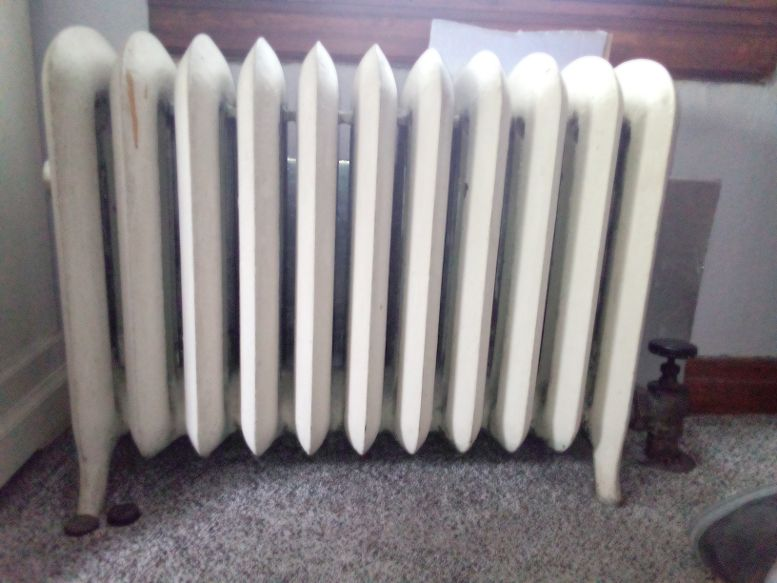
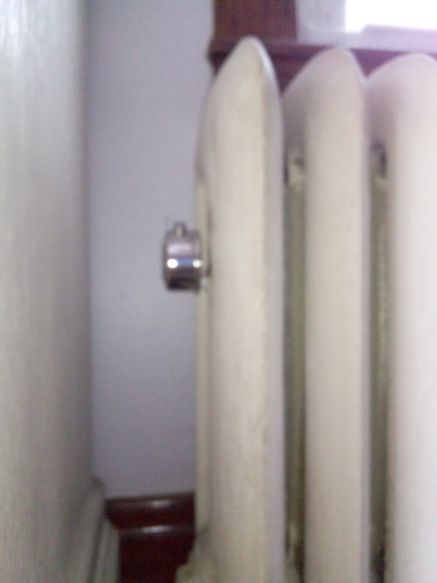
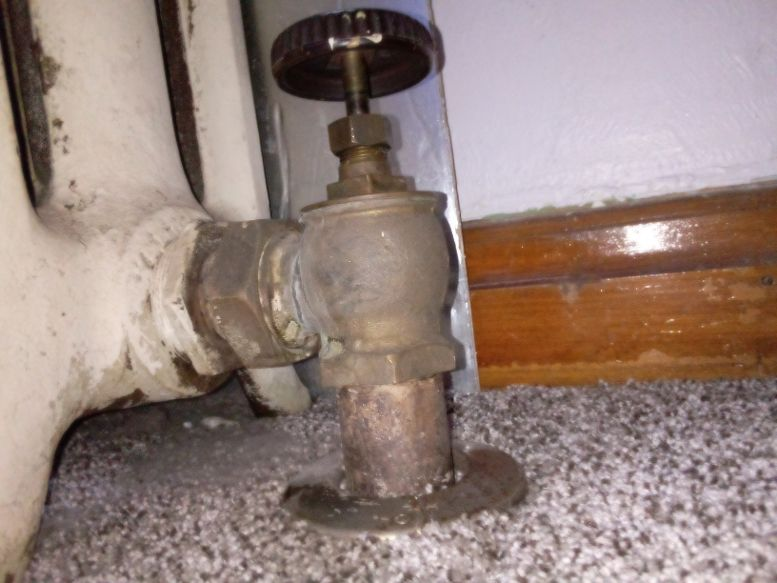
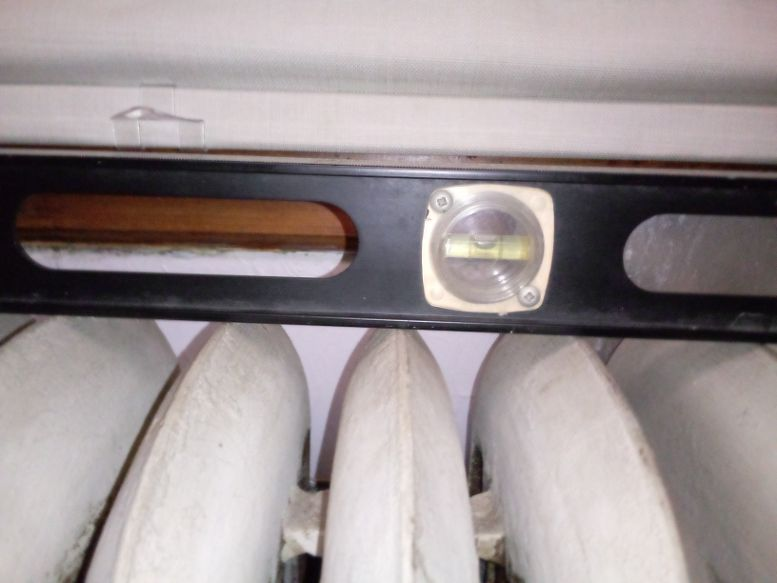
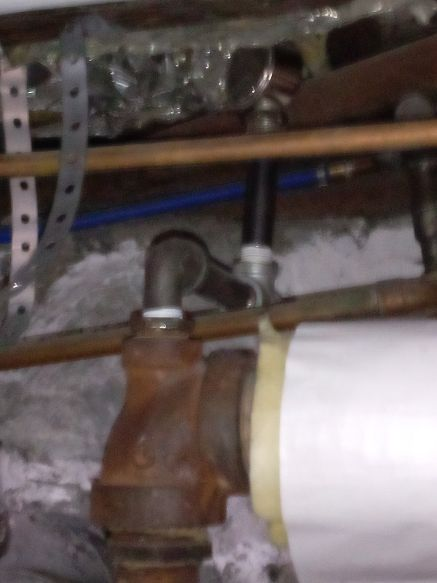
Radiator only heats first 3-4 fins. Vent is MOM with size venting removed. During heating vent puffs. Valve is frozen I believe in open position. Tried WD40, no movement. If you notice the radiator is connected at top with no steam path. The pitch is minimally away from valve. My guess is clog, probably requiring flush in off season. There is a wooden cover which I removed to get improved heat, which worked, but not at ideal level.
Fizz
Comments
-
What happens if you remove the vent ?
There was an error rendering this rich post.
0 -
You might have too much tilt in light of what you mentioned, that the steam has to pass through the bottom section where the condensate can pool up, especially if the supply valve has failed and isn't allowing full passage. I've disassembled the upper bonnet and checked some of mine. I even removed the gate on one that needed all the help it could get; a very small radiator in an upstairs bathroom with some poorly pitched piping.
0 -
A puffing vent is a classic sign of water pooling somewhere in the piping to that radiator, probably due to an incorrectly pitched pipe. Buildings settle and structural materials deflect over time.
—
Bburd
 2
2 -
i came here to say this. you probably have water siting somewhere
1 -
Yep, this is where to look. A clog in a radiator would be from very very rare all the way to "has never happened"
NJ Steam Homeowner.
See my sight glass boiler videos: https://bit.ly/3sZW1el 2
2 -
Fizz, is this a 1st floor radiator where you can go down in the basement and get an idea of the pitch of the takeoff from the main that could tell the whole story? If it is not 1st floor it still won't tell you about the pitch of the pipe within that floor/wall by the radiator though. You could try raising the radiator up a bit to see if you can get more pitch. One way to do that might be to disconnect it first and see if the supply valve can be raised and how much. Then raise the radiator by that amount one end at a time and reconnect, or try raising without disconnecting but you won't have a good feel for anything.
Also, panting can also correspond with a surging waterline in the boiler which you can see in the sightglass, in additon to pooled water in the pipes. The pooled water is more likely your problem. 1/4 in. of pitch per foot would be good. You don't hear any water chugging type sounds as the radiator attempts to get filled, just panting?
0 -
The pitch of the supply pipe is very important
The pitch of the radiator is not important
Focus
(if you’re interested, I showed that radiator pitch doesn’t matter in a series of videos:)
NJ Steam Homeowner.
See my sight glass boiler videos: https://bit.ly/3sZW1el1 -
The pitch of the main is good. I agree, the pitch of radiator is not so important, unless extreme, which is not the case. If you see my earlier posts of poorly pitched pipe you can see that the feed to this radiator which is on the 1st floor begins about a foot after feed to it.
1 -
We were talking about the pitch of the supply pipes to the radiator, not the pitch of the radiator itself or the main, although a puddle of water in the main would be bad.
Not real clear what you are saying. Are you saying the supply pipe to this 1st floor radiator is only 1 foot long and has plenty of downward pitch back towards the main?
Is the water in the sight glass surging up and down a lot when steaming?
This style radiator seems pretty unlikely to have clogs. I have some vertical column clogs that effect a small 10 section, 4 column radiator of the other type, with the top and bottom horizontal passages. Those column tubes are very small. 5th and 8th sections are not heating properly in this particular radiator and I actually did remove it last year and tried to flush it out with the hose, w/o using any chemicals though.
0 -
Two mains run from boiler, one to front and one to back(Cape Cod)with each having 4 radiators attached. The back has 3 down and one upstairs(end of run). All work well. The one going to front has 2 up and 2 down. visualize the boiler centered on left side of house, the main going to back runs 12' to back feed which runs about 30' to end of run. The main to front runs about 15' to feed line which runs 30' to left end feeding 2 radiators on 1st floor(the 2nd one is problem one) and one on 2nd floor(end of feed). The 4th radiator is on the 2nd floor which is fed by a 2' feed to right of 15' feed. They all work well but trouble one.
0 -
Boiler off……… Open up the radiator shut off and pour water down it …Wrench off the top valve bonnet .. Best way to find the problem …. Problem is there if the other rads are heating fine…
There was an error rendering this rich post.
0 -
How do you pour water down it? The air vent orifice is too small.
0 -
I believe he meant that when you remove the bonnet from the input valve, you will pour the water in there and see if it will back up or flow out into the main.
0 -
Ah! So if it backs up blockage in main? A question on prior post re puffing of vent. if it's puffing cold air, which it is, where is it coming from? If from radiator, why no steam at the vent? The steam does fill first 3 fins, and sometimes 4th, but none afterwards. And there is the upstairs rad after one in question and it works fine. If there is water pooling, wouldn't the upstairs rad be affected?
0 -
If water runs out then the piping leading to the radiator isn't pitched the wrong way. If it accumulates and doesn't run out then there is a pitch problem and/or a low spot in the piping between the radiator and the main. This wouldn't rule out a rare but possible clog in the radiator itself, or other weird problems like underpowered boiler causing balancing issues etc..
0 -
Vents get old and fail , Get. Gorton 5 or 6 or c air a VariValve . Yes check pipes sagging
0 -
Whoa.. If the radiator heats the first two or three fins, steam is getting to it. No blockage. But if it only heats that far, air isn't getting out of it.
Before you try paying games with the valve — which can cause problems — try this: with someone at the boiler and in communication with you (cell phones are handy!), take the vent off completely — it should unthread without too much hassle — and fire up the boiler and see what happens. Be prepared to shut off the boiler, as if it is a vent prooblem, you may get steam coming out of the hole and that can burn!
Br. Jamie, osb
Building superintendent/caretaker, 7200 sq. ft. historic house museum with dependencies in New England0 -
maybe the vent is too fast for the rad and pressure, and the steam is rushing across to the vent and closing it before the rad can fill completely,
known to beat dead horses0 -
I've had air vent completely out with boiler running(0 degree temp outside), no change. Cold air comes out hole. It's a mystery.
0 -
As to air rushing across top, not possible, there is no passage up top.
0 -
You're describing almost exactly the situation told in the story at the end of this chart, in which back-to-back radiators off the same riser have completely different behavior. One is venting faster than the other, which causes the faster-vented radiator to warm up, beging condensing, and create vacuum which sucks up all the steam. The author could then remove the vent entirely from the adjacent cold radiator and get no steam out of it when the other rad was blazing hot.
As an experiment, try temporarily putting foil tape over the vent of the nearby rad that DOES get hot. That will force all the air in that branch to vent out of the problem radiator. See what happens then. Apparently you have either an imbalance in venting, or some sag/condensate pool or blockage that prevents that rad from heating as fast as the other rad. Once the other rad becomes hot, it "steals" all the steam in that branch. You just have to figure out where the imbalance/condensate/blockage is.
0 -
So I taped-off nearby rad and flipped vent, it cooled down, but no change in problem rad other than heating 3 fins quicker.
0 -
Now try @Jamie Hall 's test again, with that other rad vent still taped. I might even tape the vent on the upstairs rad on that riser too. You're basically trying to force all the steam in that branch to go into the problem rad, by blocking the other air exit paths. With the other vents on the riser blocked, and the vent removed from the problem rad, the steam's path of least is resistance will be through the problem rad.
If you had an IR gun, that would be ideal, because you could image the problem rad as the steam moves through it (with the vent removed) and "see" if there's a blockage in the rad as showed by uneven heating, and/or the runout pipe is heating unevenly because of trapped condensate.
I would also try @Big Ed_4 's suggestion of disassembling the valve and seeing if there's a partial blockage in it.
0 -
Yeah but for those following along, Frizz had already done Jamie Hall's test (removing the vent) 12 posts before he suggested it.
0 -
He didn't do it with the other vent(s) taped. The point of the story in the chart I posted above is that if other rads are allowed to warm up first and begin condensing steam, they can create a partial vacuum such that, when the vent from the problem rad is removed, the result is exactly what Fizz observed.
But starting with a cold system, and the other vent(s) taped, forces the steam into the problem rad and prevents the other rads from heating up, condensing, and establishing a preferential path for the steam away from the problem rad.
0 -
Right. I'm well aware of that. There is a similar issue perhaps in the Whac A Mole thread and I suggested blankets over the other radiators. Taping a vent is a good alternative method. I was just pointing out that it is Frizz's test, since he had already done it.
0 -
@Captain Who Got it. Sorry, I misunderstood the thrust of your comment.
0 -
did you compare the connected edr to the boiler size? did you clock the meter if it is natural gas? this could be one of the rare instances where the boiler is a little undersized and you are going to have to slow the fast radiators way down to get this radiator to heat
could be mains that don't connect individually to the header so the steam prefers one over the other too in addition to trapped water.
0 -
I closed the upstairs rad, and taped closed down(the vent on the down is a varivalve, while the other are either MOM or Gorton. Now, I went to fliip varivalve on half turn it came loose. I tried putting another vent in but couldn't. Probably stripped. Notice stem on varivalve, very short.Must have been a problem all along. The problem rad got hot to 4th fin only. I'm thinking of putting a lower vent on upstairs which is Gorton 6(2nd largest room next to Varivalve rad, which is also same room where t-stat is. I will tape varivalve to slow it down, and re-tap it in spring. One other revelation, the retrurn got warm at end of main where vent is. It rarely gets warm, and never hot, yet the other return main always gets hot.
0 -
No reason to flip a varivalve upside down imo because they have a metal bellows in them that is attached at the upper part and there is no float whatsoever. If you hear a rattle when you shake one that is because it has become detached and it is defective.
0 -
Thanks Capt'n
0 -
you need to get the mains balanced to have any hope of balancing the rest of the system. either the lengths /sizes of the mains are different or you have trapped water in the slow main or both.
0 -
The length and size are the same. Attached radiation is about 35sf difference.
0 -
also could be an issue with the near boiler piping, that can also make the mains unbalanced.
0 -
here's the latest on problem rad. As stated earlier, I increased venting on upstairs rad, and partially taped fastest heating rad downstairs. Results are problem rad is heating at 5th fin and as quickly as reduced vent rad. The upstairs is now quickest heating. I believe Jamie was correct, that radiator is not the problem, also, I don't think there's puddling in the main since rad in question is 16 or so feet from other downstairs rad, and there's no hammering, also, the last rad at end of line upstairs works fine. I don't think there'll ever be balance in the mains. The vents in mains are at end of returns which drop 90 degrees. I've used bigmouths and Gorton#2's without improvement or speeding steam to returns. Currently have MOM#1 on one and Gorton#1 on other. Tried all combo's with same results. As it stands now, I'm satisfied wiith these results. Will know better as cold ramps up again.
0 -
are the mains more balanced now with the fast radiator in the other main slowed down?
the steam can only progress as fast as it can heat things, more venting won't speed it up if it is evaporating a puddle of water in the main or is taking a runnout to a close radiator with a lot of venting or make it any faster than it can ehat the next infinitesimally small piece of pipe in the main.
a pool of water in the main or in the runout frequently doesn't cause water hammer, it just kills the progression of the steam until it is steam hot.
do the last radiator on both mains start heating at about the same time? i thought you said the main with the problem radiator didn't heat nearly as fast as the other main(look at the last runout on each main, after that it doesn't really matter for balancing)
0 -
The supply mains heat equally as fast, it's the dry return(system is a single pipe parallel flow) which normally will fill before the rads heat. The one rarely gets to the vent, at the other always does. Right now the heat in the house is very consistent…no one room being hotter than the others. Very comfortalble.
0 -
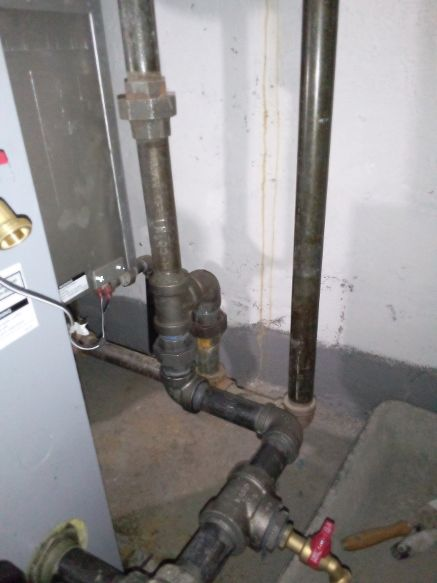
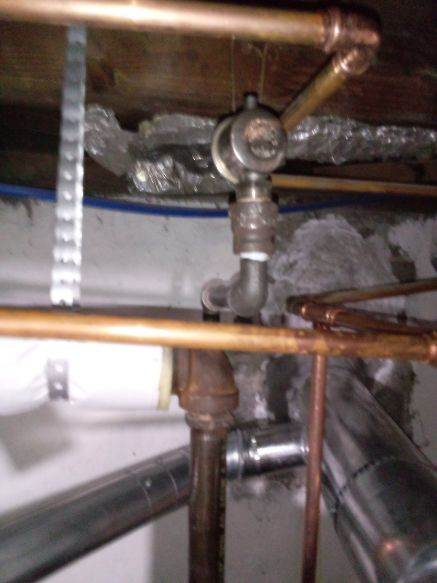
A diagram of your piping and radiator runouts would be great. I have dry returns that go all the way back to the boiler and the only vents are at the ends of these before they drop down into the wet return. I've looked and there never were any vents at the ends of the mains. House is about 100 years old now. It's important to insulate the dry returns just like the mains.
0





Categories
- All Categories
- 87.8K THE MAIN WALL
- 3.3K A-C, Heat Pumps & Refrigeration
- 59 Biomass
- 430 Carbon Monoxide Awareness
- 132 Chimneys & Flues
- 2.2K Domestic Hot Water
- 6K Gas Heating
- 124 Geothermal
- 170 Indoor-Air Quality
- 3.8K Oil Heating
- 79 Pipe Deterioration
- 1.1K Plumbing
- 6.7K Radiant Heating
- 396 Solar
- 16.1K Strictly Steam
- 3.5K Thermostats and Controls
- 56 Water Quality
- 51 Industry Classes
- 51 Job Opportunities
- 18 Recall Announcements