I need help tuning my steam system and thinking about mini-splits

To set the stage:
- Charlestown MA (Boston)
- My 35 year old 200k BTU "Peerless" branded boiler this season has been consuming half-to-all of its water capacity in the space of one day.
- Recently we discovered if we fill it up all the way, once it heats up it will drip down into the heating element. This fizzles and sends some steam up the exhaust. It is easy to get it to drip so much it collects and pools around a little bit. But it always stops leaking after the level drops to 90%. For now. To me this means that the boiler is going, going… about to be gone. I have precious days or weeks before it's really kaput and I will be desperately using space heaters to keep pipes from bursting and so on.
Now .. I asked some AIs and I asked Reddit and some smart cookies on there pointed me to Dan Holohan and that led me to come here.
Now I've had this house for a good close to 10 years and I hadn't familiarized myself with the operating mechanics of the steam system beyond knowing that it works more or less like a kettle… On the first winter, I overfilled the thing so much that I had to drain about 20 gallons once I realized what I did. Once that water level rises above the top of the glass tube it's not obvious what's going on!
I've had banging in the pipes. I've known about how I'm supposed to tilt the radiators to make that go away. But when I tried that it didn't work. Life sorta got in the way. And I've moved out a long time ago now, my tenants are now dealing with the banging in the pipes and the unreliability and the inconvenience of filling the boiler regularly. And the last peeve which is the lack of controllability. Some rooms just take forever to heat up. All the energy going to heat the entire rest of the house while we wait for the cold room to get up to temp is completely wasted and causes discomfort to boot. I had gotten so used to the lack of control that I was, until today, mentally ready to abandon steam entirely. But someone on reddit mentioned that steam radiators can be tuned to do what I need from them.
I want to move off steam due to above listed reasons, and heat pumps have a lot going for them. Mini-splits will allow me to implement a system that can heat without adding ducts. That will make installation a lot more bearable compared to anything else involving baseboard or ducted solutions, which is pretty much every other solution. ChatGPT mentioned some European sort of gas heater hung on walls, but that sounds absurdly expensive.
As regards heat pumps, it seems they CAN work, maybe even effectively down to a low enough temp to feel safe, like, -15F, but it's clear that there's so much variability in this number because in actual reality when it's cold out, the heating efficiency will be abysmal, the heating capacity will also be questionable: the same unit being able to effectively heat a well insulated new construction to 70F when it's -15F out may only be able to maintain 45F in a poorly insulated drafty house. So it's up to interpretation whether such a system is viable in such a house. 45F isn't acceptable, but… would 63F be acceptable? I'd say for a rare -15F outside temp, it would be adequate. What is certain though is that it will be sucking down the amps something fierce all the while in that scenario. I can get solar to reduce the amortized utility rate of electricity, and that will help. the question is will it be enough? I think I am starting to have a good handle on the dynamics, but the big question is how to measure how much heat flux is lost from my building and how to plug an estimate for such a quantity into sizing a system, and then i'd be able to know how much that system would cost to run. Or maybe this isn't so hard, since if I can estimate BTU/hr lost from my house, I could directly use this to size a system.
I like the idea of a hybrid system more and more. It works together for high combined efficiency like a gearbox: As the temp drops and the heat pump exits the effective efficiency band there will be an optimal point at which to switch to combustion. This cutoff happens when the dollar per unit heat output is equivalent between the two systems, that in turn depends on the prices of their respective energy sources and important parameters like the rate of heat loss from the walls.
My problem is I don't have much intuition around these things. But I guess I can compensate for it by cramming before the test, so to speak. I've only read about heat pumps on the internet. How they work is black magic to me still, but I'll gladly take 250% coefficient of performance all the way to the bank.
I do have to move fast now, though. The boiler is on its last legs. I have to do something, and if I wait, and even if I don't I may have to default to a boiler replacement the moment it fails. I have learned much over the last two days through research.
It's clear to me already that a hybrid steam and mini split setup can probably most effectively get me to where I want to go. Enough heat pump capacity to comfortably cool the space during the summer can also efficiently heat the space down to maybe the vicinity of 30F outside temps. Then I can supplement with steam heat to handle the cold days.
I want to ask for help on the following topics.
- I heard about Hercules Boiler Liquid. It looks like this is likely to be able to temporarily repair a boiler in my current state of it being on its last legs. It is the only thing I've found so far that may be able to let me have this thing hobble along a little bit longer and in addition to that maybe even allow it to leak less than it is leaking currently, which would be a miracle. I suspect if it can do this and that i'm supposed to somehow just add it in while it's hot, there is probably risk of clogging up some pipes and having a similarly catastrophic event of total failure as what I'm hoping to avoid? How should I think about the risks with applying this remedy? If risks are low should I go out and apply this immediately or should I wait until the boiler shows signs of further deterioration to do so?
- This is Massachusetts-specific, but Is there anything preventing me from being able to get MassSave incentives which exist to help me finance heat pump solutions if I intend to use them in conjunction with steam for backup?
- Do there exist, can I install, a replacement steam boiler that is much smaller, say 125 or 100KBTU/hr, that can:
- automatically tend its water level
- throttle its output level? Or somehow to control the internal pressure?
one of the things I wanted to do with my about-to-fail oversized boiler that puts out more heat than I need was to limit the heat output from top floor radiators. But I tinkered this in my first few winters and it leads to an overpressure situation that vents steam out in the basement. I grant that a much lower capacity boiler will help alleviate this need but I think any tech to allow me more freedom will be appreciated if it's available.
Thank you so much for reviewing my wall of text.
Comments
-
I'm not a heating pro, just a homeowner/mechanical engineer (also in MA). But if I were you, I wouldn't rush to get mini-splits. Your steam system can be made to work well; the problem is you didn't have the time to do that. Now you're going to be forced to do something. Why not make the steam system work as it was designed?
Most or all of your steam problems are likely due to a combination of poorly pitched pipes (not the radiators), failed vents, unbalanced vents, poor water quality, etc. All of which can be fixed by a steam pro who knows what he/she is doing.
So if it were me, I'd start with a properly-sized new steam boiler. Make sure the installer measures the EDR of your existing radiator and sizes the boiler to match the EDR. If he doesn't, he doesn't know what he's doing. Then once you get reliable heat back, you can have him/her address all the other problems you never had the time to fix. Once they're all fixed, the system should run quietly without banging, and should heat evenly.
You can also add things like TRV's to your radiator valves to help balance the heat, smart thermostat(s) with wireless remote sensors for temeprature-averaging inside the building, etc. Once you have the steam system working as it was intended, then you're no longer in a hurry and you can consider a longer-term plan for (maybe) adding mini-splits for better efficiency in the shoulder season. But if you're in a rush now, you're likely to make a mistake and do something you regret later.
So replace the steam boiler with a properly-sized one, which doesn't take long. Find a steam pro who knows what he/she is doing to fix all the problems. Once those are all fixed, the system should be balanced well and should take minimal maintenance.
 1
1 -
Lots to unpack here…. I'll give it a shot. Keep in mind I'm just an informed homeowner/steam enthusiast and the real pro's will chime in sooner or later.
Your Boiler is in the ICU…hospice has arrived.
- Safety first. Make sure your float type LWCO is working. While the boiler is operating, drain liquid rapidly out of the LWCO drain and verify the boiler shuts off as the float moves down. This is called a blow-down and should be done weekly with these older boiler to keep junk from accumulating in the LWCO and preventing the float from sticking.
- Not having a functional LWCO means all of the water could potentially leak out creating a dry-fire situation. Dangerous in terms of fire hazard and a boiler explosion.
- Add a quart of the Hercules boiler liquid. Raise the water level to close to where it leaks and let it steam. Leave it in there. Will it help? Maybe. It won't hurt your boiler anymore than it already is.
Find a Steam Pro.
- Local HVAC techs and plumbers that are well versed in steam do exist, but they are the exception not the norm. You may get lucky but 95% of the time you'll get burnt. Your best bet is to consider a steam pro, using the "find a contractor" feature on this site. New England Steam Works services MA and they are about as good as it gets. They service my boiler actually and I'm always super satisfied.
Heat Pumps/Mini-Splits
- Swear words around here. Not because they are something other than steam….but because they are poor at heating at very low temperatures. As you've noticed they become inefficient at low temps and most people have to use a backup.
- With this in mind, go for it if your main goal is Air Conditioning. Yes they will help heat in shoulder season…say 40/50F or warmer out. When temps consistently get in the 30's/40's….just stick with the primary heating system.
- MassSave will allow you to install the heat pumps with a fossil fuel backup, I'm 95% sure of this.
- A new house constructed to all the modern efficiency standards, insulation, air-sealing, etc might be able to benefit from a heat-pump only (maybe), but our older houses are not the ideal candidates considering their age. No matter how much we have improved the building over the years.
New Boiler.
- Just about ALL boilers come with probe type low-water sensors and automatic water feeders these days.
- Sizing. A boiler MUST be sized to the connected radiation of the radiators that are installed. It is easy to do, you measure the size of the radiator and the number of sections and match it to a diagram/table that gives you the EDR of the radiator. EDR = Equivelence of Direct Radiation in square feet of steam. You add up all the EDR of all of the radiators and pick a boiler that is as close as possible in square feet of steam capacity to that total EDR number.
 2
2 -
It sounds like your existing system is out of balance, meaning it does not heat all radiators evenly.
System Balancing
- A boiler that is too large will build pressure quickly and hit its upper pressure limit set by the Pressuretrol. It then shuts off, the pressure lowers and it restarts when it is at a low threshold. This is called short cyling. It isn't damaging….more of an annoyance and a waste of fuel.
- Lower pressure is better. A residential steam system has no need to operate at more than 2psi. 1.5psi max is ideal. If a boiler is properly sized it will operate in ounces.
- Main vents are important to get the steam to the radiators quickly.
- You probably need new radiator vents. That is the best way to balance the system and make it heat evenly. Vents come in various venting capacities. Install the higher capacity ones further away from the boiler or on radiators that you want to speed up. Install slower ones on radiators that you want to slow down.
Survival Mode
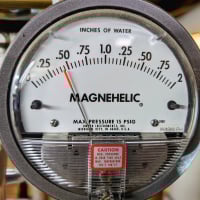
- Take as much stress off this boiler as you can by lowering the pressure (if needed). Your 0-30psi gauge is useless for very low pressure readings. Get a 0-3psi gauge and install it. Learn to adjust the pressuretrol so it can operate at 1.5psi max.
- Make sure the LWCO works.
- Put in some Boiler Liquid.
- Pay very close attention to it multiple times a day.
- Lower your thermostat to as low as you feel comfortable. Don't do set backs, i.e. turn it down to 60 at night. Keep it at a constant temp. This is less work for the boiler and by nature steam heat is more efficient when keeping it at a constant temp.
Steam heat should be virtually silent and heat the whole house evenly. It may take some work to un-do years of previous mistakes and catch up on maintenance but it will be worth it in the end.
Last thought. If the LWCO is functioning and you are willing to babysit this boiler you may be able to limp along until spring. Contact New England Steamworks now and get the ball rolling for a spring boiler replacement. In the dead of winter, on short notice, these installs are usually considered emergency repairs/installs…and the price goes up accordingly. If you can wait until they slow down a bit it may save you some $$$. But perhaps not…talk to them first for their professional advice.
0 -
@unphased , mini-split salesmen will produce a lot more hot air than the actual mini-splits will in this frigid weather. Keep your steam. And I'll second @New England SteamWorks .

 2
2 -
4 different neighbor's that moved out here during covid all changed from Steam / HW to Heat pumps.
All 4 have had issues, all 4 have had trucks there during this cold spell. All 4-regret listening about the benefits of heat pumps!
Get the heat pumps but not the low ambient models. Find a steam expert and get that system fixed.
0 -
All of the above, especially @New England SteamWorks .
As it happens, I have a very good mini-split system in an apartment in Cedric's home here. It helps that tenant a lot in the summer (AC), but in the winter… below 20 F or so while it sort of blows tepid air, the efficiency is horrid. That's plus 20 F.
Size the replacement boiler to the installed radiation. Don't make it any bigger — that is common but useless — but on the other hand, don't make it much smaller either. There is some "wiggle room" built into the boiler specifications so it doesn't have to be exact. But get it installed correctly — the "near boiler" piping is critical. Once that's done, you will have time to play with the rest of the system and get it silent and balanced. It's not hard, but it does take some imagination and patience.
Br. Jamie, osb
Building superintendent/caretaker, 7200 sq. ft. historic house museum with dependencies in New England1 -
All of the above posts I agree with, and I can't say that very often.
If the boiler has a leak at the sections then some boiler seal can surely help. I would do that first. ( IF ! ) the source of the leak is truly coming from the boiler.
While the boiler is back in working order, ie. the leak has stopped resulting from the boiler seal liquid, have all of the pipes that sag or pitched incorrectly pitched back toward the boiler. Have all safety controls checked and any parts that are worn fixed or replaced. I say this because you may not need a new boiler. It depends on where the leak is.
Mini splits are terrible in the coldest weather. Not a big fan, but they have their place.
I have installed and lived with all of the types of heating systems. Warm air, Hot water baseboard, mini splits and steam. The best one without a drought is steam.
Give your steam system a good look before making the jump to something different. You might even find that it will be less expensive.
0 -
I commented in your other thread, so continuing here:
I concur, get the steam system working properly. Add minisplits for air conditioning and shoulder season heating.
To answer your questions: A heating professional can do a 'manual J' calculation to evaluate the heat loss requirements of your building. You can also measure the operating time of your boiler, the indoor, and outdoor temperatures, and use that to calculate the heat loss of the building.
The typical approach is to calculate the heat loss (or heat gain for air conditioning) on the 'design day': The expected 'worst' day the system will have to deal with. This 'worst' is probabilistic, based on historical statistics, and you have some fudge on what exactly is the 'design day'. I know that I looked up the values for my home, and the next winter the coldest day was colder than that.
You mention that you have tenants and are in Massachusetts, so the law sets the minimum allowed temperature capabilities: https://www.mass.gov/info-details/massachusetts-law-about-winter-heating Even though 63F on a worst case design day might be acceptable to you, I think that the law would say 68F on the coldest day.
My understanding of the Mass Save rebates is that you can get a smaller rebate if you plan to keep the fuel burner installed. You can't get the full rebate unless you remove the steam system from service.
You must get the boiler matched to the capacity of the radiators. Otherwise the boiler will not be able to heat all of the radiators. I don't know what the solution is if the combination of boiler and radiators is too large for the house; this is where you will need to get a good steam professional involved to evaluate the capacity of the radiators, make suggestions for adjusting the capacity of the radiators, and then get the boiler matched to the radiators.
Automatic water feeders are a common item. I have no recommendations on this point other than they exist.
Modulating burners exist, but I don't know how they would play with a steam system; perhaps you would need some combination of modulating burners and fancy zoning valves to control where the steam goes. Probably way to complex to provide value. You don't want to make this system a research project.
0 -
I agree jeat pumps are a problem when the mercury heads for the cellar. I had one installed in 2015 mainly for cooling but also used it on mild winter days. It works fine if temps are above freezing and the wind isn't blowing hard. Getting them fixed when they break is not easy, I've foung it touhj yo get competent technicians — most just throw in some freon and run away.
Find a good steam man (not cheap (you will have to go outside the local area) and listen to what he tells you. Unless your house is mew and very well insulated don't depend on heat pumps for heat in this area..
Smith G8-3 with EZ Gas @ 90,000 BTU, Single pipe steam
Vaporstat with a 12oz cut-out and 4oz cut-in
3PSI gauge0 -
You have tenants and its cold outside. Seems like that greatly limits your options. Hire somebody to test to make sure its the actual cast iron block leaking. Replace boiler. After you have a new one, hire them to make sure you have no system leaks. When you have a responsibility to keep someone else warm (tenant) considering changing entire heating systems during heating season is not an option. Who is gonna install minisplits for you with the 2 feet of snow surrounding your house?
0 -
Thank you all for your input. I made this post first and it said it was under review and was so for over a day so i made a second post, which got posted immediately. Then this post also showed up. This post is missing some of the latest info which i included in the other post, but now between all of your help, thank you again, and my own research, I am now at a 80% comfort level when it comes to understanding how the steam system works, so now I know that all I've got to do from this point to dial in the system is tune my vents and I should be able to with a few hours spread out over days and weeks tune all radiators to do what they need to do.
The boiler is hanging in there for now, it does not leak unless overfilled, it's still working, and I'll be able to put the hercules liquid in there as a last hail mary, but I'll be looking to replace it with a modern unit and have some peace of mind. For now I it looks like I've actually got breathing room, so while I keep my eye on this thing I can hopefully make it to spring to get better prices on things and get things done in a well-planned way.
You can't get the full rebate unless you remove the steam system from service.
This makes sense but it's unfortunate because a hybrid system will clearly be more efficient. I suppose the oversimplified notion of efficiency from the perspective of the state is that electification is good and fossil fuels are bad, the lack of nuance here is unfortunate but also understandable.
I got a quote for HVAC from Sunshine Team for a 12 year PPA at $-something a month and i think he said the cash rate for that install is $? a setup with two units for 24k+36k BTU capacity. Since i'll be using the minisplits for AC and not to shoulder the heat load, I'm almost certain this is more capacity than i will need and i shouldn't need to install such a beefy heat pump setup.
Today Jeff from Horvitz plumbing came to visit and I dunno if he's got steam in his blood but he definitely knows his away around it so that was a relief. Now, he said he didnt know anything about Hercules Boiler Liquid, but I felt great about how he was able to confirm a bunch of stuff that I've figured out about steam on my own and so for the time being I can tweak the vents on my own and I'll reach out to them later when its not crazy season to get a quote for boiler replacement. This feels better than the off the cuff $ quote for a boiler replacement that I got from Renato from Bushi Plumbing who I had in earlier in the week.
I asked Jeff about downsizing the boiler (since i've had insulation put into the walls 8 years ago while this boiler has been in place for 35 years) but he didn't think that's a great idea. It looks like am prob going to have to go do a radiator EDR calculation myself to make a replacement boiler sizing estimation.
0 -
In your last paragraph, @unphased , you mention the possibility of downsizing the boiler since you had insulation put in.
NO. As has been mentioned elsewhere, a steam boiler is sized to the installed radiation, and the heat loss of the house or new insulation or whatever has nothing to do with it. It is sized to the installed radiation. End of story.
Now. Boiler liquid. Um… good luck. It is intended to seal small leaks in hot water boilers and such like. Not steam leaks. I doubt it will do you much harm. It also won't do any good.
On a cheerier note, however, unless that leak is huge you can keep going for a long time. You'll burn more fuel than you like. You'll use much more water, but the boiler is done anyway. But you will still have heat.
Br. Jamie, osb
Building superintendent/caretaker, 7200 sq. ft. historic house museum with dependencies in New England0 -
Was $/month for a solar + minisplit install?
I got a quote for HVAC from Sunshine Team for a 12 year PPA at $-something a month and i think he said the cash rate for that install is $? a setup with two units for 24k+36k BTU capacity. Since i'll be using the minisplits for AC and not to shoulder the heat load, I'm almost certain this is more capacity than i will need and i shouldn't need to install such a beefy heat pump setup.0 -
No pricing, please…
Br. Jamie, osb
Building superintendent/caretaker, 7200 sq. ft. historic house museum with dependencies in New England0 -
Just an FYI Hercules boiler seal/liquid does indeed work on both steam and hot water heating systems. I have had great luck with it. Both big and small leaks. I would caution those who have not used it to read and follow the directions. If too much is added holes that are not meant to be affected with the boiler seal will seal. Not a good thing.
0 -
I think I might be on the wrong website. Is this professionals helping homeowners or homeowners helping homeowners?
0 -
What was $ a month
0 -
Have New England Steamworks take a look and potentially replace the boiler if it's on its last legs after the heating season.
Mini-splits, even Mitsubishi Hyper Heat systems start losing efficiency below 15f and exponentially below 5f before they stop doing much of anything at -15f. They are great in highly insulated homes, but in any older New England property I'd recommend using them for cooling in the summer and heating in the shoulder seasons before transitioning to steam in the winter.
You are able to set up thermostats for two stage heating where at a set point temperature the heat pumps shut off and the steam system kicks on. That's what I recommend long term.
0 -
Both. Unlike some trade websites, HeatingHelp has always welcomed non-professionals, both to ask questions and to share experience. So we have professionals helping professionals, professionals helping non-professional, non-professionals helping professionals, and non-professionals helping non-professionals.
That's what makes this place work so well, and we can thank @DanHolohan and his daughter @Erin Holohan Haskell for the concept and for keeping it that way.
Br. Jamie, osb
Building superintendent/caretaker, 7200 sq. ft. historic house museum with dependencies in New England


 6
6 -
-
Up here the Great White North, my local design is -4F and 6700HDD. Running a couple of rentals with cold climate ducted heat pumps. We recently dropped bellow the design and the units have no issues keeping the place warm. These were properly sized with and installed with good ducting.
Our electricity costs are much lower so a heat pump is comparable to natural gas though, in places with expensive hydro this might not make sense.
The one that is guaranteed not to work is shotguning an old home with a bunch of wallmount mini splits. This is recipe for disaster in terms of comfort, operating cost and reliability. Unfortunately it is what lot of installers push.
@Waher Most cold climate units provide nameplate output down to 0F to 5F, no EVI unit will loose steam at 15F. The falloff is also linear with outdoor temps bellow 5F. Heck even my non hyper heat that I use mostly for cooling with happily put out 110F air with the current -5F outdoor weather.
This is a 3 ton unit, produces above 3 tons at 5F and 2.5 tons of heat at -13F.
https://ashp.neep.org/#!/product/209040/7/25000/95/7500/0///0
 1
1 -
Newer heat pumps work in cold climates, but the cost of electricity varies depending where you live. Up on the coast of NE I'm paying 35 cents a KWH, that's 3X what it was a decade ago. Also the homes up here are a lot older and unless you gut the place you can't bring it up to current standards so it takes more energy to heat..
Smith G8-3 with EZ Gas @ 90,000 BTU, Single pipe steam
Vaporstat with a 12oz cut-out and 4oz cut-in
3PSI gauge0 -
What's your cost per kwh?
Single pipe 392sqft system with an EG-40 rated for 325sqft and it's silent and balanced at all times.
0 -
learn to fix the system . Banging is pipes sagging , and buildings settle. take a long level . Attach long drill bits with plastic wire ties and check pipes . I attached 8ft 2x2 and had a helper helped me . You need new vents . Changing systems will cost many times more that fixing what can work . Mini split will mean new electric service ! And they cost more to operate than NG. Learn what you have.
0 -
"Local HVAC techs and plumbers that are well versed in steam do exist, but they are the exception not the norm. You may get lucky but 95% of the time you'll get burnt."
I would say the exact same thing is true when it comes to sizing and installing a cold weather heat pump.
Just reading from the responses in this thread there are an awful lot of people in the business who believe misinformation about heat pumps.
As @Kaos noted, it is possible to heat a building with a heat pump in a cold climate. Is it economical? It depends upon your climate, the cost of energy where you are, the construction of the building and the choice of equipment. There really aren't any universally useful rules of thumb, be wary of anyone who relies on them.
0 -
I’m in MA. It’s pretty amazing how many people confuse the rebate process for heat pumps
It doesn’t help that the rules change every year or soif you want to keep the steam for super cold days, and heat pump for regular days, that’s called the “partial home rebate”. $1125 per 12,000 BTU.
As for your steam system, yes, get that thing looked somebody who knows what they’re talking about.
 3
3




Categories
- All Categories
- 87.8K THE MAIN WALL
- 3.3K A-C, Heat Pumps & Refrigeration
- 59 Biomass
- 430 Carbon Monoxide Awareness
- 132 Chimneys & Flues
- 2.2K Domestic Hot Water
- 6K Gas Heating
- 124 Geothermal
- 170 Indoor-Air Quality
- 3.8K Oil Heating
- 79 Pipe Deterioration
- 1.1K Plumbing
- 6.7K Radiant Heating
- 396 Solar
- 16.1K Strictly Steam
- 3.5K Thermostats and Controls
- 56 Water Quality
- 51 Industry Classes
- 51 Job Opportunities
- 18 Recall Announcements