1917 Home w/ Basement and attic (4 levels) radiators and Plaster or drywall

I have a boiler and radiators in 2 floors of home, basement and attic are not heated, we are in North Central Indiana, about 45 minutes drive to Lake Michigan…7 radiators in this old house.
(Basement and attic are not finished.)
I had a slow leak at the bathroom tub faucet and did not make a decision about its replacement that resulted in slow drip that affected the ceiling, and last year, plaster failure that I really need to get repaired. The real story is that I could not find brass that I really liked… it was out of style, and very limited options when this happened for this old house.
Many years ago, I read on the this -old -house forum that drywall and radiators do not work, but my husband thinks I'm nuts and just want to spend more $ on this old house to have the LR ceiling re plastered. If I have to live in this old house, then I'm not willing to give up my radiant heat with Northern Indiana's cold winters. Radiant heat is truly the warmest feeling heat…If I won Powerball and built a new house in this area, I would still put radiators and a Boiler in my new construction.
Is there scientific reason that drywall doesn't work with Radiant heat? If it is 0 degrees for the high temps, the radiators do get hot…If I understand, the boiler sends hot water through the pipes in the house to the radiators. If the boiler is sending water, let's say at 200 degrees Fahrenheit… Can I find out the temp of the water in those pipes to illustrate my point?
does the temp of the water in those pipes cause my new drywall to crack?
Or
does plaster reflect/ absorb heat radiation better?
He isn't buying what I'm selling.
Thanks for any assistance…
Comments
-
Drywall works fine with radiators.
 1
1 -
Plenty of houses have drywall and radiator heat. I have never heard that the two were incompatible, and I have been involved in the industry for 40+ years. Don't believe everything you read!
—
Bburd1 -
radiators and radiant heating with something like tubing behind the drywall are 2 different things but both can be used with drywall.
on a ceiling something like blueboard which is special drywall that is skim coated in plaster or a skim coat of joint compound over drywall will make for a flatter ceiling if you can find someone that is good at it but neither will affect the function of standing cast iron radiators.
1 -
-
Drywall and radiators work together just fine. No problem there..
HOWEVER. Drywall does not have the heat storage capacity of plaster, nor the sound and heat insulating characteristics. I'll grant that a very high quality drywall job does look almost as good as a quality plaster job… for a while. A cheap one can be spotted as soon as you walk into a room. Neither will last anywhere near as long as a quality plaster job.
I'll grant that drywall is cheaper. However, if you do decide to go with drywall, do an entire surface (for instance, the whole celling or a whole wall). Remove and replace all the trim. Do not even try to patch an area. Plaster you can patch, but you if you leave some plaster and do some drywall, you'll always see it.
Br. Jamie, osb
Building superintendent/caretaker, 7200 sq. ft. historic house museum with dependencies in New England0 -
also unless you ripped most of the ceiling out, a good plasterer can patch a hole and make it look like it was never there.
0 -
Radiant ceiling heat is typically copper or steel tube embedded in the plaster or below sheetrock. In some cases electric cable was used. A lot of electric ceiling radiant was installed in the 1960's
A company in Illinois built copper tube grids for ceiling radiant, they still do.
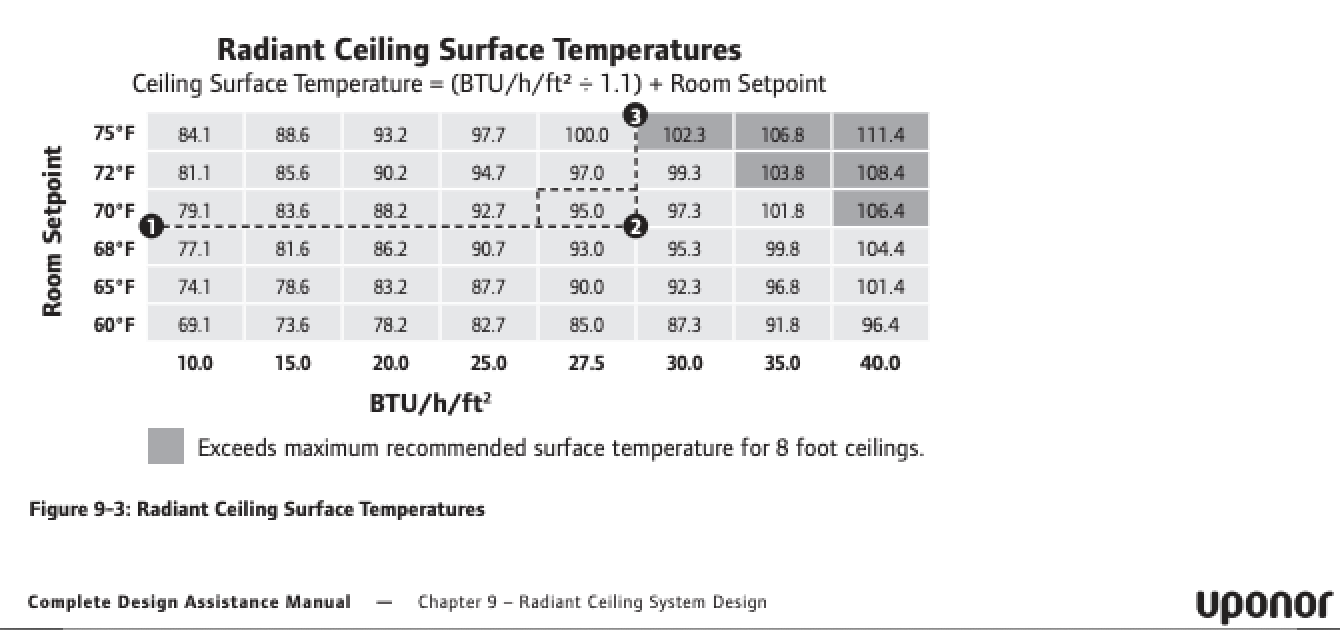
It is a great way to heat a space. The limitations are the temperatures that you want to supply to it, here are Uponors guidelines. Supply temperatures below 120° are one recommendation for sheetrock, surface temperature 100° or lower.
Cast iron radiators, even steam temperature should not over-heat sheetrock or plaster with the air space between the radiator and the surface.
 Bob "hot rod" Rohr
trainer for Caleffi NA
Living the hydronic dream0 -
Sand paint works wonders on plaster and sheet rock repairs.
 1
1



Categories
- All Categories
- 87.8K THE MAIN WALL
- 3.3K A-C, Heat Pumps & Refrigeration
- 59 Biomass
- 430 Carbon Monoxide Awareness
- 133 Chimneys & Flues
- 2.2K Domestic Hot Water
- 6K Gas Heating
- 124 Geothermal
- 170 Indoor-Air Quality
- 3.8K Oil Heating
- 79 Pipe Deterioration
- 1.1K Plumbing
- 6.7K Radiant Heating
- 396 Solar
- 16.1K Strictly Steam
- 3.5K Thermostats and Controls
- 56 Water Quality
- 51 Industry Classes
- 51 Job Opportunities
- 18 Recall Announcements