Welcome! Here are the website rules, as well as some tips for using this forum.
Click here to Find a Contractor in your area.
If our community has helped you, please consider making a contribution to support this website. Thanks!
Water line disappearing

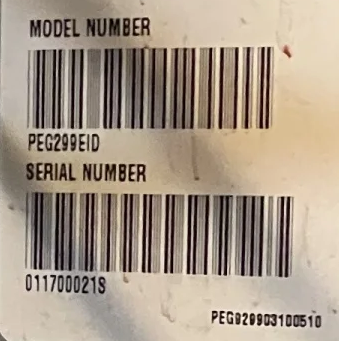
I have a Utica 299999 PEG EID. I believe my boiler may be too big for my 3-family apartment building. No leaks in system, re- piped the header installed a 3" drop, dropped the dry return 5 inches for faster condensate return. All radiator valves are wide open throughout the building. I'm starting to think that the boiler is too big. My question is can the Btu's be decreased in turn decreasing the velocity of the steam and not pulling the water out of the boiler.
Comments
-
Sounds like something is delaying your condensate return. That doesn't have anything to do with boiler size.
Can you go step by step what happens with the water line as the boiler cycles?
Does the low water cuttoff engage?
Trying to squeeze the best out of a Weil-McLain JB-5 running a 1912 1 pipe system. 1
-
or it is surging or priming and throwing liquid water in to the mains. did you skim it after you changed the piping? Is there additive in the water that is causing it to prime?
 1
-
can you post pictures of the near boiler piping?
 1
-
what pressure are you set to, and what are you seeing on the gage when the water leaves the boiler?
known to beat dead horses0 -
Is this a one pipe or two pipe system. You say you lowered you dry return. Can you take pictures to show exactly what you did there please?
Dave in Quad Cities, America
Weil-McLain 680 with Riello 2-stage burner, December 2012. Firing rate=375MBH Low, 690MBH Hi.
System = Early Dunham 2-pipe Vacuo-Vapor (inlet and outlet both at bottom of radiators) Traps are Dunham #2 rebuilt w. Barnes-Jones Cage Units, Dunham-Bush 1E, Mepco 1E, and Armstrong TS-2. All valves haveTunstall orifices sized at 8 oz.
Current connected load EDR= 1,259 sq ft, Original system EDR = 2,100 sq ft Vaporstat, 13 oz cutout, 4 oz cutin - Temp. control Tekmar 279.
http://grandviewdavenport.com1 -
1 or 2 pipe? If it’s one pipe, pressure can’t push water out of the boiler.
Depending on the timing it could be surging
NJ Steam Homeowner.
See my sight glass boiler videos: https://bit.ly/3sZW1el1 -
yes, it is a one pipe system. At start of the cycle the water in the site glass (clear water) starts to surge midway the glass to the very top, As the cycle continues the water surges in three-inch increments as the surge works its way to the bottom of the glass until the low water cutoff shuts the boiler off. the low water cutoff kicks in at about 3/4 of an inch from the bottom of the glass. when the boiler shuts off the surge stops but at the same time the last 3/4 of an inch of water disappears completely out of sight. The Xvt water feeder is on a 8-minute delay to allow the water to return. When the water reaches approximately 1 inch from the bottom of the glass the boiler turns back on and almost immediately when the boiler flames up the water level quickly rises back to operating level which is about three inches from the top of the glass and then it repeats itself starting the surge all over again. Soon as I get the photos I will post.
0 -
that is a strange description of water level that I haven’t seen before. The good news is there is an explanation, we just have to find it.
A video would be good but if not, what is the timing roughly of these events in a typical heating cycle?
NJ Steam Homeowner.
See my sight glass boiler videos: https://bit.ly/3sZW1el0 -
Larger boiler especially side tapped boiler are sensitive to dirty boiler water .It would be wise to flush and skim the boiler if piped correctly w a skim set up i have found i easier to wand the boiler from the side skim tap and wash the boiler out leave the bottom drain open as you wash each section upon completion close up the valve ,fill to water line and fire her up till just about steam and do a quick skim . Aside from being oversized possibly ,if you have wet returns they should be flushed out if this was not done then do it or the mud and debris will return back to your boiler . With a boiler that size a full 2 inch equalizer should have been used .As for down firing your best and safest approach would be to add a vaporstat and a 2 stage gas valve .I would hope that your boiler is set up w a 0 to 3 psi gauge so you know what the system pressure truly is . Personally before jump to that how about your do a edr survey and see if indeed your boiler is over sized and if not and you are sure your returns are clear and the boiler is clean and that your pressure troll is set and operating within the proper pressure range . Have your main vents been checked for proper operation and function ?
Some other steps are to clock your gas meter and check inlet and burner manifold pressure to ensure that the boiler is not being over fired it makes sense ? As for water disappearing from the site glass personally when i see this occurring i usually will shut the burner off if the water line comes right back up then it is one of a few things ,bad near boiler piping /dirty boiler water ie oils /mud /rust making the water line surge , Also do not discount hidden leaks in piping large enough leaks will also make a water line disappear but i have only seen this on mostly side outlet boiler and maybe one or two top outlet .
PS water does not get pulled from the boiler its leaving most likely due to the boiler being dirty . Usually most in the business of steam boiler install and repair will aside from replacing a boiler and its near boiler piping will up grade main venting and replace all steam radiator vents being there usually a mis moss of old and barely working vents being if it is not done when the boilers being replaced it will most likely never be done and i can guarantee that that when not included in the replacement job will not be installed for free you will be charged extra not only for the vents but for a return visit usually at more then you would have been charged included with the boiler replacement . Also if the boiler is cycling on pressure maybe its just because there zero place for the air to get out being most of the rad vents are 30 years old the same goes for the main venting .
It seem easy to just have a boiler replaced just about any jack **** can do it but is it done right Hum being there's a lot more then meets the eye and it seems every body looks at bottom line price instead of what else is being done .Just because you up date the boiler what about the rest of the stuff that works silently and unknowingly for ions maybe they should be replaced also .
when faced w customers who see no value in replacing main and radiator vents and radiator traps thinking it just a sales angle but are just loaded w complaints about there steam system and when the boiler is replaced for it to be a new perfect functioning system without updating any vents and such is a indicator of what i can except so i generally will pass on such jobs being im not in the habit of doing things on my dime for free and being on the hook for issue that are usually due to there seeing zero value in until it dont work .
I would possibly think that being you had to redo the original near boiler piping that you possibly had the wrong contract being real steam guys dont have to re do headers being they do them properly the first time around that being said i would not doubt that it s over sized .
Hoping not to sound like a tool but im just tell ya the truth as i see it being i have been doing this for quite a number of year s to the point that im nearly at the end of the road of nonsense and can only do what is $ to do other wise i gotta go .
peace and good luck clammy
R.A. Calmbacher L.L.C. HVAC
NJ Master HVAC Lic.
Mahwah, NJ
Specializing in steam and hydronic heating

 4
-
i may have forgetten to add that your new boiler may not have he same water volume that your old one had and that you may have to add a reservoir tank to add that missing water volume .The alternative for a boiler which runs out of water due to low boiler water volume is a boiler feed pump w a mech lwco to maintain water line which is mechanical and costly while a reservoir has zero moving parts and if installed and sized properly does the same thing automatically requiring to be flushed out and refilled when a boiler water side service is performed .Ya know clean the lwco probe, sight glass assembly and safety valve piping among a slew of other things which are usually over looked or installed so it cant be service which is quite common when nobody things about coming back to service . These are some of the differences that occur when those who have the knowledge and take real pride in the craft aside from all the fame and glory that comes along w it . This is why we cost more . lol
peace and good luck clammy
R.A. Calmbacher L.L.C. HVAC
NJ Master HVAC Lic.
Mahwah, NJ
Specializing in steam and hydronic heating0 -


this was he boiler as its presently set up. I just recently repacked all the radiator valves in the house and replace all steam vents. I’m not losing water. The water feeder has not replaced any water since then. I will take clammy advice and use a wand and clean out each heat exchanger. When I first started this chat the boiler had just been cleaned and water was clear but as the picture shows the water has rust in it again. I will get those studies done and have the gas company come a check the gas flow to the boiler. The pressuretrol is on the lowest setting
0 -
The naked long pipe is the return line that I lowered to increase the pitch


 0
-
I would start with thoroughly skimming the boiler, and making sure the steam pressure is not excessive, .5 and 1 psi. on pressuretrol, and that it actually turns off the burner. That amount of surging is usually just contaminated water.
 2
-
P.S. clogged pigtail or piping?
0 -
PS water does not get pulled from the boiler its leaving most likely due to the boiler being dirty
You tossed this line in there @clammy and I just wanted to say I agree completely
NJ Steam Homeowner.
See my sight glass boiler videos: https://bit.ly/3sZW1el1 -
its been a while since I posted about my boiler issue. i heeded clammys words and made my self an l shape copper pipe and i cleaned out each individual heat exchanger from top to bottom until the water ran clear. did this during the height of the heating season. the system being dirty is not the issue because it is squeaky clean at that point. The water still leaves the site glass when the boiler is firing.
i counted all my radiators counted all the fins and even allotted extra for the exposed steam pipes in the whole house. from the basement to the third floor no pipes are behind walls.
according to my amateur calculations i need approximately 190000 btu to heat the whole house so i believe the 299000 btu boiler that i have presently is creating to much velocity and the steam is pulling the water out of the boiler. is there a way to calm this boiler down to act like a 190000 btu boiler.
0 -
A couple of quick thoughts. First, that "naked long pipe" in you pictures is not, repeat NOT, a dry return. It is a steam main extension. Where are your steam main vents? It would be best if they were just beyond the last radiator takeoff, but in any event that pipe should be insulated.
Second, if your measurements are reasonably correct, your boiler is half again as big as you need — and that surely is not helping. Unhappily there is not good way to downfire it to close to what you need.
And last, it is not clear from the pictures whether you used both side outlets of that boiler…
Br. Jamie, osb
Building superintendent/caretaker, 7200 sq. ft. historic house museum with dependencies in New England0 -
is the pitch of the main right? the near boiler piping looks close enough that shouldn't be the problem
are the radiator valves all all the way open?
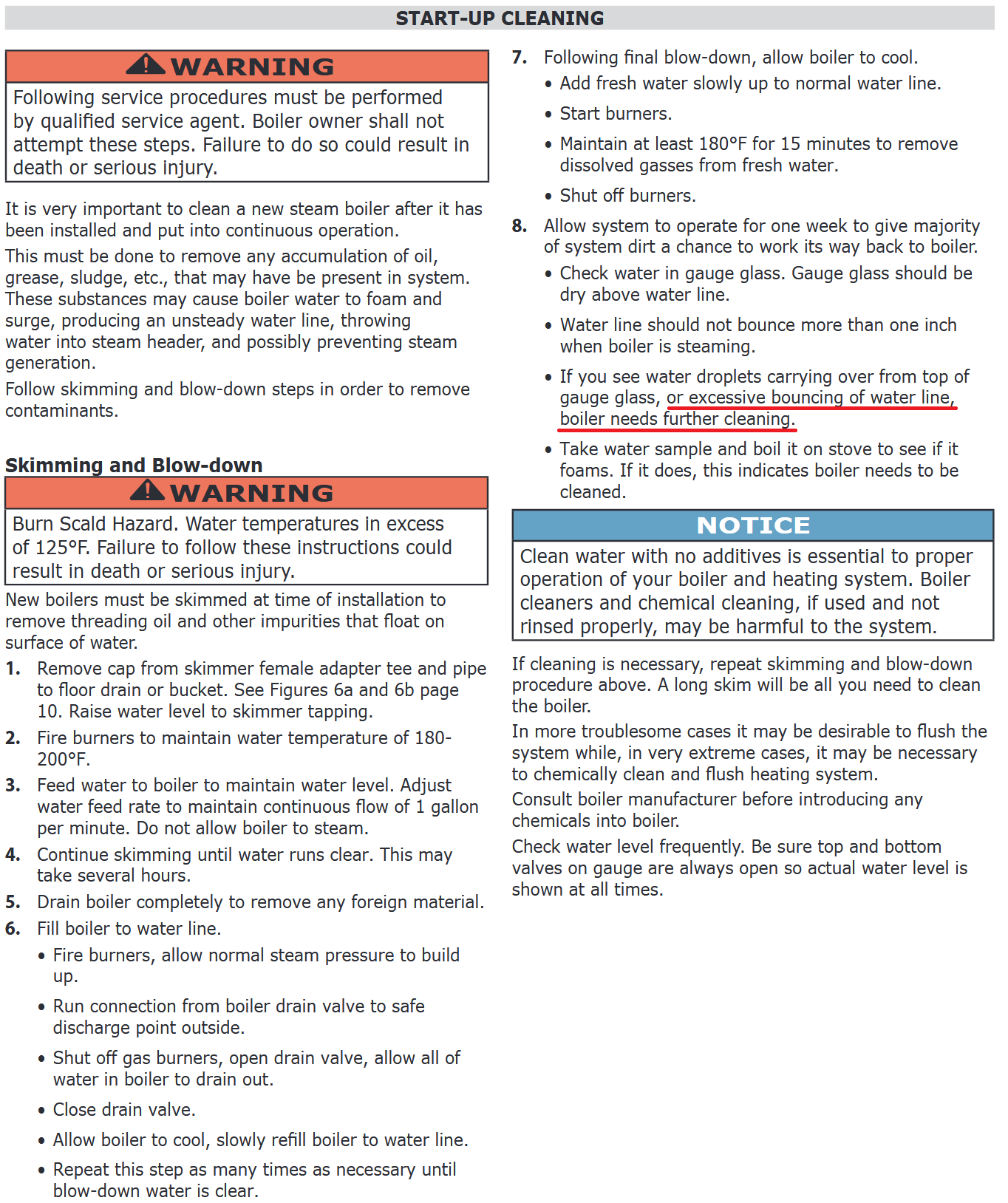
it may take a lot of skimming to get the oil out of that boiler. were you skimming out the tee on the side of the boiler?
if the system was flooded sometimes debris can collect somewhere and slow the return
0 -
I am going to jump in here with some observations and thoughts. But first, you refer your calculations for the size of boiler you need according to your calculations, does that number include the piping and pickup allowance? If not, you would add 34%. Some recommendation say 50% (TLAOSH). I don't recommend that high of an allowance, but many boilers are installed in that condition and that does not push water out of the boiler.
Your reasoning that the steam is going out of the boiler so fast that it is pulling water with it…. NO! That is not happening and it makes no sense.
1st, I would suggest that you look very closely at the installation instructions for your boiler. It is going to say exactly what size of pipe the two risers should be and also the size of the header, equalizer, and so forth.
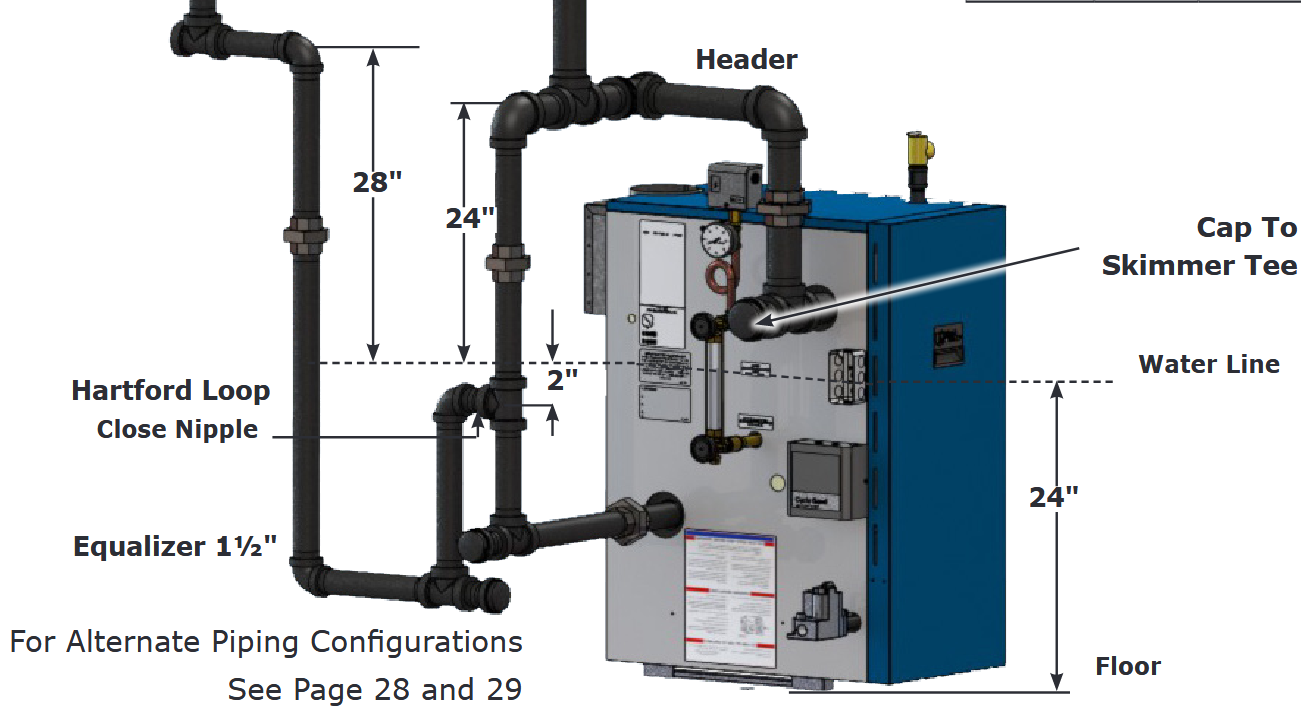
2nd. Check the elevation of the Hartford loop. It should be a little below the normal water level, but not so low that the water disappears from the sight glass. The manual will say exactly what it should be.
3rd. I notice that the connections from the header to each of the two building mains go through a reducing coupling, through several fittings, and then back to the full size of the main via a reducing 90. This is very bad because it restricts the steam flow.
I suspect you have a combination of piping errors that when the boiler is firing restricts the flow of steam, raising the pressure in the boiler just enough to cause condensate to back up in the return, or even to push boiler water out of the return port. The equalizer should assist with that, but there the Hartford should be at the right height, and most of all, you need to let the steam get out of the boiler without restrictions. 1 psi pressure in the boiler is enough to cause the condensate to back up 27" at the back end.
Best of luck in getting this straightened out.
Dave in Quad Cities, America
Weil-McLain 680 with Riello 2-stage burner, December 2012. Firing rate=375MBH Low, 690MBH Hi.
System = Early Dunham 2-pipe Vacuo-Vapor (inlet and outlet both at bottom of radiators) Traps are Dunham #2 rebuilt w. Barnes-Jones Cage Units, Dunham-Bush 1E, Mepco 1E, and Armstrong TS-2. All valves haveTunstall orifices sized at 8 oz.
Current connected load EDR= 1,259 sq ft, Original system EDR = 2,100 sq ft Vaporstat, 13 oz cutout, 4 oz cutin - Temp. control Tekmar 279.
http://grandviewdavenport.com0 -
And….. of course is the boiler still has oils in it and is foaming on the top, THAT will really clog up the piping going out and will definitely push water out of the return of your boiler. I remember that happening very clearly when my boiler was installed back in 2012. It took a lot of skimming, but it finally settled down for good.
Dave in Quad Cities, America
Weil-McLain 680 with Riello 2-stage burner, December 2012. Firing rate=375MBH Low, 690MBH Hi.
System = Early Dunham 2-pipe Vacuo-Vapor (inlet and outlet both at bottom of radiators) Traps are Dunham #2 rebuilt w. Barnes-Jones Cage Units, Dunham-Bush 1E, Mepco 1E, and Armstrong TS-2. All valves haveTunstall orifices sized at 8 oz.
Current connected load EDR= 1,259 sq ft, Original system EDR = 2,100 sq ft Vaporstat, 13 oz cutout, 4 oz cutin - Temp. control Tekmar 279.
http://grandviewdavenport.com0 -
if the boiler is priming or surging the return piping will get hot before the mains, if the returns are hot but the mains are cold that is a pretty good sign that liquid water is being tossed out of the boiler probably in your case because of oil on top of the water that hasn't been skimmed off. even if the main connections are a little small, the drop header should separate the water from the steam well enough that with good water quality it shouldn't be throwing water in to the mains.
0 -
An oversized boiler working properly should just build pressure and the Pressuretrol should limit the pressure by shutting down the burner. It should NOT puke its water into the system piping.
Your boiler puking its water into the system piping is typically because of contaminated water, often oil.
If your boiler is puking its water into the system piping, wanding it only once may not be enough, since the Puking action forces the oil up into the system pipes, to slowly return to the boiler and cause problems.
Have you (or anyone) skimmed it ever ? If not why not ?
The manual states this.
 National - U.S. Gas Boiler 45+ Years Old
Steam 300 SQ. FT. - EDR 347
One Pipe System1 -
Which Utica 299,999 PEG boiler is that? There have been several versions- we'd need to know the full model number to confirm the proper piping diagram and ratings.
Regarding ratings- the 299,999 BTUH is the Input rating- that's what the burners produce. Then there's the DOE Heating Capacity (formerly Gross Output) which is 250,000 for the current Series E. This is what's available at the steam outlets- and yes, that boiler requires both outlets be used. The Net rating is 188,000 BTUH- this is what is assumed to be available to the radiators after the piping and pickup factor is deducted. So that size boiler is probably correct.0 -
National - U.S. Gas Boiler 45+ Years Old
Steam 300 SQ. FT. - EDR 347
One Pipe System0 -
Those model numbers used to be longer. Here's the piping diagram. @RNC , your boiler is the 9-section model:
0 -
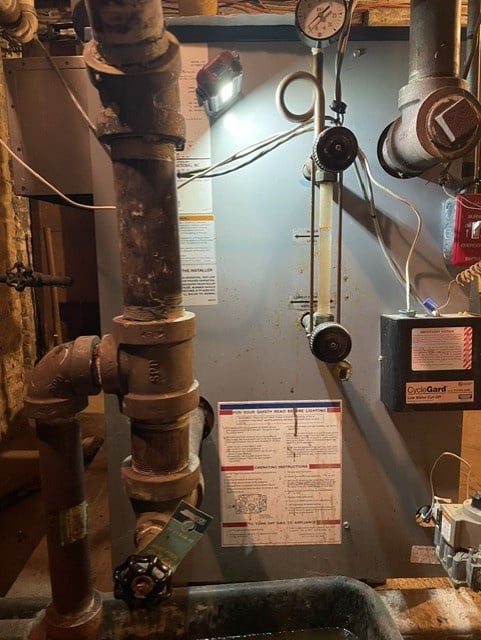
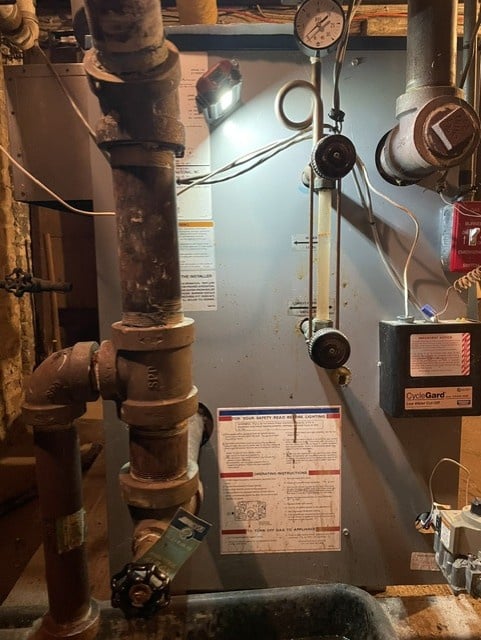
Is your Hartford loop within 2" of the normal water line, or 24" from the base of the boiler per the piping diagram @Steamhead attached? Based on the angle of the picture it looks to be much lower.
Your boiler is rated for 782 sq.ft. of steam. What is the total EDR of all of the radiators in the building? A pickup factor is already included in the boilers 782 sq.ft. rating so no need to add more. The pickup factor is to account for uninsulated pipes.
As for the uninsulated pipes….this should not contribute to your problem. All it will do is take the steam longer to get to the radiators as it takes more time to heat up the mains. This can use some more fuel…but with the benefit of a warmer basement which may be desirable.
I have a single family home and a much smaller boiler….but it is still about 75% oversized. Single pipe counterflow steam. It is clean as a whistle and the water in the site glass only bounces +/- 0.25" when running.
The only time I've had water puke out of the boiler was when I first bought the house and the water was nasty. Even after cleaning it got dirty again and would start surging in a few weeks. It took some time and many drain/fills to clean it out.
I've since been using Rectorseal 8-Way and the boiler stays crystal clean. Never an issue since.
0 -
I'm asking the people that know way more about steam than I do, but if the hartford loop is too low, since the returns are overhead, where exactly is the water going to go?
0 -
As long as the returns drop to near the floor and then rise to the Hartford Loop, there shouldn't be an operational issue. But if the return breaks and the low-water cutoff doesn't stop the burner, enough water could leave the boiler to cause it to crack.
0 -
@ Admiral Yoda, its ironic that you asked about the height of the Hartford loop. prior to reading your post i was tending to the boiler last night and i noticed that the Hartford loop is too low. im going to post the pictures.
 0
-
Can't 100% tell due to the camera angle and it is out from the boiler a ways but it does not seem excessively low. Use a level to get a better measurement. Probably not the issue.
 National - U.S. Gas Boiler 45+ Years Old
Steam 300 SQ. FT. - EDR 347
One Pipe System0 -
Where is that boiler's "Lowest Permissible Water Level"?
0 -
I agree with the point raised above that the Hartford loop height relative to the normal water line deserves close attention — several experienced members flagged it, and comparing it against the boiler's specified lowest permissible water level, as Steamhead suggests, is the right verification step. One general thought: when multiple plausible causes are on the table, addressing them in order of simplest-first tends to save the most time. Thank you to everyone who shared their expertise here.
0 -
Also " My question is can the Btu's be decreased in turn decreasing the
velocity of the steam and not pulling the water out of the boiler. "Here is another way of looking at it, if the boiler is actually oversized for the rest of the system it should have plenty of water to convert to steam without emptying its self out.
The LWCO probe looks to be below what looks to be the "Lowest Permissible Water Level" label (near the bottom of the sight glass). And the Hartford connection look appears to be above that.
The boiler should calmly boil water like a tea kettle on a stove. If the water is leaving the boiler abruptly the common cause is oil or some kind of contamination in the boiler's water.
Can a picture be taken with the camera level (not looking down) and at the same level as the Tee that connects the Hartford loop to the equalizer pipe. The Hartford loop may not be at the prefect level per the manual but I don't think it is causing the water level issue.
The boiler probably needs skimming and multiple times if it has been puking its water and oil up into the system.
National - U.S. Gas Boiler 45+ Years Old
Steam 300 SQ. FT. - EDR 347
One Pipe System0 -
the hartford loop height will only make a difference if the return springs a major leak. the piping is all above it, the water will stay at the water line in the return piping, there is no place for the water to go out the return unless there is enough pressure differential between the supply and return to lift the water in to the mains. That can't happen because the mains and the returns are connected, they are at more or less the same pressure.
if the water is leaving the boiler, it is leaving through the supply as liquid.
0 -
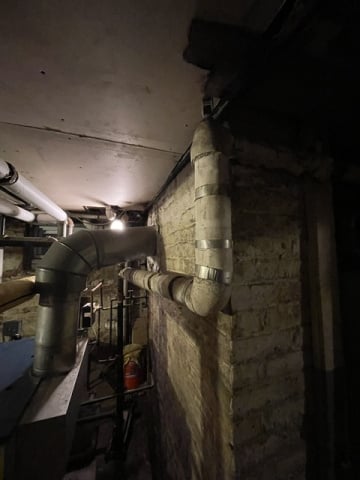
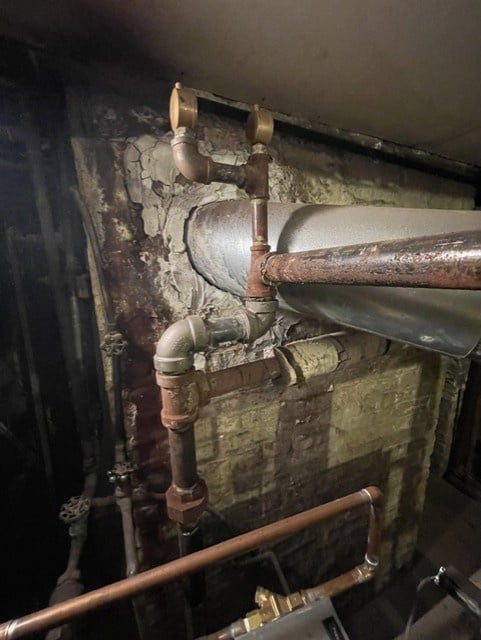
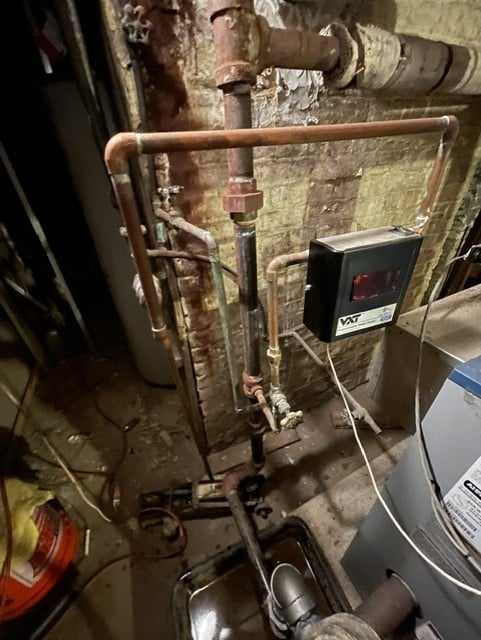
Good evening gents. im in the basement pondering my issue. it dawned on me that i failed to say that I have two steam mains, the longest main supplies the front of the building the smaller supplies the rear of the building. each main has its own take off from the boiler as seen in other posted pictures, each main has its own dry return both returns meet in the picture that I just posted. they both run into a single drip down and into the single wet portion of the return. its double vented at the point that the returns meet. when the boiler is firing i followed the steam heat with my hand. The steam fills the rear house main and dry return and comes back around to the junction shown and immediately heats the drip down and heats the wet return down to the hartford loop. The steam also goes into the front steam main dry return at the shown junction, I felt the progression with my hand, the steam travels more than halfway against the flow of the front dry return until it meets the heat of the condensate returning back to the boiler from the front steam main. is it possible that these returns are piped wrong and that is what is causing the water to be sucked or pushed out of the boiler. should each dry return have its own drip down into the wet return in turn eliminating the junction where both returns meet. There is no water hammer in either of the dry returns.
0 -
@RNC said "should each dry return have its own drip down into the wet return in turn eliminating the junction where both returns meet?"
YES! And each should have its own main vent too. How long is each steam main, and what pipe size?
0 -
The Hartford loop issue has been addressed I raised it to manufacturers specs two inches below the top water line
1 -
Every time you added new pipe to the system did you skim the boiler ? Did wash the oil off the new pipe before installing it ?
Most every picture you you posted of your sight glass the water seems cloudy.
Yes independent drips and vents for each Steam main. Probably won't solve the boiler surging issue, but when that is resolved it will help with system heating balance.
National - U.S. Gas Boiler 45+ Years Old
Steam 300 SQ. FT. - EDR 347
One Pipe System0 -
Unless there was a union I can’t see in pictures, I bet that wasn’t a simple as you make it sound. Procedurally simple, but took a bit of muscle I imagine.
Post a picture pls.
0






Categories
- All Categories
- 87.8K THE MAIN WALL
- 3.3K A-C, Heat Pumps & Refrigeration
- 60 Biomass
- 430 Carbon Monoxide Awareness
- 133 Chimneys & Flues
- 2.2K Domestic Hot Water
- 6K Gas Heating
- 124 Geothermal
- 170 Indoor-Air Quality
- 3.9K Oil Heating
- 79 Pipe Deterioration
- 1.1K Plumbing
- 6.7K Radiant Heating
- 397 Solar
- 16.1K Strictly Steam
- 3.5K Thermostats and Controls
- 56 Water Quality
- 51 Industry Classes
- 51 Job Opportunities
- 18 Recall Announcements