Two pipe steam observations/questions

As with many of the posts, I have the exciting responsibility to own an older home(1923) with a 2 pipe steam boiler. I've been there a couple years, and had a service call shortly after I bought the house as I knew nothing about boilers. Fast forward to today, and I know a little bit more thanks to Dan's book and reading through this forum. You really do start wondering how it all works and what decisions of the past might be hiding in plain sight. Which brings me to this thread. It's a series of observations that id appreciate some expert insight, so that when the technician comes I can make sure we minimize the knuckleheads.
Basic information:
3 floors excluding basement around 4500sq. No steam radiators in the basement, but I'd assume there were when it was built. Perhaps ceiling mounted?
Total of 18 radiators of differing sizes.
Mostly original Warren Webster thermostatic traps and supply valves.
The only real problems are (bullet 5 below) and that one room(with three radiators) doesn't seem to heat as well as the others. I need to check the inbound and outbound temps to ensure the traps and valves are working.
Observations/questions
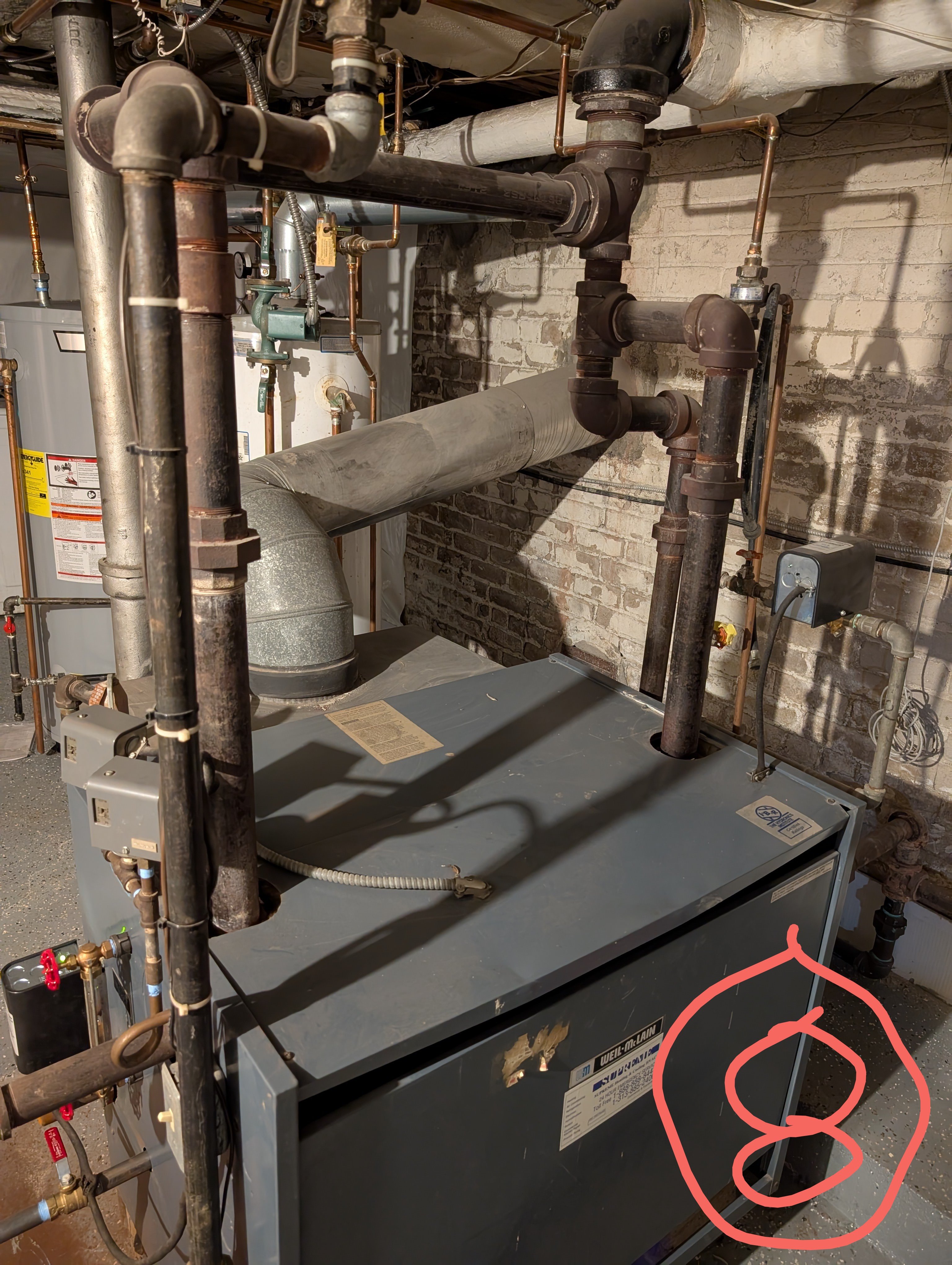
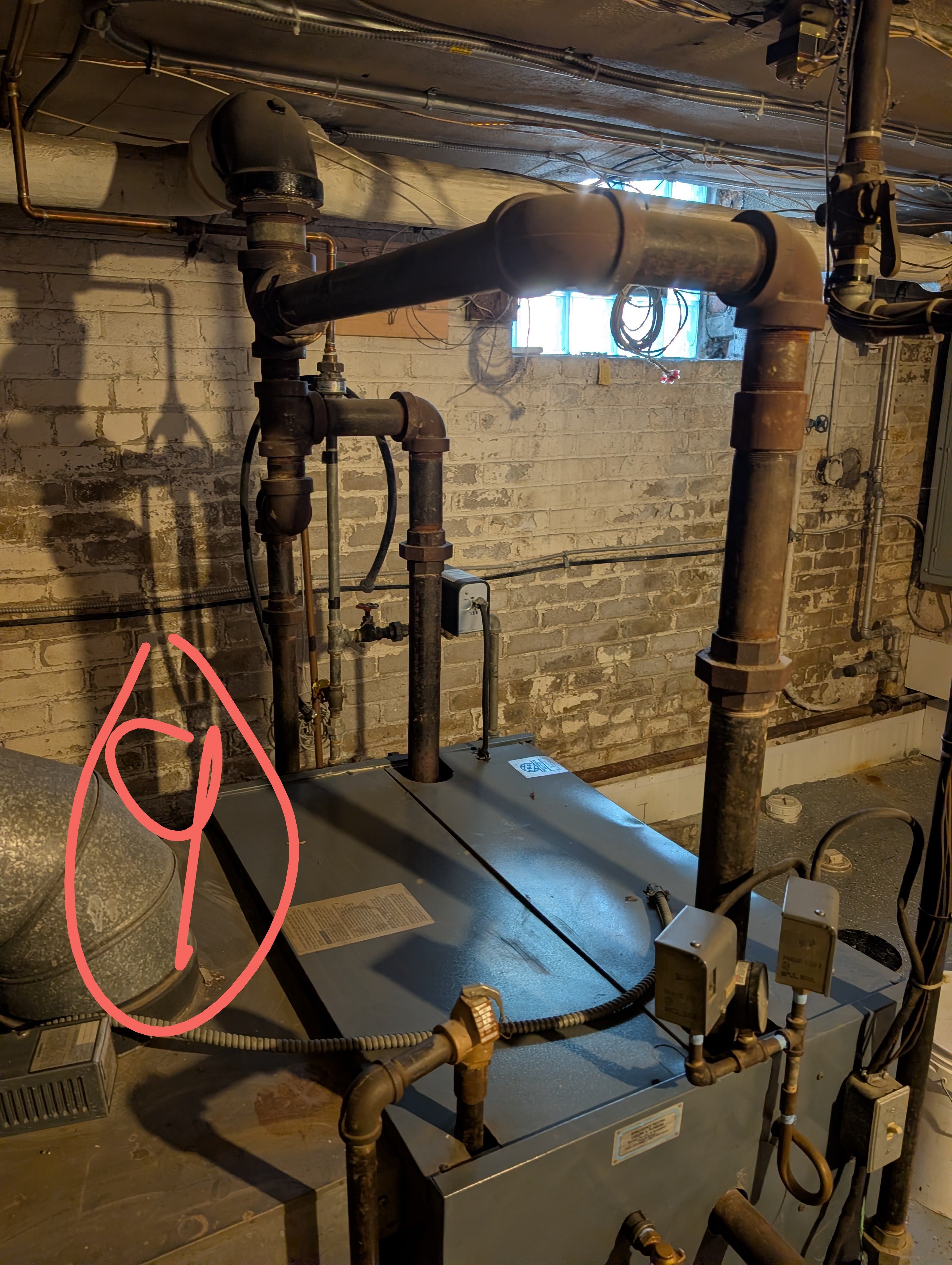
1. It would appear the second riser going to the header is in the wrong place? Seems like this would cause issues with the equalizer? (Picture 8 and Picture 9)
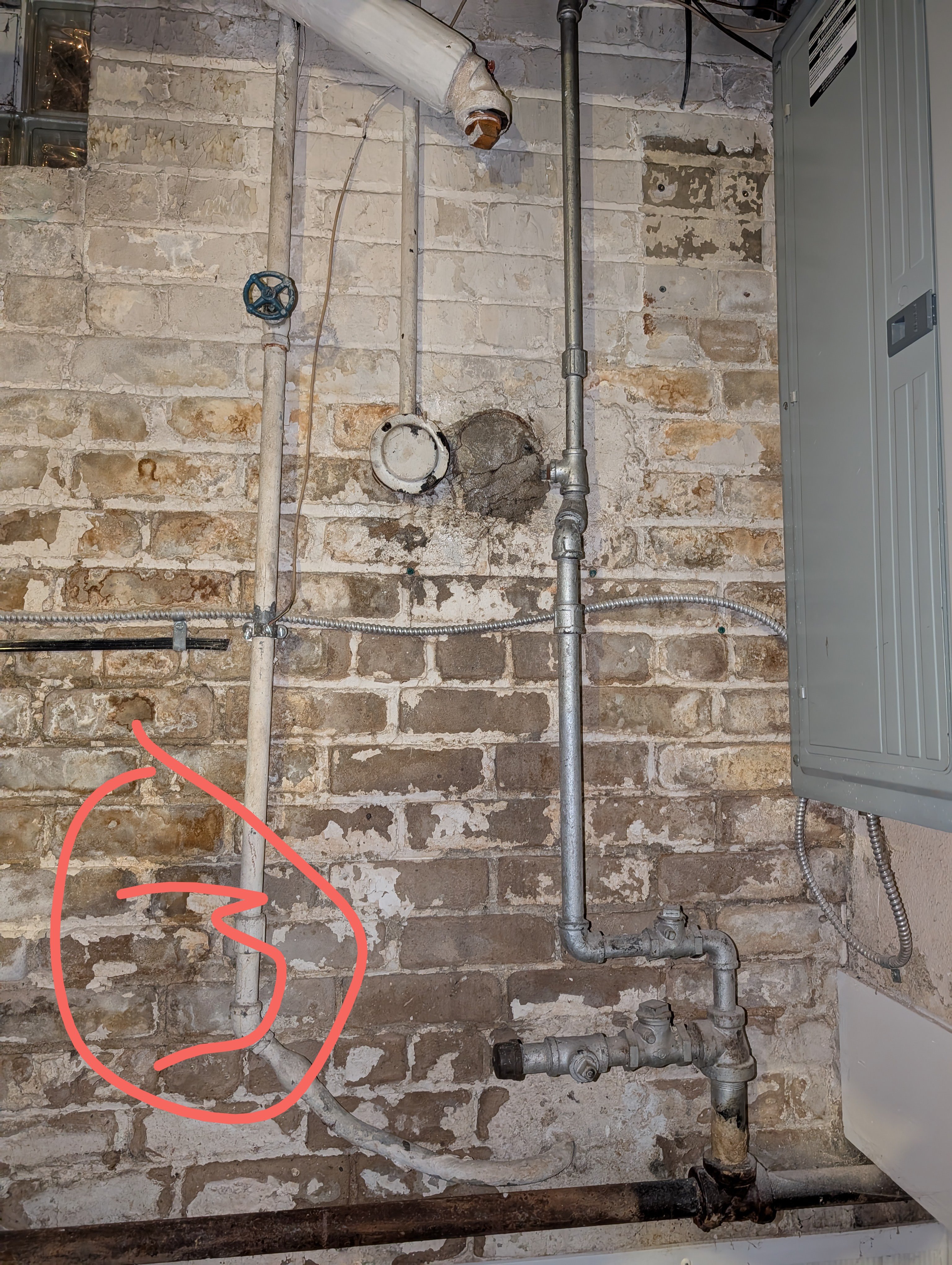
2. This elaborate setup of check valves(picture 3) seems overly complicated and a result of something being removed. Maybe a wet return pump? Also featured, a dead end a branch of the supply main. Not sure what's going on here as it is only about 7 feet from the boiler.
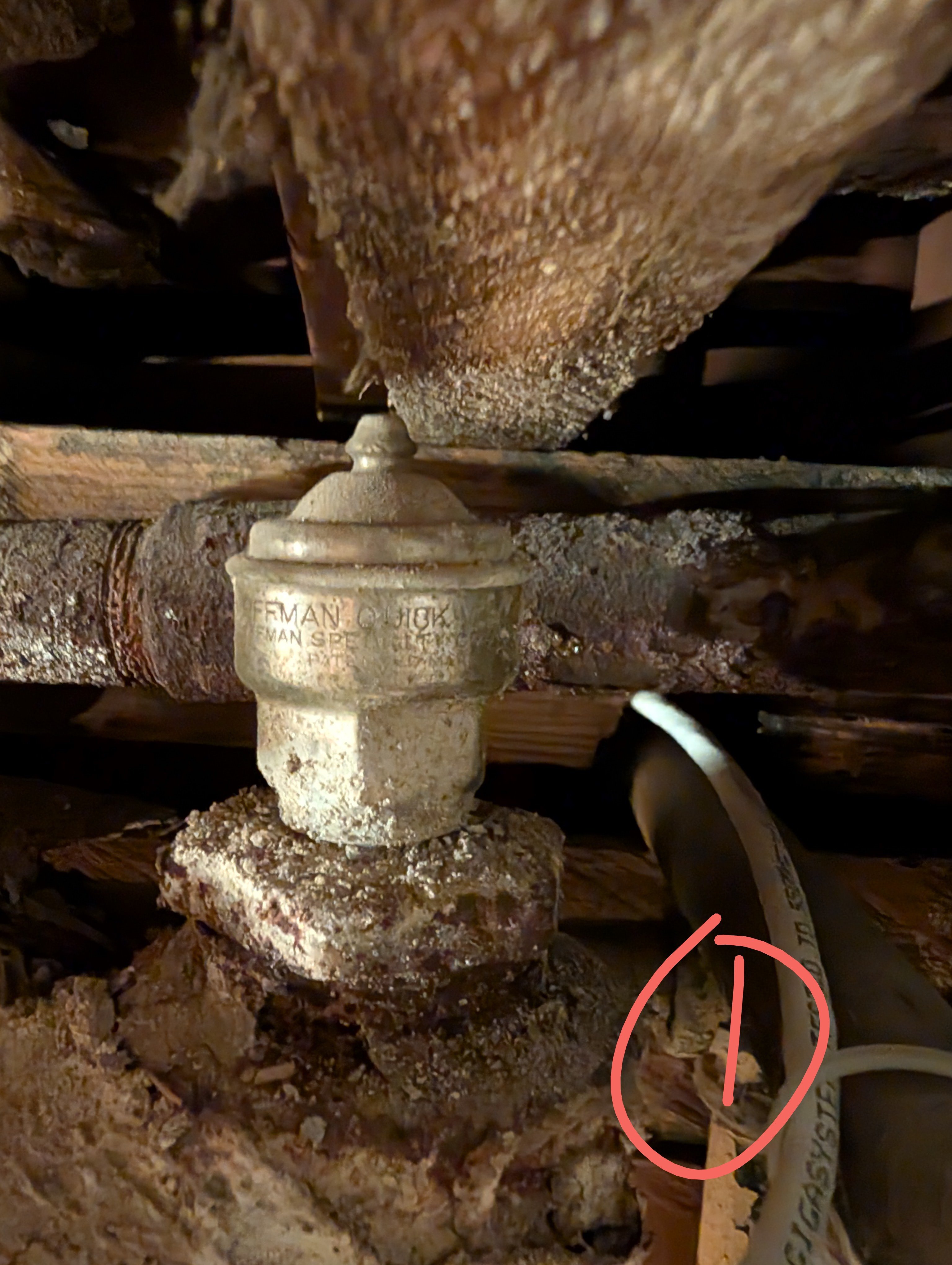
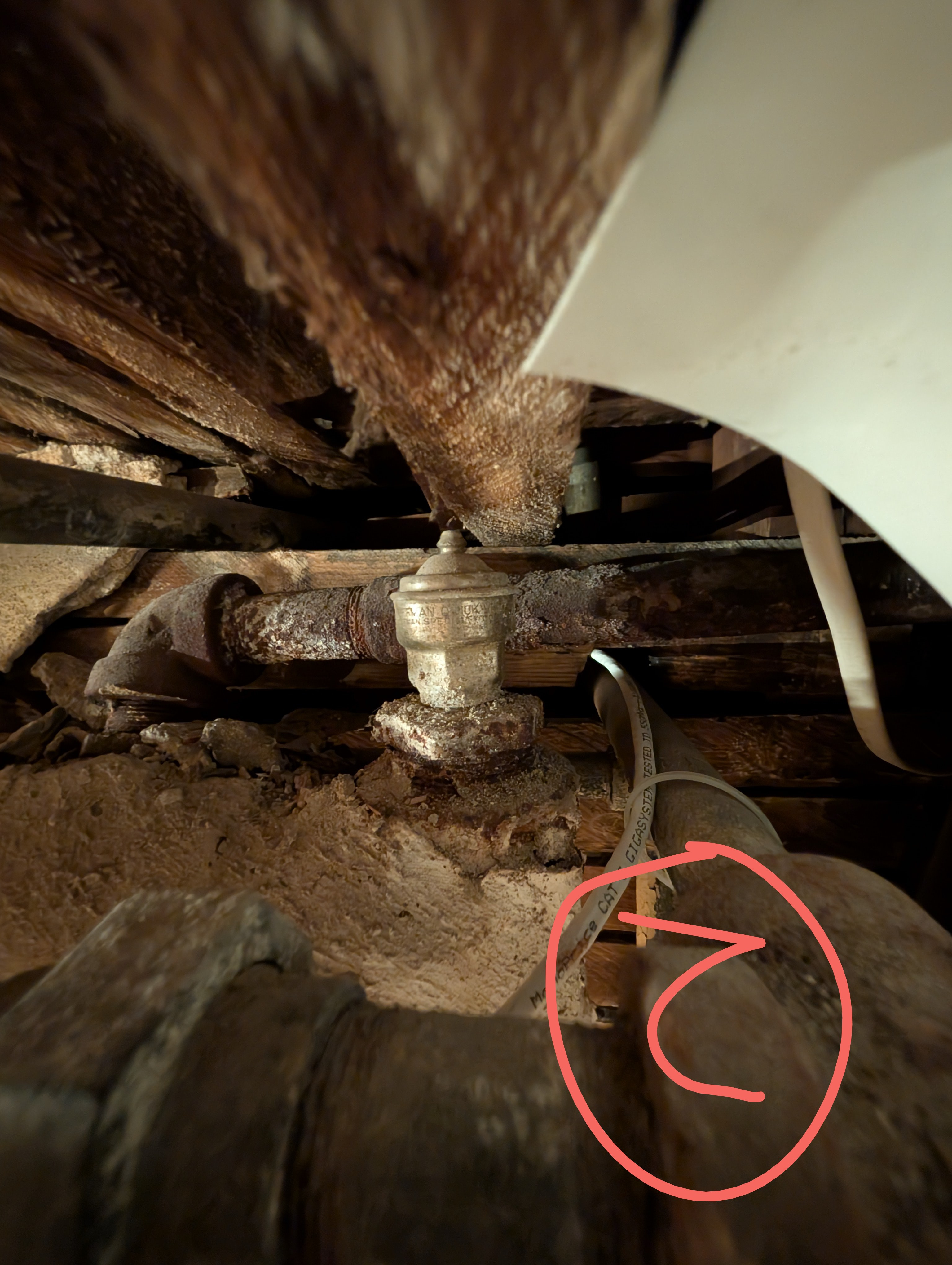
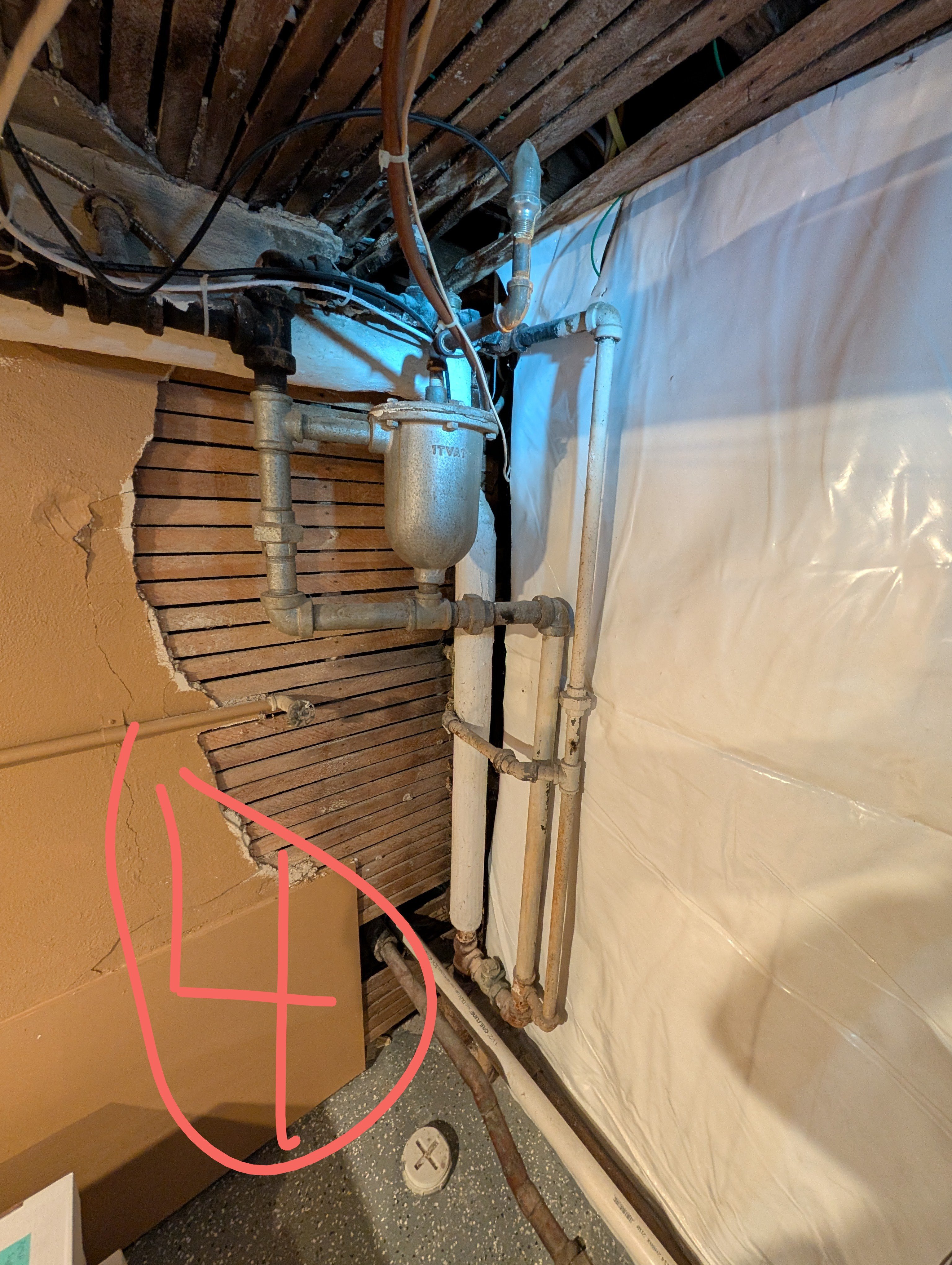
3. The only "main vents are right next to each other" one is directly on the line(picture 1 and 2) and the other is on the F&T?(Picture 4) This also seems strange that these are the only ones.
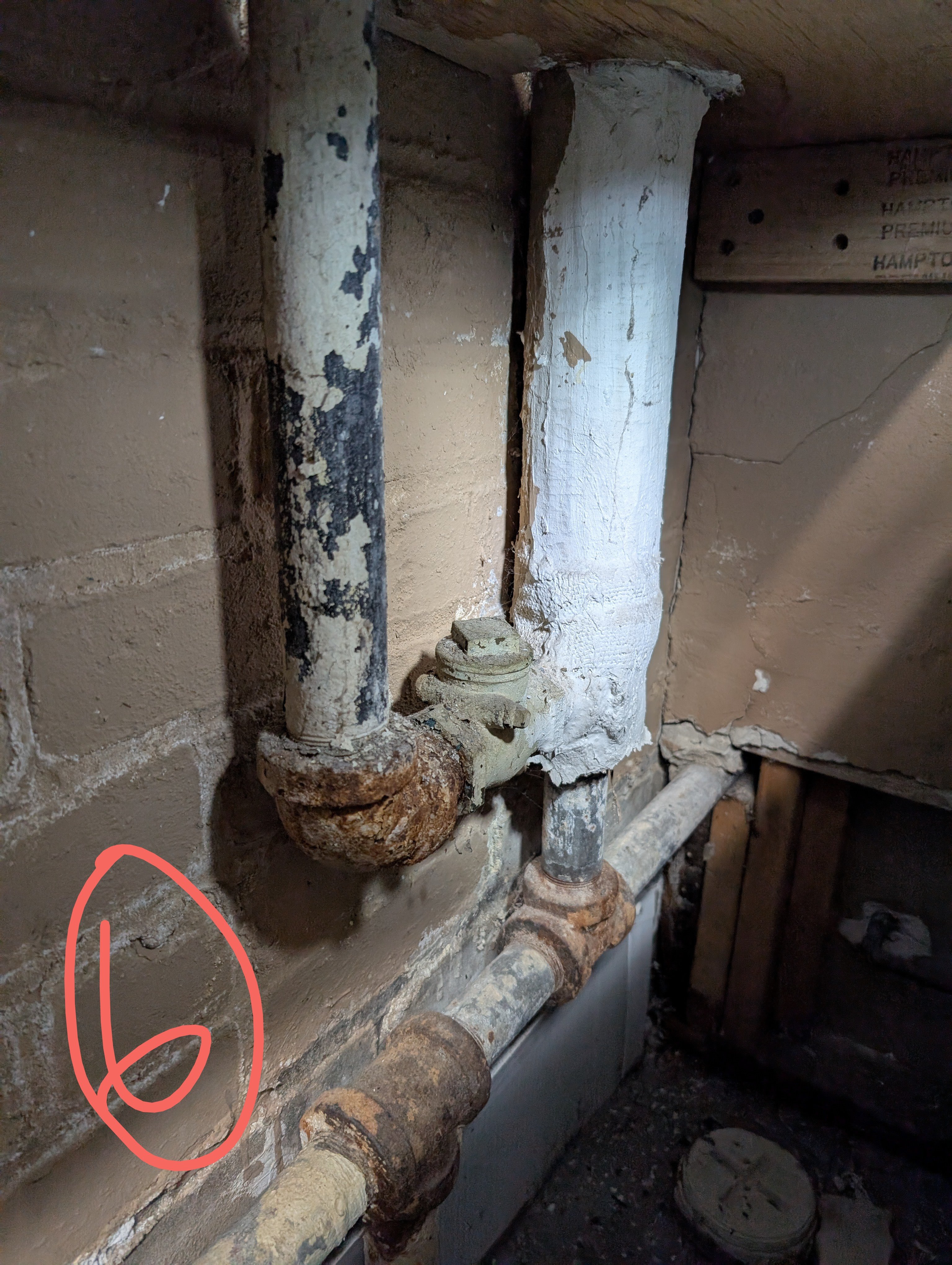
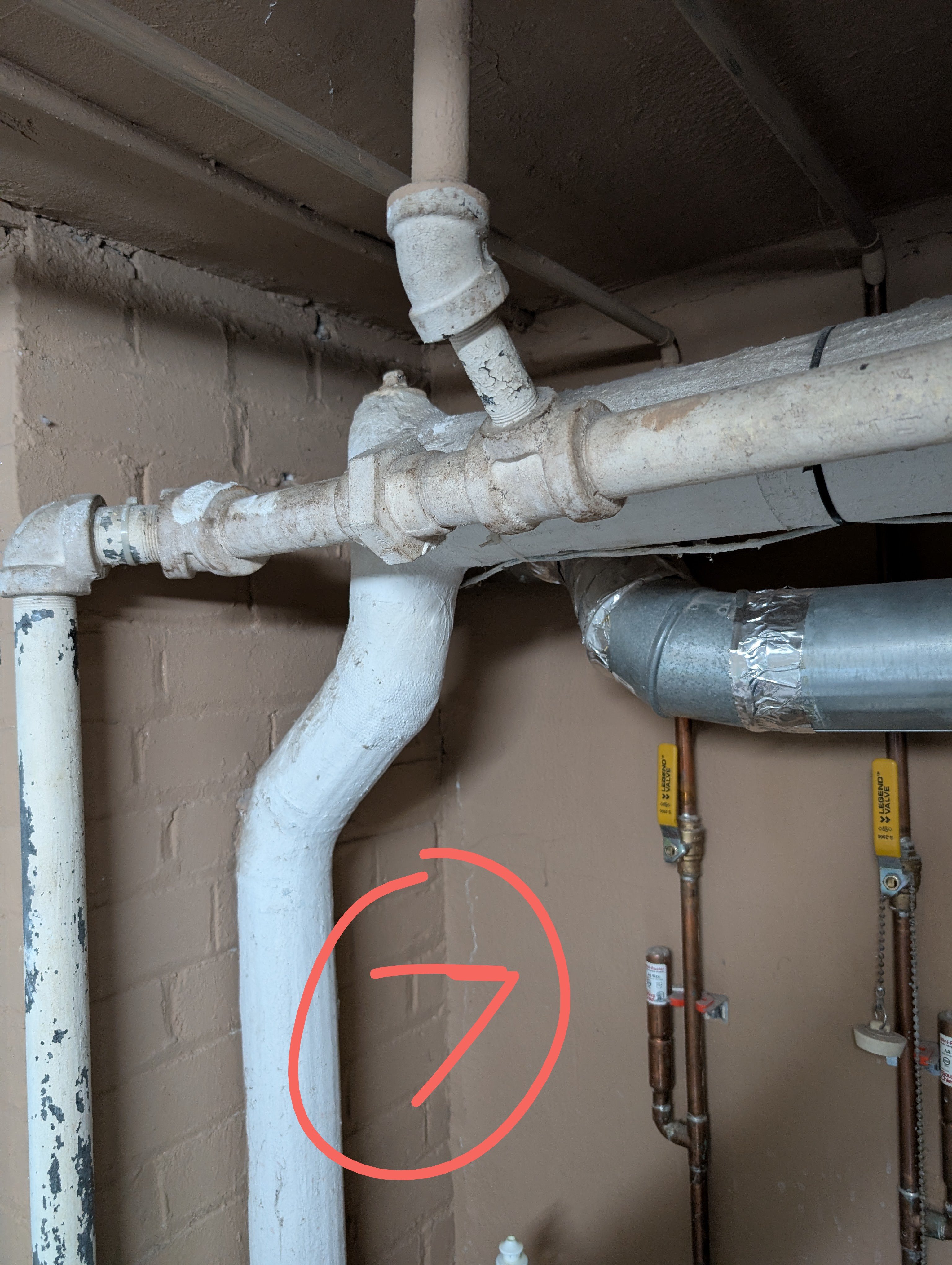
4. Another strangeness?, seems like one branch of the main returns down to meet a dry return line before hitting a check valve?(Picture 6) Maybe to prevent the main from pushing up the return under load? It also appears the main pipe is plugged?(Picture 7)
5. I have a radiator in a second floor bedroom that has a vent added to it(not pictured), even though the entire system is a two pipe. Isn't this a red flag? It might also be leaking. Furthermore, this radiator makes a gushing water noise every once in a while. Is this the return getting flooded? None of the other radiators do this.
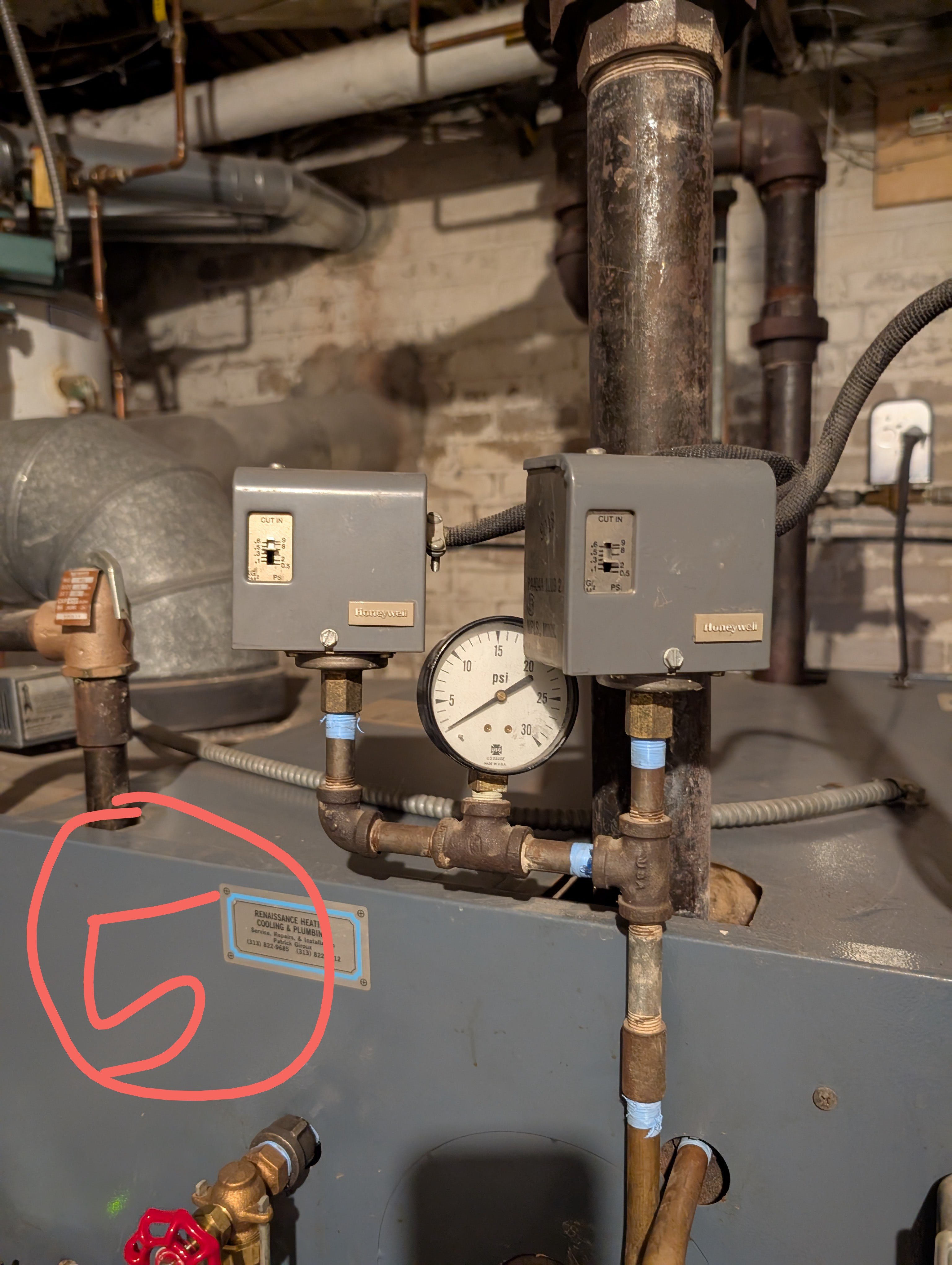
6. Looks like I have two pressuretrols, and they seem a tad high? (Picture 5). When under load the boiler doesn't get about a few psi, which is still perhaps more than desirable.
Thanks again for any insight in my questions or with something else you see/notice and I appreciate your time.
Comments
-
Lot of stuff going on there.
Others that know more than me will comment @Steamhead
What I see:
Looks like a vapor system
Picture #1 & #2 would have the Hoffman vent in the first picture replaced, maybe with a BIG MOUTH Vent.
Picture #3 Looks like something was removed. Maybe a steam feed underground to a garage? Is that possible?
Picture #4 I would replace the vent on top of the float trap with probably a Gorton #2 or maybe 2 #2s
Picture #5 Pressure too high. Need to adjust the pressure lower and maybe replace 1 pressure control with a vapor stat. Also install a low pressure gauge but keep the 0-30 gauge as well
Picture #6 & #7 no comment other than there is a plug on top of a tee that it maybe needs a vent in that spot.
Picture #8 Yup the boiler header is wrong. Undersized and the wrong configuration. But we have seen worse that work. I would get the rest of the system in shape first and make a decision on the boiler and header later.
You could use a steam pro. I see Michigan.
Maybe you could PM @offdutytech he does excellent steam work and is in MI. I don't know if he covers your area. If he does not he may know someone.
Others will comment.
0 -
@EBEBRATT-Ed said "Picture #4 I would replace the vent on top of the float trap with probably a Gorton #2 or maybe 2 #2s"
This!
0 -
not sure what happened here- @HeatingHelp.com please delete.
0 -
Yup. Warren-Webster vapour system, or at least it was…
@EBEBRATT-Ed and @Steamhead hit number one: get the pressure down. You need to replace one of those pressuretrols with a vapourstat. Keep one as a safety backstop. Start off with the vapourstat set at 7 ounces for the cuout, with a 3 ounce differential..
As they said, the near —boiler piping is wrong and not helping, but may not be worth the cost of fixing.
Let's see… Picture 6 looks like the bottom of an arrangement with a drip from the steam main and one from the dry return, going into a wet return. With a check valve… it would be well worth finding out if that check valve will open. It isn't needed, however, so long as the boiler pressure stays where it belongs. It IS needed if the boiler pressure is allowed to rise too high.
Picture 3. I think there's more than meets the eye here. Something certainly was removed — or moved, but I'm not at all sure what. Or when. What is the whiter pipe which looks almost flexible against the wall? I hope that's not lead… Also, is there a chimney in that wall? Looks almost as though there was a flue opening there. The bit of steam main coming down is part of whatever was there.
Picture 7 — there may have been a crossover trap at that location, but there needs to be a vent on the steam main there.
Allso you need to replace those two main vents you mention with one or two Gorton #2s.. One each I assume they are both on the dry return, in which case they are correctly located — but if the crossover traps (see above) have been eliminated they may need to be supplementd.
Your problem child radiator should not have a vent, but it won't hurt anything. It is quite possible that the problem has to do with the pitch of the return pipe being incorrect. Where does its return join the dry return?
You mention basement radiators. Probably not, although some houses did have them. They would have been hung flatwise from the ceiling.
Br. Jamie, osb
Building superintendent/caretaker, 7200 sq. ft. historic house museum with dependencies in New England0 -
it looks like the boiler return trap was removed in picture 3 (whatever webster calls it). The check valves were for it to be able to keep the right pressures everywhere so the the differential between the main and the return was very low and the condensate could still get back in to the boiler.
If you run it off a vaporstat and keep it below about 8 oz/in^2 you don't need it.
Picture 3 is definitely a lead pipe, probably a water service. you can see the wiped joint at about 4 o'clock on the circle for the number.
0 -
The Vapor piping setup in the third pic was for feeding radiators in an outbuilding such as a garage. This was common in high-end homes of that time, since we didn't have automotive antifreeze then. If you didn't heat the garage, you had to drain the car's engine block and radiator when you put the car away, or they would freeze.
 1
-
The hole in the wall was my clue for a garage along with the electrical box next to it probably going to the same place.
1 -
maybe the lead pipe is water to the garage/carriage house/usually guest house.
0


Categories
- All Categories
- 87.9K THE MAIN WALL
- 3.3K A-C, Heat Pumps & Refrigeration
- 60 Biomass
- 430 Carbon Monoxide Awareness
- 133 Chimneys & Flues
- 2.2K Domestic Hot Water
- 6K Gas Heating
- 124 Geothermal
- 170 Indoor-Air Quality
- 3.9K Oil Heating
- 80 Pipe Deterioration
- 1.1K Plumbing
- 6.7K Radiant Heating
- 397 Solar
- 16.1K Strictly Steam
- 3.5K Thermostats and Controls
- 56 Water Quality
- 51 Industry Classes
- 51 Job Opportunities
- 18 Recall Announcements