LWCO float works intermittently - solved, and a question

McDonnell & Miller #61 on a steam system. Fought with this thing for the past week, though it had started acting up in the last week or two of the previous season. Standard start of year maintenance. Removed the switch from the fixed housing at its bolts. Outer housing cavity scrubbed free of sediment. Float is free of sludge, float moves easily, the pivot isn't binding up. The roller on the end that engages the arm on the switch spins freely. The levers on the switch do not bind. The microswitches that the lever pushes on snap back properly. Continuity is correct.
Install it back in the housing, fill with water. Doesn't work reliably at all. Sometimes the switches make and break, sometimes they don't. When you blow it down, it reliably cuts the burner, but sometimes when you close the valve, the furnace starts again, and sometimes it does not. Check continuity, the switch is open, even though the water is right. Remove the #11 switch, look at the roller that moves the switch, it's fine. Push on it with a finger, feel the float moving freely inside the housing. Move the switches with a finger, check continuity, No problem. Open the blowdown valve, float drops decisively. Push on the roller either direction, feel resistance as it displaces water, then it comes back to center as it should. Feels kind of sluggish, but it has to displace the water out of the way for it to move, so that seems ok.
Try the switch again, still completely unreliable.
Disassemble the whole mess again, everything still seems fine.
Disassemble further. Separate the switch mount and brass bellows from the cast iron part of the housing. Everything is fine. Brass bellows is fine, not caked with anything that would make it bind, pivot is still smooth and easy. Closely inspect the float body, no problems. It's caked with some dried on iron sediment on the dry half of the float, but that's to be expected, I don't want to scrub it too hard and risk damaging the copper float and its seals.
The… copper float… and its seals.
I set it in a big pot full of water. It doesn't float. It doesn't sink. It just kind of hovers there under the water like a submarine.
Hold it up to my ear and shake it.
slosh slosh slosh.
So while it has been responding to water level changes during a blowdown, it's not because it has been floating, but instead because the flow of the water moving downward when I blow down quickly sucks the float downward along with it. And when the water level equalizes, later, it does so slowly — sometimes fast enough that the water pushes the float up properly, sometimes it just kind of bobs there and settles wherever it feels like. When I flush all the start of year sludge, and the auto feed pump triggers, the water level rises incredibly slowly — never moving fast enough for the feed pump to trip off. It will fill happily keep feeding till the whole sight glass is full… Because the LWCO float and/or submarine is just sitting there, instead of responding to the rising water level.
Hopefully this helps someone in the future.
Comments
-
Follow up question — LGB boiler, no tappings for a probe. Replace the float and bellows with a new one, in the housing as-is, or make the switch to a probe type, installed on a tee in the equalizer?
The cost is comparable, I don't know how to compare the reliability of the two, and it appears the FPC-1000 does have a second contact to support a feed pump — Though I don't lose enough water through the year to demand support from an automatic feed pump — the only time it ever runs is from the water that I lose lose to my weekly blow down and main drain silt flush.
0 -
-
Electrical switch contacts need pressure to make a proper low resistance connection. With your Float slowly loosing its buoyancy the switch contact pressure was probably not sufficient, hence the poor electrical performance.
When I clean my M&M 67 I always test the Float by shaking it to see if it has taken on any water. Don't thrash the Sylphon around when shaking it.
If it was my boiler (not a customer's) I would try to repair the Float, however if the Float and/or Sylphon is compromised it may be too far gone to reasonably repair.
2nd I would replace the Float, since that is probably the least invasive (and least costly) method to restore safe operation. And they (just the Float assembly) appear to be available.
McDonnell & Miller SA67-2 Float & Bellows Assembly for Series 61/67/69/767 (344200)
SA67-2, Float & Bellow Assembly
3rd change over to a probe type LWCO this is probably the most expensive repair method, time and money, (other than replacing the whole M&M 61) since in your case you have to add a chamber for the probe.
National - U.S. Gas Boiler 45+ Years Old
Steam 300 SQ. FT. - EDR 347
One Pipe System0 -
@109A_5 , that Hydrolevel comes with the chamber.
0 -
Additionally if you really want a probe type LWCO and you are handy you probably could reuse the McDonnell & Miller 61 main assembly for the probe chamber. You would have to fabricate an adapter plate to close off the M&M housing assembly and provide a tapping in the plate for the probe. It could go at either place (red arrows). May not save any money, but since you have had this area apart it may save some re-piping aggravation.
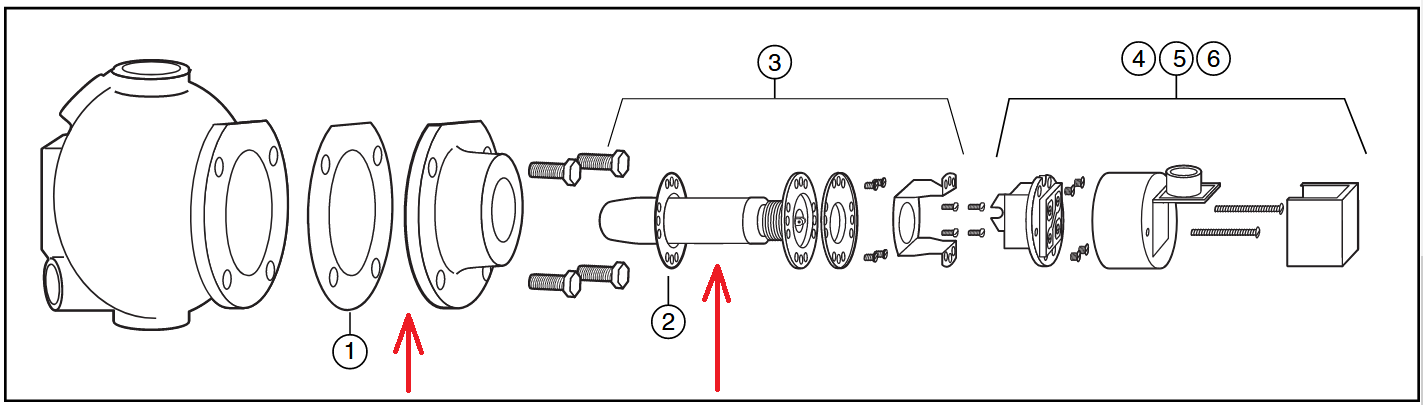
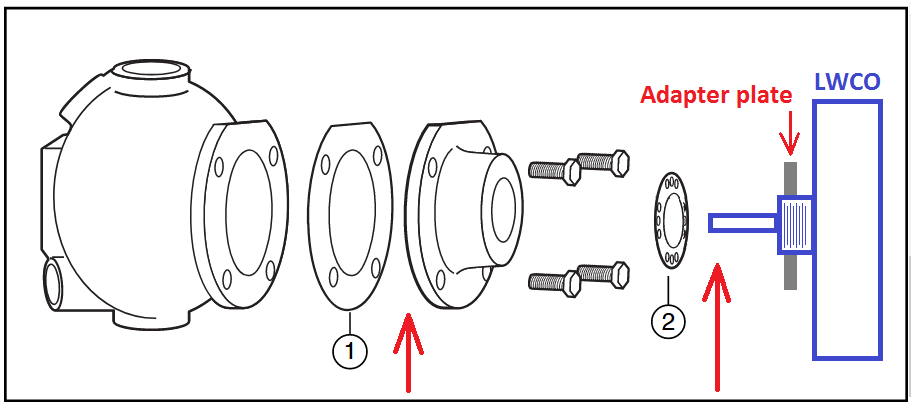
A modified Dirt Pocket Cap may work for the adapter plate.
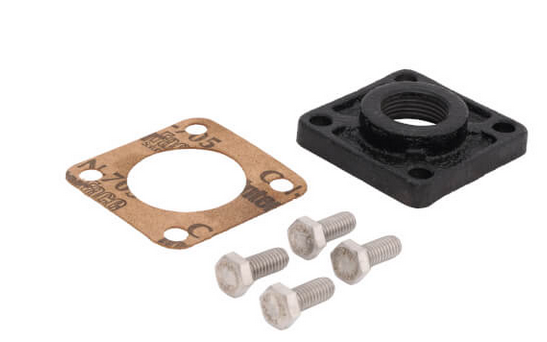
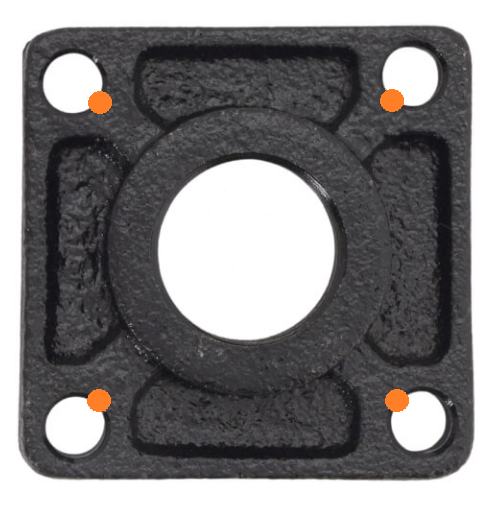
The mounting holes are not on the same centers. The Orange circles are about where the screw centers are for the switch assembly mounting to the cast Iron assembly.
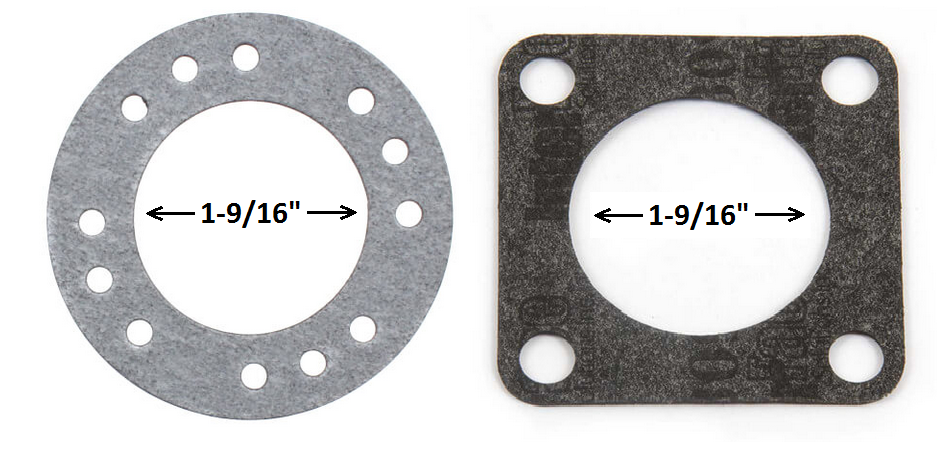 National - U.S. Gas Boiler 45+ Years Old
Steam 300 SQ. FT. - EDR 347
One Pipe System0 -
OK, but with @jcwenger's cost comparison I don't think he was looking at that solution. Or not compared to just replacing the Float only.
I think he was comparing to the cost of a plain old Probe type LWCO with no added special features.
National - U.S. Gas Boiler 45+ Years Old
Steam 300 SQ. FT. - EDR 347
One Pipe System0 -
I can get a FPC-1000 probe from supply house for about $200. I would put a 1" tee, a close nipple, and a 1x¾ reducer and put the probe right into that. Maybe just a reducing bushing with the short probe, I need to check length. It says I need ¼” clearance from the probe tip to other metal, and I can get that in the center of a 1" tee. Is that a bad idea? Do I need a larger chamber for some reason? I have all pipe dope, no pfte tape, so conductivity is no concern, and I'm comfortable with the repiping. Any other gotchas to consider?
Alternaltely, SA67-2 is a replacement float only for the #61, $220.
So identical price. Question is which is better long term? The probe is newer and more modern, sure, but that doesn't necessarily mean its better.
I hunted eBay for two years to scrape together enough mercury vaporstats, to replace the modern micro switch ones, which are crap.
Dan seems to speak quite favorably of probe type in the book, though, so I'm open minded to them.
Others experience?
0 -
I would not install a probe type in a tee for steam. HW OK. I saw a steam boiler fail with a probe type control.
The one I saw was steam. The probe would hit the back of the casting inside the section so the installer put a nipple and a coupling in the boiler with the probe on it. Sludge collected around the probe.
Not good. I would do as @Steamhead mentioned with the Hydrolevel chamber or replace the float and switch in the #61
LWCO is an important safety.
Even if the control costs $700 do you want to risk a new boiler if you have a marginal control?
0 -
Over the years I have dealt with so many failures with electronic devices (and I can repair electronics), so I like the float. Typically simple to maintain. However they do have down sides, you need to blow down the boiler, they can sink, they can get stuck and the switch can go bad.
Probe types still need maintenance and testing. However probe types are probably more likely to get ignored.
At least with the float type it gets tested at the blow down time.
National - U.S. Gas Boiler 45+ Years Old
Steam 300 SQ. FT. - EDR 347
One Pipe System0 -
Aside, repair is off the table for me. For $200 it's not worth my time to have to de-solder the float, empty it, de-solder, and even then, not be sure I'd even found the pinhole or crack. I'd rather just start again with new in box parts.
And, @109A_5 I do indeed appreciate the inventiveness of fabricating an adapter, but again, faster to just repipe, if I go that route.
0 -
As far as repair, I'd inspect for the leak (maybe heat it up so the water or steam wants to escape at the leak), drill a hole at the leak drain the water out and patch the leak.
I would not disassemble (de-solder) anything. That's just asking for more problems. My time is free to me and I don't have to work for it. My life style is not so cluttered up that I can't save myself some money. To each his own.
National - U.S. Gas Boiler 45+ Years Old
Steam 300 SQ. FT. - EDR 347
One Pipe System0 -
@EBEBRATT-Ed definitely not trying to compromise the system to save money. I was asking if there were valid reasons to move to probe, to improve the system, balanced against the risks of introducing a change.
I had gotten the idea of installing it in a tee from the manufacturer's instructions... but now that I look again, I see it recommends that only for hot water systems... while for steam, it says "consult the boiler manufacturer's directions for probe mounting" and Weil Mclain have nothing to say on the matter.
0 -
I believe that is why they make the larger (than a Tee) cast iron chamber as an 'add on' modification. And you still need to Blow it Down.
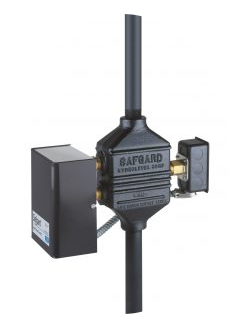
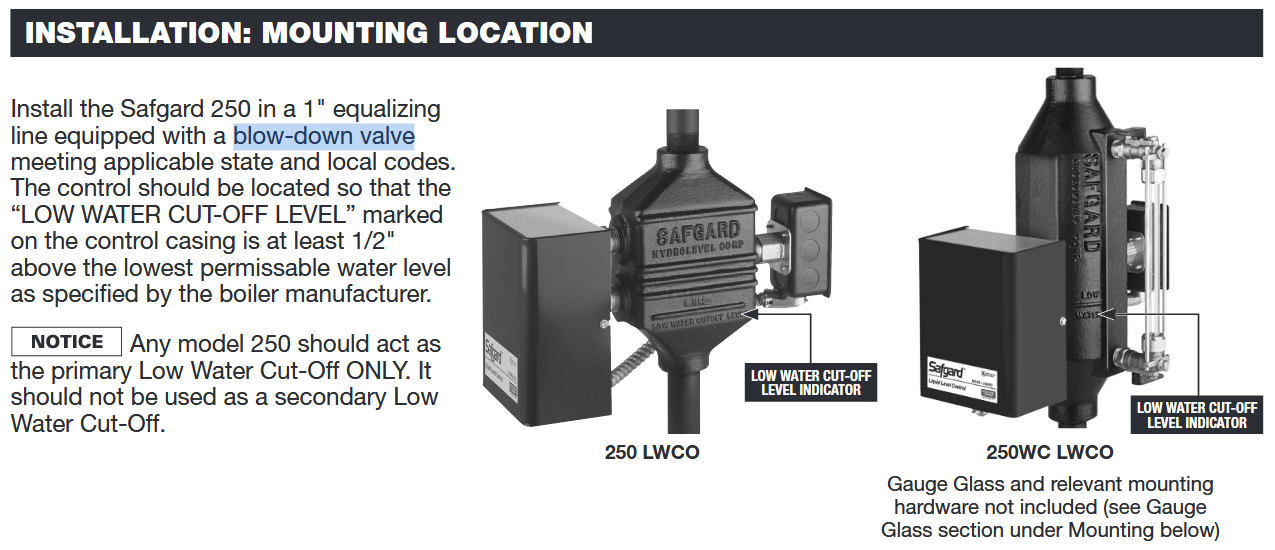
I like heating equipment I can deal with when it is zero degrees Fahrenheit outside and it fails on a Saturday evening.
National - U.S. Gas Boiler 45+ Years Old
Steam 300 SQ. FT. - EDR 347
One Pipe System0


Categories
- All Categories
- 87.9K THE MAIN WALL
- 3.3K A-C, Heat Pumps & Refrigeration
- 60 Biomass
- 430 Carbon Monoxide Awareness
- 133 Chimneys & Flues
- 2.2K Domestic Hot Water
- 6K Gas Heating
- 124 Geothermal
- 172 Indoor-Air Quality
- 3.9K Oil Heating
- 80 Pipe Deterioration
- 1.1K Plumbing
- 6.7K Radiant Heating
- 397 Solar
- 16.1K Strictly Steam
- 3.5K Thermostats and Controls
- 56 Water Quality
- 51 Industry Classes
- 51 Job Opportunities
- 18 Recall Announcements