Propane to natural gas

Happy 4th to everyone,
I have a quick question.
I am doing a propane gas oven to natural gas. The customer is having the oven switched over by the over repair company. I am responsible for the piping.
Can I re-use part of the existing propane gas piping (black pipe) for natural gas. I looked in the fuel gas code book but could not find anything related. I assume it should not be a problem; I am just not sure.
Thank you for taking time to reply.
Comments
-
Natural gas piping is usually black steel pipe with malleable iron fittings, not cast iron fittings. The same holds true for propane, although many propane companies will use copper tubing, which is usually discouraged by the natural gas utility.
The fuel gas code does not require only one specific piping material for residential gas piping. It lists several approved materials, including steel pipe, CSST, and other approved materials depending on the application. However, traditional residential natural gas piping is commonly black steel pipe with malleable iron fittings. Propane systems may also use steel pipe, CSST, or copper tubing where permitted by the code, the gas supplier, and the local authority having jurisdiction.
The fact that you have some existing black steel piping does not automatically mean it can or cannot be reused. That depends on how much fuel the pipe needs to carry, the pipe size, pipe length, number of fittings, allowable pressure drop, and the delivery pressure of the gas system.
LP gas is often delivered at a higher pressure inside residential buildings than natural gas. Because of that, a smaller-diameter pipe can sometimes carry the same appliance BTU load when using LP gas. Natural gas systems are often operated at a lower pressure, so the same BTU load may require a larger-diameter pipe.
The piping should be sized using the proper fuel gas sizing tables for the specific gas, pressure, pipe material, developed length, and appliance load.
This is generally correct in most areas, but not absolute. Some residential natural gas systems are also medium-pressure systems with regulators at the appliances, and some LP systems are low-pressure after the second-stage regulator. The code does not size pipe by “fuel type only”; it sizes by gas input, pressure, allowable pressure drop, pipe length, and material. The IFGC and NFPA 54 covers design and sizing for gas piping installations, including materials, pressure requirements, and sizing.
So the short answer is MAYBE!
Edward Young Retired
After you make that expensive repair and you still have the same problem, What will you check next?
 2
2 -
I thought about this a little more and if that black steel pipe (or even galvanized pipe and fittings) is on a manufactured home, and was included in the original building when it was manufactured then that gas pipe is the correct size for natural gas with the appliances that were included with the home when it was built. That is because the home manufacturer usually does not have control where the home is delivered and what fuel will be used. So many of the furnaces must be able to be converted to fuel oil or natural gas or propane and even butane in the farther north places of Canada. That gas pipe must be able to handle all of the possibilities.
Something I learned when I was studying for the manufactured home service technician qualification performance examination. STQP. I know… it looks like STOP, but it is a real made up test I just invented on my AI website so I look like I know what I'm talking about
Edward Young Retired
After you make that expensive repair and you still have the same problem, What will you check next?
0 -
If it black pipe you can use it for natural gas if it is the right size. Propane is usually 10-11" wc inside a house while NG may be at a lower pressure.
Also for the equal BTU rating NG requires larger pipe than propane. propane is about 2500BTU/cubic foot . NG is about 1000btu/cubic foot
2 different animals

 2
2 -
Thank you for all the replies.
I do understand about sizing and type of material that needs to used.
The pipe that is currently being used for the propane is black pipe with malleable iron fittings and is the proper size to carry the required BTU load.
I will rephrase my question.
Is it ok to re-use the existing pipe and fitting since changing from propane to natural gas? I assume (I know) that using one type of gas and another in the same pipe should not affect anything, but I was just not sure.
Thank you again.
0 -
I don’t see a problem with switching gas in a black steel piping system.
If a gas supplier is doing a connection and meter set, they may require an observed pressure test on the complete piping system.
Bob "hot rod" Rohr
trainer for Caleffi NA
Living the hydronic dream 2
2 -
You can even go back to propane if you want to in the future. The chemical makeup of one gas then switching to another gas has no damaging effect on the black pipe. If there is, then it is so slight that my grandson's great grandchildren will be dead before there is a problem created by that change. The black pipes will rot out from other causes long before changing gas causes any problems.
Edward Young Retired
After you make that expensive repair and you still have the same problem, What will you check next?
0 -
Only risk is potential size of the pipe; propane has over 2x the BTU per cubic foot as @EBEBRATT-Ed stayed. You can get a sizing chart at link below based on pipe size and length.
If the pipe is too small for 8 in/WC pressure, the gas company can set up the meter for 2 PSI. You’d need to add a regulator before the appliance to reduce pressure to level required by appliance.
0 -
you can only get a 2psig service if it is over 2psig in the street and even then some utilities have a policy of not doing it. getting the utility to change something can be crazy expensive too.
0 -
good to know. The few regional gas-services I’ve been involved in were all higher pressure supply lines.
0 -
in my neighborhood it is theoretically 2 psig in the street so i can't get a 2 psig service. also just to change the meter to a higher capacity meter i think they wanted several thousand dollars. so i went with a mod con boiler and and indirect instead of a tankless water heater.
1 -
MA will only allow 1/2 lb. or less in a house. They think they are smarter than anyone else.
That's why the eastern half of the state blew up 9 years ago LOL
But they will allow high pressure (over 1/2psi-5psi) for large equipment in commercial and industrial but you have to draw it out and have it stamped by a PE
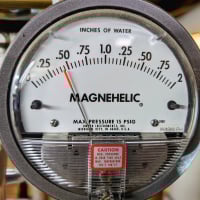 1
1 -
Luckily we have something like 20-50 psi in the street and they will give you 2 psi in a house although they really don't want to.
They also increased my meter size for free once they knew I actually required it. They have no problem selling me more gas.
Single pipe 392sqft system with an EG-40 rated for 325sqft and it's silent and balanced at all times.
 1
1 -
That's why the eastern half of the state blew up 9 years ago LOL
that was actually an Engineering mistake. Let me say MAJOR F U B A R1 -
I thought some worker accidentally connected a high psi line to a low psi line?
Or is that a different disaster in MA?
Single pipe 392sqft system with an EG-40 rated for 325sqft and it's silent and balanced at all times.
0 -
Was that with the regulators on new pipe sensing pressure on old pipe which was zero psi so new system over pressurized to the max??
0 -
yes, procedure failed to address switchover to new sensors.
 1
1 -
Yes. @JUGHNE is right. They connected the new pipe, and the regulators were upstream to control the pressure but the sensors were on the disconnected pipe.
At least that was my understanding. Columbia Gas got thrown out of the state because of that
1 -
-
Thank you all for the good advice.
Enjoy of the rest of the weekend.
347
0





Categories
- All Categories
- 87.8K THE MAIN WALL
- 3.3K A-C, Heat Pumps & Refrigeration
- 60 Biomass
- 430 Carbon Monoxide Awareness
- 133 Chimneys & Flues
- 2.2K Domestic Hot Water
- 6K Gas Heating
- 124 Geothermal
- 170 Indoor-Air Quality
- 3.9K Oil Heating
- 79 Pipe Deterioration
- 1.1K Plumbing
- 6.7K Radiant Heating
- 397 Solar
- 16.1K Strictly Steam
- 3.5K Thermostats and Controls
- 56 Water Quality
- 51 Industry Classes
- 51 Job Opportunities
- 18 Recall Announcements