Is this a common piping configuration

Hello,
This is my first post on this forum and I apologize if this is so simple that I could have found it with a search, but I wasn't sure how to phrase the search so that it didn't pull up a thousand responses…
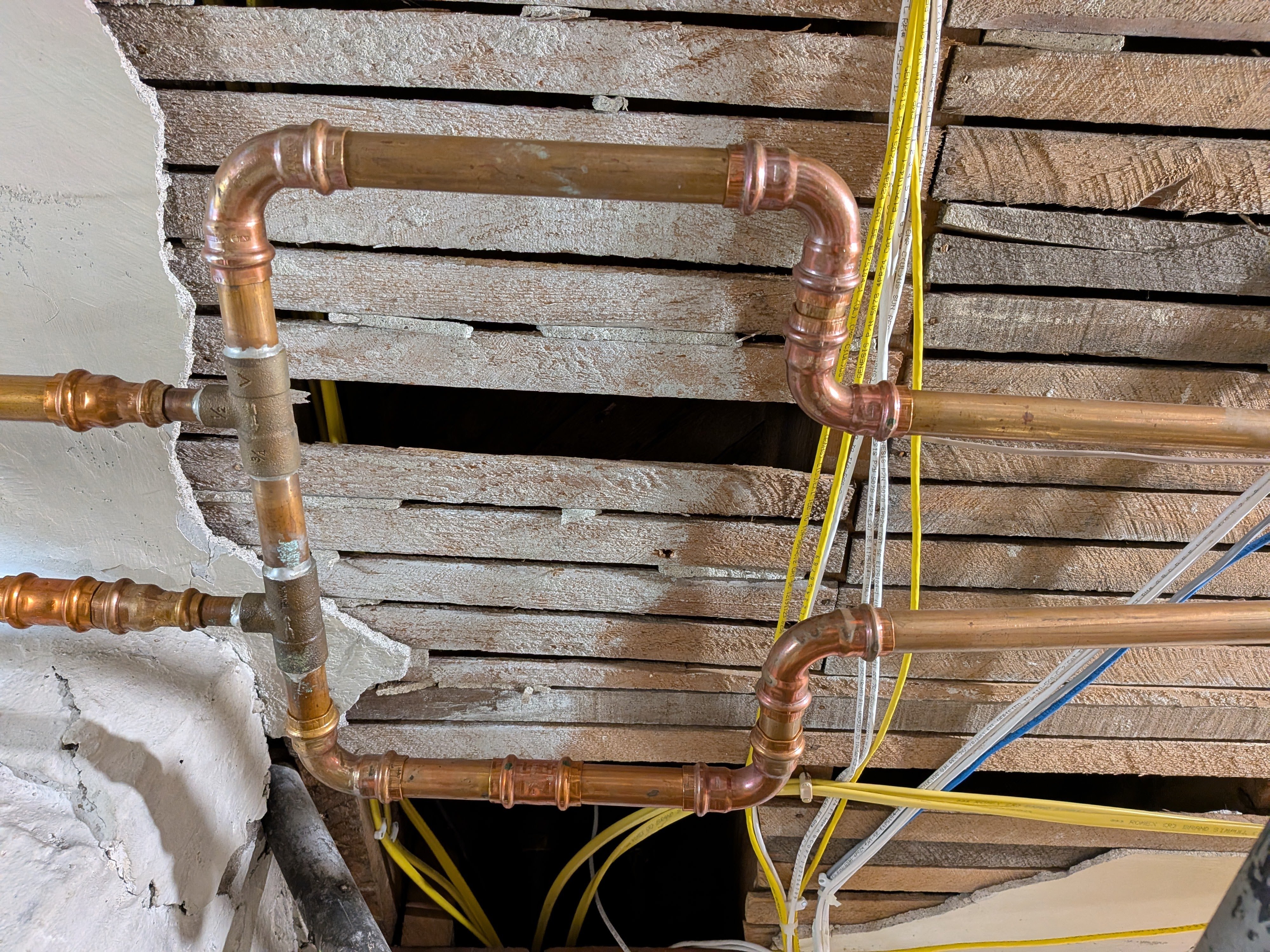
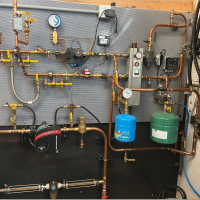
In the attached picture, what is the purpose of (what seems like) the unusual piping shown?
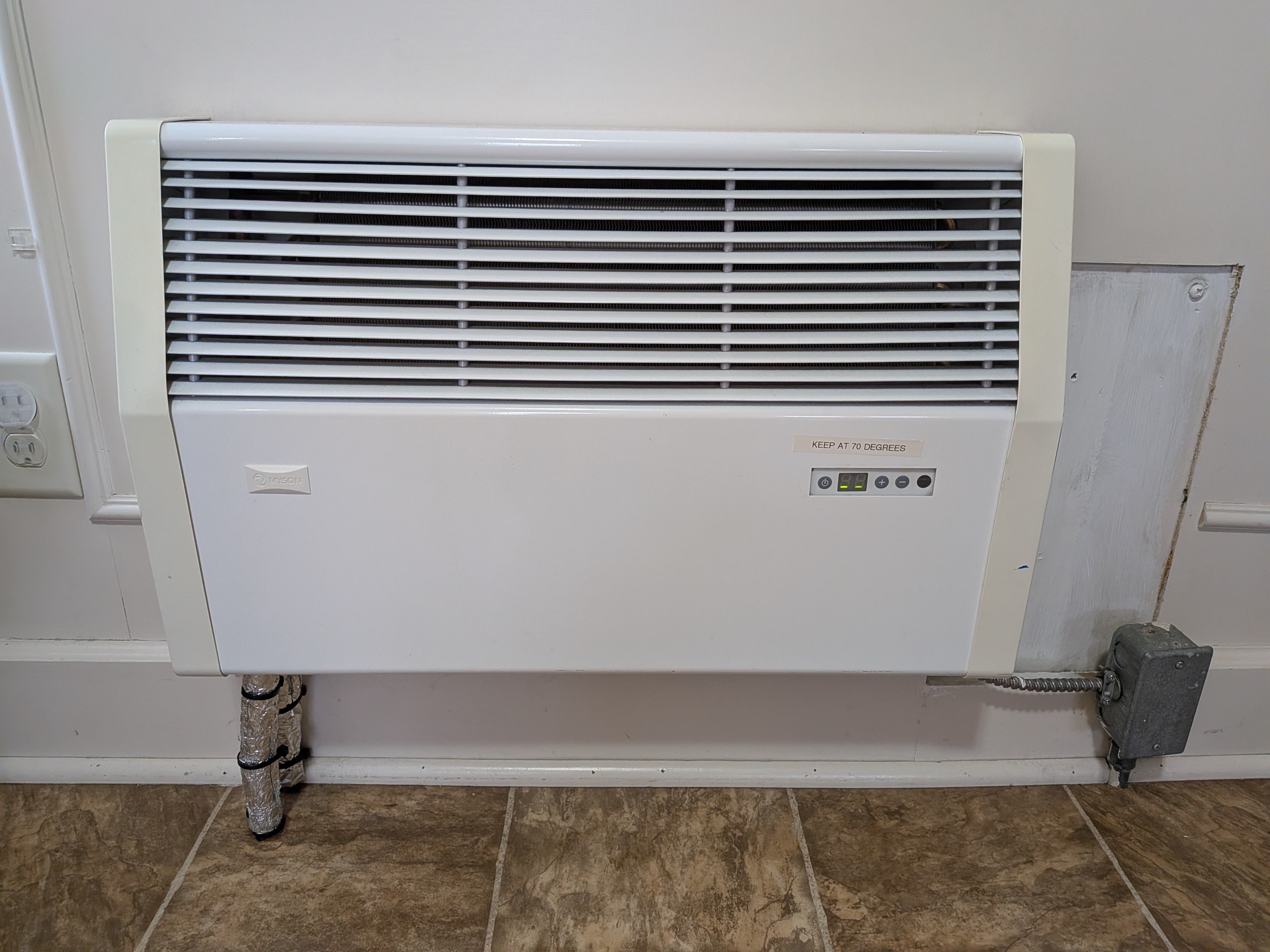
The pipes going to the left feed a wall mounted heating unit with the feed coming from the right. (I'll attach a photo of the wall unit and the piping)
What I'm wondering is, is there hot water always circulating in the piping going to the heater? Because those pipes running to left that feed it, run through an unheated crawl space and I wonder if they need to be insulated to prevent freezing. We wouldn't mind having that little bit of heat in that area that the pipes would give off if it was safe to not have them insulated.
Thanks!
Thanks
Comments
-
The unit shown must have its own water circulator in it. You have a primary secondary circuit. We would need to see the ends of both sets of pipes to see exactly what is going on. I am assuming the pipes on the left in the second photo go to the wall unit.
0 -
the unit heater's coil is likely always hot when the boiler is on and it regulates temp by turning the blower on and off. monoflo needs to have constant flow in the main loop and the branch to keep flow in all the other branches.
0 -
Okay so if there is in fact constant flow in the circuit going to the wall unit (yes those are the ones on the left) am I safe to assume there is little chance that they could freeze in a non heated crawl space that is partially open to the basement?
0 -
If there is an infiltration, drafts in the crawlspace, that tends to freeze pipes quickly.
Always good to seal a crawlspace, especially the rim joist connection to the foundation.
If it is below freezing, generally the heat is flowing and pipes are safe.
The biggest concern is extended power outage in sub freezing weather.
But if the crawlspace is below freezing,invest in insulation, the gift that keeps on giving.
Bob "hot rod" Rohr
trainer for Caleffi NA
Living the hydronic dream0 -
Well the reason this question came up is because we are currently adding insulation and doing some encapsulation of the space. In the past the whole crawl space was isolated from the basement (except for a common wall) but no airflow between the two. So the floor above this space was almost as cold as the outside air. So we plan to improve the insulation on the outside walls significantly, and then improve the airflow. The heat pipes did have pipe insulation on them but with these changes we're making we thought it might be better to take it off.
0 -
Well, hot goes to cold, always. Also the greater that temperature differance the greater the heat btransfer.
So insulating the space so the temperature around the pipes stays warmer will lower the heat loss from the pipe wall.
But the space is being warmed from some place/?
Either adjecent space, or heat loss from uninsulated piping. Either way the less that goes outside the structure the better. if energy consumption and comfort is the goal.
Bob "hot rod" Rohr
trainer for Caleffi NA
Living the hydronic dream0 -
Well no, the area was not heated at all except for what escaped from the two insulated pipes and the shared basement wall. And I should have mentioned that we are in central Wisconsin, so we get well below zero at times. The room above it is just a mud room so the cold floor didn't really cause much concern.
The access hole (an old basement window before the small 11 x 11 mudroom addition was added) had long ago been removed but the old opening was again covered with OSB to keep the bugs and spiders out but still allow access if needed.
So now we intend to leave the OSB off (since it will be mostly encapsulated) and to direct warm air from an adjacent mechanical room into the crawlspace. So that's why we thought we could also remove the pipe insulation in that area to maybe get a bit of extra heat off of it.
0 -
if the floor is relatively free of critters you could insulate the bottom of the floor to keep the heat in the room. most of the heat loss is likely through infiltration between the top of the foundation and the sill and the rim joist and the floor. it wouldn't be surprising at all to find an open hole that someone just covered up somewhere in construction from that era
0 -
Okay, well we will continue with the addition of extra insulation on the outside walls and especially the rim joist areas along with the partial encapsulation and ensure that we have warm basement air circulating into the crawl space. With those changes, it seems like we should be safe to remove that pipe insulation and take advantage of that extra little bit of heat to warm the floor.
Thanks guys!
0 -
No i would not remove the pipe insulation from the heating pipes in the crawl space. All it will take for it to freeze is an air pocket to develop in the branches to stop the water flow and then the exposed piping will freeze. I would not only insulate that piping but also box it in. Expose piping in a crawl space will not heat the crawl space enough to prevent it from freezing. The only way is to keep the water moving but circulators don't last forever either. I can't tell you how many times this is attempted and the pipes freeze. Just lowering your thermostat overnight to save a couple of bucks is all it takes.
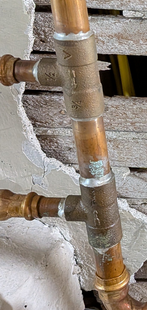
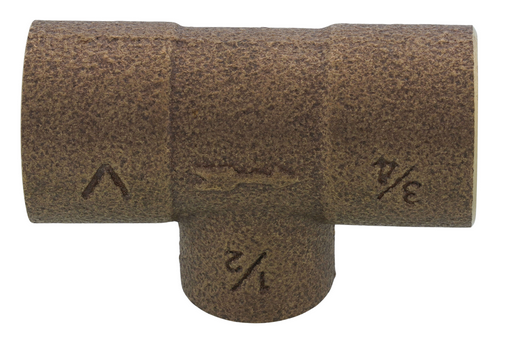
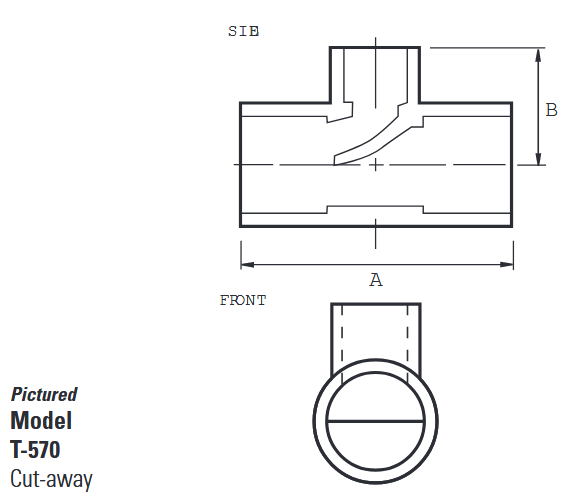
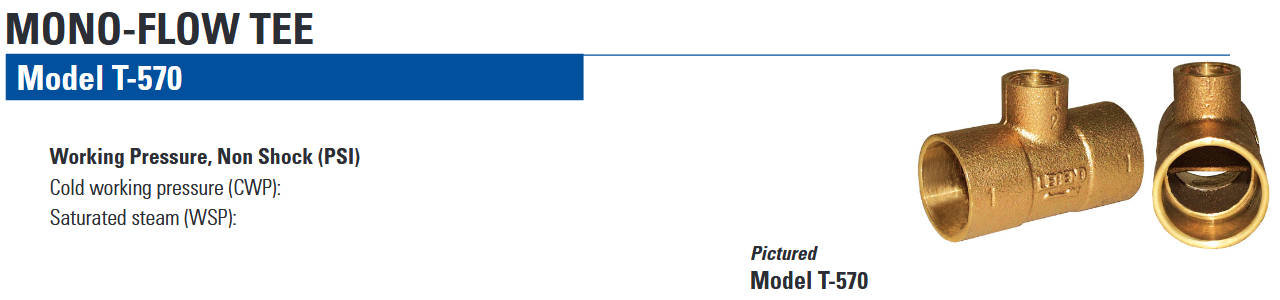
The piping going to the left is a common monoflow piping arrangement. There should have been a lot more space between the tees. It is concerning because the pressure drop between the tee's is what allows some of the water to flow to the branches, hence the wall heater. Although the Tee's are installed with the arrows facing each other to maximize the pressure drop, the tee's being so close together might negate that. Only you as the homeowner can check that with the heating system on. You can feel if the hot water is moving.
i'm in Boston and every year we fix issues like this. Everybody wants to use the mud room, 3 season porch, or enclose there porches for an extra bedroom without thinking about how to protect the piping. i personally would never recommend putting heating pipe exposed outside in a crawl space. If you do extra precaution should be taken. I honestly can't overstate what a bad idea it is to leave pipes exposed to freezing temperatures. Also keep in mind that most residential piping systems, at least in massachusetts, are done with type M tubing, which is thin wall. only the fin tibe piping is thinner. So frozen piping will split relatively quick.
i hope i understood your question correctly
 0
0 -
the orifice in the monoflo tee is what splits the flow between the branch and the run. the resistance of the pipe is small compared to the orifice. you do need to have enough flow in the loop for the water to take both branches.
0 -
It also depends on the type of heat emitter and how far the heat emitters are away from the monoflo tee's. Thats why you need to space them apart. Yes the orifices create the pressure drop but it has to be greater than the combined piping of the supply and return and the emitter. By spacing them your allowing additional pressure drop in the main. This increases the flow thru the branches. Monoflo tees were designed with radiators in mind and they still wanted separation as wide as the radiators.
0 -
the tee partitions the main in to 2 sections. it would be a lot easier to understand if they main section of the tee were also smaller. the same thing could be down with a tee with 1 run the size of the main and the other run and the branch smaller. if you have a very restrictive emitter like a serpentine unit heater or certain kickspace heaters or certain panel radiators it isn't going to work but otherwise your problems are likely not enough flow in the main to make more flow than what what wants to flow through the reduced main alone or piping that isn't arranged to allow you to get the air our. just calculating the flow you need to move the btus you need to move at 20f delta won't do it for monoflo, you have to think about the pipe sizes and velocity. a problem with one emitter, either restricted flow through the emitter branch or a backward tee somewhere could cause some or all of the other parts of the system to not have enough flow to heat the emitter.
0




Categories
- All Categories
- 87.8K THE MAIN WALL
- 3.3K A-C, Heat Pumps & Refrigeration
- 59 Biomass
- 430 Carbon Monoxide Awareness
- 133 Chimneys & Flues
- 2.2K Domestic Hot Water
- 6K Gas Heating
- 124 Geothermal
- 170 Indoor-Air Quality
- 3.8K Oil Heating
- 79 Pipe Deterioration
- 1.1K Plumbing
- 6.7K Radiant Heating
- 396 Solar
- 16.1K Strictly Steam
- 3.5K Thermostats and Controls
- 56 Water Quality
- 51 Industry Classes
- 51 Job Opportunities
- 18 Recall Announcements