"Frozen" gate valves
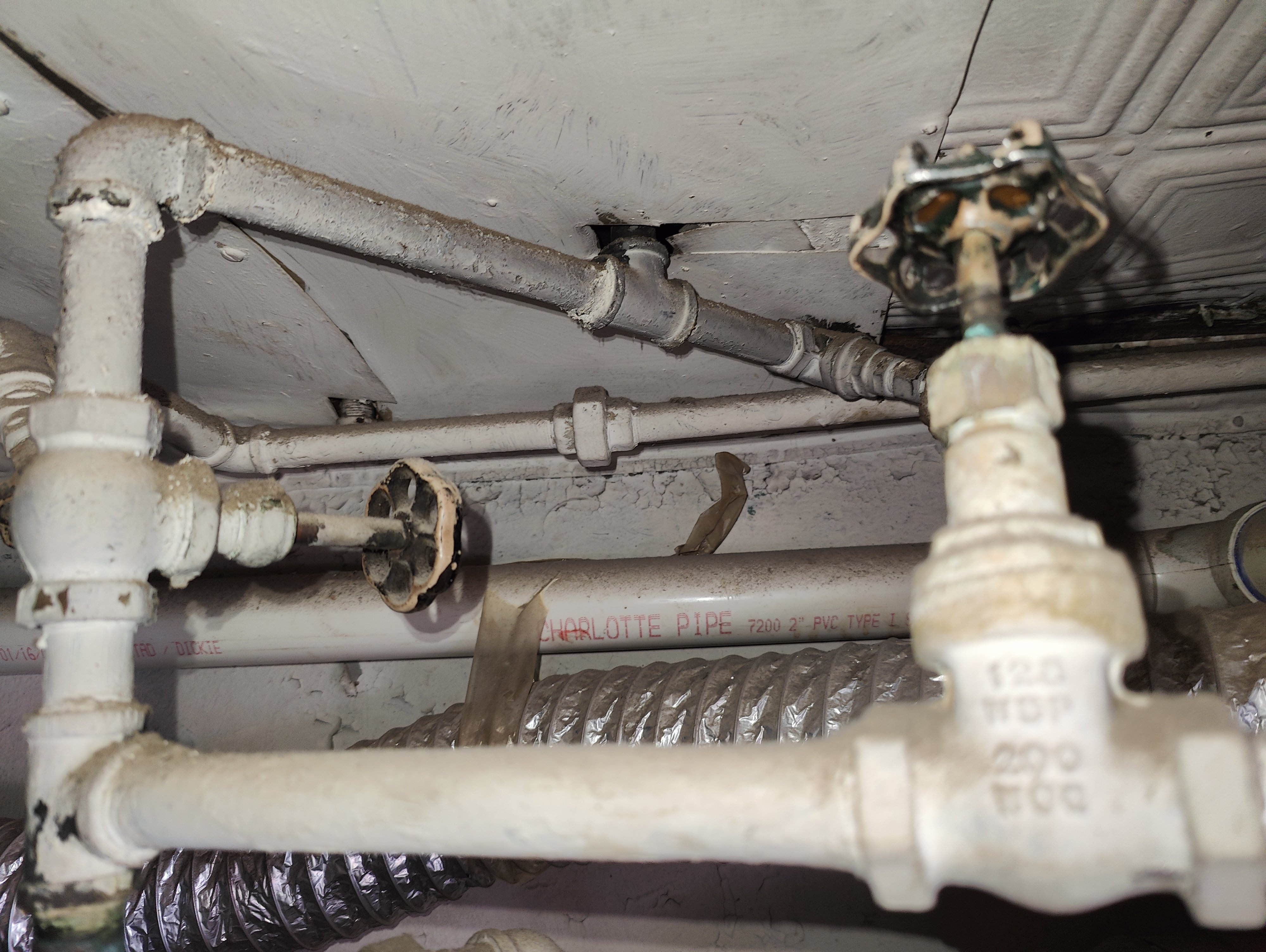
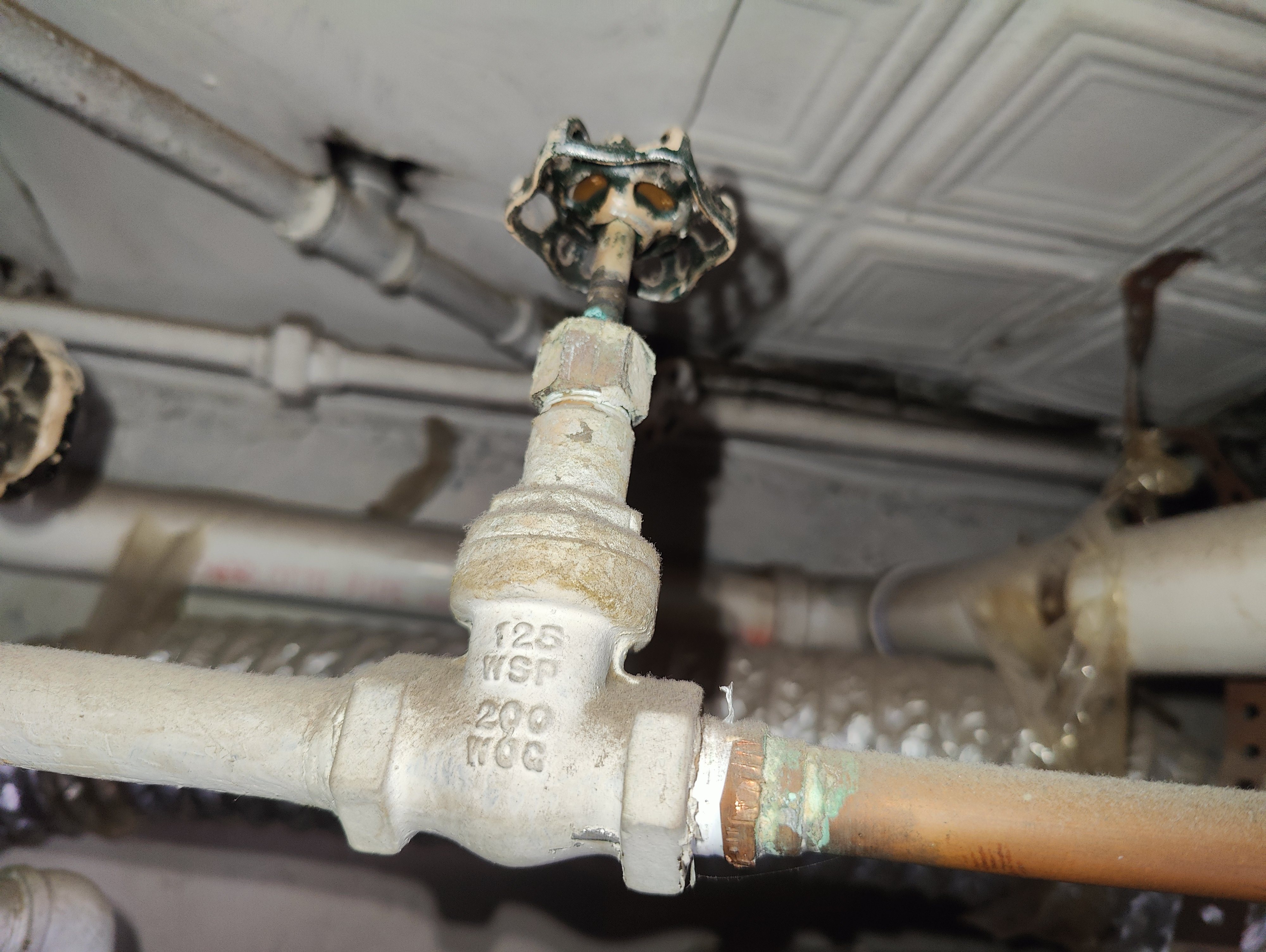
The shut off valves on the cold water supply tubing no longer turn by hand. Is there a tool to turn it?
These tubing and fittings do not respond to a magnet, so they are brass or copper.
Comments
-
loosen the bonnet and try turning. Remove the handle and use an open end wrench.
if need be a small pipe wrench. 1
1 -
try rocking back and forth gently. if you just crank on it you are likely to break something. you still might break something no matter what you do. the screw that screws in to the gate to raise and lower it is fairy fragile, if it is stuck you could break it. you can also remove the whole bonnet and clean things up.
 1
1 -
Then maybe it's better to leave it as is..
0 -
Well, I have a couple things to try but if none of them work, just leave it alone. First, put some strain on the valve handle by trying to turn it and at the same time tap the side of the valve with a hammer. This may loosen the valve and allow it to turn. Next, if you can turn off the supply water before that valve that may allow you to turn it using the same pressure and hammer as above and lastly, you could try to remove the whole valve by turning the top of the valve with a big wrench and unscrewing it. If none of these ideas work, leave it alone.
 1
1 -
Disassemble and grease it up or replace ..If you force it, the brass worm gear that slides the gate along the trough can break .
Tip ; Gate valves were installed with handle down so no debri collects in the trough which prevents the gate from seating..
There was an error rendering this rich post.
 1
1 -
Why do you wish to close this gate valve?
Is this valve controlling boiler feed water or a potable water supply??????????
The mistake made by many people is fully opening the gate valve until it stops-this is never good. The valve stem becomes stuck and will not release. It is always best to stop short of fully opening the gate valve to prevent the stem from freezing in place due to corrosion
The component parts of a "very small" gate valve are as follows;
- body
- bonnet
- gate
- stem
- globe handle
- valve stem packing-The stem packing is either a rope packing or square cut stem packing to seal the valve stem
- seat
The 125 WSP; 200 WOG; designations cast into the valve body side indicate that the valve is capable of withstanding "125 PSI Wet Steam Pressure" or "200 PSI Non Shock Cold Liquid Or Gas Applications".
The globe handle may still have the small metal circular identification tag under the screw that anchors the globe handle to the valve stem.
1 -
does this allow the gate to be loose and vibrate with flow and wear the threads on the stem and gate?
0 -
First make sure your main shut off is working properly. On every property/rental property I ever owned, job 1 is to shut the water off at the curb and put a good quality ball valve before and after the meter.
After that, @pecmsg has the right idea. But I would shut off the main and repair or replace the valve. Because it most likely will start leaking again when you open it back up.
You can take the valve body out, take it to a big box store and match up the closest kit of washers, which should work.
But if it were me, shut off main, drain what you need, cut copper, heat up threaded pipe, spin off valve. Spin on a new ball valve, then male npt to press and a press coupling. If it's the boiler feed, new boiler feed/backflow (I like Caleffi), ball valve on the other side. With the proper materials, isolating the feed/back flow, to flush/repair/replace is forever a breeze.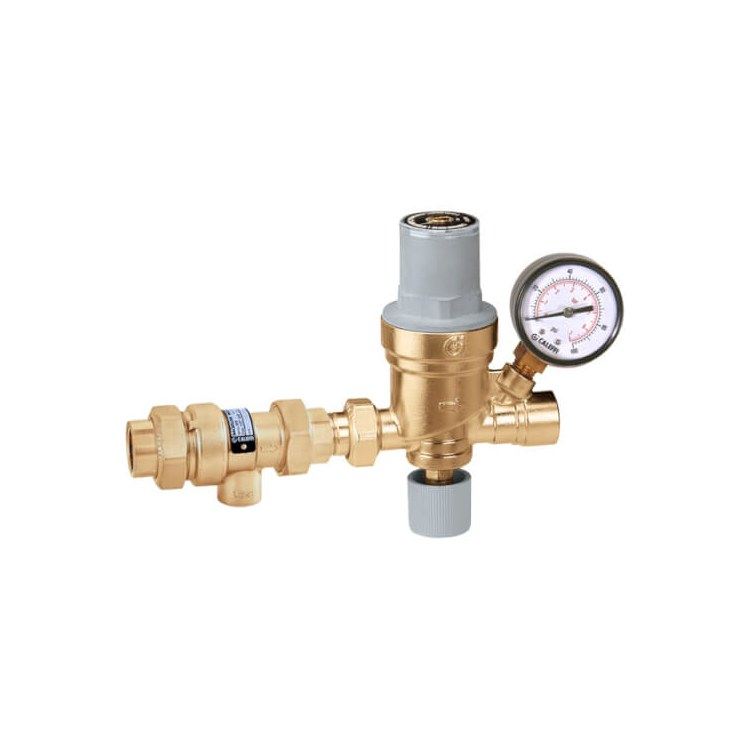 0
0 -
My personal experience with gate valves involved residential use for city water control in home use and well water, single load commercial laundry washing machines using pre-manufactured bulk heads with header pipes that controlled hot and cold water feed for 20 single load washing machines per bulkhead and 8 Pellerin Milnor triple loaders and residential well water, and commercial industrial use with compressed air system feeder lines used for bag sewing machine lines using compressed air for clearing of cotton thread chaff.
I never found problems with vibration loosening the bonnet nuts so much that the valve leaked through the stem.
As long as the valve stem is packed with the correct stem packing for the size of the valve and the bonnet nut is tightened only after the stem is partially closed it never leaked.
When I worked in a powerplant as a temporary laborer they replaced absolutely every valve stem packing each gate valve no matter how large or small and painted them that years designated color to show it was changed.
0 -
not the packing, the screw down the middle of the gate that raises and lowers the gate.
0 -
Hello Matt,
I never found them to be frozen at all after many years of use with city water or well water.
0 -
frozen isn't my concern, stripped from rubbing for years is my concern.
0 -
I never found them inoperable or stalled if that is what you are referring to.
0 -
The question is, if you do get it to close, will it ever open again?
 2
2 -
if you get it to close, probably. if the screw snaps off or strips somewhere in the middle, no.
 1
1 -
I've found it's always a gamble with old gate valve. I've had the stems break more than a few times. I've had the gates drop off a few times. Stop the water at the meter if you can and be prepared to replace the valve. You might not have to but better safe than sorry.
Miss Hall's School service mechanic, greenhouse teacher, dog walker and designated driver
0 -
in a pinch you can always open it up and take the gate out too if it breaks.
0 -
If you did crack it open at the assembly seam, there is usually a gasket in there that would be tough to find and replace. It is a thin dimension, fits into a machined recess.
I would have a plan B in place if you start forcing or wrenching on it.
A MegaPress setup would be the simple replacement tool and coupling
 Bob "hot rod" Rohr
trainer for Caleffi NA
Living the hydronic dream0 -
The pipe is 3/4 copper, so do you mean propress? The search shows mega press is for thick wall black iron piping
0 -
the parts with the gate valves are steel (or possibly brass)
0 -
It's non ferrous metal, so it's brass.
0 -
the pipe at the valves? the valves are brass but the pipe is usually steel. the pipe to the right of the horizontal valve adapts to copper with an ips male adapter to copper.
0 -
It just seems like a steel pipe, because it has threads on the ends. But a steel pipe should attract the magnet. It does not respond to a magnet.
0 -
Not if it's the only valve holding back the water, my brother. Hopefully, there's another somewhere upstream.
0 -
Those water meter cocks are high qaulity. Let should move, shut and hold well. Just go easy and work it back and forth first. Mad Dog
0 -
I scaped off some paint off a section of a pipe with end threads. it is thick wall brass pipe?
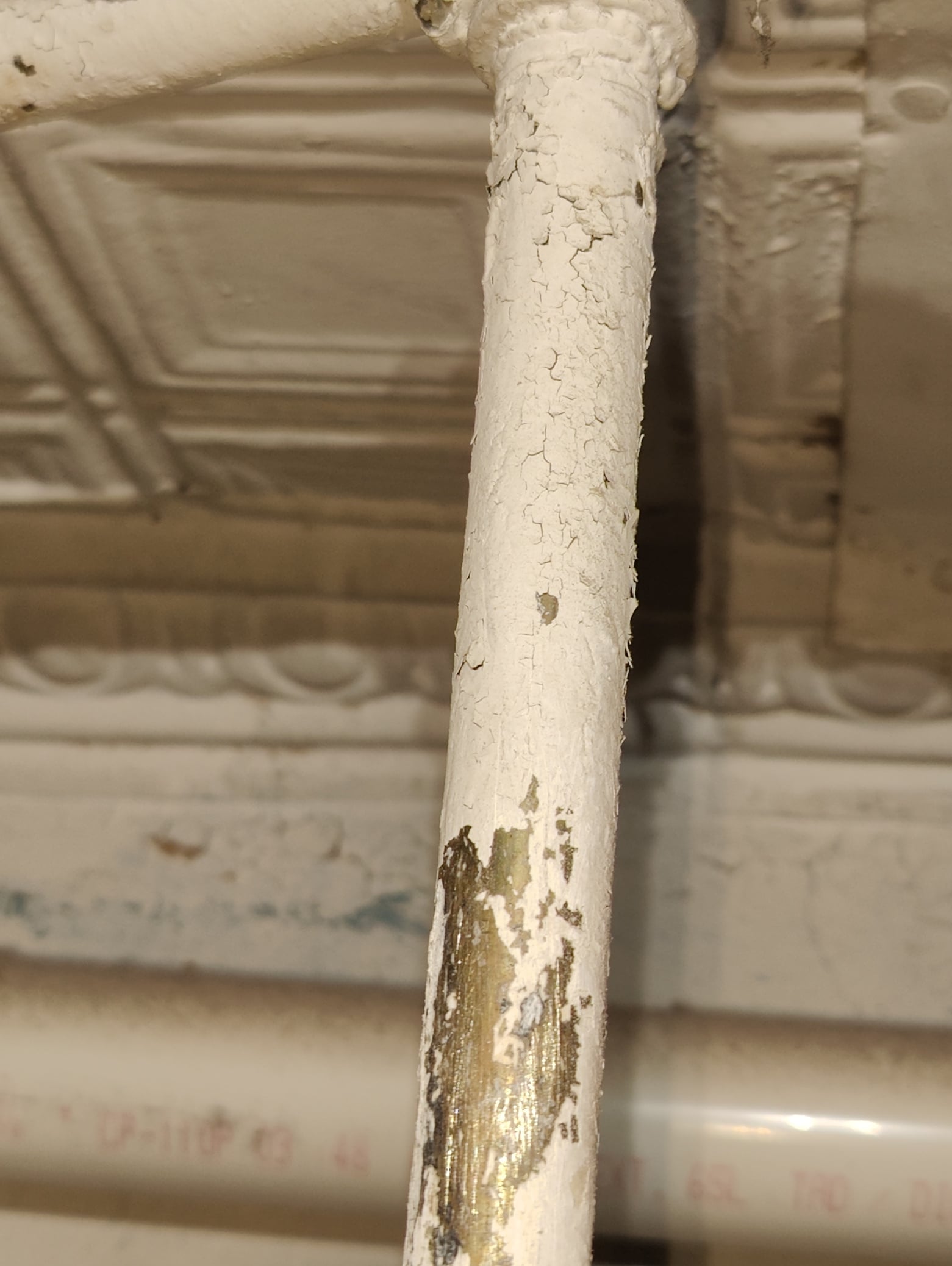
the lower tubing with no threads are copper
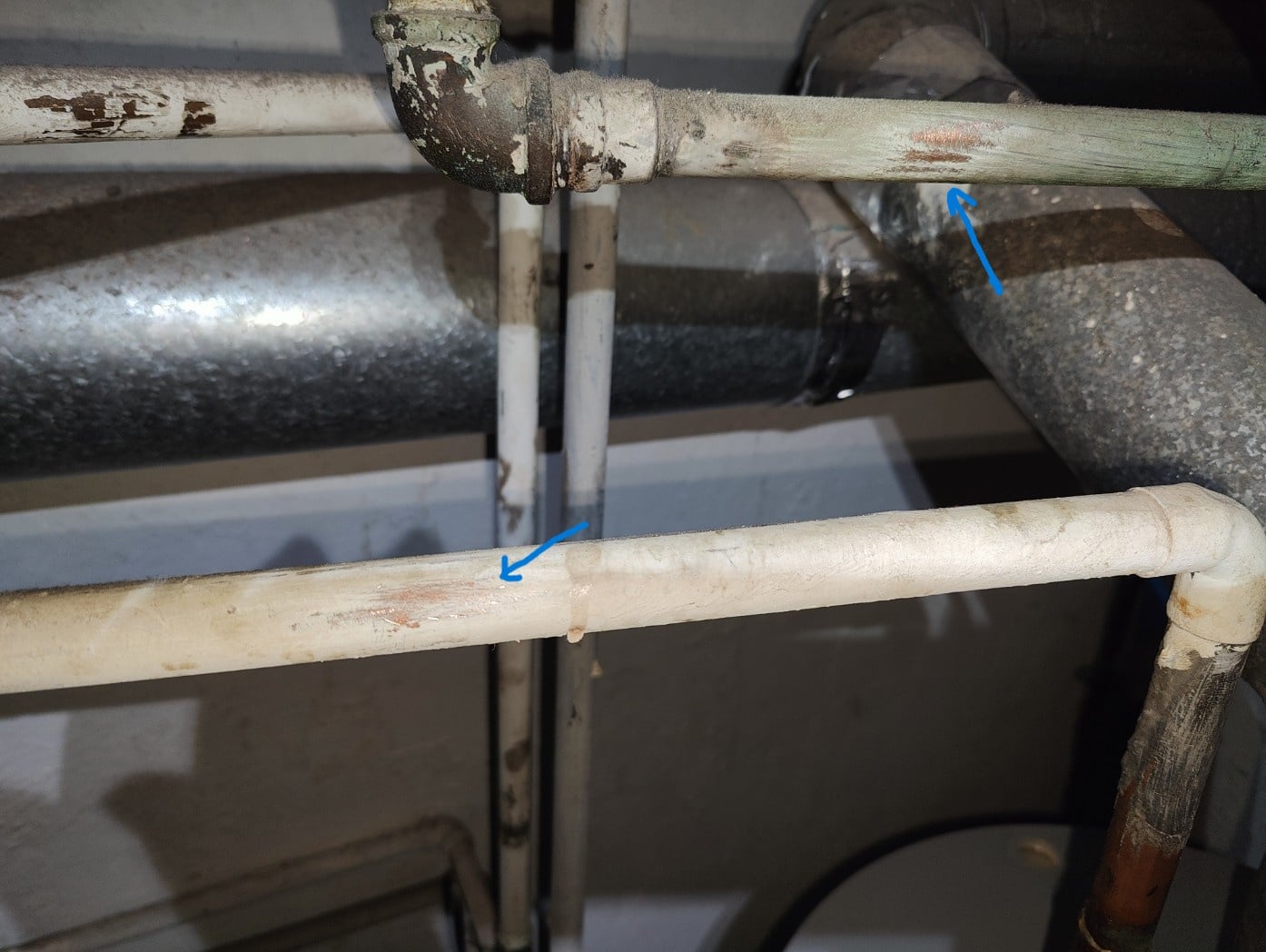 0
0 -
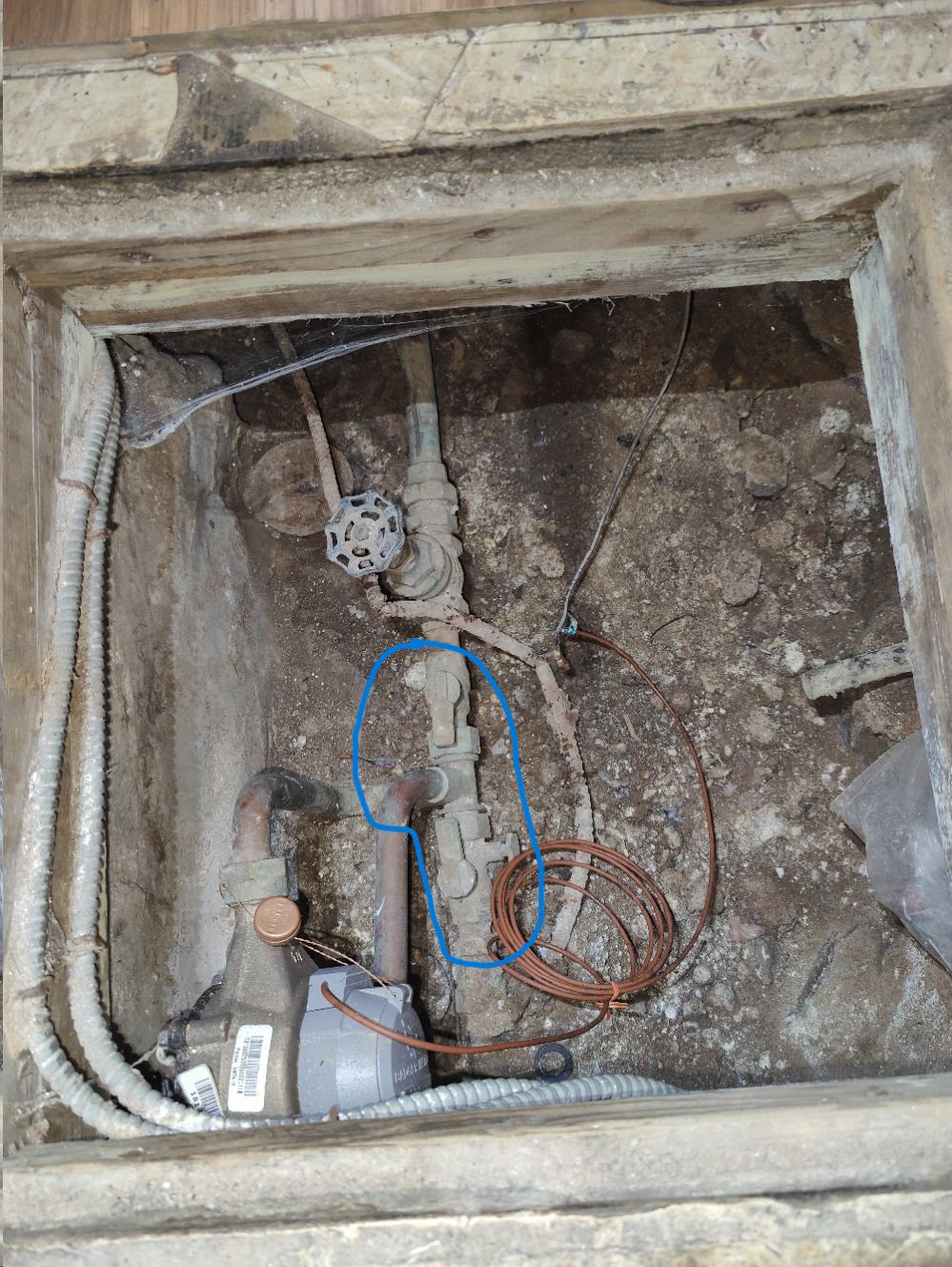
the two "quarter turn" valve handles are pointing toward a middle fitting that has 4 ports. One valve controls water flowing into the meter, and the other valve controls the meter's Out? Why does the downstream one has a small branch with a small handle on it?
0 -
This assembly is called a meter yoke, used to set and space the water meter.
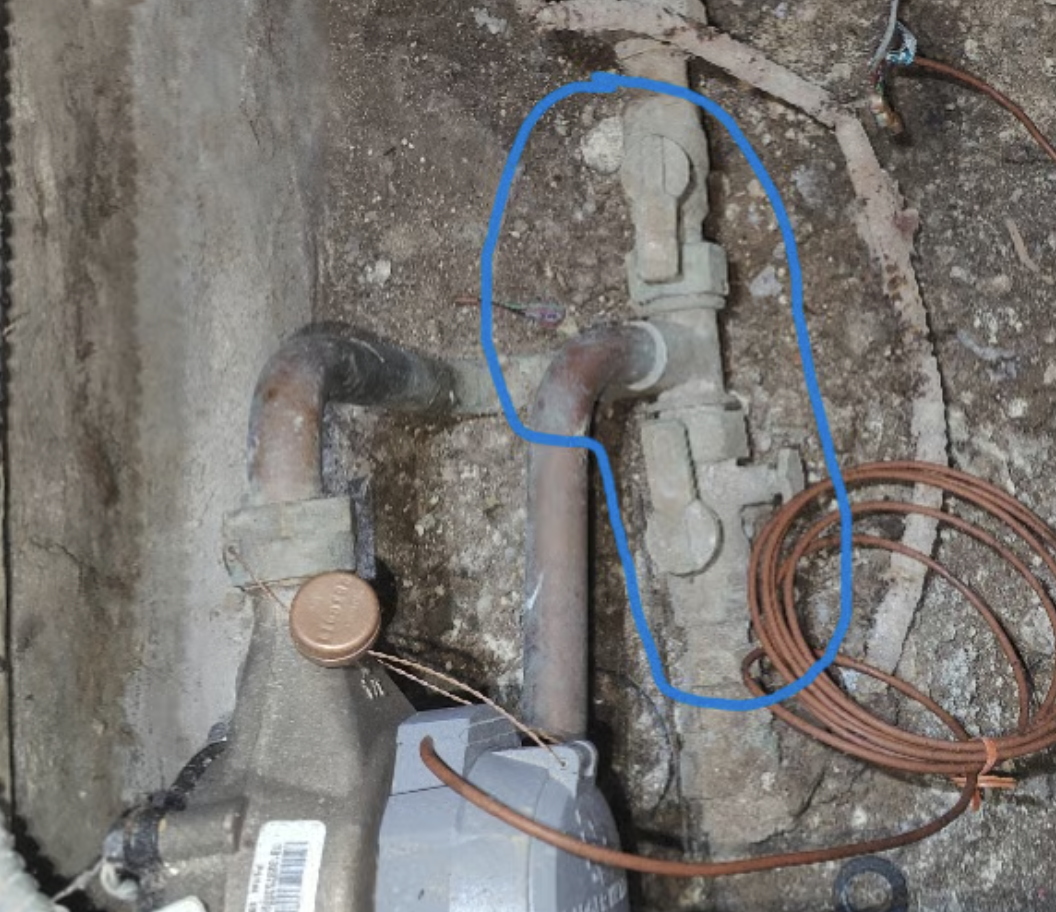
Sure looks like brass pipe.
If the entire building is piped with that $$
Bob "hot rod" Rohr
trainer for Caleffi NA
Living the hydronic dream0 -
the middle fitting has two branch ports, one plumbed to the meter's In and the other to the meter's Out. so the water has to flow into the meter and back into the pipe, instead of just flow directly through the straight pipe?
0 -
there are different styles of meter yokes.
Often they look like this, but I can’t see enough of the piping to see what goes where
Could be those are isolation valves for the meter?
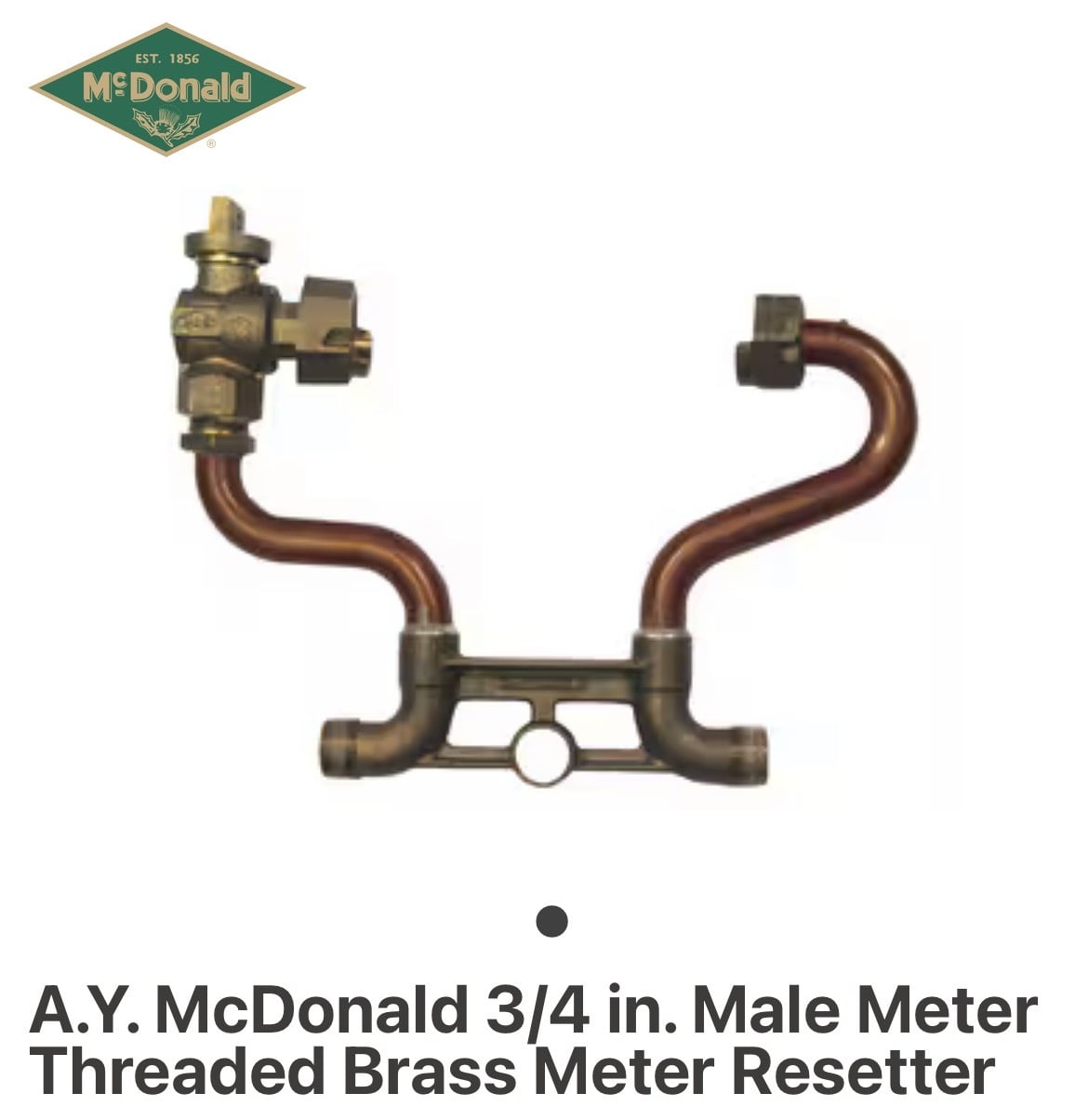 Bob "hot rod" Rohr
trainer for Caleffi NA
Living the hydronic dream0 -
brass is very corrosion resistant but it can be brittle. where steel is very tough but tends to rust closed brass doesn't corrode but can break if you accidentally smack in to it.
0 -
I took more photos of the meter.
It seems both the In and Out of the water meter are connected to the T fitting that has two branches.
I'm curious on how the yoke handles define which branch is In and which is Out?
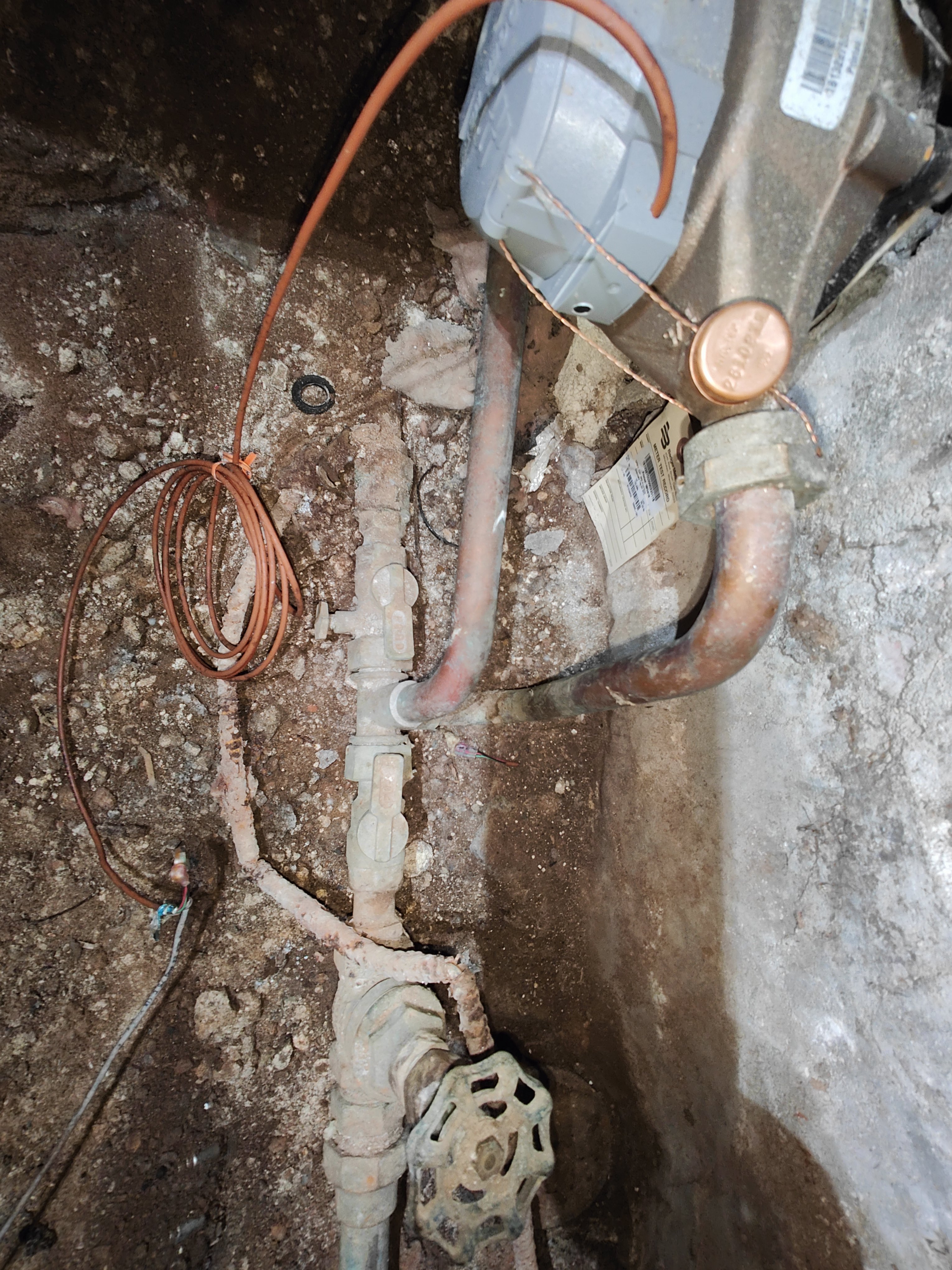
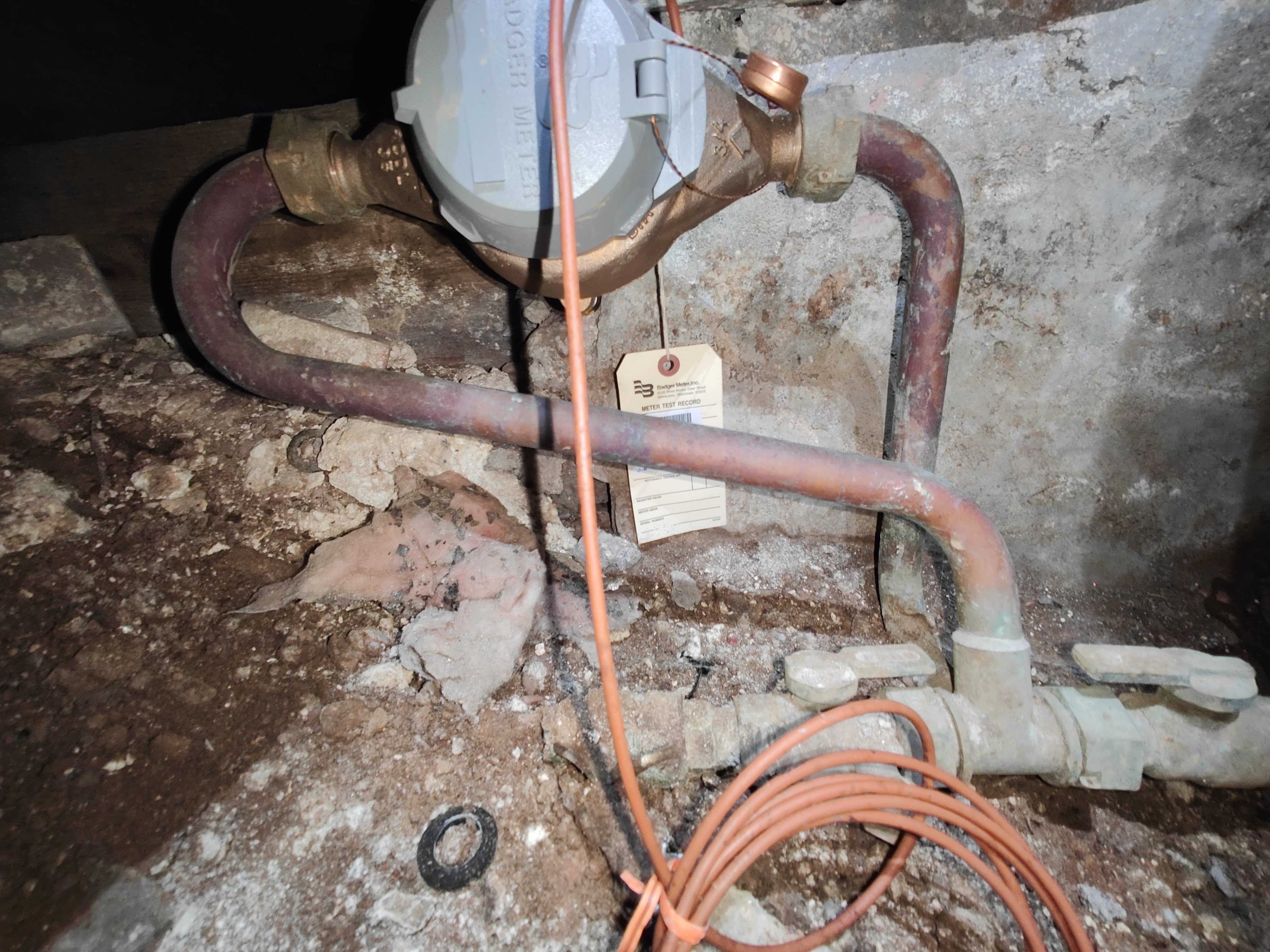
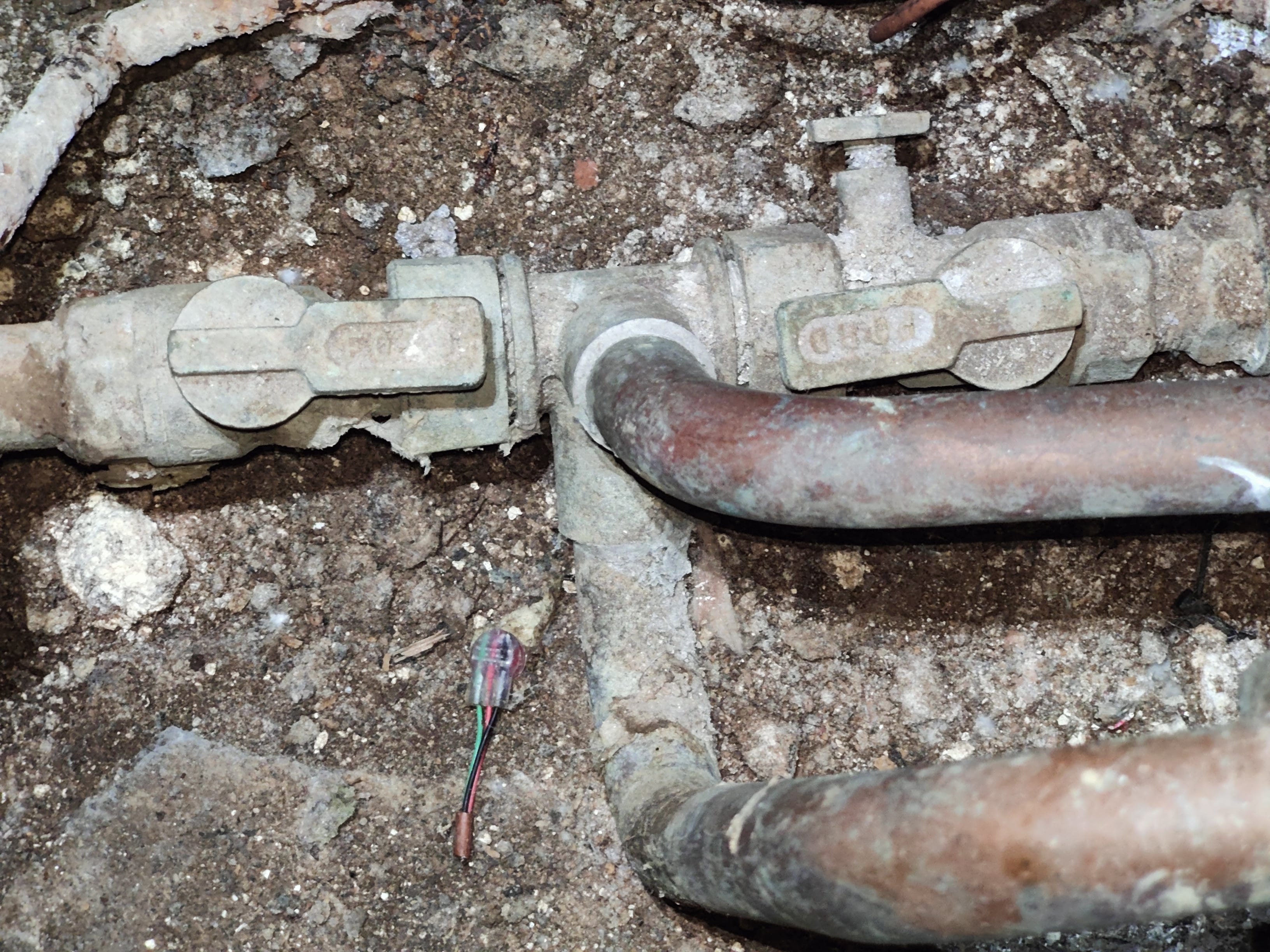 0
0 -
it is a solid brass piece or partition between the meter connections, here is an example of another style. The only way the meter spins is water going in one end, out the other end.
The arrow on the meter indicates flow direction.
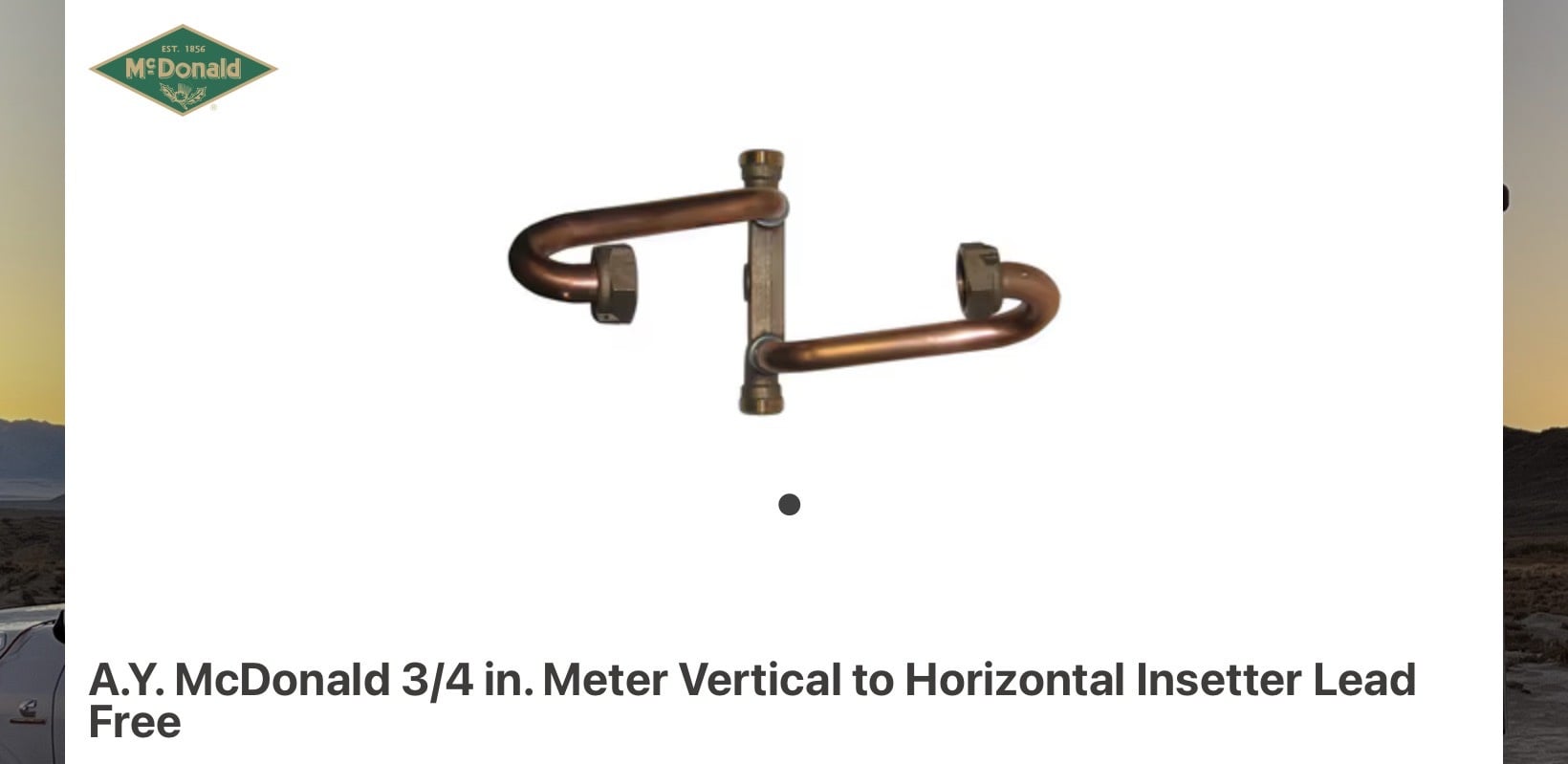 Bob "hot rod" Rohr
trainer for Caleffi NA
Living the hydronic dream1 -
Then it's a water meter special T fitting
The yoke has two valves to shut off the pre and post flow. Their handles are now mirror symmetric. Does "clockwise 90 degree to shutoff" apply to both valves?
I tried my hands on those handles, but was not able to turn
0 -
Yes it is a Ford brand meter yoke with isolation valves.
I believe the valves are part of the yoke assembly. One on both sides to isolate the meter.
If they are not turned occasionally they tend to stick, so forcing them could break the tab off. Generally clockwise 1/4 turn will be off. Even new you would need a wrench to turn them. So the tab lever is crosswise fo off. When the lever is inline with the pipe, it is open, as they are now.
If you need to shut the supply off, use the green wheeled handle valve, might be easier to turn by hand.
No guarantee when turning old valves.
Bob "hot rod" Rohr
trainer for Caleffi NA
Living the hydronic dream0 -
Between the copper tubings and the partition fitting, are those soldered connections?
0 -
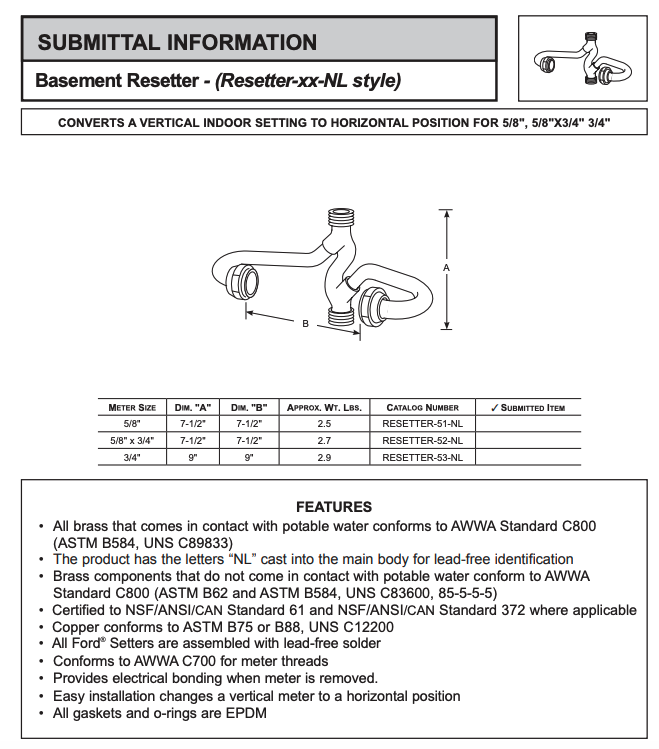
Yes, find more info at the Ford website. There are many styles of those meter setters.
Being an older yoke, it probably is not leadfree solder.It could be a 95/5 solder, a bit stronger that typical 50/ 50 of plumbers solder.
See the arrow cast into the right side meter, that is the supply side from the yoke.
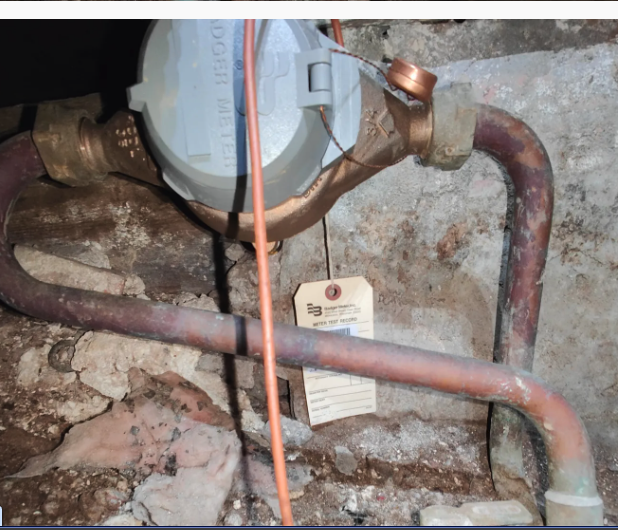
In some areas both that yoke and meter belong to the water utility, not the building owner.
I don't know why you would want to unsolder the copper loops, you would need to turn off the water and drain everything to solder at that assembly.
 Bob "hot rod" Rohr
trainer for Caleffi NA
Living the hydronic dream0 -
It requires a licensed plumber to work on the meter.
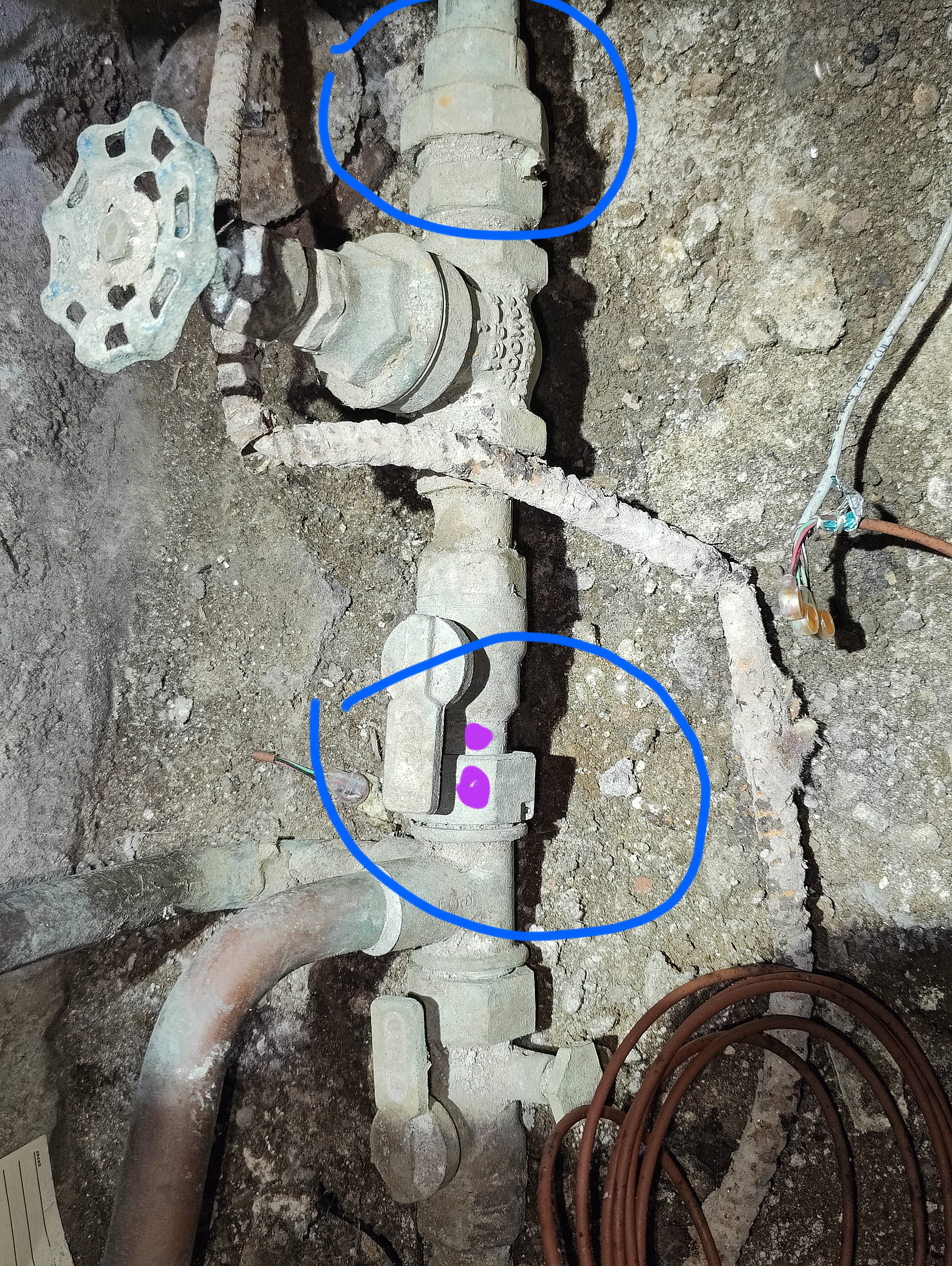
The tag on the meter says 1998, so it's not that old, but he gate valve already can not shut fully. To replace the valve, are these two union like things the points to disconnect? The pipe can not be pulled as it's mostly under the heavy soil.
 0
0 -
The top connection looks like a flare connection, onto the copper service line. so yes that acts as a union
The next is either a flare to the yoke, or has a flat gasket under the nut
You would want a valve the same length, as probably not much movement in the piping?
That may be a gate or globe valve, The largest hex under the handle of the valve is where they usually come apart the easiest. That is a fine straight thread.
However the gate or the groove it fits into may be damaged.
So you are try right to consider a new valve.
Don’t go cheap, Apollo, Watt, Nibco generally have a price point import , and a top quality US built option.
Bob "hot rod" Rohr
trainer for Caleffi NA
Living the hydronic dream0



Categories
- All Categories
- 87.9K THE MAIN WALL
- 3.3K A-C, Heat Pumps & Refrigeration
- 60 Biomass
- 430 Carbon Monoxide Awareness
- 133 Chimneys & Flues
- 2.2K Domestic Hot Water
- 6K Gas Heating
- 124 Geothermal
- 170 Indoor-Air Quality
- 3.9K Oil Heating
- 80 Pipe Deterioration
- 1.1K Plumbing
- 6.7K Radiant Heating
- 397 Solar
- 16.1K Strictly Steam
- 3.5K Thermostats and Controls
- 56 Water Quality
- 51 Industry Classes
- 51 Job Opportunities
- 18 Recall Announcements