Dryer vent duct
Comments
-
could you explain more about "reline with a properly sized smooth wall 316Ti or 316L ss liner"?is the liner on the exterior surface of the chimney?
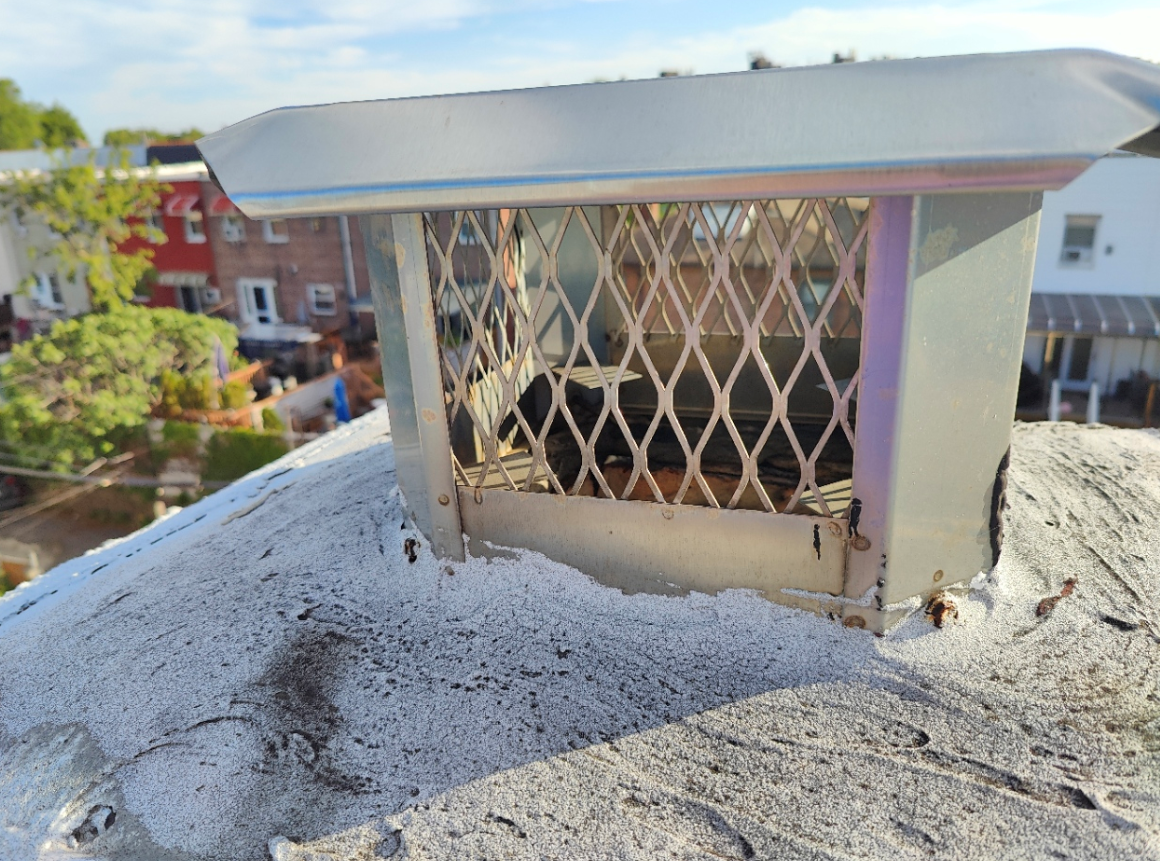
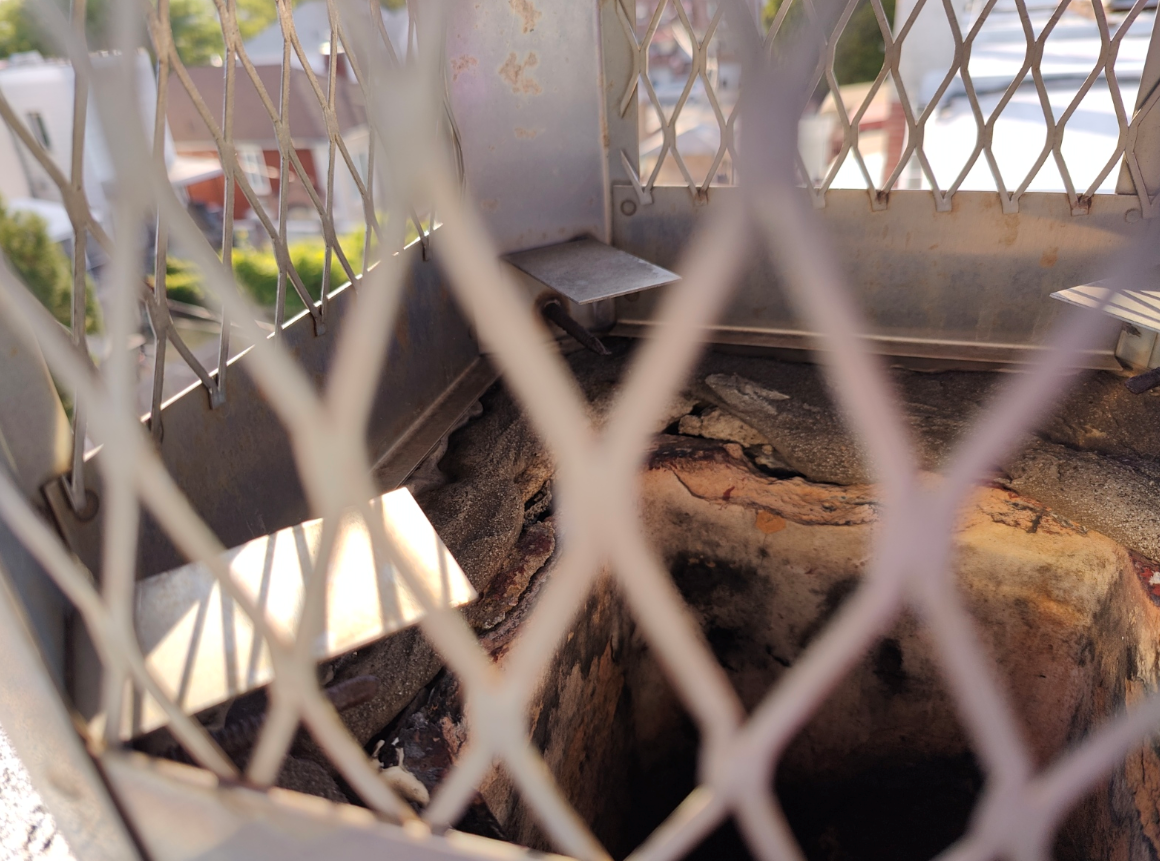
the top of the chimney has a rain cap. the flue way formed by the inner clay liner is pretty small, compared with the size of the chimney.
 0
0 -
what do you mean by "within 6 inch of the bottom of the opening through the middle of the chimney"?
I talked with a city employee who confirmed the cleanout is needed for compliance to the current code. All the codes are listed here:
The chimney cleanout is documented in the mechanical code instead of building code or fuel gas code:
801.13 Cleanouts. Factory-built chimneys and vents shall be provided with a cleanout opening or access door at the base of the chimney or vent installed in accordance with the manufacturer’s instructions. Masonry and metal chimneys shall be provided with a cleanout opening having a minimum height of 6 inches (152.4 mm). The upper edge of the opening shall be located not less than 6 inches (152.4 mm) below the lowest chimney inlet opening. The cleanout shall be provided with a tight-fitting, noncombustible cover of a minimum size of 8 inches by 8 inches (203.2 mm by 203.2 mm)
this says the cleanout should be located between 6"+ above the ground, and 6"+ below the thimble? it's a pretty wide range.
0 -
your previous quote said this:
"Cleanout openings shall be provided
within 6 inches (152 mm) of the base of each fluewithin every masonry chimney. The upper edge of the cleanout shall be located not less than 6 inches (152 mm) below the lowest chimney inlet opening. The height of the opening shall be not less than 6 inches (152 mm). The cleanout shall be provided with a noncombustible cover."
the flue is the opening in the inside of the chimney so this rule says that the cleanout must be within 6" of the "floor" of the inside of the chimney
0 -
@mattmia2 the quoted language is from the Building code. if you click my link, then click "Building code", "chapter 21 Masonry", on page 24 it says -

the other language is found by clicking "Mechanical Code", then "Chapter 8 Chimney and Vents", on page 4 -

"the height of the opening shall be not less than 6 inch" refers to the distance from the ground to the opening.
so I think this sentence stands out: "within 6 inch of the base of each flue"
0 -
You seriously need a professional level II inspection. So much going on I can see from here. The terra cotta flue tile is severely eroded and does not extend the requisite 2-4" above the crown. The crown appears to be either a mastic gobbed over the crown or rich Ordinary Portland Cement (OPC) mortar crown wash instead of a cast concrete crown with a 2" overhand that has a reglet but into the overhang forming a drip edge 1.5" from the face of the chimney. The flue has to be accessible- this is entombed by the OPC mortar/ mastic crown mess.
The cleanout is for a masonry chimney. If you install a listed liner, the listing applies. I'm not aware of any mfr. that requires a tee with a cleanout for liquid or gaseous fuels. Wood/ pellet/ coal solid fuels typically DO require a cleanout 6-12" below the breaching or thimble. This provides a convenient point of inspection, a cleanout port, and a trash can to collect solid flue deposits and previous clay flue liner and mortar. Since metallic liners do not slough off and burning liquid or gaseous fuels does not result in significant flue gas deposits requiring intermediate sweeping to keep the flue open, they don't need a cleanout. The IRC Ch. 24 discussing sizing liners by NOT requiring the single broad radius bend at the base of the liner (meaning no tee or cleanout).
I quote the IRC and NFPA 211. If your local code is more restrictive, you follow it.
 1
1 -
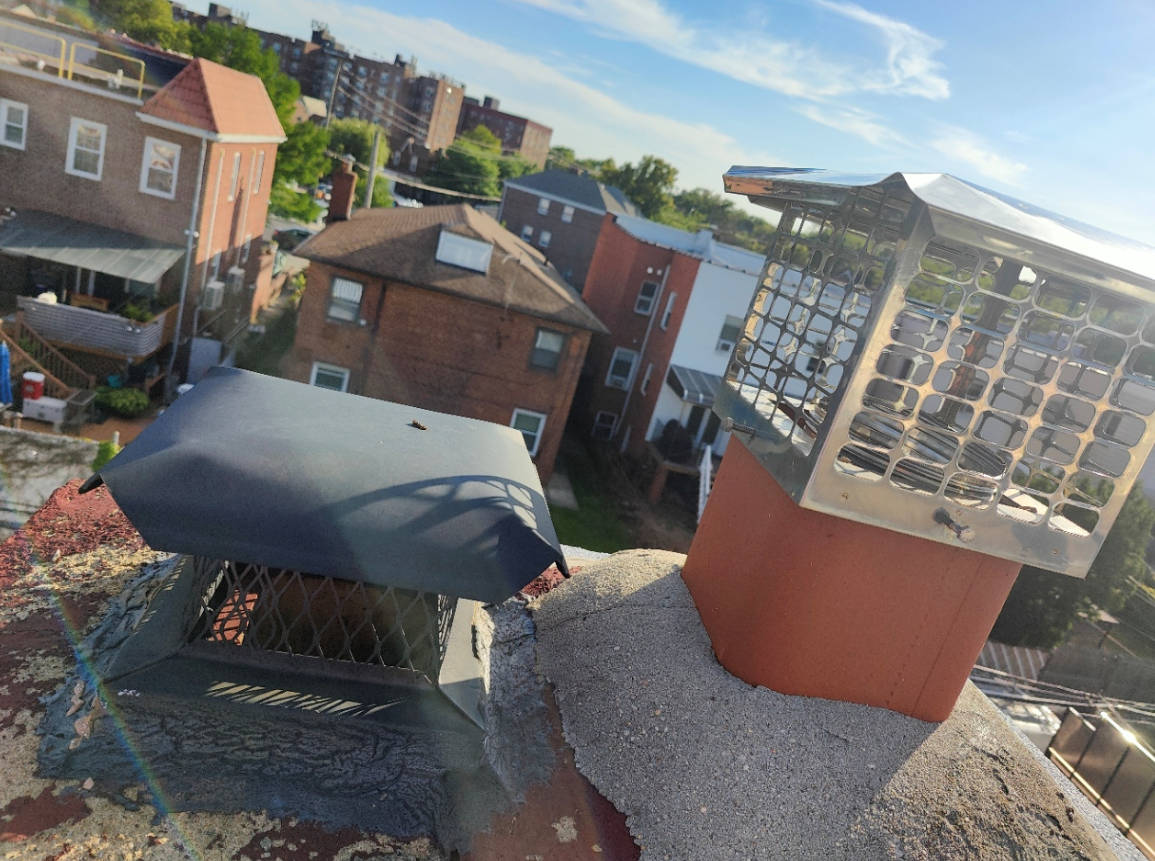
the photo below shows the neighbor's chimneys. the right one has been updated where a new flue has been added on top so it naturally extended the inner clay above the crown by ~1 ft. The flue way is relined with a stainless steel liner. The flue way is accessible by removing the 4 bolts at the base of the rain cap.
the cleanout door will be most likely required by the inspector. I heard he will not inspect the top or inside of the chimney, but mostly rely on the plumber's signoff on the LAA form.
 0
0 -
Someone dropped a ss liner, slipped a section of terra cotta flue tile over it to provide a convenient way to slop some mortar up against it to form some semblance of a crown and provide a base for a traditional tile mounted chimney cap. What I cannot see is the stainless-steel support plate REQUIRED by the UL listing.
The whole thing is a mess but, whatever you want. If Hector, the Inspector requires a cleanout then put one in. However, a tee with a 90-degree snout creates massive flow resistance whereas a broad radius bend does not. The bottom line is, it has to work. If if backdrafts into the CAZ then you're right back to the drawing board.
0


Categories
- All Categories
- 87.7K THE MAIN WALL
- 3.3K A-C, Heat Pumps & Refrigeration
- 59 Biomass
- 430 Carbon Monoxide Awareness
- 127 Chimneys & Flues
- 2.2K Domestic Hot Water
- 5.9K Gas Heating
- 121 Geothermal
- 170 Indoor-Air Quality
- 3.8K Oil Heating
- 79 Pipe Deterioration
- 1K Plumbing
- 6.6K Radiant Heating
- 396 Solar
- 16K Strictly Steam
- 3.5K Thermostats and Controls
- 56 Water Quality
- 51 Industry Classes
- 51 Job Opportunities
- 17 Recall Announcements