Questions

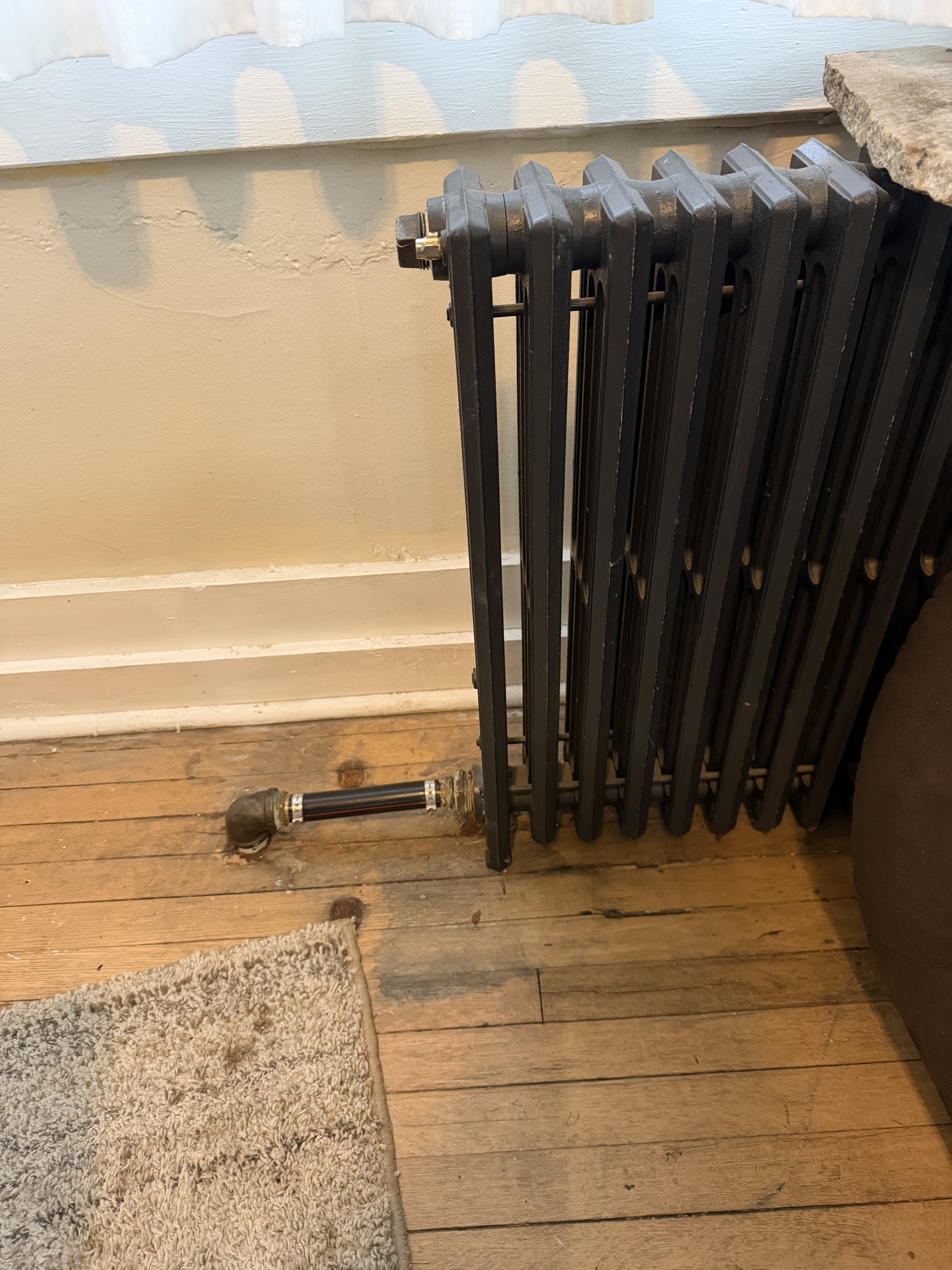
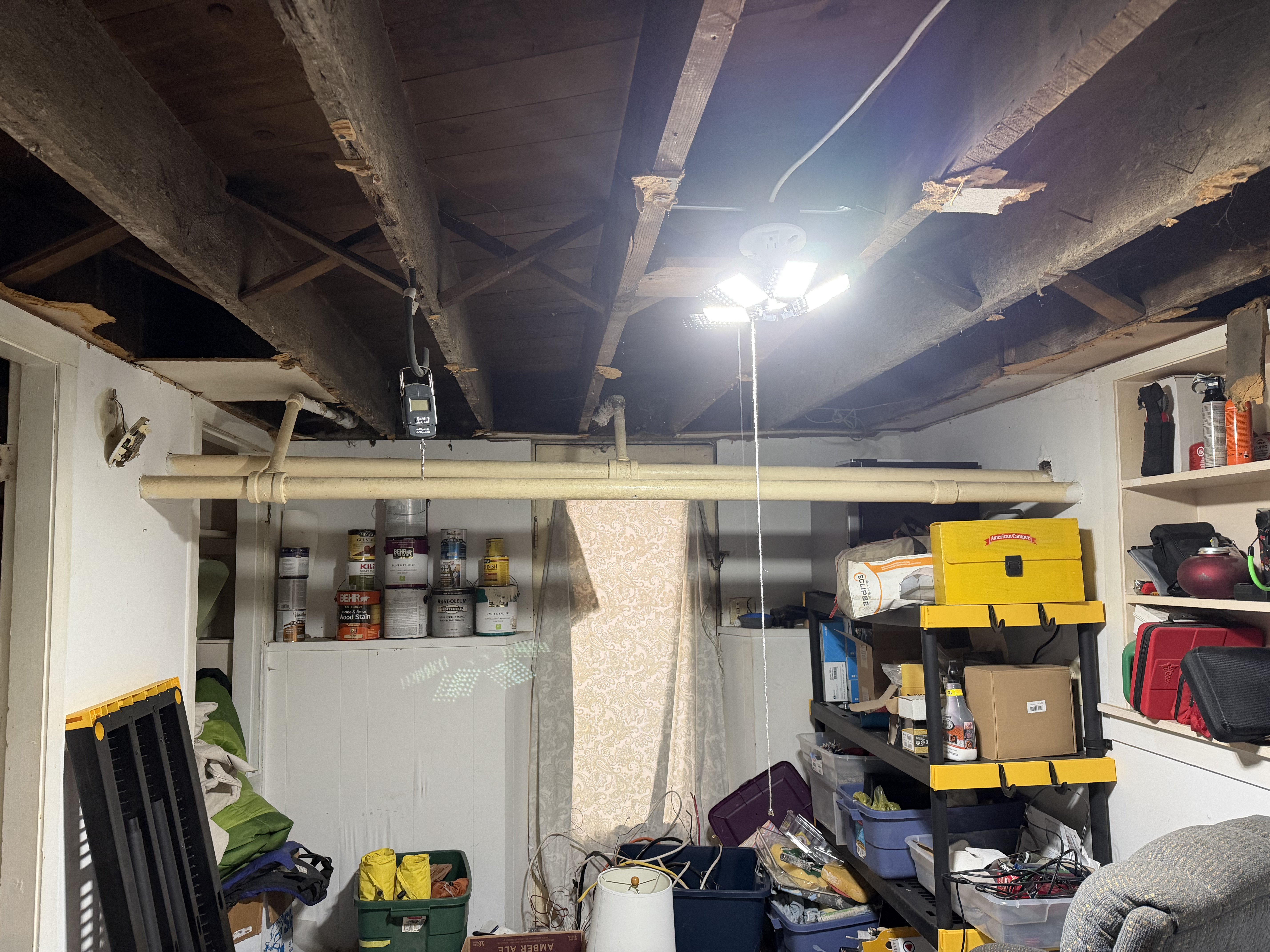
I have questions about rerouting some low pipes. Also I have a radiator that does not get hot. I got an estimate that said the radiator is clogged. I replaced a few radiators with pex. These work great, and have for awhile. I'm wondering if I can use the same pipe to reroute the low pipes.? I will post some pictures.
Comments
-
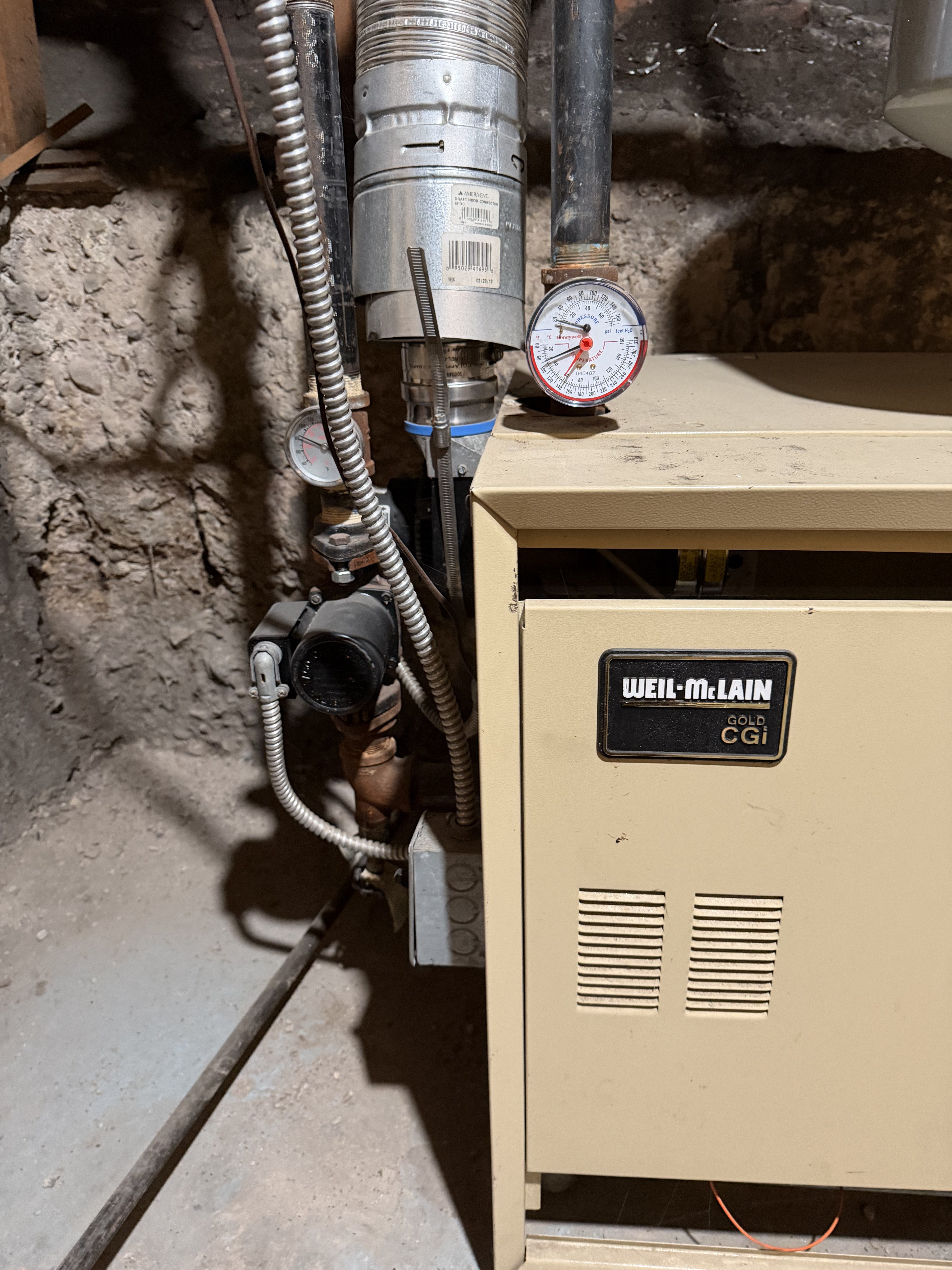
This appears to be a hot water heating system? The boiler trim, at least, suggests that… but it would help to know for sure. There are some aspects in the pictures which suggest possibly steam, or maybe it was a gravity hot water (not pumped).
I am puzzled by the comment "replaced some radiators with PEX". Eh? Do you mean yo took a radiator out and put a PEX pipe in in between what was the inlet and the outlet, or what?
If it is steam, there are some low pipes, called wet returns, which could potentially be safe with PEX. Otherwise, I'd not use PEX, as its working temperature limit is below the safety limits on a hot water boiler, never mind the working temperature of a steam boiler.
But let's know a little more about the system…
Br. Jamie, osb
Building superintendent/caretaker, 7200 sq. ft. historic house museum with dependencies in New England0 -
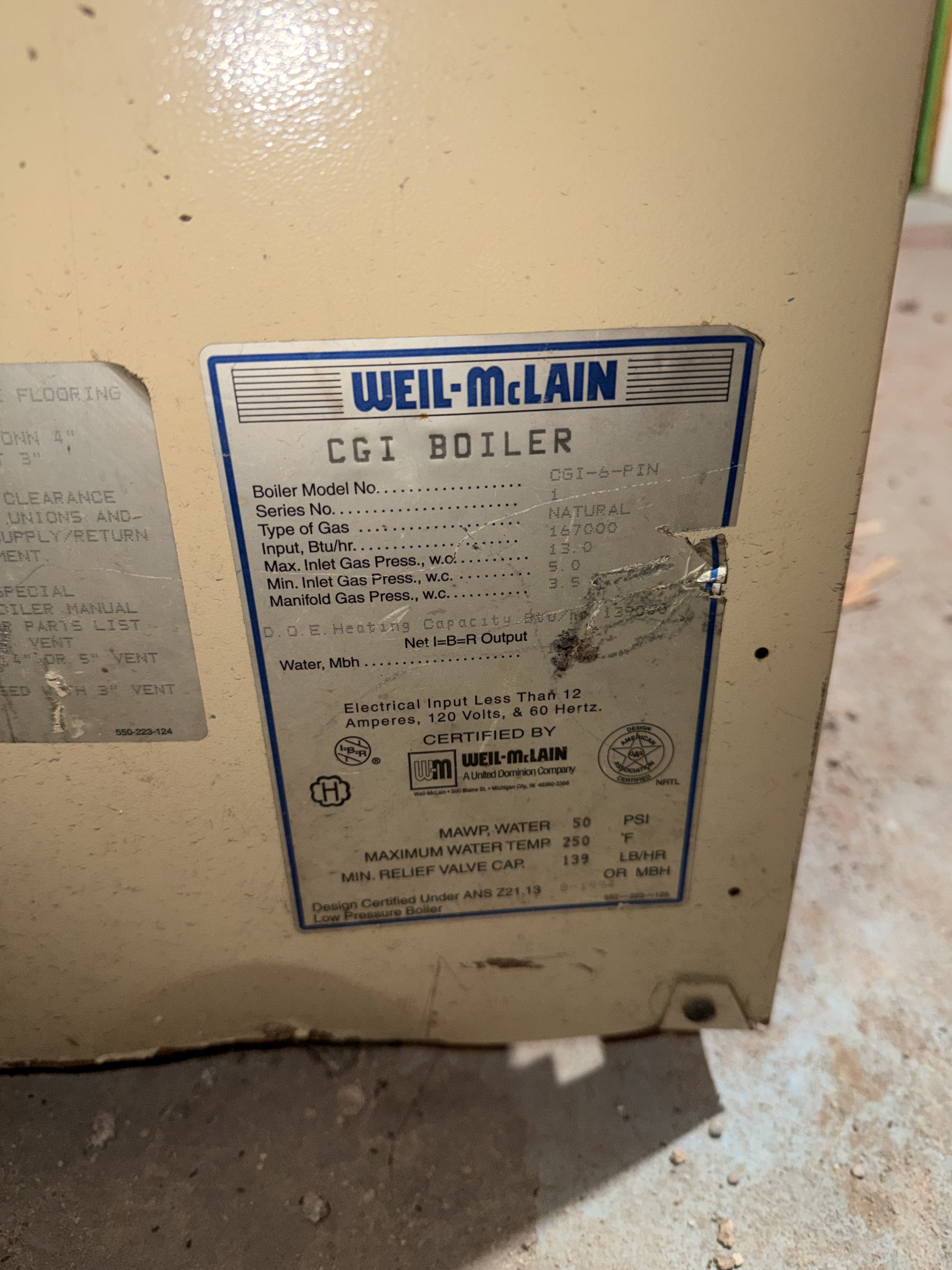
How many radiators do you have? About how many square feet are you heating? That seems like a fairly large boiler.
If you need the full btu capacity you would need to repipe with 1-1/4" pipe, around a 14 gpm flow.
Seems odd for a radiator with those size connections to get plugged??
That boiler may not be vented properly, is it a power vent model.
Bob "hot rod" Rohr
trainer for Caleffi NA
Living the hydronic dream0 -
Yes hot water system. Yes I put pex in between the inlet and outlet of the new radiators. So one of my questions is can I reroute the low gravity system pipes with 1 inch pex. Also is it still a gravity system with the boiler pump?
0 -
The house was built in 1930. It had the original boiler when I moved in. I think it was origially coal converted to gas . total gravity system.
0 -
So I thought the working temperature was 180 degrees and my temperature never gets above 145.
0 -
180 degrees for the pex. It was suggested by my original boiler advisor. I did hear the guy who sold it to me say something like that. Advice has been hard to come by. And estimates have been so high. Anyway its been working for many years. So easy to work with
0 -
The house is about 3000 square feet. 5 large radiators 3 smaller ones.
0 -
I have definitely wondered about the venting . It has been working since 2009 when I installed it. It is a class b that goes through the chimney in a sleeve that a I got from standard plumbing gas department.
0 -
First things first. PEX is rated to 180 F. True. What positive safety cutoff is on your boiler which shuts it down — independent of anything else — before it gets to 180, in the event the aquastat fails?
Now it is no longer a gravity system, now that it has a pump.
Br. Jamie, osb
Building superintendent/caretaker, 7200 sq. ft. historic house museum with dependencies in New England0 -
the working temp is at the typical aquastat settign of a hot water boiler. If you look at the specs it is a curve of pressue and temp, at 30psig it can hold a lot more than 180f water.
0 -
directly connected flexible chimney liner right to the boiler?
0 -
The boiler operating temperature may be set at a typical 180°
But that doesn't mean the boiler will always reach that temperature.
If it satisfies the thermostat before it reaches 180, it may never run above a 145 or whatever supply or boiler temperature.
It is always the connected piping, volume of water and mass of the radiators that drives the boilers actual operating condition.
IF you runs most of them time at or below 145° that may cause condensing in the boiler and/ or flue piping.
It would be good to monitor that a few times throughout the season. Ideally on a design, coldest day the boiler would run nears its setting and stay there. That indicates the boiler and radiation is sized close to the homes design load.
If I had to guess I would say the home is under 100,000 btu/hr load at design, maybe even as low as 60,000.
A heat load calc would be good info to have. That boiler could be twice the size required?
Bob "hot rod" Rohr
trainer for Caleffi NA
Living the hydronic dream1 -
The house is a brick uninsulated very leaky house. I have improved it greatly with better windows and blown in insulation. The resting pressure is 12psi and working hard psi is18. I think he said the temperature was set to 145 and he could adjust it if the house wasn't getting warm enough. Its a one floor home. 1 zone. I replaced the original boiler with the current one myself. The estimates to replace it with asbestos abatement were unbelievable. I got the same boiler specialist to advise me for a small fee. They said the boiler was a good fit. Anyway I installed it in 2009 and it has been working well. The advisor from the plumbing company retired and I haven't been able to ask questions. He was the one who suggested the pex for radiator installation. This winter i found that a radiator in a bathroom not getting hot. I tried free estimate from a local specialist. He said it was clogged offered $$ $ power flush. Then I showed him the low pipes and he said he could reroute them for $$$. I really don't want to invest heavily in this technology. But I know I can buy a replacement cast iron radiator for under 400$. How can he be certain its clogged. He said his company could mega clamp for rerouting the pipes. I saw some other aluminum clad pex like pipe on this old house. Could I reroute the pipes going through the room without re piping the whole system.
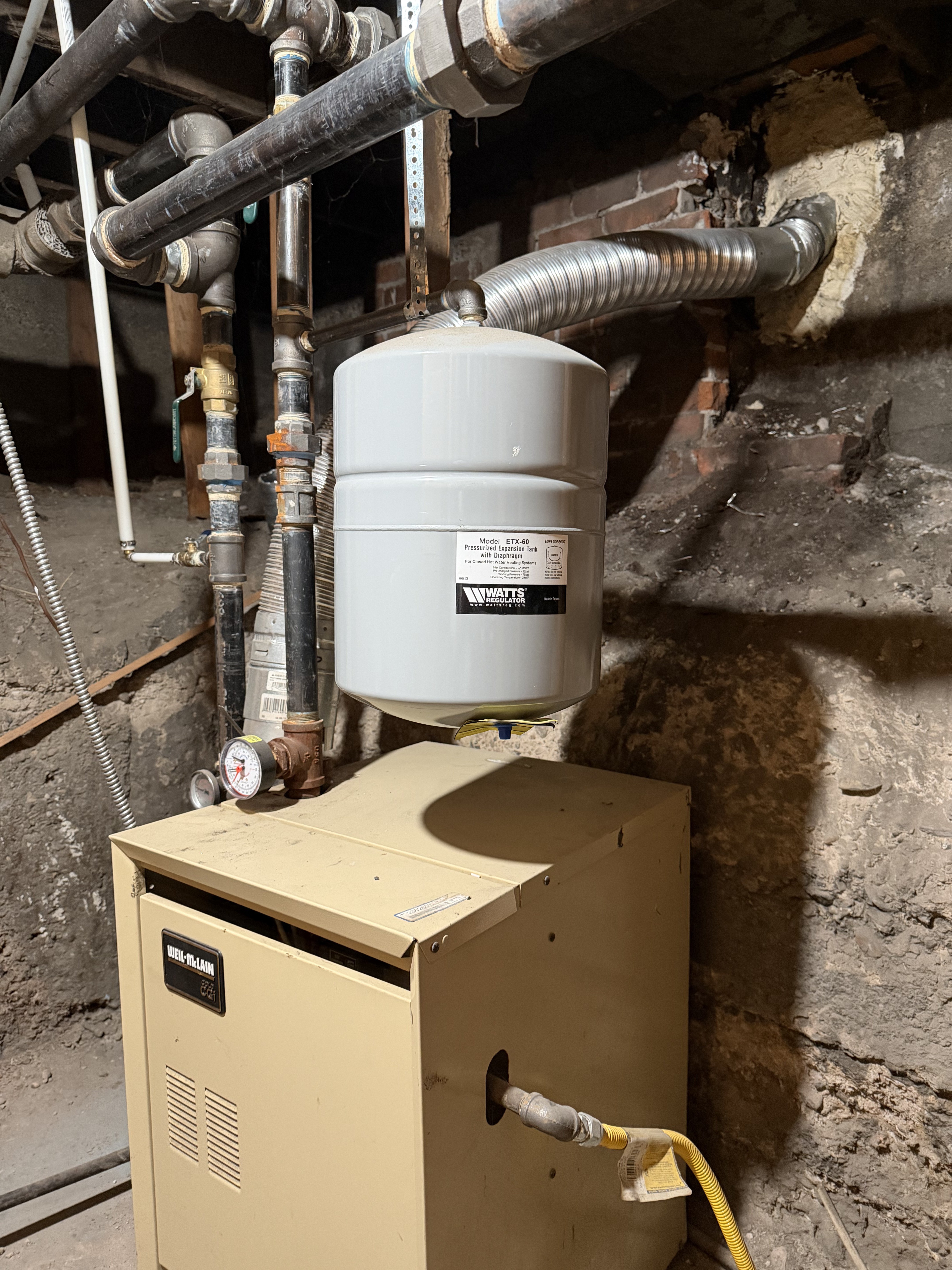 0
0 -
A clogged radiator is almost unheard of. More likely airbound…
Br. Jamie, osb
Building superintendent/caretaker, 7200 sq. ft. historic house museum with dependencies in New England

 3
3 -
it would be fairly easy for someone with basic pipefitting skills to break that piping back to a threaded connection and use a male adapter to replace with with probably a combination of copper and pex. pex in a large enough size for those mains would be expensive and unwieldy but it would be great for the runouts to the radiators.
please edit to remove prices, we can't talk about the prices of services
you wouldn't need the full size of the current main but it would have to be somewhere between probably 1" and 1.5" depending on what load is served by that section of the main.
1 -
A CLOGGED RADIATOR is a quote from someone who gives you a high ball price and doesn't have a CLUE what is wrong with your system.
Radiators especially Hot Water CI radiators don't plug.
Keep your eye on that pex over time it may get brittle
 4
4 -
insulate or paint the pex if it is someplace where it will be exposed to sunlight(or fluorescent lights), uv will degrade it
0 -
If you have upgraded the building shell, that boiler is almost guaranteed to be too large. But you own it, so.
Good chance the entire home could be heated with 1" pex runs replacing those steel pipes.
Another option is a home run with 1/2" pex to each radiator from a manifold at the boiler. Then you have individual control and a system you could install yourself
You could have manual, or thermostatic valves at each radiator for unlimited zoning and tem perature control.
This happens to show steel panel radiators, it could be any type of heat emitter connected.
Aluminum pex is a good option.
Slide 3 is how Bob cleans up the pex home runs in the basement, running through pvc sleeves. A mod con boiler as show is a gret match for it's modulation and low temperature efficiency.
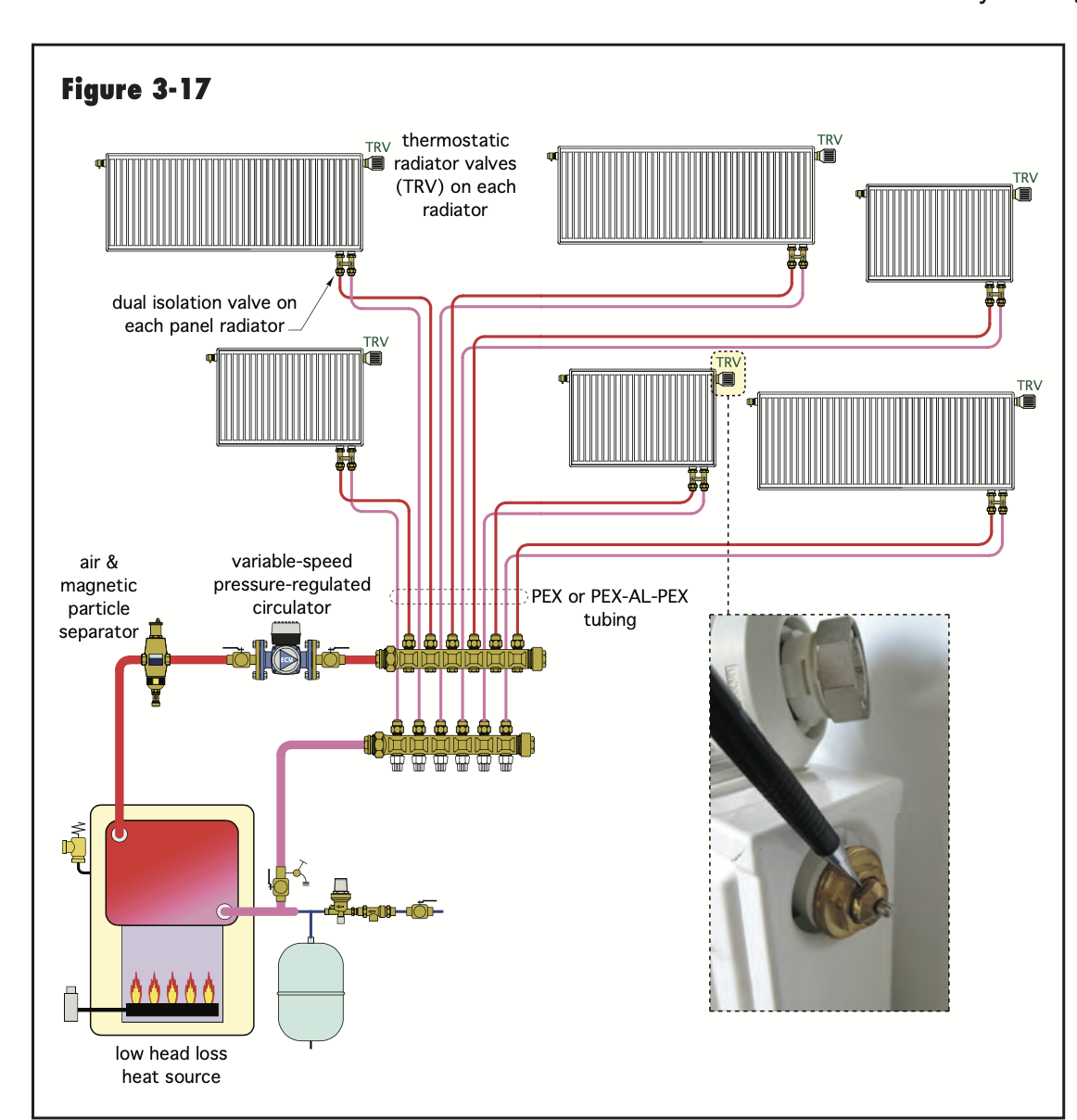
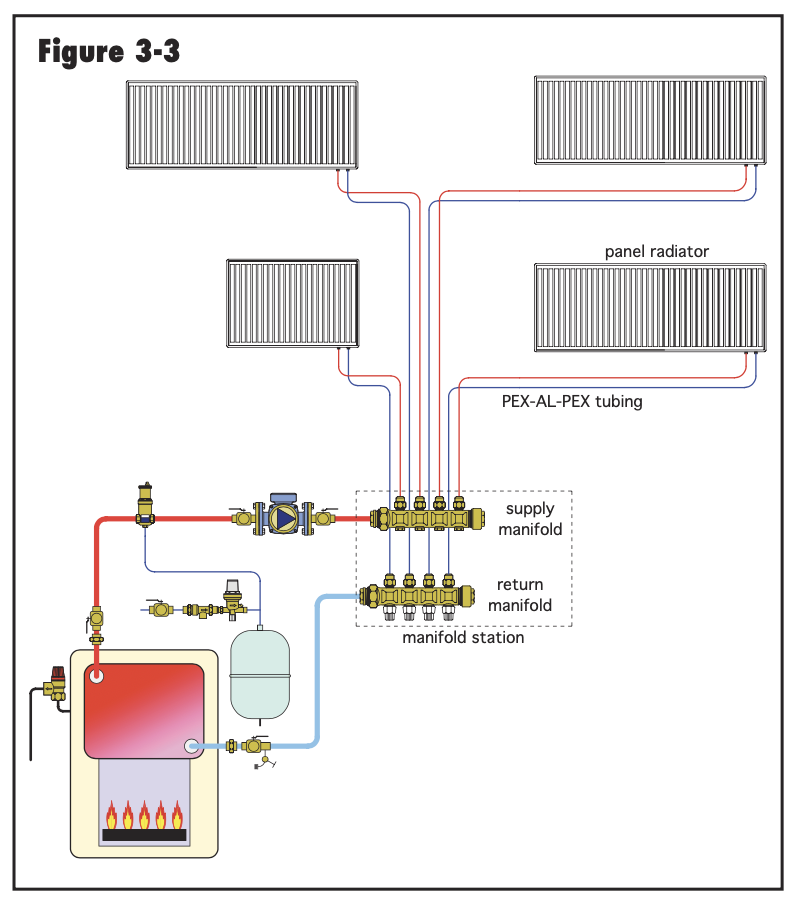
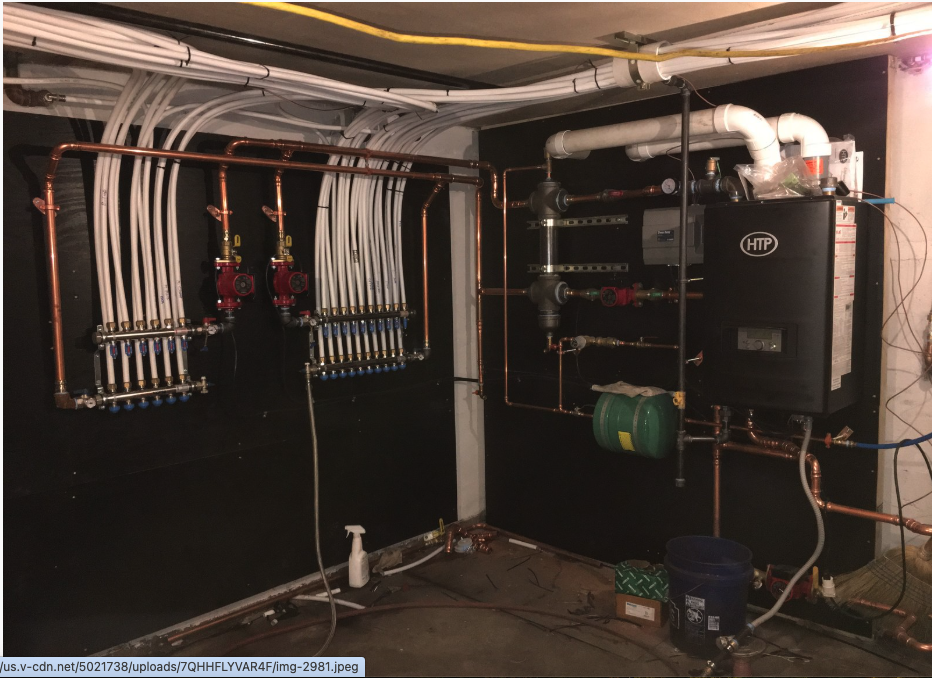 Bob "hot rod" Rohr
trainer for Caleffi NA
Living the hydronic dream1 -
The pex leaks or doesn't leak. Its a lot cheaper then the alternatives. I had 2 leaky radiators. Again I could not work with local plumbers. I ordered and installed them. The whole system is so outdated for my area. I live in Salt Lake City and there are residential homes with boilers but not many. So finding plumbers with the right experience to ask has been very difficult.
0 -
Does anyone know how to troubleshoot a cold radiator. I traced the pipes back to where they get warm from underneat in the basement.
0 -
it isn't outdated, they are just putting cheaper systems in most new construction
with hot water if it us cold it is lack of flow, that is either it is air bound somewhere or the other paths are less resistance for the water. or a valve that is closed or came apart internally and closed itself.
0 -
-
there are dozens of radiant/ hydronic shops in the Salt Lake valley
Harris Dudley
Thorton
Neerings
These are some of the larger shops been around 50 years or more
Plenty of smaller shop if you need more names
Bob "hot rod" Rohr
trainer for Caleffi NA
Living the hydronic dream1 -
I agree. I don't think it's a clogged radiator. The house was built in 1930 but there was an addition. a one bedroom apartment. They added 2 additional radiators to the system. One works great. The one in the bathroom doesn't work. I had a tenant move out in January. I have access to the plumbing runs in the basement but no knowledge about how it was supposed to be done. I have had some of the plumbing companies over for estimates. No one they sent has has impressed me. They do great work but… If I cant figure it out I will just put in an electric heater.
0 -
There aren't all that many ways to plumb a hot water heating system… the one which can be really confusing it the "monoflo" system; it is also the one which is hardest to get to work right unless it is really understood. But from your pictures (there is one which appears to show supply and return piping) you don't have that problem.
Absent that, then, you just aren't getting flow through that radiator. Since it is one of the added ones, I wonder if it was even piped correctly to begin with? Supply from the supply main, return to the return line? Then are the lines similar in size to the ones to and from the radiator which works? If there are valves on the lines, are they open? When you open the air bleed on the radiator, do you get air out or water?
Br. Jamie, osb
Building superintendent/caretaker, 7200 sq. ft. historic house museum with dependencies in New England0 -
- did it ever work?
- if it didn't then yo may need to close the valves partially especially on the radiators close to the boiler to get flow to take that path along with the other radiators especially if they used smaller piping to that radiator.
- is this a second floor above the rest of the system? what is the pressure at the boiler?
0 -
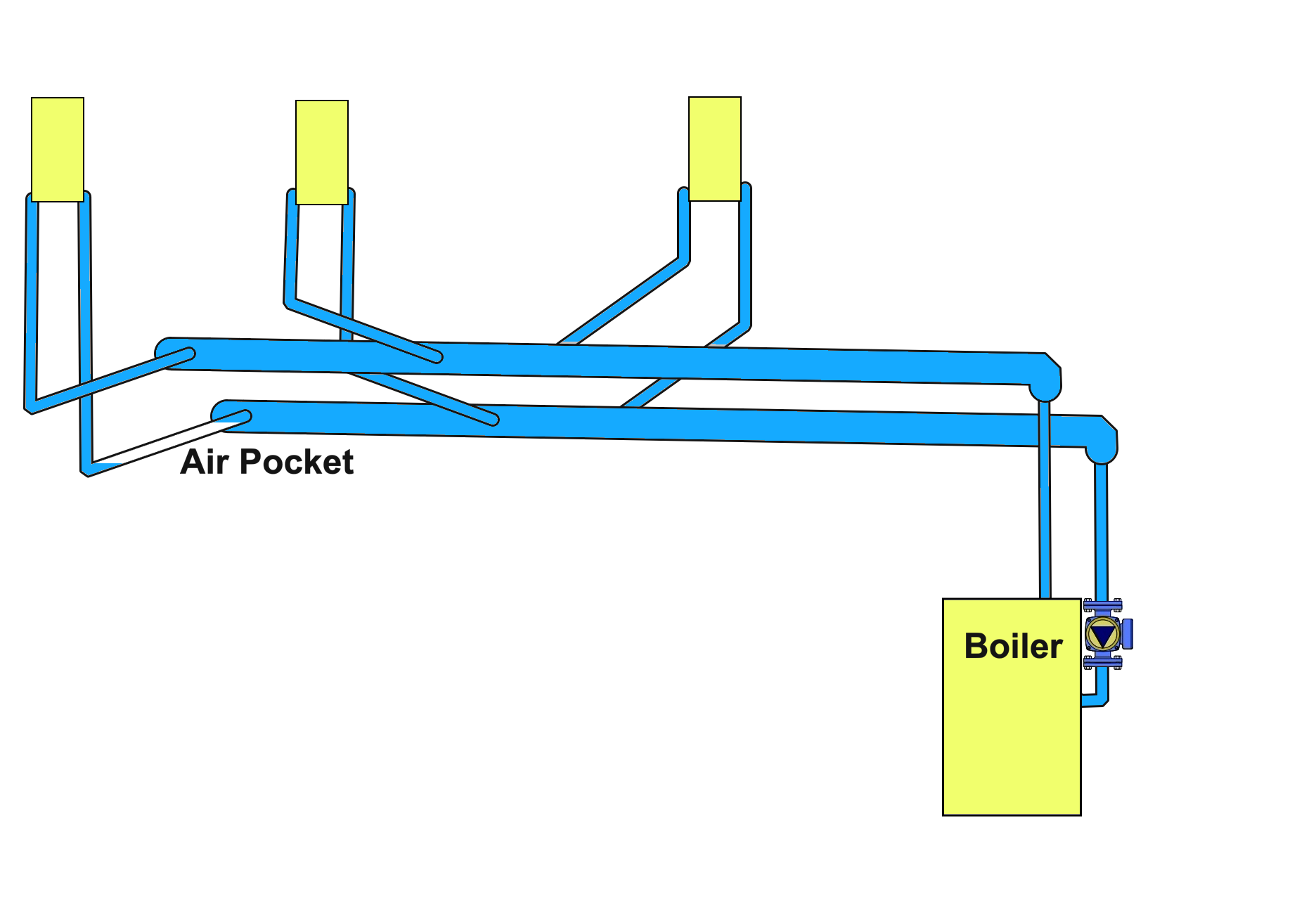
This might be what is happening if the pipe does not pitch the proper way. Air can get trapped on a pipe pitched the wrong way and that will stop water flowl.
Edward Young Retired
After you make that expensive repair and you still have the same problem, What will you check next?
1 -
After talking to you on the phone I believe that you have too much pipe on the radiator that is not working. From what I could see on the video and what you said about having "both" pipes off of a takeoff for the addition, I believe that the addition heat never was that great and now that you have a chance to get in there you want to fix it. So here is what I see in my minds eye
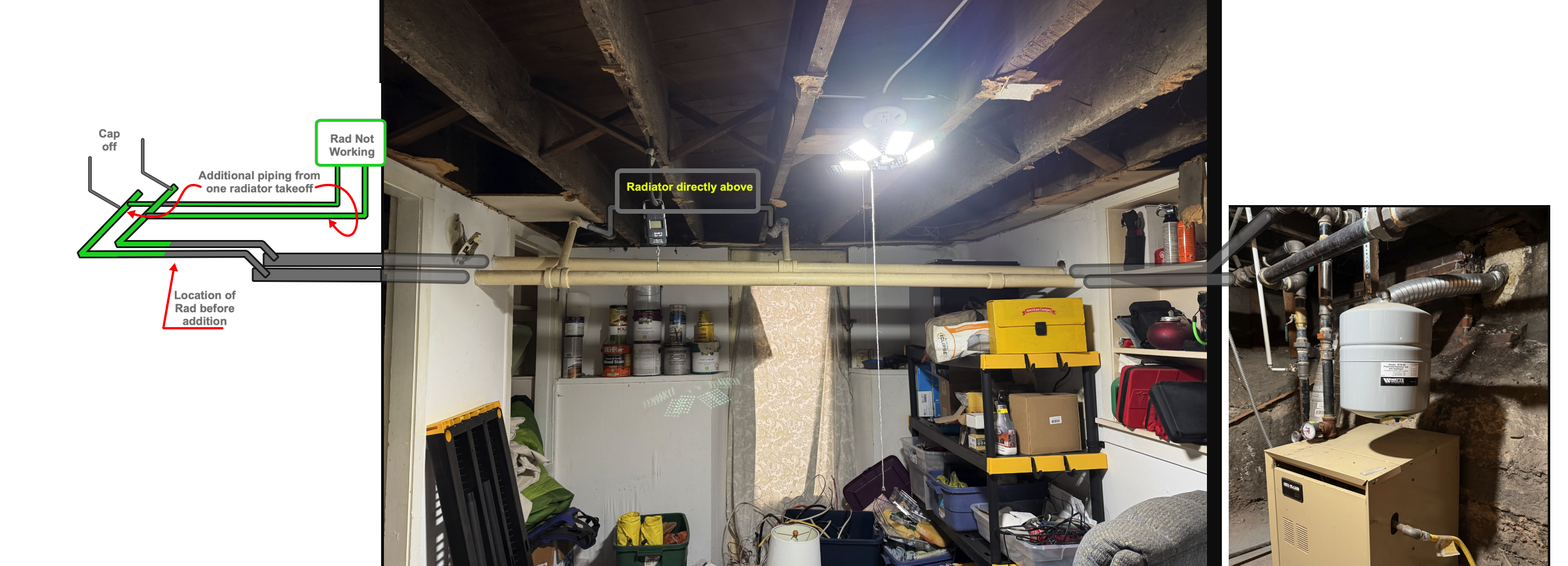
The above illustration may not be exactly what you have and is only for illustration purposes.
The old gravity system will be balanced for your one-story system, as it was before there was an addition. Replacing the boiler should result in a balanced system with a circulator. If you look on the left side of the illustration, I have the main supply and return (shown in gray pipe) and the one radiator that was removed when the addition was added. Stopping at the gray pipe would be a balanced system.
When the addition was completed, there was a radiator supply and return big enough for one radiator, with short feed pipes off the main. The installer of the addition may not have understood how water flow works and perhaps added two or more radiators. All of the addition radiators were connected to the only available pipes — the supply and return for the single radiator that was removed. That supply and return was not large enough to handle the entire addition heating load. Perhaps only one radiator worked, and that was “good enough” to get paid for building the addition. It may never have actually worked properly.
Now you want to fix it properly, and the best idea I have is to use 1/2" oxygen-barrier PEX and run that PEX from the bathroom radiator directly back to the boiler room, making the connection to the supply and return at the boiler. Here is the illustration I might use:
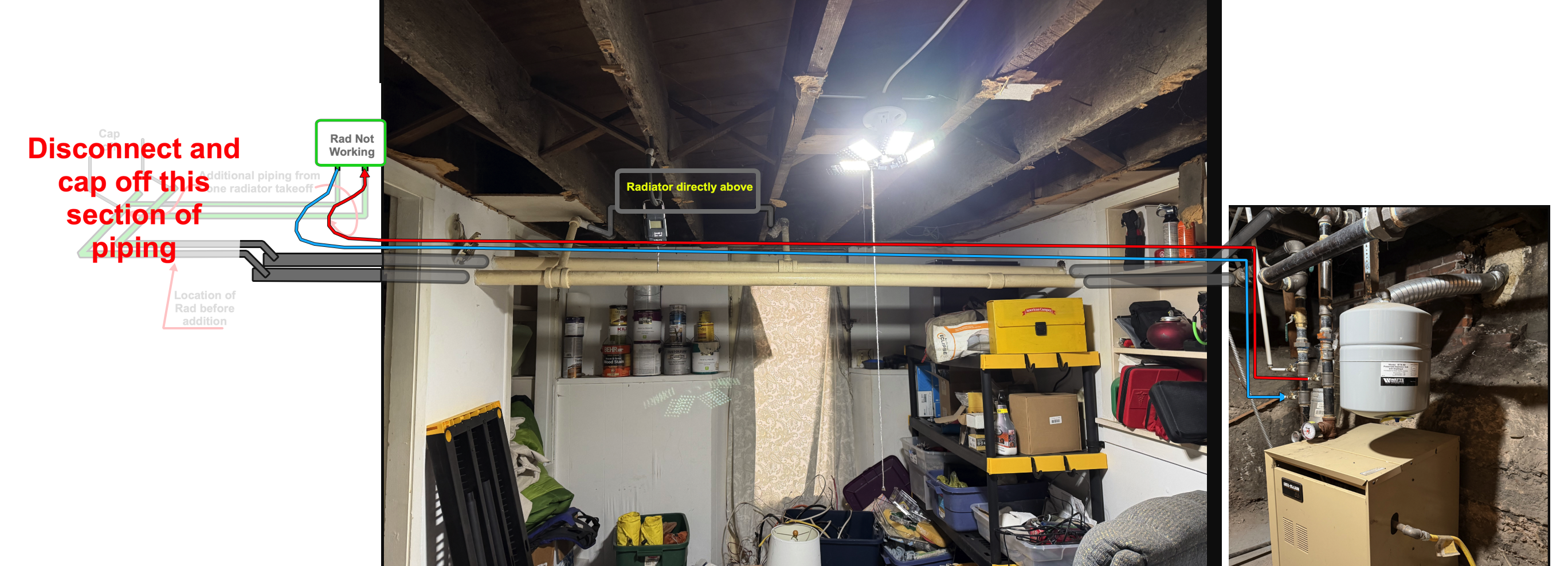
Forget all the piping that is for the addition and cap it off near the main supply and return.
Using Oxygen barrier PEX make the non working radiator connect bt way of a home run to the boiler room as shown using Red and Blue in the illustration. Make the return from that radiator as close as you can to the circulator pump. (Within 3 feet)
That will solve the cold radiator problem.
Lowest cost, least amount of work way in my mind.
Edward Young Retired
After you make that expensive repair and you still have the same problem, What will you check next?
0 -
Thank you all for your advice. After the plumber told me it was a clogged radiator I was ready to just replace it. I wanted to believe. Thank you ED for looking. I can see myself removing all the 100 year old black pipe and installing 1/2 " aluminum pex with the manifold system. Thank you Hot_Rod. At first I thought that would never work for me. But thinking about it.. Its a big project, but doable. Thanks
0 -
sounds like a home that has been converted to have a rental property?
If so, control if the heat in that separated unit or space may become a challenge,
Bob "hot rod" Rohr
trainer for Caleffi NA
Living the hydronic dream0





Categories
- All Categories
- 87.8K THE MAIN WALL
- 3.3K A-C, Heat Pumps & Refrigeration
- 60 Biomass
- 430 Carbon Monoxide Awareness
- 133 Chimneys & Flues
- 2.2K Domestic Hot Water
- 6K Gas Heating
- 124 Geothermal
- 170 Indoor-Air Quality
- 3.9K Oil Heating
- 79 Pipe Deterioration
- 1.1K Plumbing
- 6.7K Radiant Heating
- 397 Solar
- 16.1K Strictly Steam
- 3.5K Thermostats and Controls
- 56 Water Quality
- 51 Industry Classes
- 51 Job Opportunities
- 18 Recall Announcements