another wiring/control question

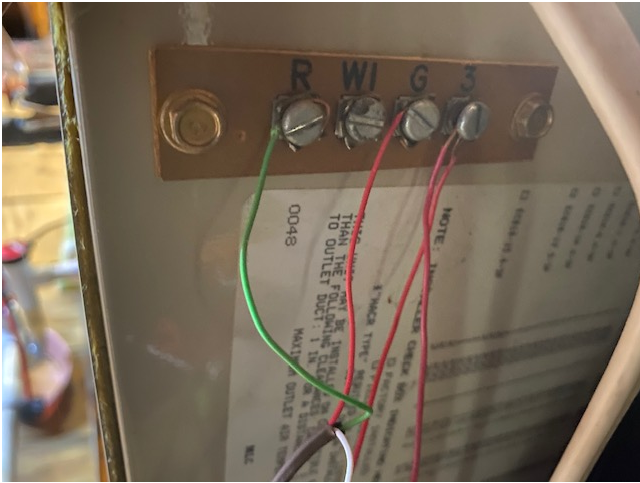
Could you possibly dig into your bag of tricks and spells and find a wiring diagram that explains the thermostat wiring for a 1989 Lennox Air conditioning unit? I was up in the attic and I noticed the low voltage board on the air handler only has 4 screw terminals for wiring between the Thermostat, air handler and the compressor (R, W(I), G, 3) but the W(I) does not have anything connected to it but the other 3 terminals do.
The air handler is CBS18-31-P (I do not see any boxes checked on the label to indicate heat strips are installed)
The condenser is a HS1.8-311-7p
The thermostat is a typical Honeywell RTH65XX wifi series (not sure of the exact version)
Everything is working and has been since 2018 when I bought the house, but as always when I notice something weird and can't find any information on it via the regular search engine, I come here to the best search engine out there Heating Help :)
Any ideas what the terminal # is for and also why the W(I) may not be connected.
Thanks in advance
Pete
Comments
-
That could be a cooling only system.
Do you have another system in the house?
If there was electric heaters in this unit then there would be a fairly large electrical circuit feeding it.
0 -
Those boxes might seldom get checked. If I need to know about heaters, I open the unit up.
0 -
y from the condenser connects directly to y from the thermostat one way or another. c from the air handler connects to the other side of the contactor in the condenser.
when there is a call for cooling the thermostat closes g and y
y turns on the condenser by energizing its contactor
g turns on the blower in the air handler
this is the way it worked before sometime in the 90's when furnaces started to be set up to run low speed blower on a fan only call and high speed blower on a cooling call, when this change happened the air handler needed a y connection from the thermostat to bump the blower up to high speed on a cooling call.
w is for heat
not sure about the 3, look at the schematic inside one of the doors of the air handler. might just be an unconnected terminal that is used as a splice point for y out to the condenser.
0 -
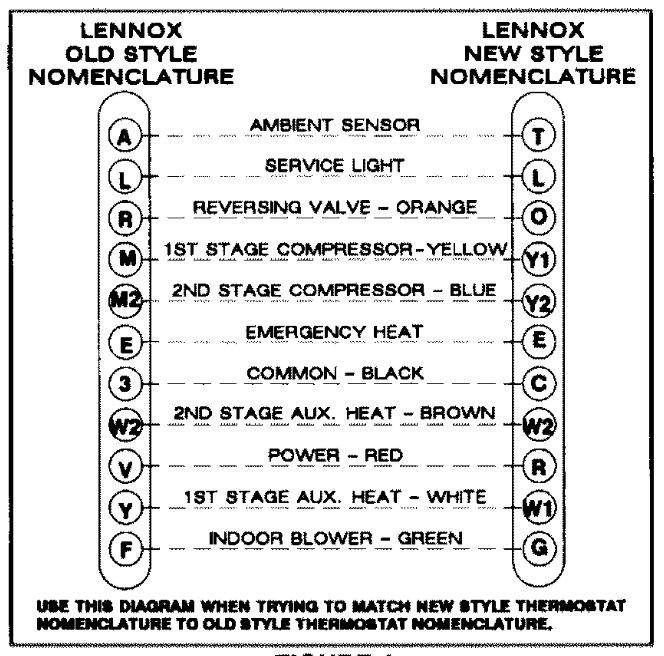
I think that explains it, it looks like the labeling on the air handler could be a little from column A (new) and column B (old)
R (new) - power
W1 (new) - aux heat - not used on my unit
G (new) - indoor blower
3 (old) - Common wire
Thanks very much. I'll also pop off a cover or two that I have access to in case I ever lose track of any of the wiring connections just to be certain. The air handlers in great condition so I "assume" i won't have any issues opening and closing the access panels I see on it. I always hate opening stuff first since there's usually enough folks like the Heating Help team and other resources online to find out these details before taking stuff apart.
Thanks Again
Pete
0 -
Yeah I'm sure that is an easy thing to skip during an install. I was more focused on the cooling side control connections between the AH, CON, Therm. Since the terminal strip didn't have the typical labeling on the terminals. Thanks for all the feedback though.
0 -
the 3 i think comes from some old honeywell gas valves that had the terminals numbered.
0 -
@PeteA… Way back in time, just after the dinosaurs became extinct, there was this brief period in human history when there was no air conditioning… and then suddenly there was air conditioning. Historians believe this period was either called the Protestant Reformation or the Age of Antiquated Technology. The records are unclear.
During those ancient times, HVAC control systems were mostly just wires and relays. Circuit boards and transistors were rare magical artifacts. You would not believe the size of radios back then. They were basically an entire piece of living room furniture with vacuum tubes and wires going everywhere with AM reception. We would actually sit and watch the radio.
Those old analog thermostats and control systems used weird numbering and lettering schemes that made perfect sense to somebody in 1963 and absolutely nobody afterward. As you can see from many of the previous posts, Lennox was going through a transition phase where they were slowly moving away from their own thermostat labeling system while Carrier and other manufacturers were beginning to standardize terminal labels across the HVAC industry.
That is why on your ancient relic of a system “3” = Common (C) because apparently using the letter “C” directly would have been too easy.
For a cooling-only system, the W terminal was not needed, which is why it is blank on your AHU. Back then, there was also this exciting new concept called the heat pump, where early engineers basically tried putting a window air conditioner in backward so the hot air blew inside and the cold air blew outside. Unfortunately, this groundbreaking technology had a slight flaw: the outdoor coil turned into a giant block of ice every winter.
Then one glorious day, somebody invented the defrost cycle and civilization advanced once again.
Eventually, manufacturers added reversing valves to the outdoor units so homeowners no longer had to physically remove and rotate their window air conditioner every season like some kind of HVAC Amish ritual. Amazing, right?
But to answer your actual question:
On your unit, W1 was simply there for adding an optional heating section to the air handler. If your system was cooling-only, then W1 existed solely to confuse installers and future homeowners for generations to come.
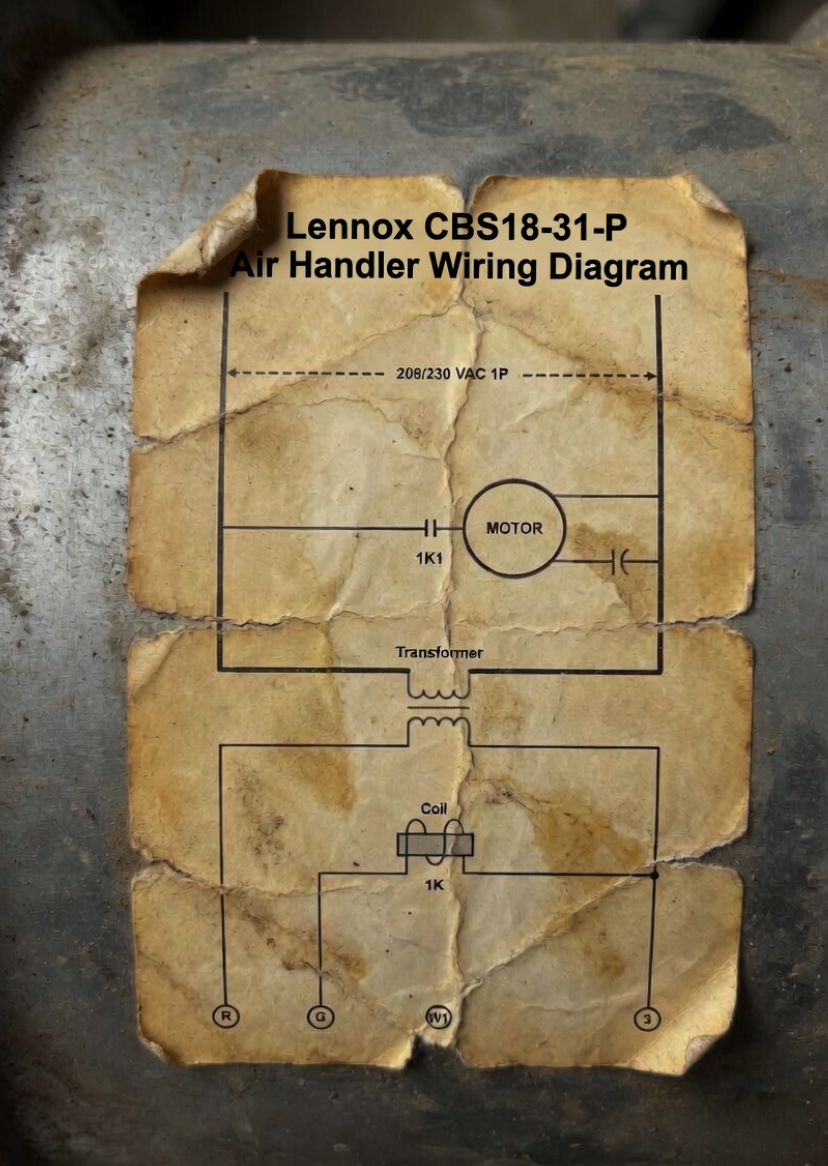
So on your system:
- R = 24V hot from the transformer
- G = Fan relay
- 3 = Common from the transformer
- W1 = Emotional support terminal / installer confusion terminal
Edward Young Retired
After you make that expensive repair and you still have the same problem, What will you check next?

 3
3 -
Lennox always had to be different from anyone else.
0 -
sometimes that's good, sometimes that's bad. sometimes it is both.
0 -
And don't you just love the color coordination from the colorblind installer. The Red wire goes to G and the Green wire goes to R.
And 3 has two red wires. Perfect for future technician confusion! I found the wiring diagram for your AHU! …or did I? Look at my edit on the bottom of my previous post @PeteA
Edward Young Retired
After you make that expensive repair and you still have the same problem, What will you check next?
1 -
the 2 reds are probably because of 2 wire red and white cable to the condenser
0 -
As always @EdTheHeaterMan I really appreciate your in depth, historical and hysterical knowledge of the old, new and irrelevant. I certainly do remember the days of the old vacuum tube cabinet sized television as well as the full sized record player. Geez "those where the days….."
 1
1 -
I will take a closer look at the multiple reds and how many conductor wires come up to the one spot in the attic tonight now that the sun is not beating on the roof. I am sure you're correct that in order to make things work, multiple wires were run in order to branch off to different parts of the system.
Thermostat, AHU, Condenser and then the hotwater boiler in the basement. I'll make an attempt this season to get the wiring more coordinated to todays standards to avoid any confusion later in my more senior years when I try and fix this stuff myself.
0



Categories
- All Categories
- 87.8K THE MAIN WALL
- 3.3K A-C, Heat Pumps & Refrigeration
- 60 Biomass
- 430 Carbon Monoxide Awareness
- 133 Chimneys & Flues
- 2.2K Domestic Hot Water
- 6K Gas Heating
- 124 Geothermal
- 170 Indoor-Air Quality
- 3.9K Oil Heating
- 79 Pipe Deterioration
- 1.1K Plumbing
- 6.7K Radiant Heating
- 397 Solar
- 16.1K Strictly Steam
- 3.5K Thermostats and Controls
- 56 Water Quality
- 51 Industry Classes
- 51 Job Opportunities
- 18 Recall Announcements