Replacing cast iron piping

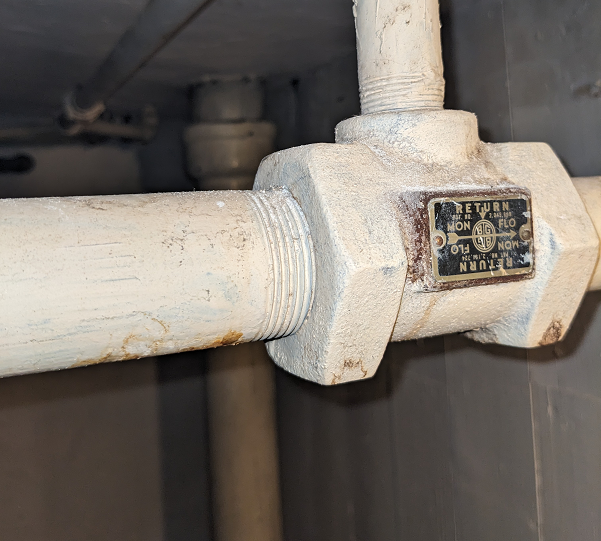
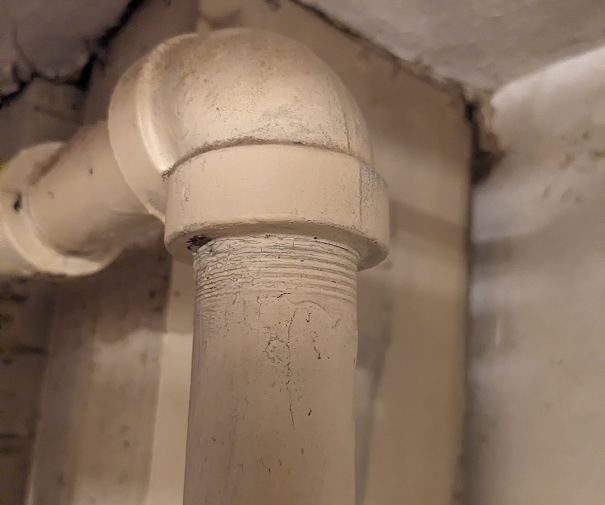
I have a Monoflo system from the 50s and I will be replacing the boiler with a Weil-McLain CGa-6 cast iron boiler. I will be keeping the Monoflo piping and radiators, but I will make some changes to the near-boiler piping. I'll be using black steel pipe and iron fittings. I'm trying to anticipate any problems I may have beforehand, so I can be more prepared when I do the install. One thing that concerns me is getting the old cast iron piping apart. I have never worked on these particular pipes, so I don't know if they'll come apart, if they'll be seized, if the threads will be usable, etc.
To anyone who has a lot of experience taking this type of piping apart, do they generally come apart easily? Are the threads usually clean enough to reuse with black steel pipe?
My other question then is, if i do have to end up cutting the pipe, how could I mend it or connect it with new piping? What are some techniques/methods that can be used? From the research I've done, it doesn't seem that I'd be able to easily cut and re-thread them. And I haven't really found any sort of compression couplings or sleeves that seem like a durable, leak-proof fix.
Comments
-
You can crack Cast Iron elbows with a sledge hammer. That will get you to the threaded pipe end that can then be converted to copper to female adapter for easy repipe job.
I have also used 2 pipe wrenches with a come-along to pull the handles together and break the pipes loose with brute force leaving you with a female thread to use a copper x male adaptor for an easy repipe
Trying to get all the new piping from the new boiler to the existing system piping will be difficult. It can be done if you have a pipe threader, but shy of that, you can make custom length pipes with copper much easier. If you are not that good at soldering 1-1/2” fittings, then you might look into renting a propress tool and using the no solder approach.
CGa-6 is a pretty big boiler with 122,000 NET output. If you really need that much heat, that will require a 1-1/4" one pipe main and those photos look like you have a 1" main with a 3/4" branch to the radiator. How big is your McMansion? I have a feeling that you an use a CGa-4 if you do a proper load calculation. maybe even smaller. If you are using the old boiler size as a reference for the new boiler and then going a little bigger just for good measure, then you will surely be purchasing an inefficient oversizes boiler for your system.
I know this is not a steam boiler but this story goes to the point here about properly sizing your new boiler. .
Edward Young Retired
After you make that expensive repair and you still have the same problem, What will you check next?

 2
2 -
@EdTheHeaterMan Thanks for the info. I appreciate it. My house is about 2,100 sq ft. The current boiler is a very old American Standard, and it is rated at 210,000 BTU. In the past, an HVAC guy mentioned it was way oversized. Also, I had a company come out and give me an estimate. They did their heat loss assessment and recommended a CGA-5. I did my own heat loss assessment, and came up with a total of 133,000 BTUH heat loss. My house was built in the 1920s, so the insulation is not all that great. Also, the main pipe is 1-1/4" and the brach pipe is 3/4". Those pics are a bit misleading.
0 -
More Info. Great.
Professionals usually use copper to reconnect new boilers to old cast iron systems. It is standard practice today. I left the industry several years ago and never invested in the ProPress tools they use today for connecting copper piping. I see it all over now. the company that purchased my business upon retirement used ProPress on all the new work. It seems that not using a torch inside a customers home offers you a reduced rate for your business insurance. …enough to afford a ProPress tool.
Edward Young Retired
After you make that expensive repair and you still have the same problem, What will you check next?
1 -
Your Heat Loss calculation may be a little high. The infiltration factor can throw your numbers way off. an old house with leaking windowa and lots os space between the floor and wall connections can cause as much as three air changes per hour (ACH) while some new construction homes can be as little 0.1 ACH, but without a HRV or ERV that house will hold lots of sickness and health problems in. Your home is probably closer to 1-2 ACH. with that in mind you are probably still oversized with that CGa-6. What is the chance of getting a CGa-5 or CGa-4?
What size and how many heat emitters do you have? Are they cast iron radiators, or recessed wall convectors, or something else? With Cast Iron radiators we can size your system by the square foot of equivalent direct radiation, (EDR) and tell you how many BTUh that system can deliver to your home. With convectors that is another measurement that we can use. That can help in deciding if you are oversized. For example if you have enough radiators to deliver 100,000 BTU per hour. then any heater that is larger than 100,000 NET output, is oversized. No need to install a heater that can deliver 122,000 BTU if you can only deliver 100,000 BTUh thru the radiators. You can't put 10 pounds of potatoes in a 5 pound sack.
This is not the best way to measure your heat loss, but it can tell you that you are probably oversized. Since most radiator systems installed in homes over 60 years ago were oversized when they were installed, you can actually install a 70,000 BTUh or smaller BTUh system and get great performance with lower temperature water in that oversized system.
I just dont want you to make a mistake that will last 30 years with 30 years of paying too much for heat. even if it only saves you 10% over to years, that can be a significant dollar amount.
Edward Young Retired
After you make that expensive repair and you still have the same problem, What will you check next?
1 -
The pipe may sizes but they likely aren't very corroded so if you break or carefully cut the fitting off a pipe or pipe out of a fitting you should be able to adapt to copper. Since it is a closed system the corrosion should be minimal unless there were leaks that were ignored for years.
If the emitters are cast iron radiators you may need return water temp protection on the boiler.
Sizing the boiler to match the loss will keep the heat more even.
With the monoflo system you need to have enough circulator to have enough flow in the mains so that the water takes both the main branch and the branch to the emitters. The main branch has less resistance than the loops out to the emitters so it is common to inadvertently under pump monoflo systems and have issues with some of the emitters heating.
0 -
My house had the same monoflow fittings, they came apart fairly easily with a big pipe wrench.
Do you have past fuel consumption data for your house? That is a great way to check your heat loss calculation.
0


Categories
- All Categories
- 87.6K THE MAIN WALL
- 3.3K A-C, Heat Pumps & Refrigeration
- 59 Biomass
- 430 Carbon Monoxide Awareness
- 124 Chimneys & Flues
- 2.2K Domestic Hot Water
- 5.9K Gas Heating
- 120 Geothermal
- 168 Indoor-Air Quality
- 3.8K Oil Heating
- 78 Pipe Deterioration
- 1K Plumbing
- 6.6K Radiant Heating
- 396 Solar
- 16K Strictly Steam
- 3.5K Thermostats and Controls
- 56 Water Quality
- 51 Industry Classes
- 51 Job Opportunities
- 18 Recall Announcements