Monoflo fittings unused

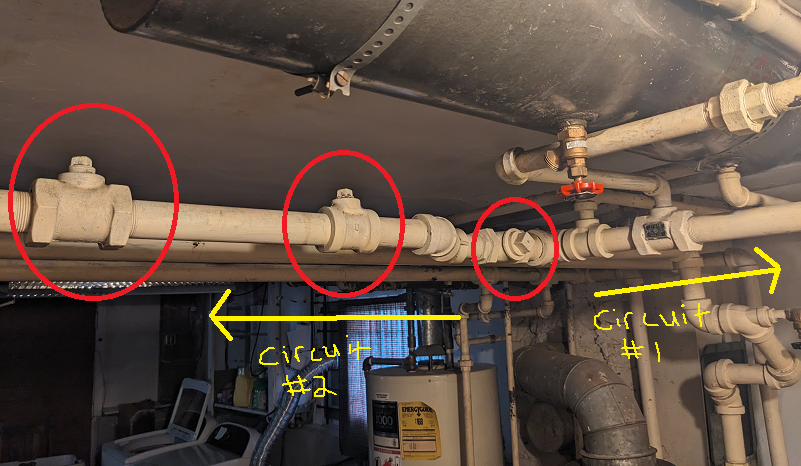
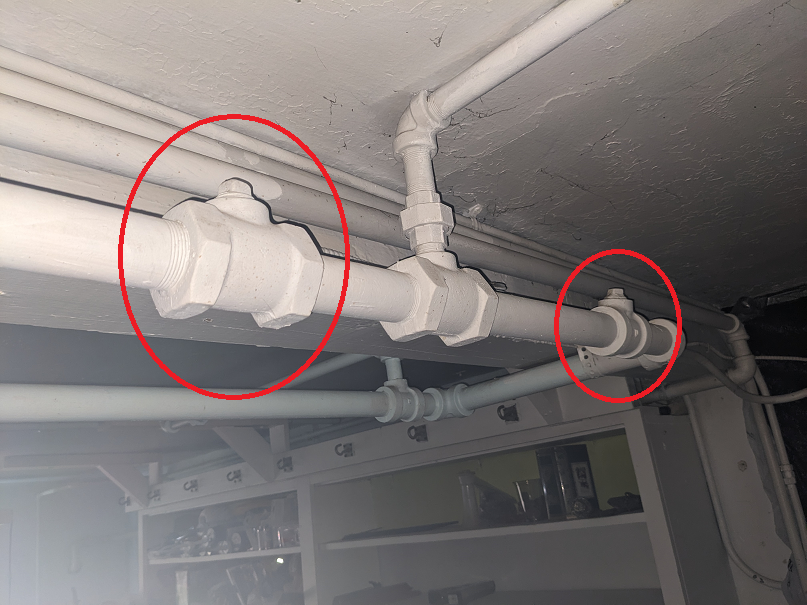
I have a Monoflo system from the 50s and I will be replacing the boiler with a Weil-McLain CGa-6 cast iron boiler. The system has two circuits, but only one circulator. While examining the piping, I came across two sections that I have questions about. Both of the sections have two unused fittings. One of the fittings is a Monoflo T and the other is a regular T. Myfirst assumption was that they were remnants from an old radiator that was removed. But perhaps they were strategically placed there to affect the flow rate.
Can anyone tell by looking what the likely purpose of these fittings was?
Also in the first pic, I additionally circled a shut off valve that is for circuit #2. Circuit #1 has no shut off valve. I don't understand why they added a shut off to just one circuit, but as you can see from the pic, the two circuits bifurcate in that area. I was thinking perhaps the shutoff was used while filling the system to make it easier to fill circuit # 1. Then they opened the shutoff to fill circuit number 2. Is that a plausible theory?
Comments
-
Each monoflow tee has the equivalent of twelve feet of pipe. The shorter the pipe (less restrictions) the easier it is for the heated water to flow to the system. I suspect someone thought they may need these tees for another heating element (perhaps a basement heater?). Ideally, you would remove all of the unused monoflow tees, as they only hurt system performance.
As far as the valve goes, I think the original installer was concerned that one side of the monoflow system would flow better than the other. You could better balance the system with the (again restrictive) valve. It appears the "balance" valve is wide open. Do not attempt to adjust it, as the square head will likely break off.

 3
3 -
The Monoflo® Tee fittings and the associated standard tee fitting were most likely placed there for accommodating a radiator or convector. Perhaps for future use when a second floor is added in the future or there was a radiator that was removed and the both Tee branches were plugged. In any case, that is the wrong way to abandon a set of unused Monoflo® branches. There is a restriction inside the tee fitting that diverts water to the branch. Without the branch, that is only a restriction. If you are going to do that you may as well just use the next smaller diameter pipe and remove the restrictive tee fitting(s)
The correct way to abandon a Monoflo® Tee is to place a full size pipe from one branch to the other to give the diverted water a place to go and return back to the system further down the main.
This Illustrates the proper way to connect the unused tee branches
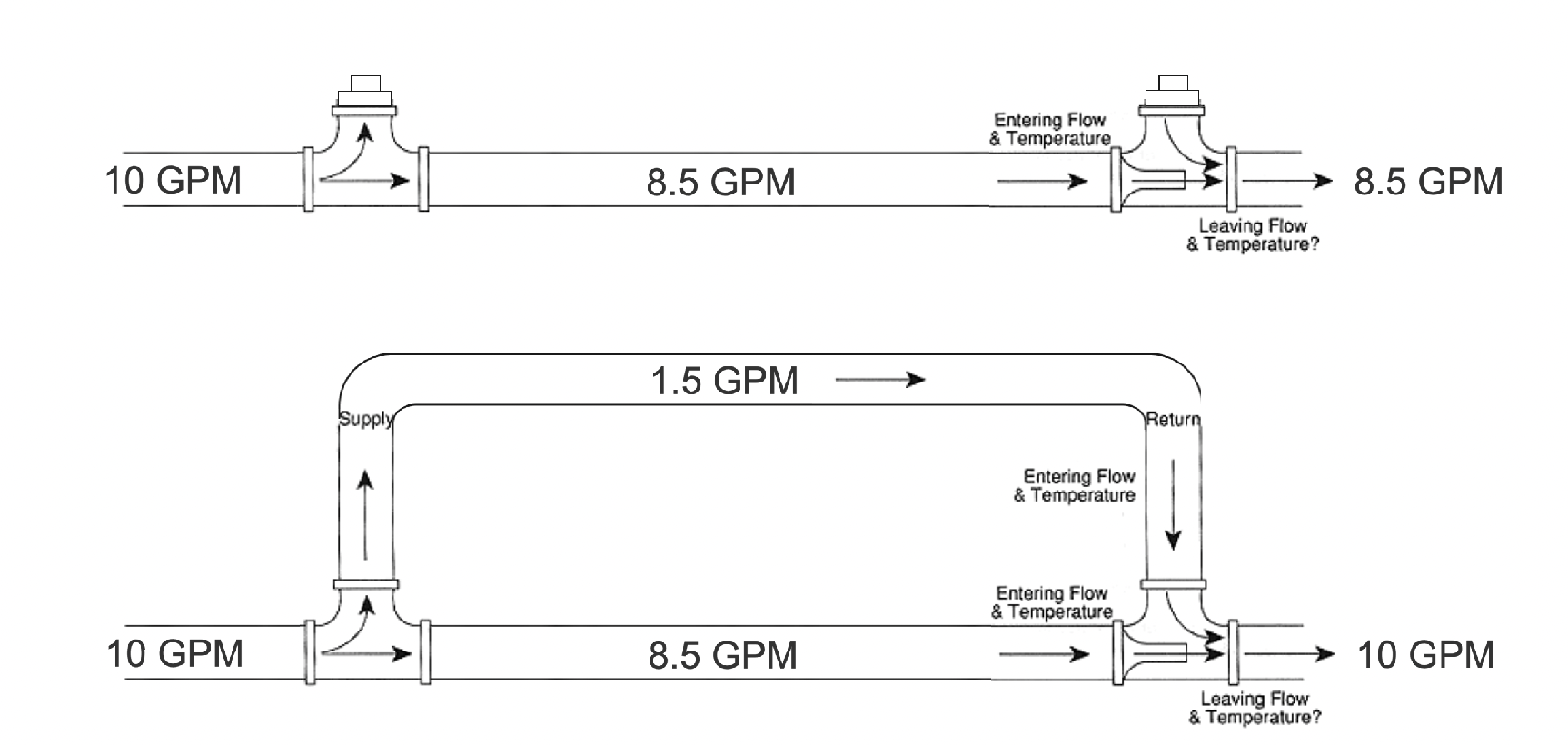
See how the restriction will end up making the total loop drop to the lower GPM. Even though the first inlet pipe has the ability to move 10 GPM, the first resatriction reduces that flow to a lower flow rate of 8.5 nad there is no path for the other 1.5 GPM to use, which in turn makes the entire loop a lower flow rate.
As a result of the lower flow rate the amount of heat the water can move the the rest of the radiators is restricted to the lower flow rate.
By adding a bypass pipe from the branches you do not restrict the entire main loop since the additional 1.5 GPM has a path to the other side of the tee restriction.
As far as the valve is concerned, that appears to be at a 45° from fully open or fully closed. That may be to balance the two separate branch circuits of the system by having one branch go strait thru the tee fitting there is less restriction to flow than there is to take the 90° turn and follow the other branch circuit. if that happens then you can balance the system by partially closing off the branch (the is going straight) so mor flow goes to the branch the needs to turn.
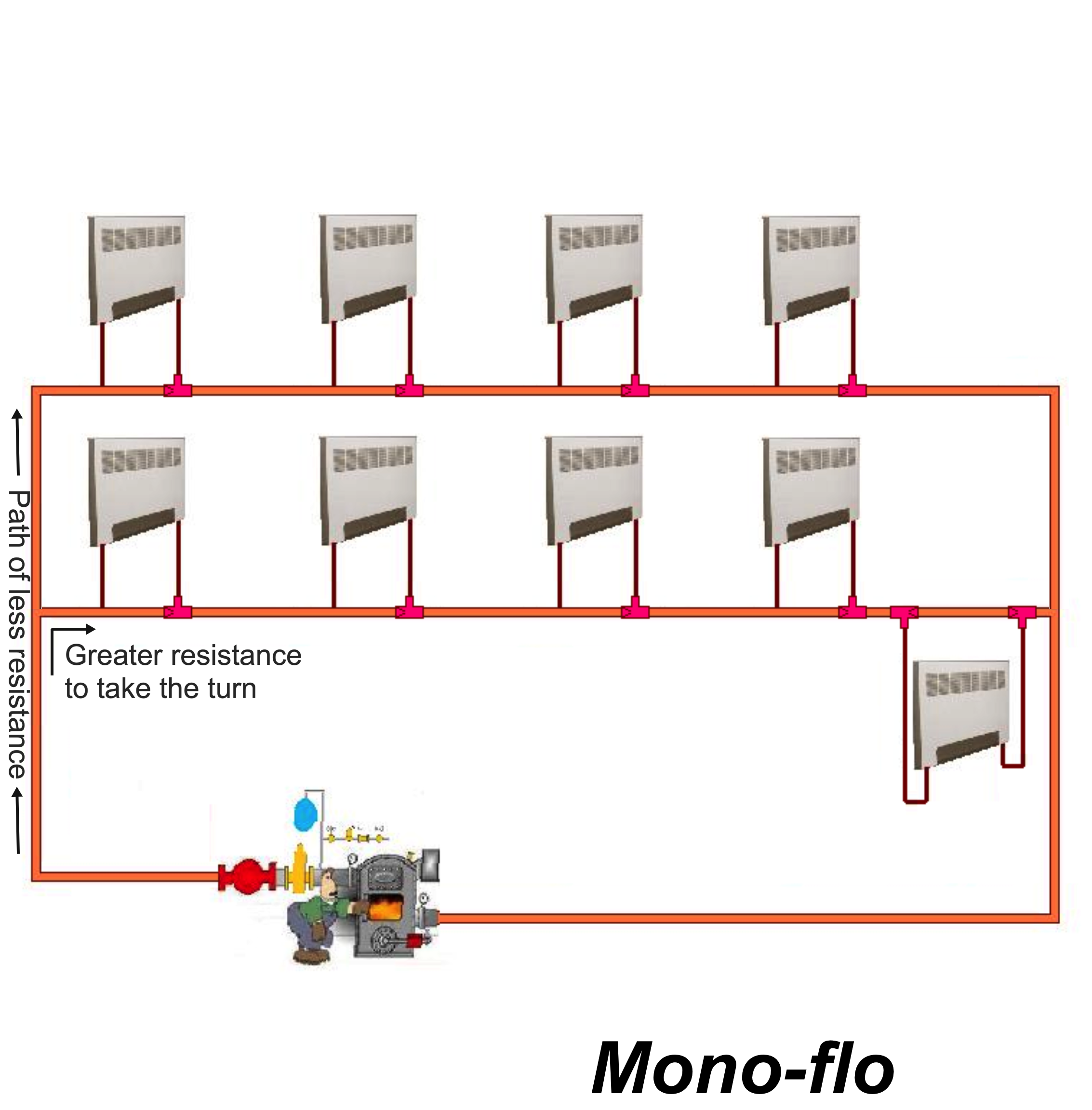
if you add a valve to the straight thru main loop going straight up in this illustration, you can add some resistance to the flow and when you get it just right, leave it there for ever and ever. or until the building gets demolished
Edward Young Retired
After you make that expensive repair and you still have the same problem, What will you check next?


 5
5 -
This site is awesome!! There is always so much to learn here. You guys/gals are all truly generous with your time and knowledge, it makes it enjoyable to come on here and learn something new all the time.
 2
2 -
The 12' pressure drop is vastly overcome by the ups26-99 3 speed pump we install on the new boiler.
Also I don't see shut off valve you're talking about?
0 -
oh I see it now, plug valve.
0 -
what is going on here, is one bot replying to another bot?
1 -
ha
0



Categories
- All Categories
- 87.8K THE MAIN WALL
- 3.3K A-C, Heat Pumps & Refrigeration
- 59 Biomass
- 430 Carbon Monoxide Awareness
- 132 Chimneys & Flues
- 2.2K Domestic Hot Water
- 6K Gas Heating
- 124 Geothermal
- 170 Indoor-Air Quality
- 3.8K Oil Heating
- 79 Pipe Deterioration
- 1.1K Plumbing
- 6.7K Radiant Heating
- 396 Solar
- 16.1K Strictly Steam
- 3.5K Thermostats and Controls
- 56 Water Quality
- 51 Industry Classes
- 51 Job Opportunities
- 18 Recall Announcements