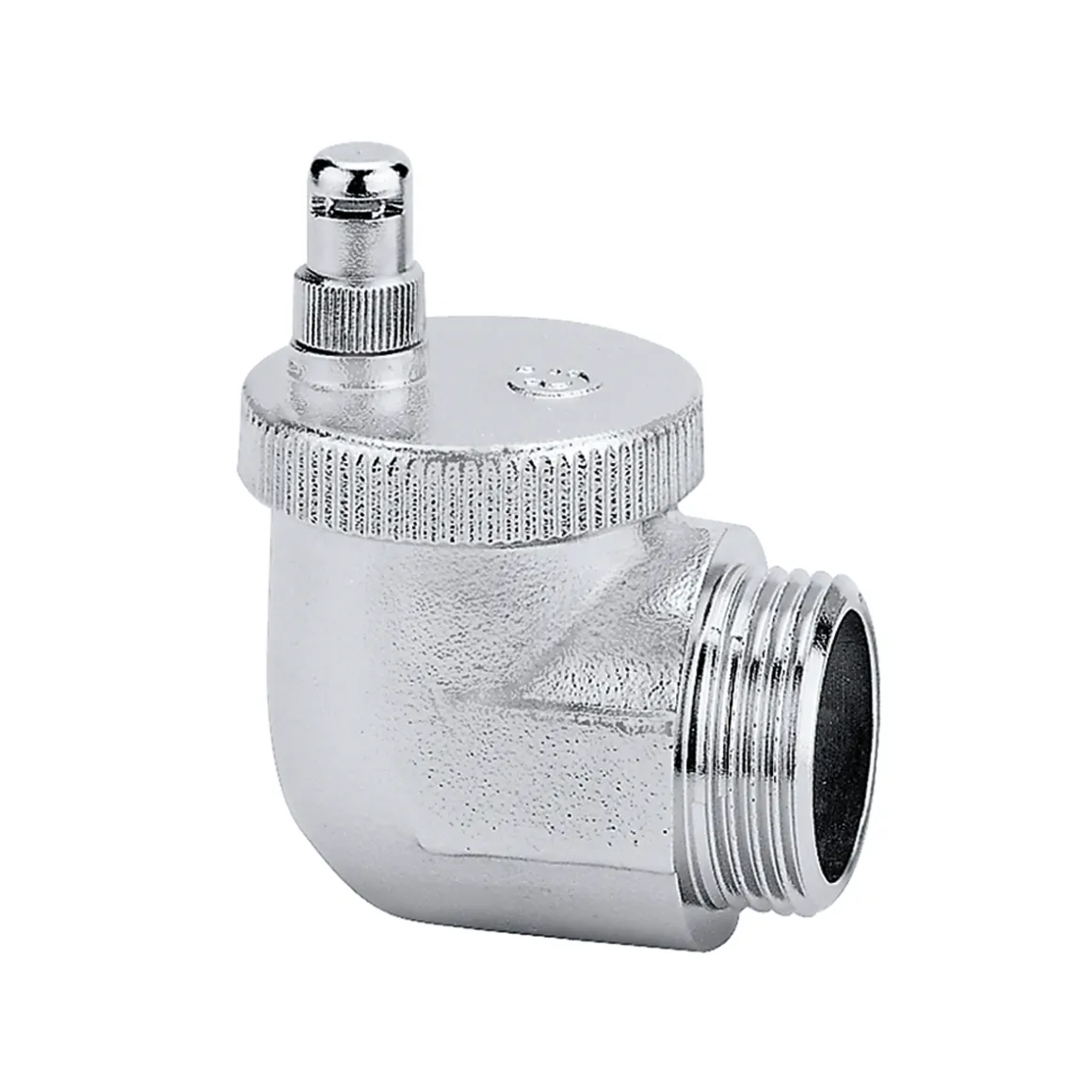
Caleffi 504 Aercal

I've encountered some quirks using the Caleffi 504 aercal, and I wanted to see what the folks here thought. The Aercal is a right angle radiator vent similar to the Minical, available in Europe, but not yet in the USA. However I was fortunate enough to pick up some up on a trip to Europe. The threads should be G 1/2" A on the 504401s I have, which is a British Standard Pipe Parallel (BSPP) thread, not compatible with National Pipe threads due to a different thread shape and pitch. However, in my case I'm using Hudson reed radiators imported from the UK, which appear to use the BSPP threads, so in this case, the valve should be appropriate without an adapter, since both parts are on the market in the UK. I will say that in the 1/2" size, NPT and BSP are the same threads per inch, so sometimes they will appear to mate up particularly when tapered fittings are used, but I think this will be an unreliable joint.
Now, it's obvious that a straight threaded joint will not make a reliable water tight seal. It appears there are two approaches discussed on this topic. One is the use of hemp or loctite 55 to seal a straight joint. The other is the use of an o-ring or gasket. The Aercal comes with a fiber gasket. Easy right? use the gasket. The Aercal screws easily into the radiator up to the last thread, then becomes very tight, well before the fiber washer is compressed. I used the Loctite 55, and it seems to seal. But something is weird, why would it not enter far enough to compress the gasket? Is the radiator actually NPT? I tried an NPT coupling and the Aercal goes only 1 turn before the threads do not work, although hotrod previously showed an NPT nut screwing onto one. It could make sense depending on the portion of the taper included on each fitting.
So my questions are, why doesn't my straight threaded Aercal penetrate deep enough into the radiator to compress the included seal, and is the loctite 55 joint properly made?
Thanks!
Comments
-
BSP to NPT kind of works in one case but not so well in the other
In other words a NPT male will go into a BSP female, sort of, it needs hemp or a bunck of teflon tape wraps, or Loctite thread because in never tightens up on the taper
But a BSP male does not go into a NPT female, but a few threads
It sounds like the radiator may in fact be a female NPT?
one work around if you have enough thread depth in the radiator it to run a 1” NPT tap in deep and enlarge the thread diameter in the radiatorOr if you can get two turns in you can use a liquid Loctite thread locker. Its basically a super glue for threads, anaerobic so it sets up in the absence of O2
545 and 272 are the Loctite we use at the factory to assemble BSP without gaskets
Bob "hot rod" Rohr
trainer for Caleffi NA
Living the hydronic dream0 -
Thanks. After much experimentation I think the radiator threads are BSP, but in the 1/2" size, the threads per inch is the same as NPT so it is very difficult to see the difference. I will try to get a thread gauge to confirm. However upon further research, I think it may not matter. This article explains that because the TPI for 1/2" and 3/4" trade sizes for BSP and NP are the same, they will thread into each other, although the different thread shape will increase the odds of spiral leaks. I think it is unlikely the radiator is NPS straight female thread because you don't see that much, and it doesn't seem to be tapered, so it is most likely BSPT, but if it is NPS it wouldn't really change the situation.
This explains why some NPT fitting do make a decent seal with it, and some don't, while also some BSPT fittings make a decent seal with it and some don't. It would appear to be since only the largest diameter threads make the seal, if the male fitting is too short, it won't have a large enough thread to make a good seal, and I observed this with both BPT and BSPT male fittings. Some smaller fittings just keep tightening deeper into the radiator without making a seal.
It doesn't explain why I can't get my Caleffi 504 deep enough into the radiator, I think it is because I've reached the end thread on the caleffi. Apparently the loctite 55 is intended to seal even straight threads, which PTFE tape is not, so in theory it might work on this valve radiator combination. For now the valve is not leaking with the Loctite 55 seal.
If this type of connection is reliable, it would actually make it a lot easier to adapt 15mm parts to 1/2 inch US tubing size without fancy parts. I'll bet 15mm to 1/2" BSP female, and then a 1/2" copper NPT can go into that. Might be easier than finding a 16mm BSP compression nut.
0 -
when you assemble pipe and fittings that are BSP, the hemp or thread tape makes the seal. As long as you get a few threads into the fitting , you can stop in any position. Unlike a tapered thread. So the pipe make up is always spot on with straight threaded pipe. Like working with a nut and bolt!
However with some hydronic components the fiber washer or o-ring makes the seal. Sort of like a spin on oil filter
Fiber washers ideally are tourqued tight as the fiber washers have a compression set
In some cases, like the end fittings on a brass manifold that need to end up in a specific orientation, the liquid thread locker is used
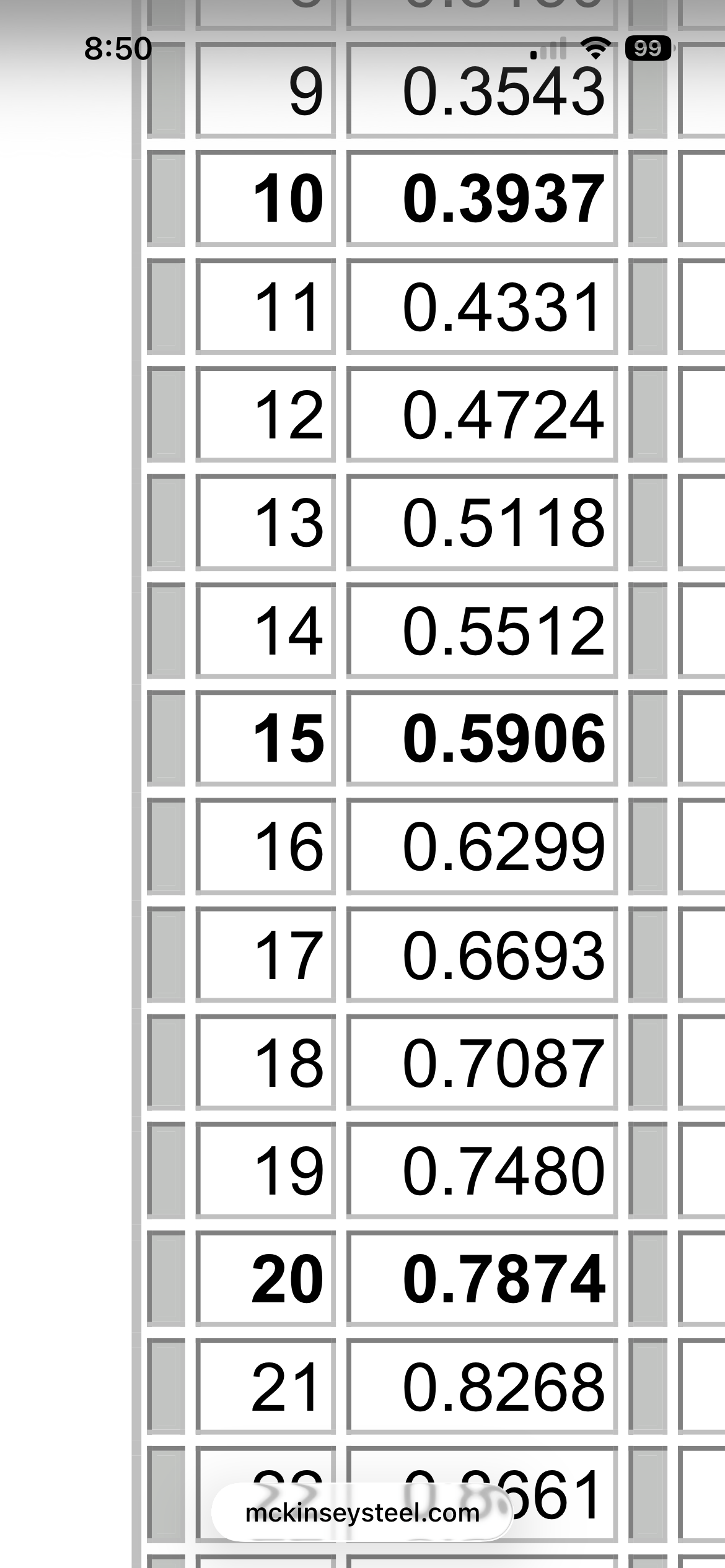
With a bit of work you can make a 15 mm fitting work on 5/8” od, .625” copper tube. The dimension are a few thousands off
 Bob "hot rod" Rohr
trainer for Caleffi NA
Living the hydronic dream0 -
Thanks Bob, so although it is clear that the valve is a gray market valve and probably not warranteed at all in the US, but the radiator and valve are both sold on the European market, if I had made the same installation I did in the Europe, without the fiber washer, just the Loctite 55, do you think Caleffi as the manufacturer would say this is a proper installation? Or is this something only Americans worry about, and in Europe perhaps it's more of an "If it fits it ships!" kind of situation?
I'm still a bit uncomfortable not knowing if I've used a time tested method to make the joint.
0 -
they put cylinder sleeves in engines with loctite and use loctite to make various types of permanent sealed threaded and pressed plug type repairs, it is fine for your bleeder as long as it has a couple threads engaged for mechanical strength.
0 -
you could also use a couple nipples and an ell and a straight auto air vent.(though i don't recommend auto air vents where no one will notice they are leaking when they inevitably leak.)
0 -
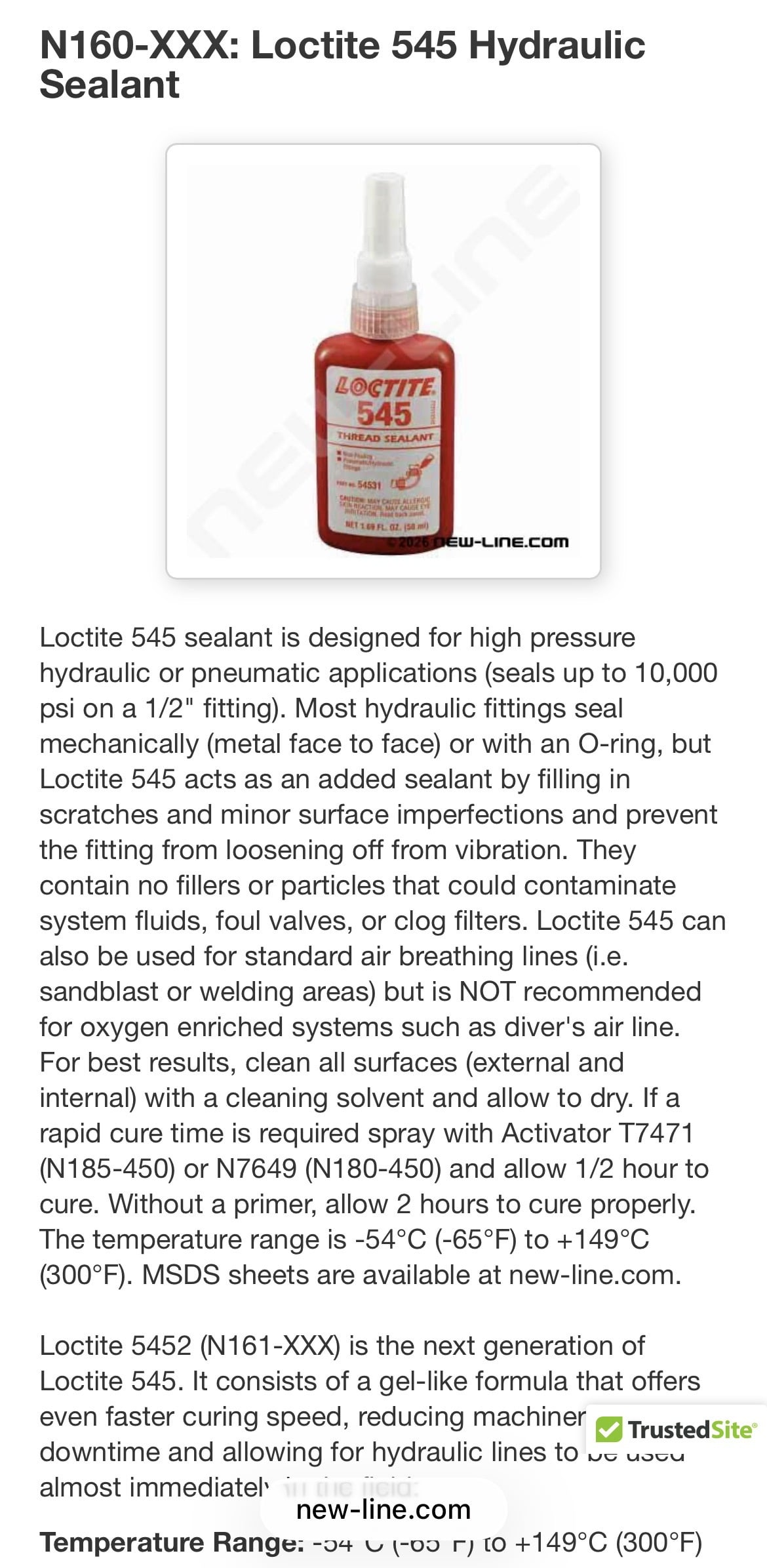
pretty much any ball valve you purchase is assembled at the “belly seam”with loctite, we use 545 for fine thread assembly That is a very shallow thread if you have ever disassembled one, and they test to 300 psi or more.
Typically if a product ships with a fiber washer it is intended to be the seal
In the case of a vent like that where it needs to end up with the cap level, the gasket may not be engaged enough to seal, that is why manufacturers seal straight threads with Loctite, or hemp
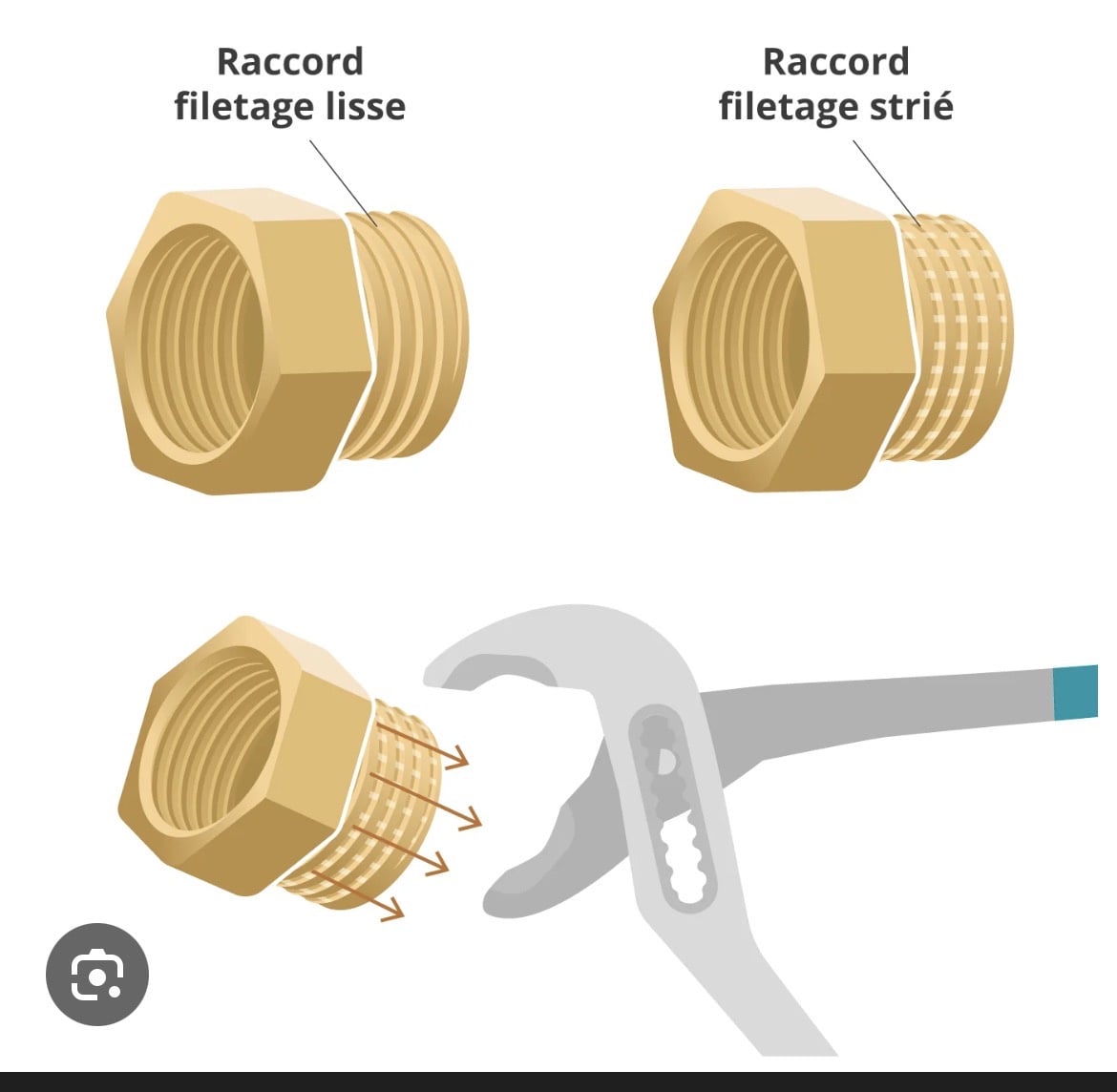
Many of the fittings Caleffi makes have hemp threads The threads get a knurling tool run around them so the hemp stays in place. Ir make your own hemp thread with a slip joint pliers🫣
The hydraulic industry also seals connections with loctite that operate at high temperatures and multi thousand psi conditions
If you can get at least two threads into the radiator, with Loctite, it should hold 30 psi without an issue
Bottom line BSP and NPT officially are not compatible
But BSP to BSP should always fit, unless the OD/ ID are different
I ran that same vent into a cast radiator that I tapped with a 1” NPT, but I ran the tap to the very end
Bob "hot rod" Rohr
trainer for Caleffi NA
Living the hydronic dream0 -
Thanks folks. 2 questions,
Thanks but my first question is, if I use the loctite 545, what do I do when it's time to change the valve? It doesn't seem like it's going to come out very easily.
0 -
Second question is, I thought this is BSP to BSP, I will confirm tomorrow when I receive a G 1/2" BSPP tap, and a thread gauge. I also note that the caleffi 504 is pre-knurled, which suggests the manufacturer is expecting it to be hemped/sealed at the threads. So if it's BSP to BSP why does it bind after 4 turns? It would seem surprising to me if they tapped everything NPT parallel since other radiator importers do not do this. But I guess I need the thread gauge to know for sure what it is.
0 -
the vent is rebuild able without ever removing it. Why would you want to remove it once it is sealed in?
But warming the vent with a torch softens the Loctite, if you did choose to remove it
The vent has a shallow thread, how far into the radiator is it after 4 turns?
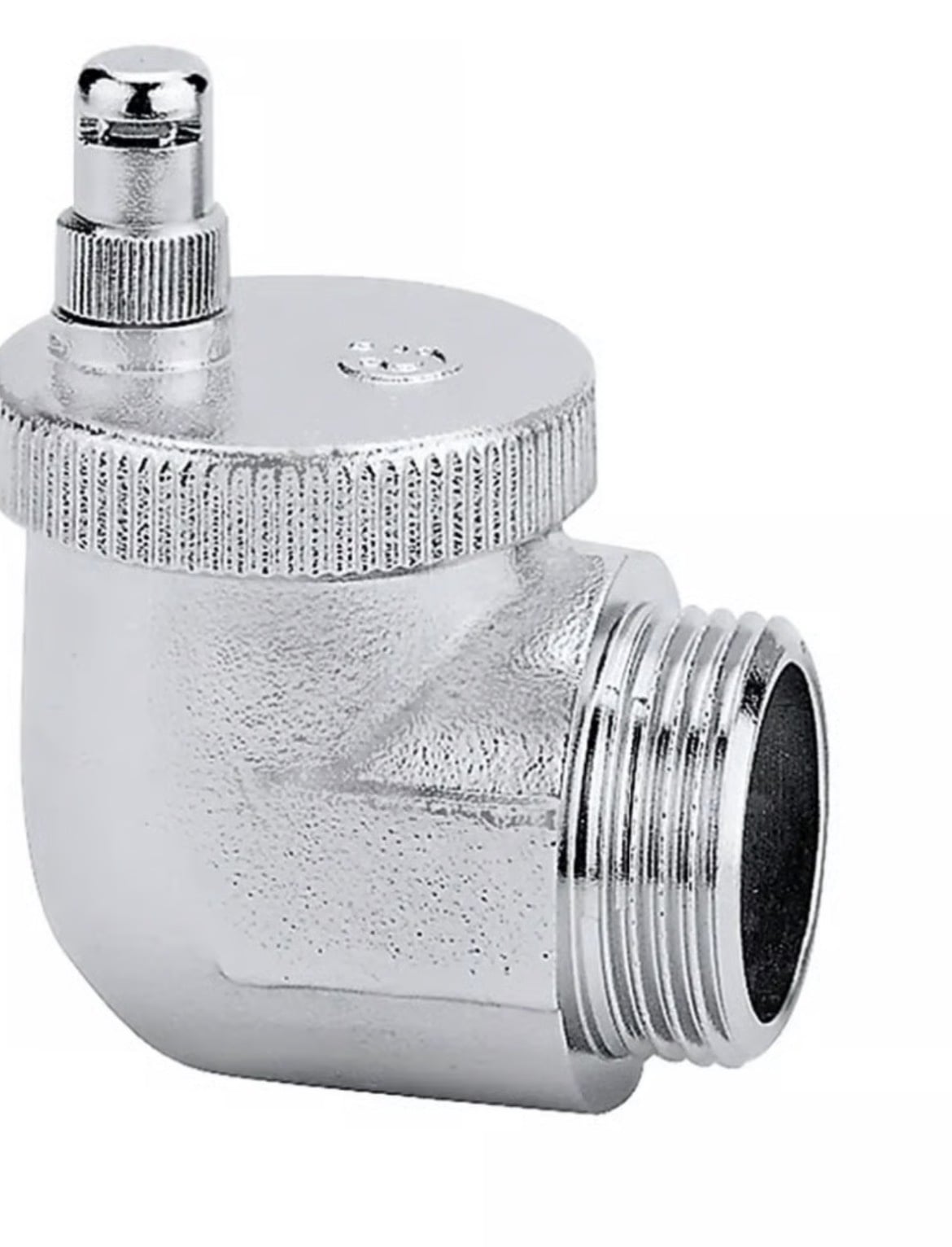
If it has a hemp thread, it is giving you two options to seal. Hemp the thread, or bottom out on the fiber washer
Bob "hot rod" Rohr
trainer for Caleffi NA
Living the hydronic dream0


Categories
- All Categories
- 87.6K THE MAIN WALL
- 3.3K A-C, Heat Pumps & Refrigeration
- 59 Biomass
- 429 Carbon Monoxide Awareness
- 124 Chimneys & Flues
- 2.2K Domestic Hot Water
- 5.9K Gas Heating
- 119 Geothermal
- 168 Indoor-Air Quality
- 3.8K Oil Heating
- 78 Pipe Deterioration
- 1K Plumbing
- 6.6K Radiant Heating
- 394 Solar
- 16K Strictly Steam
- 3.5K Thermostats and Controls
- 56 Water Quality
- 51 Industry Classes
- 50 Job Opportunities
- 18 Recall Announcements