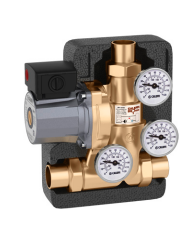
Caleffi 280 Thermostatic Mixing Valve
Comments
-
thanks for the suggestion, @EricPeterson. Is a full purge the only foolproof way to do this? How else can I tell if I’ve still got air if none of the radiators bleed air anymore? It’s possible I overstated how much air there is now - I just visited every radiator in the house and got water at first turn on each one.
The reason why a better circulator strategy is on my mind is that after the system has been running a while, and the valve is getting closer to fully open to the return side, I am getting heat to some of the previously cold and more distant radiators. The only difference in my mind between operation early in the cycle and late in the cycle is how much boiler output is a going going to the radiators, since the supply temp is fairly warm (140F or more) after only a few minutes. Early on when return temps are low, I estimate 50% or less of the boiler output is going to the radiators (just based on the various delta Ts and knowledge of the boiler output). After an hour or two it seems to be closer to 75-80%. A bigger circulator would guarantee that I got hot water to more radiators faster, right?
0 -
The problem with a bigger circulator is that you'll get even higher velocity through the bypass at startup, which can cause noise and/or pipe erosion. The best solution may be re-piping for primary/secondary. We have two WGO-5 boilers heating two separate gravity conversion systems in our old 4-unit condo building, and I'm planning to re-pipe them primary/secondary through a hydraulic separator so that either boiler can heat either/both systems.
I know you're reluctant to do a whole re-pipe for primary-secondary, but that would de-couple your boiler/bypass flow from the system flow, so you can get full flow through the system at all times without hindrance from the bypass.
@hot_rod proposed the following primary-secondary design for us, and you could do the same, except with one boiler instead of two. Some people do the primary/secondary without the hydraulic separator using closely spaced tees, but for our setup, a hydraulic separator is more convenient. See the last post in this thread for the diagram:
0 -
Thanks @jesmed1 I have been wondering the same thing, too. After I've got my air issues resolved (if there are any left) I will talk to my installer about this.
One question for @hot_rod about the P/S setup proposed above: I noticed that the Caleffi SEP4 in the 1 1/4 inch conf has a maximum stated flow rate of 18 gpm. Is this like a hard limit, in the sense that the device won't work properly at higher flow rates, or is this just matching the 4 fps limit? I'm asking because 18 gpm for my radiator loop seems a bit low, and before I got the 280 I was probably experiencing flows above 20 gpm without any noise in the system.
0 -
Resideo also has a line of hydraulic separators that seem to be somewhat lower price than the Caleffis. Their 1-1/4" model also has a stated flow rate of 18 gpm, apparently based on a standard of 4 ft/sec through 1-1/4" pipe. You could go to the next size up, 1-1/2", for 26 gpm.
0 -
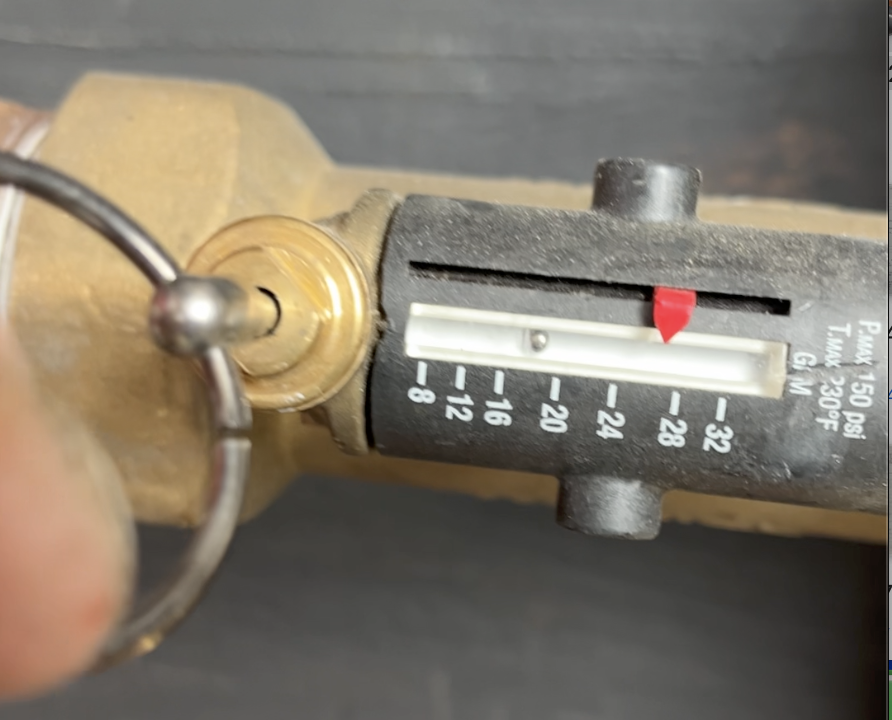
Any hydroinic component should be operated at the listed, tested flow rate. Beyond the Cv number performance suffers. This is critical on control valves, they want to work within that assigned number, or very close to it. A gpm or so on either side of the Cv listing isn't a dealbreaker. Nobody makes valves in one Cv increments. Use the formula or spread sheet to see how working outside the designed flow looks. If you know any two numbers solve for the other.
Here is a 25 gpm flow through a 17Cv valve
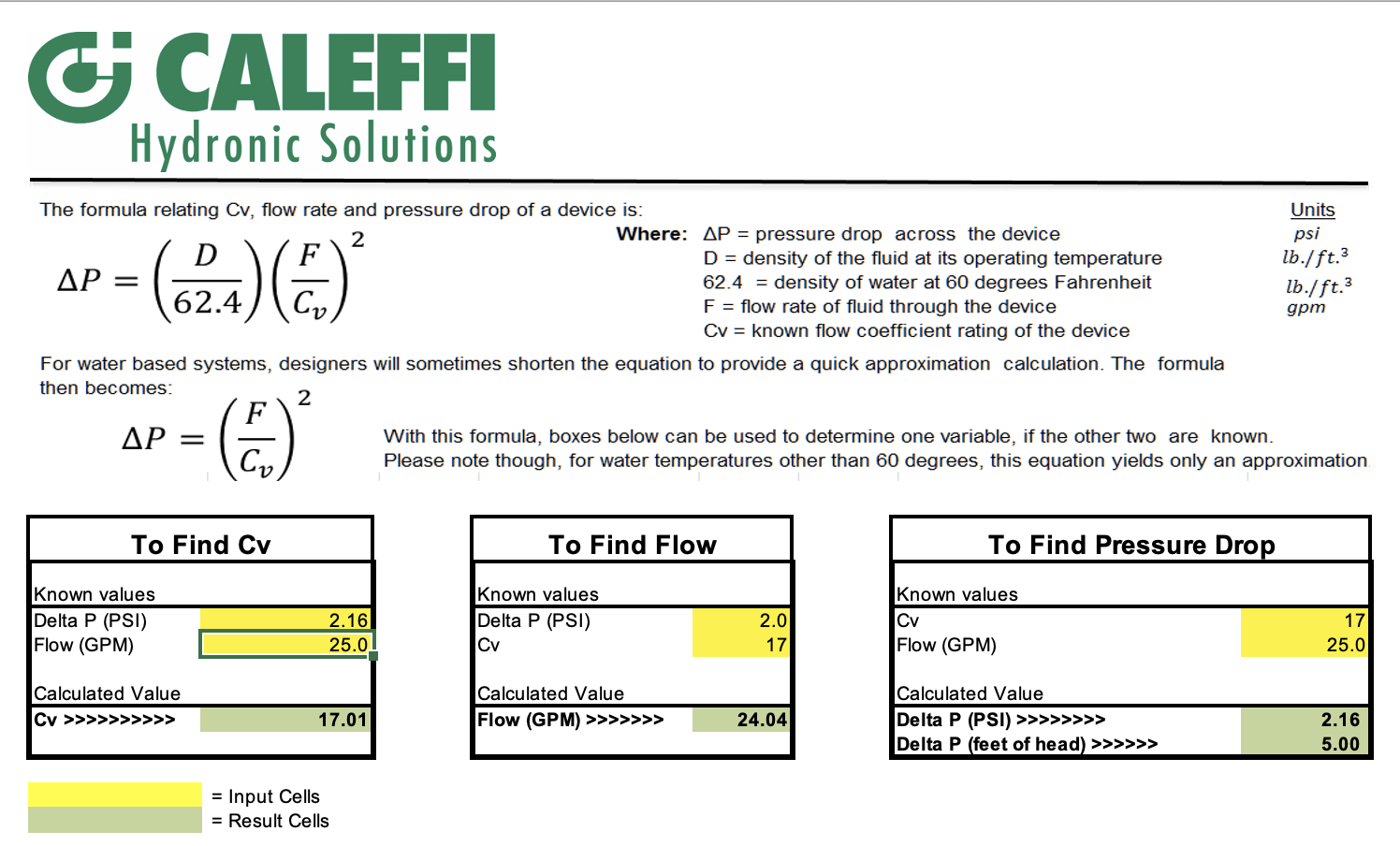
If you have a valve with a 17 Cv and start running 25- 30 gpm through it, it will not perform as designed.
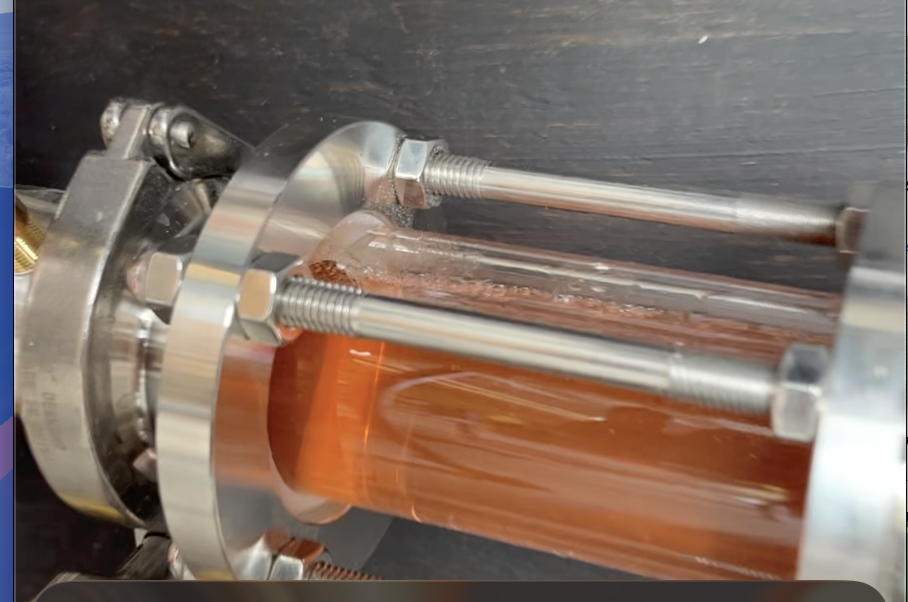
With hydraulic seps the main function it to create a separation between the A and B side. Where flow in either side does not effect flow in the other side. This is accomplished by the sizing of the center chamber. There should be little to no movement from top to bottom under performance. No crossover of flow from the flowing to non flowing side. The math works out to the center barrel being about 3X the diameter of the branches. In this example 40 gpm enters one side, no flow out the other side, very low velocity top to bottom .44 fps
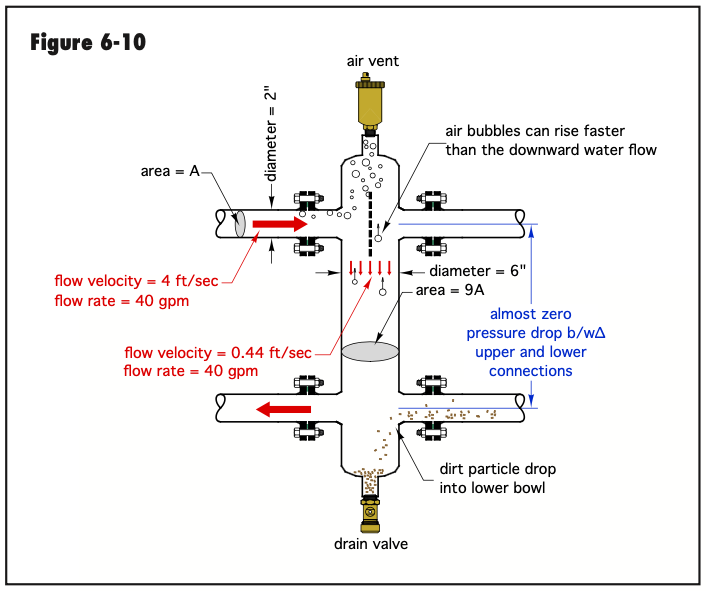
I have tested other brands with a food coloring injected into the non flowing side, not all perform as listed.
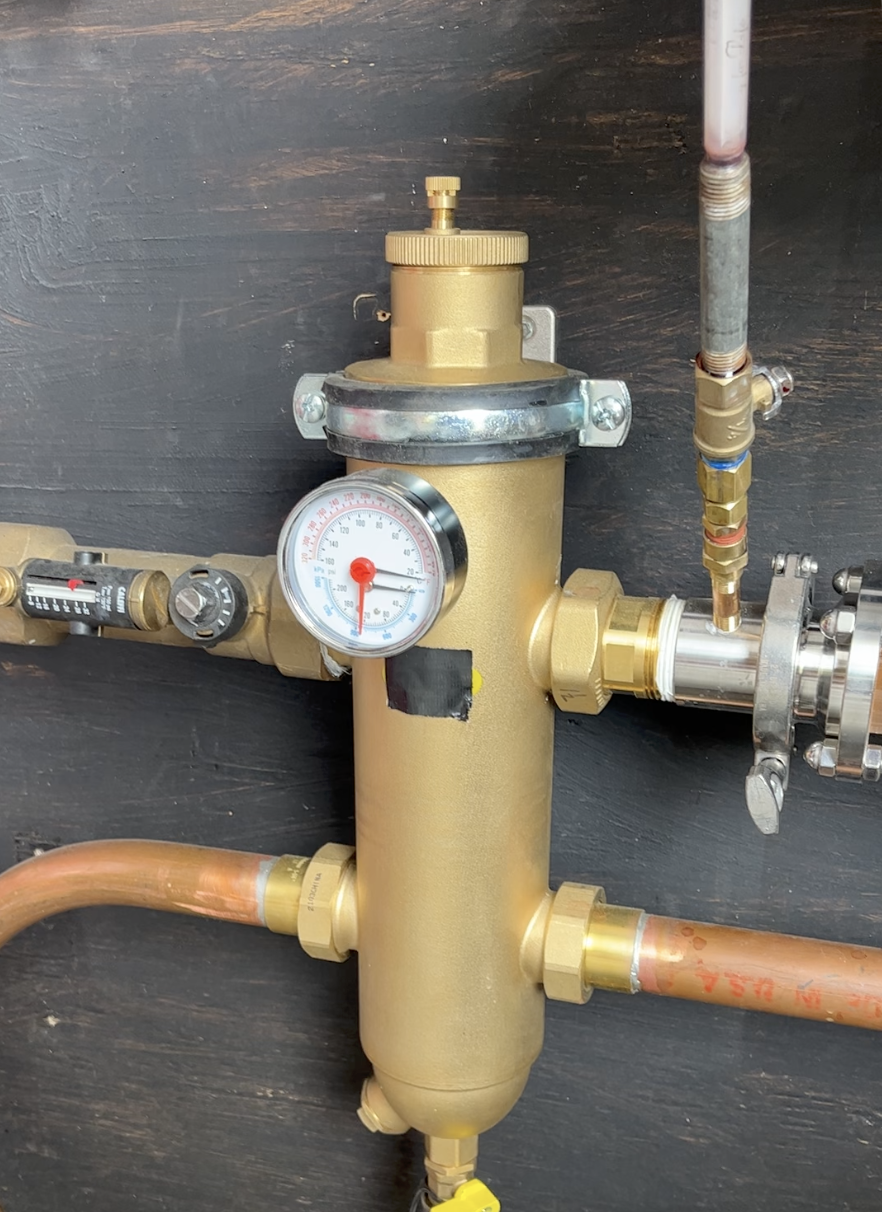
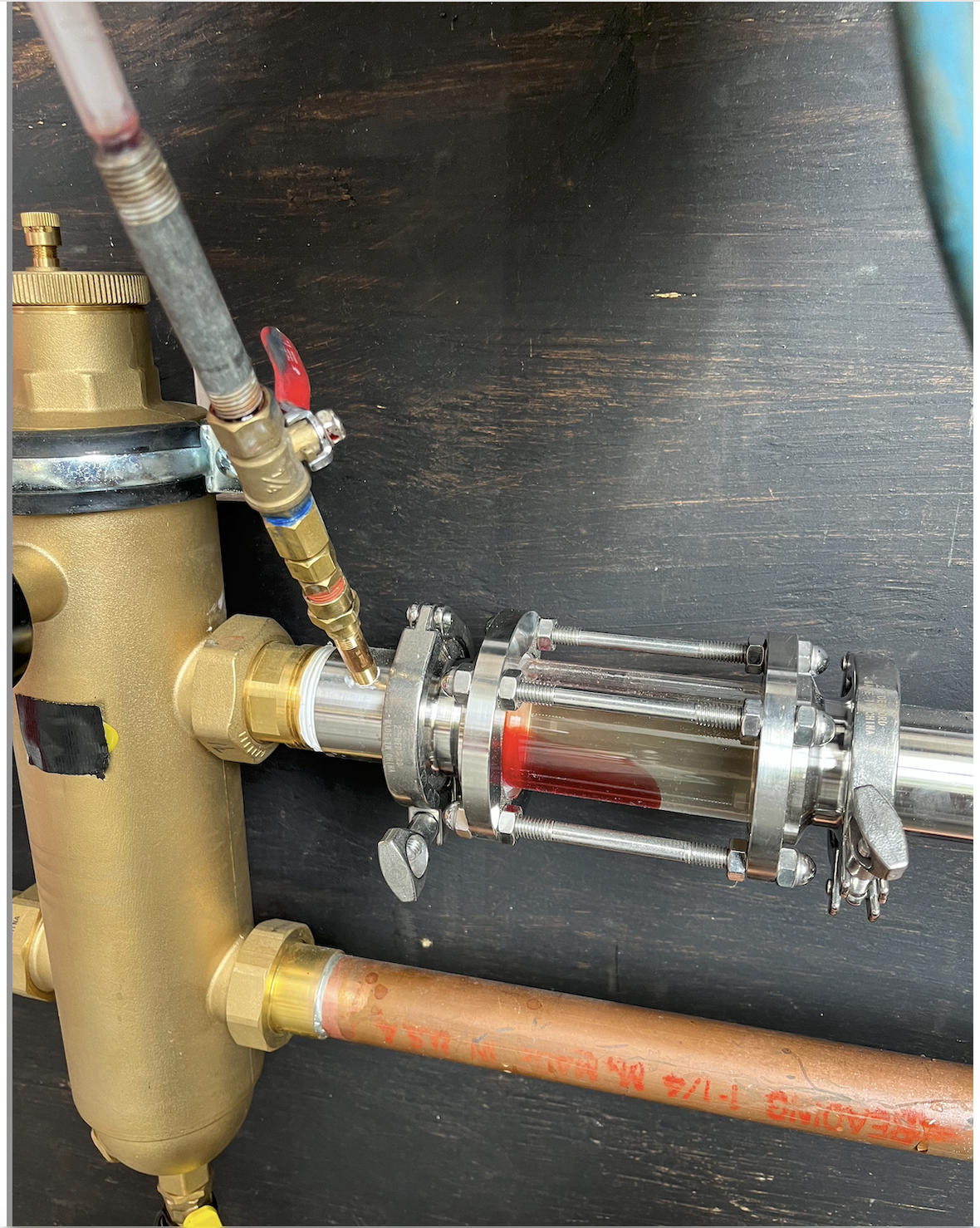
 Bob "hot rod" Rohr
trainer for Caleffi NA
Living the hydronic dream 1
1 -
@tcovert83 - if it’s any consolation, when I re-piped my boiler, it was an open question as to whether or not that piping arrangement for the Caleffi would provide adequate flow - which it has, and at 10 gpm to boot. Otherwise I was ready to go the P/S route. You might try reaching out to Caleffi sales / support to see if they can help you.
—Eric
0 -
As you can see from the brochure these 280 valves are used mainly by the wood and pellet boiler industry, which is still a sizable market in Europe. They often ship along with the boiler as OEM.
The valve was designed to handle up to the 60 Kw boilers (204,000 btu/hr). Most often the wood boilers pipe to a buffer tank to help them run long hot cycles. The buffer acts as a hydro sep as the majority of heating systems in Europe are panel radiators. So panel radiators controlled by TRV and an ECM delta P circulator.
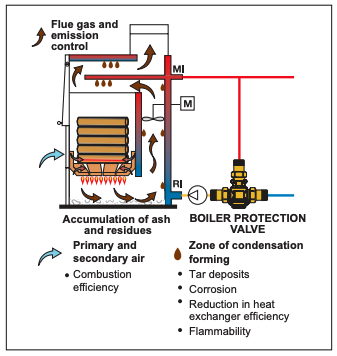
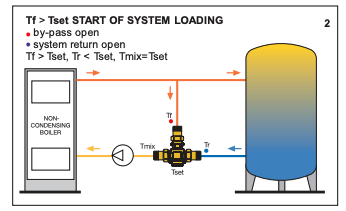
So the boiler pump just needs to flow through the 280 valve and the piping at the boiler, as above. Picture that tank as a giant hydraulic separator
We sold it as a 281 with a built in Wilo pump for years. The small Star 16 ( Grundfos 15-42 size) was plenty of pump for the boiler loops up to 200,000 btu range.
A typical gravity conversion acts a lot like a buffer tank, very low pressure drop. So generally you do not need much circ power to flow the boiler, 280 valve and radiatiors.
But without knowing exactly how your system is piped and laid out it is hard to give an exact option.
Valves, restrictors plates, long series loops all need to be in the calculation.
It strikes me as odd that the system itself need very much pumping power. The pros that work on these conversions indicate a small flat curve, low head circ like. B&G 100 series is often plenty of power.
Something else is going on with your system if a B&G 33 cannot get the job done. It just feels like a substancial flow restriction somewhere? If it worked on just gravity induced flow how can a circulator not move adequate gpm??
We sell thousands of these 280 valves around the world, and there are several competitors with the same offering, I have not heard of noise issues when installed, sized and pumped properly.
Any valve that is over-pumped, excessive flow velocity across the orifice, can create noises. Hissing, squealing, vibrations, humming, whistling, moaning, screaming, most any noise imaginable :)
Bob "hot rod" Rohr
trainer for Caleffi NA
Living the hydronic dream0 -
Thanks a lot for those details, @hot_rod. Can you help me understand your point that I don't need much pumping power for a gravity conversion, in light of this article:
I've got 2200 sq ft EDR of cast iron radiators and associated piping. If I am reading the table in this article right, it says that I would need an even bigger pump than the NRF-33, and thats before the flow restrictions the valve adds, right? I know this article is not your writing so maybe you have a different view than its author.
What worked just fine was not the gravity system itself (I assume the conversion happened many years ago), it was my exact boiler + NRF-33 before I added the 280 and bypass piping. I want to be clear: I am not complaining, I am glad I have proper boiler protection, etc. I am just trying to figure out how I get back to having all my radiators get warm in a reasonable time, which was how it used to be. If the answer is that I need a new pump, or P/S piping, I happy to hire someone to do that. If there is something simpler/cheaper, even better.
0 -
You said you got a lot of air out of the system (in several steps) after the addition of the bypass. I know the rads are now bleeding only water, not air, but I'm still not convinced there isn't more air somewhere. I already told you the story of how hard it was to get all the air out of one of our much smaller gravity conversion systems (500 EDR vs your 2200).
Your next cheapest option would be to power purge the system, not just bleed at the radiators. But you may not have a purge station piped into the system to facilitate that. If not, maybe try adding a purge station and then purging to ensure you do get all the air out. Once you know all the air is out, if the system still isn't working, at least you've eliminated one potential root cause at (hopefully) minimal expense. Because it would be a shame to go changing pumps, piping P/S, etc, if the root problem turns out to be that you still have air somewhere.
@hot_rod might be able to suggest a simple purge setup for you involving some garden hoses, a large trash barrel, and an electric pump.
0 -
I do have what looks like a garden faucet at the bottom of the radiator which is at the lowest point in my home (this is a radiator in the basement that doesn't get hot, but that was true before I got the valve). When I had the valve installed, I asked the installer about this radiator and he spent a ton of time draining water through this faucet. While this did not end up heating the radiator up, I wonder if this is what would be the purge station in my system?
if so, what is the procedure? Something like (0) power the boiler off and wait for it to cool somewhat (1) close the return vale into the boiler, (2) attach a hose to this faucet and run it into one of my basement drains, (3) open the refill valve to add water to the system? Then let this run until I'm seeing only water, no bubbles?
0 -
@hot_rod or @EdTheHeaterMan will be able to tell you how to purge most effectively. It will work best if you can purge through different parts of the system, one section at a time. This is easier if you have isolation valves in the right places, which you probably don't. They'll probably need to look at the photo of your near boiler piping and tell you which valves, if any, to close.
Also, I don't know if that bypass valve complicates purging. When the boiler is cold, the bypass is closed, meaning no flow through the return half of your system. So how do you purge the return half of the system…?
0 -
Regarding the bypass valve - you can simply remove the thermostatic element while purging, then reinstall it after.
Eric
1 -
The problem with that is you don't have isolation valves around your bypass like @EricPeterson does. So when you open the bypass valve again to reinstall the element after purging, you're letting air back into the system you just purged. Hopefully it's a small enough amount that it doesn't cause an air lock.
0 -
Another thought. You might be able to flush out any airlocks by closing the radiator valves on the rads that do get hot. Then run the system with only the cold rads open. Run it for a while that way, until you're sure the bypass has mostly opened, then try bleeding them again if they still don't heat.
Valves that haven't been exercised in some time may weep around the stem when you open them again, so you might have to tighten the packing nuts and/or wait for the weeping to self-heal.
0 -
Im concerned that the original gravity system got modified somehow over the years causing flow issues
If it worked correctly back in the day with no pump it should not be hard to pump it
The pump just overcomes a small pressure drop through the boiler itself and 2’ through the valve
Was there any 3/4 fin tube added or any other restrictive heat emitters?
Bob "hot rod" Rohr
trainer for Caleffi NA
Living the hydronic dream0 -
nope, it’s all old cast iron radiators. As I mentioned earlier, what unambiguously worked, albeit at fairly low return temperatures, was this boiler + circulator + piping without the bypass and protection valve.
my installer is coming by in the next few days so thanks to this forum I’ve got a bunch of things to ask about and potentially try with his help.
0



Categories
- All Categories
- 87.6K THE MAIN WALL
- 3.3K A-C, Heat Pumps & Refrigeration
- 59 Biomass
- 429 Carbon Monoxide Awareness
- 124 Chimneys & Flues
- 2.2K Domestic Hot Water
- 5.9K Gas Heating
- 119 Geothermal
- 168 Indoor-Air Quality
- 3.8K Oil Heating
- 78 Pipe Deterioration
- 1K Plumbing
- 6.6K Radiant Heating
- 394 Solar
- 16K Strictly Steam
- 3.5K Thermostats and Controls
- 56 Water Quality
- 50 Industry Classes
- 50 Job Opportunities
- 18 Recall Announcements