Add a mixing valve ?

This is from another thread on a system with zone valves. I figured I would start a new one with this new question and hopefully get more views… (Hope this is ok)
Previously looked at a job with 3 zones total. One of which is an in-floor concrete slab zone with no mixing valve or anything to control water temperature. It is getting 180 degree water just like the rest of the system. Customer complaint is that the zone is always too hot.
So now I've gotta schedule a time to go back to the house and determine how to control temperature to the in-floor radiant zone. The current system has a single circulator and 3 honeywell zone valves all on the supply side. (pic attached)
What is the best way to control water temperature to the in-floor radiant zone? Is there a way to do it without adding another circulator? Can I install a manual 3-way valve for this?
Comments
-
I prefer to install a Viega hydronic mixing block in these situations. The adjustable / programable heating curve paired with an outdoor sensor will adjust the swt; no indoor thermostat needed.
1 -
A manual mixer is better than what's there, but will still have variations in SWT so it's not the ideal option. Adding a circulator is the only way to really dial it in for maximum performance
1 -
There is already a thermostat and zone valve in place for the in-floor zone.
Naturally the customer wants something as easy and cheap as possible without re-piping the whole system. He is upset with the original installing contractor who did this 2 years ago, (which is why I got a call ) . He spent a lot of money to install brand new boiler system with new zone that is not correct. So I understand his frustration.
So I'm looking for an easy alternative for this situation to help out this guy. He is 83 years old and understands it's piped wrong. He just wants an easy solution
0 -
I think on cold days with a manual mix valve there is a good chance the system will still end up over temping that zone quite a bit. I would just cut to the chase and get a thermostatic valve and a circ. If you want to help the guy out cut him a deal on labor. just my opinion
https://www.supplyhouse.com/Honeywell-Home-T100R1012-Valve-Actuator-with-Remote-Sensor-86-158F
https://www.supplyhouse.com/Grundfos-519601-3-4-Iron-Pump-Flange-pair-9574000-p
 1
1 -
I would either do it properly, or leave it like it is.
A 3 way thermostatic would be the least expensive way to get accurate control. But it would involve some repiping.
Any mixing valve will need a dedicated circulator, it needs to pull hot and cold together to mix properly, so a pump on the discharge M mix port.
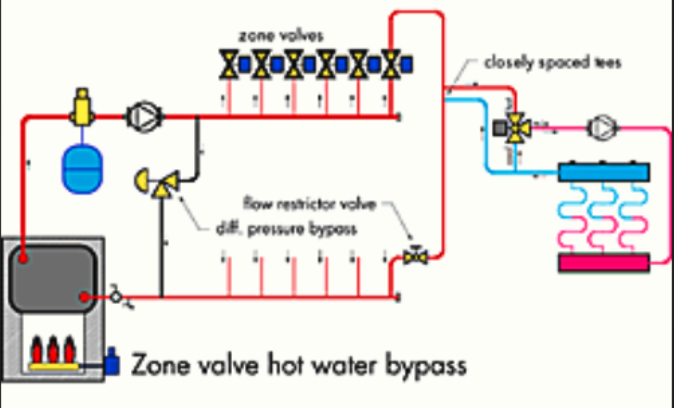
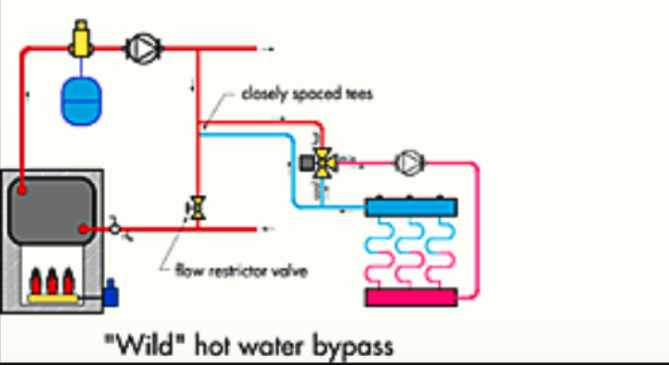
Here are a couple of the simplest options.
Since you have zone valves this first option is workable. No need for that pressure bypass unles you have more that 4 zone valves.
So basically add another zone valve, make a loop from zone valve to return. A valve in that loop to balance just enough gpm for the radiant. In that loop, two close tees for the mix valve and its pump.
This give you independant control over just the radiant woithout running any other zones.
 Bob "hot rod" Rohr
trainer for Caleffi NA
Living the hydronic dream1 -
I understand. Doing it properly is best option for it to work correctly.
Just a thought in my head… What about a limit switch or something secured to the supply line to the in-floor zone, wired in series thru the thermostat signal to the zone valve? Or actually maybe better on the return line coming back ?
Could set it at around 100 degrees on the return line to shut off that zone, and then the warm water in the tubing would just sit there as the concrete absorbs heat. Then once it cools off, the zone valve opens to flow more water… I know it's not the most ideal solution, but would it help this problem ?
0 -
That valve would be pulsing on/ off every several seconds as the cooler water comes back.
I wish it were that simple
Bob "hot rod" Rohr
trainer for Caleffi NA
Living the hydronic dream1 -
Honestly if you kludge a solution together you will probably be on the hook when it doesn't satisfy their needs. Best bet is to pick the most economical tried and true solution (thermostatic mixing valve, add pump, or self contained mix station if your labor rates are high regionally) quote that to the customer and let them know the band-aid solution is to just turn the thermostat lower than they typically would keep it set to. Customer gets a free, not-totally-correct solution, and you get the option to quote doing it the professional way.
0 -
Short answer is no.
0 -
Maybe trying reducing the boiler temperature from 180, perhaps down to 160? That would help a small bit for the radiant. If it doesn't sacrifice the high temperature fin tube?
Bob "hot rod" Rohr
trainer for Caleffi NA
Living the hydronic dream0 -
If you want to get into science fair territory, you can technically use a single monoflow T with the existing setup to provide the mixing. The venturi effect through the monoflow T would provide the suction to pull return water in to mix with the supply.
Would definitely a fun exercise to size correctly.
0 -
I realize all of these suggestions on doing it the proper way.
But I'm still see a problem in my mind with just adding a mixing valve and also another circulator to this particular zone…
Again, the existing current set up has a single system circulator (007-F5) with 3 zone valves on the supply side of boiler. If I were to leave all of this in place and then add a mixing valve / circ to the in-floor zone the proper way, then when this zone calls for heat, it would have to turn on the new zone circ, and also open up the existing zone valve, and also turn on the existing circulator and fire the boiler… But then when the 180 degree water hits the "hot" side of new mixing valve, the mixing valve is gonna close and then "dead head" the existing system circulator. Am I right on this ???
So if you look at the drawing I posted, can someone please notate (or re-draw) how this can work ? I mean without changing the other existing zones…
If I would have installed this to begin with, I would have used individual circulators for each zone, with a zone control panel. Then the wiring and piping for mixing valve would have been easier and effective.
0 -
The Viega hydronic mixing block doesn't require a circulator or zone valve, and its wiring & piping is simple, easy, and effective.
And the device provides constant circulation, reliable, continuous 3 way mixing, and a programable warm weather shutdown. Viegas tech support will walk you through live installation, programming, and adjustment by phone if needed.
As others have indicated you will be accountable for future issues once you try to fix a mess left behind. And you may not have a full true understanding of what took place before.
Was there a written proposal?
Scope of work?
Payment schedule?
Installers responsibilities?
Homeowners responsibilities?
Gc's responsibilities?
I understand being generous and sincere efforts to help. Occasionally it can be rewarding and sometimes a disaster fostering ill will.
0 -
pipe the new mix valve into the radiant loop, remove wires from existing zone valve, lock zone valve open. use a relay to power the circ and provide a dry contact call for heat to the boiler when thermostat calls. then the main circ only runs when one of the zone valves is open. Or since you would need to do some re-piping anyway just remove the old zone valve add a single zone pump relay
If you pipe the mix valve the way it needs to be piped to work then no you will not be dead heading the other circ, if your circ runs whenever the boiler calls then yes you would need to add a separate relay to power that circ
0 -
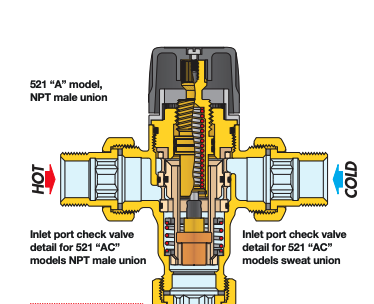
A 3 way mix valve never closes off both ports, as one port closes the other is opening the same amount. You will not deadhead a circ with a 3 way mix thermostatic mix valve.
Here is what they look like inside. Notice the cold port at the top, hot at the bottom. As the spool inside moves up or down the ports inside are open, always.
There are some motorized valves that can close off both ports, but these are not intended for temperature mixing or diverting.
 Bob "hot rod" Rohr
trainer for Caleffi NA
Living the hydronic dream0



Categories
- All Categories
- 87.6K THE MAIN WALL
- 3.3K A-C, Heat Pumps & Refrigeration
- 59 Biomass
- 429 Carbon Monoxide Awareness
- 124 Chimneys & Flues
- 2.2K Domestic Hot Water
- 5.9K Gas Heating
- 119 Geothermal
- 168 Indoor-Air Quality
- 3.8K Oil Heating
- 78 Pipe Deterioration
- 1K Plumbing
- 6.6K Radiant Heating
- 394 Solar
- 16K Strictly Steam
- 3.5K Thermostats and Controls
- 56 Water Quality
- 51 Industry Classes
- 50 Job Opportunities
- 18 Recall Announcements