Cleaning Oatey No. 95 from inside of pipes?

Soldering newbie… I've been using Oatey No. 95 (lead-free) for soldering hydronic heating pipes and am starting to get the hang of it. I've likely been using too much as it I see it run down the inside of ball valves. Been doing my best to clean the outside and some of the inside.
I still feel film on the outside and the inside isn't particularly easy to clean, though the instructions just say to flush with water (though it's petroleum-based). I didn't want to use a water-based flux because I read that it might get fried at lower temps.
I'm assuming the outside will clean well once there's hot water running through the pipes, but should I be concerned about a stainless steel fire tube heat exchanger and this flux running through the system?
I've seen recommendations for flushing soon after initial fill, so maybe that will help. I can also try flushing individual pipe sections where I can.
Even in the worst-case, 1.7 oz of flux in a system (with buffer tank) that has ~41 gallons (5248 oz) of water makes me think I'm being overly cautious and I should just do my best.
Comments
-
Overly cautious? It depends on your soldering skills and how much solder is left behind on the inside diameter. Practicing soldering, if you are so inclined to be so concerned, should be done before any permanent soldering. Practicing should be done on copper tubing you don't necessary want to install.
0 -
i don't think their issue is excess solder, it is the flux running around out of the joint, which is completely normal, just wipe it up on the outside with a wet rag and i'd probably just fill it, run it a couple days, drain and if i can flush then refill. there are system cleaners intoned for new systems you can run to clean it out if you want but unless you dumped the whole tub of flux in the system i'd doubt you'll have a problem.
0 -
95/5 is a tough solder to work with. Try a roll of Sterling , it is worth the price .. It flows nicely with less heat .. A wet rag with detergent works well for cleaning off the excess flux .
There was an error rendering this rich post.
 1
1 -
The lead-free brass makes this harder (should have chosen something else for hydronics). But it hasn't been all that bad. When the joint is "ready," the solder just flows, similar to my experience with electronics soldering.
I need to do some potable water joints as well, so I need 95/5 there. I did order water-soluable though.
0 -
lead free solder melts at a higher temp than tin-lead solder so there is a smaller window between where the joint is hot enough to melt the solder and where the flux burns away. different lead free alloys flow differently
0 -
My favorite solder for plumbing has been Bridgit.
I also have a spool of Sterling but I like the Bridgit more.
https://www.supplyhouse.com/Harris-BRGT61-Bridgit-1-8-x-1lb-Spool-of-Solder
My preferred flux
https://www.supplyhouse.com/Oatey-30374-No-95-Tinning-Flux-1-7-oz
For cleaning outside you need to wipe it with a wet rag while it's still fairly hot. Not super hot because that's bad for the solder but still pretty hot.
I've never heard of cleaning the inside and can't imagine how you'd do that.
For valves I like wrap a wet rag around them to keep them cool obviously not on the side you're soldering. Most do not do this but I'm not as fast as them.
Single pipe 392sqft system with an EG-40 rated for 325sqft and it's silent and balanced at all times.
0 -
i like using npt valves and adapters so if i burn something up it is a $1 adapter and not a $30 valve.
the idea of the tinning flux is that it tins the surfaces before the flux burns out even if you overheat the joint. i'v used both tinning and non-tinning flux with lead free solder and have no strong preference either way but have found that sometimes the solder particles in the tinning flux seem to sort of corrode and it gets kind of funky. much more important is clean both surfaces and flux both surfaces, heat the more massive part, move the torch around or away if you are applying solder for a while.
i see people doing electronic soldering on videos where they are doing mechanical stuff and they are doing everything wrong, it is painful to watch. dipping the iron in the flux, putting solder on the iron and trying to melt it in to the joint…
what do you mean about a wet rag being bad for the solder? most use a rag to smooth out the molten solder and sometimes to quench the joint
1 -
There's been threads on here as well as articles written on it. They say the thermal shock causes cracking.
That's all I've got.
I solder valves because I like less leak points but I can see benefits to both.
With an iron I be add solder to the iron usually to transfer heat. Sometimes I'll cheat and use it to hold solder but I try to avoid it. It'll only work if the joint or wire is already tinned.
Single pipe 392sqft system with an EG-40 rated for 325sqft and it's silent and balanced at all times.
0 -
there needs to be a little solder on the iron to transfer the heat but the adding solder to heat the joint usually is more getting flux from the core of the solder on the joint while wasting some solder. putting some flux on the joint helps a lot. small joints can be made with solder on the iron if you put flux on the joint but they weren't doing that. using liquid or paste electronic flux saves a lot of solder.
0 -
I do it more when I'm soldering two wires together or doing point to point and I don't have a third hand. It's lazy but often will work.
Single pipe 392sqft system with an EG-40 rated for 325sqft and it's silent and balanced at all times.
0 -
Stay away from 95/5 it is difficult to work with because if you look it up the temp it becomes solid is the same as the temp it becomes liquid…no in between. I like Silvabright but any of the newer solders are better than 95/5
1 -
it is a good idea to run a hydronic cleaner through a system after soldering.
They are basically a strong detergent, that will clean flux, oils, pipe dope from all the components. Flush and fill with good water and add a conditioner
Fernox, Axiom are good brands. Use the screw on aerosol cans
Bob "hot rod" Rohr
trainer for Caleffi NA
Living the hydronic dream 1
1 -
that generally is desirable. the viscosity of the liquid still changes with temp but that property is known as eutectic. it means if you move the jont while it is cooling it doesn't have a temp where the solder will crystalize and make a weak joint. 63/38 solder was sometimes used in electronics for that property.
that doesn't mean there aren't other reasons that 95/5 alloy isn't difficult to work with. I think it is common because the metals are less expensive than in some of the other blends. most other blends contain some silver which is probably the costly part.
0 -
63/37.
It's all I use in electronics. Mostly rosin core, some no clean but not much.
Single pipe 392sqft system with an EG-40 rated for 325sqft and it's silent and balanced at all times.
0 -
Too much flux
Flux the pole not the hole!
 1
1 -
If I'm not mistaken, you can still use 50/50 on heating systems. It is not potable so 50/50 as used in the past may still be used today as long as it is not used on drinking water installations.
To be sure a mistake is not made, I do not carrie 50/50 at all. But in this case it would be easier to use for soldering. Is 50/50 still allowed for this?
0 -
60/40 (60% lead) melts at lower temperature than 50/50 and is a good filler solder for loose joint caps.
If you have a lot of solder inside the pipe that can be from loose joints and excessive flux. The solder flows down inside with the flux trail inside.
Bob "hot rod" Rohr
trainer for Caleffi NA
Living the hydronic dream0 -
Hi, I like to use Rectorseal C-Flux. It's a water based flux, so easy cleanup, but the fun part is that it turns dark when the joint has reached the right temperature to apply the solder. It prevents under or overheating things, so some of the problems can be avoided in the first place.
Yours, Larry
0 -
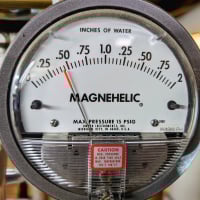
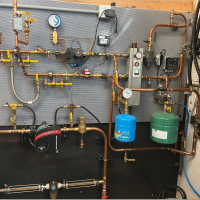
Post some photos of your pipe work, we will be gentle. Always good to get some constructive criticism if needed.

 2
2





Categories
- All Categories
- 87.6K THE MAIN WALL
- 3.3K A-C, Heat Pumps & Refrigeration
- 59 Biomass
- 429 Carbon Monoxide Awareness
- 124 Chimneys & Flues
- 2.2K Domestic Hot Water
- 5.9K Gas Heating
- 119 Geothermal
- 168 Indoor-Air Quality
- 3.8K Oil Heating
- 78 Pipe Deterioration
- 1K Plumbing
- 6.6K Radiant Heating
- 394 Solar
- 16K Strictly Steam
- 3.5K Thermostats and Controls
- 56 Water Quality
- 51 Industry Classes
- 50 Job Opportunities
- 18 Recall Announcements