Boiler kettling or something else?

Hello all. Laars Mini Therm boiler installed in 2016. Regularly maintained. Lived most of its life w/ very hard water (Denver, CO metro area). Whole home water softener installed in 2024.
This season, boiler started to over pressurize and dump water (through PRV). Replaced expansion tank, auto air vent, primary pump (on top of boiler, system has secondary pump down the line), added a second auto air vent directly to the boiler, and PRV (started dripping).
System lives around 22 to 27 PSI. Plumber set expansion tank to 21 PSI. Also lowered boiler temp from 190 to 175 degrees, and replaced temp/pressure gauge. Also flushed boiler and all zones (4) multiple times. No more over pressure activating PRV.
However, now experiencing the linked video where knocking occurs, pressure jiggles arounds rapidly, suddenly stops with no PRV activation, and 25 degree plus rapid temperature increase. Takes several hours after normal operation for this to occur, and issue is intermittent. Doesn't happen with every cycle, seems to be about every 30 mins.
System does have an auto fill valve, but experiencing this issue with the fresh water line on and off to the boiler. Any help would be greatly appreciated. Thank you!
Is this kettling? Something else wrong internally? Other thoughts/ideas?
Comments
-
Yes, that's kettling.
The pressure keeps rising even with the feed valve turned off? Is there an indirect water heater attached?
0 -
that is not uncommon in copper tube boilers that have scaled up
It is a fairly simple fix to run an acid type type hydronic cleaner for a day or so and refill with good water
The over pressure could be the expansion tank or leaking indirect coil
When you pre charge an expansion tank at higher psi, you reduce the capacity
The system should run at 12-15 psi if it is a two story or less home?
If system pressure drops with the fill valve off and the indirect isolated, you could have a leak in the system
It needs some additional troubleshooting to determine two problems
Bob "hot rod" Rohr
trainer for Caleffi NA
Living the hydronic dream0 -
Is there a reason for operating at 27 PSI static pressure? Seems a little on the high side to me.
Edward Young Retired
After you make that expensive repair and you still have the same problem, What will you check next?
2 -
Thanks all. Yes to this issue even when the feed valve is closed. No indirect water heater. Operating pressure seems to be the norm, but does that mean it's just overfilled?
Yes it's a 2 story from the basement to the farthest zone. Haven't noticed any leaks.... Yet.
Sounds like next step is descaling. If that doesn't work, worth pursuing heat exchanger replacement or just an entirely new unit?
0 -
The pressure seems quite high. The static fill pressure should be 12- 15 psi cold.
The pre-charge in the tank should be adjusted to that pressure before it is installed.
Any idea why he set the tank to 21 psi? If the pressure rises to 27 psi or higher the pressure relief valve may start seeping, or discharge at 30 psi
Some troubleshooters increase fill pressure like that to get rid of noise problems, but no need to run that close to relief pressure.
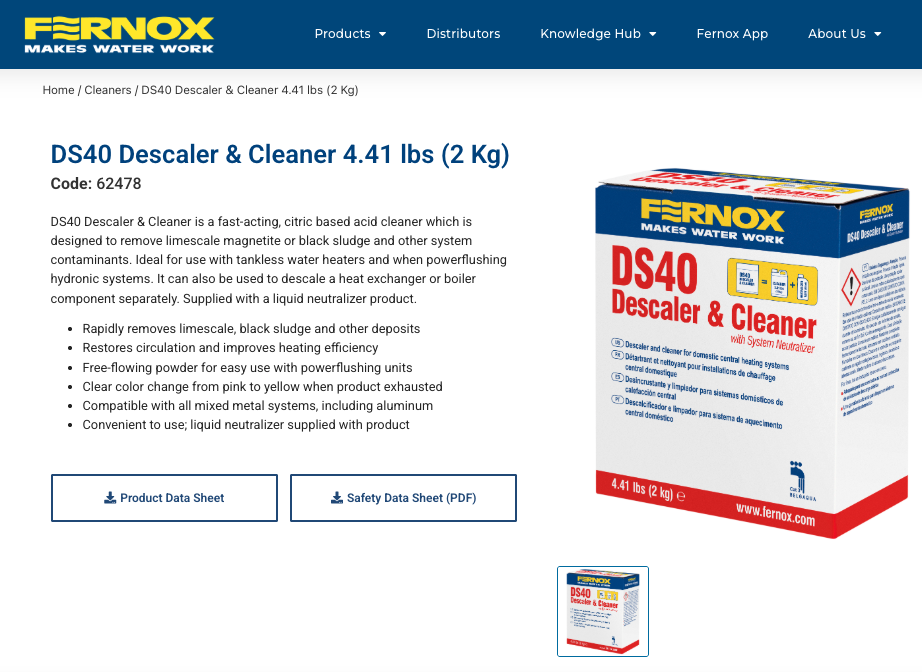
This is an example of a products that works well in scaled copper boilers.
 Bob "hot rod" Rohr
trainer for Caleffi NA
Living the hydronic dream1 -
Tech is here again. Believe he set the tank to support the higher operating pressure. He flushed out the heat exchanger numerous times and got some black flakes out of the system. Operating pressure is now consistently around 21 psi, but problem in the video persists. Latest thought is something still intermittently blocking the heat exchanger. Mentioned letting it sit w/ something like a CLR (product above) for several days in the hopes it breaks down whatever is blocking the heat exchanger.
0 -
I would go with a more aggressive cleaner than CLR.
This is another product that you can find at hardware and box stores. It has directions on the bottle for descaling water heaters and heat exchangers. What is the boiler pressure without any pumps running, boiler at room temperature if possible?
21psi is too high, unless the gauge is mounted at a pump discharge. Generally the gauge on the boiler itself is where you monitor fill pressure. Or the tech could put a temporary test gauge on the system.
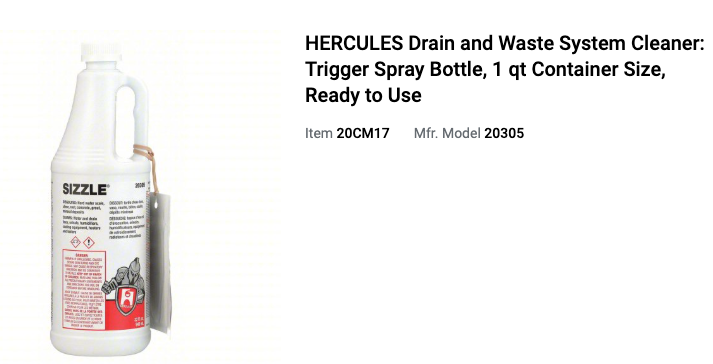
This product you could squirt in yourself. It screws on a hose connection on the boiler drain or purge valve. Pull the trigger and it squirts in.
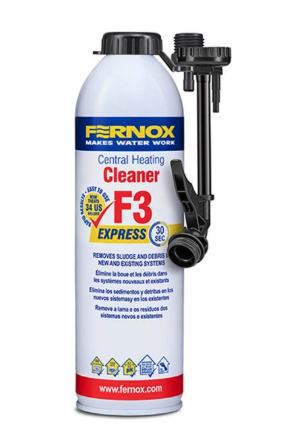
It is more of a detergent based product, I prefer acid for limescale problems.
 Bob "hot rod" Rohr
trainer for Caleffi NA
Living the hydronic dream1 -
Latest update. Boiler board controller may be failing. It's sending inconsistent voltage to the pump, so when a thermostat is calling for heat the pump is intermittently activating, trapping water in the boiler itself. Also found a zone valve motor that's starting to skip its gear, so could this all be electrical/circulation related and not boiler itself related?
0 -
It really depends on how the boiler is piped. If the boiler has it's own circulator that could be controlled by the boiler control, or it could be controlled by an additional relay box.
In some cases you have multiple pumps, one on or in the boiler, one on a primary loop and possibly multiple zone pumps. All of those need to be controlled on a heat call.
Some still pics showing the boiler piping may help. Unless the boiler control is sending out a variable speed signal,I don't understand inconsistent voltage?
If the zone valve has a stripped sector gear, the actuator needs to be replaced. Most valves canbe forced into a manual open position, to give you heat or troubleshoot a zone.
Actuators can fail if the valve gets sticky.
Which the boiler cleaner would also help with also.
If in fact you have a boiler pump malfunctioning that could lead to the kettling sound, not enough flow through the boiler. You have a very low mass boiler it needs adequate flow any time the fire is on.
A simple test would be to wire the boiler circulator to a plug or extension cord, disconnect it from the controller, let it run and see if it solves any or all the issues.
Bob "hot rod" Rohr
trainer for Caleffi NA
Living the hydronic dream0 -
What is the model # of your boiler? Does it have a low loss header? You obviously have insufficient flow thru the heat exchanger for what ever reason. How is it piped? You say,"primary pump (on top of boiler," sounds like you are talking about a low loss header. 150K BTU or above? This boiler should be, I think, piped primary/secondary. That's the way I've done mine.
Pics help.
0 -
Following-up for closure. Replaced the controller and resolved the issue. It wasn't telling the main pump to circulate, so when a zone was calling for heat the pump wasn't activating causing the cavitation/over-pressure. Thanks all!
0




Categories
- All Categories
- 87.6K THE MAIN WALL
- 3.3K A-C, Heat Pumps & Refrigeration
- 59 Biomass
- 429 Carbon Monoxide Awareness
- 124 Chimneys & Flues
- 2.2K Domestic Hot Water
- 5.9K Gas Heating
- 119 Geothermal
- 168 Indoor-Air Quality
- 3.8K Oil Heating
- 78 Pipe Deterioration
- 1K Plumbing
- 6.6K Radiant Heating
- 394 Solar
- 16K Strictly Steam
- 3.5K Thermostats and Controls
- 56 Water Quality
- 51 Industry Classes
- 50 Job Opportunities
- 18 Recall Announcements