Update/further guidance on mains venting

Hey everyone. I recently posted about venting this 270ft main on a 2 pipe system.

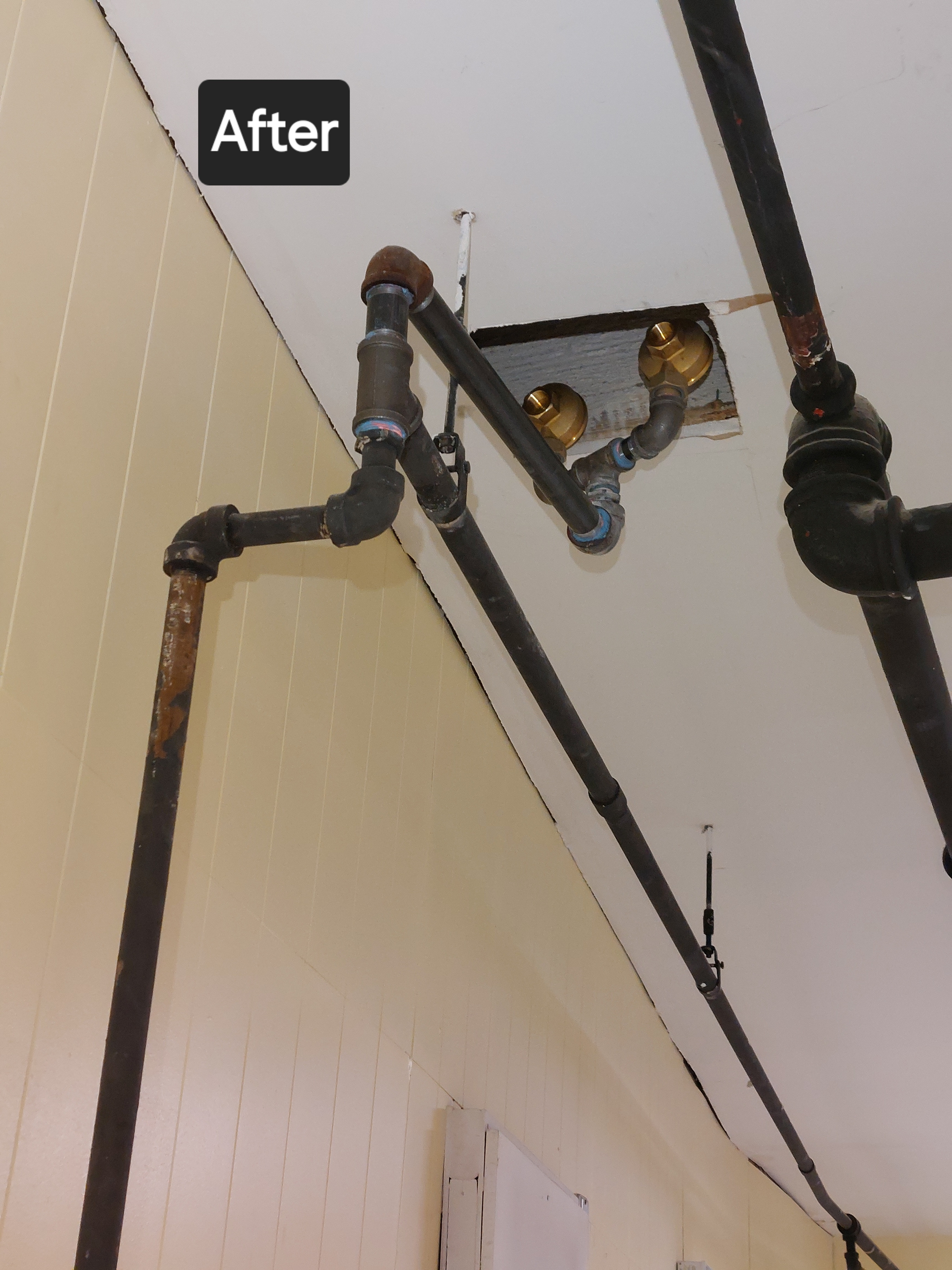
Recap:
*boiler was low fire only waiting for parts
*even after running for several hours, this radiator never heated all the way although everything down to the valve was hot.
*much of this line is still uninsulated (runs through an art gallery - can start insulating next week when they're closed.
Update:
Burner can now run on high and I've installed a 0-3psi guage. I've got the firing rate set as low as the ptrol will go and still cycle. It drops to low just above 1/2psi and back to high at basically 0 on the low range guage. Any lower and it won't switch back to high at all.
On high with these vents installed this radiator heats all the way to the trap and the vents close fine. However, on low it seems like there's not quite enough heat to close both vents. They both puff a little vapor and heat won't make it to the radiator.
So, on a long cycle (coming off overnight setback) this radiator heats, but once the burner starts to cycle and on shorter calls for heat through the day, it goes cold and even the main stays cold.
Do we think insulating the pipe will likely correct this? Additionally, might insulating the vent bodies (like the hood on a parka with just the nose sticking out) possibly help as well? Is 2 big mouths too much for a 270ft main?
I'm really not inclined to raise the pressure since the rest of the system heats fine.
Thanks
Comments
-
Insulation can't hurt especially on a long main like yours. But here's my question (and it comes from a place of ignorance, so bear with me):
If the low burner setting doesn't make enough steam to heat everything, then why not just keep it on the high setting and let the pressure control modulate it?
I'm really not inclined to raise the pressure since the rest of the system heats fine.
How do you plan to raise the pressure? I assume you're talking about on low burner, which seemingly can't provide enough steam so how will pressure go up?
Forgive me if you know this already, but you are aware that the pressure control can't by itself raise the pressure in your system, right? It only sets the upper limit.
NJ Steam Homeowner.
Free NJ and remote steam advice: https://heatinghelp.com/find-a-contractor/detail/new-jersey-steam-help/
See my sight glass boiler videos: https://bit.ly/3sZW1el0 -
Paul, I am letting the pressure control do the modulation but on a commercial setup like this I've got 3 ptrols. The first (firing rate controller) simply switches between 2 fuel flow rates to keep the pressure at the desired level. The second identical unit is really just a high limit that doesn't need a manual reset. If you get above the pressure your firing rate controller is trying to maintain, it'll shut off the burner. Then you've got the required manually reset high limit controller.
So on startup the we'll burn hotter until traps start to close and pressure builds, then drop down to save fuel.
While we were limited to low fire only, I was able to determine that on low there aren't quite enough BTUs to get all the air out and close every trap in the system, no matter how long it ran. But it came darn close. There's enough uninsulated pipe here that, once corrected, the pickup factor for the building is going to drop.
I was hopeful that by insulating everything and venting the mains, we'd be able to effectively down-fire boiler and still get heat to the farthest places in a reasonable time frame. This may still be possible, I don't know. But in this location (the first to get mains vents) it seems like once the burner drops to low (as it should to maintain the set pressure), the steam collapses and the vents puff away the pressure thats still needed to push air though the traps in the rads. I could be wrong on that though. But as you mentioned once before, the big mouths are big and heavy and need alot of heat to stay closed. They also don't have a drop away pressure right? They'll open if there's a small drop in temperature like a radiator trap. I don't know if that matters here but it's why I was thinking about insulating the vent bodies.
0 -
I would not insulate the vent bodies, but I would insulate every steam carrying pipe that you can reach.
Can the firing rate on low be increased? A slight bump might be enough.—
Bburd0 -
For sure. There are some significant runs of uninsulated pipe and I'm into that now. I'm sure we could change nozzles. It seems like the low fire isn't quite high enough and the high fire is more than we need.
What interests me is that the radiator in the photo could almost heat on low (maybe the first 2 sections) but it took an extreme amount of time. Now it heats all the way to the trap on high but goes cold when the burner kicks back to low.
0

Categories
- All Categories
- 87.5K THE MAIN WALL
- 3.3K A-C, Heat Pumps & Refrigeration
- 59 Biomass
- 429 Carbon Monoxide Awareness
- 124 Chimneys & Flues
- 2.2K Domestic Hot Water
- 5.9K Gas Heating
- 119 Geothermal
- 168 Indoor-Air Quality
- 3.8K Oil Heating
- 78 Pipe Deterioration
- 1K Plumbing
- 6.6K Radiant Heating
- 394 Solar
- 15.9K Strictly Steam
- 3.5K Thermostats and Controls
- 56 Water Quality
- 50 Industry Classes
- 50 Job Opportunities
- 18 Recall Announcements