Electric Furnace Help
Comments
-
Well…
" Could be easily changed by putting in a two stage thermostat "
Not without rewiring a bit, W2 when connected internally does not do much.
 National - U.S. Gas Boiler 45+ Years Old
Steam 300 SQ. FT. - EDR 347
One Pipe System0 -
Anyway back to troubleshooting. Divide and Conquer. Is it control or sequencers ? Figuring out which one it is gives you troubleshooting direction.
To do so is relativity simple. Set up to measure the 24 VAC across the of the sequencers' heaters at the sequencers. Since your issue happens so seldomly I would connect to the heater terminals rather securely (you could use any unused heater terminals) and bring the wires out of the cabinet through the thermostat wire breach so you can get information without even touching the heater. Then connect a 24 VAC indicator of some sort, multimeter, dedicated AC voltmeter etc. So when it acts up you can see if the 24 VAC actually makes it to the sequencer heaters. No 24 VAC control issue, 24 VAC present and nothing else happening sequencer issue.
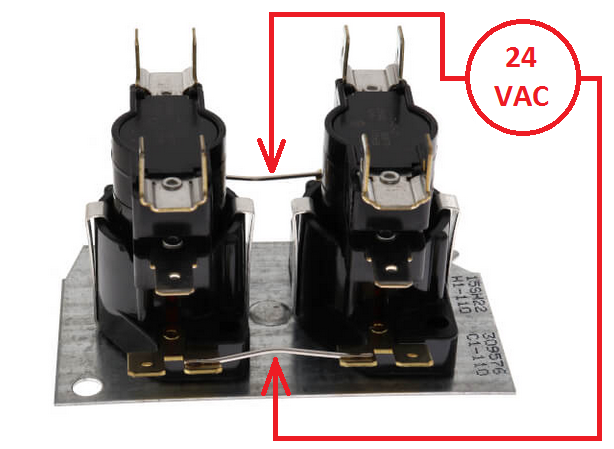
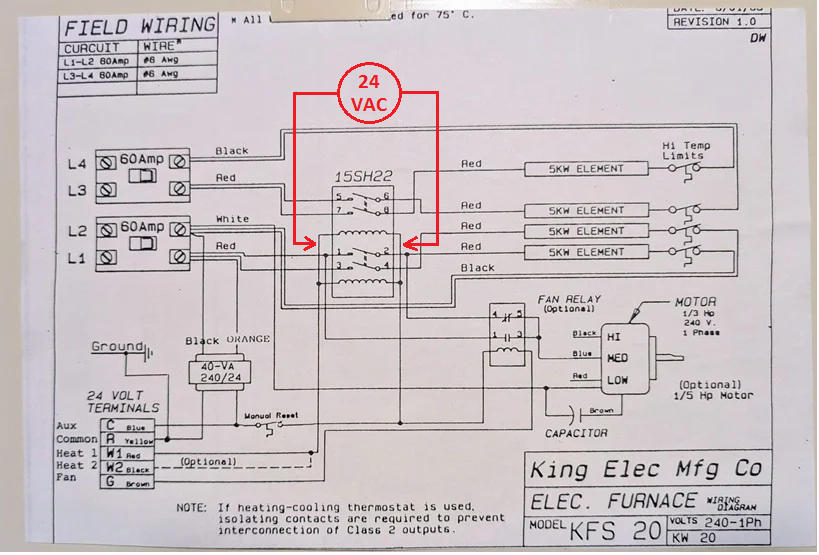
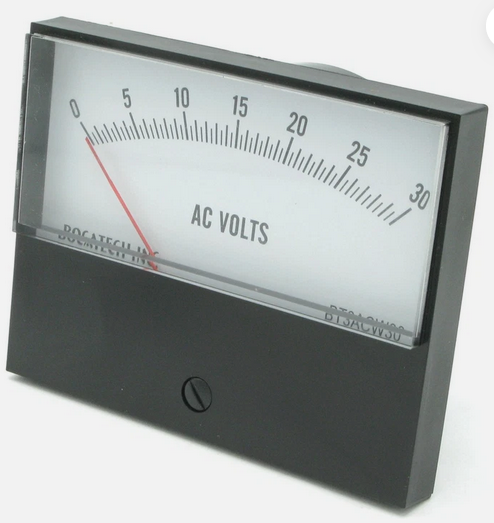
As an example: BocaTech Inc. BT3ACW30 Panel Meter, 0 - 30 AC Volt Meter. Inexpensive on eBay.
National - U.S. Gas Boiler 45+ Years Old
Steam 300 SQ. FT. - EDR 347
One Pipe System0 -
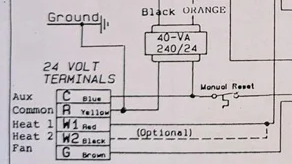
Interesting the R side is grounded.
 National - U.S. Gas Boiler 45+ Years Old
Steam 300 SQ. FT. - EDR 347
One Pipe System0 -
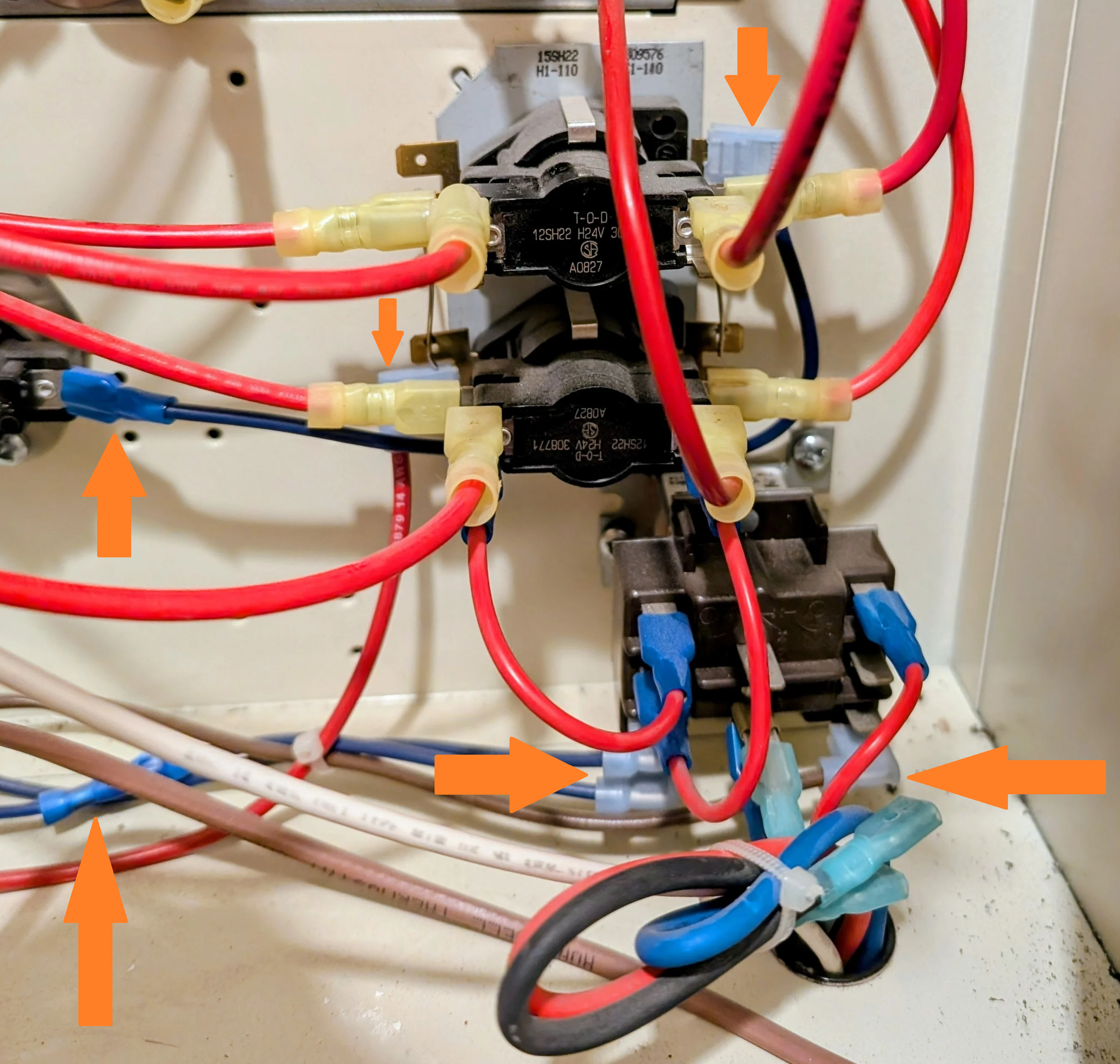
With all the crimped wire terminations and connections (Orange arrows and others in the control circuit) it would not surprise me if one was causing your issue, it does not take much to make a bad intermittent connection.
 National - U.S. Gas Boiler 45+ Years Old
Steam 300 SQ. FT. - EDR 347
One Pipe System0 -
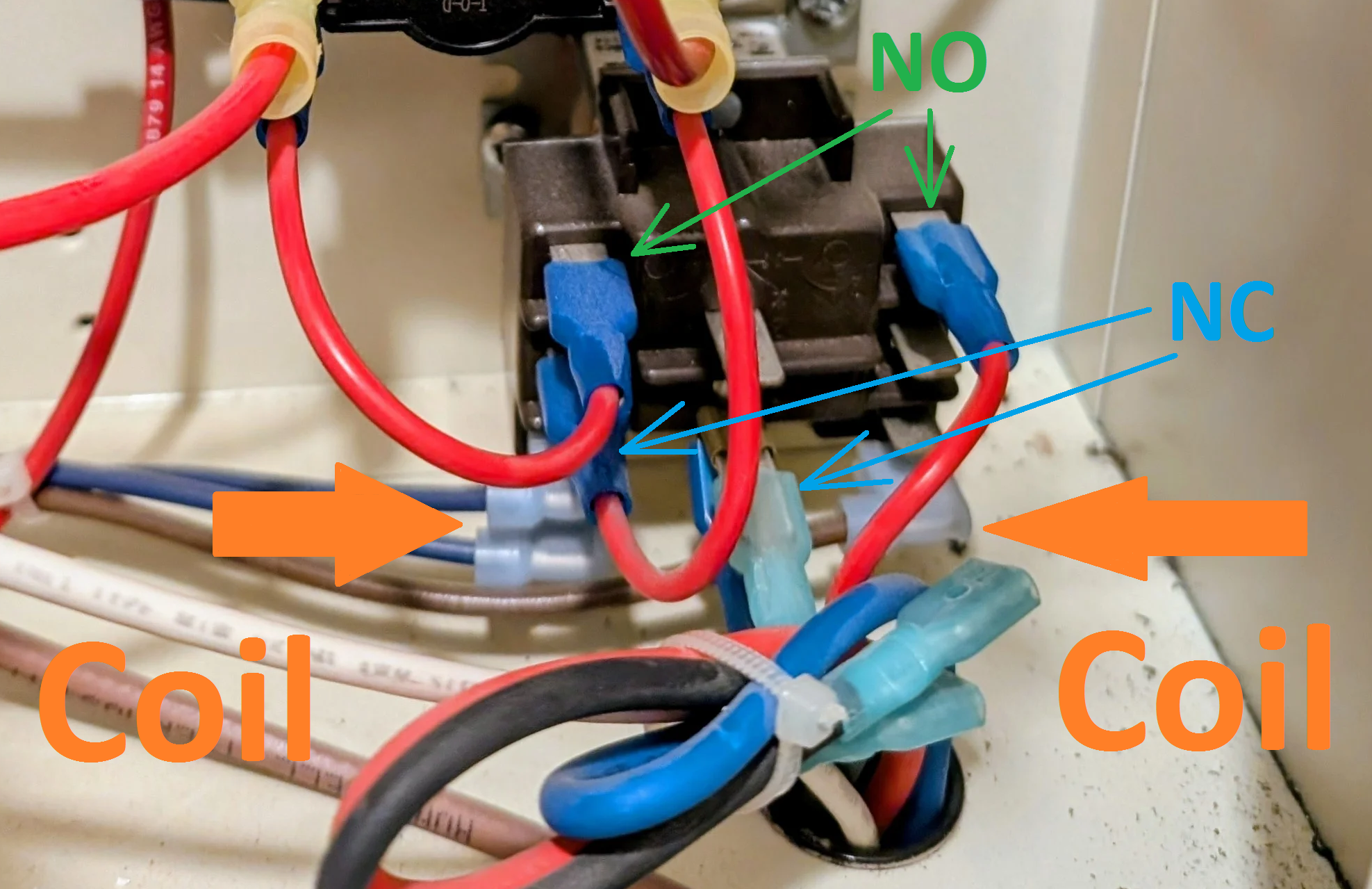
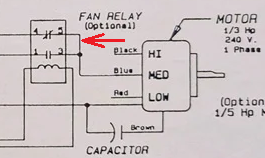
" But it looks like another wire is on the lower middle contact …can't see the color or trace it Just curious as I don't see it on the diagram. "
Its the Red jumper (blue crimp on) between the NO and NC contacts. The lighter blue crimp on goes to the motor.
 National - U.S. Gas Boiler 45+ Years Old
Steam 300 SQ. FT. - EDR 347
One Pipe System0 -
mattmia2 I don't know if all the heaters are running. It heats the house with no problem.
OK updated information. None of the above has changed. Since the last (2nd) visit from the service tech on or near the Nov. 4th the unit has worked perfectly. On Dec. 4th the unit wouldn't come on when house temp dropped below t-stat setting. Tripping the breakers on the unit front panel fixed it. Happened again a day or 2 latter. Ditto reset breakers on front. And then happened again today.
This time I reset the breakers in the main electrical panel for the house not on unit itself. And the unit came on. So apparently it's not the mechanical force of tripping the breakers and jiggling the wires inside. It's just cycling the power.
Anyway if previous precedents are repeated the unit will require being reset more and more often until it no longer comes on. And this time I'm not paying over $200 for a service call that resolves nothing.
Have the step by step instructions posted by EBEBRATT. Was just wondering if knowing tripping the main panel breakers away from the unit has the same effect as tripping the breakers on the face of the panel might change potential diagnostics?
As always thanks for the help.
0 -
Tripping the main breakers does have exactly the same electrical effect. And the whole thing suggests rather strongly that there is something amiss in the contractors (big relays!) which control the heating elements.
Br. Jamie, osb
Building superintendent/caretaker, 7200 sq. ft. historic house museum with dependencies in New England0 -
I would check the wiring between the breakers in the main panel. I would also check that the breakers stab on connections and the panel busbars are ok. Also check that the breakers in the main panel are the correct size.
0 -
Well there is not much there. If you don't have a meter to actually do some troubleshooting. I would do two things.
1. If you have not done it yet and it is more a curiosity thing, cycle the thermostat to stop the call for heat then turn it back up again. See if it has the same result as cycling the breakers at the main panel.
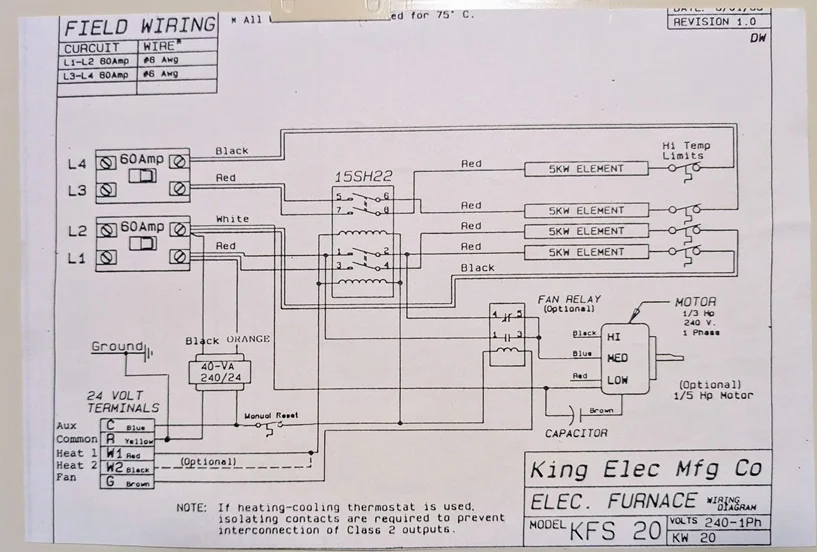
2. The most likely culprit is the sequencer relay having dilapidating contacts that don't close every time. Or the coil control side of the sequencer relay is intermittent or bad crimp connections, however wiggling wires may rule out bad crimps.
There only a few things it can be.
Bad thermostat, thermostat wiring, control wiring inside the heater unit, bad crimp-on wire termination of the control wiring to the sequencer relay, the sequencer relay.
Since the summer fan function works it is not the 240 VAC to 24 VAC transformer, and probably not the high current 240 VAC building power.
With a multimeter and some careful testing when it fails, with strategic measurements you can find out for sure. Beyond that it is a guess, the simplest most likely thing is to change the sequencer relay and/or closely inspect the control circuit crimp connections.
I'd be very curious if there is 24 VAC at the coil of the sequencer relay when it acts up. Assuming 240 VAC is good to the sequencer relay, if there is 24 VAC at the coil of the sequencer relay and the sequencer relay contacts do not close it is the sequencer relay. But you need a meter (and some skill so you don't electrocute or arc flash your self) to test that and you have to catch it in the act.
 National - U.S. Gas Boiler 45+ Years Old
Steam 300 SQ. FT. - EDR 347
One Pipe System0


Categories
- All Categories
- 87.6K THE MAIN WALL
- 3.3K A-C, Heat Pumps & Refrigeration
- 59 Biomass
- 429 Carbon Monoxide Awareness
- 124 Chimneys & Flues
- 2.2K Domestic Hot Water
- 5.9K Gas Heating
- 119 Geothermal
- 168 Indoor-Air Quality
- 3.8K Oil Heating
- 78 Pipe Deterioration
- 1K Plumbing
- 6.6K Radiant Heating
- 394 Solar
- 16K Strictly Steam
- 3.5K Thermostats and Controls
- 56 Water Quality
- 51 Industry Classes
- 50 Job Opportunities
- 18 Recall Announcements