Hydronic Baseboard Gap

Hey everyone,
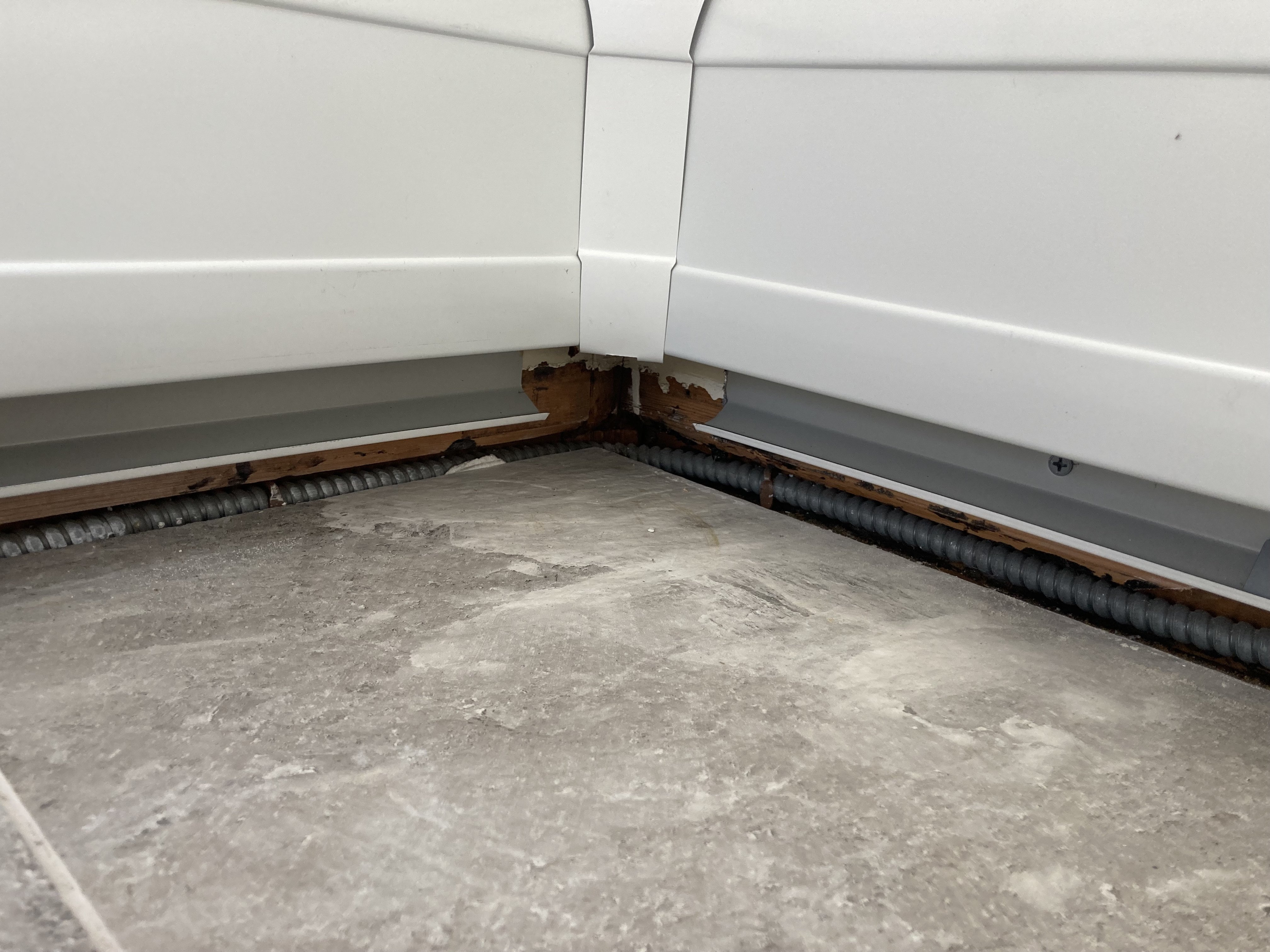
I just had hydronic baseboard installed in my sunroom and the plumbers left a significant gap between the baseboard and the floor. I was wondering if this was normal or a mistake before I have the redo it to lower it. The rest of my hydronic baseboard in my entire home goes to the floor. Attaching pictures.
Thank you
Comments
-
Pretty ugly…but who did the wiring? That's wrong too
 1
1 -
Yeah, I agree- so definitely have them lower the baseboard? They shouldn't need to re-solder, right? Wiring beneath the baseboard is from the old owners. Not sure who they had run wire for the sunroom. They did a lot of things wrong.
0 -
Was he leaving some space for carpet and pad?
Or staying above the highest BX staple?
Or covering up some damaged wall above the BB?
Bob "hot rod" Rohr
trainer for Caleffi NA
Living the hydronic dream
 2
2 -
Nothing above the BB is damaged, there is no carpet or pad going in, and they did not make mention of staying above BX. Not quite sure why they left such a big gap. Sunroom has a very very subtle slope so there will be points where it is not level, but they can still bring it down to the floor or closer to it. Just wanted to be sure there was no standard gap necessary for air flow.
0 -
It's the gap under the front cover that needs enough space to enable the convection.
Typically the bottom edge of the enclosure can go down onto the floor. At you level mark as you mentioned.
Looks like 1/2" or so lower if the BX has to stay? Is it worth it?
It depends on the end connections as far as lowering it. Are they through a wall, or the floor?
Bob "hot rod" Rohr
trainer for Caleffi NA
Living the hydronic dream0 -
Got it; not sure if the BX has to stay- probably yes. The entry point is through the wall- it is a supply and return so two pipes. To me, if you are going to do the job, you do the job right, so I would make them change it. I just don't know if they will have to redo the entry point pipes to lower the heating element. If so, that will just take longer.
0 -
your call and whether to lower it or not
It must bother you enough to come here for an opinion?
I’d just ask the installer why he mounted it like that. Might be something we don’t see from one pic?
Bob "hot rod" Rohr
trainer for Caleffi NA
Living the hydronic dream0 -
Yes, definitely. I appreciate the help.
0 -
will it affect the heat output, no.
Looks weird, Yes
0 -
the bx may have been behind a baseboard that was removed, that would have been legal 50+ or so years ago.
if you lower the baseboard you may have a problem if in the future flooring gets layered on top of the current flooring. I don't think you're really going to see that it is an inch higher unless you are crawling on the floor or you are in an empty room that is 30' deep, once there is furniture in there you won't have the right angles to see it.
0 -
I don’t get the impression that the OP will be able to un-see that gap.
Bob "hot rod" Rohr
trainer for Caleffi NA
Living the hydronic dream1 -
Hi, Any chance the installer left the gap just in case the bx wants to be removed someday? 🤔
Yours, Larry
0 -
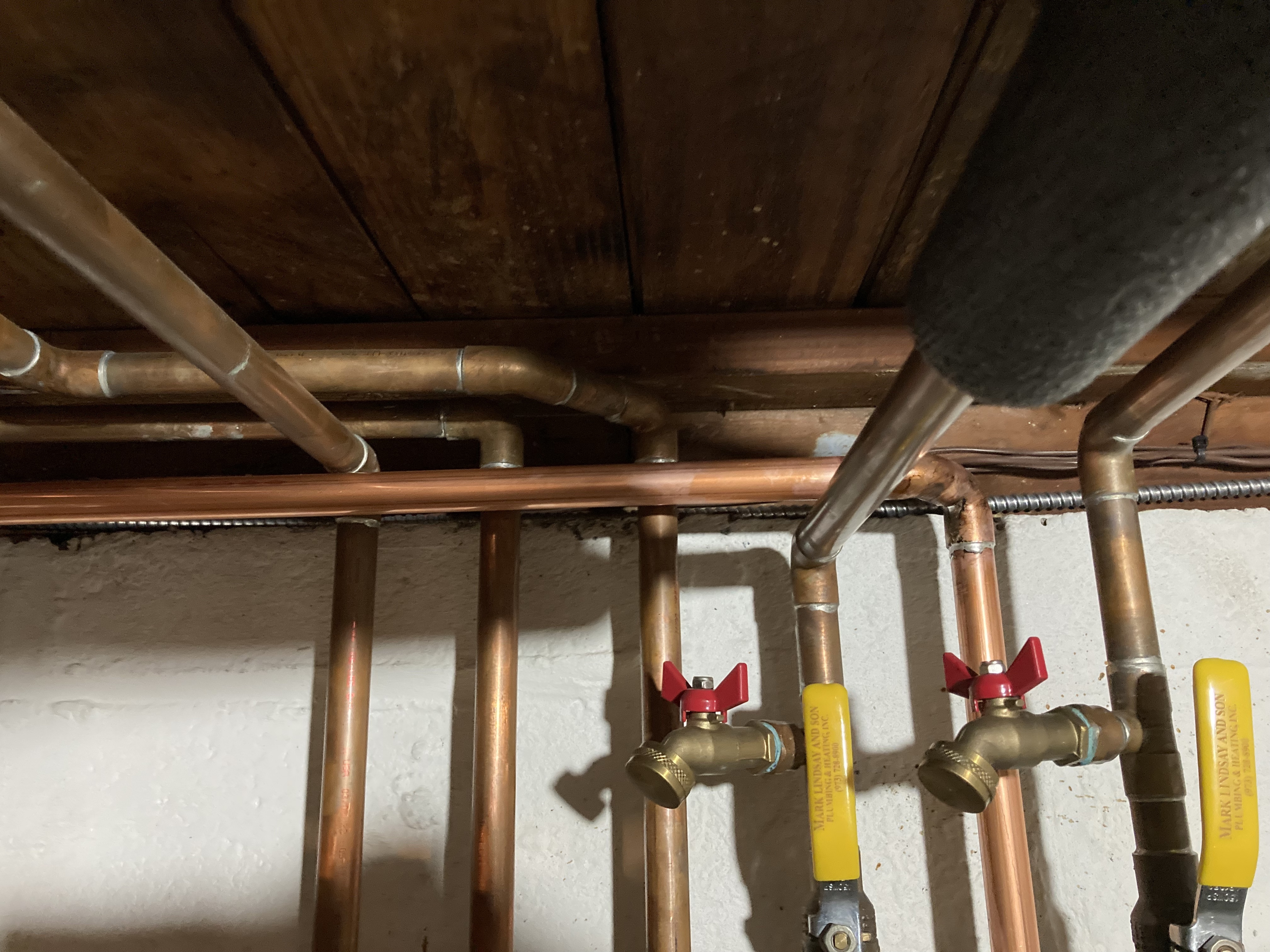
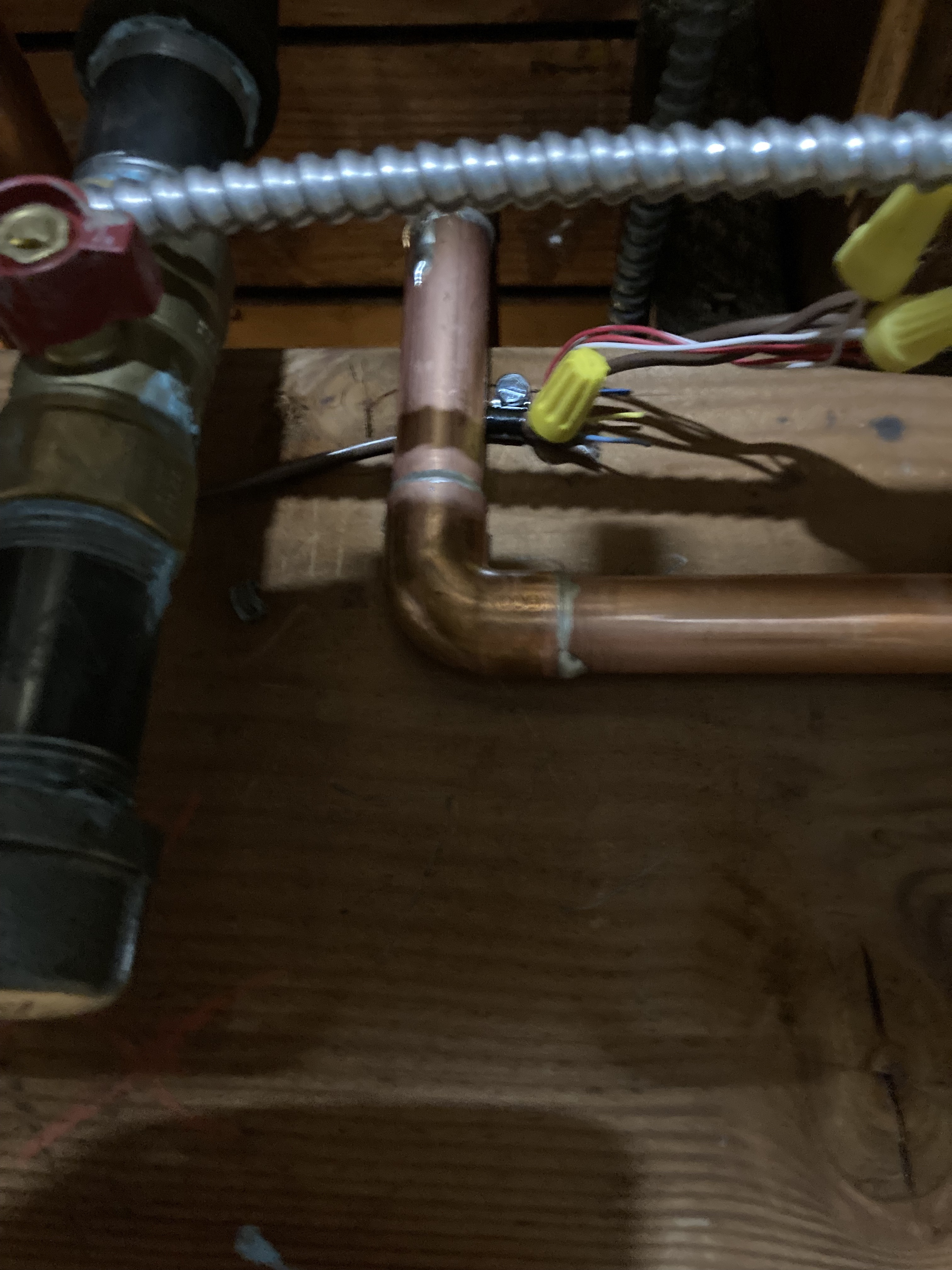
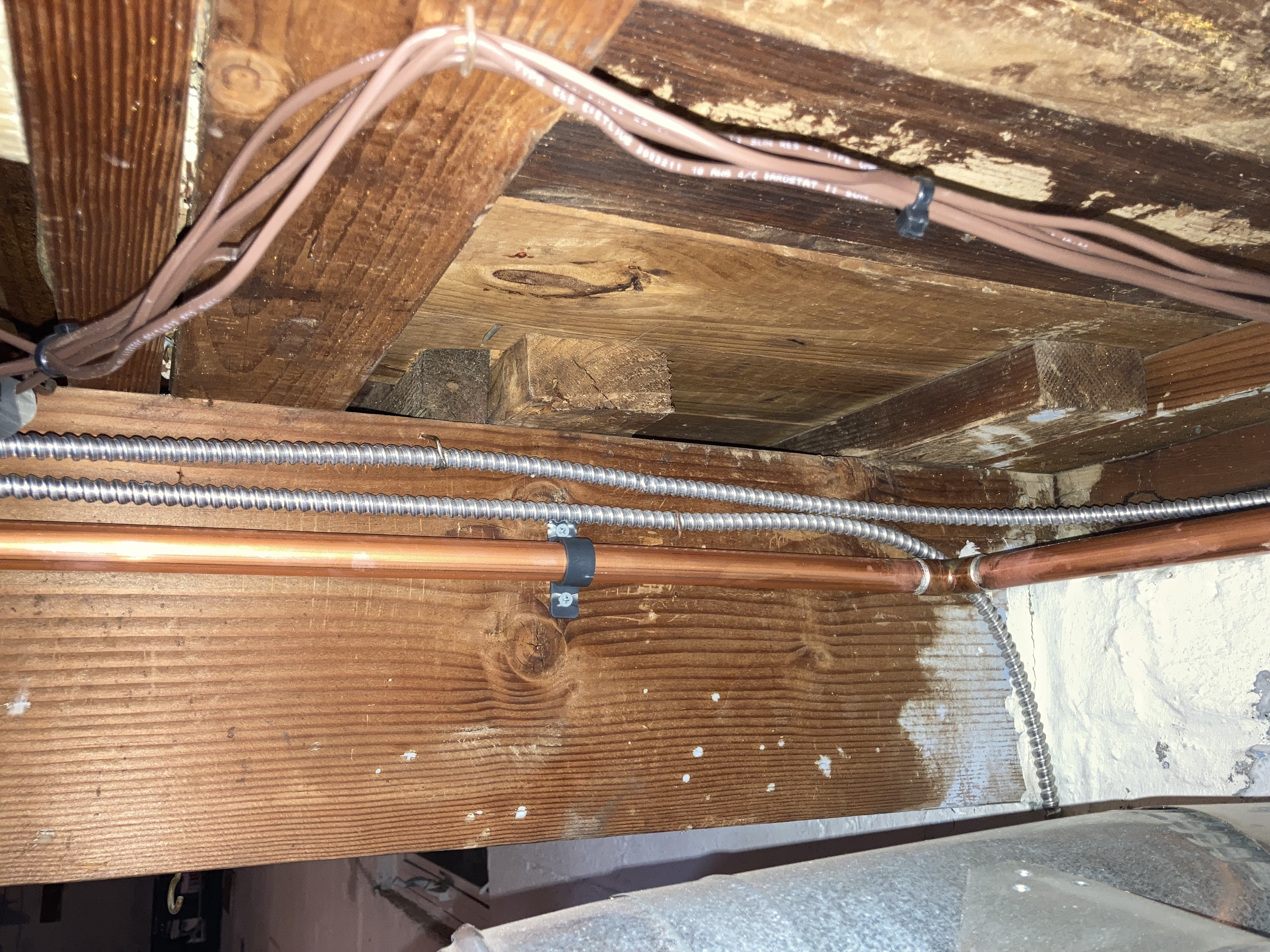
Thanks for all the new info. I will ask them tomorrow, but the BX was behind both electric baseboard and also baseboard molding, so it ran the length of that wall. We don't plan on ever changing the floor- just got it retiled. It's a concrete slab underneath. I will reach out to my electrician about the BX. I've been searching for baseboard gaps (metal backing) in other homes and can't find any- always goes to the floor. On a separate note, I also had a question about their pipe routing at the pipe manifold against the wall. The farthest to the right pipe is the new addition for the sunroom (bright copper)- it crosses over the other already existing pipes and is touching the one and also some thermostat wire. This plumber did some very good work overall, but I'm thinking of recommending they change the pipe path- I've found a better one that does not cross the other pipes. Any thoughts? Attaching pictures.
0 -
some supports of the various stuff can keep the pipes and the wires apart, some rubber or hard plastic between the pipes will keep them from rubbing, it would have been better to offset the pipe down and below instead of between but I don't think any of that is something you can make them change.
The baseboard cover held above the floor a bit I don't think is something you can compel them to change unless you spelled out that you wanted it that way. Most heating contractors will hold it off the floor a bit so they don't have an issue with future floor coverings. If you paint everything in that gap white or black no one but you will ever notice it.
That being said, with both sides it is a question of is this a battle you want to fight with the contractor and is this something it is worth it for the contractor to fight or should they just change it even though the way they did it is arguably acceptable.
0 -
Fair enough, acceptable but not clean- I figure they can use those pieces in between pipes to fix the areas of contact, but a different route will be cleaner and avoid the need. I'm actually thinking re-routing above so it follows the same pattern as the other pipes to the left- the new pipe is still not in use and job is half finished, so at this point it's just re-soldering and changing pipe path- not a great deal of new work.
0 -
Hey guys,
Just wanted to give an update and had one more question. We met with installer who was very accommodating and more than willing to adjust height of baseboard. They chose to leave the gap because of a slight slope in sunroom floor so they picked the first line on the wall paneling to follow and be parallel too so it appeared level. We decided to go with their choice and will live with it for a year or so to see if we tolerate gap and hide it well enough.
The other question I had was about the amount of hydronic element in the sunroom they added. When I initially met with installer- he said we did not need to do a load calculation because sunroom is on its own zone and has its own thermostat. So it has element along all three walls and I'm sure it is oversized. But, is there any downside to this? According to him, no. Right now the room just heats up much quicker than rest of house but also the wall thermostat reads 3-5 degrees cooler than the actual ambient room temp, so I am adjusting thermostat lower than I normally would to make real room temperature comfortable.
Should we have a load calc done and remove some heating element? So far as I can tell the only real downside of excess element on its own zone/thermostat may be shorter boiler cycles and a hotter room temp than thermostat reads.
Room is half glass- Demi-walls all around and wall to wall windows.
Thanks for all the help,
Steve
0 -
Red flag when he told you he didn't have to do a load calc because it is on its own zone. Get a load calc done and make sure the correct amount of baseboard was installed.
0 -
You said the room is tile on slab and there's a lot of glass. I'm not defending the installer for not doing a load calc but I know when I see that kind of room there's a nagging feeling that even if I install the correct amount of radiation I could hear back that they aren't always comfortable in there, probably because their feet are cold, not because the air doesn't warm up. Without the benefit of being in the room I say just close the dampers on some (all?) of the baseboard to reduce the heat output a bit. Leave the section closest to the thermostat open. I'd rather be a bit oversized and have to throttle it than not have enough in that type of room. As to the gap below the heat, get the carpenter to cut small strips of wood or molding, paint them whatever color works best and install that. It could look like you planned to make the heat level.
0 -
Rooms with a lot of glass tend to feel "cold" even though the ambient is warm. Your body heat is being pulled to the cold glass. AKA the "cold 70 effect"
Use an accurate thermometer to adjust the wall thermostat reading. There is a differential in the thermostat 1.5- 2° that may be adjustable also. Pull out the manual on your thermostst.
The wall thermostat is on an inside wall?
This smiling gentleman explains cold 70 the concept well.
 Bob "hot rod" Rohr
trainer for Caleffi NA
Living the hydronic dream 2
2 -
You could throttle the flow to the zone some.
What kind of boiler is it? If it isn't a mod con you will still run in to the boiler making a lot more heat than the zone can absorb if just that zone is calling regardless of if you reduce the output or not. You will just move the short cycling from the room thermostat to the aquastat on the boiler.
0 -
Thanks everyone- I am leaning towards just leaving the baseboard as is without the load calculation. It certainly is not undersized, and I live in the northeast so we do get cold winters. I figure I'll at least live through a winter in the room and see how it does- I'd certainly rather not remove heating element only to have to put it back. The thermostat is on an inside wall that adjoins the dining room, but still to the right of the thermostat wall is windows, since three of the four sides of the room are Demi-walls, windows/door. The boiler is a Weil-McLain. I think I'll probably just set thermostat to lower than rest of house. Thank you for the info and I will definitely watch the video.
0 -
Something like runtal or baseray up where you can feel it would put out some radiant heat and counteract the radiant heat loss through the glass but the ship has already sailed on that.
0



Categories
- All Categories
- 87.6K THE MAIN WALL
- 3.3K A-C, Heat Pumps & Refrigeration
- 59 Biomass
- 429 Carbon Monoxide Awareness
- 124 Chimneys & Flues
- 2.2K Domestic Hot Water
- 5.9K Gas Heating
- 119 Geothermal
- 168 Indoor-Air Quality
- 3.8K Oil Heating
- 78 Pipe Deterioration
- 1K Plumbing
- 6.6K Radiant Heating
- 394 Solar
- 16K Strictly Steam
- 3.5K Thermostats and Controls
- 56 Water Quality
- 51 Industry Classes
- 50 Job Opportunities
- 18 Recall Announcements