Rusted out steam lines in concrete slab, excavation vs. moving the radiator?
Options

rhodebump
Posts: 155
Hi,
We have a church built in 1904 with a some 2-pipe radiators. One of the radiators is located in the rear of the church. The existing (and rusted out) steam and condensate line run under a six-inch old concrete slab with 1 (or 2) inch marble tile floor over top. I estimate about 20 feet of line.
I have spent a few hours trying to "tunnel" under the slab from the church basement. I did not make much progress and I do not think that is a viable option.
I used a concrete saw and a demo hammer to remove a section of the marble floor and concrete slab. While doable, it's going to be a lot of effort to do this for 20 feet. It will also ruin a significant portion of a beautiful 100+ year old floor of marble.
Another option is to move the radiator a few feet where underneath the radiator is not slab on grade. Just the rear 6 feet of the church is a slab on earth/grade, but if I move the radiator a few feet, it's just a suspended concrete slab, and I can easily run steam/condensate lines (well easier than excavation!)
Moving the radiator is the easier option, but I am loathe to move something that the "dead men" installed. I am looking for the right choice/option, not necessarily the easy option.
What would you do?
Thank you!
I did a movie of the whole thing if you want to see it in video.
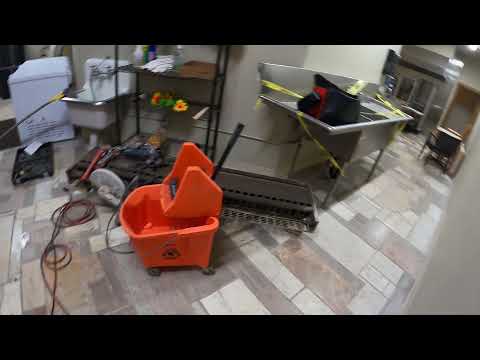 https://www.youtube.com/watch?v=SDBWZtJq2k0
We have a church built in 1904 with a some 2-pipe radiators. One of the radiators is located in the rear of the church. The existing (and rusted out) steam and condensate line run under a six-inch old concrete slab with 1 (or 2) inch marble tile floor over top. I estimate about 20 feet of line.
I have spent a few hours trying to "tunnel" under the slab from the church basement. I did not make much progress and I do not think that is a viable option.
I used a concrete saw and a demo hammer to remove a section of the marble floor and concrete slab. While doable, it's going to be a lot of effort to do this for 20 feet. It will also ruin a significant portion of a beautiful 100+ year old floor of marble.
Another option is to move the radiator a few feet where underneath the radiator is not slab on grade. Just the rear 6 feet of the church is a slab on earth/grade, but if I move the radiator a few feet, it's just a suspended concrete slab, and I can easily run steam/condensate lines (well easier than excavation!)
Moving the radiator is the easier option, but I am loathe to move something that the "dead men" installed. I am looking for the right choice/option, not necessarily the easy option.
What would you do?
Thank you!
I did a movie of the whole thing if you want to see it in video.
https://www.youtube.com/watch?v=SDBWZtJq2k00
Comments
-
Moving it to the spot under the window should work, as long as you can get enough pitch on the pipes.
 1
1 -
That looks to be a storage room for the kitchen, so placement may not be critical.
Also you have maybe 3 compressors in there and maybe a good door.
Things they did not have in 1904.
 1
1 -
As they say -- move the radiator. Just do make sure the pitch on the lines is correct.Br. Jamie, osb
Building superintendent/caretaker, 7200 sq. ft. historic house museum with dependencies in New England0 -
Thank you everyone!
One last question. The old radiator location used a dedicated branch from the boiler (not the main). The steam line looks to be 1.5 inches.
Where I am re-locating the radiator, there is already a set of lines (they are capped, no rad) They are about 1 inch diameter, and at the end of the main (at the end of around 210 foot run of main).
I am nervous because I worry there would enough steam left at the end of the run, but perhaps it doesn't work that way.
Would you use the existing lines, or run a line from the boiler near piping (already have 2 inch plug ready to remove)
Thanks.
0


Categories
- All Categories
- 87.9K THE MAIN WALL
- 3.3K A-C, Heat Pumps & Refrigeration
- 60 Biomass
- 430 Carbon Monoxide Awareness
- 133 Chimneys & Flues
- 2.2K Domestic Hot Water
- 6K Gas Heating
- 124 Geothermal
- 170 Indoor-Air Quality
- 3.9K Oil Heating
- 80 Pipe Deterioration
- 1.1K Plumbing
- 6.7K Radiant Heating
- 397 Solar
- 16.1K Strictly Steam
- 3.5K Thermostats and Controls
- 56 Water Quality
- 51 Industry Classes
- 51 Job Opportunities
- 18 Recall Announcements