2 stage gas valve setup

Comments
-
I'm assuming the boiler is oversized. Where are you located because it be best to hire a contractor because the after the install you need to do a combustion analysis and gas pressures need to set on hi and low fire. I've done many and everyone needs adjusting.DL Mechanical LLC Heating, Cooling and Plumbing 732-266-5386
NJ Master HVACR Lic# 4630
Specializing in Steam Heating, Serving the residents of New Jersey
https://heatinghelp.com/find-a-contractor/detail/dl-mechanical-llc
https://m.facebook.com/DL-Mechanical-LLC-315309995326627/?ref=content_filter
I cannot force people to spend money, I can only suggest how to spend it wisely....... 1
1 -
not all boilers can operate 2 stage. what do you have??0
-
Weil-Mclean EG-65 steam. Yes, it is oversized relative to the radiators and pickup. Located in Michigan between Lansing and Detroit. Haven't found too many contractors in the area but yes I would still find someone to do the actual install. I really just would like to know now what I could use.0
-
Current single stage valve on this boiler is Honeywell VR8304P4348, Weil McLain part number 511-044-383. Also compatible single stage is White-Rodgers 36C74-474.
Just wondering if that helps identify a compatible 2-stage? White Rodgers does sell a W36H64463 2-stage 24V 3/4"x3/4"? Anyone know whether that would work?? Or, the Robert Shaw 720-082?0 -
Sent question to a Weil Rep, this is his response:
"Thanks for submitting your question about the Weil-McLain EG-65-S-PIDN - 157K BTU - 83.0% AFUE - Steam Gas Boiler - Chimney Vent. Please see our response below.
Q. Does this unit come with a two stage gas valve either standard or as an option? If it is an option, what gas valve is used?
A. Wouldn't be an option, Fred, I apologize. See attached for the valve that comes along.
I know there is a 2 stage for the EG75 but apparently they don't suggest one on the 65 ????
0 -
The valve I like to use is the Honeywell VR8345Q4563 good for 300,000 BTU. Had too many failures with the Robertshaw valves.DL Mechanical LLC Heating, Cooling and Plumbing 732-266-5386
NJ Master HVACR Lic# 4630
Specializing in Steam Heating, Serving the residents of New Jersey
https://heatinghelp.com/find-a-contractor/detail/dl-mechanical-llc
https://m.facebook.com/DL-Mechanical-LLC-315309995326627/?ref=content_filter
I cannot force people to spend money, I can only suggest how to spend it wisely.......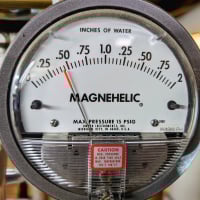 1
1 -
I can't find it now but I recall reading somewhere on this forum that the Weil Mclain reps were obligated to say it is not recommended, thus my effort to see if there was any real field experience out there with doing such.
Dave, I found the valve you recommended online and it does appear to be mostly same specs to the ones I found (from my non-expert point of view). I will recommend it for consideration to my heating contractor. Is it correct to assume having a higher capacity than needed is not a problem?
I do not want to reinvent the wheel on this forum if there are other previous forums that really adequately cover the setup process of implementing a two stage. I have read some that suggested setting the high and low stage up based upon outside temperature. Not sure that would be exactly what I was envisioning. Mine being more of an oversized boiler issue intuitively it makes more sense to me to downfire based upon pressure. I have read a couple threads referencing such with a vaporstat but didn't find anything start to finish referencing a complete and successful setup and tuning.
0 -
Dave, If I get the Honeywell VR8345Q4563 valve, a L408J1017 Honeywell 0-4psi vaporstat and a low pressure 0-5psi gage I have a few related questions below. Very much appreciate anyone's input;
1) Is the L408J1017 an appropriate vaporstat?
2) would there be any recommendations on initial adjustment of the vaporstat?
3) should the existing pressuretrol be replaced or somehow kept in series with the new vaporstat?
4) by code does the 30psi gage need to be kept alongside the new lower pressure gage? If so does the low pressure gage need some kind of protection from higher pressure?
5) Are the stages in the 2-stage gas valve pre-set or adjustable? If adjustable how to determine the low fire setting gas pressure? IS this set/limited by the combustion analysis or is that unrelated?
I know there are alot of questions here. Maybe it is a rainy day where you are and you have nothing better to do?
0 -
Perhaps I am asking painfully obvious questions relative to something quite straightforward or I am proposing something totally not recommended, don't know which. Really hoped to get some more detail back from the forum so will try one last time starting again with the reasons I am proposing a 2-Stage gas valve with low fire triggered off of rise in steam pressure.
1) Current gas valve still buzzing - Very annoyingly so likely needs to be replaced anyway
2) Sizing - My standing radiation with 240 conversion factor and 1.33 pickup factor is 159,495. My boiler EG65 has output of 209,000btu. In real usage the three upstairs bedroom radiators are purposely turned off. Too hot when on at all. Thus normal radiation is 133,680. We are also empty nesters and really never use two other rooms in the house that are easily closed off (a sunroom that is original outdoor construction so that it would not be affected by cold, and another room that has two radiators and at least one could be turned off separately). Radiation load could be as low as 84,588. So I am oversized anywhere from 31% installed to 56% as used today to 147% potential.
3) My winter gas bills average $2600 per heating season. If I could cut consumption 25% I could easily save $650 per year. So my payback should be pretty quick.
0 -
Check your main vents first, after adding the 0-3 psi gauge along side the standard 0-30 psi gauge.
As the system begins to make steam, watch the pressure rise as air is pushed out through the main vents. If it goes above a few ounces, then your main venting capacity is lacking.
After the air has been removed, of course the pressure will continue to rise as the oversized boiler is producing more steam than can be condensed by the radiators, and this is where the 2-stage gas valve will help.—NBC0 -
Thank you Nicholas. I can do that initially and get the low pressure gauge in. I guess the fact that a 0-30psi gauge stays pegged at zero really doesn't mean anything when you are loooking for ounces. My main venting by the way is comprised of 2 Gorton #2's + 1 Ventrite #75 on one main and 1 Gorton #32 + 1 Ventrite #75 on the other main.
So you are suggesting that the low stage be calibrated to initiate on 3-4 ounces?0 -
-
@dabrakeman A 0-0.5 PSI gauge barely moved on my system.
The highest I see all winter is 0.036 PSI and every radiator heats fast and if need be, completely.
Before the main vents close, my pressure is around 0.009 PSI at the boiler.
Just to give an idea of just how low a single pipe system can operate.Single pipe 392sqft system with an EG-40 rated for 325sqft and it's silent and balanced at all times.
0 -
Sounds great Chris! I have not been able to measure pressures at that low level yet since I do not have the proper gage but I suspect I don't have pressure issues of any significance until my radiators are full and stat is still calling for heat. I think my main venting is fine and steam gets from the header to end of mains quick enough. Pressure only builds when very cold or recovering from a setback. Boiler will shutoff at ~2psi. I also suspect that after the steam collapses and the boiler comes back on that my mains are still hot and don't reopen which can't help anything relative to the inefficiency of that 2nd short cycle.
I have tracked for years my gas use per heating degree day and it is quite clear that my overall efficiency declines as the heating degree days go up (when it gets colder).0 -
Double check your boiler numbers. It will tell you exactly how many EDR the output is. Compare that to your 240 Radiation EDR. The 159,000 BTU number you quoted as output for your boiler I believe already has the 33% piping and Pick-up factor calculated into it (Boiler input minus Boiler efficiency, minus Pick-up factor = BTU and or Sq. Ft. Steam (EDR) output).
I think you may be adding another 33% into your equation which means your boiler over-sized more than you think. How did an EG-65 ever get installed for 240 EDR?0 -
Fred,
My standing radiation (all radiators) is 531sqft. Teh 240 is just the conversion factor for one sqft of steam radiation to net BTuh. In my normal usage scenario with the bedroom radiators off the total sqft of radiation is 419 sqft.0 -
Got it. I miss read your post. In any case, you don't have to convert EDR to BTU's. Just compare the EDR to the stated Sq. Ft. Steam on the boiler plate. Anyway, to your real question:
Several of the Pros here have installed a two stage gas value on boilers with standard single stage valves. It can be done and is effective. Just make sure it is installed by someone who knows what they are doing and who has the equipment (combustion analyzer) to properly set it up. I believe @Dave0176 even told you which one he likes to use.
Closing off radiators is not the fix for over heated rooms and it is not likely to save you any fuel cost. Those bedrooms are hot because you haven't balanced your system. Main venting is the first step. Make sure you have enough vents on each main to get the air out quickly. Once that is done, each radiator needs to have a vent on it that is appropriately sized for the amount of heat you want in each area/room. Using adjustable vents like the Vent-Rite #1, the Hoffman 1A or the Maid-O-Mist will allow you to adjust each vent to your liking. It takes trial and error but you can even out the entire house.
You already know that your boiler is over sized, why compound the problem by shutting any radiators off? Even with a two stage gas valve, shutting enough radiators off will still cause short cycling, even in low fire. Eliminating the short cycling is where you will likely see the most fuel savings as you can create a steady flow of steam to where it is needed and to satisfy the thermostat and not have the stop (steam collapse throughout the system) and start (steam has to start a flow again).0 -
Fred,
So is the L408J1017 an appropriate vaporstat and does it replace the existing pressuretrol or does the pressuretrol stay in there in some backup manner?
BTW the bedroom temps are certainly not going down by turning those rads on and they are warm enough off. Thermopane windows upstairs, original historic windows down...0 -
Your window combination may be problematic, especially since the more energy efficient ones are upstairs.
I have the L408J1017 vaporstat and am very happy with it.
I would suggest Gorton No. 4's for the upstairs radiators. These will slow them down and help balance you out.
My building had a mixture of low E and older aluminum replacement window and the heat could not be balanced properly until all of the windows were upgraded.
0 -
Lets go back to NBC's post about venting the mains.
How long and what diameter are they. You have large vents but they may not be enough.0 -
@dabrakeman , yes, that is the correct Vaporstat. The Pressuretrol does stay on the system and acts as a back up. The Vaporstat, Pressuretrol, and Low Water Cut-off are all wired in series.0
-
Until there's some funding support for historic homeowners replacing windows downstairs is not going to happen. Been quoted in the neighborhood of $75,000. I'll let you guys do the payback on that. I probably won't live much beyond 200 years old:)
Heat is balanced perfectly in the house, just don't need a couple of those rads on.0 -
Yeah the EG55 would’ve been a lot better for you, but since the 65 is new and already there. As I said before I like the valve I mentioned and the Honeywell vaporstat you mentioned. However those vaporstats need to set on water column test gauge to be sure their working where you want them. The numbers on the two scales unfortunately do not work accurately. The low pressure gauge I like to use is a Wika 0-35 oz.
As far as installing them on the boilers both Weil-McLain and Peerless both said they don’t recommend it and it will void the warranty. This was from the reps of both companies. That being said it is what it is. The only warranty the manufacturer has anyway is a 10 year manufactured defect on the boiler block only. You are warranted for a year on the all other components installed.DL Mechanical LLC Heating, Cooling and Plumbing 732-266-5386
NJ Master HVACR Lic# 4630
Specializing in Steam Heating, Serving the residents of New Jersey
https://heatinghelp.com/find-a-contractor/detail/dl-mechanical-llc
https://m.facebook.com/DL-Mechanical-LLC-315309995326627/?ref=content_filter
I cannot force people to spend money, I can only suggest how to spend it wisely.......0 -
@gfbrookline,
Old string few years back has most of the info you are looking for. Time to get steam to end of mains is pretty good, less than 4 minutes.
https://forum.heatinghelp.com/discussion/153121/main-vent-reopening-temperature0 -
@Dave,
I have a Wika 0-3psi on the way. That won't be sufficient?0 -
@dabrakeman obviously it depends on the length of the mains and insulation, but I'm able to get steam down to the end of my 29' main in just under 60 seconds if the piping is hot.
A good test for main venting is to fully heat the pipes and then shut the boiler off for 10 minutes then fire it again and time it while monitoring back pressure. It's extreme conditions but that's about what my system sees when it's below zero out.Single pipe 392sqft system with an EG-40 rated for 325sqft and it's silent and balanced at all times.
0 -
Not a problem that’ll work fine......dabrakeman said:@Dave,
I have a Wika 0-3psi on the way. That won't be sufficient?DL Mechanical LLC Heating, Cooling and Plumbing 732-266-5386
NJ Master HVACR Lic# 4630
Specializing in Steam Heating, Serving the residents of New Jersey
https://heatinghelp.com/find-a-contractor/detail/dl-mechanical-llc
https://m.facebook.com/DL-Mechanical-LLC-315309995326627/?ref=content_filter
I cannot force people to spend money, I can only suggest how to spend it wisely.......0 -
Thanks for the link, that was one of the ones that I used to balance my system. Two mains, one with three big mouths the other with two plus one G2 to balance. Hot side of the building has G4's on rads cold side has G4's, G5's and G6's depending on floor and room comfort. All is balanced since the windows have all been replaced 99% of the time. The only time we get out of whack is when we have a Noreaster and the wind slams the east side of the building, can't correct the heat loss of the bricks.
I feel your pain on the historical requirements. Went through it years ago trying to install low e windows. One branch of government is pushing you to improve your energy efficiency the other is trying to hold back time. I get both but there needs to be a compromise.0 -
@Dave0176 little reboot of the thread here.
my results with Williamson GSA-125 have me thinking about two-stage already. my rough EDR calc was 260 so the 315 of the GSA-125 gives me 20% pickup but this system is tight enough and the empty nest habits for closed radiation mean it is very quickly short cycling at full fire. even if i go nuits with more/bigger vents i'm really not in that much of a rush and have noticed that a nice low fire fills the system about as fast and with much dryer steam.
just by manual restriction i can set up a nice low fire that keeps the radiators all steaming at norm house temps so high would be reserved for cold starts and clawbacks. I didn't have my manometer or combustion meter so I'll check the numbers but the honeywell valve you linked has nom low fire pressure of 1.7 inches of water, (half the standard 3.5 inches).now everyone talks about adjusting. when I did this on a burnham commercial 8 section I checked combustion at high and low settings but mostly the adjusting was around output. (these side saddle atmospherics I am inserting the combustion probe through the draft hood and into the top of the boiler. I tried a few locations on the burnham and got pretty consistent result. I suppose I could pop the top and drill the bolted on exhaust collector/leader to the draft hood and make a little plate or just a little red silicone to fill that hole when not in use but I haven't really seen anyone suggest a particularly effective location other than upstream through the draft hood). the honeywell literature indicates the stages are adjustable but it doesn't indicate a range. (for that matter I might want to adjust the high as well which has an adjustment but again doesn't indicate the range. It maybe be that they kind of intend the ranges to be fixed around those numbers but give you a little adjustment. I could live with that but I have to stop and think if half the pressure delivers half the btus. not sure it is linear relation and might be dependent on the choke points in gas delivery to the burners.
The air intakes are fixed with the amount of air entrained being managed by the extent of the flow out of the orificies. So this is pretty much like changing the flame level on your stove burner. I was checking combustion to make sure that the alteration didn't produce an undesirable CO or efficiency that couldn't be carefully enough inferred from just observing the flame, but otherwise the adjustment was actually aimed at regulating the flow to just maintain low steam pressure to continue just steaming the system and make up for condensation. I did this with a larger 2-stage honeywell valve with 1" ports for that larger burnham commercial. That was maybe 10 years ago and I can't find the number of the valve I used in my old emails at the moment.
also the wiring instructions in install manual for the VR8345Q are impoverished, partly because the install manual is for the Q and M and H variants so both single and dual stage valves. I assume the Q has a 24V common and two 24V calls one for high and one for low so the stages are independent although its conceivable that you could also design something like this to call the low fire all the time and then have an equivalent stage so calling them together gives you high fire. the manual shows the pilot wiring well for intermittent pilot but it doesn't show the two stage connections for the actual valve operation-only a one stage setup, which many of the valves in that line are one stage.
as far as control, I knew you could use a staging thermostat or inferential maybe rate of rise staging with tekmar style steam controls but IIRC those aren't staging on what i really care about, steam pressure. if the tekmar had a vapor sensitive pressure input and learned the rate of pressure rise by cycle time and maybe comparison to indoor and/or outdor temp it could decide what was a useful time to turn down. That would be cool, but I don't think that is what it does.
Because you want the turndown often before you start to see changes in room temp I'm ruling out staged themostats. So I'm pretty much going to use the manufacturer supplied pressuretrol to run the low fire where it really is more a limit and not operating control and set a 3 lb cutout and i'm planning to adjusting low fire as I have manually in test to accomplish nice balance about 8 0z of steam which fills the system and keeps it steaming under normal circumstances, i.e. not cold start or clawback. So i'm going to use a L408J1009 I think to turn off high fire. Getting good vapor control is difficult but I think that is about the only option these days with any kind of differential. In the lost archives of heating help there was a collaboration to design a two stage operating control using dwyer gas pressure sensor switches that used two of them and a relay to create the differential but unless the L408Js are virtually useless I'm thinking that is the simple approach for this job. there are still a few L408Bs out there but if the L408J can really go off at say 12 inches with a subtractive differential of 8" I think that would mean i'm not going to be short cycling the high fire.thanks for ideas from anyone who has added this option.
brian0 -
i'm tagging a few folks from a closed discussion on 2-stage conversion for weil-mcclain residential which is more or less the same as the williamson line i'm working on. it seems like maybe the manufacturer's main recommendation against two-stage for steam (and main reason for not just including the tech from the get go) is possible short cycling and/or failure to fully steam depending on what is used for a staging control. don't mean to be rude bringing in folks who don't want to amend and extend their remarks; but I thought it was slightly more useful to keep this all on one thread than start another thread and see who responds. if i violated any politenesses i apologize.
@gerry gill
@ttekushan_3 @ChrisJ @Steamhead (whose post about fuel savings with lo-hi-lo fire is apparently amongst those in the lost archives).of course the inadequacy of some control strategies begs the question why manufacturers don't offer two-stage for residential steam since they could engineer and specify the controls if they built out the option. I guess that the market segment for steam is small enough and shrinking that it isn't worth it to them to spend time making it work better esp. where field settup is critical and they could be in the line of fire as the ones with the name on the plate (albeit other kinds of problems that crop up without the 2-stage approach, whether reputed boiler failures, wet steam, knocking, etc. might find some solution in a two-stage fire in my experience). Efficiency seems to be the watchword these days but, forgetting that for a minute, simple efficaciousness and trouble free operation matters. Do they really not get how important it is to run at vapor pressure with dry steam for these residential systems that are getting boilers with much smaller water capacity and steam chest these daze. Or maybe they are just trying to convince people it is time to put in baseboard . . . .
Anyway just looking for feedback from folks who have made this conversion on methods and results. best vapor control (obviously pretty limited palatte to choose from) looking back to heady days when @MarkS. proposed a dwyer-stat using two 1800 series dwyer differential pressure switches and a relay to create a wider deadband than the narrow factory preset. but I think i'm going to try a DH3-016 style dwyer pressure switch with addressable deadband but ready to fall back to the honeywell L408J-1009 or 1017 (1 or 4 PSI vaporstats-back in the 408B days i think there was a 2 PSI version too). the dwyer approach is a little bit of a PIA, because I've got to add a solid state relay (thinking a crydom A1210E) since the switches on the dwyer can't handle the amperage of the gas valve, i.e. with pilot valve also engaged 3 amps). And then I'll tee and keep the supplied honeywell pressuretrol as the limit and the dwyer as the operating.
thanks, brian0 -
noticed at the end of the "adding a two stage gas valve" thread cited above @Jim Pompetti observes that many weils came with a two stage gas valve . . . hmmm. is there documentation for that setup and what valve they used? and jim continues to say that they disconnected the second stage to stop short cycling ( I assumein context he means they disconnected the high stage ).
I have since clocked my rough adjustment using the shutoff valve to throttle gas to the single stage valve on the williamson and I'm running at about 107,000 so about 15% below nameplate. I'm getting excess air with O2 at 11% but i'm never convinced how perfect of a test you are getting stuffing the probe in the back of the side saddle draft hood although i get similar reading at several locations across the hood, i'm just not sure if there is any air entrainment from the draft hood that is contributing to that combustion reading and associated lower efficiency. CO is 11, stack temp 408. this thing hums. it steams at about 1/2 a pound filling the system and matching condensation nicely, all rads filled.
At high fire its pushing wetter steam (esp. as the boiler is needing multiple skims as advertised regarding the oily nature of this newly commissioned equipment). The best i seem to get adjusting the pressuretrol provided because is a 3 lbs limit, It runs up to that quickly not having filled the rads and the higher it goes the wetter the steam so although it is definitely contaminants that are contributing it doesn't push water if I keep the pressure in that 1/2 lbs range. I was going to deal with this by getting a vaporstate but that would short cycle in this circumstance. So I ordered one that can double as two stage control if I go that way and leave the pressuretrol as overall limit.
I didn't combustion test or clock the gas to this boiler at full fire for comparison yet. on the last two stage conversion I did (burnham 8 section commercial), IIRC I think the efficiency was 3 or 4 points off at the lower fire and I would have suspected that I had throttled the rate a little more than 15% so i do want to clock the gas at full fire. The scary thing, when I think about it , is that I believe this same block is provided on the GSA-150 with an even higher firing rate (6 burner tubes instead of 5 IIRC). unsure if that model would definitively provide second riser tapping to reduce velocity coming out of the steam chest although the manual offers single riser config.
it does take a while to make the first steam at the lower firing rate so I could see a two stage setup, but homeowner would even be happy with just turning down the single stage if its range of adjusment encompasses the approx 15% reduction we're undertaking now and use a timed thermostat to start the clawbacks earlier.0




Categories
- All Categories
- 87.8K THE MAIN WALL
- 3.3K A-C, Heat Pumps & Refrigeration
- 59 Biomass
- 430 Carbon Monoxide Awareness
- 131 Chimneys & Flues
- 2.2K Domestic Hot Water
- 6K Gas Heating
- 124 Geothermal
- 170 Indoor-Air Quality
- 3.8K Oil Heating
- 79 Pipe Deterioration
- 1.1K Plumbing
- 6.7K Radiant Heating
- 396 Solar
- 16.1K Strictly Steam
- 3.5K Thermostats and Controls
- 56 Water Quality
- 51 Industry Classes
- 51 Job Opportunities
- 18 Recall Announcements