Welcome! Here are the website rules, as well as some tips for using this forum.
Click here to Find a Contractor in your area.
If our community has helped you, please consider making a contribution to support this website. Thanks!
Non bladder expansion tank configuration

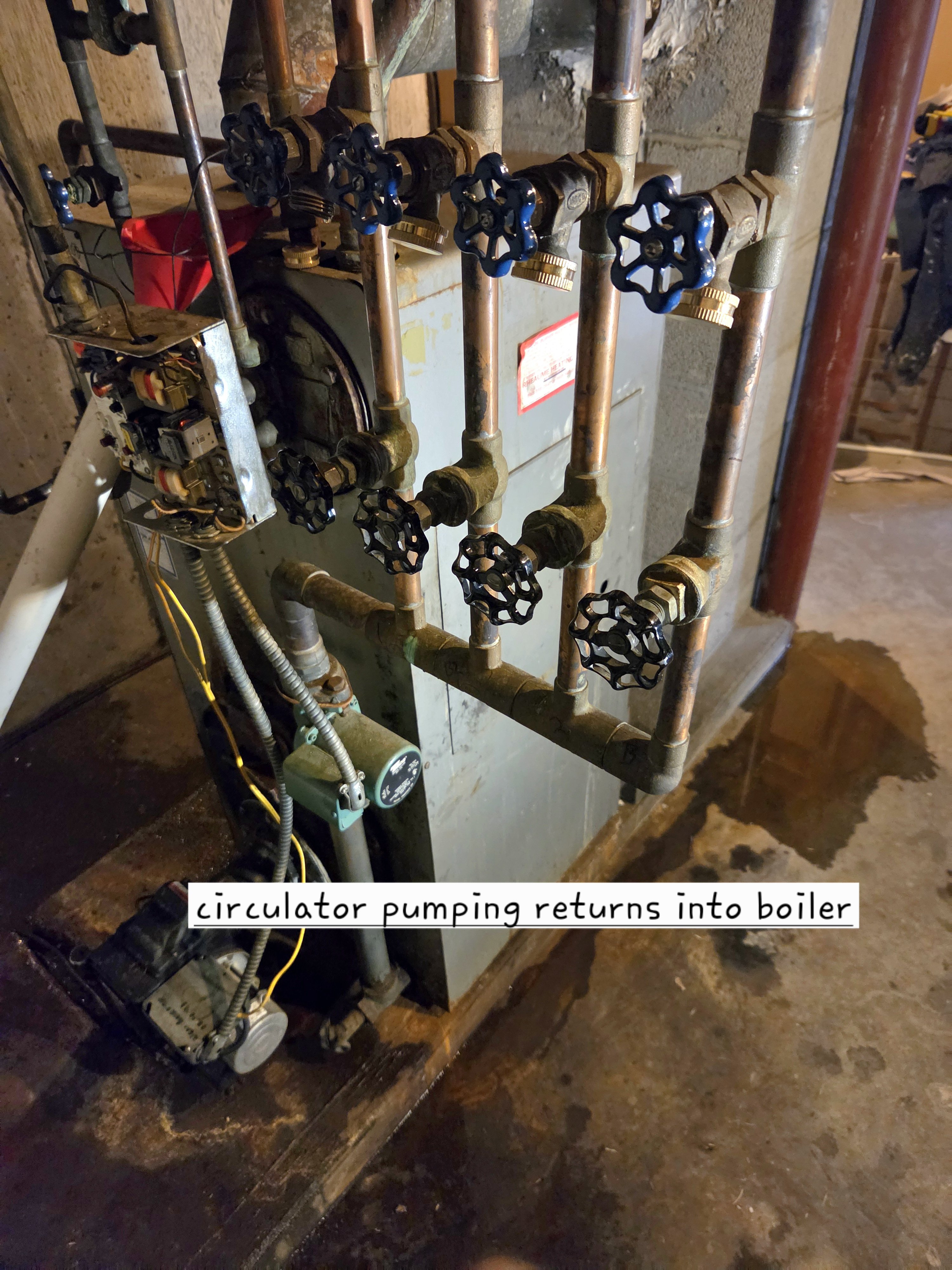
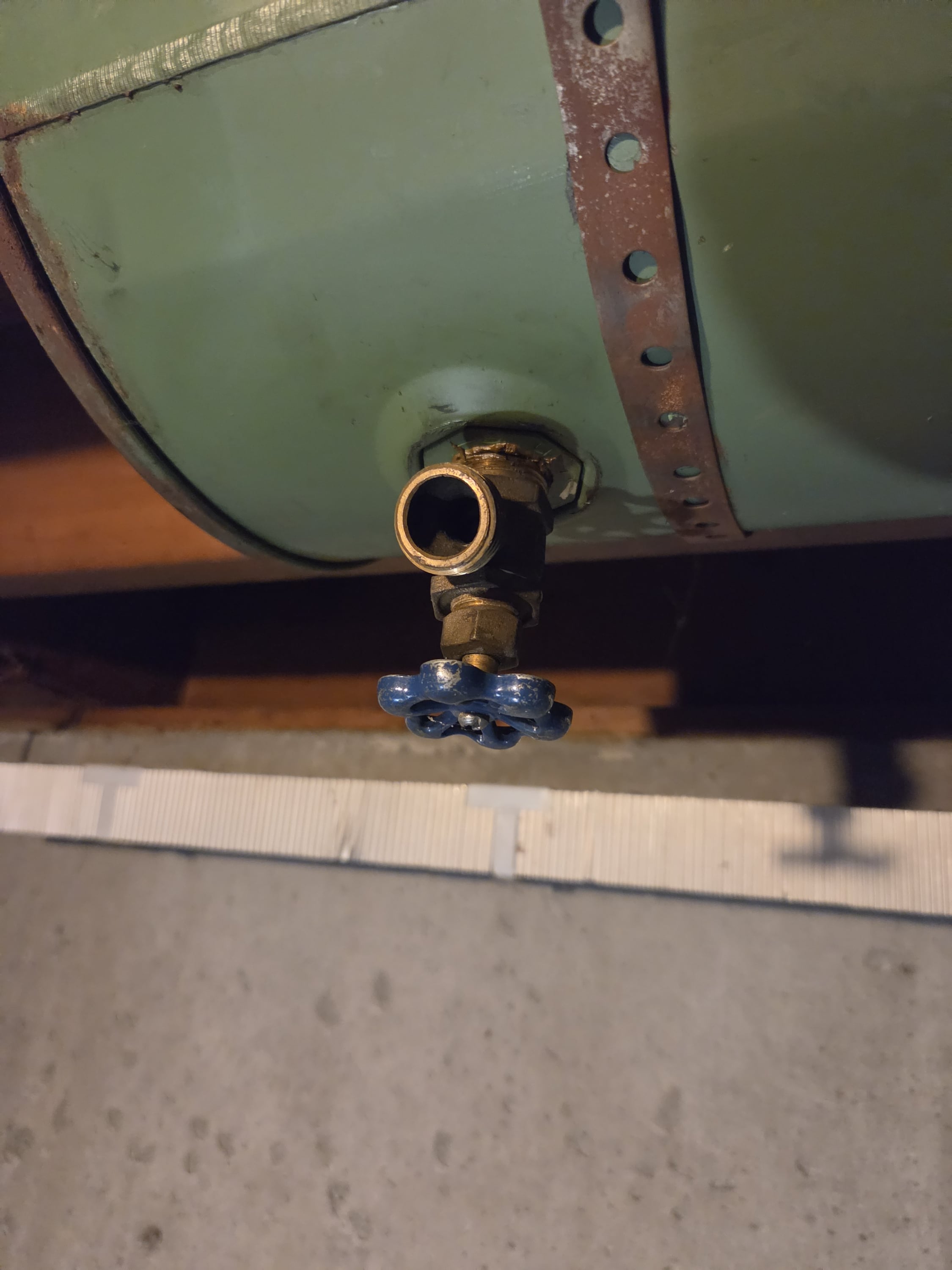
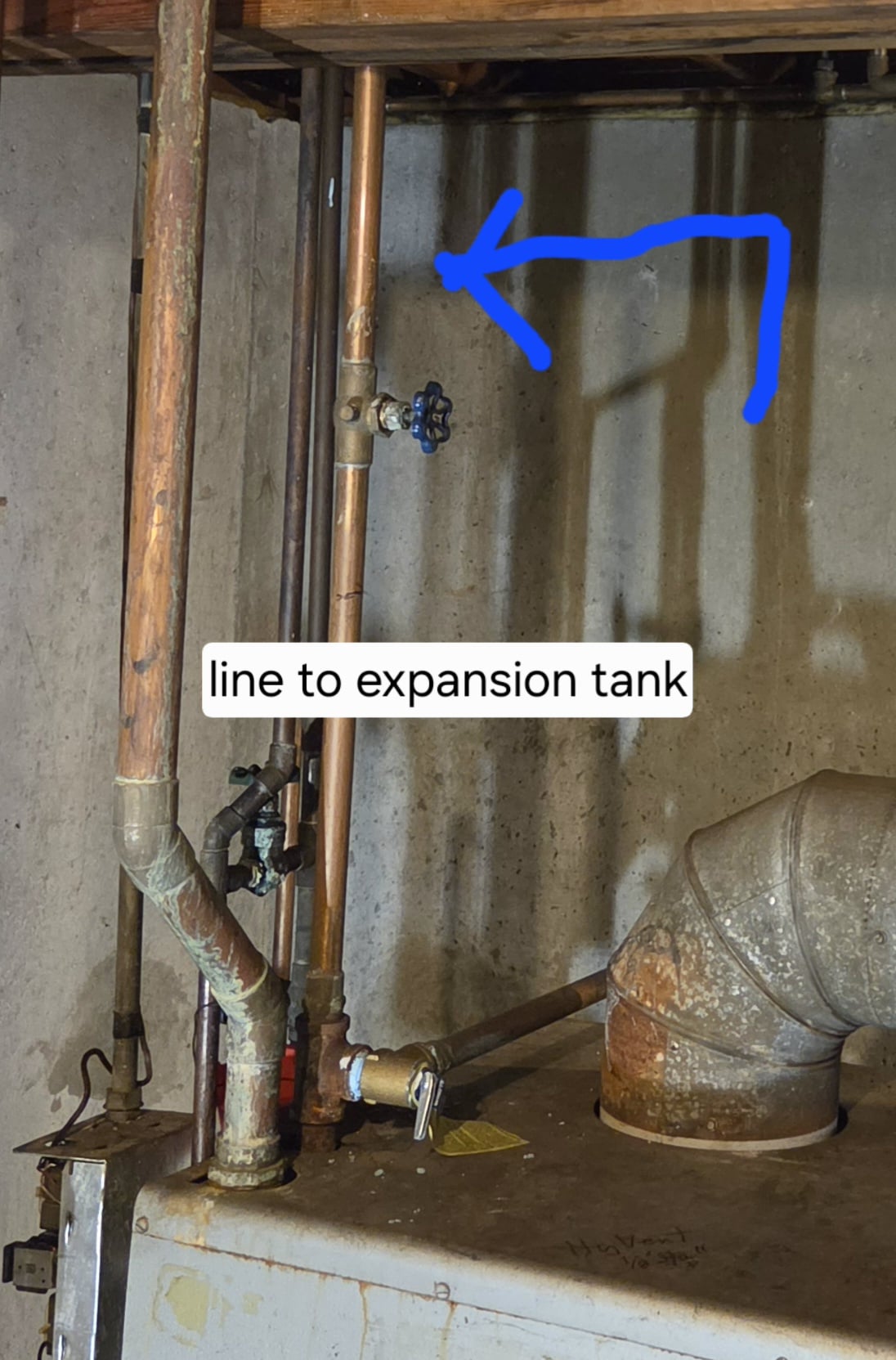
I'm helping someone with an old American Standard boiler that's having air issues constantly having to bleed Etc. This system has a non bladder expansion tank but no air separator or tank airtrol fitting (just a drain valve) as I understand it should have to work correctly. The expansion tank just ties in right above the boiler on a tee with the prv.
I don't know why these components aren't in the system but they're not. And it will be pretty expensive to bring up to Snuff for use with this type of tank. I am considering adding a air Eliminator like a spiral vent and bladder expansion tank and changing it to a pumping away configuration as right now the circulator is just pumping from the returns back into the boiler.
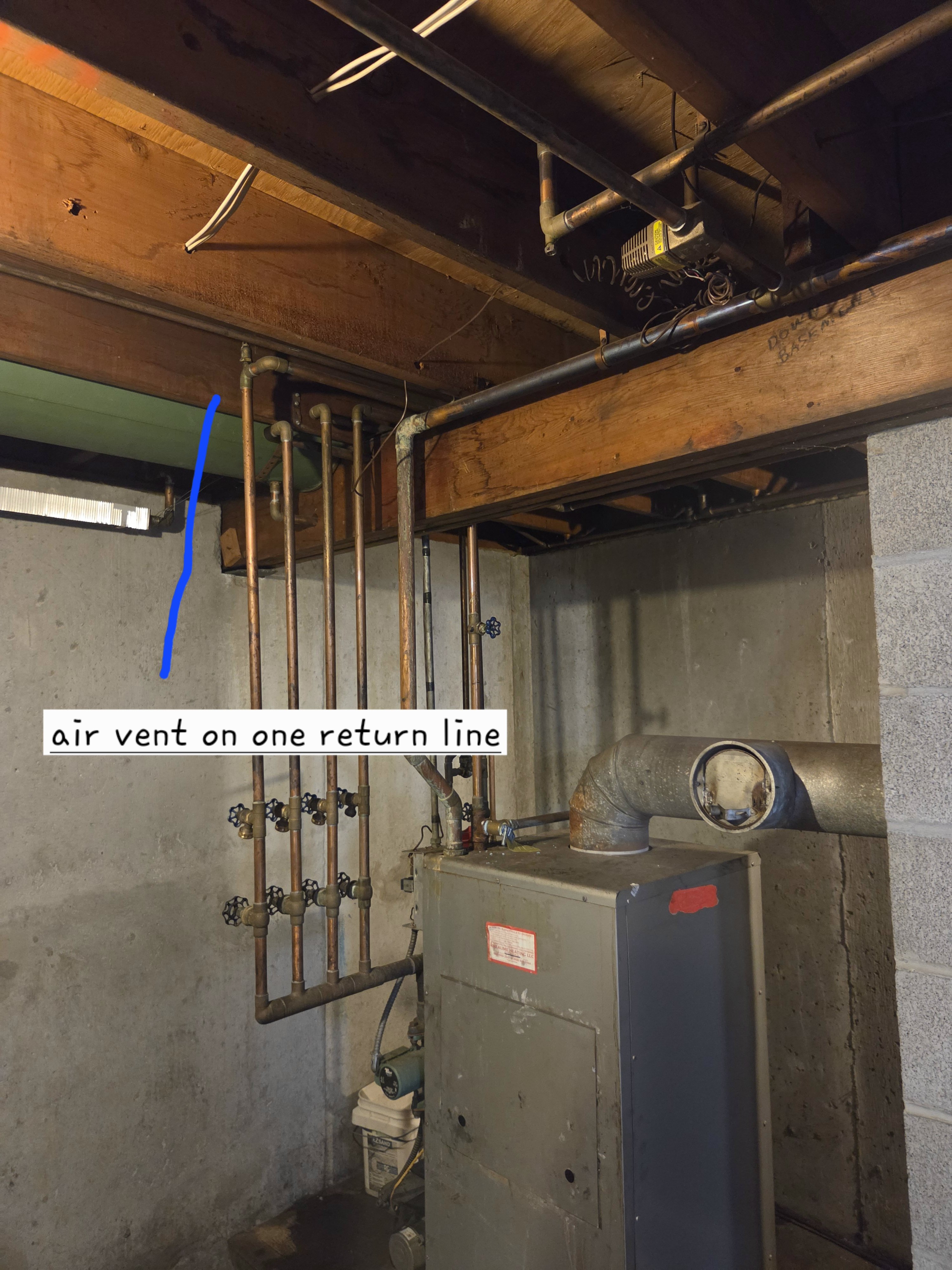
Also there is an air vent on one of the return lines it's very old and the circulator is probably pulling air in through it.
I'm curious what others would do. Feel free to educate me :)
Comments
-
First thing I'd do is… well, three things. You have a convenient valve between the boiler and the compression tank — so close that valve and open the drain on the compression tank. Let the compression tank drain completely. It may help to snake a vaguely flexible hose through the drain valve to let air in faster, but that may be easier said than done. Whatever, you want that tank empty. Then, go over to that air vent and block it. Last thing you want on a compression tank system is some other air vent active!. Then close the drain on the compression tank and open the connection to the boiler and bring the system up to pressure. With a helper, go around to the radiators and bleed them, one at a time, while the helper makes certain that the system pressure stays up — I'd suggest 15 psig for a two story house, 12 psig for one.
Then run the system for a whille and see what happens.
Br. Jamie, osb
Building superintendent/caretaker, 7200 sq. ft. historic house museum with dependencies in New England 1
-
Judging by the color of the tank, you have a TACO steel Compression Tank in your heating system.
- It will cost you less money to shut the boiler off and let it cool, 2. drain the steel compression tank to empty it, 3. remove the boiler drain valve, 4. replace it with a Drain-O-Tank valve, 5. open the Drain-O-Tank Valve, 6. turn the fill valve back on and wait until water comes out of the Drain-O-Tank valve and then shut the water feed valve off. After that remove the globe valve handle and set it aside someplace.
The steel compression tanks only job is to manage the air volume in your heating system not to eliminate the air in your heating system.
If that air vent is open please shut the cap all the way off, that thing should not be in this system to begin with.
If the water feeder has been left on the compression tank is probably flooded and not allowing the steel compression tank to create the point of no pressure change to allow the system to work properly.
If all you are getting is water when bleeding the system you know you do not have an air problem!
Now as far as the immediate repair is concerned you can shut the system down let it cool down and drain out the steel compression tank and install a drain-o-tank valve in place of that boiler drain and refill the tank to the point where the Drain-O-Tank valve is spitting water out of the valve vent and STOP filling the tank as you now have the correct amount of water in the steel compression tank
0 -
you can make a heat trap out of copper pipe in the riser to the compression tank. that is all the b&g fitting is, a little trap so that you don't get gravity circulation putting the hot water in the tank and taking the cool water that holds more dissolved air out of the tank.
0


Categories
- All Categories
- 87.9K THE MAIN WALL
- 3.3K A-C, Heat Pumps & Refrigeration
- 60 Biomass
- 430 Carbon Monoxide Awareness
- 136 Chimneys & Flues
- 2.2K Domestic Hot Water
- 6K Gas Heating
- 124 Geothermal
- 170 Indoor-Air Quality
- 3.9K Oil Heating
- 80 Pipe Deterioration
- 1.1K Plumbing
- 6.7K Radiant Heating
- 397 Solar
- 16.2K Strictly Steam
- 3.5K Thermostats and Controls
- 56 Water Quality
- 52 Industry Classes
- 51 Job Opportunities
- 18 Recall Announcements