Welcome! Here are the website rules, as well as some tips for using this forum.
Click here to Find a Contractor in your area.
If our community has helped you, please consider making a contribution to support this website. Thanks!
Uponor HePex installation

We are installing several loops of 1/2” HePex from the underside of the subfloor for an existing space. I’m wondering if you need to use the Uponor clips, or could it be installed using plastic two hole straps? The homeowner did not want to use the transfer plates, so we’re trying our best.
Comments
-
That’s a huge mistake!
You’re only gonna get about 7 btus per square foot without plates.
You’ll get about 20 btus per square foot with plates @ 120* SWT.
You’re the pro. Don’t let the homeowner design the system! He’s wanting to do it cheap, but the laws of physics don’t yield to the laws of economics.
Bob Boan
You can choose to do what you want, but you cannot choose the consequences.
 5
-
I agree! We discussed the issue with no plates and the homeowner didn’t want to hear it. Luckily we told them it won’t work as good as it could with the plates and they still wanted us to proceed. Unfortunately we can’t force someone to do something. Would it be better though to use the Uponor clips, or just plastic flat straps?
0 -
is this intended to heat the rooms, or floor warming?
Uponor calls it joist bay heating, they have a track for installing the Pex.
These tend to need high supply temperatures, 140 plus.
Do you have heat load numbers for the various rooms?
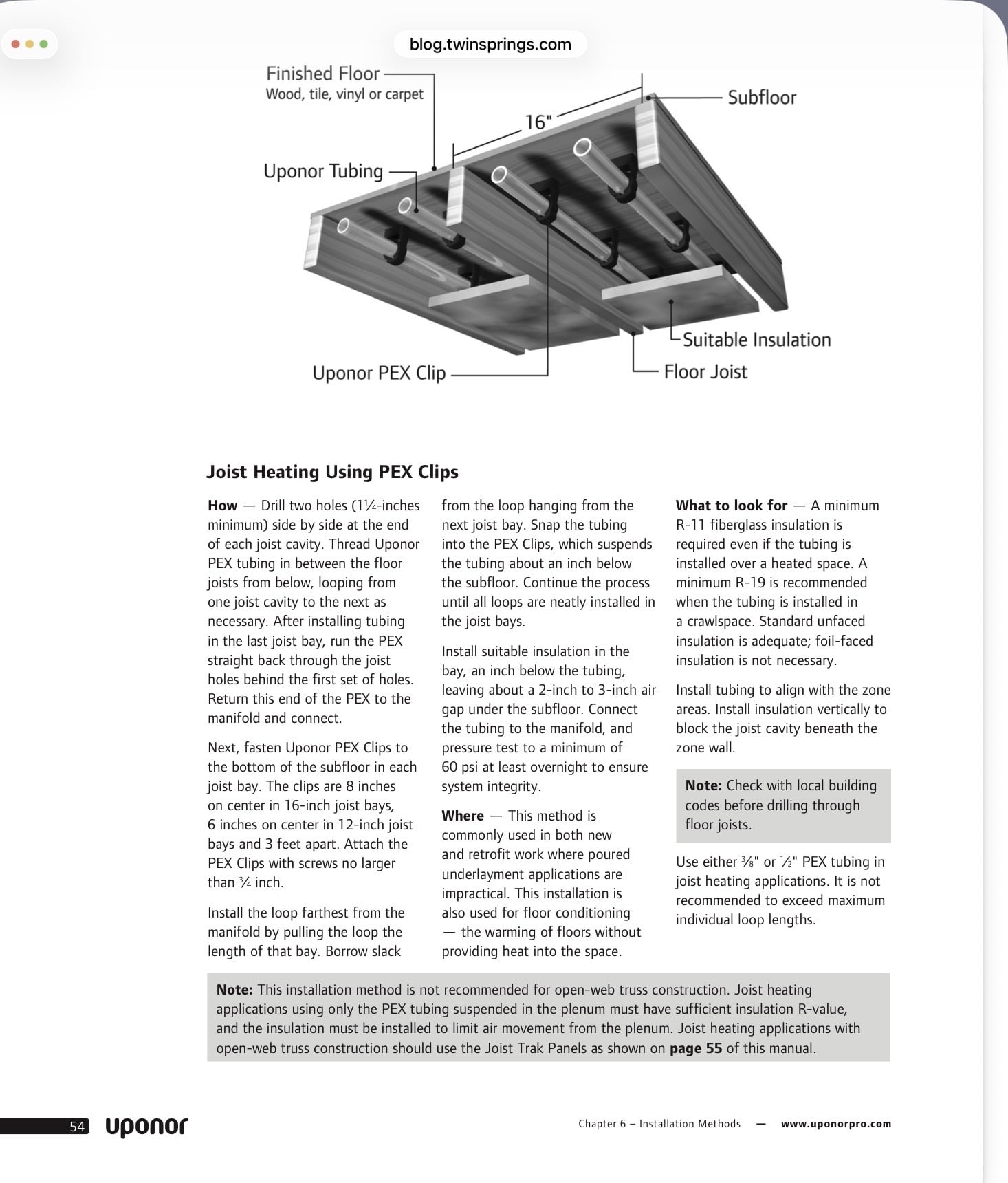
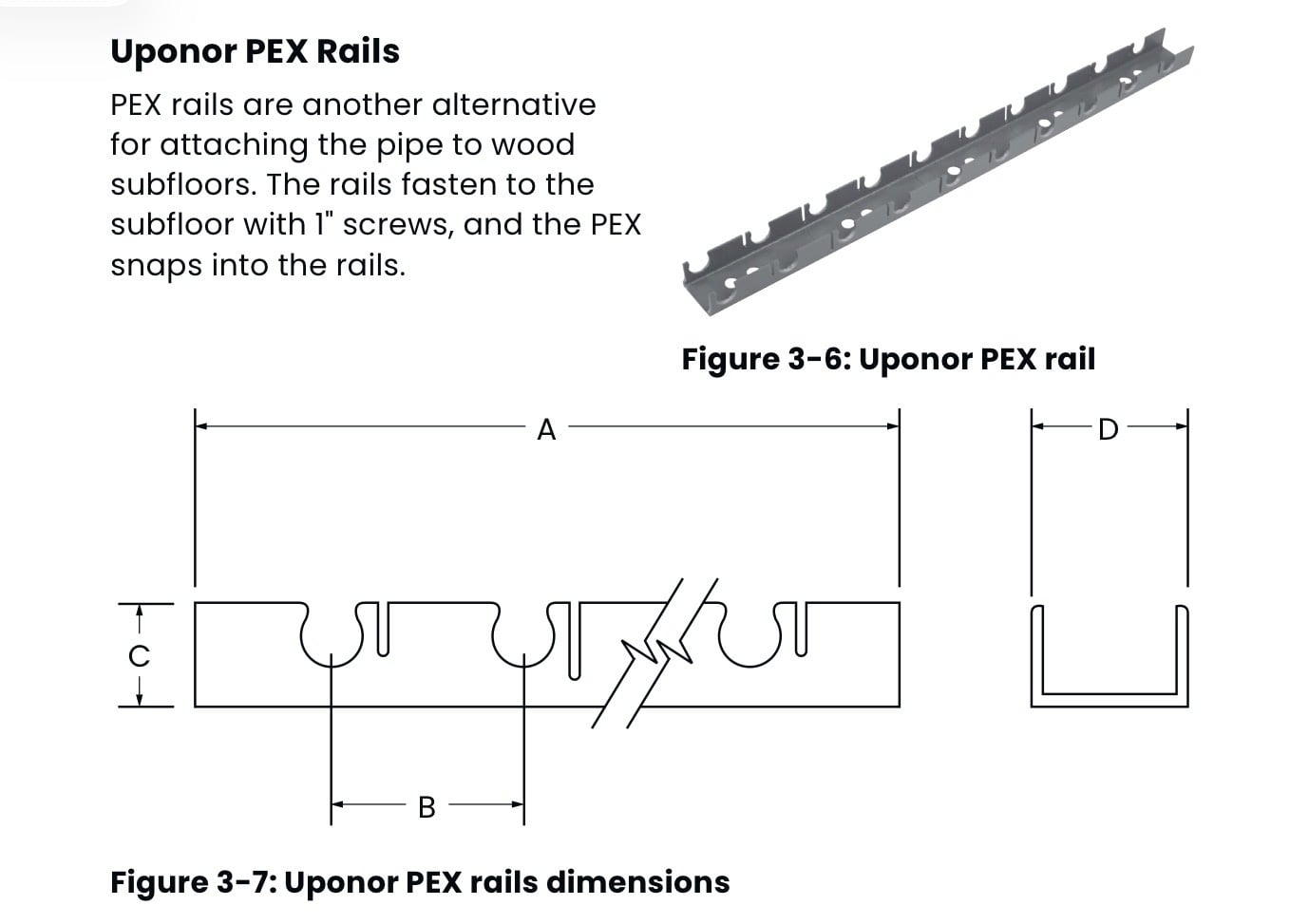
The key to any radiant installation method is getting the floor surface temperature up. You get about 2 btu/ square foot per degree difference.
So a 82 degree floor surface in a 70 degree room = 12x= 24 btu/ ft
Getting the floor surface that warm by heating the air in the space is the question.
Bob "hot rod" Rohr
trainer for Caleffi NA
Living the hydronic dream0 -
will it or something else cover the heat loss?
0 -
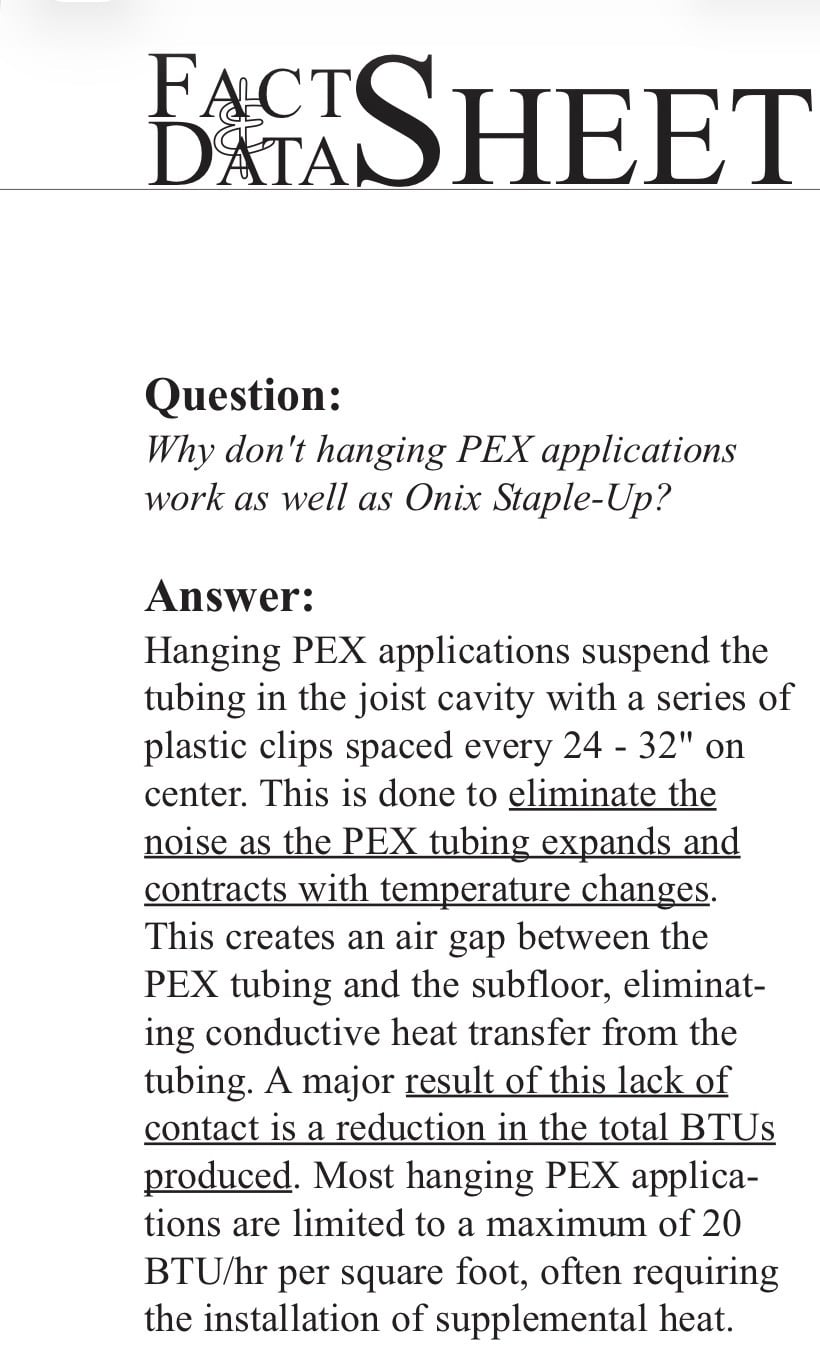
Watts Radiant has been claiming up to 20 btu/ square foot per ft with suspended pex. It may take 180 supply to get that.
 Bob "hot rod" Rohr
trainer for Caleffi NA
Living the hydronic dream1 -
This is intended to heat the space, along with (2) toe-kick heaters. I saw the tracks, but the homeowner was dead set against using them because of cost. We explained it may not work as well, but I can’t argue with them.
0 -
Thank you for this. So essentially securing the tubing directly to the underside of the subfloor below would be the best bet if not using the tracks?
0 -
Nope, I just found your post online and it’s saying the pex will cause noise. Guess I’ll be using the clips instead.
 1
-
There are also two large toe-kick heaters in the space.
0 -
yeah Pex squirms a lot especially when you run it up to high temperatures needed with joist bay application. Use an attachment designed for quiet movement. Avoid the pex touching or crossing itself. The outer layer can create a squeaking noise when it rubs. The loop ends need to be unfastened to allow the pex to grow in length, quietly.
Bob "hot rod" Rohr
trainer for Caleffi NA
Living the hydronic dream4 -
This is the part of the job where I cease progress and send a bill for the work provided. These are the people that will run your name into the ground when the system underperforms.
 3
-
Im not in the game, but I think I would make it clear multiple times during the install that "we should leave the ceiling open to allow us to improve it down the road" or similar.
I know with my mechanic, when he tells me we can do it this way or that and why the cheaper one might fail… when it does I dont gripe about his work, I just realise he was right and I go back to fix it properly.
30+ yrs in telecom outside plant.
Currently in building maintenance.0 -
If you're talking about leaving the insulation off, there will be less heat moving up. An already compromised heating system will definately need you to "improve it down the road".
8.33 lbs./gal. x 60 min./hr. x 20°ΔT = 10,000 BTU's/hour
Two btu per sq ft for degree difference for a slab0 -
I agree with Ironman first ….you are the pro not the homeowner. I have always believed that’s it’s my responsibility as a reputable contractor to not allow the homeowner to make pour decisions.
Next I also agree with ground up. This might be the best job you didn’t get.
I am sure there are plenty of other projects to do it right. JeffreyJeffrey Campbell0





Categories
- All Categories
- 87.9K THE MAIN WALL
- 3.3K A-C, Heat Pumps & Refrigeration
- 60 Biomass
- 430 Carbon Monoxide Awareness
- 134 Chimneys & Flues
- 2.2K Domestic Hot Water
- 6K Gas Heating
- 124 Geothermal
- 170 Indoor-Air Quality
- 3.9K Oil Heating
- 80 Pipe Deterioration
- 1.1K Plumbing
- 6.7K Radiant Heating
- 397 Solar
- 16.1K Strictly Steam
- 3.5K Thermostats and Controls
- 56 Water Quality
- 51 Industry Classes
- 51 Job Opportunities
- 18 Recall Announcements