Welcome! Here are the website rules, as well as some tips for using this forum.
Click here to Find a Contractor in your area.
If our community has helped you, please consider making a contribution to support this website. Thanks!
Advice on buffer tank sizing
Comments
-
@jesmed1 - The XPS made a big difference in my old house both from R value and controlling moisture moving into the house.
Getting the moisture intrusion under control dramatically reduced the funky old basement smell.I use orange foam in a can (Lowes or HD) to stick the XPS to the walls because I had some on hand. I’ve also used polyurethane adhesive in a can in that’s easier to source.
I typically braced it top and bottom in areas where I couldn’t wedge it between the floor and the structure.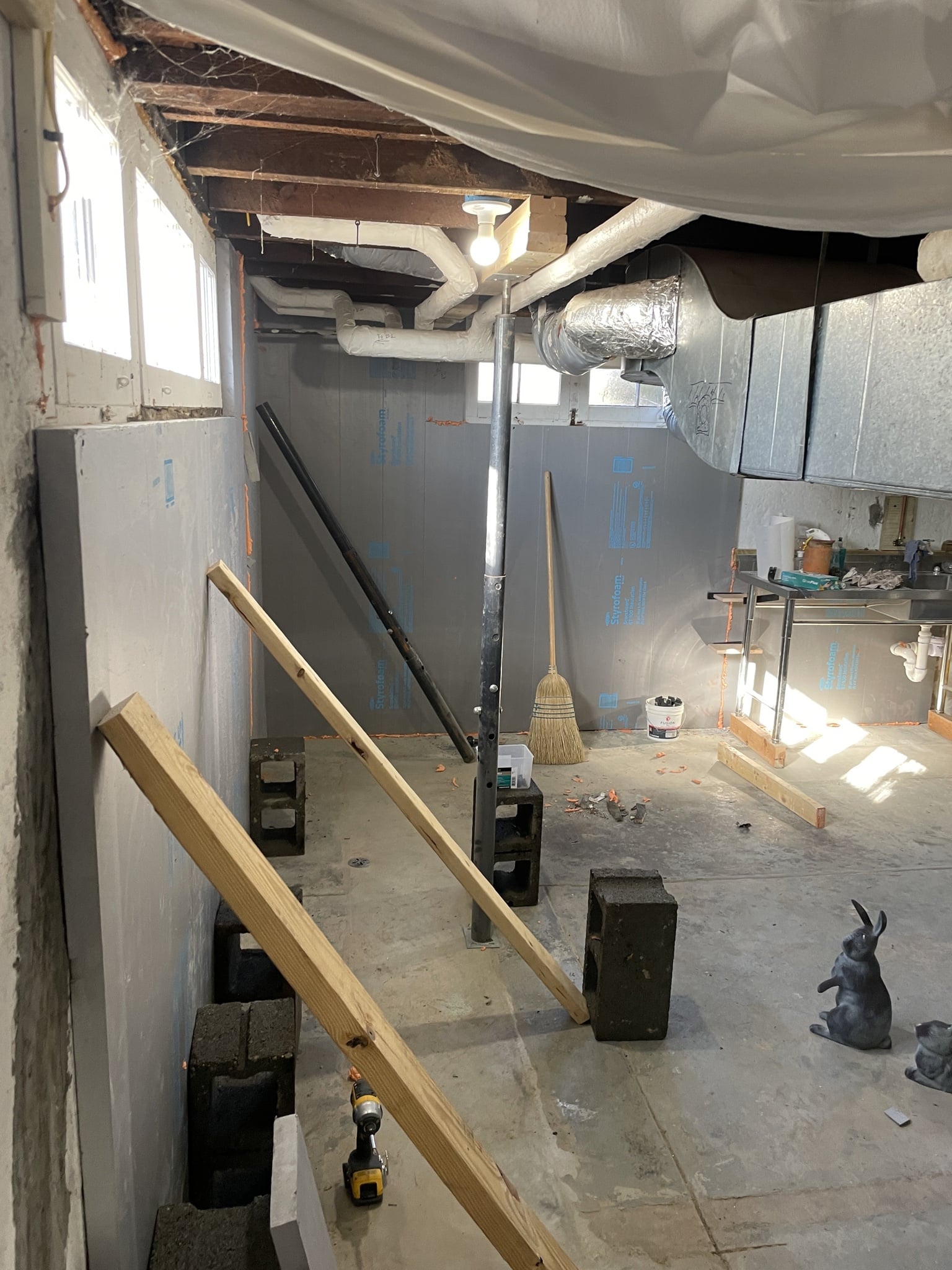
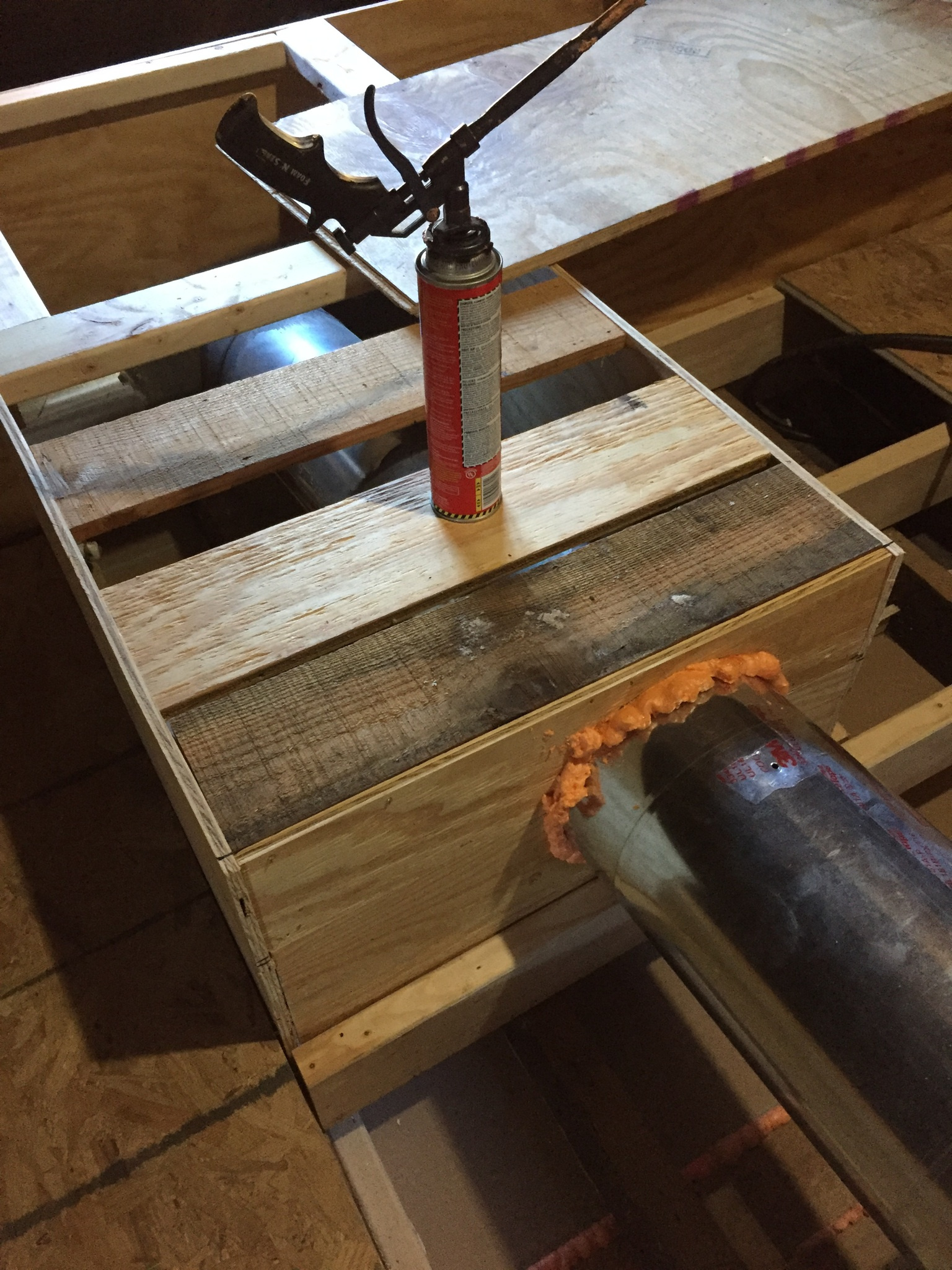
Buy the gun from Amazon. Works great to apply the foam where you want it and seal foam-can when no in use so stays good for weeks/months.
 0
0 -
I would think you would want to insulate the entire basement, not just the boiler room?
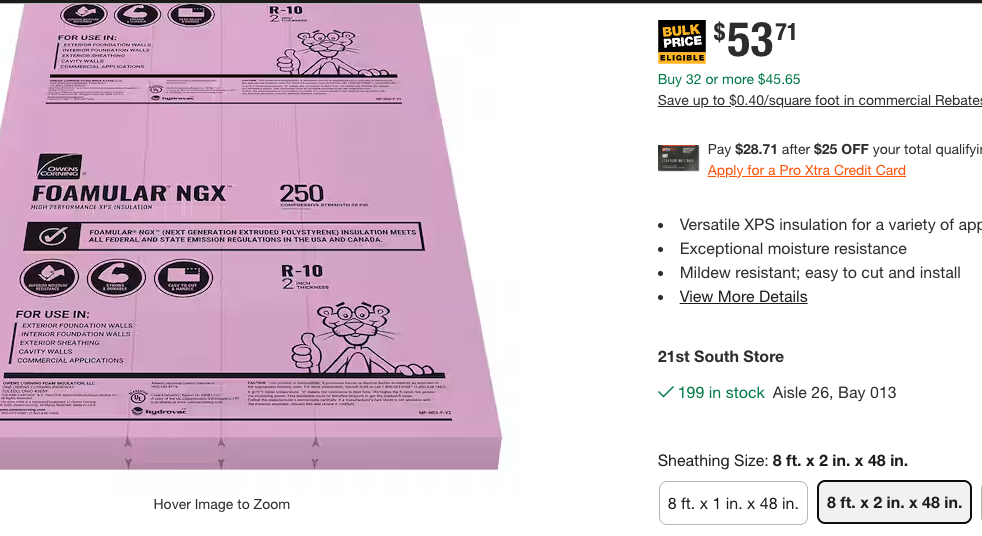
All the foams EPS, XPS, etc are about R-5 per inch. The 2" stuff gets pretty $$, even the white foil faced beadboard. Then you need an attachment method. Foam adhesive works if you can hold the sheets against the wall till it dries.
 Bob "hot rod" Rohr
trainer for Caleffi NA
Living the hydronic dream0 -
yes, I was should have added a note stating that the hardest part was cleaning the basement so I could get to the walls. 😂
 1
1 -
Yes, it's just that the boiler room has more wall surface area and doesn't need to look pretty. Sister will not want foam board visible in finished basement, so that will take more work to cover up.
0 -
I am not sure if you are supposed to leave the foam board exposed in a dwelling
1 -
Doing insulation right is actually surprisingly technical. I really suggest you at least get a pro to do an assessment, Mass Save will do it for free.
Massachusetts absolutely will not allow exposed foam.
1 -
@DCContrarian OK thank you. I'll tell her to consult Mass Save.
0 -
Good question, @EBEBRATT-Ed, since its been a couple years i looked up latest report.
The report I certified under was : ESR-2142 (2023)
4.2.2 Application without a Prescriptive Thermal Barrier: ASTM C578 Type X and Type IV Styrofoam Brand insulation boards may be installed without a prescriptive 15-minute thermal barrier required by the applicable code when the maximum thickness does not exceed 2 inches (51 mm)
Latest report is:
The 4.2.2 section has been struck from the report and all new installation must be installed with Prescriptive Thermal per 4.2.1.
1 -
The listings on the foam will indicate the use. Whether you local code inspector agrees is another issue.
I think some of the PolyIso foil faced bead board is approved for exposure, in certain areas. Best to check.
 Bob "hot rod" Rohr
trainer for Caleffi NA
Living the hydronic dream0 -
Back to @EBEBRATT-Ed 's suggestion to to a boiler test and a radiation survey, check zones for even heating, etc.
I started with temporarily disconnecting the boiler TT wires from the zone controller so that I could run one zone circ at a time without firing the boiler. Then by turning each thermostat up one at a time, I could identify which circulator was running and which supply and return corresponded to each zone. Then with all pipes labeled with zone numbers, I re-connected the boiler TT wires to the zone controller.
With the pipes number by zone, I was able to figure out which pipes went to which radiators. The zoning turned out to be a bit of a hybrid nightmare, with one zone heating the master BR through original cast iron radiators on the first floor, plus 3 bedrooms on the second floor containing a mix of original cast iron and new baseboard radiators, and new 3/4" copper grafted onto old 2" steel pipe. What a kluge.
With the zones figured out, I checked all the thermostat setpoints. The uninsulated basement zone was set to 71, the highest in the house. So that one zone, with the door open to the stairs leading up, was probably heating half the house.
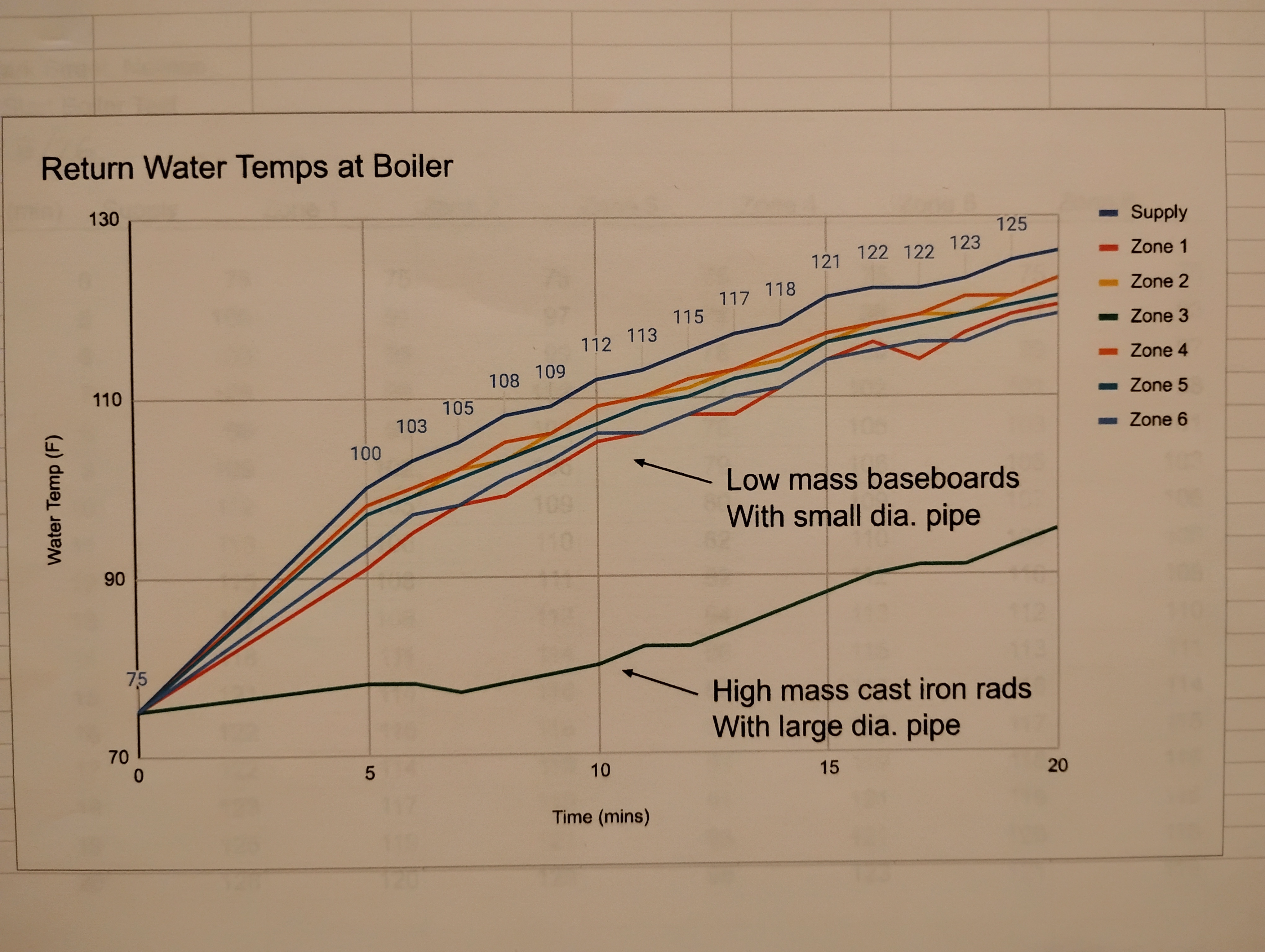
Then I ran the boiler test by first turning the boiler service switch off, then turned all 6 thermostats up to 80, then turned the service switch back on so the boiler would start and begin heating all 6 zones simultaneously. With black tape on the returns, I tracked and recorded boiler supply water temp and all 6 return temps each minute for 20 minutes. All return temps rose steadily with delta T's of 10 or less, except for the Frankenzone with all the bedrooms and a lot of cast iron radiators and large-diameter old steel pipe mixed with a baseboard and 3/4" copper. So a lot of water volume and cast iron to heat, and a delta T of 30+.
The boiler itself reached a supply water temp of 126 in 20 minutes, measured at the supply outlet, so the internal water temp was probably 130+ (after cold start from 75). That seemed reasonable.
Then I turned the service switch off and checked all the rads with an IR imager. Most were heating evenly at temps consistent with the supply temp. Two cast iron rads were presumably full of air based on the IR images. I was actually suprised to find only two with air. The rest seemed OK.
So despite the Frankenzone kluging of original cast iron and large diameter piping with new baseboard and 3/4" copper piping, the system seemed to work OK. I did notice an alarming corroded green bulge right where 3/4" copper had been improperly mated into old steel threaded pipe, and I warned my sister that the bulge was ready to start leaking. I turned the autofeed off, turned the emergency service switch off (the green bulge was right above the zone controller) and told her to get that pipe fixed. I then put a 30-gallon plastic trash can right under it, just in case. She called a plumber, who said he could come next week.
It would probably take more time and money to repipe/rezone the house properly than is worth it. She already has plans to start a remodel of her master suite and bathroom, which will be expensive. But I told her the main heating problem was the lack of insulation in the basement, and trying to repipe/rezone the heating system isn't going to fix that. I suggested turning the finished basement thermostat down the 50 and leaving the door closed so that zone would run as little as possible without letting the pipes freeze. And I suggested turning one living room zone off completely, since it's right next to another living room zone in a relatively small area. That reduces 6 operating zones to 5, with one of them (basement) only running rarely with Tstat at 50.
I also suggested putting TRV's on the upstairs bedroom radiators, since they are rarely occupied. That way they can be turned down to emit less heat when unoccupied, without needing to repipe that whole zone. So I suggested she get the ready-to-burst copper pipe fixed, and also put TRV's on the upstairs bedroom rads, both of which will involve letting air into that zone, so best to do it all at once, then purge afterwards. Other than that, I don't see much point in trying to repipe anything, it's such a Frankenmess.
So my feeling is the house does stay warm in winter, the boiler is surprisingly well-matched to the actual heat loss, but it does cost a lot to heat mainly because of the uninsulated basement. You wouldn't plumb the heating system that way if starting from scratch, but it mostly works and isn't worth putting a lot of $$ trying to undo 20+ years of bad surgery. Turn some thermostats down (or off), add some TRV's, maybe an automatic damper, and call it good enough. Then consider insulating the basement walls.
0 -
the boiler supply at 126 after a 20 minutes run. Under a low/ no load condition. That seems a bit long. Possibly the radiator mass is driving this condition.
Any signs of past condensing conditions inside the boiler? How about the flue piping?
Running the boiler with all zones calling, measure supply and return. When both temperatures stabilize, you are at thermal equilibrium.
That is the condition that the radiation is driving the boiler to operate at.
Ideally return should run above 130 f at that condition.
You would want to run that test on a cold or design day also.
Bob "hot rod" Rohr
trainer for Caleffi NA
Living the hydronic dream1 -
@hot_rod Thanks for your thoughts.
Re boiler time-to-heat, my only reference point is our oversized WGO-5's in a high water volume gravity conversion system with all original cast iron rads. Those take 20 minutes to reach 120, 30 minutes to reach 130, etc, also from cold start. Sister's house is a combination of old large diameter pipes and cast iron rads (mostly combined on one zone) with newer baseboard rads piped with 3/4" copper (the other 5 zones). I suspect the governing factor in boiler heating rate is that one zone with the big old pipes and 5 cast iron rads in it. During my 20-minute test, that was the zone where the return temps were 30+ F below supply temp. This makes sense because of the high mass in the water/rads. The other zones with the baseboards and 3/4" copper all had return temps within 10 F of the supply. That also makes sense because of the lower water volume and less radiator mass.
I can run the test longer to reach thermal equilibrium, but whenever I visited the house last winter and checked the boiler water temp gauge, it was always around 170, and at least one zone's return pipe was always very hot to the touch. That also makes sense because most of the zones have small amounts of radiation relative to boiler size. I made a list of all the rads on each zone, and next step is to estimate BTU output for each rad, but for now I can guesstimate that 5 of the 6 zones have outputs of 15,000-25,000 BTU/hr at 170F. These are all baseboards or kick space heater. The only zone with more radiation is the one with all the old cast iron rads, and I haven't sized those yet. But I can pretty much guarantee that those smaller zones are all returning at well above the 130F at equilibrium on cold days.
So no sign of condensation in the flue pipes. Haven't seen the inside of the boiler yet, but I don't expect to see signs of condensation there either because of how hot the boiler was running last winter whenever I happened to visit. I never saw it run for more than a few minutes at a time, probably because it was alway bouncing off high limit, and I never saw the temp gauge go below about 170.
0 -
if you want some longer duration temperature info, data loggers are an inexpensive way to get a better picture.
Regardless it sounds like you will need to deal with the hand you are dealt, the mix of high and low mass emitters.
Bob "hot rod" Rohr
trainer for Caleffi NA
Living the hydronic dream1 -
Yes, I have some data loggers that I've used in past to troubleshoot other heating problems, and they have definitely helped. Will use as needed here.
Meanwhile, I'm writing up a list of recommendations for her, including turning the basement Tstat down to 50 and closing the basement door, raising Tstat swing settings, installing TRV's on upstairs bedroom rads to reduce heating in those rooms when unoccupied, installing an automatic vent damper on the flue, doing some air sealing, and maybe insulating the basement walls if she wants to make the investment in $$ and time.
0 -
Probably not many homes or heating systems couldn't use some improvements.
Balance when the juice is worth the squeeze. Upgrading the building envelop is a gift that keeps on giving.
Multiple little steps will add up.
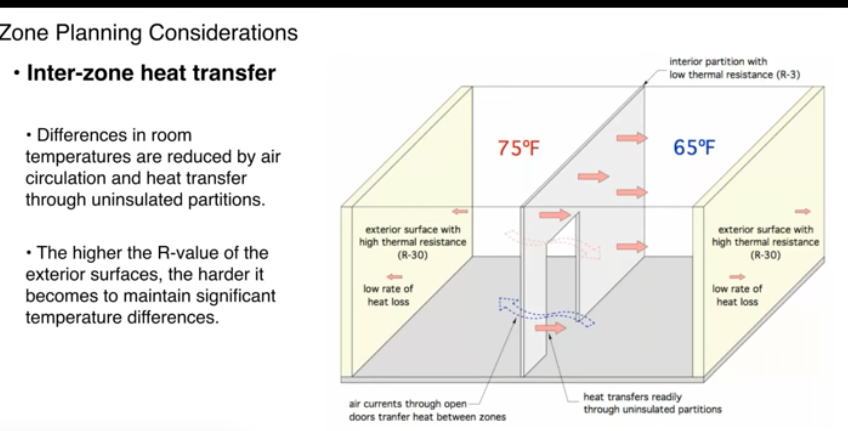
If there is no insulation between the upstairs and basement, the colder that basement the more of the upstsirs heat will travel that direction.
Fiberglass batts are an inexpensive step to lessen that unwanted transfer.
 Bob "hot rod" Rohr
trainer for Caleffi NA
Living the hydronic dream0 -
I know you don't want to mess with the Frankenstein piping but with the longer loop it may be possible to find a place in the middle of the longer loop and cut in a new tee for a common return. Then you would have to connect the existing return at the boiler to make it a supply.
Probably a last resort if you had to do that.
Your radiation load and calculating the expected return temps will probably show that.
The problem is you need to know the flow in that loop which is not so easy to find. Pressure gauges across the circ or a circuit setter would be nice.
0 -
@hot_rod Thank you. Insulating ceiling would be problematic because she just installed a new drop ceiling in the finished part of the basement, and the unfinished part (boiler room) ceiling is a rat's nest of piping. Ironically, right now any heat flow through the ceiling was actually going from the basement up to the first floor, because the basement was so warm last year. I understand your point that in future if she turns the basement Tstat down, that flow could be reversed, but that's one of the envelope problems she's going to have to live with. In our old condo building nearby, our basement stays cold and we lose heat through the uninsuated first floor into the basement, because it would be impossible to insulate due to all the piping and wiring. So we're in a similar boat.
@EBEBRATT-Ed I think I understand what you're saying, but I'm not sure it's needed. As long as that longest loop can keep the upstairs bedrooms warm (which she says it did), then doesn't that mean there's enough flow already?
0 -
-
OK, understood. Speaking of temps, here's a chart of the return water temps at the boiler for each zone. The supply temp is the top line. The 5 zones with baseboards are all grouped just below it, tracking the supply temp closely. This makes sense because those are low mass baseboards that heat up quickly. The line on the bottom is the Frankenzone with mostly cast iron radiators and old large-diameter piping, plus one new baseboard with 3/4" piping. Since that's a much higher mass loop (both in water volume and metal mass), it makes sense that it sucks much more heat out of the water, making the return water temp rise much more slowly.
All zones have Taco 007's. The longest baseboard loop is probably 150 feet long, so following Dan's pump sizing rule of 4 ft head loss per 100 ft, plus 50%, that's 9 feet of head. For a Taco 007, that's about 5 gpm, running through 50 feet of baseboard in a room (finished basement) that can't output more than 25,000 BTU/hr. All the other baseboard loops are shorter. So there should be plenty of flow in all those zones.
The only zone where flow rate may be questionable is the Frankenzone with mostly old cast iron. Although it's mostly large diameter old pipe, there is one far bedroom cast iron rad that's been re-piped with 3/4" copper. There's so much large diameter piping on the other rads that flow may be short-circuiting through those other rads and not reaching the one with the 3/4". It appeared to be full of air when I checked it with the thermal imager. I guess we need to bleed that first and run it for a season to see how it does. Maybe just getting the air out will be enough.
But as far as overall return temps going back to the boiler, one thing to keep in mind is that this test was done with all zones calling simultaneously for 20 minutes, so it was worst-case low water temperature for the high mass zone because that zone was only getting a fraction of total boiler output. If I had run the same test with only that one zone calling for heat, the return water temp would have risen faster. Would be interesting to try that and see how much faster that zone heats when it's running alone.
 0
0



Categories
- All Categories
- 87.8K THE MAIN WALL
- 3.3K A-C, Heat Pumps & Refrigeration
- 60 Biomass
- 430 Carbon Monoxide Awareness
- 133 Chimneys & Flues
- 2.2K Domestic Hot Water
- 6K Gas Heating
- 124 Geothermal
- 170 Indoor-Air Quality
- 3.9K Oil Heating
- 79 Pipe Deterioration
- 1.1K Plumbing
- 6.7K Radiant Heating
- 397 Solar
- 16.1K Strictly Steam
- 3.5K Thermostats and Controls
- 56 Water Quality
- 51 Industry Classes
- 51 Job Opportunities
- 18 Recall Announcements