Welcome! Here are the website rules, as well as some tips for using this forum.
Click here to Find a Contractor in your area.
If our community has helped you, please consider making a contribution to support this website. Thanks!
Argo Control Module 3P with Priority and IR882 Isolation Relay - heat zone 2 fires w/o thermostatt

Recently moved into a home with an Argo Control Module (3P) with Priority on a Burnham gas fired boiler (Priority zone for indirect hot water tank and one zone each for upstairs and downstairs). Recently I've noticed the upstairs zone (baseboard radiators) occasionally ticking and warm to the touch. This can happen anytime and seems to be independent of whether the priority zone was fired for domestic hot water.
Last heating season I added an Argo IR882 isolation relay module and 24v transformer to resolve chattering relay for a zone with a Nest E learning thermostat (no C wire). Since it's the summer here I didn't expect heating zones to fire on their own as we'd set the thermostat to off.
To try and isolate the issue I've:
- Pulled the Nest Thermostat off the wall mount
- Disconnected the wires between the IR882 isolation relay and the TT terminals on the ARM control board.
- Switched the ARM control board relays for the two heat zones.
- Set the Priority switch to "ON" (down) position.
Unfortunately I've never been able to catch the event to see if the control board lite for the #2 zone is lit when the circulator is powered and the boiler fires.
Could this be a bad control board or is this somehow expected behavior?
Comments
-
Need more info. Control model #.
Zone valves or circulators for zones
Nest wired 2 wire or 3 wire (with a common) Are both zones Nest?
No, this isn't normal operation. The zones should not heat in the summer.
If you have circulators with flo check valves or check valves those can fail due to a little dirt or sludge and you can get gravity circulation. If you have zone valves that could also leak by.
Need to try and figure out if a zone is actually calling for heat when it should not be due to a short circuit, bad stat , bad relay etc
or
Do you have a bad check valve or flow check valve cause gravity flow
0 -
This sounds like there may be a compromised thermostat wire. My guess would be the wire between the thermostat and the Argo control. Look for something like this:
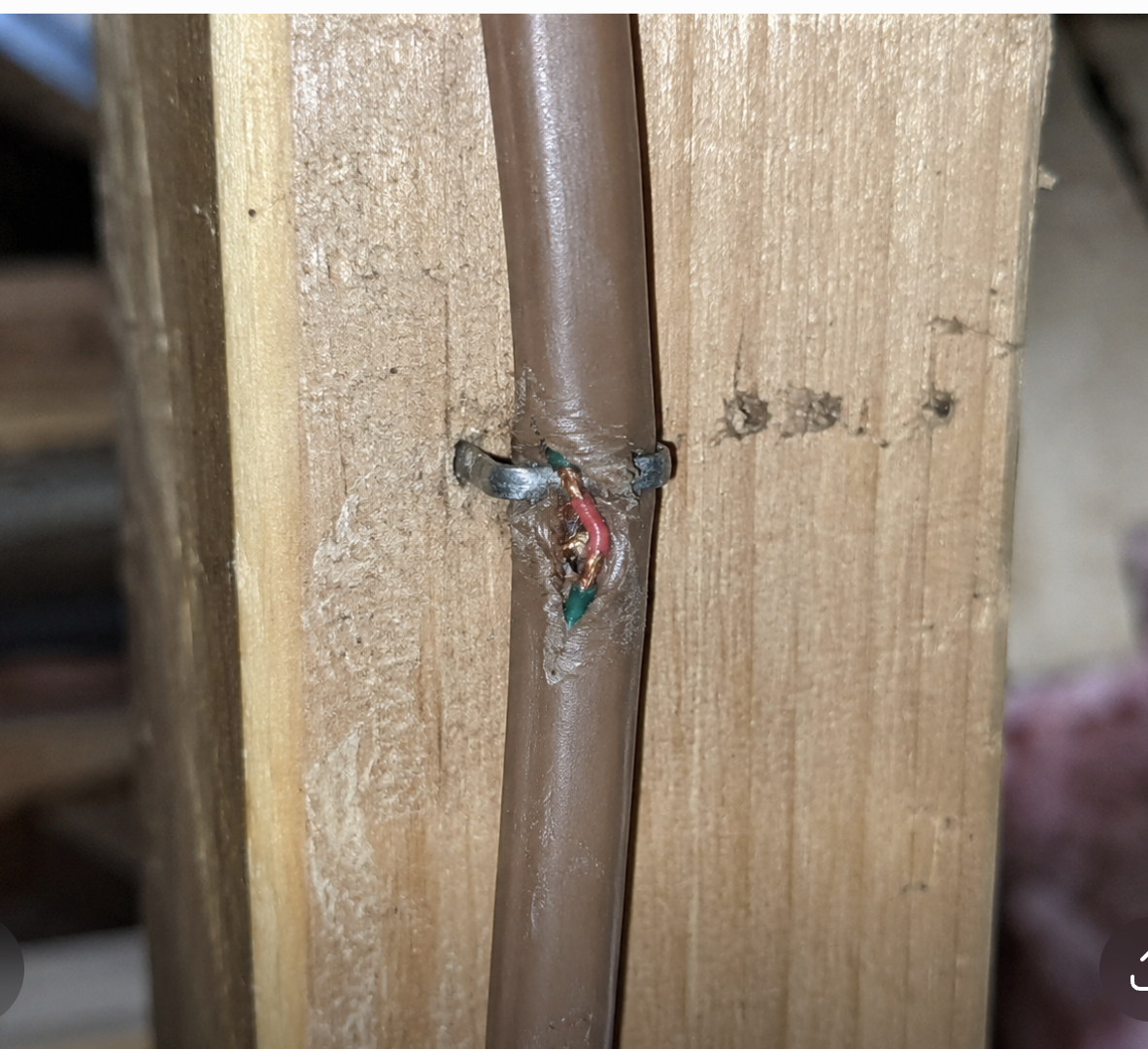
As the temperature changes, the wire may expand from the heat and make contact completing the thermostat circuit while the actual thermostat is not calling for heat. When the damaged wire cools, the connection may open again.
The process of elimination would begin by removing both of the suspect thermostat wire connection at the Argo control. If the problem is resolved, then you have a place to start looking. If the problem still occurs, then the issue may be within the control itself.
Also if you can look for all the information that @EBEBRATT-Ed mentioned, that can help us help you pinpoint the problem.
Edward Young Retired
After you make that expensive repair and you still have the same problem, What will you check next?
0 -
I do agree that @EdTheHeaterMan's idea is the most plausible. Here are some other ideas.
I'm assuming you have multiple NEST thermostats or the zone with the NEST is the one with the issue. The NEST base plate may have electronics in it. If the problem is in the base plate just removing the NEST from the mount may make isolating the issue confusing. I would disconnect the W1 wire if that is being used.
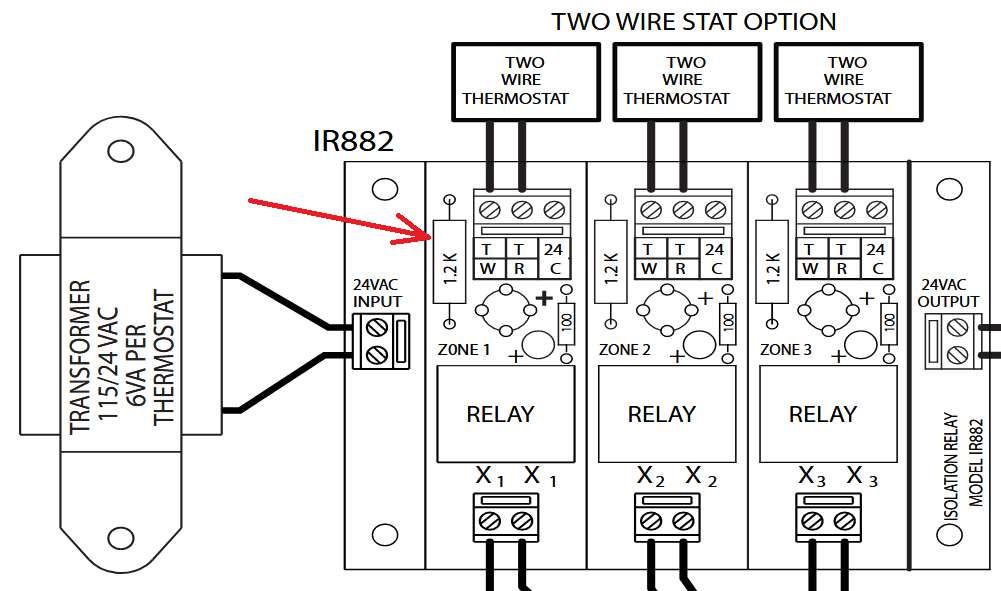
Just for clarity, is the Argo IR882 isolation relay module wired between the NEST and the Argo Control Module (3P) ?
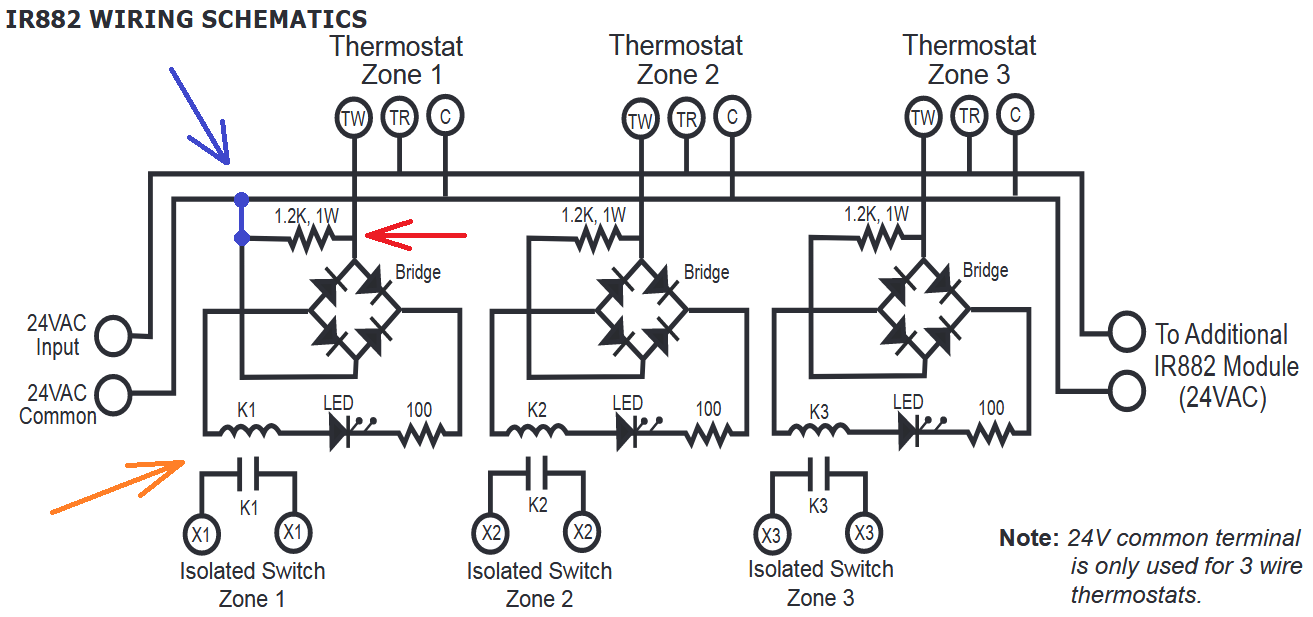
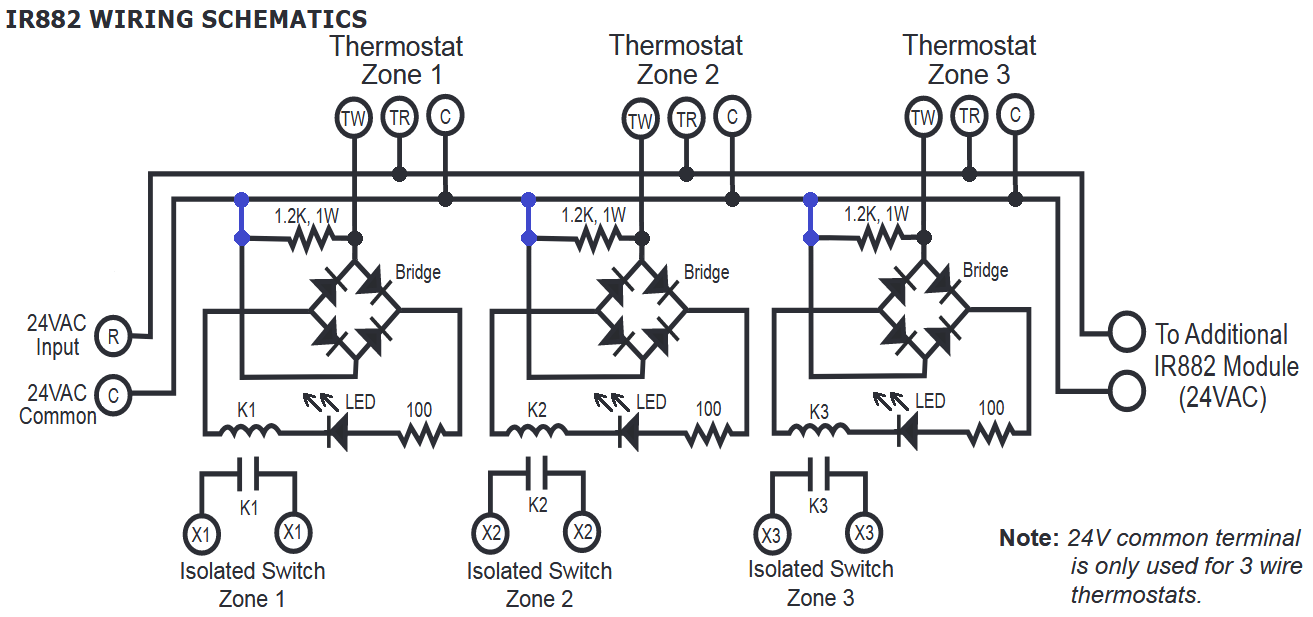
If removing the NEST from the base plate seems to solve the issue, the 1.2 K Ohm bypass resistor (Red arrow) may not provide enough current bypass around the K1 relay circuit to keep K1 (Orange arrow) from activating occasionally with the fluctuations of the electric utility's voltage. The NEST's continuous parasitic current is to power the NEST and keep its battery charged up. If the Argo IR882 isolation relay circuit (in this case) is too sensitive to the NEST's continuous parasitic current it may cause intermittent zone activation. If the NEST load changes, like a Back Light or the charge rate of the battery changes for some reason that could cause issues too.
It appears the schematic in the manual of the IR882 isolation relay has a wiring error(s). The Purple wire I added (Zone 1) makes the circuit for Zone 1 make sense. I did not bother to modify zone 2 or 3. Also the LED symbol is drawn backward too.
 National - U.S. Gas Boiler 45+ Years Old
Steam 300 SQ. FT. - EDR 347
One Pipe System 1
1 -
I believe by your description it should not be a normal or expected behavior, assuming it is an electrical issue.
Is there 3 circulators ? One for each zone and DHW? Or maybe 120 VAC zone valves ?
You could wire and audible alarm to that zone's flow control device to alert you.
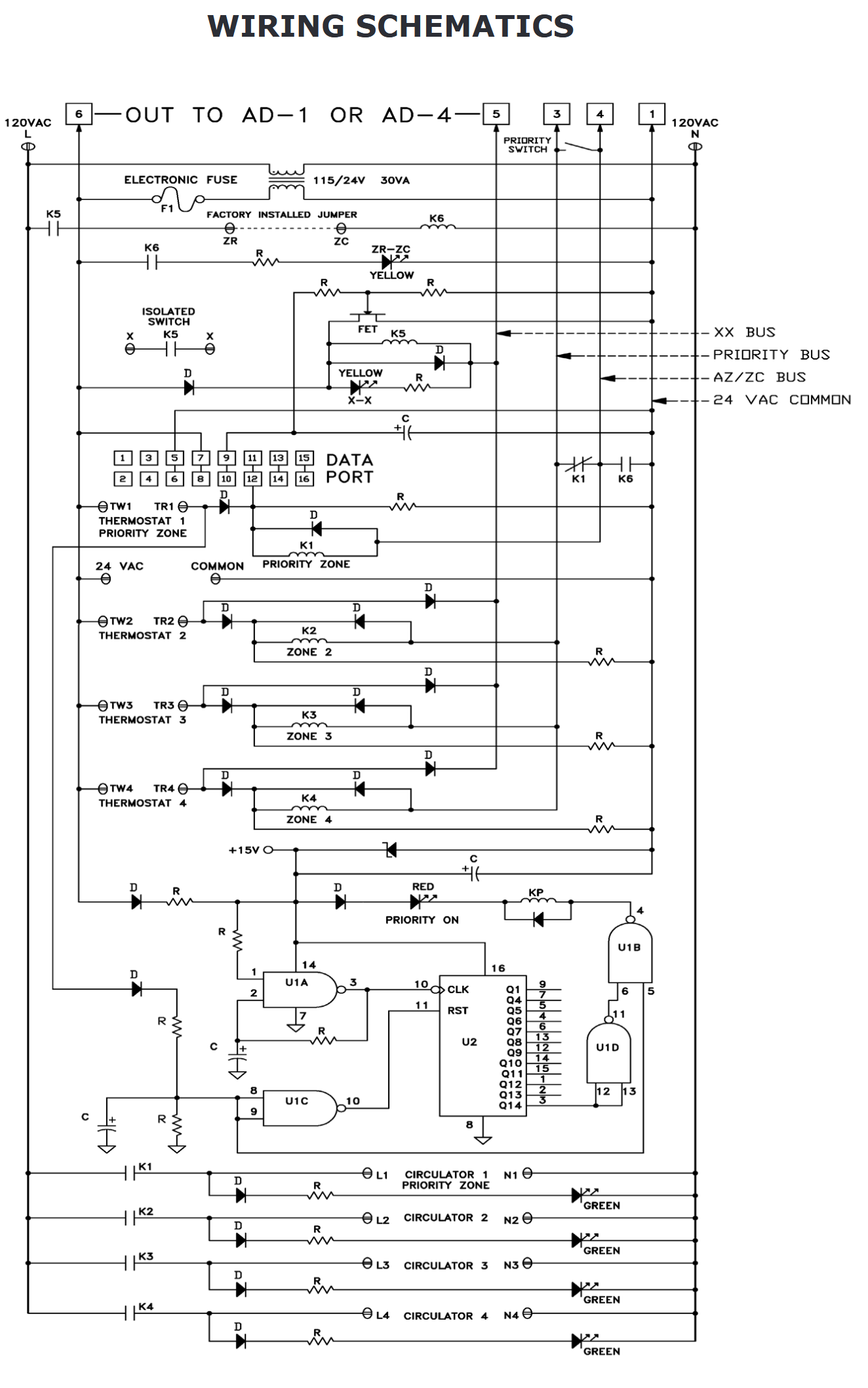
Looking at the schematic of the ARM Series controller, I'm thinking it is not an ARM controller issue. Looks like you need a TW to TR connection to activate the zone relay and energize the flow control device and the XX Bus.
 National - U.S. Gas Boiler 45+ Years Old
Steam 300 SQ. FT. - EDR 347
One Pipe System0 -
First of all, thank you to all the responders who took the time to read and comment on my post. I'll provide the responses for each question after I provide some additional detail:
Boiler is a gas fueled Burnham ES24B. The controller is an ARGO ARM 3P (3 zone expandable switching relay) and the Isolation relay board is an Argo IR882. There are three zones each with their own TACO 007 F5 71FC cartridge circulator and each zone has a Webstone Ball valve with drain port (no visible flow check valves).
Additionally, I am presuming that zone 2 (upstairs) is the only zone affected as it was the only circulator and output tube that I found warm to the touch at the boiler. This is why my troubleshooting disconnects and relay swaps so far is to isolate to a problem with that zone.
Zone 1 (priority) for domestic hot water indirect tank.
Zone 2 Upstairs baseboard radiation using a Nest E learning thermostat (heat only, no C wire)
Zone 3 Main floor radiators using a Nest Learning Gen 3 thermostat for heating (no C wire) and central air.
- Is the IR882 wired between the Nests and the control module?
- Yes, I inserted the IR882 by moving the two sets of two wire thermostat connections from the respective TT zone terminals on the control module to the TT inputs to the IR882 and then added connections between the IR882 outputs and the control module zone TT inputs.
- thinking it is not an ARM controller issue. Looks like you need a TW to TR connection to activate the zone relay and energize the flow control device and the XX Bus
- My thought in disconnecting the interconnection wires between the IR882 and the control module and having the issue recur isolated the issue to the control module (unless it was expected behavior).
- If removing the NEST from the base plate seems to solve the issue, the 1.2 K Ohm bypass resistor (Red arrow) may not provide enough current bypass around the K1 relay circuit
- The problem recurred after removing the zone 2 Nest from the base plate and after disconnecting the wire between the IR882 and the control module so I believe the zone 2 Nest and it's wiring could be ruled out.
Since I posted my query I disconnected the Zone 3 interconnecting wires between the IR882 and the Argo Control Module 3P (main floor radiators and Nest gen 3 learning thermostat used for heat and cooling). Interestingly I have not been able to sense the unwanted heat zone activation since. I will continue to monitor (thanks for the suggestion about the audible alarm).
Many thanks for the thorough analysis of my issue and I'll relay any new information.
0 - Is the IR882 wired between the Nests and the control module?
-
Mercy. I was just plowing through the circuit diagrams that @109A_5 kindly provided. I think I have a headache.
However, they are actually straightforward enough. But is it really necessary to start poling into the controller? Either it works as advertised — or it doesn't. But — like some other things which are complex — it is best to be sure that it is the complicated thing that is causing the trouble.
So. First things first.
I am very interested in the comment that effectively disconnecting Zone 3 seems to have affected the problem.
The very first thing I would do is disconnect the Nests — both of them — completely, bases and all, and the 1.2 K resistors used to power them. Substitute for the moment at least plain vanilla battery powered (or unpowered, even better) units; both heating and heating/cooling varieties are available and cheap. Now I have nothing really against Nests, but in a two wire setup with the resistor for power they are, bluntly, what we used to call a kludge — and may, or may not, play well with other systems in quite unpredictable ways. If that approach helps or even solves the problem, go ahead an reinstall the Nests, but run a power feed to them in addition to the control wires and ditch the resistor. Alternatively, if running the control wire is impossible, use the individual Nests to control an individual relay — one each — which in turn, through an isolated contact, sends the T-T signal to the rest of the system. That isolating relay should be a nice dumb insensitive one. What you are doing with this is sending the rest of the system a nice clean closed or open contact — power high or power off — signal, rather than a signal depending on a varying voltage.
If that playing doesn't help, move the control location to the thermostat input to your controls — disconnect the thermostat wires (label them!) and substitute a simple on/off switch. Play with that. Switch on, heat on; switch off, heat off? OK. Your problem is in the wires or still in the thermostat. Not OK? then you can start looking at the controls
If your system has cascaded controls (control board A signals board B which signals… etc.) repeat for each step in the cascade.
And be happy you are not dealing with a local area network (LAN) situation…
Br. Jamie, osb
Building superintendent/caretaker, 7200 sq. ft. historic house museum with dependencies in New England0 -
Hi Jamie - Thank you for your reply and I was also scratching my head at the Argo control module diagram (it's very difficult to understand if connections exists or they just cross on the diagram without use of a "dot" at the junction). As things happen, shortly (no pun intended) after I disconnected the zone 3 wires between the IR882 and the Argo controller I noticed that zone 2 was warm.
So unless I am mistaken, after disconnecting the wires for both heating zones that leave the IR882 and input to the control module I should be able to absolve the thermostats and their associated wiring and it seems to me that something is picking the zone 2 relay (as well as closing the end switch to start the boiler). The circuit below should reflect my current state:
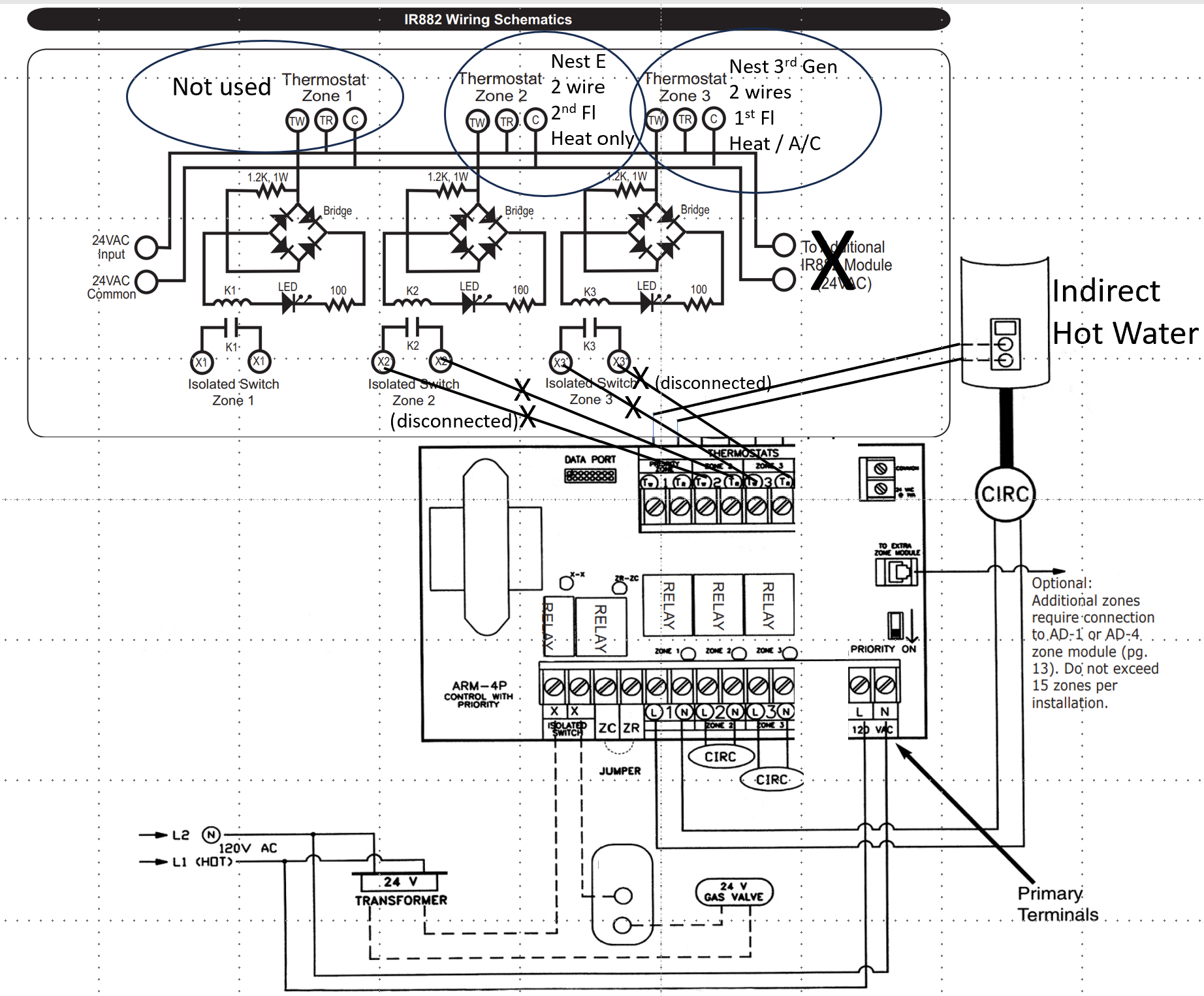
thanks again to all for responding.
0 -
I may have missed it in the discussions above… are these circulators we are looking at? If so, and both thermostat inputs to the ARM-4P are disconnected but one or both of the circulators on the heating zones turns on, it is almost certainly something amiss in the ARM-4P itself. What, exactly, is amiss is a little hard to say!, but my first guess would be a shorted or open diode, since most of the logic involved with the priority zone override on that board is done by the diodes. Is it worth trouble shooting and repairing? Um… haven't priced it out!
Br. Jamie, osb
Building superintendent/caretaker, 7200 sq. ft. historic house museum with dependencies in New England0 -
The first thing I would look at if zone 2 the offending zone is weather that circulator is running or not. C
Check the power wires to the pump for 120 volts
or
Put a screwdriver or stethoscope on the pump motor to see if you can here it running
or put an am probe on the pump wires to see if it is drawing amps
You can get a half decent test meter at Harbor Freight for around $30 that can read voltage ac/dc ohns , capacitance etc. An amp probe that can do anything is only $45
0 -
@Tomd514 OK, I will read the responses more thoroughly.
But briefly what I get is with the IR882 relay X2-X2 Zone 2 is disconnected from the Argo controller Zone 2, TW and TR, the Zone 2 circulator and the boiler still activate randomly and intermittently. Hopefully the interconnect wires are disconnected at the Argo controller end of the wires. Everything else works as expected.
Is this correct ?
National - U.S. Gas Boiler 45+ Years Old
Steam 300 SQ. FT. - EDR 347
One Pipe System0 -
@Tomd514 wrote:
" Hi Jamie - Thank you for your reply and I was also scratching my head at
the Argo control module diagram (it's very difficult to understand if
connections exists or they just cross on the diagram without use of a
"dot" at the junction). "It looks to me the schematic of the ARM controller does use dots for connections and where the lines just cross they are not connections. The IR882 is a bit more confusing, but there is less going on there.
Also I believe these drawings are to give conceptual information and are in no way 100% factual. That being said I tend to use whatever information I can find.
@Tomd514 do you have a Multi-meter ?
National - U.S. Gas Boiler 45+ Years Old
Steam 300 SQ. FT. - EDR 347
One Pipe System0 -
Hi Jamie, EBEBRATT-ED and 109A_5. Comment answers:
- look at if zone 2 the offending zone is whether that circulator is running or not
- I've never been able to catch the problem while it was happening so the only justification for my belief that Zone 2 is being activated is I find it's circulator and the copper tube that feeds the 2nd floor baseboards hot (as compared to Zone 3 which is at ambient temperature).
- Hopefully the interconnect wires are disconnected at the Argo controller end of the wires…
- Yes, at this time all four wires (two pairs) coming from the two Nest thermostats are removed from the input terminals of the ACP-3P controller. The only temperature sensing device connected to the controller at this time is the Aquastat on the indirect domestic hot water tank on Zone 1 inputs.
I can't thank all the reviewers and commenters enough for your guidance and willingness to help me analyze this problem. Considering all the suggestions I'm ready to call the control board as the culprit. In hindsight, it's possible that the damage to my current control module occurred when I installed the Nest E thermostat last season and encountered the chattering relay for Zone 2 due to the "power robbing" Nest configuration (the IR882 cured the chattering but the damage to the controller may have already happened).
I'll order a new Argo ARM-3P and while I'm at it I will add the "C" wire for Zone 2's thermostat as the IR882 offers the capability and there are extra conductors in the thermostat wire for the 2nd floor.
Many thanks again for all the help and guidance and I'll reply back to this post with outcome.
0 - look at if zone 2 the offending zone is whether that circulator is running or not
-
Hate to see you spend $$ on a new board.
Simple check.
Completely disconnect the zone 2 circulator pump wiring.
Now with the pump unable to run zone 2 can't get hot unless you have a piping issue like a leaking flow check valve.
If that is the problem the wiring will not solve that.
 1
1 -
I absolutely agree with @EBEBRATT-Ed, disconnect the zone 2 circulator as a diagnostic troubleshooting test. Your circulator "TACO 007 F5 71FC" has a check valve, maybe the check valve failed or is contaminated and does not close properly, so you are getting a ghost flow and the issue has nothing to do with any electrical control equipment. I believe the check valves are replaceable and much less (parts) cost than a new Argo ARM-3P controller. Regardless, I would add the C wire connection if possible, both thermostats if possible.

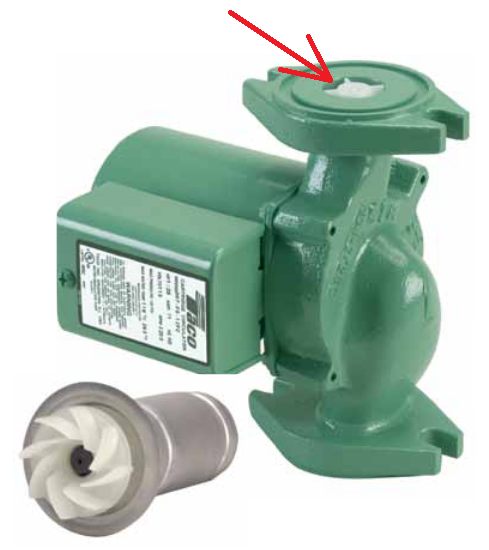

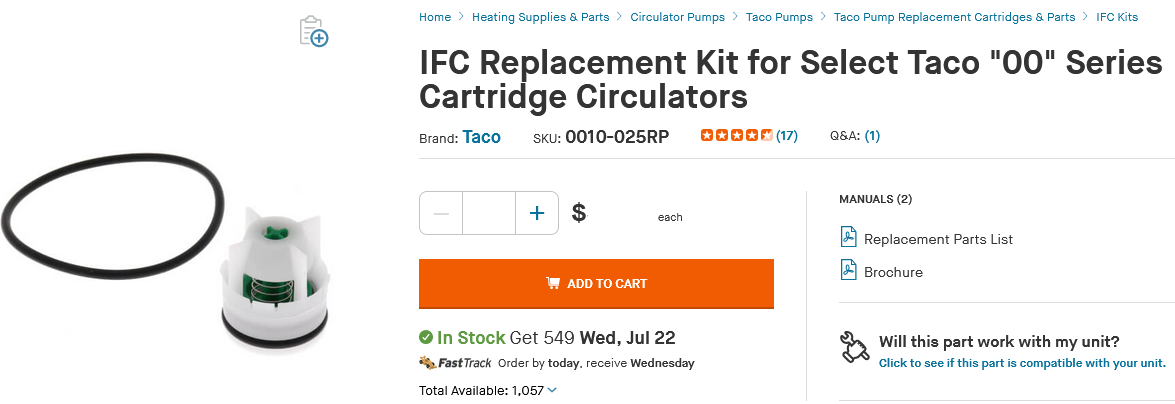 National - U.S. Gas Boiler 45+ Years Old
Steam 300 SQ. FT. - EDR 347
One Pipe System1 -
OK since you suspect an electrical control issue, but have not been able to proved it, this is what I would do before buying any parts.
A minimally invasive diagnostic test:
At your convenience disable the DHW call for heat. If possible do not power down the Argo ARM-3P controller since you suspect it of being defective, you don't want to disturb it since that may change or temporally mask its possible dysfunction.
Let things cool down so the circulators and adjacent pipes are approaching room temperature and a DHW call for heat would be imminent upon system restoration.
Restore the DHW system operation. Monitor the heat migration through the Zone 2 circulator and adjacent pipes, does the heat appear to migrate against the normal circulator flow direction ?
You could also do the test or redo the test with the zone 2 circulator disconnected so you know it can't run.
National - U.S. Gas Boiler 45+ Years Old
Steam 300 SQ. FT. - EDR 347
One Pipe System1 -
I can't thank all the reviewers and commenters enough for your guidance and willingness to help me analyze this problem. Considering all the suggestions I'm ready to call the control board as the culprit.
I would like to site my tag line: "After you make that expensive repair and you still have the same problem, What will you check next?" I like @EBEBRATT-Ed and @109A_5 comments about possible "ghost flow" as it is sometimes called. Getting heat in a zone that is not calling for heat may not be an electrical problem. It may be a piping problem.
When I used to teach Hydronics for the Eastern Heating and Cooling Council I used this publication Zoning Made Easy as my text book for the class. On page 12 it covers Ghost Flow where hot water can actually flow up one pipe while colder water can flow down the same pipe. This is because the hotter water is less cense (lighter) and the cold water is more dense (heavier) so gravity takes the heated water up the pipe and that pipe feels warm or hot to the touch. No Circulator is forcing that heated water to go there. So replacing an electrical control will not fix the problem. Then you will scratch your head and ask, "Now What?"
Edward Young Retired
After you make that expensive repair and you still have the same problem, What will you check next?
0 -
Prior to obtaining a replacement Argo ARM - 3P control board I ordered a replacement Taco circulator check valve and if necessary a complete Taco 007 with IFC as suggested by those who suggested the problem was ghost flow to the 2nd floor zone due to a bad check valve.
Upon accessing the old check valve I found it to be rusted solid and had to chip it out. After installing the replacement check valve I ran the other zones and couldn't sense any heat in the 2nd floor riser (Yahoo!). It's been 24 hours since the repair and I am hopeful the ghost flow is resolved. I restored all the disabled thermostats and wiring.
Many thanks again to the responders on my query who helped with their obvious hard earned experience.
1 -
I have gone down the wrong track troubleshooting many times….we all have weather we admit it or not, it's easy to do.
It is always better to start with the simple things.
I hope you can return the expensive parts.
1 -
@Tomd514 Glad to see the issue is resolved, and thanks for the feedback.
With what was shown in the manufactures drawings, although I believe they are only to give conceptual information and are in no way 100% factual. Example; where are the contacts for Relay KP (Green box)?
Anyways since @Tomd514 stated he disconnected the IR882 from the Argo ARM - 3P control board, so without a connection at item 1 (TW2 to TR2), items 2 and 3 (Red annotations) can't happen (assuming there is not an unknown, unshown failure path inside the Argo ARM - 3P control board from TW2 to TR2). I was having a hard time condemning the Argo ARM - 3P control board.
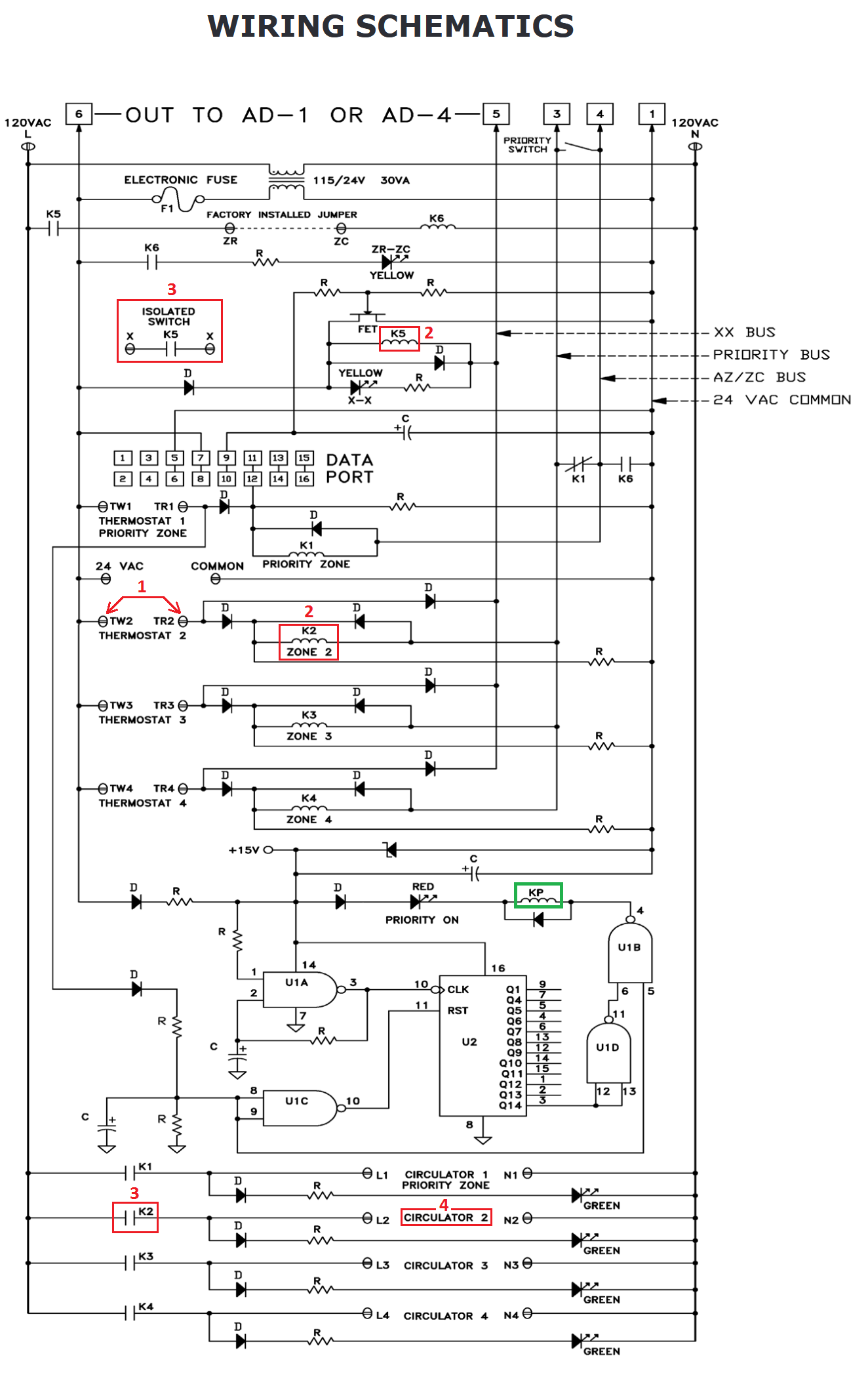
Troubleshooting strategies…
Start at one end or the other OR Divide and Conquer. Do quick tests that have diagnostic value giving troubleshooting direction.
Well the actual problem is at the circulator end, water is moving heat when it should not be, however NEST thermostats can be problematic. Disconnecting the the IR882 from the Argo ARM - 3P control board, to me helped and also @Tomd514 stated he could never catch it in the act.
In this case disconnecting the power from the circulator may have been the best first, fast, easiest test that provides troubleshooting direction. But how do you know that initially ? And if you don't know about the integral check valve you may be scratching your head.
To me the circulator part number was a clue "TACO 007 F5 71FC", "FC" = Flow Check. Kind of why I like knowing 'what's inside' the box whether it is electrical / electronic or mechanical, it almost always helps me with the troubleshooting logic.
National - U.S. Gas Boiler 45+ Years Old
Steam 300 SQ. FT. - EDR 347
One Pipe System1


Categories
- All Categories
- 87.8K THE MAIN WALL
- 3.3K A-C, Heat Pumps & Refrigeration
- 60 Biomass
- 430 Carbon Monoxide Awareness
- 133 Chimneys & Flues
- 2.2K Domestic Hot Water
- 6K Gas Heating
- 124 Geothermal
- 170 Indoor-Air Quality
- 3.9K Oil Heating
- 79 Pipe Deterioration
- 1.1K Plumbing
- 6.7K Radiant Heating
- 397 Solar
- 16.1K Strictly Steam
- 3.5K Thermostats and Controls
- 56 Water Quality
- 51 Industry Classes
- 51 Job Opportunities
- 18 Recall Announcements