Welcome! Here are the website rules, as well as some tips for using this forum.
Click here to Find a Contractor in your area.
If our community has helped you, please consider making a contribution to support this website. Thanks!
High pitch Noise

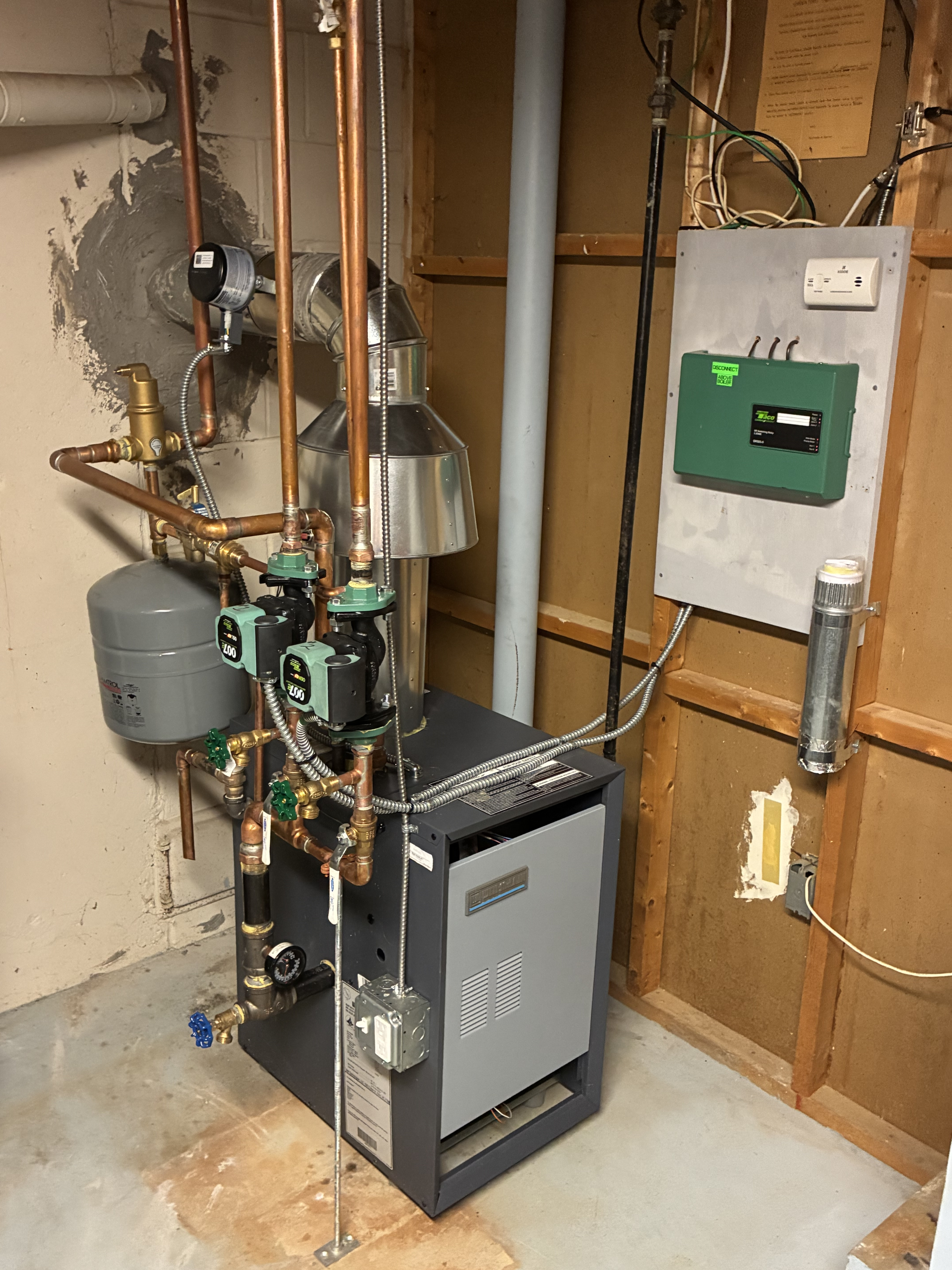
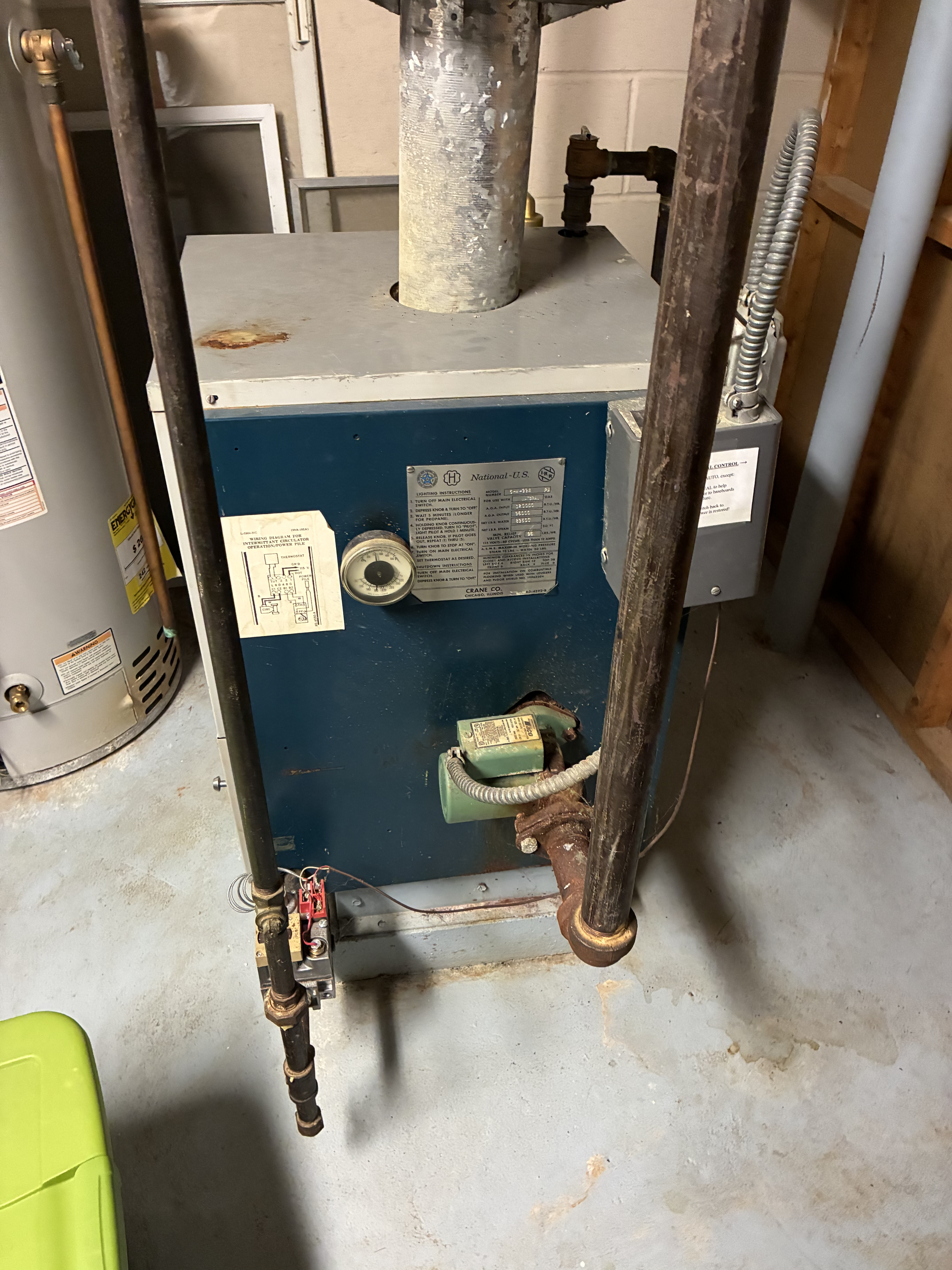
New boiler installed and getting a high pitch noise from the baseboard closest to return in both zones. Not sure if it air or normal sound. Old boiler had zone valves and was not moving much water because heat exchanger was clogged. Any ideas?
Comments
-
When People tell me that the heater is making a humming noise I tell them that it forgot the words. If you place the sheet music with the lyrics in front of the heater… it will stop humming and just sing along with all the other parts.
Your heater looks like a soprano which explains the higher pitch.
🤣🤣🤣🤣🤣🤣🤣🤣🤣🤣🤣🤣🤣🤣🤣🤣🤣🤣🤣🤣🤣🤣🤣🤣🤣🤣🤣🤣🤣🤣
Unfortunately, your installer likely should have used zone valves instead of multiple circulators.
Based on how the two circulators are programmed, and the fact that they are installed on the return piping pumping toward the expansion tank, the noise you are hearing may be the result of the pumps attempting to move too much water while operating at insufficient inlet pressure.
When the pressure at the pump inlet drops too low, the circulator can begin to cavitate. Cavitation occurs when small vapor bubbles form at the pump inlet and then collapse as they pass through the impeller. This process creates noise and vibration, which can travel through the piping and often becomes noticeable in the last few feet of baseboard radiation. Also installing the circulator pumps on the supply side of the boiler pumping away from the expansion tank would have been a better choice by your installer
You may want to try increasing the system's static pressure to approximately 15–18 PSI when the system is cold.
Before increasing the system water pressure, the expansion tank air pre-charge should be adjusted to match the new system fill pressure. This adjustment must be made before the water pressure is raised, so the air charge is not influenced by the system water pressure.
The expansion tank air adjustment must be completed while the system water pressure is still at or below 12 PSI
SO try this:
- Measure boiler pressure when cold
- If below or at 12 PSI, addd air pressure to the expansion tank to 18 PSI
- Now add water pressure to the boiler to 18 PSI
- Operate system to see if the noise stops
Edward Young Retired
After you make that expensive repair and you still have the same problem, What will you check next?
0 -
what kind of boiler did you have that the hx was clogged? that is an unusual thing to happen to a cast iron hot water boiler, at least on the water side.
0 -
Thanks. Isn’t the pressure the same on the supply and the return? Why would zone valves be better? I thought pumping is a common way to control two zones.
0 -
-
my bet if you had insufficient output from that is that the thermopile was getting weak, when it was cold it had enough current to open the gas valve then the burner would come on and heat the "cold" side of it, the output would fall, the burner would go out, the cold side would cool, the burner would come back on. you'd get some heat but not enough.
0 -
It is — when the pumps aren't running. As soon as a pump starts, it creates a pressure difference across itself; that's why the water moves. That may easily be 10 pounds, lower on the inlet side.
Pumping is a common way to control two zones. So are two zone valves. Both have their advantages — and disadvantages.
Br. Jamie, osb
Building superintendent/caretaker, 7200 sq. ft. historic house museum with dependencies in New England0 -
So you always have lower pressure on the pump inlet when running, doesn’t matter if on supply or return?
0 -
Correct. Now the trick is that the pressure at the expanson tank is held steady by the tank, so depending on where the pump is in relation to the tank, the pressure at the inlet may be less than the pressure at the expansion tank — perhaps quite a bit less. Now apparently the pumps are on the returns in your system, and the expansion tank isi on the supply. This means that the whole pressure loss of the system shows up as a low pressure on your pump inlets — and this can be problematic for a number of reasons.
Noise being one of them…
Br. Jamie, osb
Building superintendent/caretaker, 7200 sq. ft. historic house museum with dependencies in New England0 -
would it help to put the expansion tank on the return?
0 -
If you had a common return, yes — but as I understand it you have two pumps, one on each return from the loops? The tank has to be connected BEFORE the inet to the pump, and with two pumps in parallel…
Br. Jamie, osb
Building superintendent/caretaker, 7200 sq. ft. historic house museum with dependencies in New England0 -
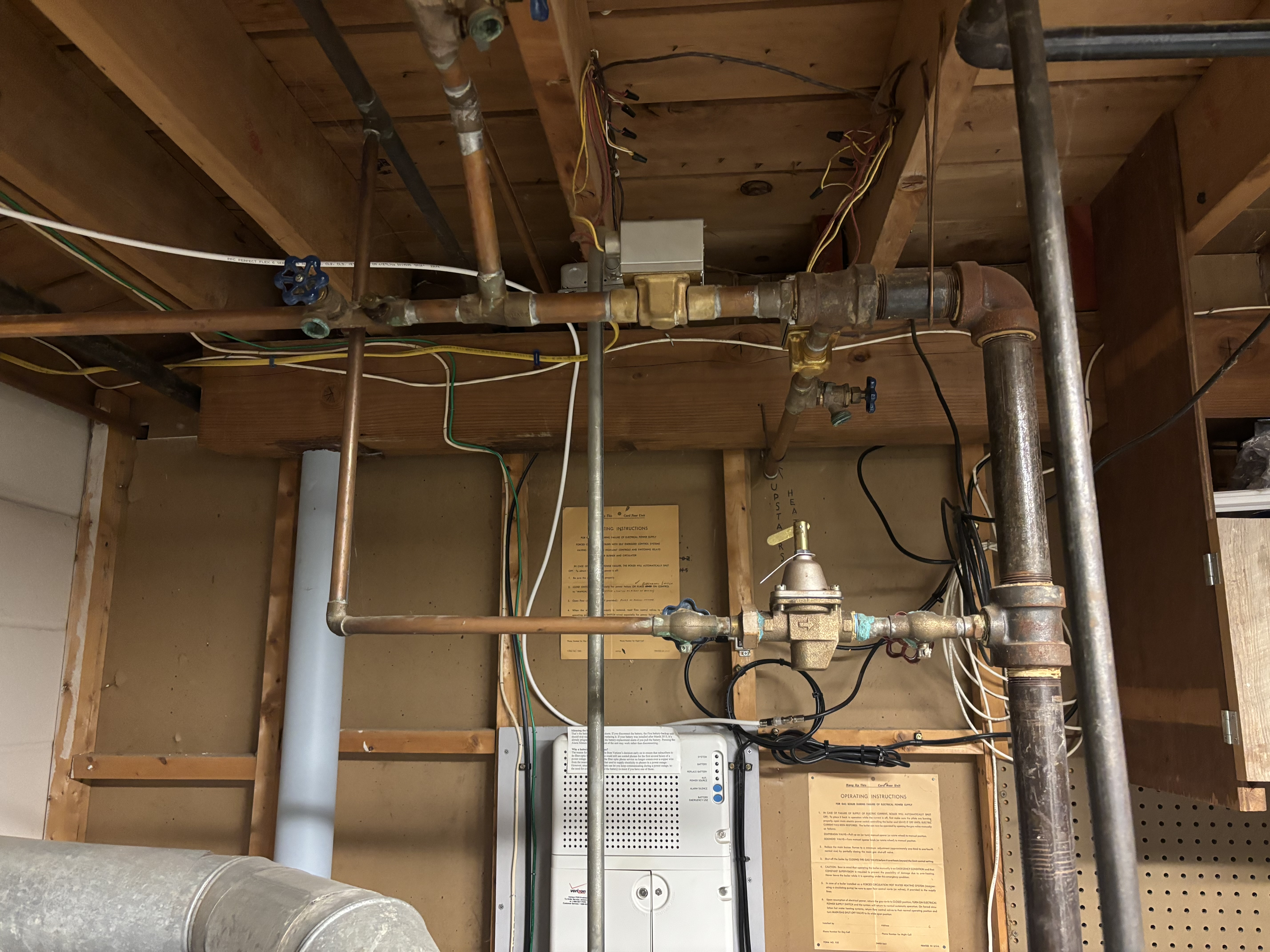
So the only option would be to add a second supply and move the circulator pumps to the supply side. The way it is set up looks pretty common from pictures I have seen. Do you think it would make a big difference if I changed the setup?
0 -
Here is one idea on how to place the circulators to pump away from the expansion tank.
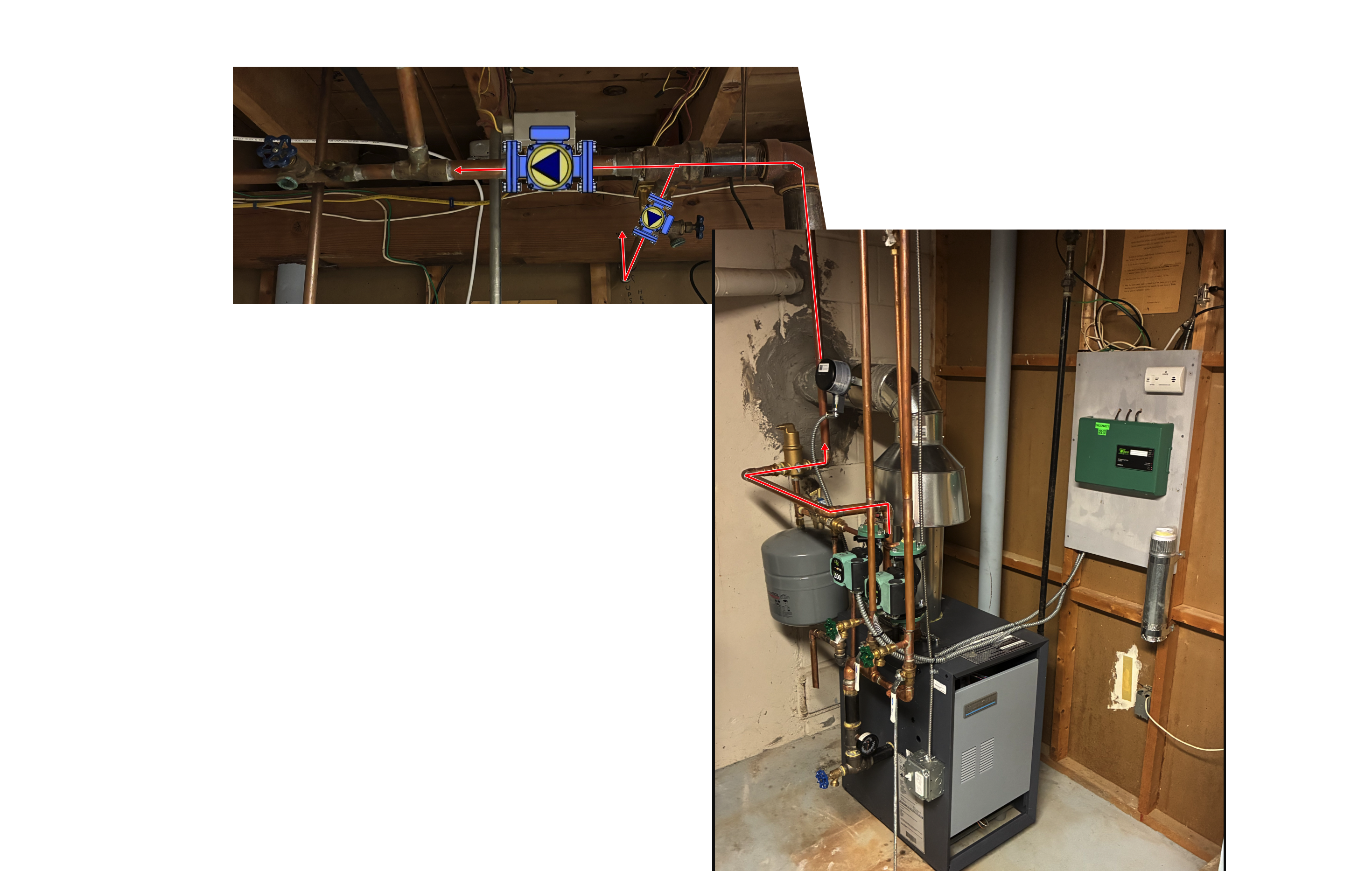
And here is some simple math to help understand the issue:
One Taco 007e circulator can move roughly 10 gallons per minute in many typical residential hydronic systems. Now you have two circulators, so in theory you could move up to about 20 gallons per minute.
Your 3/4-inch piping generally operates nicely at around 4 gallons per minute per loop. If you have two zones, the system would normally work well at about 8 gallons per minute total.
So you have a system capable of moving around 20 gallons per minute, connected to a distribution system that really only needs about 8 gallons per minute. That suggests that whoever installed the boiler may not have done the math before selecting two circulators to replace two zone valves that had worked fine for years.
A new zone valve typically costs a little over $100, while those circulators can cost over $225 each at wholesale. After retail markup, you may have paid over $300 more to install two circulators where only one circulator and two zone valves might have been sufficient.
Of course, all of that is buried in the total job cost, so the homeowner rarely sees it itemized. In addition, using zone valves would likely have required less piping modification around the boiler, which could have reduced the installation labor as well.
Some installers have a philosophy of never using zone valves, while others prefer them. In many cases, however, the choice may not involve much engineering thought. Sometimes the preference simply comes down to what the installer is most comfortable wiring or servicing, or which option appears easiest or cheapest at the time. Unfortunately, that approach does not always consider the mechanical design of the system and which method of zoning will actually work best in a particular installation.
Fortunately, those circulators are more versatile than older pumps and can be adjusted to operate at lower flow rates with the proper settings. You should probably operate them in the energy-saving proportional pressure mode (green light) most of the time.
If the pumps are currently operating in the constant-pressure or normal mode (amber light), that could be contributing to the noise problem you are experiencing.
Before redesigning the installation, try adjusting the circulator settings and see if the system operates more quietly at the lower flow rate. If that does not help then a near boiler piping redesign might be your only option.
Edward Young Retired
After you make that expensive repair and you still have the same problem, What will you check next?
0 -
Thanks for the information. How do you set the pump to green mode? Both zones rarely run at the same time so I am not sure if zone valves would cut down on the noise because when one zone runs I still get the noise. 007e seems like the standard pump everyone uses no matter what the zone size is. What would be a smaller pump?
0 -
High pitch noise is normally the signs of a high velocity flow thru a small opening.
Cavitation sounds more like marbles in the impeller due to the amount of bubbles being formed in the volute.
Use along screw driver to try and pinpoint the noise. Put one end of the screw drive on the offending area and the other on your ear. Your using it like a stethoscope. Move the screw drivwer around in a attempt to pinpoint the true area of the noise.
0 -
old boiler had a 007 not 007e. Does the new model move water at higher velocity?
0 -
@steve617 Do you have a stethoscope? If not, how about a long screw driver?
Put the handle of the screw driver to your ear and then to the circulator and any other moving part to hear if the noise is more isolated. Sometimes, but not always, there is a resinating sound that came come from a vibration, from a hanger or other support that can make a soprano pitched hum as mentioned above by @EdTheHeaterMan .
Give this a try before going to all of the piping changes that might be needed. I have a small suspicion that hangers supporting the pipes and circulators could be a part of this. Start with the threaded rod that is attached to the floor below the circulators and work your way up from there.
0 -
it's a matter of piping. 007e is trying to stay at a fix head. So if you remove resistance from the loop by changing the piping around there is a chance. But i don't think that would be it. That's why you should take a screwdriver to the noise. Try and narrow it down. It could be the checks on the circulator discharge.
0 -
Thanks. I’ll look at the check valves. Maybe some debris in them.
0 -
Proper piping is the job of the original installer. Now that you have the system installed repiping is a LAST RESORT. Do not repipe until all the other free or lower cost options are exhausted.
Edward Young Retired
After you make that expensive repair and you still have the same problem, What will you check next?
 1
1 -
looking at the instructions, it looks like the 007e changes to yellow mod whenever you power cycle it, so if you're using it to zone by circulator it will be running in yellow mode.
0



Categories
- All Categories
- 87.8K THE MAIN WALL
- 3.3K A-C, Heat Pumps & Refrigeration
- 60 Biomass
- 430 Carbon Monoxide Awareness
- 133 Chimneys & Flues
- 2.2K Domestic Hot Water
- 6K Gas Heating
- 124 Geothermal
- 170 Indoor-Air Quality
- 3.9K Oil Heating
- 79 Pipe Deterioration
- 1.1K Plumbing
- 6.7K Radiant Heating
- 397 Solar
- 16.1K Strictly Steam
- 3.5K Thermostats and Controls
- 56 Water Quality
- 51 Industry Classes
- 51 Job Opportunities
- 18 Recall Announcements