Main Vent Recommendation

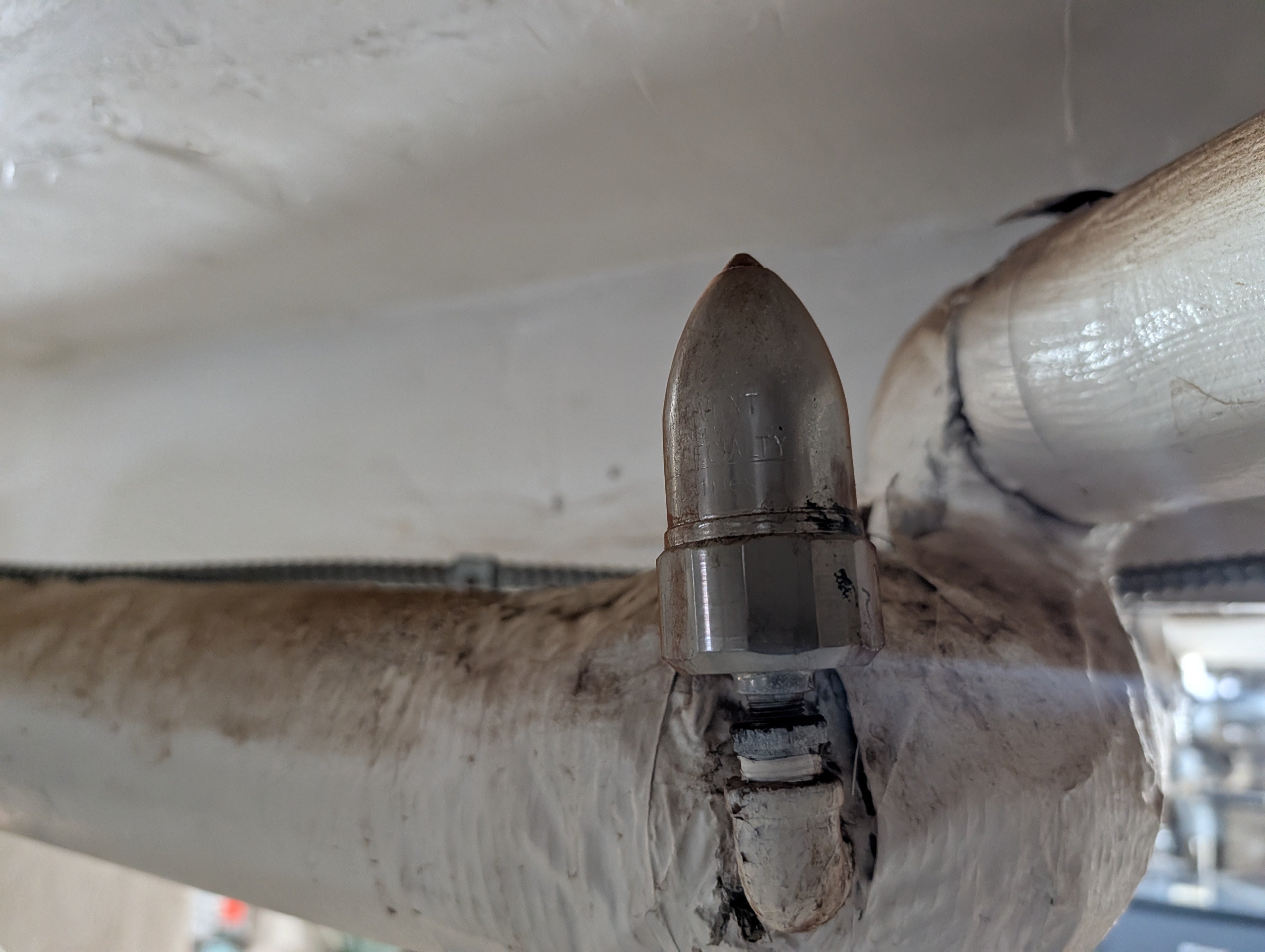
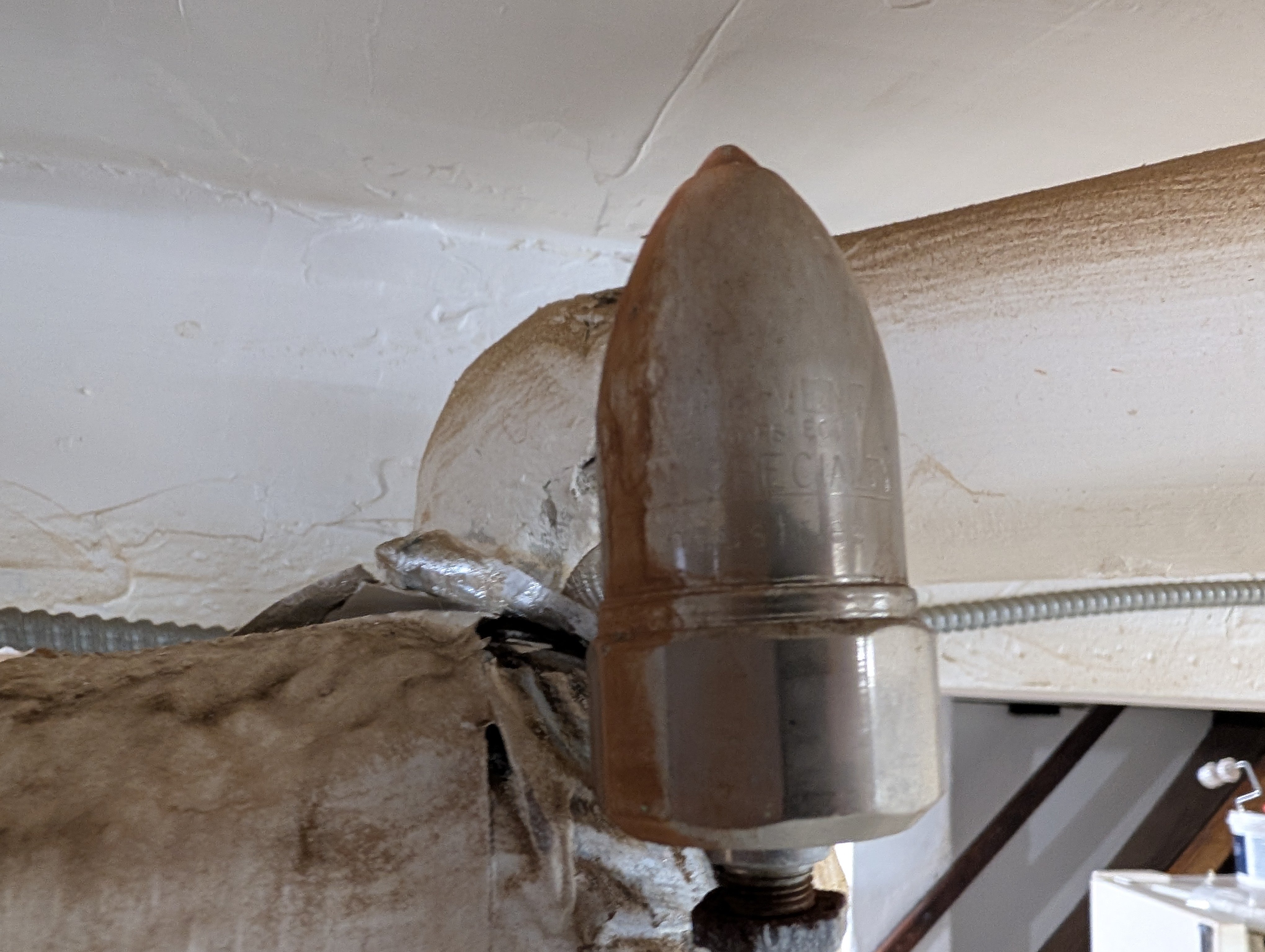
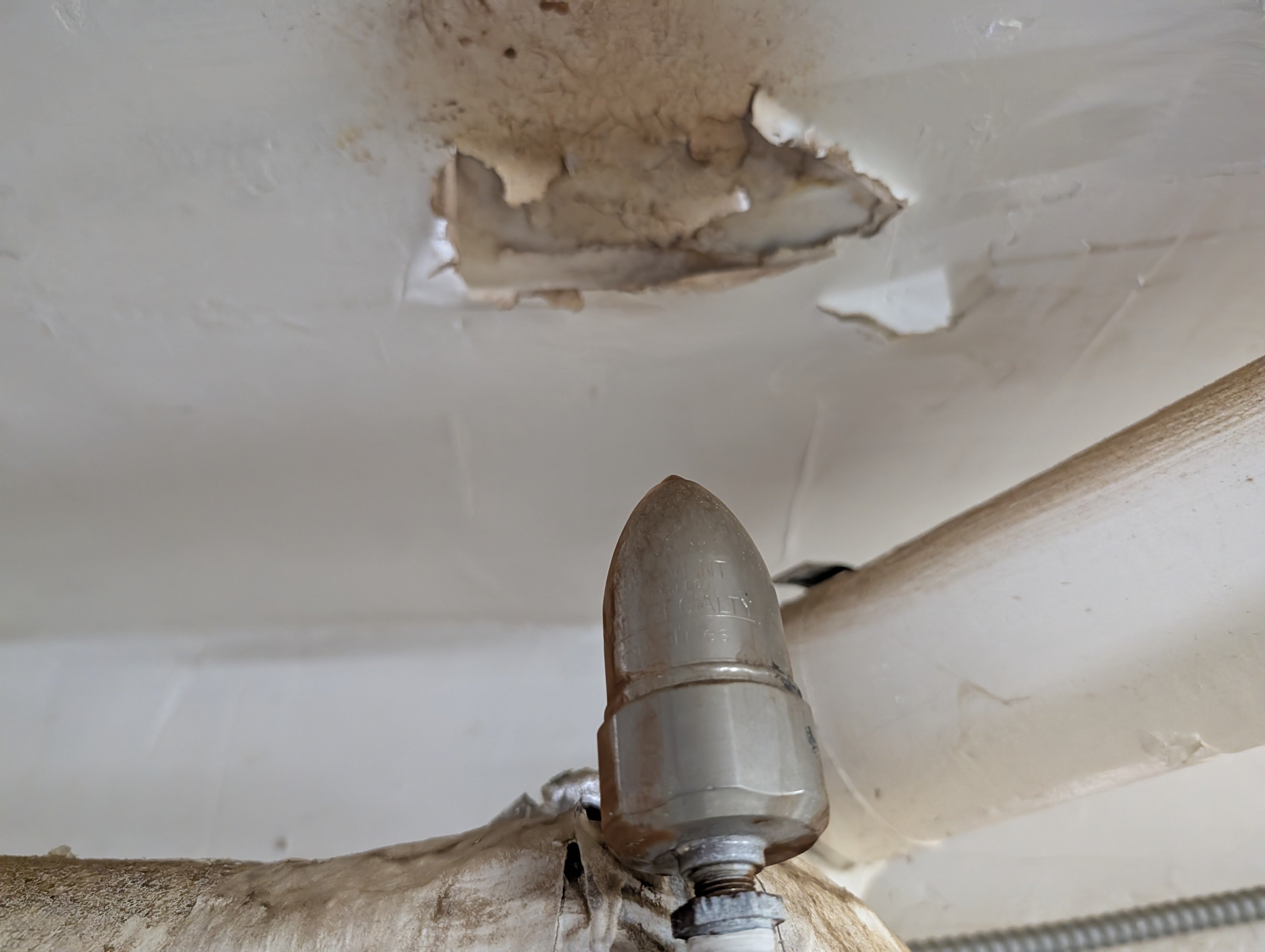
On the advice of forum members in response to my previous post regarding trying to balance the temperature between floors in my mother's 3 story circa 1900 Victorian house, I located the main vent that is hidden in a corner along the ceiling in the basement. The 4 year old system is single pipe, one zone steam.
From what have I researched, the installed valve is without a doubt, incorrect. After reading through many threads, I am amazed that the system has worked as well as it has for the 30+ years I believe that it has been installed for. Obviously, it now shows signs of failure.
I am going to replace it and the two most recommended options seem to be the Gorton # 2 and Jones "Big Mouth". Should I look for anything specific? Are either acceptable? It looks like I should just be able to unscrew the white elbow from the main and install the vertical vent.
Any idea what the current valve is rated for? What differences should I notice once the new one is installed - except for more even temperatures (hopefully)?
Thanks again!
Comments
-
Don’t worry about the existing vent—it’s not enough.
I don’t know the volume of your main but I greatly prefer the Gorton #2 to the Big Mouth.
You may have top clearance issues regardless and that tapping location isn’t optimal on the side of the main
NJ Steam Homeowner.
See my sight glass boiler videos: https://bit.ly/3sZW1el 1
1 -
Thank you.
I have 9 inches from the top of the elbow to the ceiling. The # 2 looks to be 6.5". Does in need more space than that?
0 -
Not in my opinion. I can't tell the sizes of your fittings there…it looks like it may be a 1/4" to a 1/8"…the Gorton #2 has a 1/2" male fitting on it so you might need some adaptation there.
It's kind of difficult to tell the layout of your main there from the photos…is this area near an end-of-main drip to a wet return? Is that
NJ Steam Homeowner.
See my sight glass boiler videos: https://bit.ly/3sZW1el0 -
Yes, that's a 1/4" to 1/8" fitting.
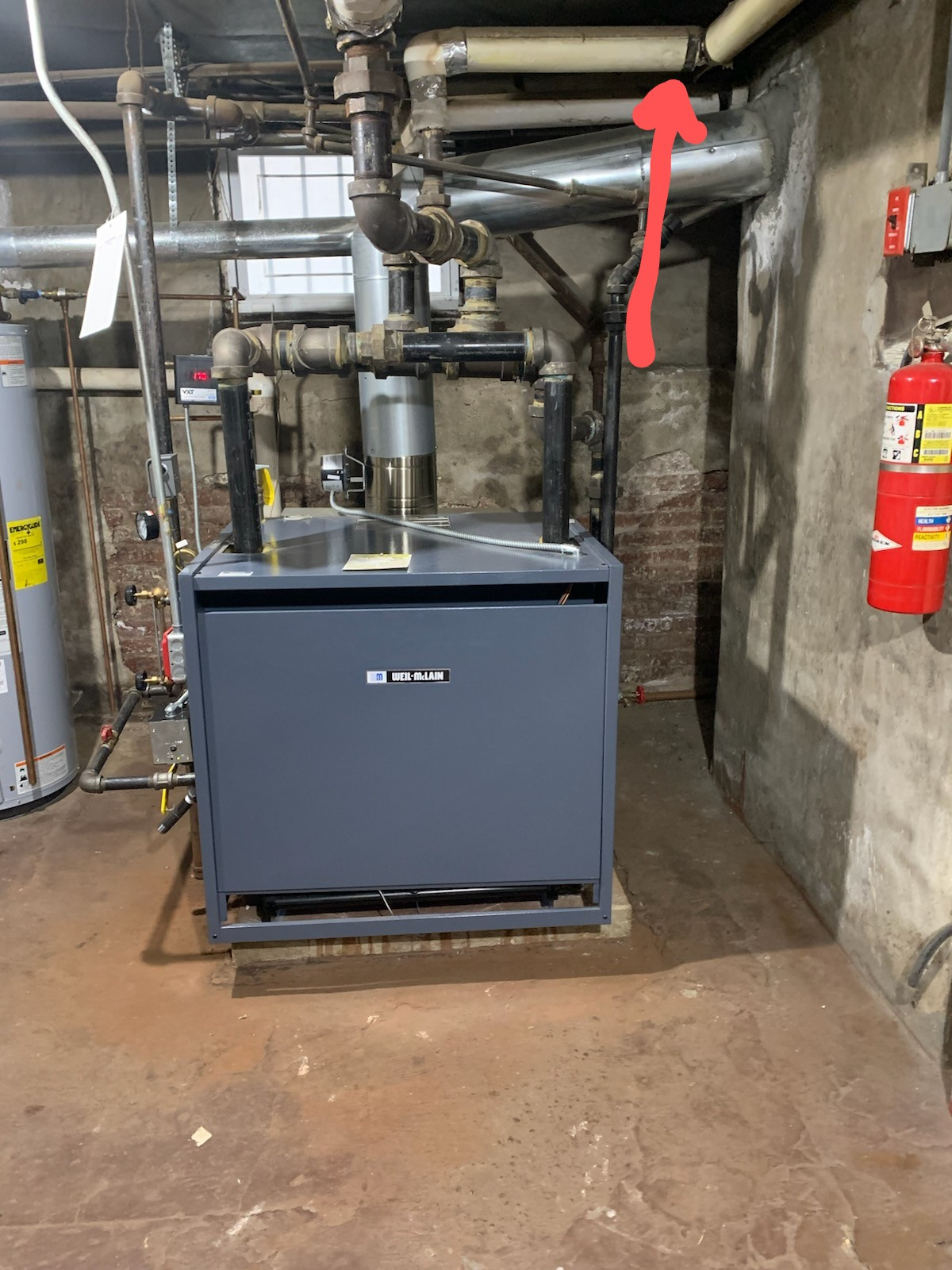
The vent is about 15 feet from the boiler where the main bends towards the front of the house. I attached a photo notating the main - that is not the location of the vent.
 1
1 -
So that vent currently is at the end of the main after the last radiator runout? The pipe continuing on in the photo after the drop is condensate return only going back to the boiler? Is this the only main or do you have two (looks like you have two…). IF there are two is there another vent somewhere? Would like to know what the total length and pipe size of the main/s being vented are. My apologies if you already posted more detail or other pictures in a previous post.
I'd have your new vent right up nearly to the ceiling but I just wanted to verify from the sizing of the pipes whether a single vent is enough.
0 -
The Gorton will close against water. The big mouth will not. Since the vent is tapped off the side of the main, water is a concern so I would not use the big mouth in this case.
—
Bburd1 -
That main looks like a rather small pipe size…is it a main with just a few radiators on it, or even just one? If so, or if it's very short a Gorton #1 might be worth a try to start with.
NJ Steam Homeowner.
See my sight glass boiler videos: https://bit.ly/3sZW1el0 -
Apologies, the vent is off the pipe that is at 12 o'clock at the photo.
There is only the one vent that I attached in my initial post.
The current setup worked fine - as in all the floors heated quickly and evenly until this past year - for over 30 years. Probably not efficiency-wise. The previous boiler lasted more than 25 years until it developed a crack. This one was installed 4 years ago. I had a thermostat issue last year that was causing a short cycling issue. Resolved that, and then had a clogged pigtail earlier this year. When that was fixed, the temperature difference between the first and second/third flors was over 12 degrees. Managed to lessen that by correctly setting the installer options on the thermostat that the technician failed to do.
It is currently about 6 degrees hotter on the upper floors. Researched further on this forum, and everyone pointed to the main vent. Located the vent that I included in my initial post - which obviously looks like the culprit.
My thinking is that if I replace it with a somewhat more adequate vent, the difference with lessen even further.
I would love to balance the system in the near future but for now just trying to make the house comfortable.
0 -
The main is 4 inches. It has 17 radiators attached two it.
0 -
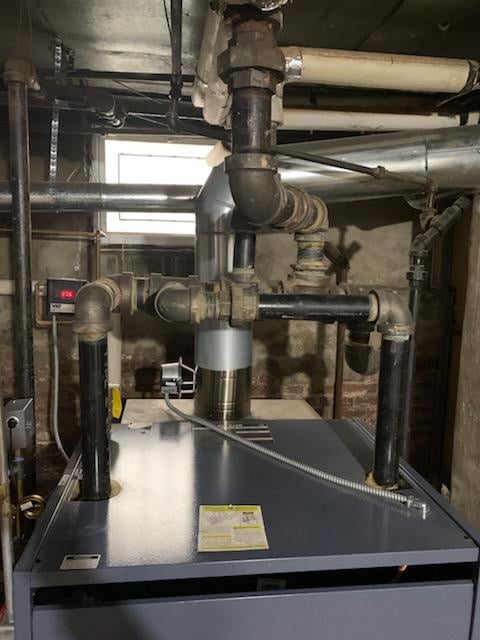
The vent looks like something that someone installed as an afterthought rather than the original vent. It should have been on a 45 higher up on that elbow at the very least. I am still confused as to whether this vent is at the end of the main after all the radiator takeoffs or not. It doesn't look that way in the photo.
It has writing on it, if you're interested. Maybe Hoffman Specialties? Probably has a model #. I know it is probably irrelevant because it may be undersized but it might be interesting to know.
You say the boiler installation was done four years ago. It worked fine after that? It looks like they did a bullhead Tee new header that goes into an older header. That isn't proper, which is why I'm wondering.
0 -
It looks to be right smack in the middle. It is about fifteen feet from the boiler on the pipe that is in the center of the attached photo.
If I had to guess, the system never had a vent. Then, when the converted coal to gas boiler was replaced in the 90's, I assume this vent was added - most likely as an afterthought and where it was somewhat convenient. I can make no claims regarding the efficiency of the system, but the house has aways been at a reasonably consistent temperature on all floors until now.
0 -
hmm, the one with the arrow pointing to it in your photo is the one on the right in this zoomed-in image of that photo (I think)…it is 4"?? Could be the photo is fooling me. But anyway if it is that large then don't bother trying anything smaller than a #2 I guess.
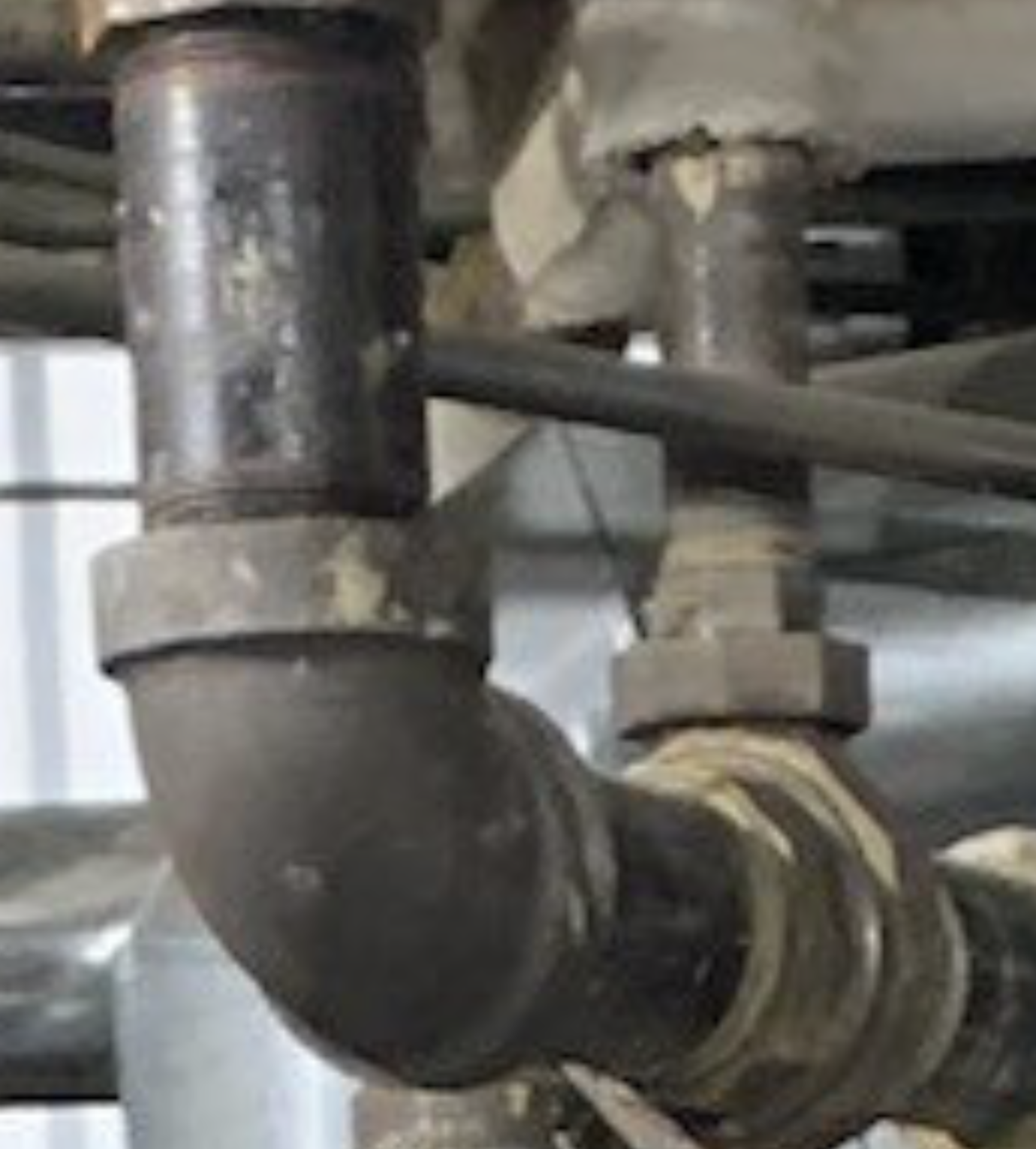
NJ Steam Homeowner.
See my sight glass boiler videos: https://bit.ly/3sZW1el0 -
Sorry, as I previously mentioned - I labeled the wrong pipe. The main is the larger one in the center of the photo.
 1
1 -
It had to have a vent for each main, coal fired boiler or not. Even if it was a vacuum system, they would've had vacuum style vents. And they totally need to be at the end before the drip, or if you had dry returns they could've put them at the end of those dry returns.
0 -
Correct. It was installed by drilling and tapping the elbow. Someone will need to drill and re-tap it for 1/2" for the #2.
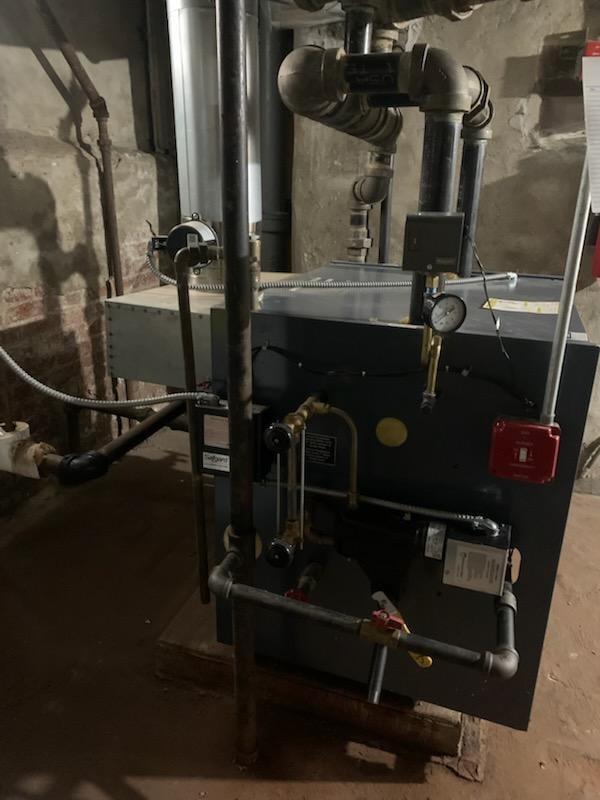
@MikeC_3 , can you step back and take a pic of the piping around the vent?
0 -
-
Near boiler piping is not a bullhead tee, now that I see it better.
 2
2 -
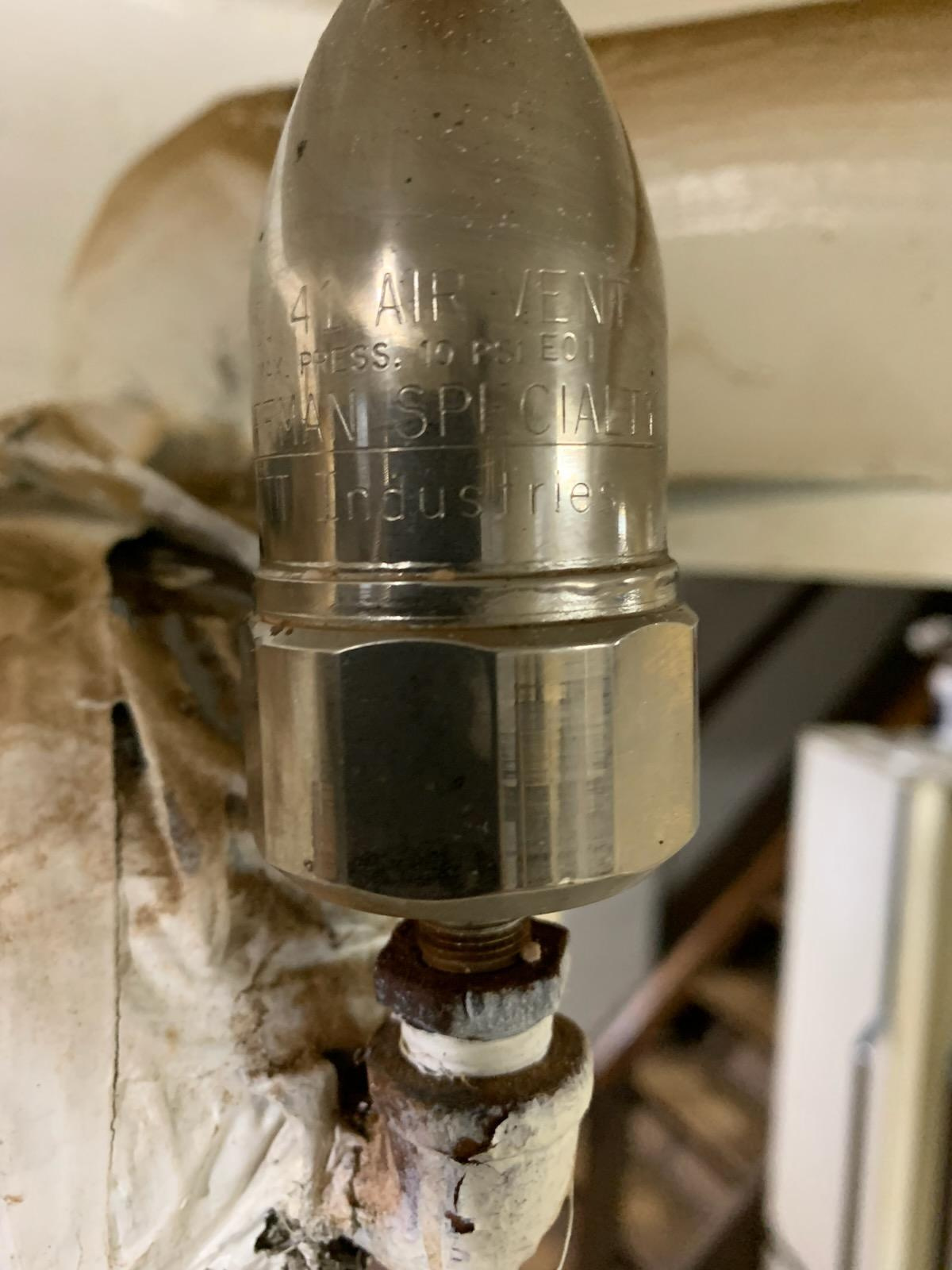
I cleaned up the current vent on the main and it is a Hoffman #41. All the others on the radiators are Hoffman # 40's. I assume if I replace it with any larger straight vent, I should see an immediate improvement.
 1
1 -
That's not a main vent its a radiator, actually convector vent. If you change that to a Gorton #1 it will be almost 6x more venting.
1 -
Yes, that's what I saw on the G & P capacity chart.
Any recommendation as to the largest available vent that is either 1/8 or 1/4", that I could easily swap until the end of the heating season?
0 -
A Gorton D has the same capacity as a #1.
2 -
If that pipe that is in the center of the picture is the return, yes then it is at the end.
0 -
@MikeC_3 Correct me if I missed it but have you answered the question of whether or not this vent is AFTER all of the runouts for the radiators that are on this main?
If not, it is not in the correct location.
Before I believe you said it was in the middle of the main but the above information is important:
"It looks to be right smack in the middle. It is about fifteen feet from the boiler on the pipe that is in the center of the attached photo."
We are missing a clear picture of your system, as in a sketch showing mains and radiators on each main and whether you have drips at the end of the mains that then go to the boiler as a wet return or you have dry returns that go back to the boiler before the drips drop down to the wet return.
0 -
"Are you asking me? lol. You should know."
I'm posting here for a reason!
1 -
I assume it is at the end about 15 feet from the boiler. As mentioned, the system worked fine for the 50+ years my parents have had the house for. Only over the last two did it start having issues with short cycling and such. The house heats up enough that my mother doesn't have any complaints, but I first noticed that it wasn't as evenly distributed as it used to be. I then looked at the usage and noticed that it was just about double that of previous years. I am positive that the two problems go hand and hand and just trying to manage it.
The first thing I did was program the thermostat correctly and that helped somewhat. I then looked into balancing the system and started at the main as instructed. What I found is what I posted — not much of a main at all and definitely not in any capacity any longer.
0 -
I will doublecheck next time I go over there and take more pictures. Thanks!
0 -
Both mains need a vent too.
But, anyways, assuming this vent is in the right place…….what I'd do is get a 3/8 to 1/4 Reducer, a 3/8 nipple, a 3/8 coupler, and a 3/8 Gorton #1. Give it a try. You could remove the one that is there and see if you can blow through it and will know right away if it was responsible for the change in fuel usage. That vent is super anemic in size to be the only vent on a 15 ft. main. I don't know for sure but I believe they got away just fine with smaller main vents with coal burning boilers because they just went continuously.
1 -
All the radiators get hot, just not as fast as they used to. The first floor is especially slow and do not get as hot as the upper ones.
@Captain Who As mentioned above, could I just try a 1/4" Gorton D to diagnose the issue initially? Not that your solution is difficult, but ideally I would like to get somebody in to properly vent (which I'm sure involves tapping/retapping) and balance the system in the not so distance future.
0 -
You won't be able to unscrew the existing vent an put a right angle Gorton D radiator vent in it's place, even though it is 1/8 NPT. AFAIK they do not make one that is Straight. The only thing I can think of that is available straight with 1/8 NPT would be a Heat Timer Varivalve. It would be useful for testing purposes to see how changing the venting rate effects your system performance. They do not have a float incorporated in their design so if you have any water issues you may get spitting.
1 -
@MikeC_3 @Captain Who , Gorton makes "D" vents in vertical configurations as well as angle ones.
I'm not sure if your existing vent is 1/4" or 1/8", but you can get the D either way:
https://www.supplyhouse.com/sh/control/search/~SEARCH_STRING=gorton%20d
1 -
Thanks. D'Oh. I should've checked. They didn't test that one in the venting chart, like they did the straight varivalve. Now that I went to the link I remember that I had seen them before and wondered how many radiators would accept those. Maybe they are for convectors?
0 -
@SteamExpertNow Maid O Mists are said to have lots of out of box failures. I just bought one that leaks steam brand new. Not a lot, but I won't be keeping it on the radiator much longer.
Do they have a straight one with 1/8 NPT, because that is what he was asking for to do something quick.
0



Categories
- All Categories
- 87.8K THE MAIN WALL
- 3.3K A-C, Heat Pumps & Refrigeration
- 59 Biomass
- 430 Carbon Monoxide Awareness
- 132 Chimneys & Flues
- 2.2K Domestic Hot Water
- 6K Gas Heating
- 124 Geothermal
- 170 Indoor-Air Quality
- 3.8K Oil Heating
- 79 Pipe Deterioration
- 1.1K Plumbing
- 6.7K Radiant Heating
- 396 Solar
- 16.1K Strictly Steam
- 3.5K Thermostats and Controls
- 56 Water Quality
- 51 Industry Classes
- 51 Job Opportunities
- 18 Recall Announcements