Is this two pipe system wrong at the end of the main?

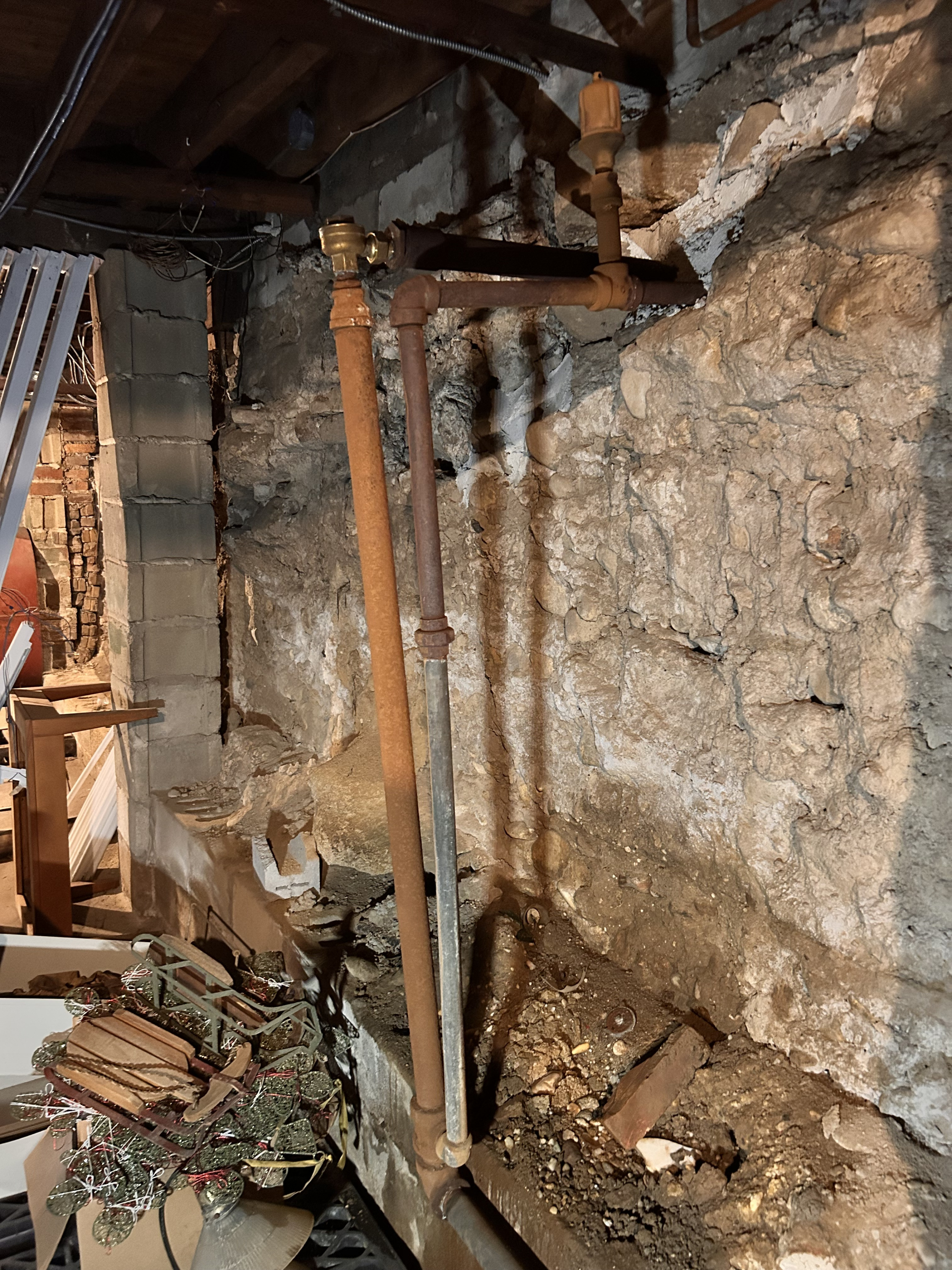
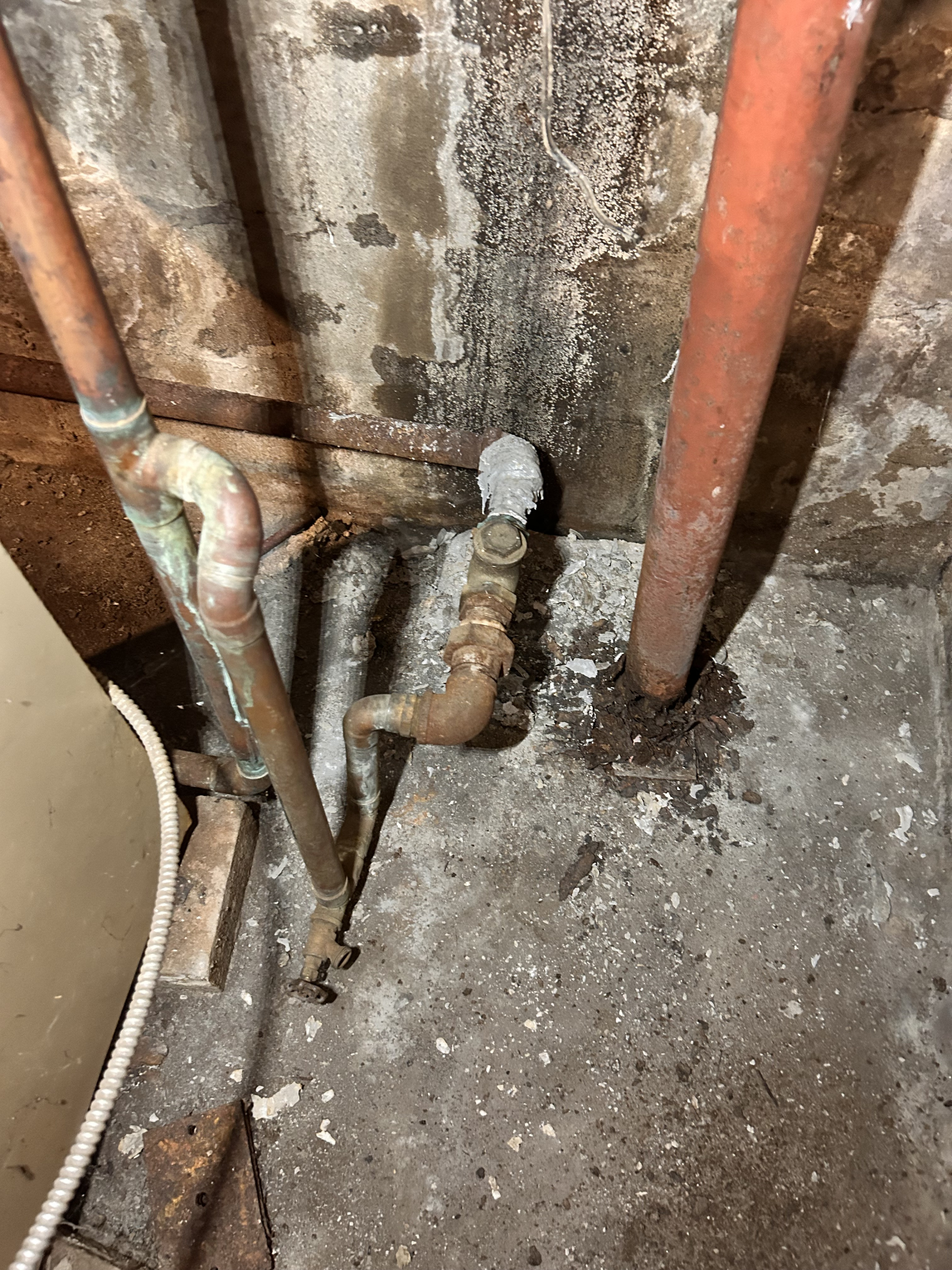
You can see the end of the steam main here with a radiator trap. The return line is right next to it and ties in below the water line. Should this be tied in above the water line? Seems to me by doing it this way you are essentially forcing all the venting to be done through the radiator traps?
What they're getting right now is actually good even quiet heating. But, all the water gets pushed out of the boiler, takes a couple minutes to return and after a few cycles it starts blowing out of those Hoffman vents while the boiler is off on low water. The traps were apparently leaking too and changed by another plumber. It's running a regular Presuretroll turned down and didn't seem like it's building much pressure (under 1lb) so it's good on that front for now.
The radiator traps are mostly bad and blowing steam into the return which has to be corrected. The pitch on the return line has been corrected. I'm also weary of the swing check valve they put on the return.
Should that tie in be raised so the main can use the air vent on the return? Like the check valve?
Comments
-
What does the radiator trim look like? There were a lot of vapor systems that had check valves in the boiler return. The trap in to a wet return doesn't make much sense, likely they were running it at too high a pressure and tried to fix the steam blowing through the water seal from the main in to the return with a steam trap instead of a vaporstat. It looks like it has been that way a while. If the reducer isn't eccentric it will trap water in the main, I can't tell if it is a standard bushing or if it is eccentric.
0 -
Your supposition on venting is correct. And that trap on the main would make sense… if it connected to the return rather than to the drip. As it is it makes zero sense. Now it would very much help if there were either vent on the main at that location, or if the trap were repurposed to serve as a crossover — but you need to leave the drip.
Somebody got creative….
Br. Jamie, osb
Building superintendent/caretaker, 7200 sq. ft. historic house museum with dependencies in New England0 -
The pipe with the trap is the end of the steam main? It shouldn't be connected to a wet return. So the trap is the end of main drip and the vented return is from the radiation?
0 -
I'm thinking the dry return drains at that drip and not at the other end of the dry return.
National - U.S. Gas Boiler 45+ Years Old
Steam 300 SQ. FT. - EDR 347
One Pipe System0 -
A lot of them do. Particularly on longer runs — the dry return and the steam main run parallel to each other, so one of them is going to drain at the far end. And it's often the dry return, with the steam main pitched parallel flow (and therefore dripped at the far end as well!)
Br. Jamie, osb
Building superintendent/caretaker, 7200 sq. ft. historic house museum with dependencies in New England0 -
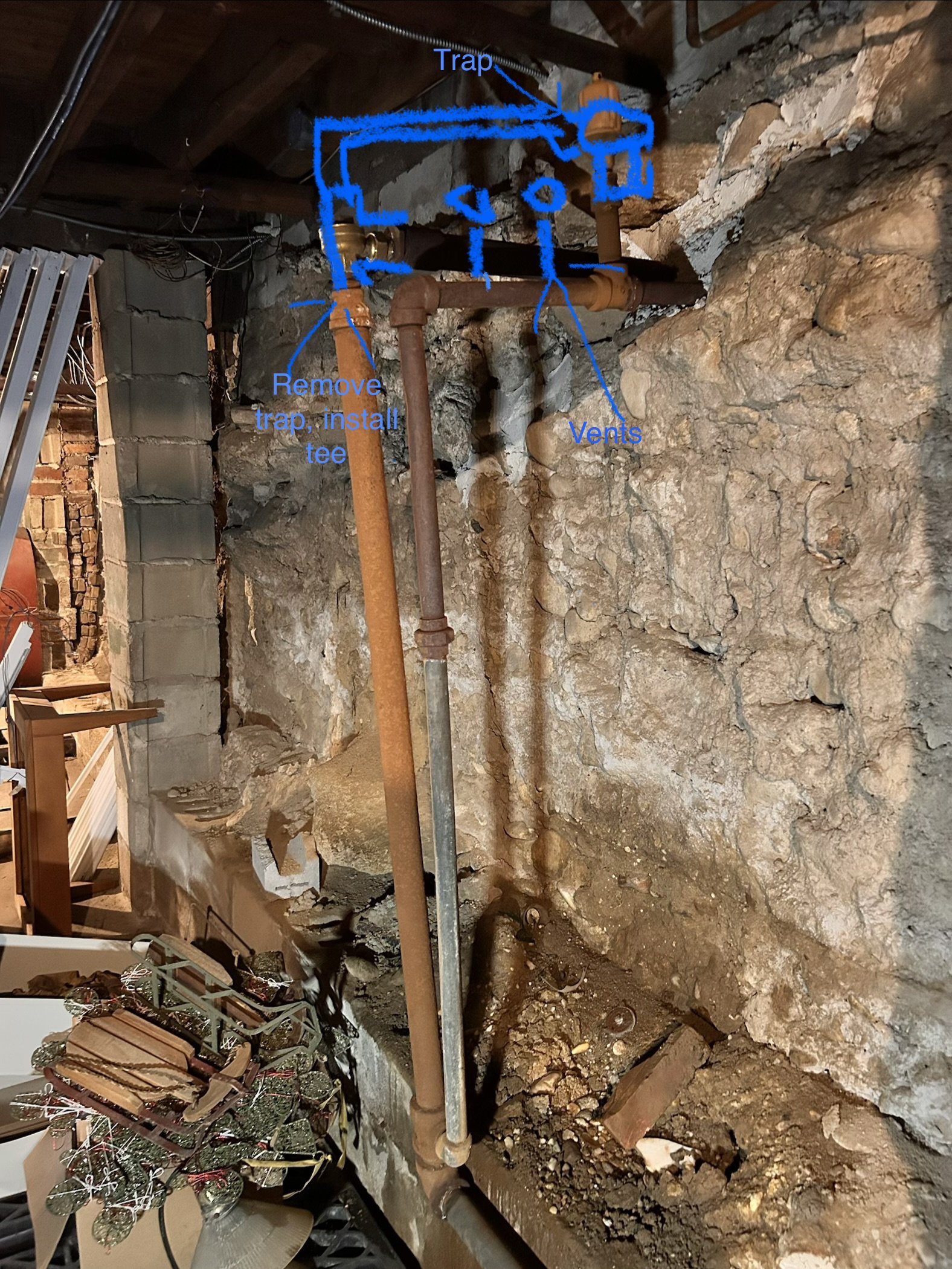
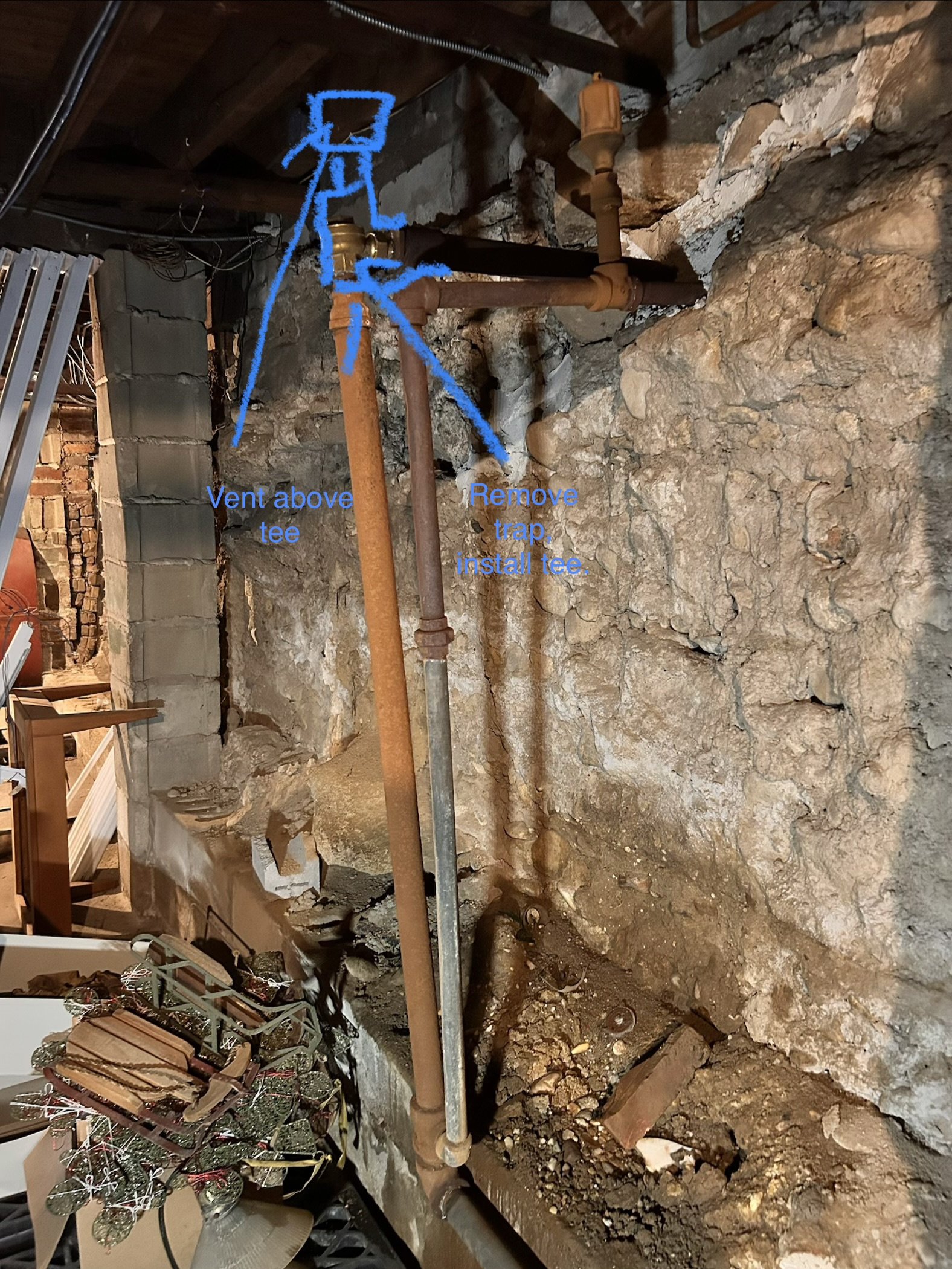
I'm thinking the Steam main and the dry return should both have Tees so they can both drip into the wet return below the boiler's water line. The path for the trap should be up and over the top of both the Steam main and the dry return. So the main can be vented through the trap.
National - U.S. Gas Boiler 45+ Years Old
Steam 300 SQ. FT. - EDR 347
One Pipe System0 -
the end of the main looks like it has been that way for a long time but the steam trap also doesn't look right which makes me wonder if it had some sort of vapor specialty there.
 1
1 -
0
-
It's the opposite. That radiator trap is at the end of the steam main (where the radiators tee off from). The Hoffman vent is at the end of the dry return (where all the radiator traps tie in). Normally I believe you'd see an F&T trap instead of the radiator traps and the return tied in after the F&T above the waterline.
It looks to me like someone just didnt want to pay for an F&T trap and for whatever reason tied the dry return in below instead of above the waterline. They've just been changing those vents about once a year or dealing with the water. If you raised that tee I was thinking you might get away with it. There's not much radiation on it as there's multiple mains tied in the same way.
0 -
Does the end of the steam main ever get hot? It shouldnt be breathing at all with that set up.
 1
1 -
the type of trap is fine but it should connect to the dry return so the air can get out
0 -
That would, indeed, be the normal way to arrange that. Very common. How it got piped the way it is and when… who knows.
On F&T traps. They have a rather specific function, and it rarely necessary to use one on a normal residential system. You could use an F&T to manage the condensate from a steam main, of course. The condensate outlet from it could tie into a return. However, in the setting shown, BOTH lines are dripped to a wet return, so there is no need to even consider condensate, and there is no way for steam or air to get from the steam main to the dry return — or the other way around. As @4GenPlumber pointed out, however, the end of the steam main as shown is not vented in any way, so although condensate will not be a problem, air will. F&T traps nominally have a vent — but it's a miserable excuse for one.
It almost looks as though someone sort of had the idea of a crossover trap — but didn't know how to implement it.
Br. Jamie, osb
Building superintendent/caretaker, 7200 sq. ft. historic house museum with dependencies in New England1 -
that probably was ok with a hand fired coal boiler where getting the air out is a small part of the cycle and venting through the emitters would work out ok although even then there is no need for a trap the way it is piped so maybe there originally was something else there or maybe just an ell.
0 -
True. If they're both dripped below the waterline steam can't back up into the return making that radiator trap at the end pointless as configured.
So basically I'm overthinking repiping and putting a trap there. That radiator vent could just be a tee with a main vent or maybe even that exiting trap on top venting to atmosphere (depending what it actually is). Both the main and return would vent and drip individually and should play nicely. If there was any specialty vapor equipment around the boiler it no longer exists so piping in a true crossover trap shouldn't really be necessary.
0 -
-
I'd put the crossover trap piping at the very end of each pipe, up and over, leave the vent alone, or add more venting, up to you.
The trap would be above the Tee at the end of the dry return pipe.
National - U.S. Gas Boiler 45+ Years Old
Steam 300 SQ. FT. - EDR 347
One Pipe System1 -
You already have the steam trap, might as well use it for a crossover instead of buying a new main vent, use the vent thats already there.
0 -
Use the trap as a crossover or replace it with a vent
0 -
Thanks for the advice.
I took the thermostats out of the traps on the mains, replaced the bad radiator traps, added vents near the end of the mains (it needed more venting anyway) and took the gate out of the check valve on the return.It runs great now unless the pressure builds up (oversized boiler). Next up is a vaporstat if they want to keep turning the thermostat down at night.
0 -
Good move, @2x_Tom . That trap looks like a Hoffman #17C, which has a rather low air throughput and would not work well as a crossover trap.
0



Categories
- All Categories
- 87.8K THE MAIN WALL
- 3.3K A-C, Heat Pumps & Refrigeration
- 59 Biomass
- 430 Carbon Monoxide Awareness
- 132 Chimneys & Flues
- 2.2K Domestic Hot Water
- 6K Gas Heating
- 124 Geothermal
- 170 Indoor-Air Quality
- 3.8K Oil Heating
- 79 Pipe Deterioration
- 1.1K Plumbing
- 6.7K Radiant Heating
- 396 Solar
- 16.1K Strictly Steam
- 3.5K Thermostats and Controls
- 56 Water Quality
- 51 Industry Classes
- 51 Job Opportunities
- 18 Recall Announcements