Horrific and frequent pipe banging in apartment complex

Hi. I am wondering what can be done to stop the frequent wall pipe banging in a 130-unit apartment building (one pipe system; most HVAC are wall units) continuous after 8 years ago adding 20 new units (some with central air) and a new boiler system? Some radiators are now completely detached from walls; some are turned off; some on. Thoughts are that old pipes cannot support the load of the new system, valves cannot open fast enough (as I understand it) and banging continues. Right now most noise is centered in the lower right wall in my unit, and probably loudest in the apartments beneath me.
Contractors recently added Runwise app but this seems to increase problems—more frequent pipe banging in some units; some units completely cold throughout.
No traps replaced (too big of a job); just some valves on radiators replaced. Any ideas? Steam heat is silent, right?
What can be done, please?
Comments
-
We get these complaints all the time from NYC apartments.
The management says too many apartments, can't shut down to make changes, too expensive to fix yada yada
So they ignore it and have unhappy tenants.
Assuming the building was originally designed correctly (and a project that size probably was) if thing were returned to the way it was originally it would probably be better than it is now. Would it be perfect? No.
The system has probably been kluged up for years and everyone who comes in has a new idea that probably won't work.
You need a steam expert. There are some around like @JohnNY you could PM him. Not sure if he would be able to devote the time needed to fix the system or if management would pay for that.
It probably would take having a set of the original blueprints of the heating system (if available )and slowly making the system right.
How old is the building I must be old if it is one pipe,
Sounds like it became worse when they did the addition which was probably done by someone with limited steam knowledge.
The problem is any steam expert would have to devote full time to this project. Then if management bounces them their out of a job

 2
2 -
Start off with the basics. Two primary. First, ensure that the pressure is reasonable. That big a building I would expect the cutout to be around 2 psig; with the standard one scale pressuretrol the cutin would be set at about 1 psig and the differential (which is set on the wheel inside the pressuretrol) at 1. If there is some other pressure control device, figure out what its settings are and set them at that.
Second, the banging is almost certainly trapped water. Now there are a lot of reasons water can get trapped, but by far the commonest is that pipes are not pitched correctly. Remember that if there is water in a steam pipe, it has to be able to find its way back to the boiler. Sags will do it. A length of pipe pitched so that the water can pool at one end with no way to drain. That kind of thing. The first place to look is in the basement, of course, but in situations where it seems to be one particular radiator, or only one or two, there may be a horizontal bit of pipe between floors, for instance, which holds water.
I might add here that trapped water can also cause radiators, or groups of radiators, to work poorly — if at all.
It sounds elementary and, truthfully, it is — but it's also common.
Now valves. Two kinds. One is the valve on the pipe leading to a radiator or, more rarely, to a group of radiators. These valves must be open all the way unless there are drips to a wet return on both sides of the valve. No exceptions. No partly closed vavles. Individual radiator valves only closed for mainenance, and then opened again. The other is the "valve" — properly called a vent — on the radiators which is supposed to let the air out. It is rare for those to cause banging. Like… about the last thing you would look at. What they do do is control how fast, or how completely, a radiator heats. Balancing a one pipe steam system in a large building like yours is a pretty horrible job, involving making a good guess at what vents to use and then adjusting them to get where you want to go.
Runwise seems to be a little light on details, but it appears that it is a somewhat more whizzy variation on the principle of running the boiler more when it is colder out. That's fine, although I can see that if it is not well implemented it could actually make your problems worse, as most often the banging is related to boiler starts. That said, they do say — rather carefully — that if the building heating system is not fundamentally in good shape, which yours isn't, their app. isn't going to help.
So start with my first three paragraphs up there…
Br. Jamie, osb
Building superintendent/caretaker, 7200 sq. ft. historic house museum with dependencies in New England 1
1 -
As a general rule, one pipe steam systems do not have steam traps except maybe on baseboard radiators; they do have air vents. So perhaps this system is two pipe? 130 units is large enough that two pipe is much more likely.
—
Bburd0 -
Thank you all for your comments.
I confirmed our boiler as a one-pipe system.
I also want to add what may be helpful. In 2017, the contractor who was working to place the new boiler system wrote this: "
"The system was designed and built in the mid to late 30s, as a vacuum return system. Somewhere in time someone decided it should no longer be one and removed the vacuum system and installed a condensate tank. For those of you who see and understand where this is going no more explanation should be needed. We are working to put it back as it was designed."
Since 2017 our pipes have banged, horribly.
Updates and Response: On Thursday, January 29, Runwise technicians uninstalled their controls in place since October and now those of the old boiler are running them again. Management told the techs that there were many complaints. Besides horrific wall pipe hammering and cold apartments off and on since October, on January 22 residents of the basement had to evacuate due carbon monoxide associated with the boiler and maybe caused by a claimed first-disassembling of Runwise earlier that day. Firemen donned hazmat gear before entering one unit. We had no noise for about 4 days after the 22nd; then more noise before the 29th when Runwise was removed permanently, then no noise (amazingly enough) for another 3-4 days, and now, tons of banging through the night beginning around 6:00pm tonight and lasting for over an hour, then sporadically going forward. It is now 2:25am and I have been awakened again.
The building was built in 1930. When the new boiler was installed about 8 years ago, there were tons of problems. In an attempt to solve some of this, the contractor set some sides of some radiators on blocks of wood. If this was to remedy a problem it would prove to be a disaster, surely. Why? Because as workmen move radiators and residents fiddle around, floors get changed out, waxed, etc., these necessary wooden blocks providing pitch (?) are lost. I have heard tenants scoff at these blocks. I have seen some appear broken and decayed. And you can be sure they have been moved when maintenance totally detaches a radiator and months later moves it back to hook it up without the lost blocks.
Valves: Oh, we have these valves. They are located on each of our radiators and everyone in the building thinks, because they slide open and closed in a graduated fashion, they are meant to be used as such to regulate the amount of heat we receive.
Not one of us has ever been told as a group that this is not how these valves are to be managed.
Except the the young contractors on several occasions have told me to keep the valve either FULLY on or FULLY off. I have said multiple times, "No one has ever told us to do this. No one in this building thinks that an adjustable valve on these radiators should not be used as such because they are obviously designed to be able to warm us to a comfortable temperature because they are adjustable!
The boiler crew just looks weary and says, "Well, they are either to be full on or off." To which I say, "Tenants need to know this!!"I informed management but still, no word ever goes out.
Needless to say, then, this design seemed doomed from the beginning. You can't get an uninformed or transient population to pamper this system like it now seems to need. How do you get the word out and to everyone as tenants come and go; how do you control for compliance?A couple of years ago, my valve replaced by the contractors blew off in the middle of the night burning me with steam and destroyed my linens with bluish stain. The valves have been replaced, but not wanting that to happen again, I never turn this radiator on. I have no radiators turned on in my apartment. I heat with two space heaters and the oven—and I still get this horrific banging.
When I asked the Runwise technician if Runwise caused the most recent banging, he said he thought no, but with Runwise removed, we would know. Several times over the years I have been told that the traps in the wall pipes are not designed to carry the force of the new system and are not opening and closing properly. The Runwise tech said when the hot steam hits the cold water in the pipes, the shock rocks the old pipes. When I asked if this could be remedied, he offered new risers to hold the pipes in place, but said this would be major work.
So, may I ask, with all this additional info, do you suppose there is any hope? Somehow the days we had quiet led me to believe something was being done right. I think our maintenance men direct the system. Are there things they may not be doing? Runwise is gone, but should they drain the radiators, check the pressure as Jamie suggests above, or is this hopeless due no interest in placing risers? But we did have days of lovely, normal quiet lately.
Very grateful for your response.
Melanie
0 -
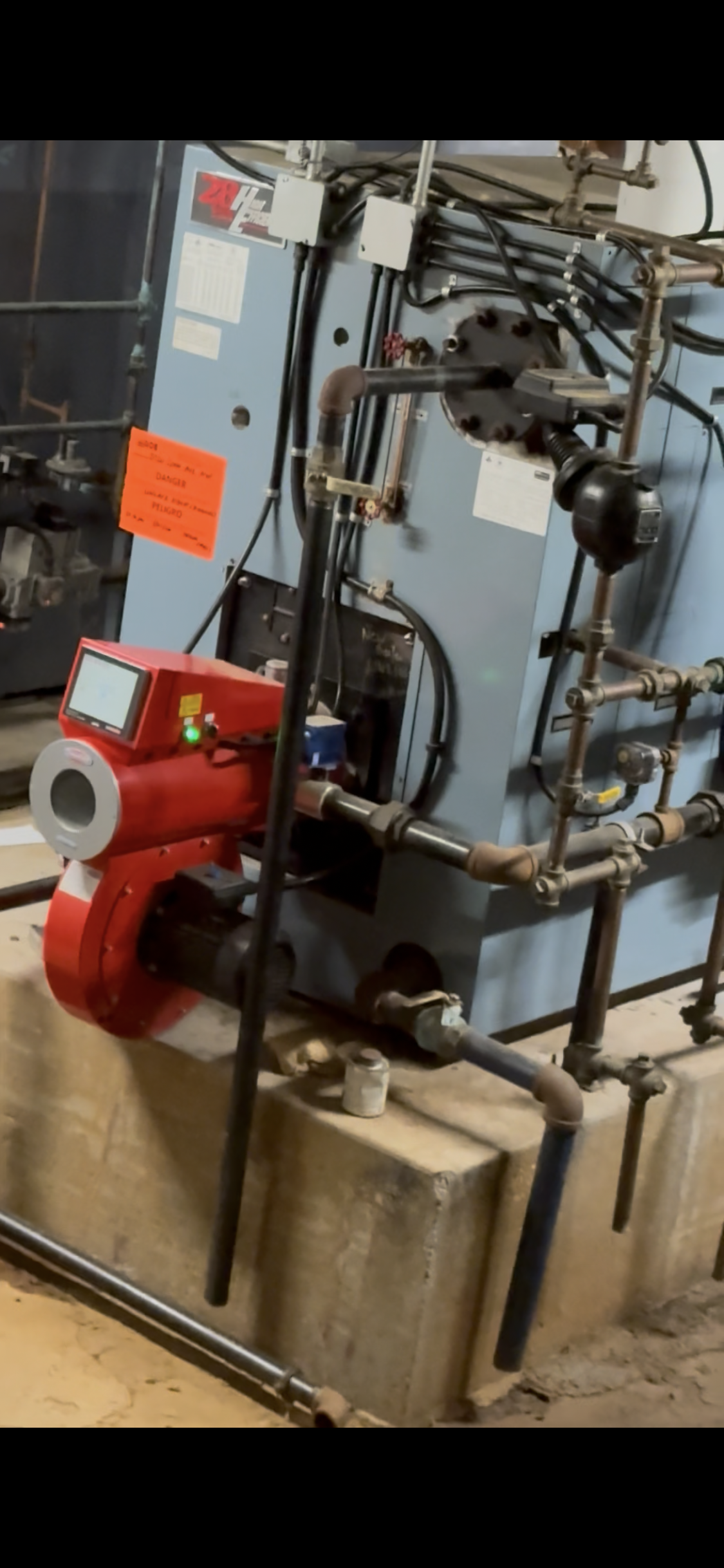
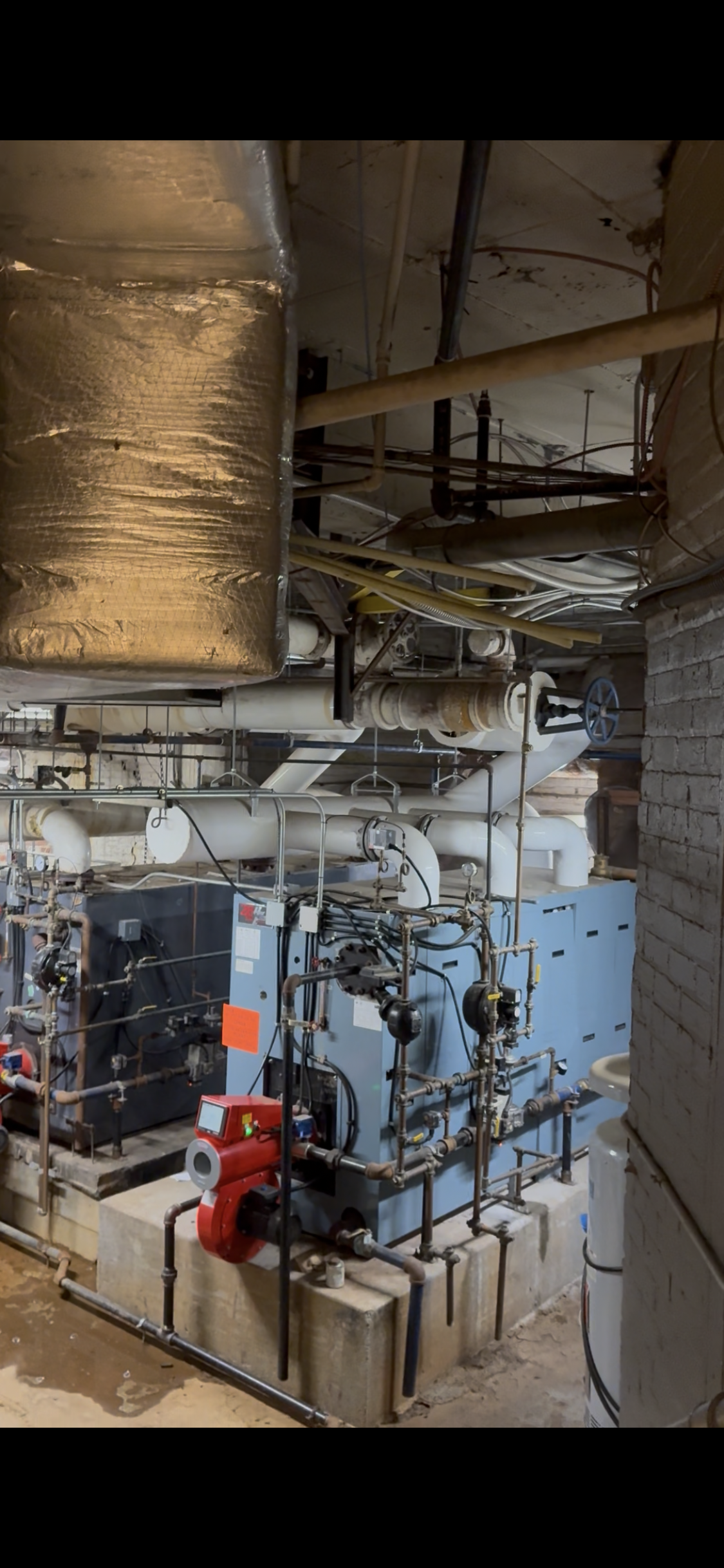
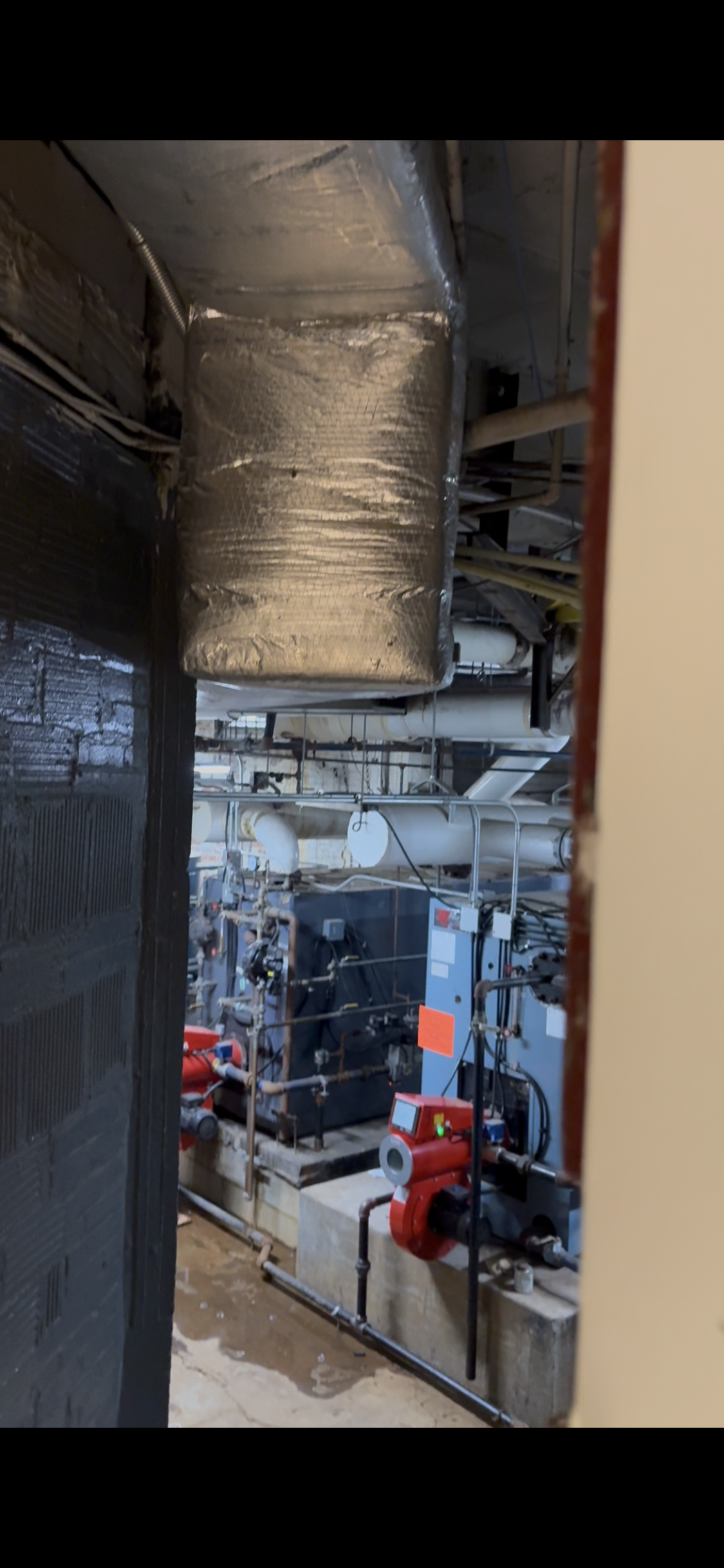
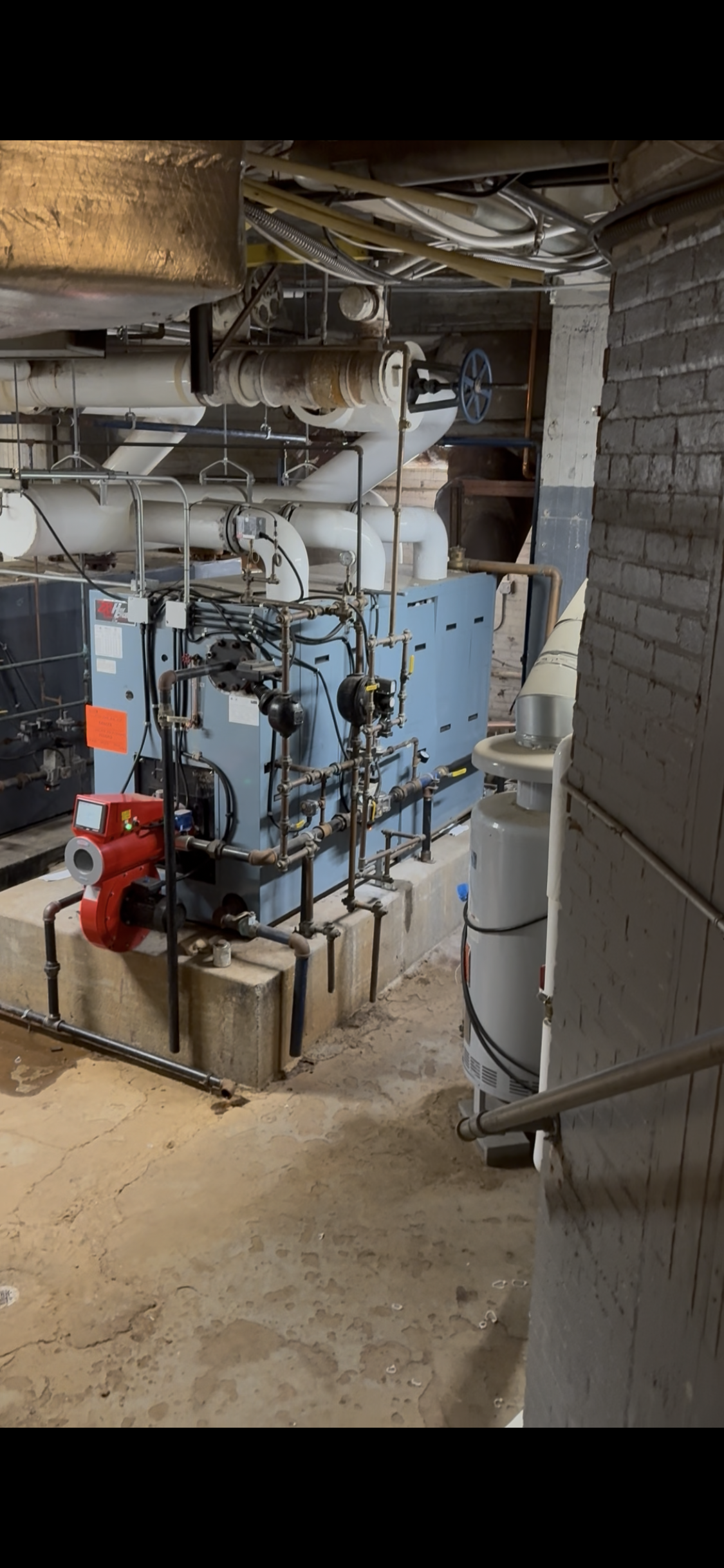
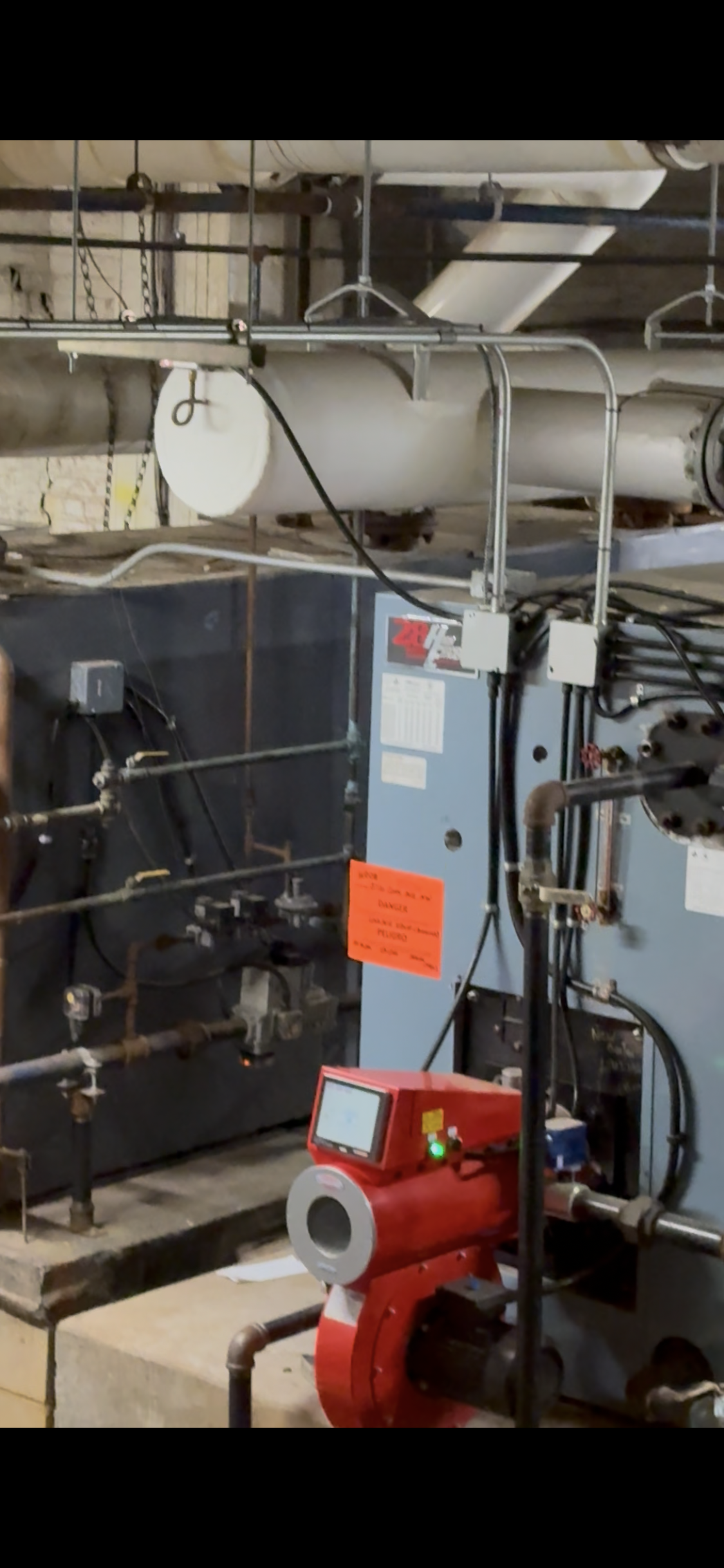
Do you have pics of your boiler and piping around the boiler? it sounds like the replacement boiler might not be installed correctly. You need to ensure that the boiler is absolutely piped in correctly.
0 -
All valves coming into the rads should be full open, always. Then the handles should be removed so tenants cant touch them. All vents should be non-adjustable, so again, tenants cant touch them. Pet-cocks could be added before the vents on rads that seem to be overheating (because system is unbalanced) to allow tenants to safely disable a rad.
0 -
The more radiators that get shut off the more likely the boiler effectively becomes way oversized and the worse the system will perform. Huge job but need to go through the building radiator by radiator and first assure the inlet valves are fully open. You seem to still confuse vent and valve. The vent is the attached to the radiator on far side from the inlet valve and no it does not need to be fully open or closed if an adjustable valve. It is indeed used to regulate the rate that steam enters the radiator. Need to make sure the vents are working on each radiator (lets air out before steam reaches it and closes once steam does reach it thus not leaking steam). If the radiator or something that sounds like just below it bangs then it probably does need blocks underneath it since there is probably a horizontal pipe underneath it that has lost its pitch back toward the boiler.
A consultant should still come out there and verify the near boiler piping is adequate, main venting on the system is in place and adequate and that there is no glaring issue with the incoporation of the addition. Pressuretrol settings should be as @Jamie Hall pointed out. The rest of it just takes time and patience.
 1
1 -
I'll bet 50 cents that the boilers operating pressure is excessive. Pictures would be super helpful!


 3
3 -
Thank you.
I took a video but need to send it to an email, please. I just tried to post it here but this forum does not let me upload the video of the boiler room that I took on my iPhone 16 a few days ago. I took it from a distance but it may shed some light. My email is: mdavisconcepts@aol.comThank you.
0 -
you didn't mention that there were 2 boilers. there are a million things that have to be done right about that or all of the condensate will end up in one of the boilers and cause all sorts of problems.
can you show us a picture of a radiator? I don't know what they mean by it was a vacuum return system. Vacuum systems are 2 pipe. There were some vacuum vent systems usually called a Paul system that used vacuum vents. Is there signs of a capped off small pipe near the vents? I thought those systems were much earlier than 1930's.
why is there water on the floor?
I don't see how a cycle control could cause a carbon monoxide issue. That being said you probably want to get a low level carbon monoxide monitor like a Defender or the low level monitor version of the Nighthawk/Kidde. The low level monitors are unlisted and will be called monitors rather than alarms. The listed alarms will only alarm for large amounts of CO because the listing standard requires that they not alarm or indicate for low levels of CO.
0 -
what does that big orange sticker on the boiler say? i bet something is wrong with how the boilers are twinned and the water is not getting distributed evenly between them causing one of the boilers to call for more water and overfilling the system over a couple hours to days
0 -
Yes we have carbon monoxide detector contained within our smoke detectors, which is how the tenant and her children knew they had a CO problem recently. Good-source rumor had it that Runwise controlling the controls caused the CO problem. I think the firemen in hazmat gear came to that conclusion when they checked the boiler room near the apartment.
I can send you a picture of a radiator later this evening. Don't know why water is on the floor. Another rather good-source rumor has it that there is a tank down there that maintenance does not like to drain, which may cause us problems. Here is an assessment as to whether 1-2 pipe heating from a mechanical engineer who helped us another time when management turned the heat off a month early and we froze.
From our mechanical engineer consultant: "2. SedgwickGardens does not have a 2-pipe system used to accommodate BOTH central heating and central air conditioning, as many apartment complexes do. Because these other buildings use the same pipes for both heating and cooling, there is a switchover date when the system is switched from heating to cooling, and vice versa. Once the switchover occurs, the system remains in that mode (cooling or heating) for approximately 6 months. Because of the nature of 2-pipe heating/cooling systems, if there are cool days after the switchover to cooling it is impractical to switch back to central heat. Sedgwick has a central heating system, but air conditioning is provided by individual window units, and therefore Sedgwick’s heating system is not constrained by the switchover limitation. Simply by running Sedgwick’s boiler system longer into the season, central heating can be provided until there is no longer a need for heat, as needed to meet the requirements of Paragraph 501-4."
Will send photos of radiator later this evening.
0 -
I am remembering somewhat about CO. As I recall of bits and pieces of a conversation, the CO occurred maybe after Runwise was shut off the first time, then on again and something about the second boiler. Since it had not been in use for a while (?) there was a CO build-up? We were all guessing, believe me.
0 -
that is a different type of 2 pipe system. that is talking about a 2 pipe hot water heating system that is also used as a cooling system. in winter heated water is run through the pipes and used for heating, in summer chilled water is run through the pipes and is used for cooling. in this context this is a 2 pipe system in contrast to a 3 or 4 pipe system that has 2 separate water pipes dedicated to supplying heated water and chilled water and 1 or 2 separate pipes for the return of that water.
you have a steam system rather than a hot water system. I would be surprised if it isn't a 2 pipe steam system where there is a pipe to supply steam to the radiator and a pipe to return condensate from the radiator. if it is a 2 pipe system then the radiator valve can be used to modulate the heat.
the tank is probably a condensate tank. if the controls are correct it should not become overfilled and require draining of water from the condensate tank. I strongly suspect that most of your problems are in the boiler room.
0 -
I misunderstood the 2-pipe system. Thank you. Will send pics of radiator later this evening, once I am home.
0 -
if you want to post video here make a free youtube account, upload your video to your account (you can make it "unlisted" in settings if you don't want it to show up when someone searches) then share the direct youtube link here.
0 -
I have a 80 yr old apartment building 120 ft heat run. I did radiator and pipe pitch. Radiators need to have pitch to valve and pipes at least level, no sag or reverse pitch . I took a 4ft bubble level, attached it to a 8ft 2x2 with plastic ties. Then took 12”paddle bits with a sharp point and attached them to the wood /bubble Level set up. With two people it’s easy , stick the pointy bits through the pipe insulation, find lowest part of pipe, look at level . Be sure no sags or reverse pitch. I fixed my knocking pipes in a day. Low areas I used cheap HD building jacks and made a wood U cradle for the pipes so the jack would stay in place . Old buildings foundations settle , sections settle! I planted 10 trees 10 years ago that made the building settle even after 85 years! I cut down the trees and now am repairing door, pipe, cracking wall damage. Materials are like 50$ and a days labor for 2 people to know what’s going on.
0 -
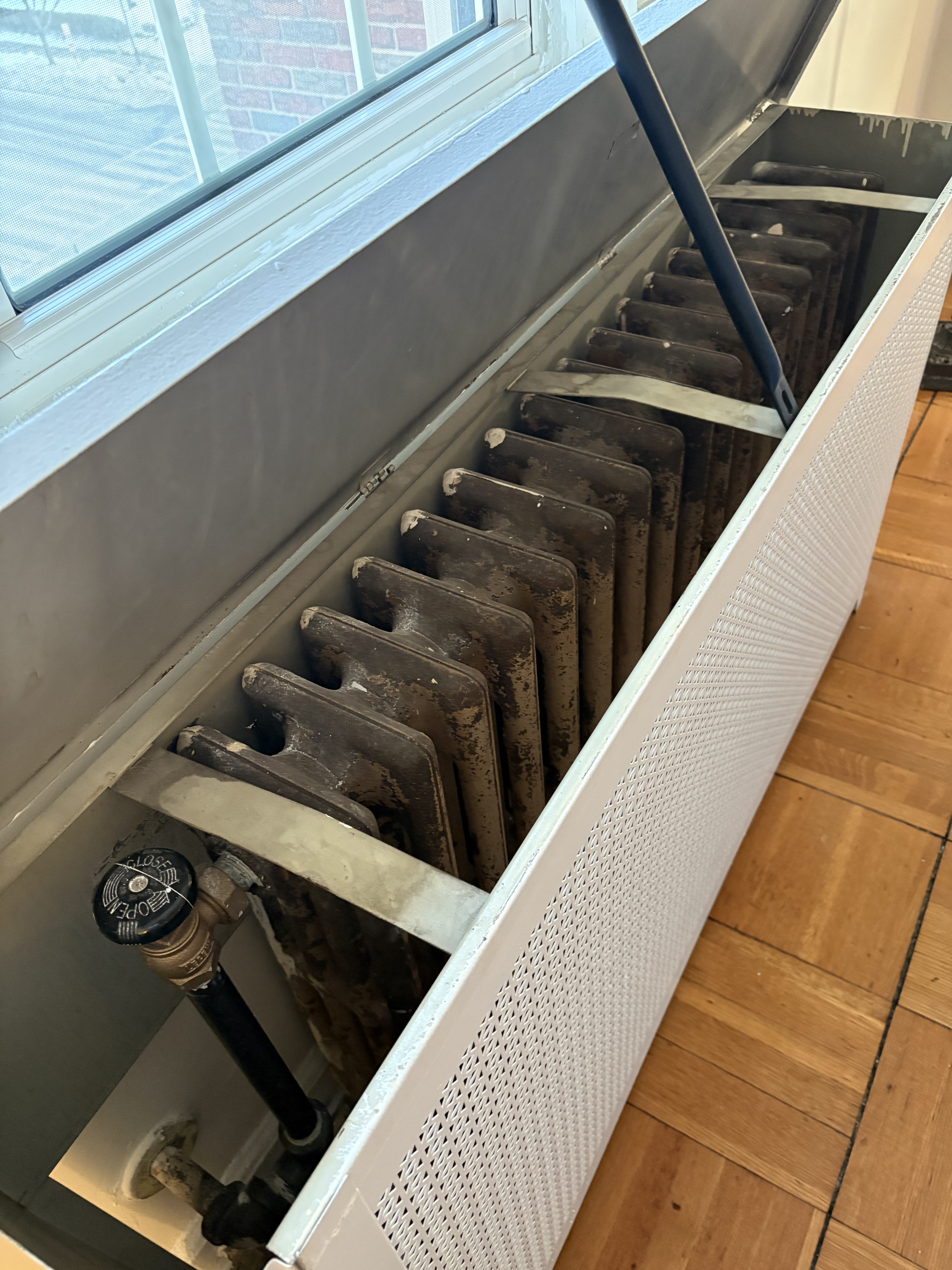
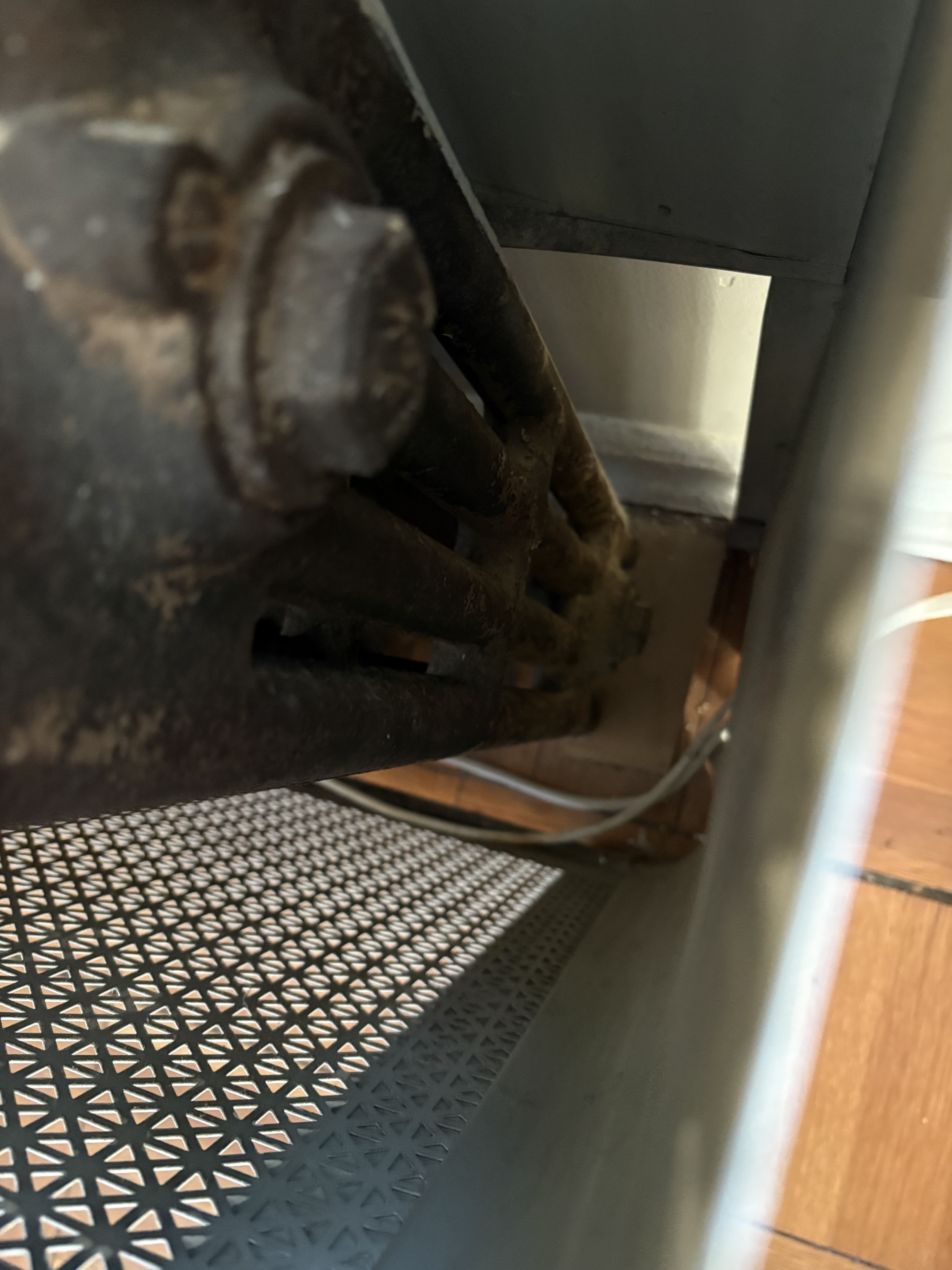
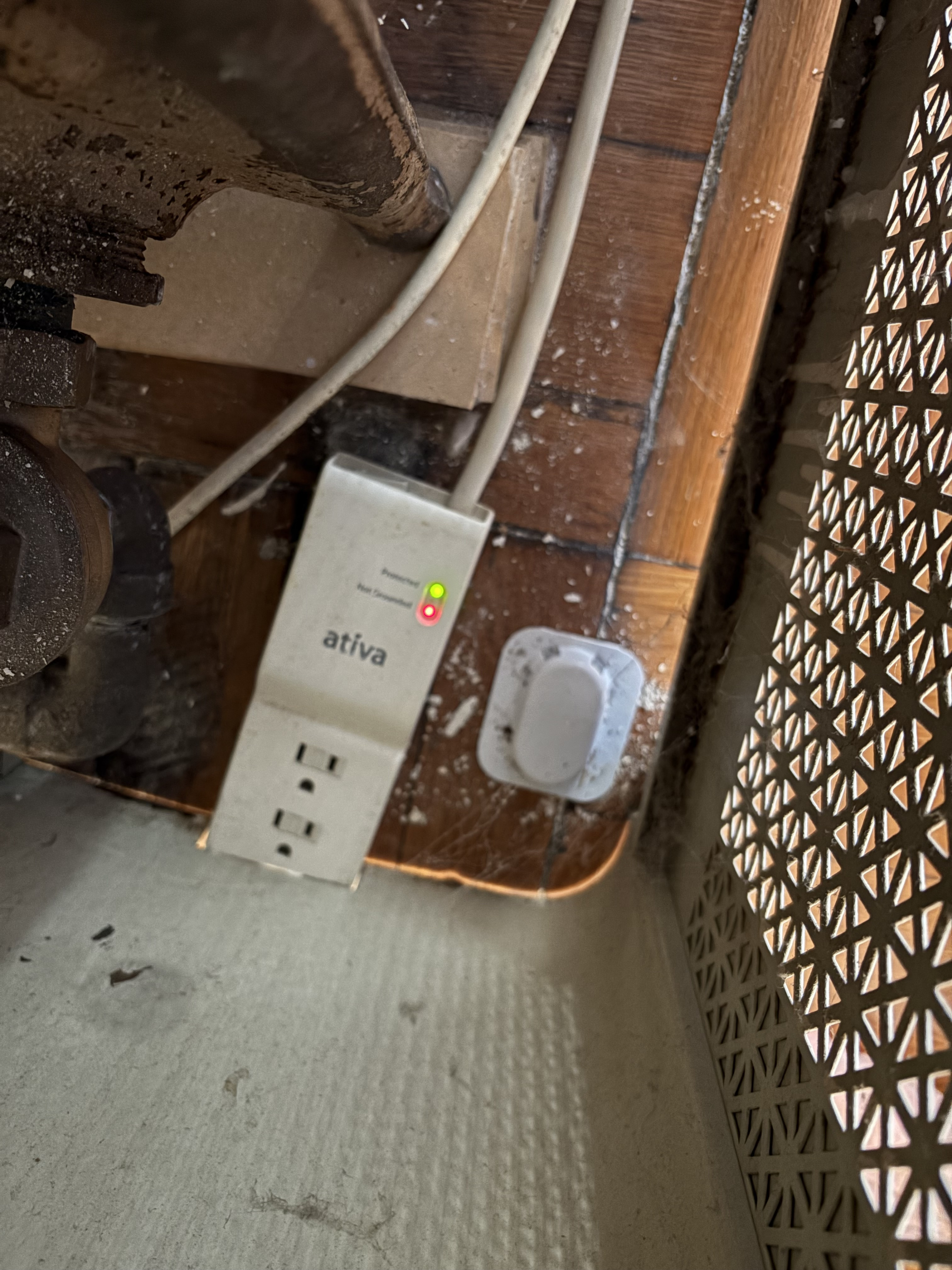
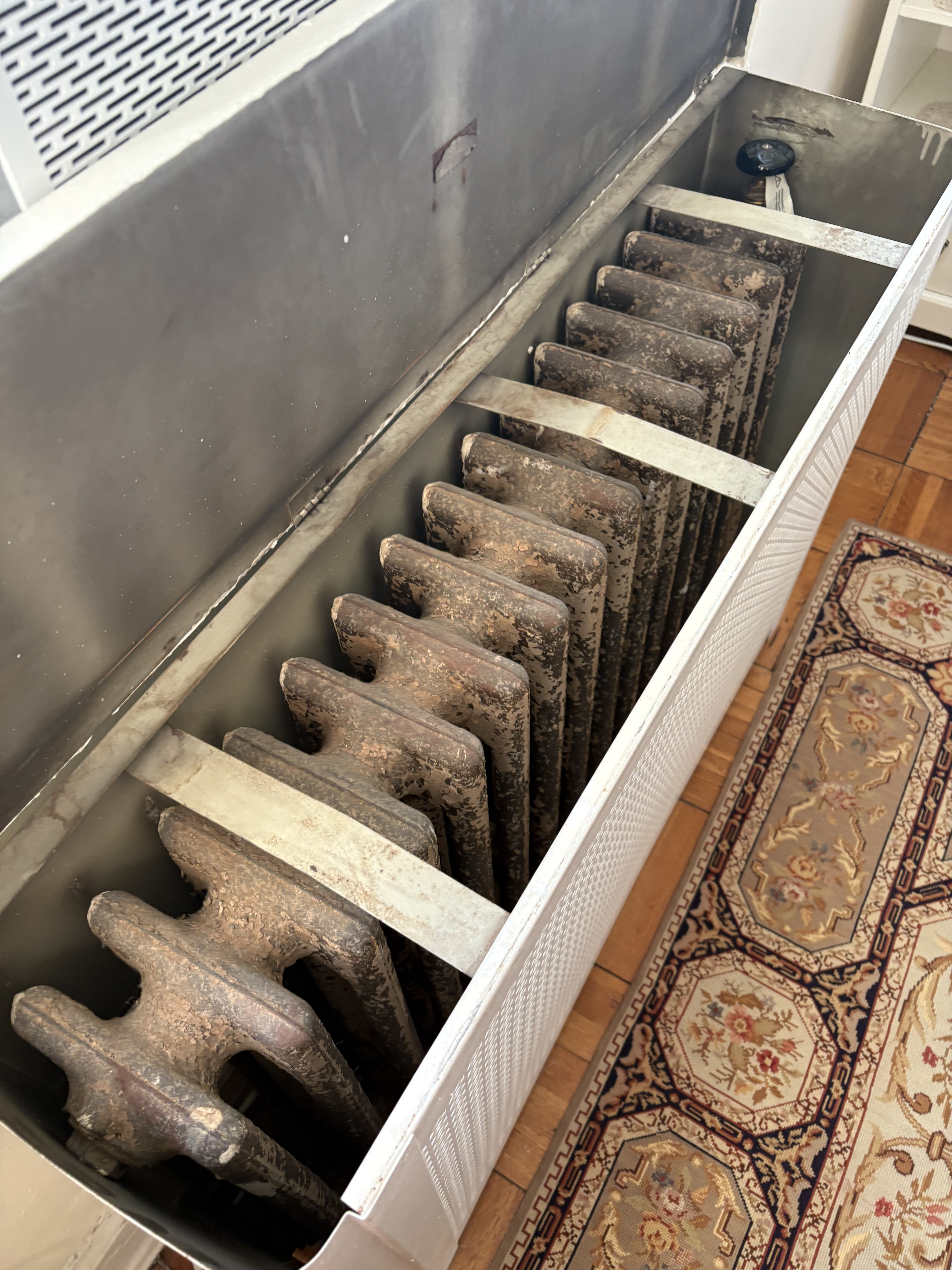
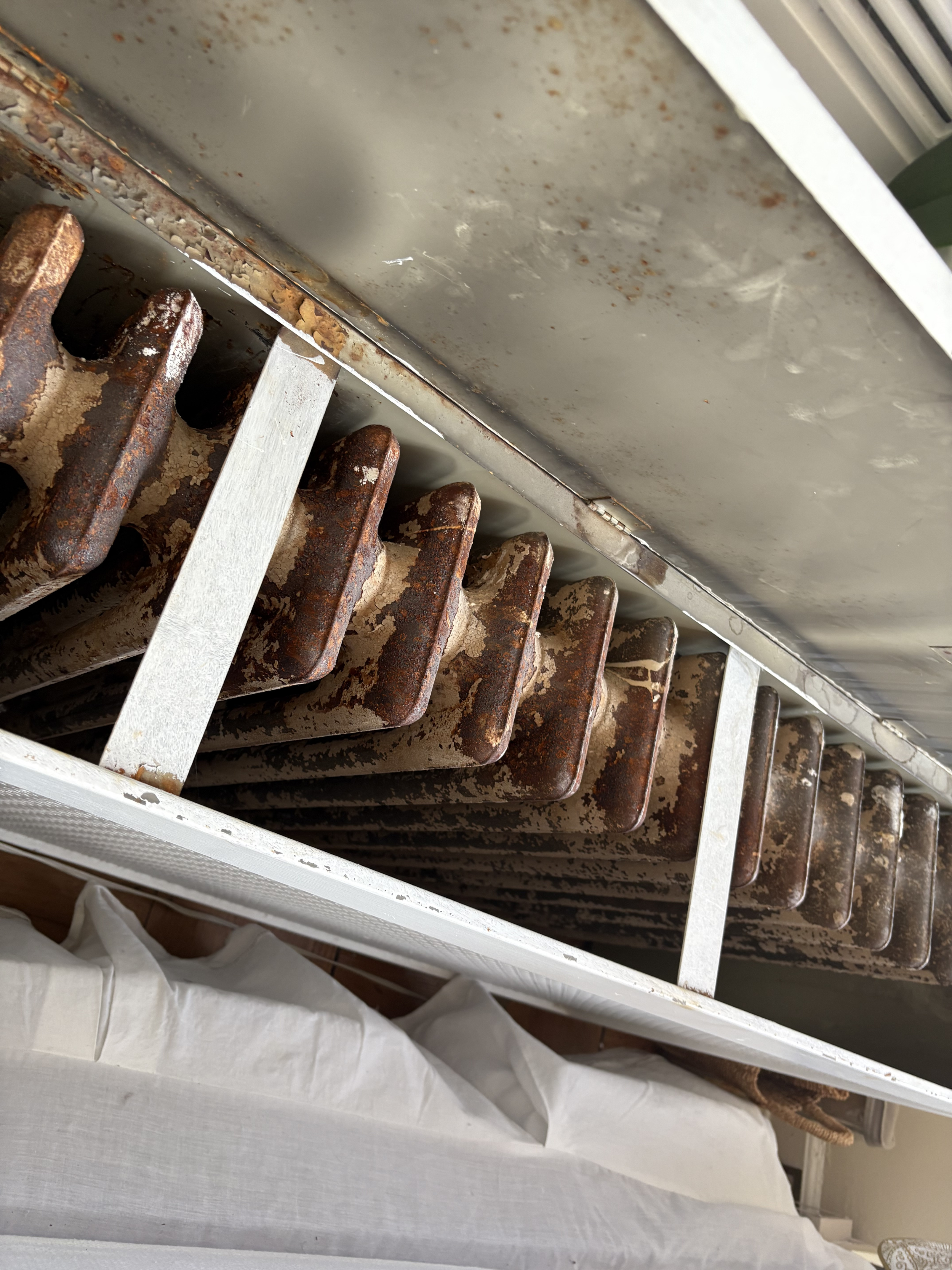
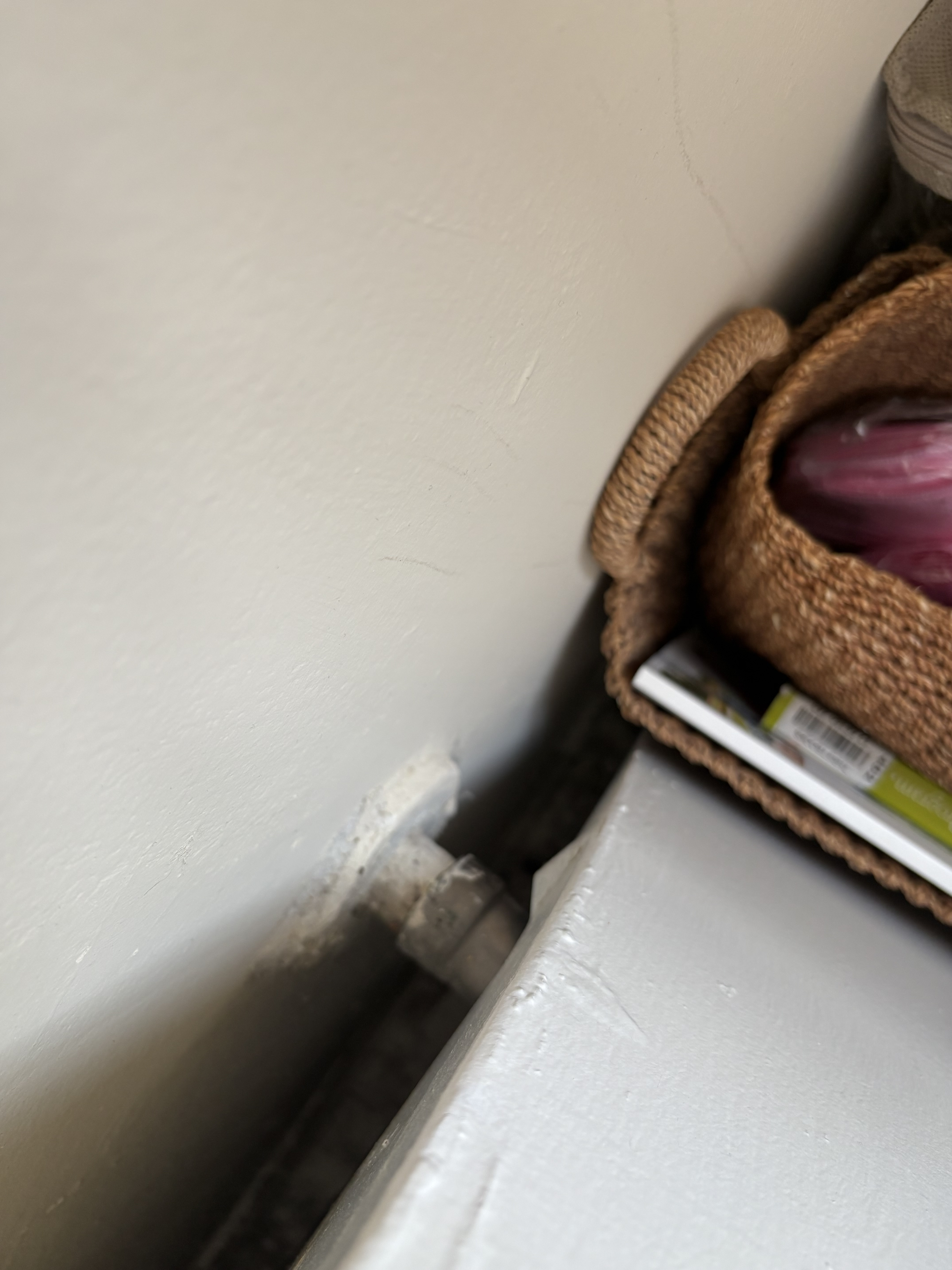
Here are some of radiator photos I took:
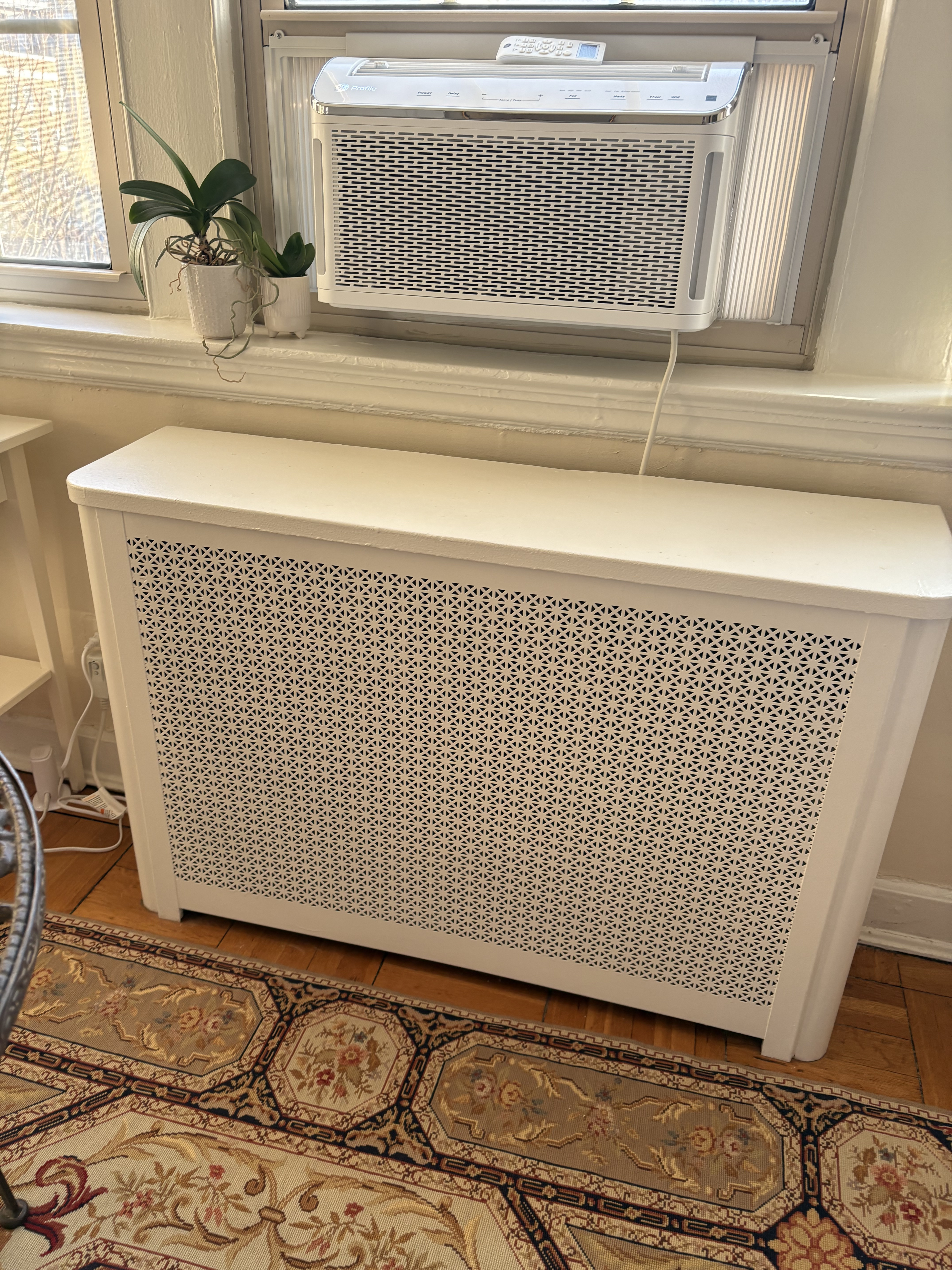
- Living Room: I was told this was completely detached from the wall and shut off, but according to photos, maybe not. No heat; no ability to turn valve(?) on or off or to adjust. Sets on two wooden blocks, each side.
Bedroom one to come, next comment.
0 -
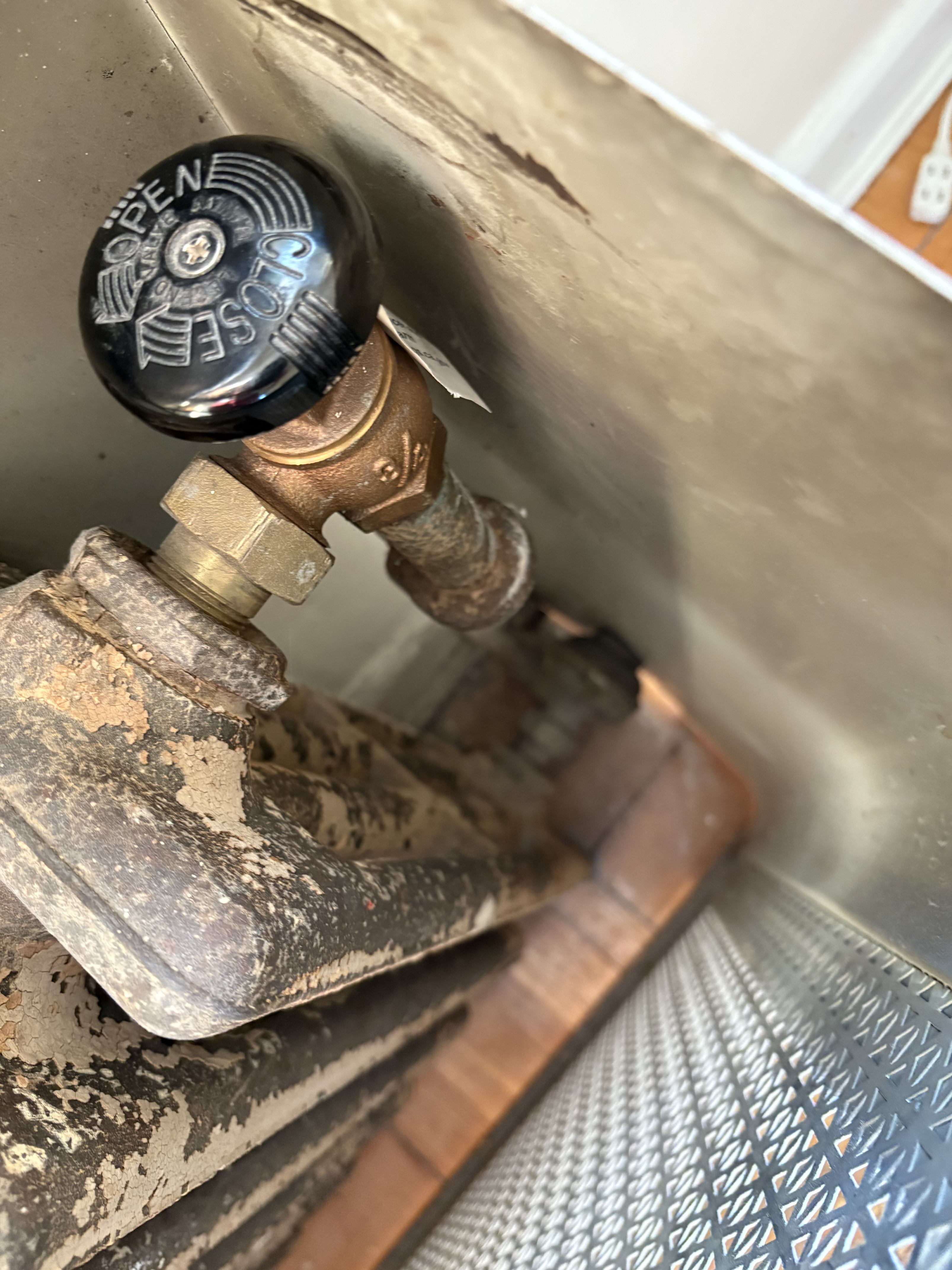
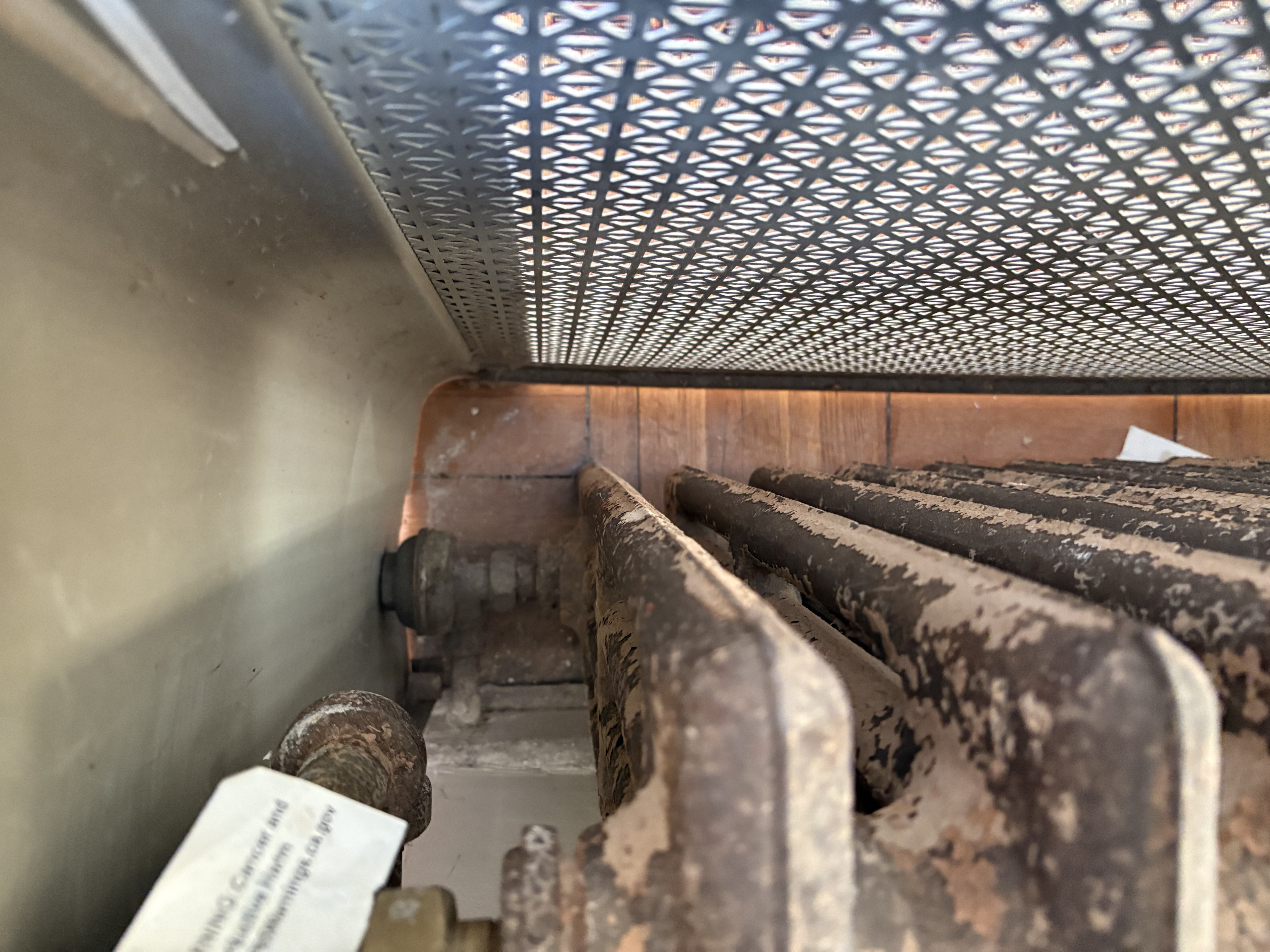
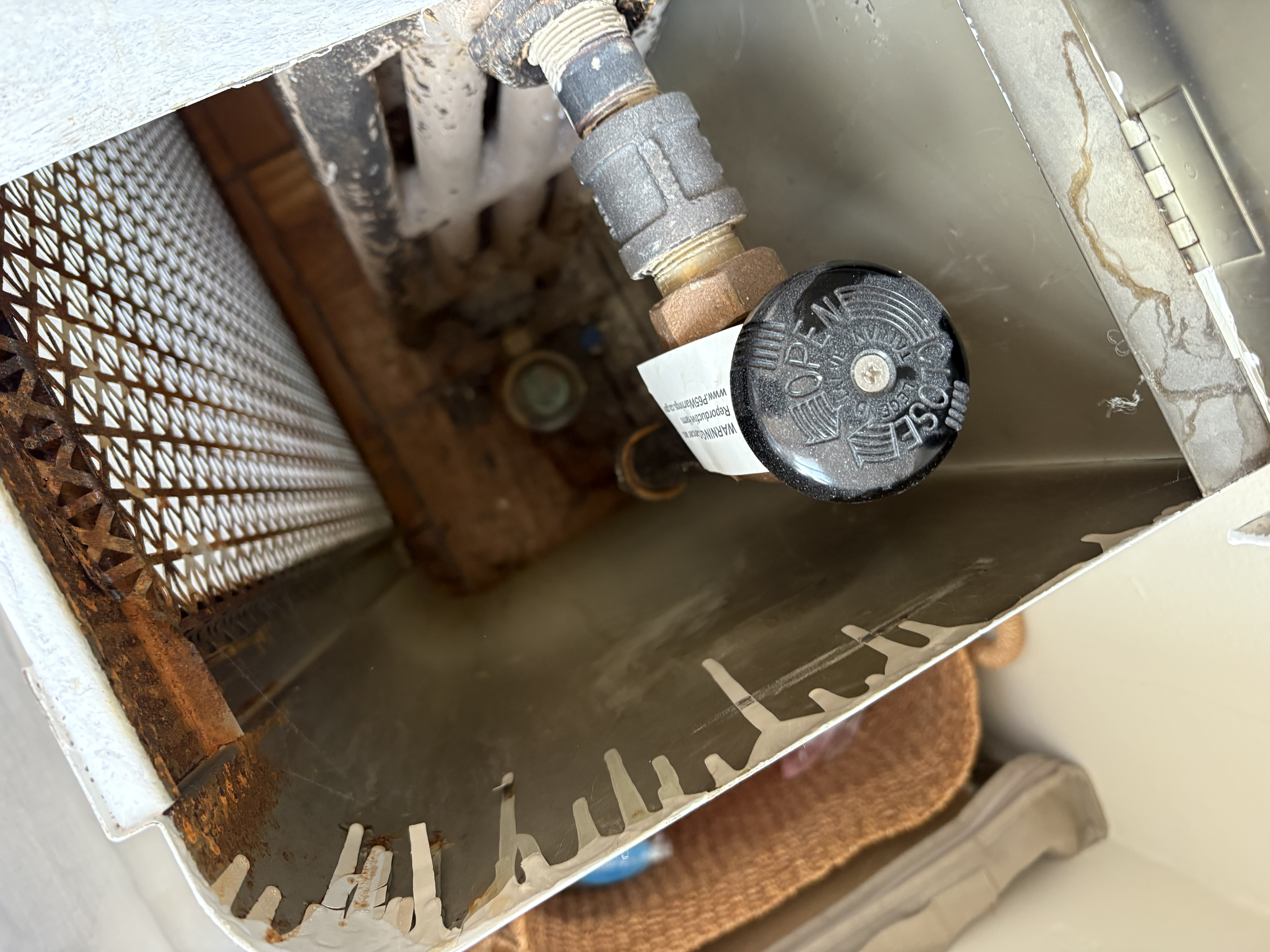
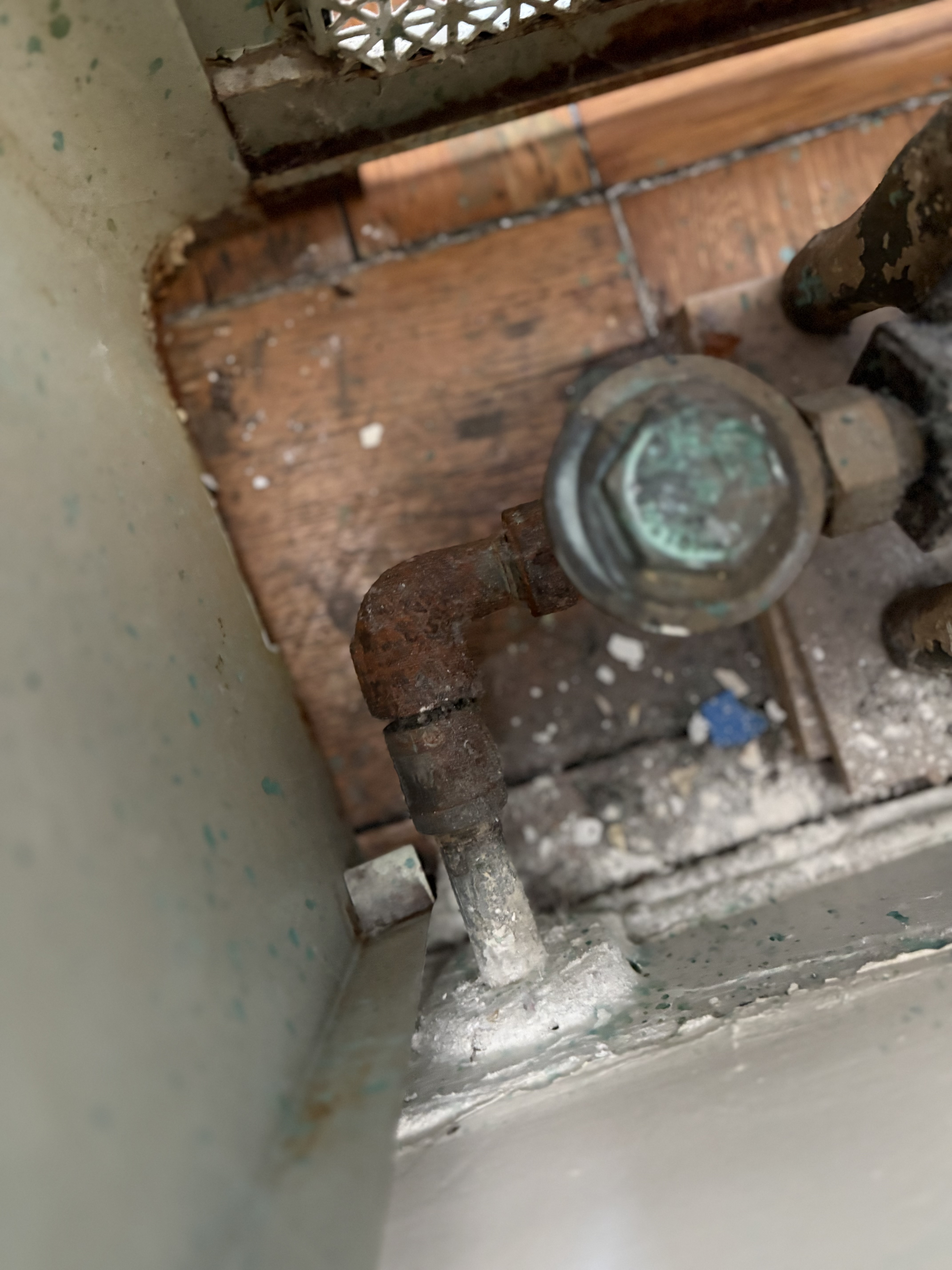
Please see bedroom photos in prior posting. These are of the bedroom:
No blocks.
This has an adjustable valve. If I turn it on, I turn it about a half inch at most—any more, the room becomes a sauna. Wall banging now comes often beneath the radiator on either side. Neighbor on same floor complains and I think it must be horrible for neighbor beneath since that seems to be where it must really be loud. That resident is hardly home at night so hard to confirm.
Photos of den to come in next posting.
0 -
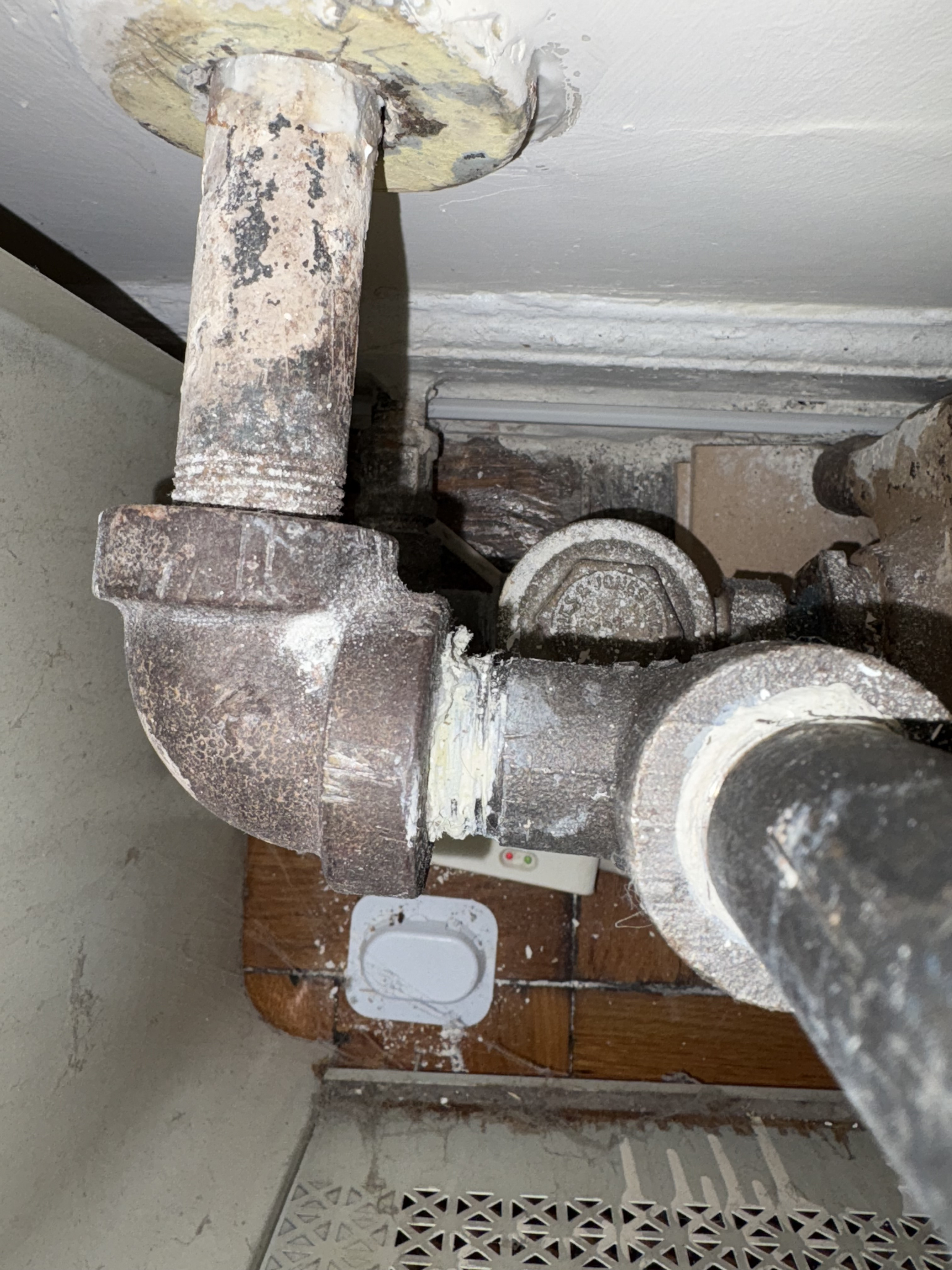
that is 2 pipe steam. you can close the valve partially to regulate the heat. if there are steam traps that are bad that can cause many problems, most frequently other radiators that don't heat other than the one with the bad trap but the steam in the returns can cause all kinds of other problems too including water hammer.
0 -
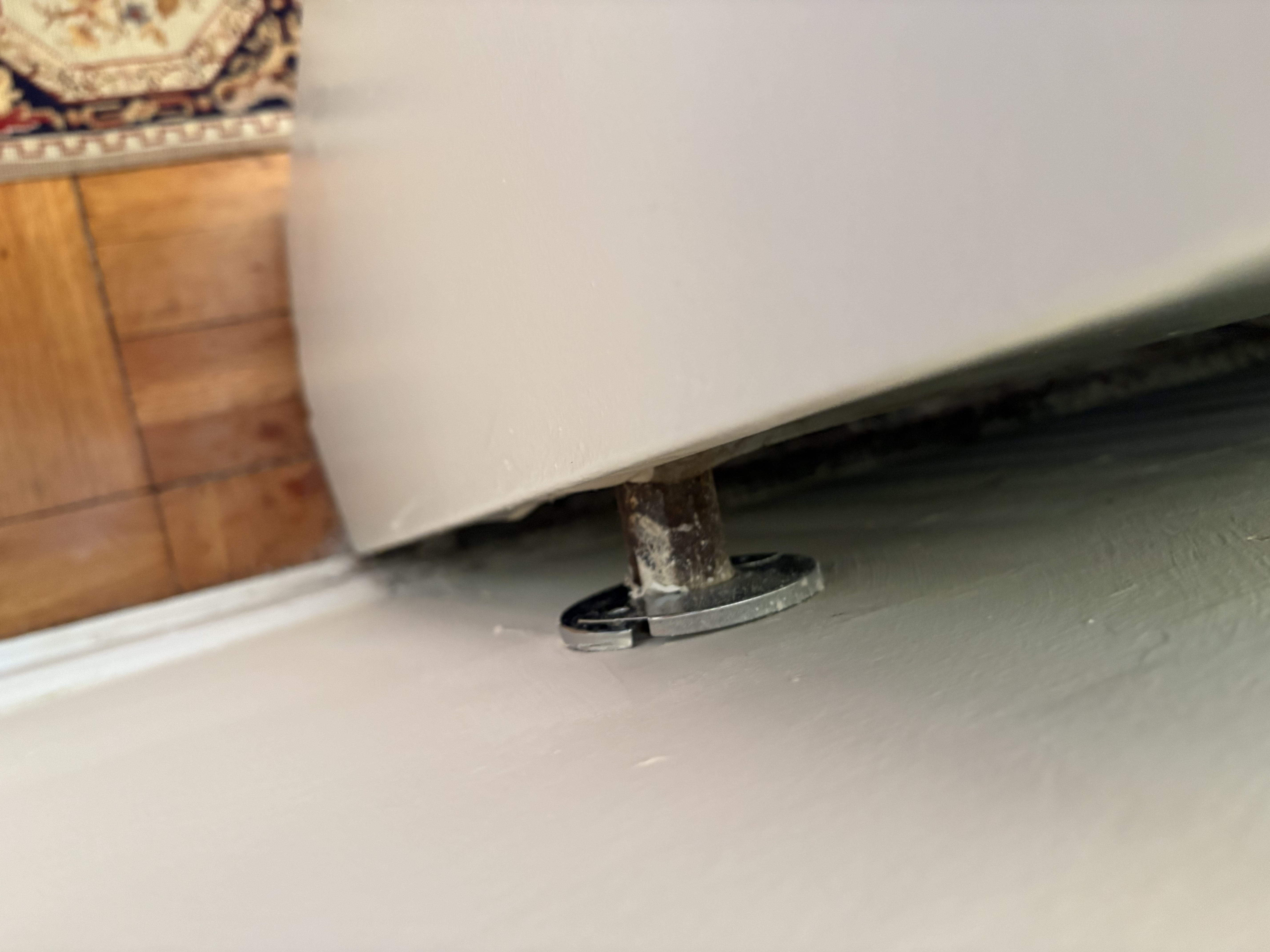
the way the supply comes out of the wall and elbows up gives all sorts of potential places for the pitch to be wrong and hold water and cause water hammer and keep things from heating.
0 -
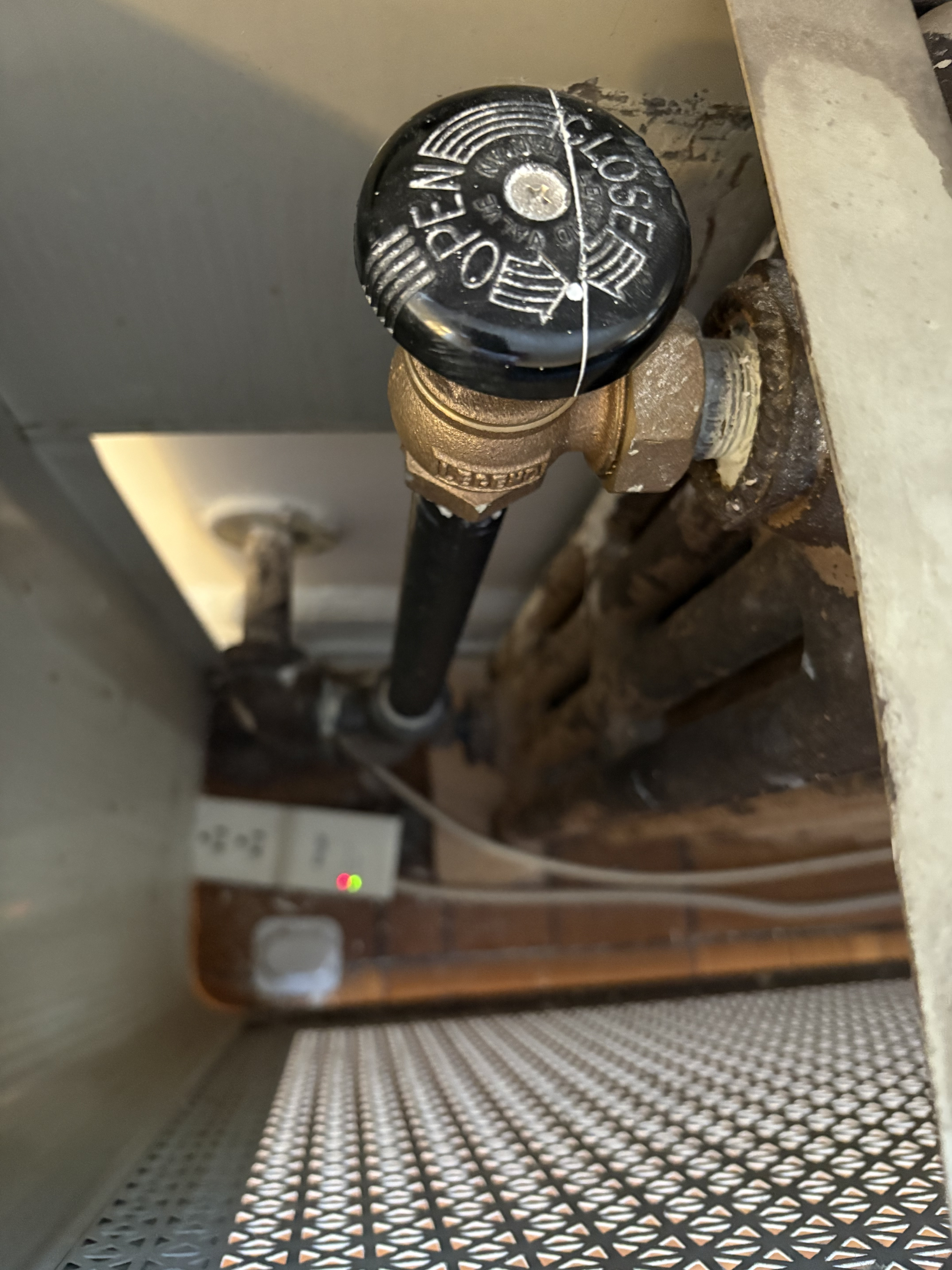
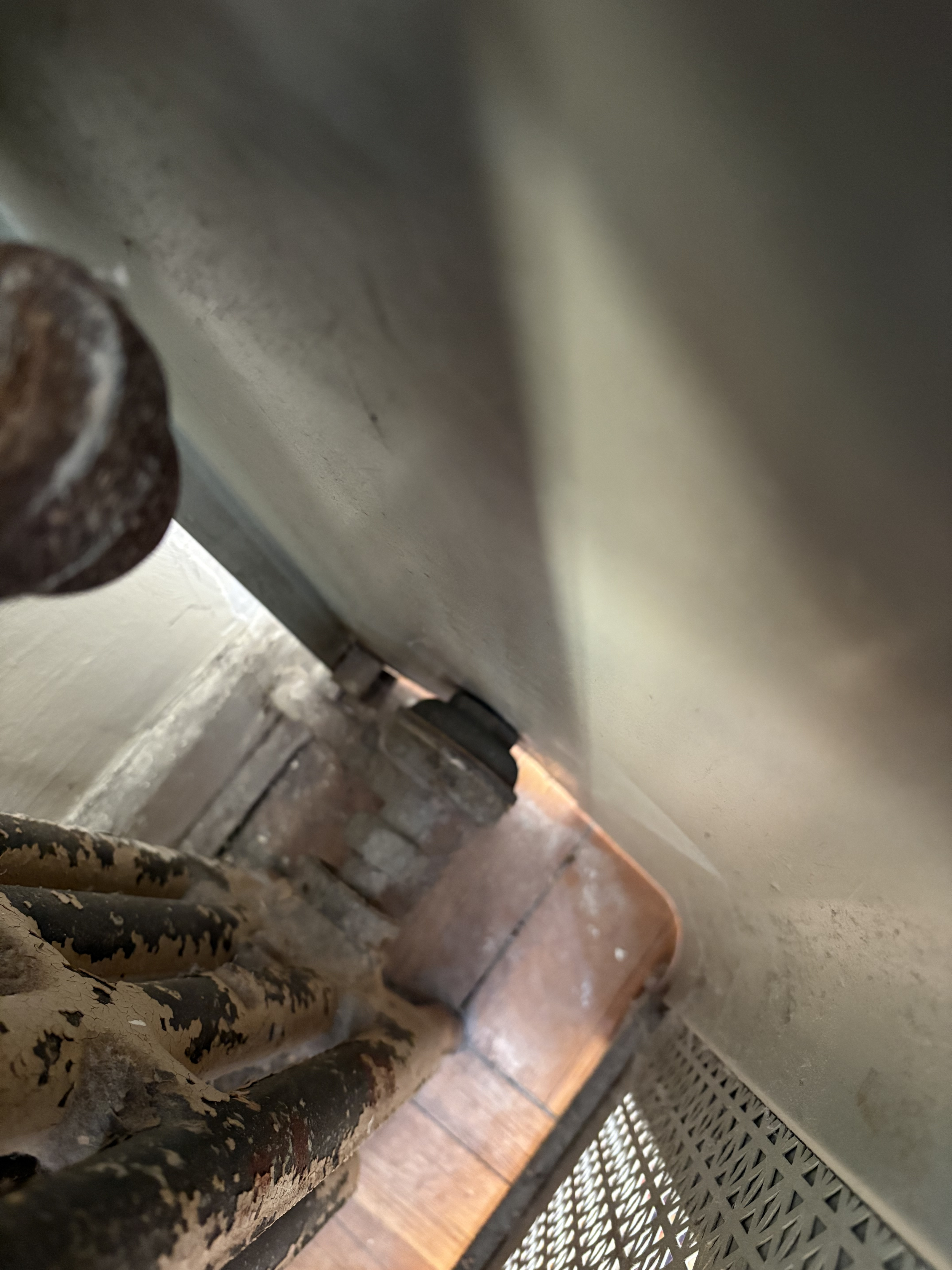
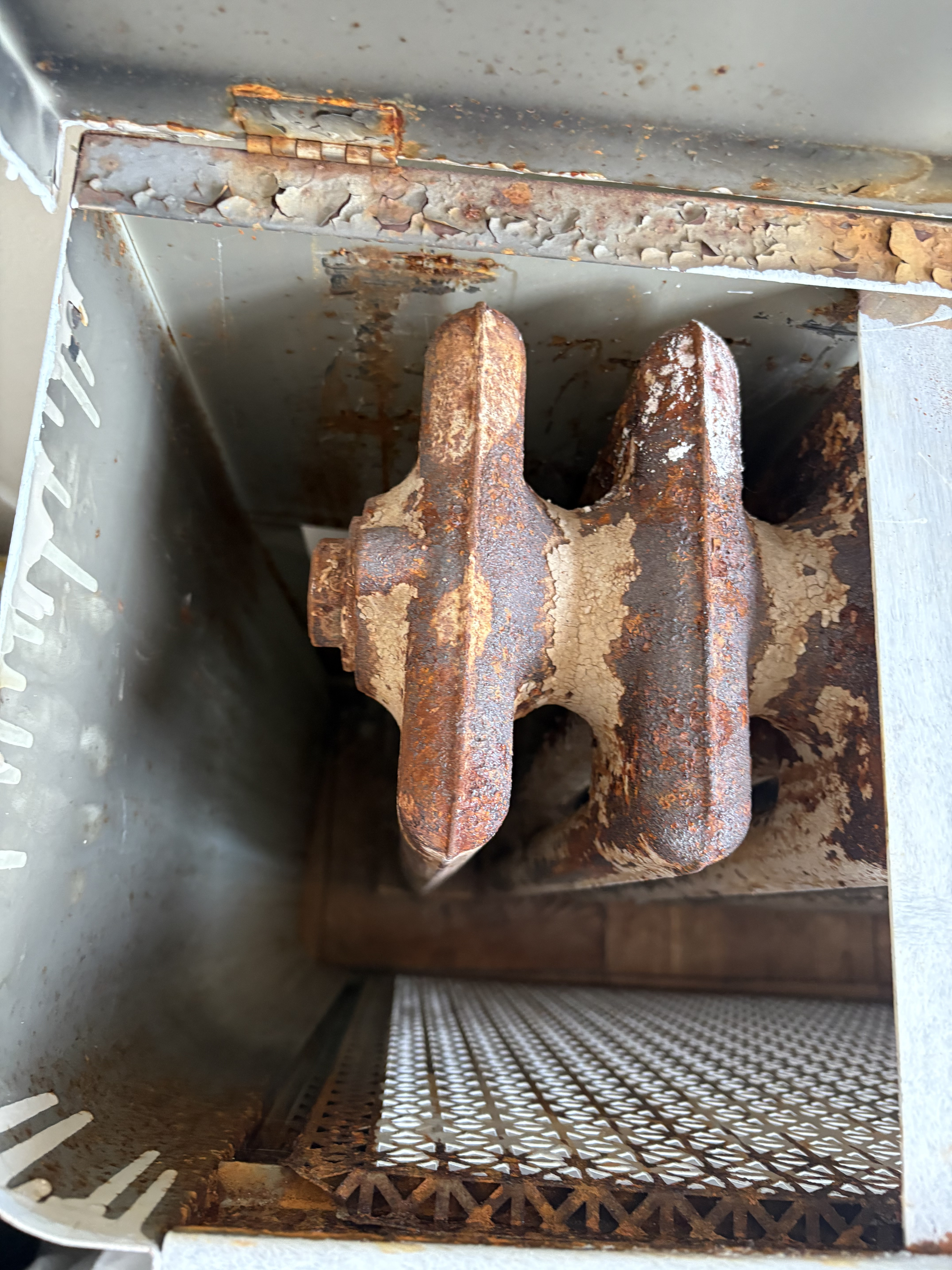
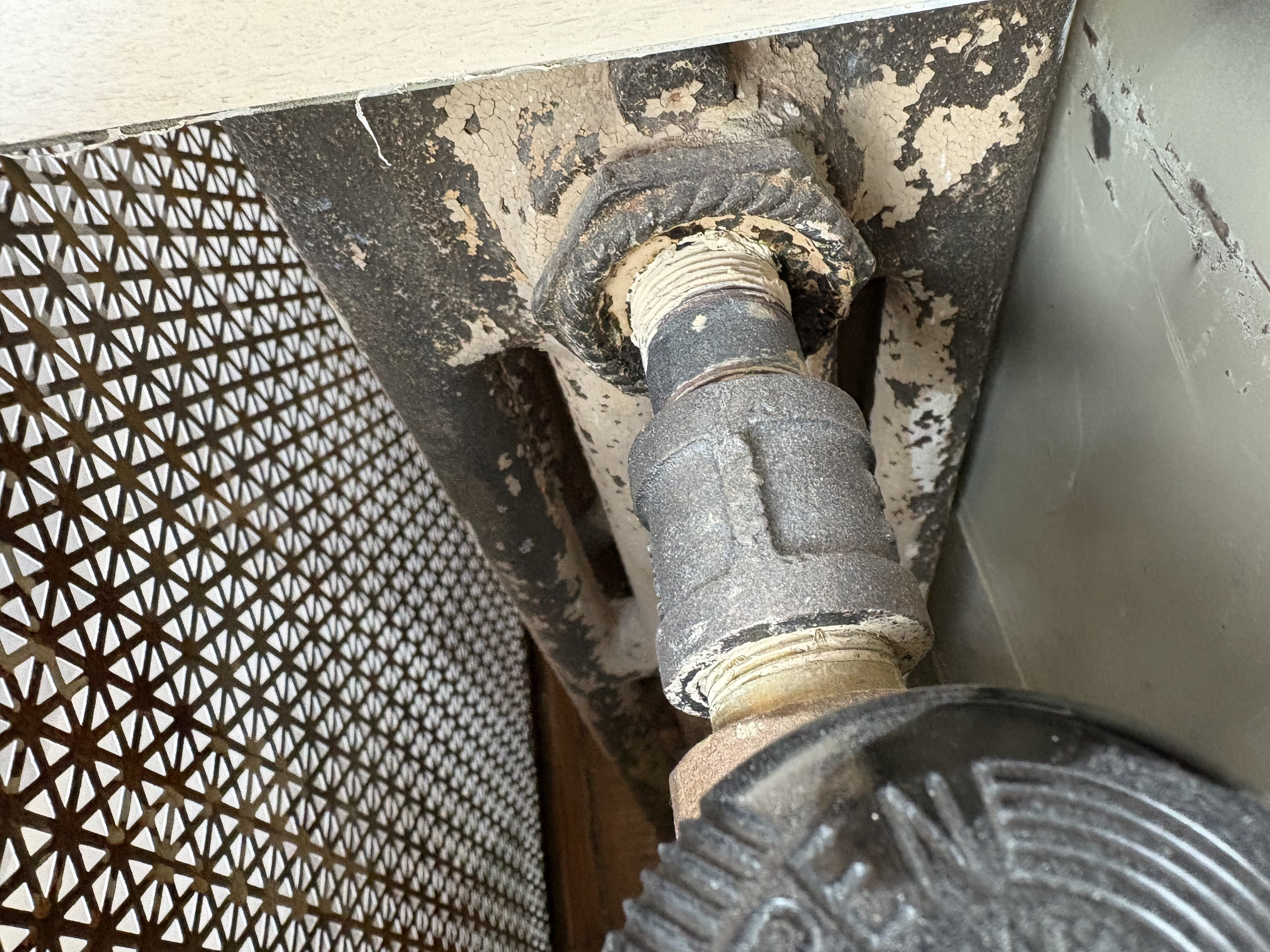
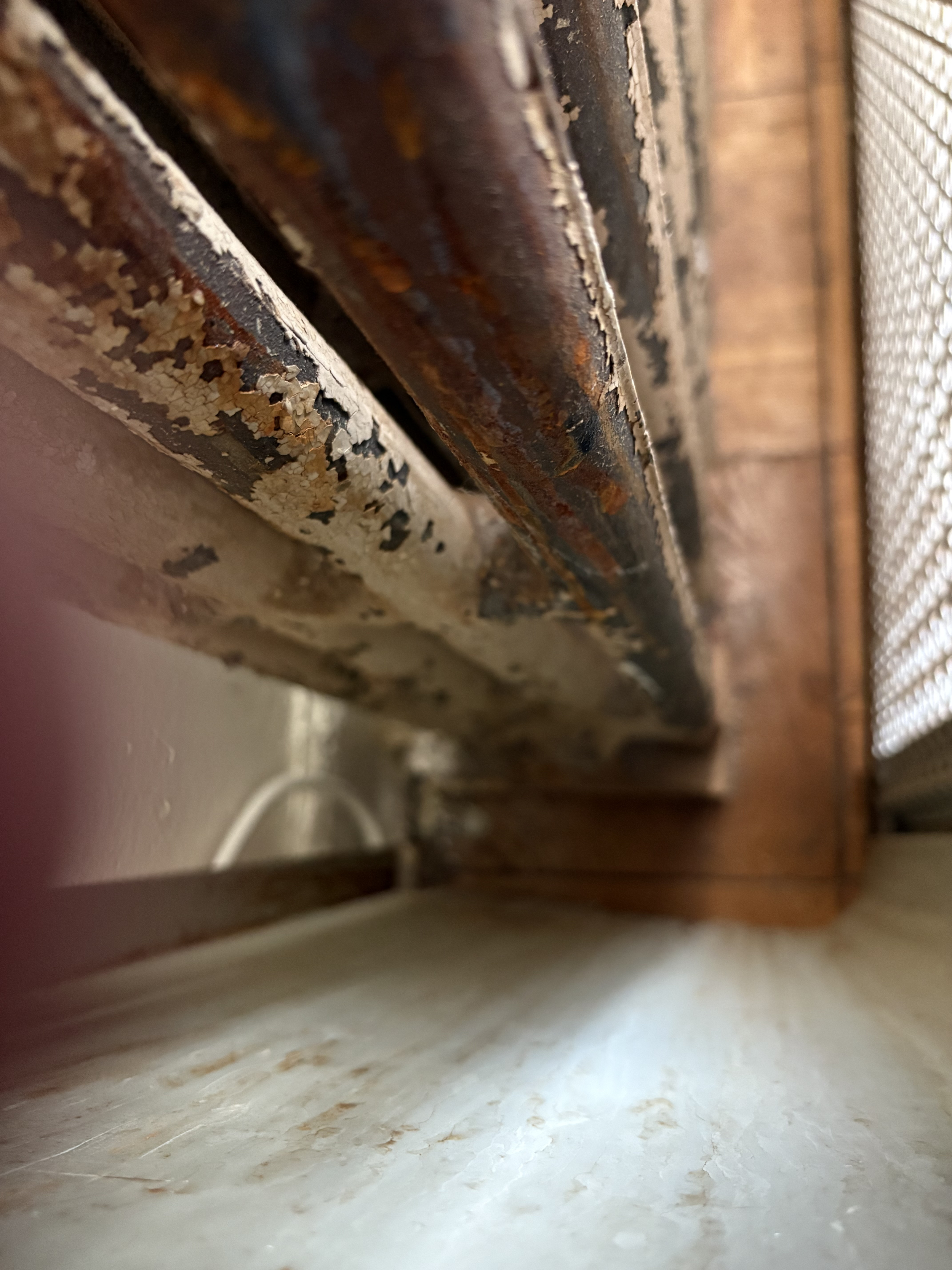
Here is the den (second bedroom) where I sleep.
Two blocks on each side. In August, in anticipation of Runwise, Contractors arrived and made an adjustment to this radiator. They told me that they were changing the valve, but it didn’t look like it to me. In retrospect, they could have been placing a sensor related to Runwise. Valve was suppose to be turned off. I did not touch it after they left. Initially, in October, pipes were banging badly this year (I have about 75 videos of banging through the night) but only in living room last year.
This year, early on, banging started in my dinette, then traveled along living room ceiling, then into bathroom, then settled mostly and loudly along the ceiling above left side of radiator in den.
After about 3-10 minutes (as I recall) would move into bedroom; be quiet for a while; then come again anywhere from 10 minutes to two hours later. All this every night since October 20 until last night (at least), except more recently it is in lower wall and along baseboard.
Now, this den radiator: This is the valve (on/off knob) that exploded 2 years ago while I was sleeping and sprayed steam burning me and that destroyed my linens. I believe they had a plastic valve on this at the time—or something plastic. (I will look for a photo.) They made an adjustment. Before renovations, we had an 83 year old, great boiler man with the company for years. . He loved this boiler and was furious at what the contractor was doing. Occasionally, before he left the company, he changed out my valves and did some other work that improved the banging.Although the contractor’s den valve recently was suppose to be off, it seems slightly (1/4 inch) on. Radiator is not warm anywhere but pipe traveling to floor attached to valve is red hot to the touch.
Boiler was renovated to accommodate new units, etc., in 2017.
0 -
PS. The radiators don’t bang. Banging is all in the walls. Were responses related to banging walls or radiators, or doesn’t it matter?
0 -
For the past several days, with temperatures below freezing or close, we have heard no banging, but that may be because boiler is not going on and off but remaining on all the time? Shall I conclude that all else above is still the greatest possibility for correcting this, with special attention on what is going on in boiler room including pressure, condensation leaks, and anything else you may have mentioned above. Thank you again, for your concerted efforts and help. We shall see and I will let you know. Thank you, again, for all of your time.
0 -
I haven't read all of what's in this post, but I'm willing to bet it was a mistake pouring that housekeeping pad under those boilers. The ceiling height suffers for it, and the water line is now significantly altered.
Contact John "JohnNY" Cataneo, NYC Master Plumber, Lic 1784
Consulting & Troubleshooting
Heating in NYC or NJ.
Classes1 -
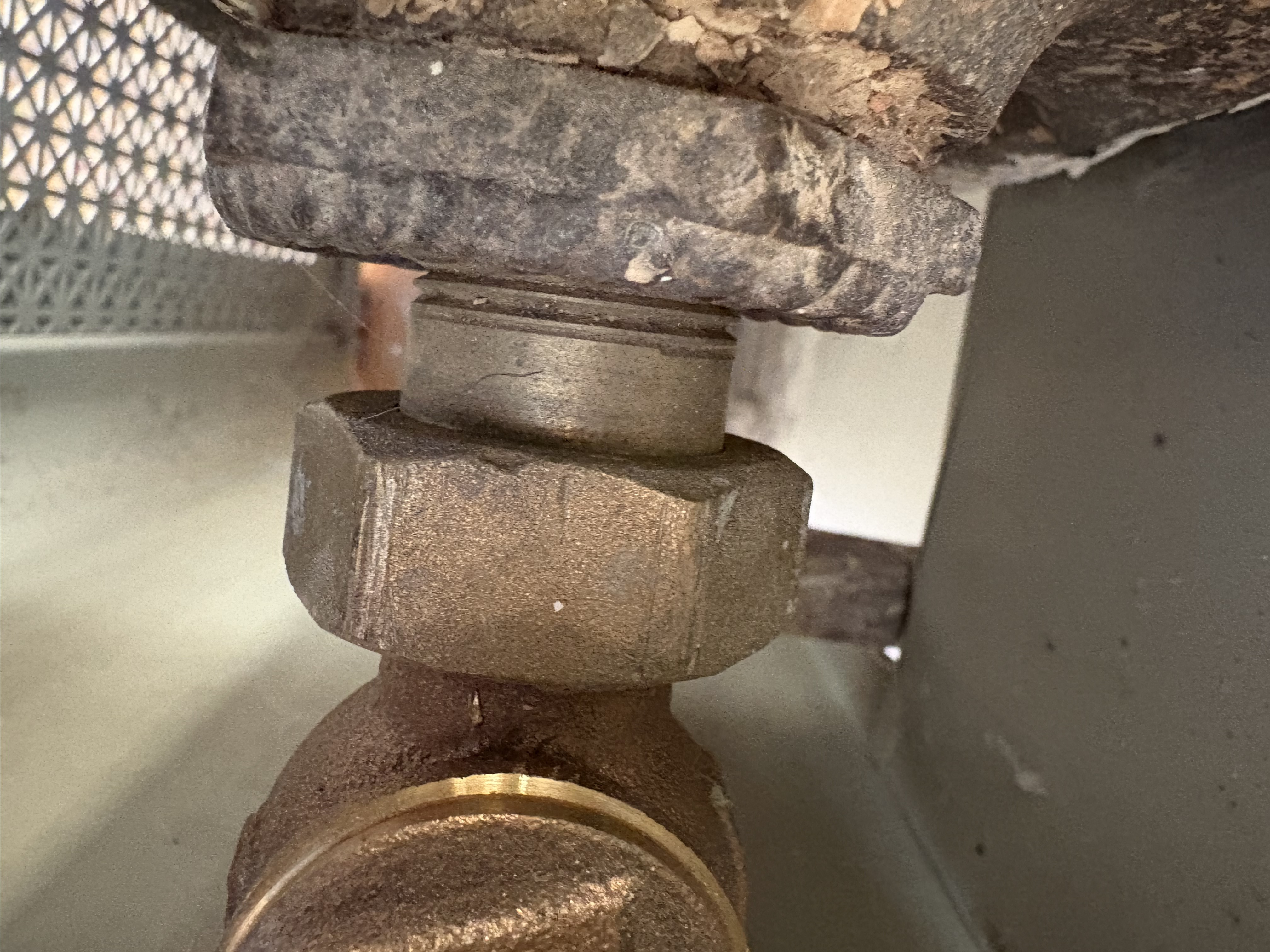
in the post on feb 4th from author, jpg 2791, you see the valve on radiator, if you zoom in on photo on same side of radiator. The trap is mounted on its side below valve. I don’t think that would allow trap to operate properly.
 1
1 -
I noticed the same thing and was going to ask about it. Seems like a likely place to trap a lot of water and slug it through the trap.
Miss Hall's School service mechanic, greenhouse teacher, dog walker and designated driver
0 -
It wouldn't surprise me if mounting the trap that way was causing a problem but wouldn't be my first guess about where the problem was. It will keep somewhat more water in the bottom of the radiator and may open and close more often with the bellows on the opposite side from the steam supply but I don't think it would outright fail to keep steam out of the returns or prevent the condensate from returning.
 1
1 -
Matt, yeah don’t think it would be main problem but wouldn’t help. The comment about not replacing traps due to cost is troubling. What if a gob of traps have failed over the years. Steam blowing through, condensate backing up. A recipe for 4th of July noise.
1 -
Jamie, I am about to send all of this to a group in town who, thanks to all of your insights, should more easily be able to address this.
I am wondering, because it appears to be a two-pipe system, does that change significantly anything that you have recommended here? Thank you, all. I felt like your little sister. 😊0 -
Hi. Convinced that the management company will not address this, just to let you know, the group I sent this to is the DC Department of Buildings, Director Hanlon’s office, that has a boiler speciality consultant division headed by Miyda Colon (miyda.colon@dc.gov) who oversees third party inspections. Chief boiler expert is named Keith Jones, maybe some of you know him.
Thank you again. Still banging through the night causing those in several apartments, including me, to be awakened multiple times each night. Upsetting.
0 -
Yes it does, but in minor ways. First, my comment on valves — in two pipe systems the inlet valve can be used to control the heat from a radiator. Too hot? Close it some. Too cold? Open it some — if it isn't all the way open!
Second, as others have mentioned, you have traps. They all should be checked for operation — a bad trap can make other radiators misbehave. It can also cause water hammer in the returns…
Your observation that the hammer noises are worse when the boiler is turning off and on is very good! And very likely. And it points to there being places in the piping to the radiators — not the radiators themselves — trapping water as the system starts up. It may be in the basement n— that's the easiest place to look — but from your comment that you can hear it moving or seeming to move suggests — sadly — that there are pipes under the floor which are really the problem.
Br. Jamie, osb
Building superintendent/caretaker, 7200 sq. ft. historic house museum with dependencies in New England0 -
You all have been so helpful. Thank you.
 1
1





Categories
- All Categories
- 87.8K THE MAIN WALL
- 3.3K A-C, Heat Pumps & Refrigeration
- 59 Biomass
- 430 Carbon Monoxide Awareness
- 132 Chimneys & Flues
- 2.2K Domestic Hot Water
- 6K Gas Heating
- 124 Geothermal
- 170 Indoor-Air Quality
- 3.8K Oil Heating
- 79 Pipe Deterioration
- 1.1K Plumbing
- 6.7K Radiant Heating
- 396 Solar
- 16.1K Strictly Steam
- 3.5K Thermostats and Controls
- 56 Water Quality
- 51 Industry Classes
- 51 Job Opportunities
- 18 Recall Announcements