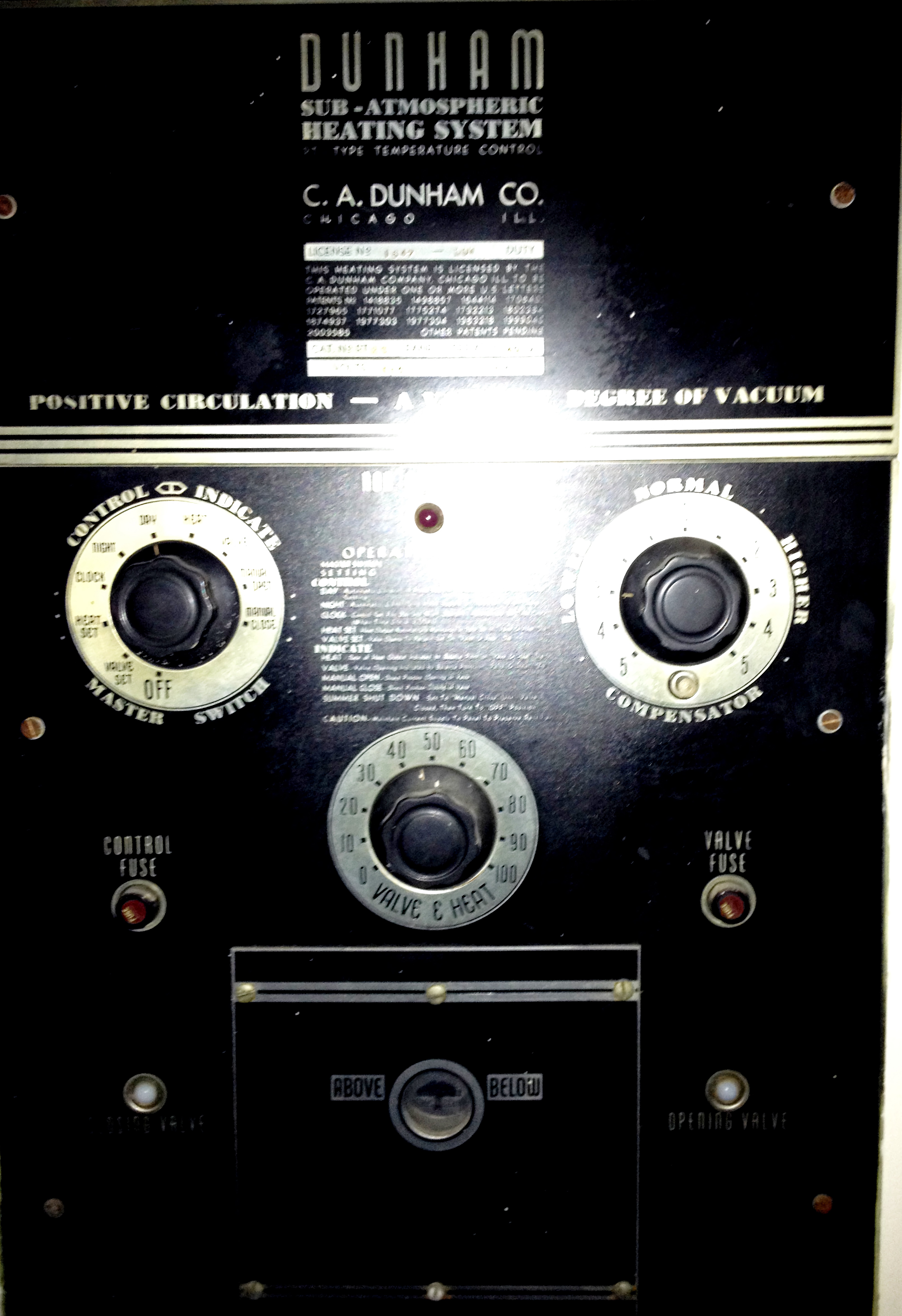
Found this info on a Dunham Sub Atmospheric System

A client of mine once had this system in their building and I came across a brochure describing it. It was pretty ingenious. The system would supply steam from 2 psi to 25" vacuum. I didnt see it it Erins Library
Boiler Lessons


Comments
-
i've seen a few dunham catalogs with this in it. if i remember the one on heatinghelp.com is from during wwii and a bunch of valves that normally would be brass are steel and ci.
0 -
Really cool @RayWohlfarth
It will give me something to read tonight.
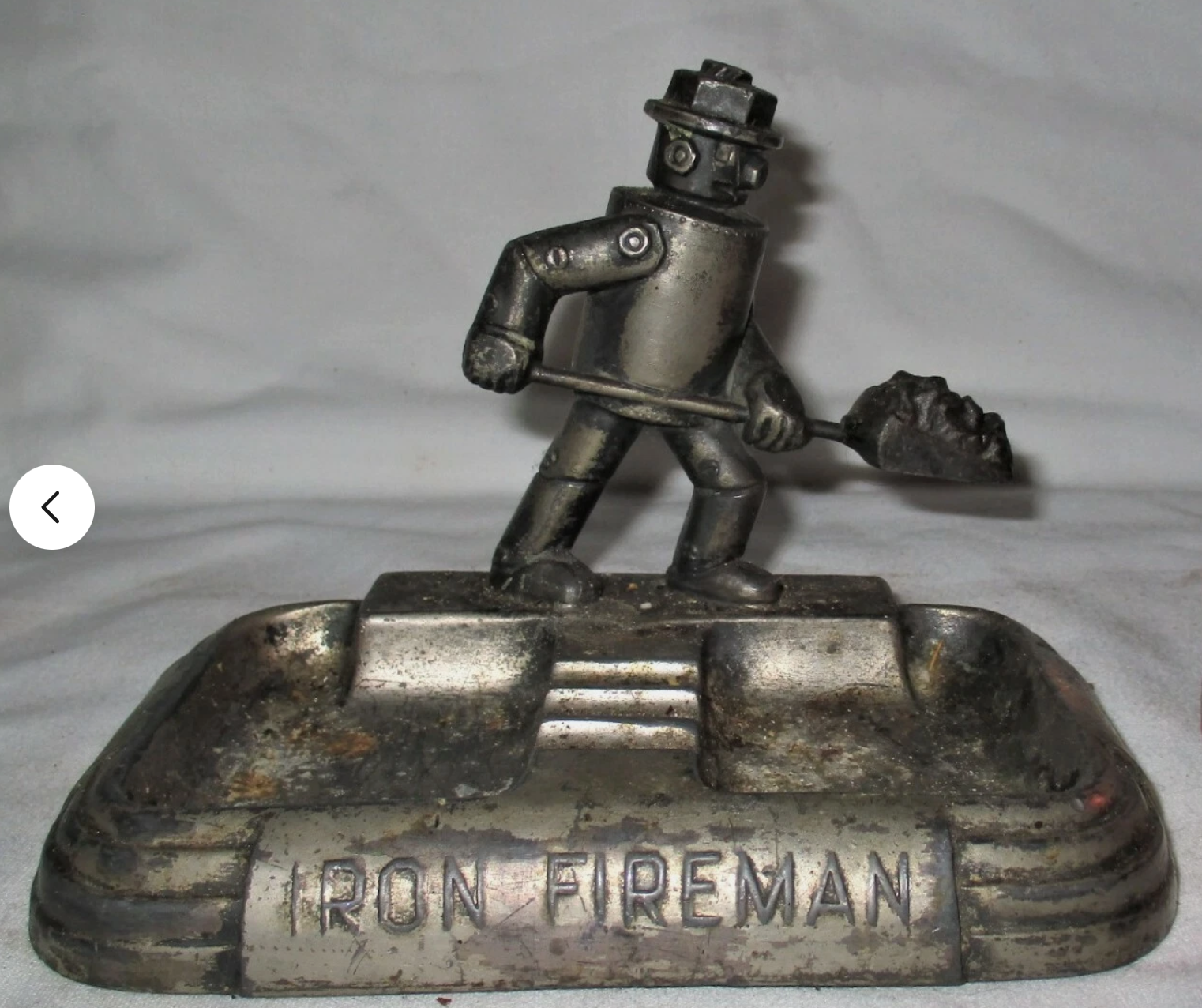
Dunham which later became part of Dunham-Bush had really good engineering and they wer into many things. Iron Fireman and Petro oil burners, They had their own boiler line, boiler feed pumps, traps (which is Mepco now) Air conditioning, refrigeration, pretty much everything.
Sadley they are mostly gone but Mepco survives. D/B moved to Malysia.
I visited their factory in Harrisonburg, VA back in the 70s for burner training.
2 -
@mattmia2 I wish I have seen it when it was working right.
@EBEBRATT-Ed I really liked Dunham Bush and visting the Harrisonburg VA plant a few times. I loved their burners. We repped them at one time.
Ray Wohlfarth
Boiler Lessons0 -
The oil co I worked for in the 70s started off selling Petro rotary burner and their gun burner back in the 1920s. I guess some time back in the 50s D/B acquired Petro and Iron Fireman. Iron Fireman came out with the Whirl power burners, C240, C120 etc back in the 50s and they were waaaay ahead of their time. 300psi oil pressure at the nozzle and 3450 rpm blower motors and a 12,000 volt ignition transformer (Franceformer) before any other burner mfg had a clue what a forced draft burner was. They were great burners except a couple of the C240s used to throw a fan once in a while and to change a fan on those was not fun. Pull the oil pump, fan shroud and damper etc.
I worked on the air atomizers a lot as well AO-4-4.5. 6.3,9,8 & 15.
I went to Harrisonburg in 1974? I think. My first airline flight ever. Stayed for 2-3 days I think.
Bob Rees was the service manager. We started with Powerflame in the late 70s. Then when I had my own business in the mid 80s I sold some IF burner including 1 of the newer EED burners which I thought was really nice.
They had good records. The post office in Springfield we had sold them 2 IF packaged Scotch boilers with IF burners #6 oil.
In the 80s they wanted me to revamp the burners and remove the 6 oil parts for simplicity and make them #4 oil and replace the complete burner control panel that was wall mounted. I sent the model and s/n to DB and they sent new panels , new wiring diagrams etc right down to new model and serial #s and all the stickers and labels for the burner and panel. I was impressed.
 4
4 -
@EBEBRATT-Ed I did like the Iron Fireman burners. I still have one of their ashtrays. We sold a couple of the EED's and really liked them. They were ahead of their time.
Ray Wohlfarth
Boiler Lessons1 -
Yes the ashtrays go for a few bucks on E-Bay. The company I worked for had offices in Spfld. & Hartford. We didn't have an ashtray in Spfld but Hartford did.
I guess the EED was supposed to copy the IC model "D".
There was an British guy named Neil Rampley that worked for Power Flame, and I think he left to work for Iron Fireman…. or maybe it was vice versa I can't remember.
I think he had something to do with the EED
0 -
Thanks for this Ray.
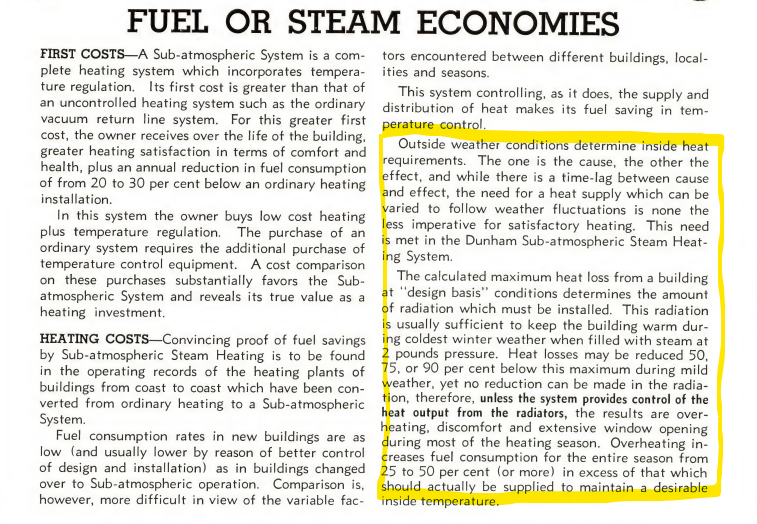
As always, it seems there is much in these old documents that somehow has been forgotten 100 years later. Note in the attached page where it is explained that while enough radiation must be installed to meet maximum demand conditions, some method of control of radiator output was considered an absolute requirement for acceptable heating because demand might often be up to 90% less than maximum. And some method for that control was being installed even at the residential level 100 years ago.
Delivery of steam from a call for heat into a system at a rate that would satisfy maximum design day demand uninterrupted until the thermostat is satisfied or, interrupted only if radiators were approaching maximum pressurized output prior to thermostat satisfaction, obviously was not considered a method able to provide acceptable heating 100 years ago. Yet today, and say for the last 70 years or so this is how residential systems are run. A significant percentage of discussions here are about how to set a pressure device to stop a boiler running on high when radiators are getting close to their maximum output. And, if these pressure stops are required too often the recommendation to homeowners is then to face the expense of changing to a smaller boiler. The conversation and effort has never managed to move to the control in all this time. Efforts to move it there are deemed not worth it. Yet whenever I read one of these old documents I find that 100 years ago it was all about control, even though they had dramatically fewer tools to work with……
1926 1000EDR Mouat 2 pipe vapor system,1957 Bryant Boiler 463,000 BTU input, Natural vacuum operation with single solenoid vent, Custom PLC control0 -
only very expensive houses had dunham systems 100 years ago
0 -
Nash had a similar system too.
The attached bulletin in 3 folders is from 1960.
Dennis Pataki. Former Service Manager and Heating Pump Product Manager for Nash Engineering Company. Phone: 1-888 853 9963
Website: www.nashjenningspumps.com
The first step in solving any problem is TO IDENTIFY THE PROBLEM.0 -
Gravity hot water had almost no controls except a thermostat and an aquastat. Forced HW came along in the 30s after they solved the pump seal problems.
That pushed steam out. Smaller pipe, no low hanging basement pipe from pitch, zoning much easier and cheaper.
If I could build a new house now (which I never will) I would love to design and install a steam system from scratch.
0



Categories
- All Categories
- 87.8K THE MAIN WALL
- 3.3K A-C, Heat Pumps & Refrigeration
- 59 Biomass
- 430 Carbon Monoxide Awareness
- 132 Chimneys & Flues
- 2.2K Domestic Hot Water
- 6K Gas Heating
- 124 Geothermal
- 170 Indoor-Air Quality
- 3.8K Oil Heating
- 79 Pipe Deterioration
- 1.1K Plumbing
- 6.7K Radiant Heating
- 396 Solar
- 16.1K Strictly Steam
- 3.5K Thermostats and Controls
- 56 Water Quality
- 51 Industry Classes
- 51 Job Opportunities
- 18 Recall Announcements