After two heating seasons freezing point of radiant heat system has gotten lower

hi, everyone, long time lurker, first time poster.
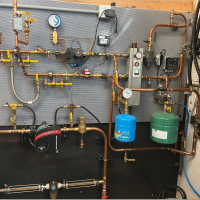
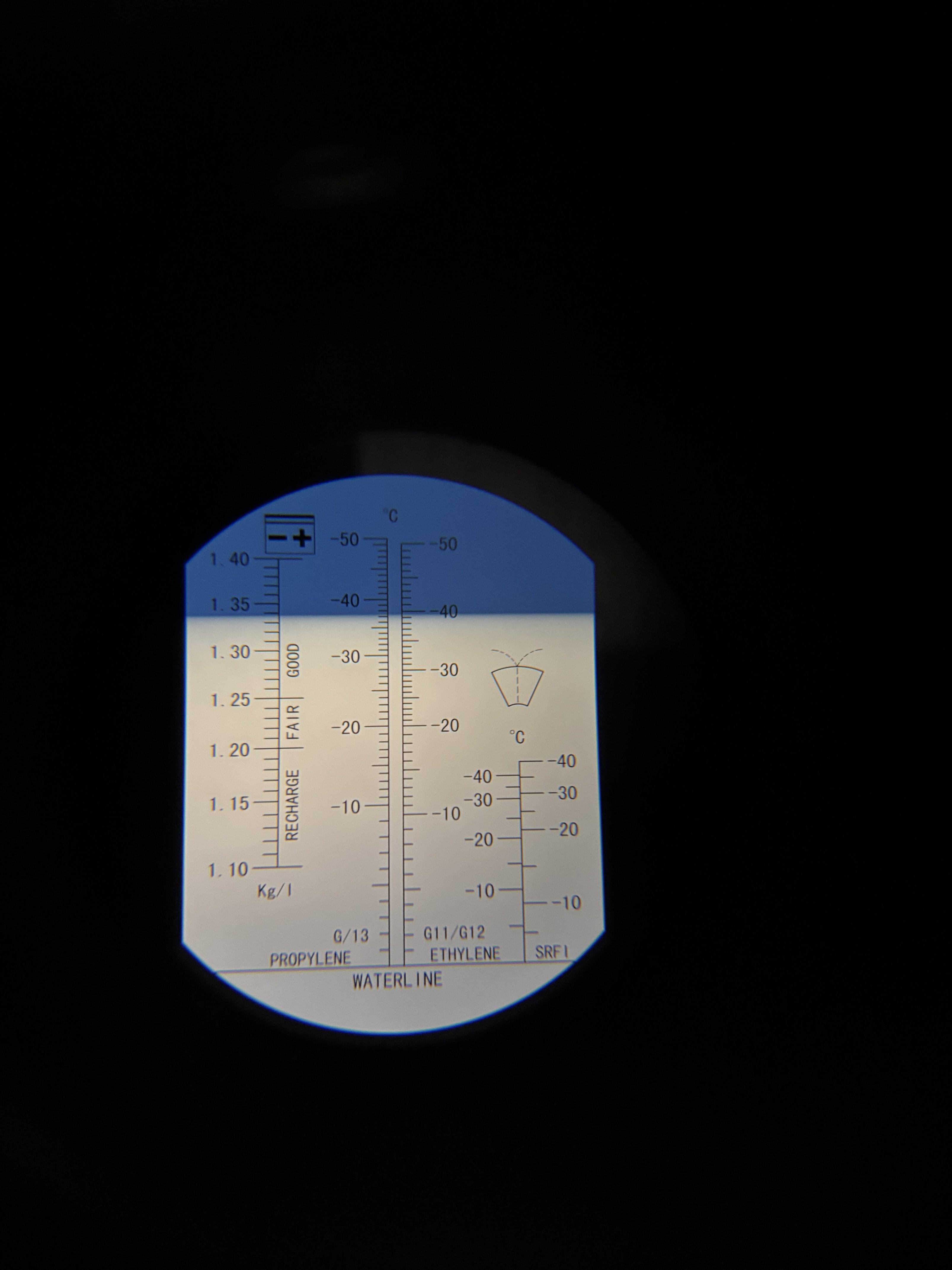
I commissioned a radiant in floor (concrete slab) system two years ago, and using a refractometer my freezing point seems to have lowered from around -30 C initially to -40 C now. Has anyone else experienced this? Is it normal due to water evaporation?
thanks,
-Capo
Comments
-
When was it first measured? Was time given for good and through mixing.
-22°F to -40°F is extreme freeze protection. Why so low?
0 -
I would chalk that up to meter or operator error.. If this is a closed system the water cannot separate and evaporate out?
The numbers for glycols are
Freeze point, ice crystals form, fluid still flows
Slush point, fluid turns to a slushee, cannot be pumped
Burst point, fluid freezes solid and can break pipes and tubes, even Pex.
It depends on the brand of glycol, generally 30-35% mix is adequate for burst protection.
The higher percentage is harder to pump and transfer heat from. No need to overdo the glycol mix.
Bob "hot rod" Rohr
trainer for Caleffi NA
Living the hydronic dream1 -
30 - 35% is generally all that’s needed
0 -
thanks for the responses - I’m in a rural area in Canada so if there was a prolonged power outage during a cold snap the outer loops of my system could see some very cold temps. I’m trying to find my notes but I definitely aimed for a little more than 35% glycol by volume (which according to my glycol supplier provides freeze protection to -18 C, which seemed a little too high in my area).
I tested the meter with water and it read 0 deg C, with my car coolant it read -50 C (which is mixed 60% antifreeze as per manufacturers instructions for severe climate eg Eastern Ontario winter ). So don’t think it’s the meter…..I would entertain the theory that thebinitia measurement was made when the system had not run very much, so it’s possible it was not thoroughly mixed. It is a closed system - I assume only leaks might be past pump seals.
perhaps I’ll try and dilute the fluid with some distilled water and see what happens.
appreciate any other diagnostic suggestions regarding the system or the meter.
-Capo
0 -
pretty much any system has some very small leaks at valve packings and things like that but if anything that reduces the concentration as water is added to keep the cold fill pressure up. does it have a tank and pump type auto feeder or some other arrangement like a well tank full of glycol mix and a prv?
0 -
Do not confuse freeze protection with Burst Point.
0 -
- mattmia2: yes I do have an automatic feeder but it has a glycol/water mix in it also. I don’t think it has added anything since the first winter when there might have been a little air in the system.
- pecmsg: not sure what your comment means - the refractometer measures freeze point….
thanks,
capo0 -
Look on the manufactures paperwork it will show Freeze point / Burst point.
30% is more than enough
0 -
"I tested the meter with water and it read 0 deg C, with my car coolant it read -50 C (which is mixed 60% antifreeze as per manufacturers instructions for severe climate eg Eastern Ontario winter ). So don’t think it’s the meter….."
Car antifreeze is a different chemical and requires a different tester. Did you use the same tester both times?
0 -
a refractometer will work for both, just need a different scale for ethylene vs propylene glycol.
1 -
I think some may be reading this wrong. It's not possible for the freeze point to get lower as time goes on unless you're adding glycol at an elevated concentration. Odds are that your first measurement was not thoroughly mixed yet, or that one of them was simply an error.
0 -
unless the stuff in the feeder tank is a higher concentration or maybe the water has evaporated from the feeder tank more readily than the glycol.
0 -
Here he said refractometer.
- pecmsg: not sure what your comment means - the refractometer measures freeze point….
0 -
Never seen H2O separate once mixed.
0 -
a refractometer measures index of refraction which is a function of density among other things
0 -
All research indicates once it is mixed it cannot be separates, with the possible exception of freezing the solution.
Bob "hot rod" Rohr
trainer for Caleffi NA
Living the hydronic dream 1
1 -
The refractometer is going to have a different scale for ethylene glycol (car antifreeze) vs. propylene glycol (hydronic antifreeze).
Look at the scale on page 2 of this document:
At a refractometer reading of 1.32 the propylene is about a 50% solution with a freeze point of -20F, the ethylene is a 48% solution with a freeze point of -30F.
Using the wrong scale would easily explain what OP is seeing.
0 -
i mean that is how you make liquor by evaporating the ethanol out of the water. what i don't know is about the boiling points and vapor pressures of propylene glycol vs water.
0 -
That's….. What I said
Except for the separation thing, which can't happen.
1 -
-
way too low.
0 -
I'm no professional when it comes to refractometers, but pure 100% PG is only 1.04 kg/L so 1.34 seems to be beyond pure unless your fluid is very cold?? -40 freeze point is approximately 52% according to my chart and that's too high
0 -
ok, so I think I confused freezing point and bursting point as suggested by pecmsg - a combination of the documentation provided by my glycol vendor and my (mistaken) assumption that freezing temp = bursting temp. It’s now clear to me that for a given glycol concentration the burst temp is much lower than the freeze temp (or perhaps more accurately the slush temp) .
The 30% mixture suggested is only good for a -18 C slush temp, so I’m still considering if I’m that confident in my ability to supply power to my rural home in event of a long duration power outage in the winter, but I’m definitely going to change the mixture.
thanks for your comments they helped me figure it out - much appreciated and happy holidays to you all.
0 -
do i get a badge for 100 disagrees?
0


Categories
- All Categories
- 87.8K THE MAIN WALL
- 3.3K A-C, Heat Pumps & Refrigeration
- 59 Biomass
- 430 Carbon Monoxide Awareness
- 133 Chimneys & Flues
- 2.2K Domestic Hot Water
- 6K Gas Heating
- 124 Geothermal
- 170 Indoor-Air Quality
- 3.8K Oil Heating
- 79 Pipe Deterioration
- 1.1K Plumbing
- 6.7K Radiant Heating
- 396 Solar
- 16.1K Strictly Steam
- 3.5K Thermostats and Controls
- 56 Water Quality
- 51 Industry Classes
- 51 Job Opportunities
- 18 Recall Announcements