Plumbing Question

My apologies as this in not related to heating.
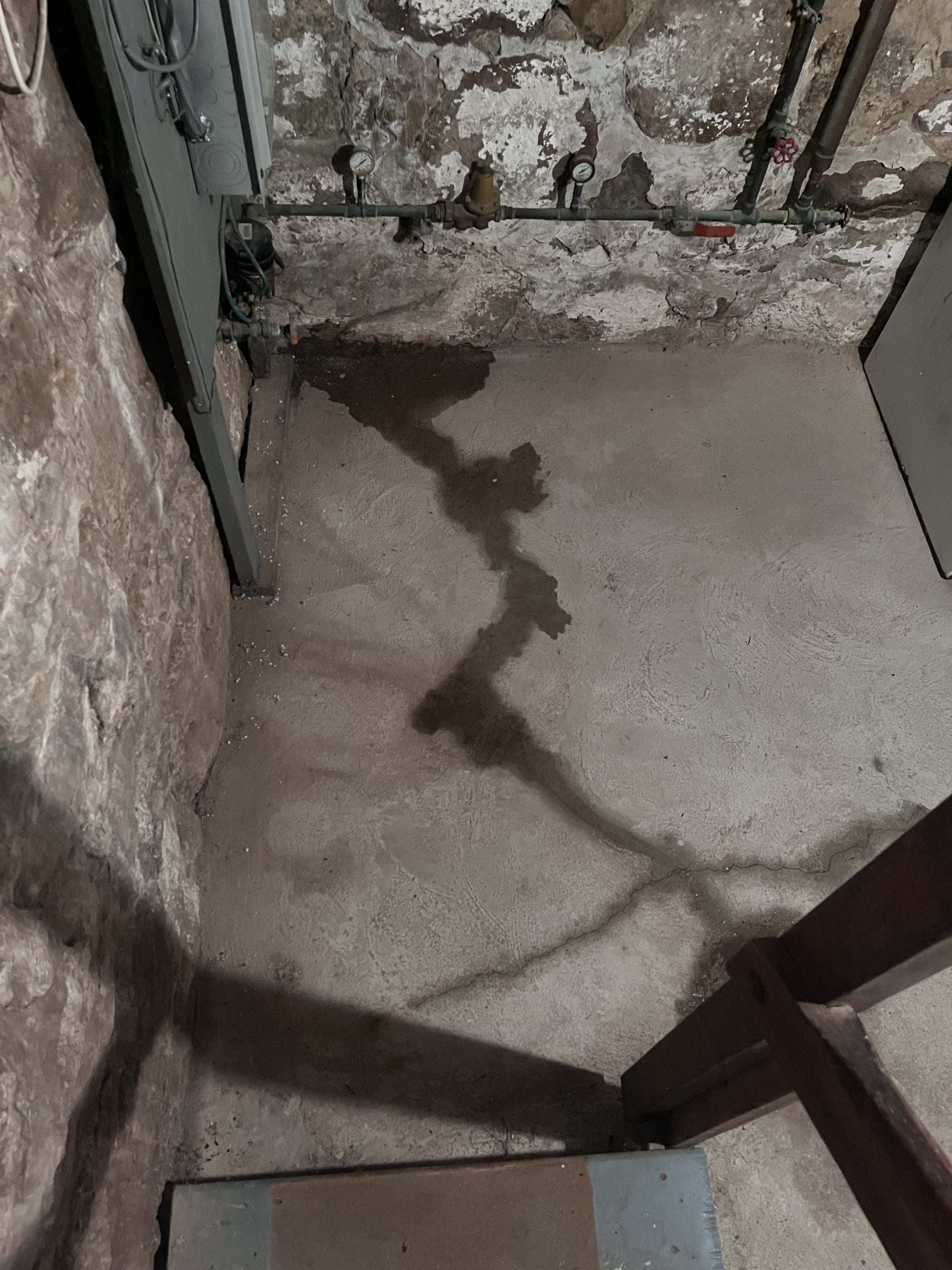
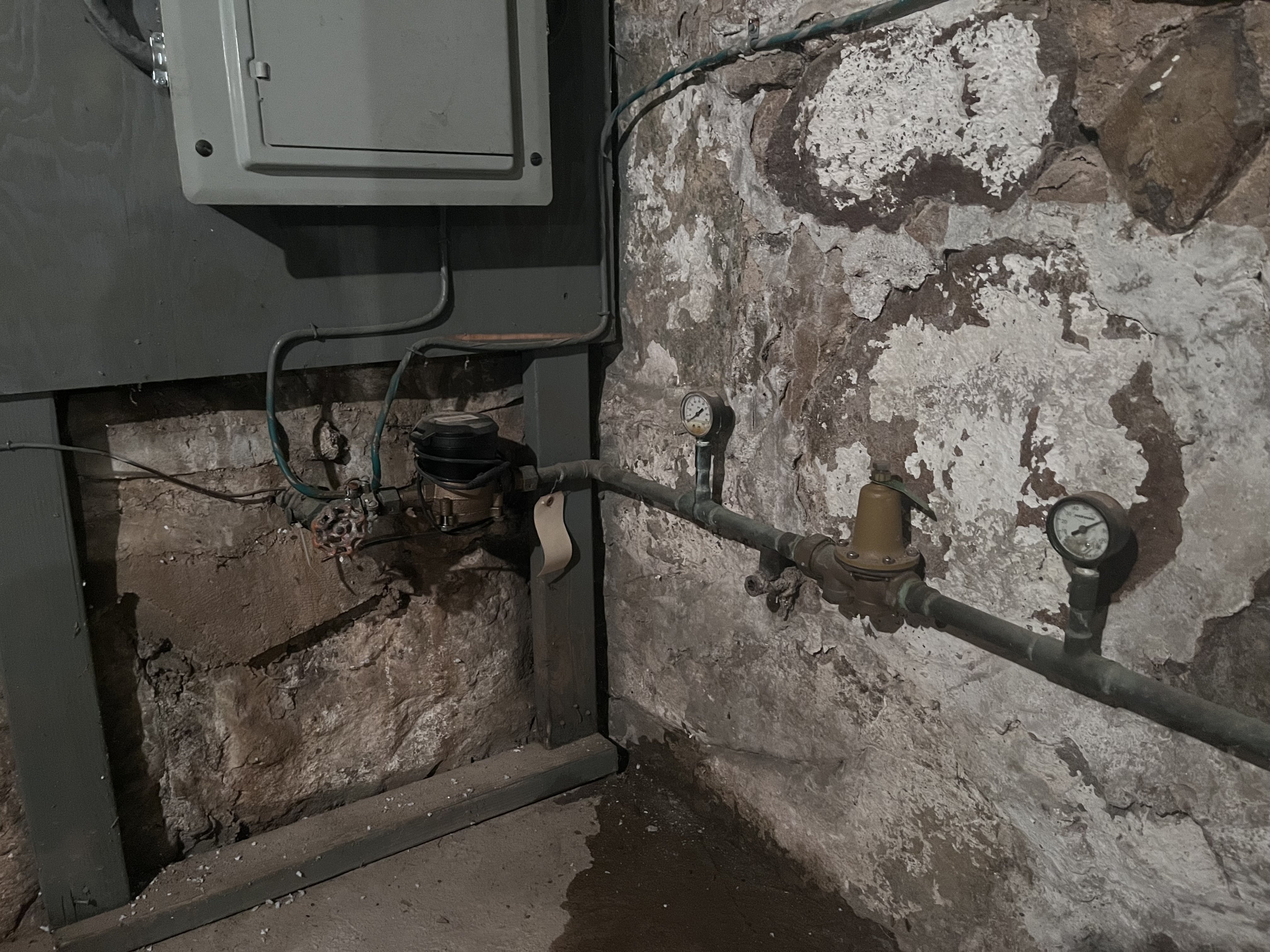
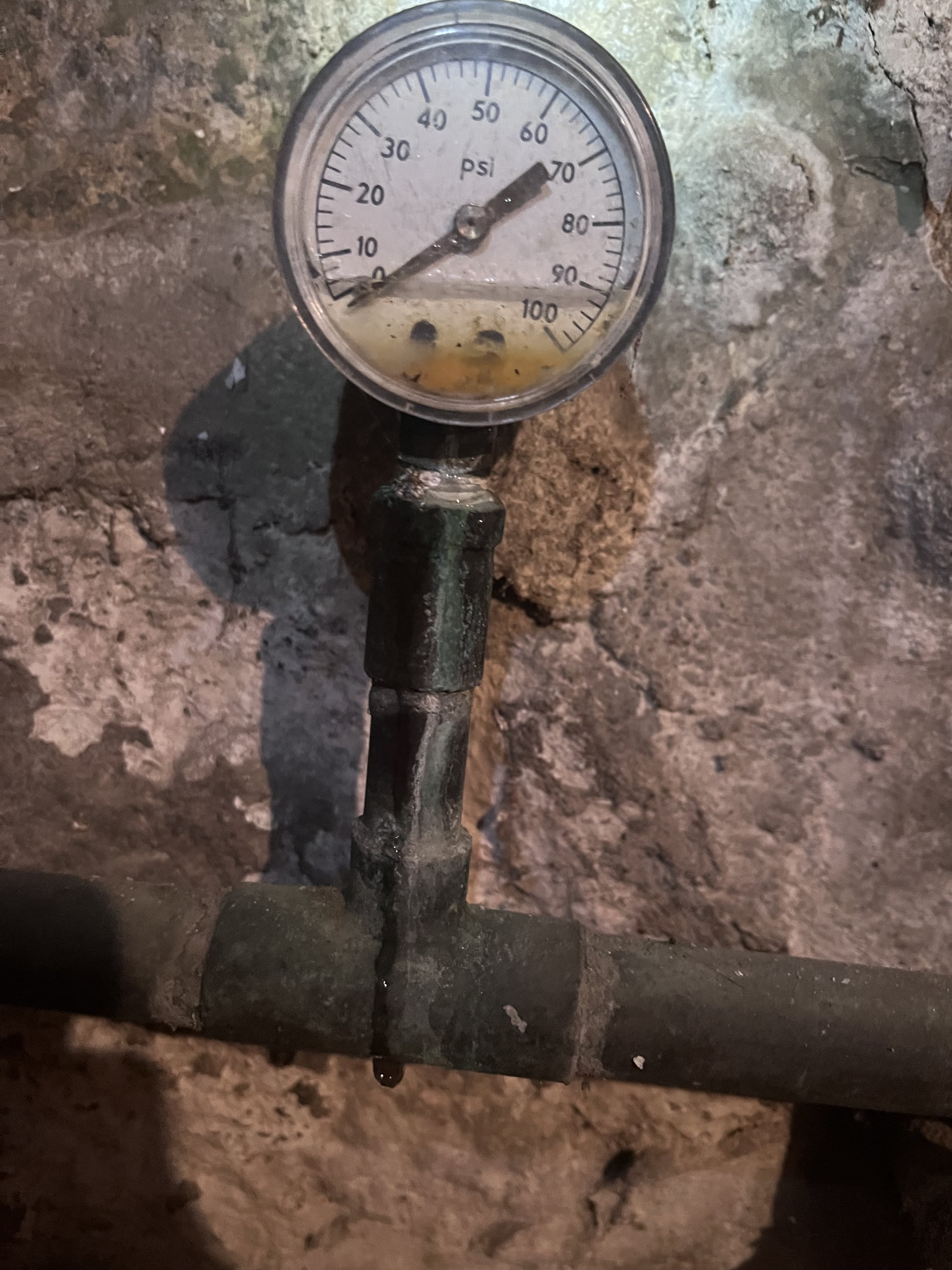
I noticed a water leak at the first pressure gauge after the main main water shut off gate valve in my basement. The gauge is partially filled with water and seems to be leaking at the base around the threads.
I’m worried that if this completely fails (I don’t know this gauge’s internal construction) water is going be gushing out. Added issue is that the electrical box sits very close to it.
Is the an ASAP, call a plumber tonight on a Saturday issue, or could I possibly try to turn off the gate valve myself and replace the pressure gauge with a threaded plug (I’d have to go to Home Depot).
Note: There is a ball valve located after the gate valve which I would shut prior to closing the gate valve to do the work
Also, do I risk the gate valve leaking after I shut it off and open after a plug is installed?
Thank you.
Comments
-
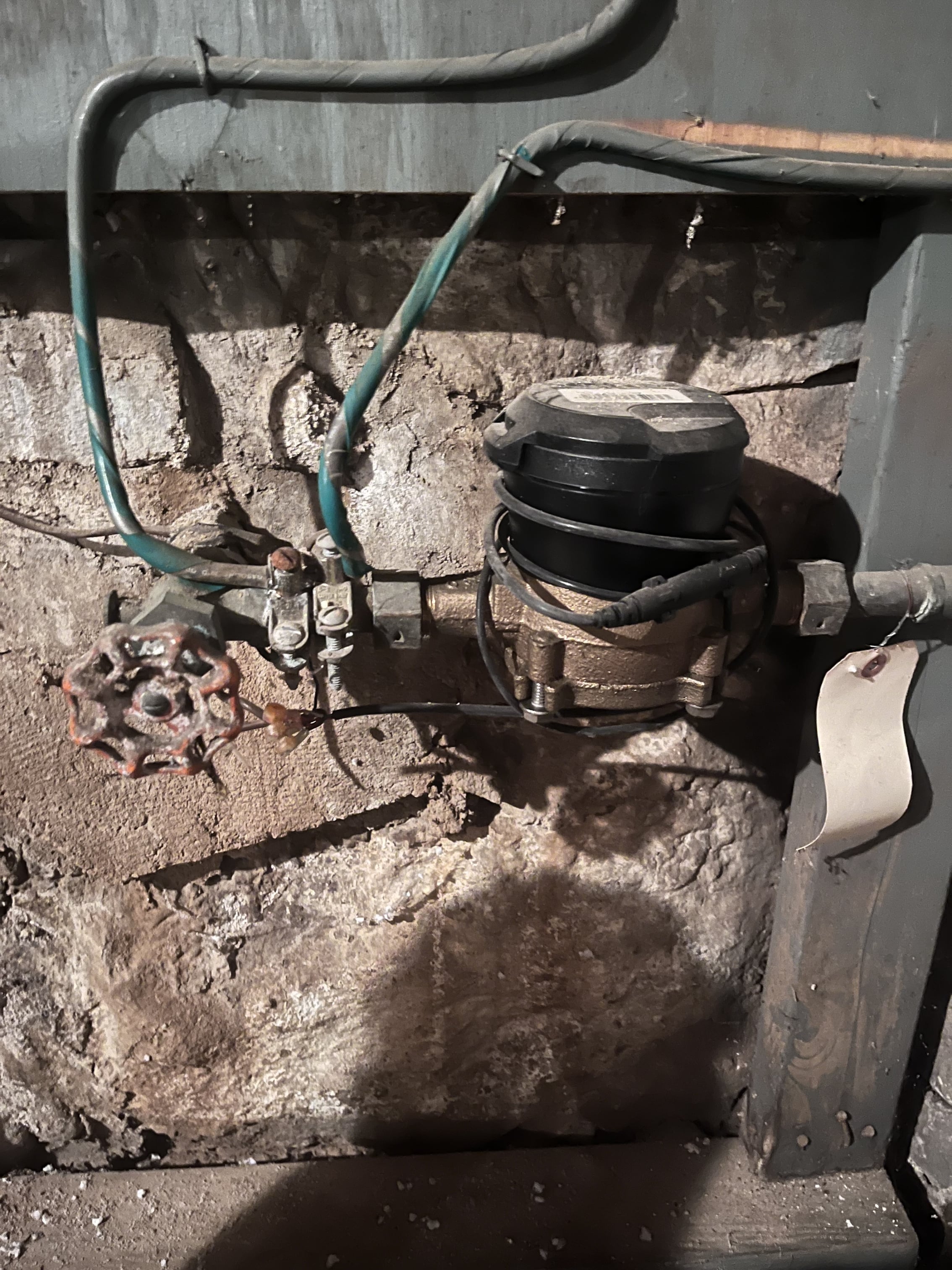
The valve at the meter inlet from the street is not a gate valve as those are not made in an angle configuration. Its a angle globe valve.
I would open a faucet partway somewhere and start closing the globe valve. If the water flow stops then the valve holds. Don't kill the valve just snug it up. If the valve leaks by a little you can still remove the gauges since it is threaded fittings
The reason for the pressure gauges is that you have a presure reducing valve and the gauges are for the adjustment of that valve. If it were me I would remove both gauges and install 2 1/4" brass nipples and 2 1/4" threaded ball valves and 2 1/4" brass plugs or 1 new gauge on the pipe going to the house.
Since it just started leaking I would make the swap during the week when you can get a hold of the plumber or city water dept if you have an issue but I think you will be fine.


 3
3 -
That’s a strange setup. The gauge is bad as I’m sure you’ve guessed.
Not a critical repair but I wouldnt wait weeks. Concur with your plan; close the valve located just before the water meter, remove the bad gage (both actually) and plug the tees.
Should take 15 minutes.
You'd need a crescent (adjustable) wrench, Teflon tape and 2 plugs. 1
1 -
Thank you both for the feedback.
If I was to plug both t’s I would be eliminating and way to gauge water pressure internally.I recall the first gauge being pinned perse, maybe the incoming water pressure was greater than the gauge’s max reading (?). The pressure gauge after the pressure reducer reads 70psi.
Wouldn’t I want to at least keep the pressure gauge after the pressure reducer…just replacing it with a new one?
0 -
Most house do not have pressure gauges permanently installed; you may see in homes with well water system but it’s unusual otherwise. If required, a inexpensive gauge can be attached to hose bid.
If you wish to keep the gauges, be sure to install a 1/4 turn shutoff valve in front of gauge as @EBEBRATT-Ed recommended.1 -
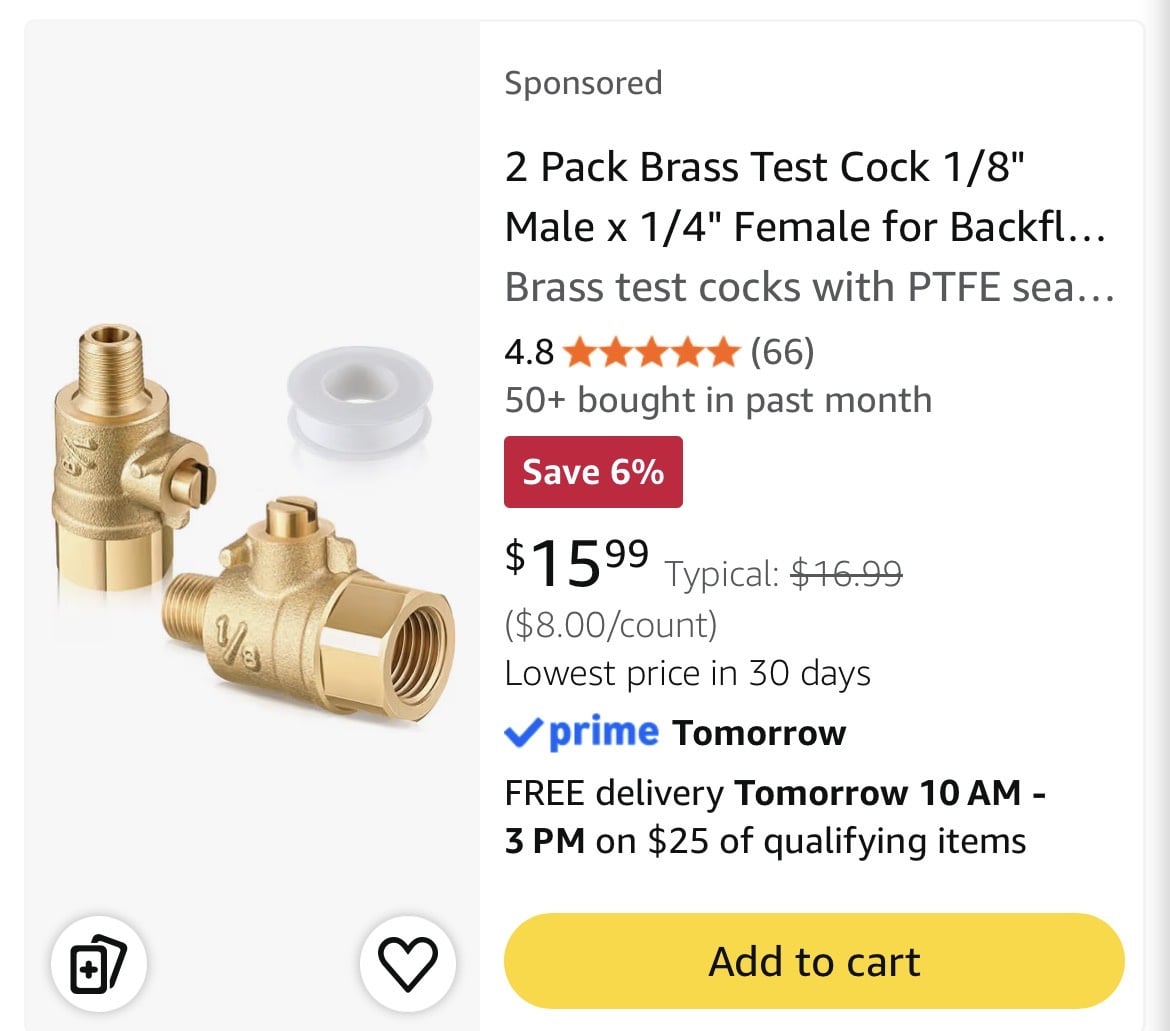
I would replace both gauges and add a couple gauge cocks 1/4 male x female
70 psi is fairly high and if the upstream gauge reads 70, the PRV may be bad
 Bob "hot rod" Rohr
trainer for Caleffi NA
Living the hydronic dream
 2
2 -
if the bourdon tube in that gauge were to split open completely it wouldn't be jut a trickle but it wouldn't be a huge flow either, it would be like the amount of water that comes out of a faucet.
0 -
Do this as @EBEBRATT-Ed says. Be very careful when closing the street side valve. If it breaks in the closed position and you tighten the valve too much, it could break in the closed position, and then you will need to replace it. This is why he mentions how to close the valve carefully. The next valve is in the street? Buried? And that can turn into quite an ordeal to correct.
Its ok to have some water dribble out as you change the gauge. Thank heaven for a basement that isn't finished.

 2
2 -
Looks like a Watts pressure reducing valve.
I never installed one with 2 pressure gauges,only one to set the pressure. Now, I use Caleffi's with a gauge unless I need an exact fit. I solder in a hose bibb drain down valve after it and use a hose bibb pressure gauge on it to set the regulator.
These pressure reducing valves fail (I've replaced numbers of them) usually pressure creep. If it's old I would replace it. Prices are only going higher.
The globe valve and meter are there forever. However, I would solder in a full port ball valve before the reducing valve and a hose bibb after the reducing valve for a house drain down if there isn't a reverse drain thru the reducing valve. A combination ball valve and drain (Webstone) if there is.
The cheap fix—do as @EBEBRATT-Ed suggested. S**t-can the bad gauge and get a 1/8" brass threaded plug, wrap a couple of turns of Megatape around it and plug it in and go to bed. Treat that globe valve gingerly and while it is closed think about replacing the other old gauge or not. I guess, if you insist, you can replace the bad gauge.
If you find that after closing the globe valve and the pipe dribbles water and you want to solder in a ball valve, you can use a tool to shut off the flow in the pipe and solder in a ball valve and remove the tool and shut off the flow with the ball valve.
0


Categories
- All Categories
- 87.9K THE MAIN WALL
- 3.3K A-C, Heat Pumps & Refrigeration
- 60 Biomass
- 430 Carbon Monoxide Awareness
- 133 Chimneys & Flues
- 2.2K Domestic Hot Water
- 6K Gas Heating
- 124 Geothermal
- 170 Indoor-Air Quality
- 3.9K Oil Heating
- 80 Pipe Deterioration
- 1.1K Plumbing
- 6.7K Radiant Heating
- 397 Solar
- 16.1K Strictly Steam
- 3.5K Thermostats and Controls
- 56 Water Quality
- 51 Industry Classes
- 51 Job Opportunities
- 18 Recall Announcements