Why do boilers soot?

This weeks video discusses the common reasons boiler will soot. It's better to avoid boiler sooting and the mess it leaves.
Boiler Lessons


Comments
-
I'll take a wild guess and say the air/fuel mixture is too rich. That's why internal combustion engines soot.Hydrocarbons contain hydrogen and carbon atoms. Hydrogen is more combustible than carbon, so burning hydrocarbons in the presence of too little oxygen for complete combustion strips off the hydrogen first, turning it into water, leaving the carbon to combine with itself in a variety of interesting ways, forming double bonds and cyclic hydrocarbons. Among these, the cyclic aromatic compounds are some of the most toxic, carcenogenic chemicals on earth. They're not just bad to breathe, they're the reason chimney sweeps were the first population doctors studied to try to understand cancer. Tumors galore.
Just another DIYer | King of Prussia, PA
1983(?) Peerless G-561-W-S | 3" drop header, CG400-1090, VXT-240 -
You want weird? Twice I just happened to be in my basement when my boiler started rumbling badly in the middle of a burn. I don't spend a lot of time there, but I got lucky and caught a nozzle crapping out twice. Fortunately, I was able to shut down the boiler and replace the nozzle before it sooted up the boiler. Weird.
0 -
@Hap_Hazzard Wow thanks for the info I never knew about the chimney sweeps
@MaxMercy You were lucky you caight it before everything went off the rails
Ray Wohlfarth
Boiler Lessons
 2
2 -
More specifically, scotal cancer with the 'climbing boys' as they were called was the first case of occupationally linked disease. These were typically orphans controlled by evil, brutal Master Sweeps. These boys were bathed in soot all day, rarely washed, and breathed in not just the particulates but the aforementioned PAH's, which is why sweeps now are trained to wear Tyvek bunny suites, use skin barrier creams, wash frequently, and wear an N-95 NIOSH respirator with an organic vapor cartridge. FYI, some on those unlined flues were about 8" x 10-12" and those boys crawled up them like inch worms with a hand scraper and foxtail hand brush. The lucky ones wore a scarf around the mouth as a respirator. They had races to the top as records were kept who could sweep which client's particular flue the fastest. To prevent kids from getting stuck and suffocating in the flues the Master Sweep deliberately starved the kids. It could cost a lot of money to pay a mason to open the wall and retrieve the body of a dead kid. It was customary for the owner of the house to pay a sum, typically $500 pounds Sterling to an orphanage. The climbing boys began to replaced by grown men using rattan poles with brass screw fittings. Bailey still makes them. That's where we get our coarse thread for our mops and scrubs brushes. By the late 1800's climbing boys were outlawed. London was almost wiped out in 1666 by a chimney fire- The Great Fire of Lonon. In colonial Williamsburg, you will see masonry chimneys on the gable ends spaced from the house. Each resident was required to keep two leather fire buckets and a 16-foot pike pole so the chimney could be pushed over to the ground, which lead to property setbacks to allow room for the chimneys to fall without starting a conflagration.
The Master Sweeps also ran a service of 'Nightmen" who went around town with a wagon holding a large wooden cask- the honey bucket. They would empty the contents in the privies- the outhouses and dump it in the river. Then they took all the soot the sweeps collected that day and sold it to farmers as fertilizer.
So, sweeps were into occupational health, recycling, fertilizer, sanitation, fire safety, and indoor air quality.
Around London, sole proprietor sweeps who did not have any boys and was starving. So much so that one enterprising sweep trash picked the undertaker's tuxedo tails and hat, though thoroughly worn out and repatched over and over. He strutted down the streets, fancying himself a bigshot while routinely laughed and scorned at. The gag caught on until the top hat and tails became synonymous with sweeps.
As for soot, yes, incomplete combustion. The luminous flame is caused by soot clusters of carbon incandescing, giving off both visible and infrared energy. That's why a luminous flame, like fireplaces give off radiant heat whereas clean burning blue flames do not. The soot clusters from short chain aliphatic hydrocarbons, such as NG or LPG produce are friable and crush into dust when poked under polarized light microscopy. Long chain aliphatic soot clusters are greasy and smear rather than disperse when poked. You can sometimes see yellow sulfur clusters in them. If you need to determine the exact fuel, gas chromatography with mass spectrometry interpreted by a PhD will provide the information needed. I've done this sampling for about 30yrs. now.
 2
2 -
I learn so much here.
 3
3 -
While most of these comments appear to be pointed towards oil or power gas burners, NG and LP atmospheric burners will also soot up to the point of failure.
I've seen corn pollen foul a Munchkin burner to the point of complete blockage and failure.
I've seen dryer lint foul the burner to the point of major roll out, which cause CO poisoning. Before you ask, yes there was a roll out switch intact at the face of the burner tray.
I've seen sheet rock dust cause fouling to the point of complete blockage and failure.
I've seen condensation dripping off of a copper fin tube HXer foul the burn to the point of complete blockage and failure.
Just when you think you've seen it all, Mother Nature steps up and shows you something you never thought possible.
I had a 2.5 mil CFT boiler in a basement, used for snow melt that kept setting off the CO alarms in the house. When we'd show up the next day, everything was working normal. I finally told the H.O. to call me, regardless of the time of day, the next time she had an "event". She called me at 2 AM.
I got dressed, went to her house, went to the basement to find the boiler spilling its products of combustion from the burner tray into the mechanical room. Seems that the 2-1/2 story 14" stack had such a plug of cold air in it that it couldn't establish a natural draft.
They didn't have requirement for a roll out switch for commercial boilers back in those days. I hope that has changed.
The spillage eventually filled the mechanical room with CO2 to the point of flame out, and after a few minutes, it would go back for a trial for ignition, and start the process over again.
Someone had changed the commercial grade boilers ignition control to a residential type controller that wasn't CSD-1 compliant. Probably because the boiler kept locking out… If it had the right controller on it, it would have locked out due to a flame loss during sustained call for heat (CSD-1).
We replaced the atmospheric boiler with a sealed combustion mod con boiler, her problem went away, and her fuel bills dropped 30%.
So just when you think you've seen everything you need to see, you find out you've not seen everything yet.
Work safe out there, and ALWAYS carry a personal hazardous gas monitor. The life you save, may be your own.
Busier now in retirement than I was when working full time.
ME
 1
1 -
Thanks @Bob Harper I learn something new here every visit
@Mark Eatherton It's great hearing from you again. Hope all is well.
Ray Wohlfarth
Boiler Lessons0 -
Wish I knew the hazards in the ‘70s. The reaction of many of our customers to the fuel crunch was to block the combustion air intakes. The boilers sooted up we cleaned them and opened the intakes after I explained their operation purpose.
But I wasn’t aware of the dangers to me and my techs. Thankfully, this was not a usual problem. And we advised our customers of the impact on there heating costs and the combustion air was unblocked.
Happily none of us were hurt.
Better info and cautions would have helped.0 -
0
-
Several years ago during a cold winter in Massachusetts, I got a call for a boiler that was smelling like melting wires. I went into the basement and sure enough, that was the smell. A large house with a large gas boiler. I shut it down. Had to use gloves to take the front panel off. Even the basement floor in front of the boiler was hot. Those flames were spilling into the control area, and yes, those wires were ask the same color. Dark brown. The area between the sections were completely blocked with soot. I borrowed a cleaning brush from my brother (an oil man) and started cleaning between the sections. Got it all cleaned out except for one small place where the brush got stuck. I worked around it and looked inside . There was a part of a cleaning brush broken off inside the boiler. So this had happened before. WHY!. Before I went exploring, I told the owner what I found and that there was a good chance there was carbon monoxide floating throughout the house. He then told me that his wife has been in bed for two days thinking she had the flue. NOPE, not the flue. What I found was that some years after the house was built, they installed a pool and 400,000 but pool heater. The line to the pool heater was tied into the 1" gas main to the boiler. When the boiler and that pool heater were both on they were looking for 580,000 btus. That's not including the water heater, range, and dryer. The meter itself was only rated at 250K.The bad mixture caused the sooting. So we upgraded the meter for the btu load and increased the gas main to 1-1/2. No problems after.
0 -
Not in the trade but in another lifetime I worked for a small municipal FD. The comment Steamfighter49 reminded me of a call we had back in the late 70's from a person who said their house smelled like heating oil. When we got there we asked the woman if she had oil heat and she responded yes and the heater was in the cellar. Opened the cellar door, strong odor of oil, killed the burner switch, turned on the light, nothing so figured the light was out. Tried our hand lights (old Koehler Wheat Lamps if anyone is familiar with them) and all we could see was black soot, including the cellar side of the cellar door. To save energy the owner had sealed all the cellar windows and bulkhead door with heavy plastic and duct tape. No makeup air at all. If I remember correctly the officer had the woman open all the house windows, told her all of the plastic in the cellar would have to be removed and not to turn on the boiler until someone had inspected and cleaned it. Between the service call and cleaning the cellar I don't think they saved any money that year.
0 -
For those interested, it appears you can still get those lamps:
https://www.kbsinnovations.com/brand/koehler/?srsltid=AfmBOor7QK3NVYUW6538sJat9UNiUsjMgvrzOEYAlSmUEDVI6Ojw4wrF1 -
Steam Head(Sorry, Autocorrect keeps changing it to "Steamed"),
The ones we had were the VTG Model. Probably no longer available except on eBay as there are better options now.
0 -
I was called to a new house that I did the HVAC/plumbing on. It was a small ranch of 1100 feet with full unfinished basement.
After a couple of years they finished one half of the basement, the furnace room was in the unfinished side. Then the pilot of the WH would go out on a regular basis…..because:
Wife home at 5 PM, starts laundry dryer, range hood for cooking, bath fan for shower. Turns up heat so 80% furnace inducer fan starts. WH pilot light was very small and non adjustable.
I suggested to temporality crack a basement window for combustion air for a few days on the unfinished side to see if that improved the situation.
The wife was adamant that she would not leave a window open in the wintertime and insisted the husband call someone else. Two weeks or so later the husband called me to look at things again.
The "pro" had fixed it by cutting a grill into the return ducting in the unfinished side of the basement. There were 2 supplies in each half of the basement. The original install had a return in the finished side.
So I closed up the new RA grill and cut a 6" hole with a hood in the side of the house with insulated flex hanging down near the floor. Never got called back for a problem.
The wife now had a window open in the basement year around but didn't realize it.
She still isn't the sharpest knife in the drawer.
0 -
Wow isn't it crazy how close people were to assuming room temperature without even realizing. I remember going to a seminar and the instructor said that it only takes -.003" water column to pull the flue gases from an atmospheric burner.
Ray Wohlfarth
Boiler Lessons0 -
Years ago I decided to grind some outside combustion air in for my steam boiler Smith G8 with carlin ezgas and shroud). My basement windows have 3 panes so i removed one so I could replace it with plexiglass, before installing it I cut a home in it and mounted a dryer hood on it and piped it over the boiler shroud. The pipe is 4" and matches the shrouds air inlet.
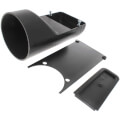
The basement window frasme has a 17x 34 full screen so it's not restricting the air.
Bob
Smith G8-3 with EZ Gas @ 90,000 BTU, Single pipe steam
Vaporstat with a 12oz cut-out and 4oz cut-in
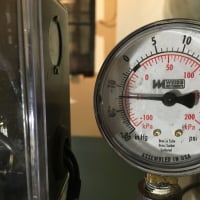
3PSI gauge1


Categories
- All Categories
- 87.8K THE MAIN WALL
- 3.3K A-C, Heat Pumps & Refrigeration
- 59 Biomass
- 430 Carbon Monoxide Awareness
- 132 Chimneys & Flues
- 2.2K Domestic Hot Water
- 6K Gas Heating
- 124 Geothermal
- 170 Indoor-Air Quality
- 3.8K Oil Heating
- 79 Pipe Deterioration
- 1.1K Plumbing
- 6.7K Radiant Heating
- 396 Solar
- 16.1K Strictly Steam
- 3.5K Thermostats and Controls
- 56 Water Quality
- 51 Industry Classes
- 51 Job Opportunities
- 18 Recall Announcements