Do I need a buffer tank?

Hi. I am installing a hydronic system in my basement, and am unsure whether or not I need a buffer tank. LoopCAD shows the modeled slab load at 9,999 BTU/hr, but my Rinnai 90k combi-boiler minimum firing is 15,000 BTU. Will this 5,000 BTU difference be a problem for a slab that is 6" thick, located 6ft. below grade, and is insulated beneath by 2” rigid foam and on the sides by 1.5” rigid foam? My house is located in Seattle, so the basement is cool year-round. All of this information was included in LoopCAD’s calculation. I am primarily concerned with keeping a fairly even temperature for the slab and keeping boiler cycling at a minimum of 10 minutes to extend equipment life. Intuitively, it seems that even 15 minute programmed firing intervals would not produce much heat loss in this large, insulated slab, but I don't know for certain. If I do need a buffer tank, though, should I install it where I was planning to put a SEP-4 hydraulic separator or should I place it before or after the manifold? Any help is much appreciated. If any additional details are useful that I can provide, please let me know.
Comments
-
What square footage is the slab and how many loops are in slab and what size/length of tubing? A slab is a tremendous heat sink and if there is enough tubing in the slab there is no need for a buffer tank. A slab will usually receive far more heat than the room requires so control is important.
0 -
what about a smaller boiler, most of the 50,000 turn down to about 8000.
Or for that small load a 3500w electric might make sense?
That load number if for design days, a small percentage of the heating season, so the load will be lower for much of the year
Bob "hot rod" Rohr
trainer for Caleffi NA
Living the hydronic dream0 -
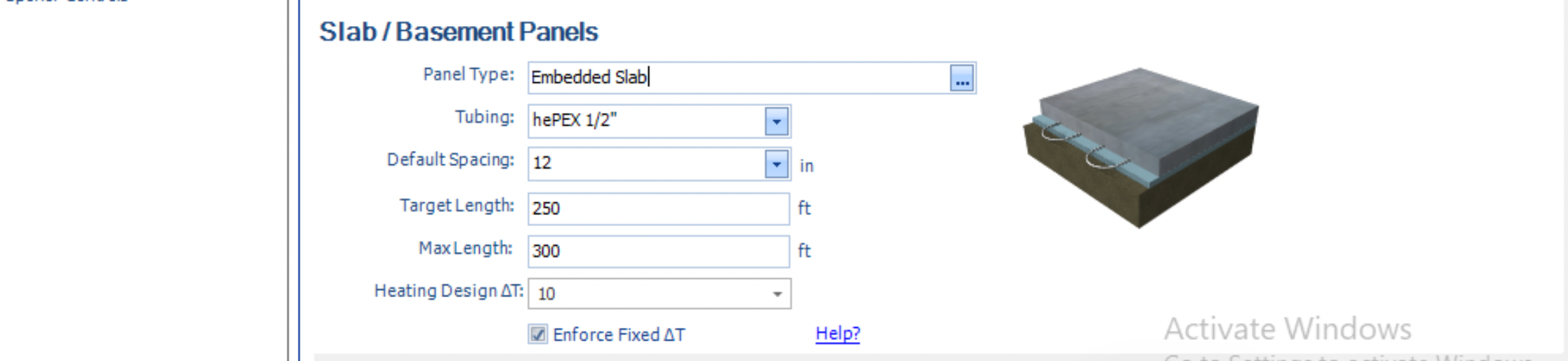
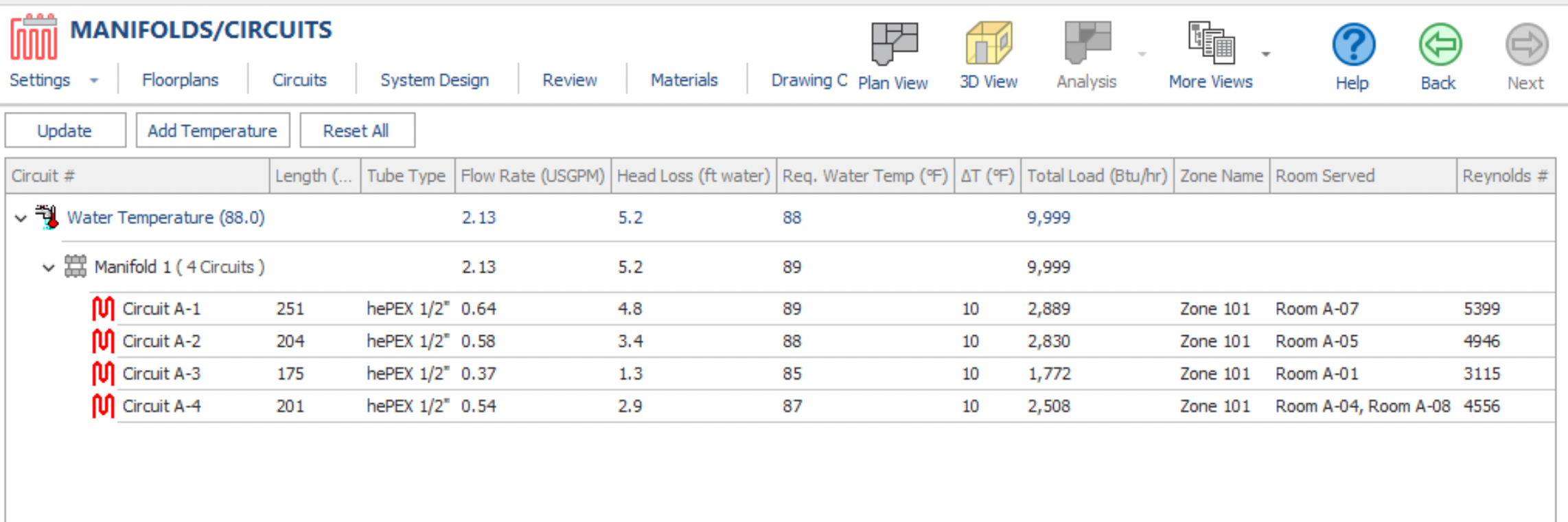
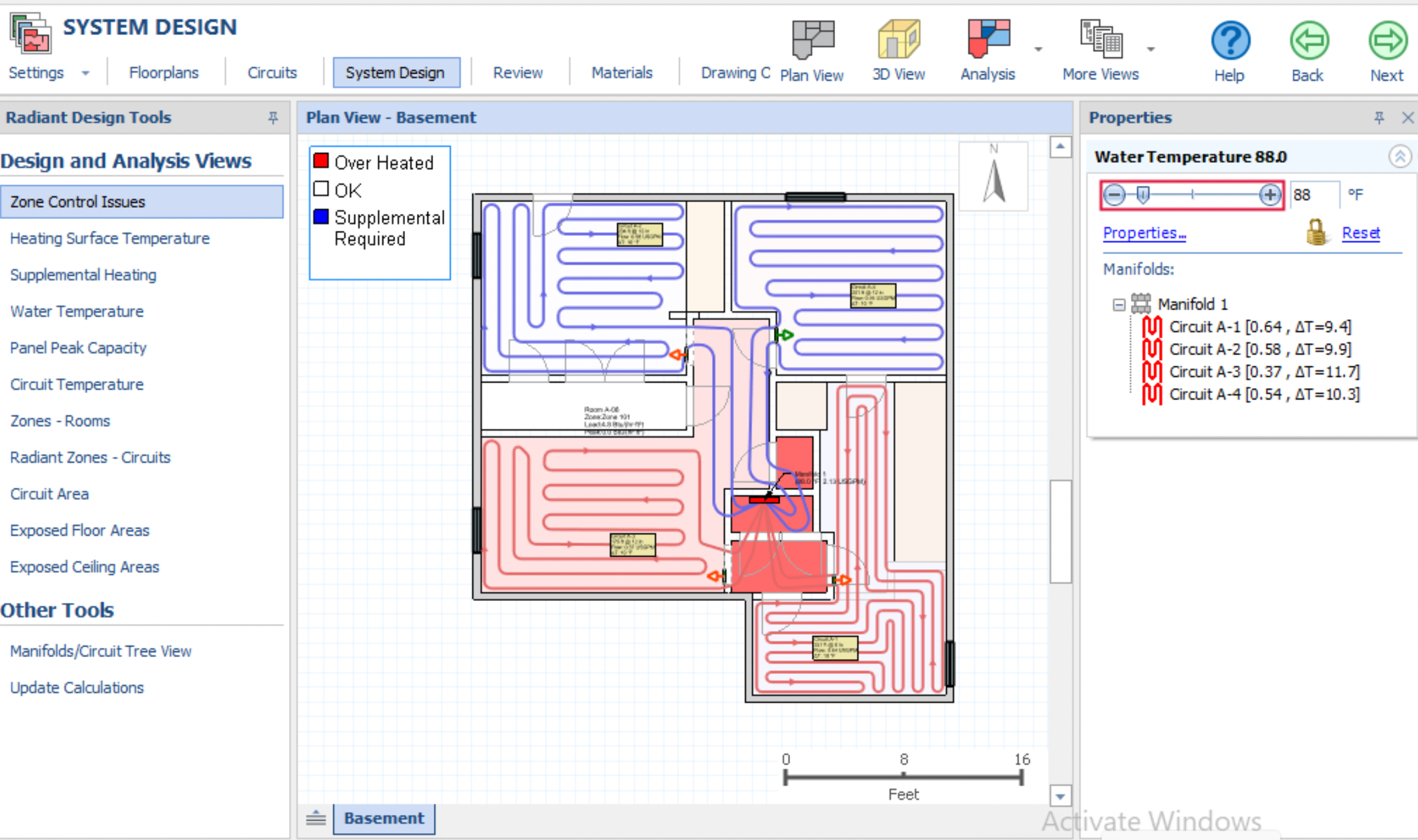
Thanks for the fast responses. The slab is 980 sq. ft. and has four loops. The total 1/2" hePEX tubing used will be 831 ft, and will be placed 4.5" below the top of the slab (or 1" off the bottom of the slab). Spacing is 12" everywhere, except for the bathroom and office, which will be 6". The slab delta T is set to 10. The combi-boiler is the I-Series Rinnai IP090199C, and its water temperature minimum is 85 degrees. I'm just trying to avoid having to add a buffer tank later to deal with short-cycling. I'd rather add it now, if I'm likely to need it, although it would be really nice to not have another large item crammed into the room. The buffer tank calculation suggests a 14 gallon model for mild conditions. I've attached some images from LoopCAD if that helps. Thanks again.
 0
0 -
Also, if I were to just increase the cycle time to 15 or 20 minutes (or longer) to avoid a buffer tank, would it be that noticeable underfoot? Would the slab temperature fluctuate that much?
0 -
You do not need a buffer tank for the basement heat. The concrete is your buffer tank. Your boiler, if running at its minimum firing rate, would have to run approximately 2 hrs to heat the slab ONE degree. With proper settings and controls you can do nice long cycles.
 0
0 -
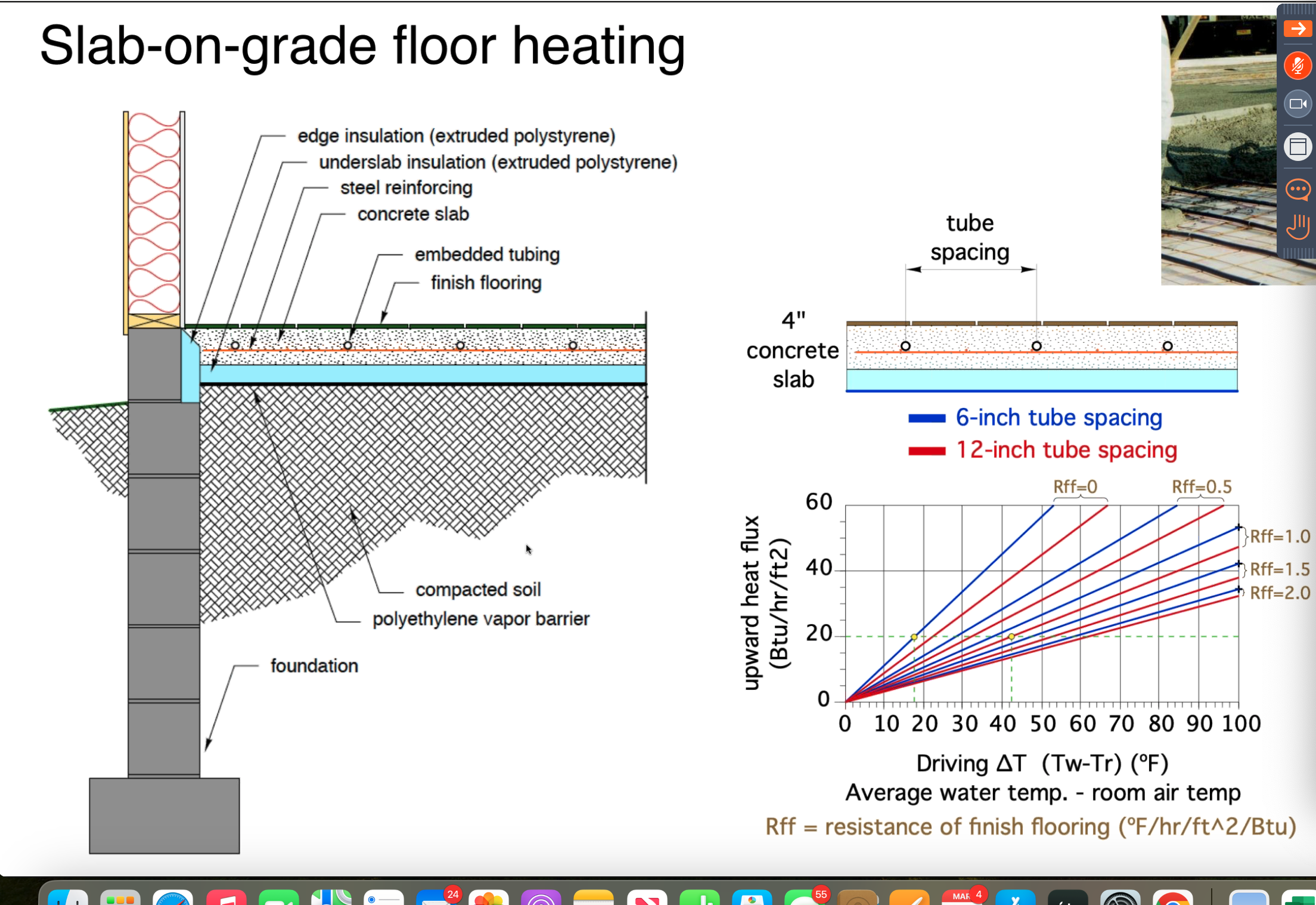
Why a 6" slab?? The slab is a thermal flywheel. The more mass the slower to warm or cool down. It will not be very responsive to temperature changes.
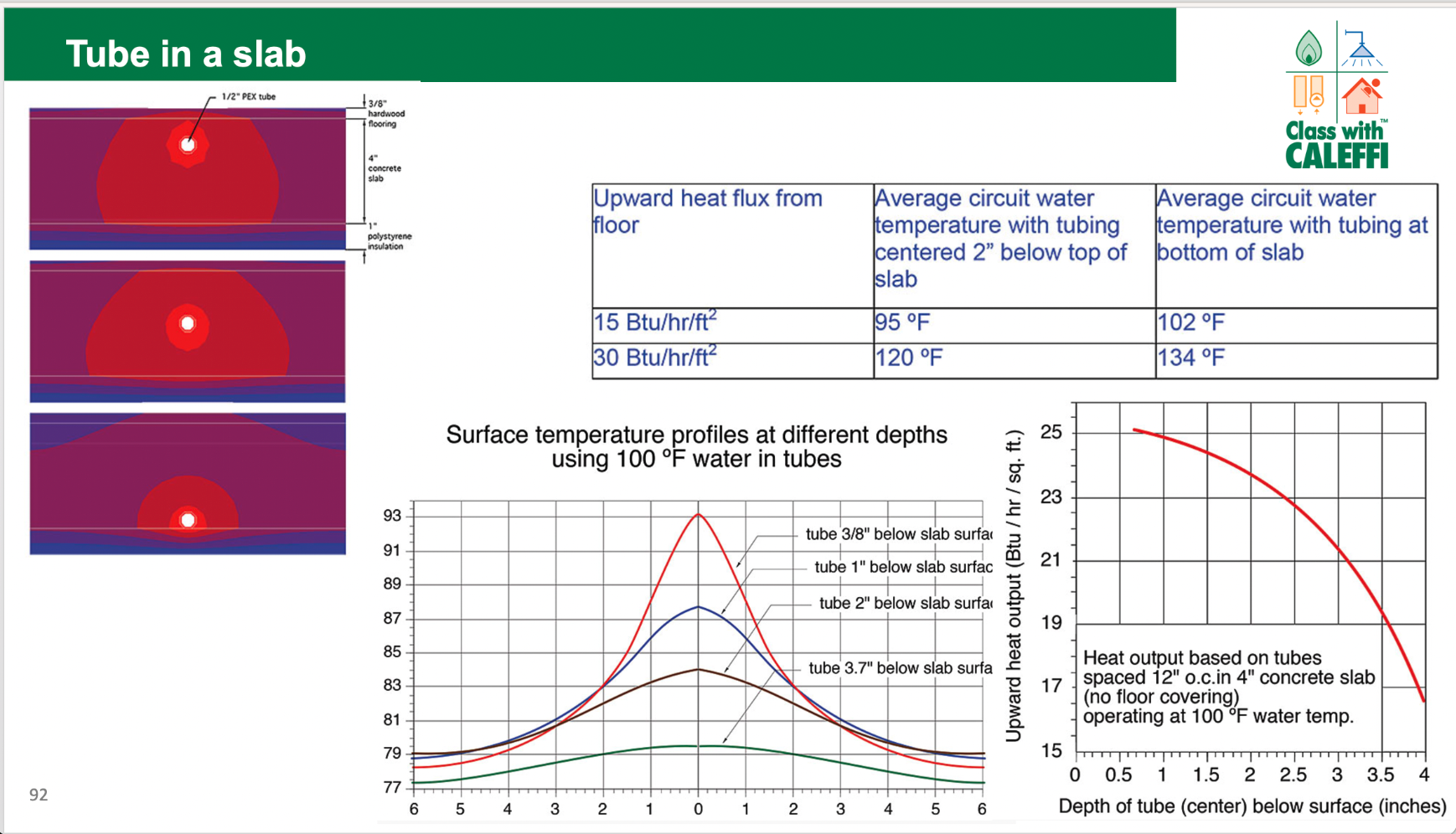
Also tube 2" below the top is ideal. Faster response and lower SWT will be the benefit.
6" on center is a nice option also for low SWT and nice consistent surface temperature.
Graphs below show the difference in tube depth and spacing.
A 4" slab is about 34,000 lbs
A 6" about 44,000
The specific heat of concrete (btu required to raise 1 lb one degree) is 0.21 X the weight give you an idea of the warm up and cool down.
 Bob "hot rod" Rohr
trainer for Caleffi NA
Living the hydronic dream0 -
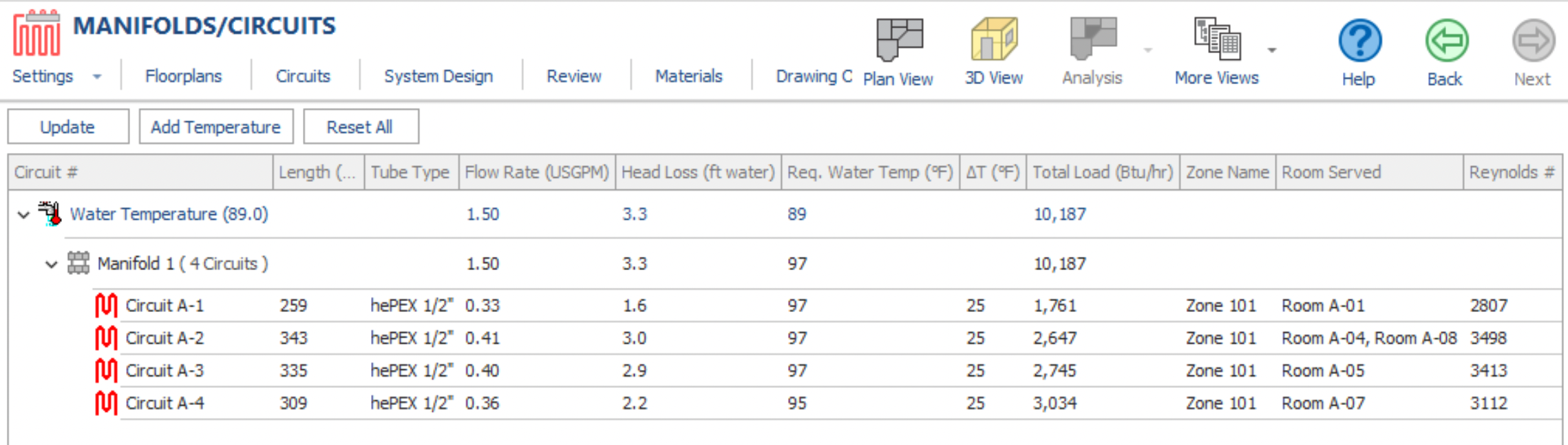
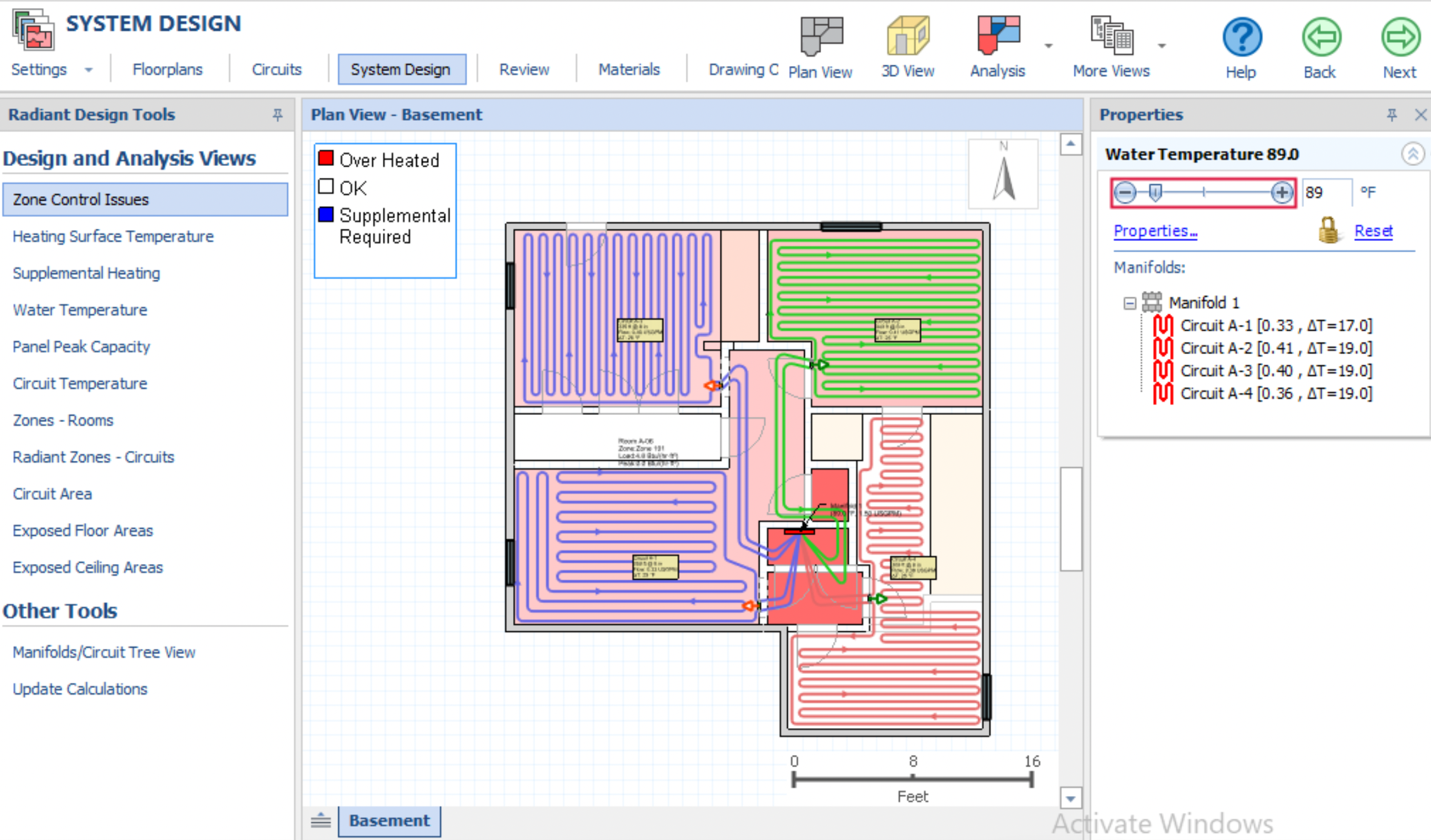
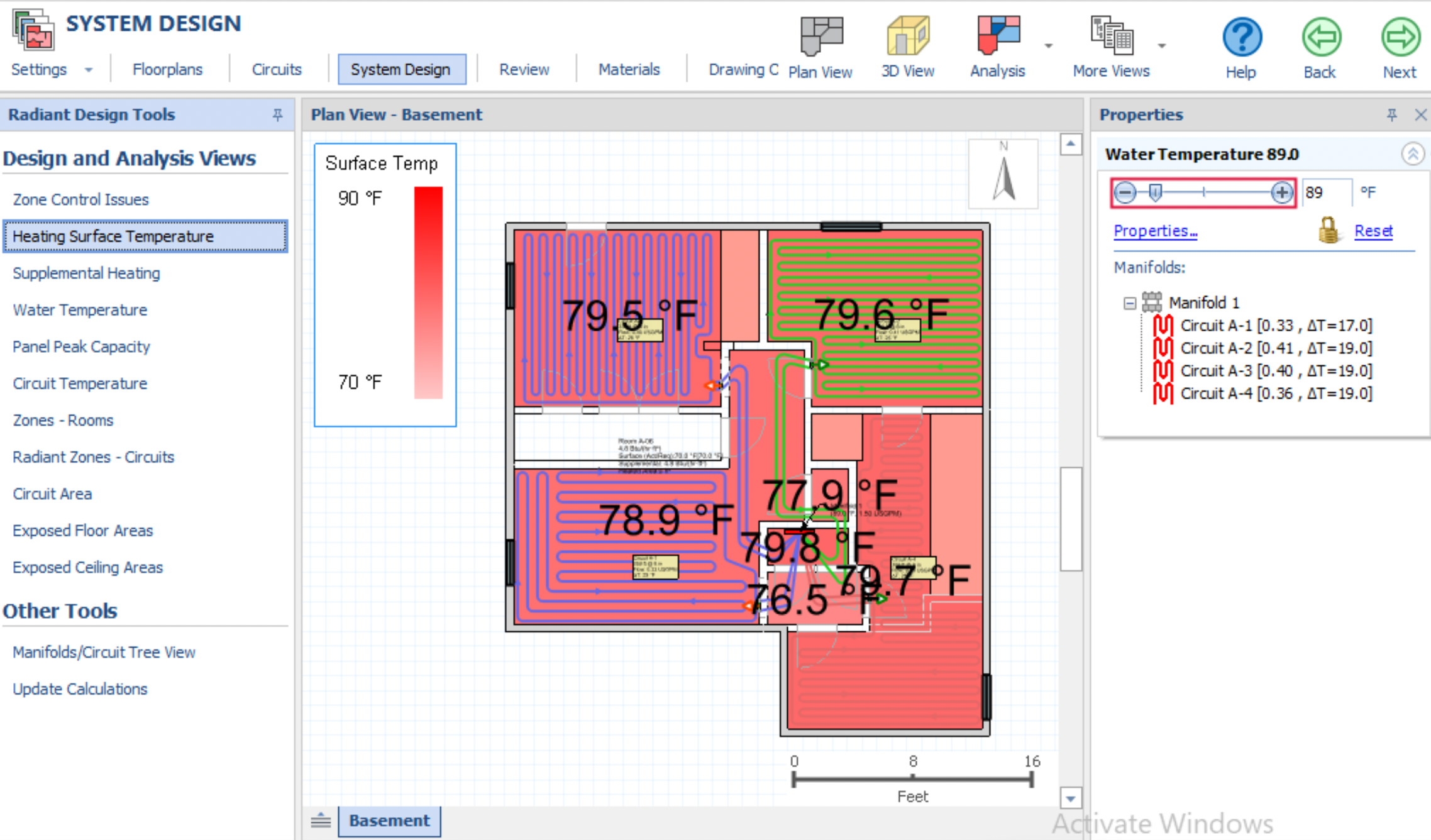
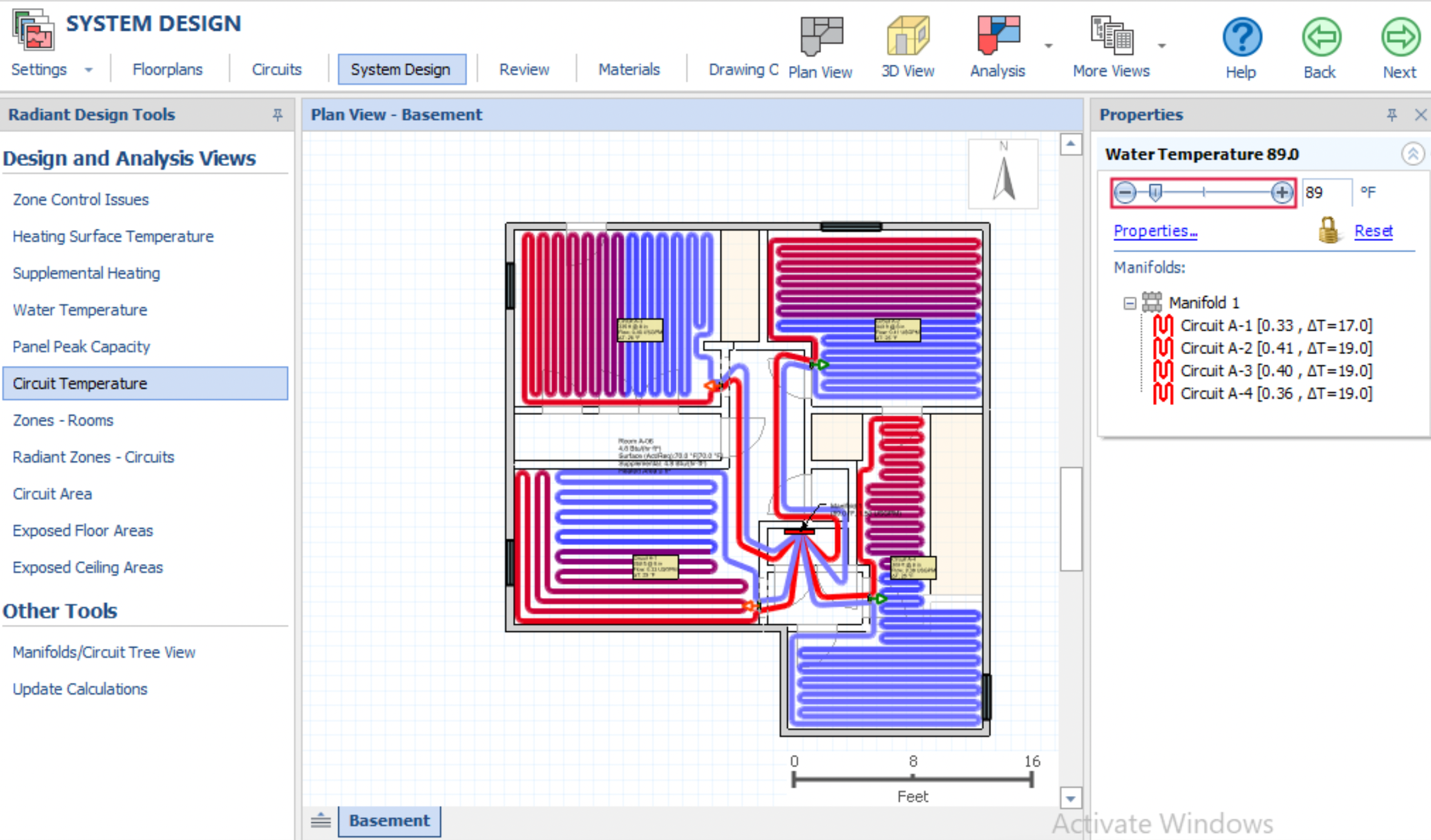
Ok, thanks. Then it does seem that when I dial in temperature and time that long cycles will be easy to accomplish and a buffer tank is redundant/excessive. I have one follow-up question concerning comfort. I moved the PEX to 2" below the surface of the slab and changed the spacing to 6" for the whole basement layout, as recommended, and I also changed the slab delta T from 10 to 25. It does seem more difficult to get to a combination of settings that doesn't result in "overheating," according to LoopCAD's outputs, though. Some images are attached. Do you all think this is a better outcome than the previous settings, and do you think this latest iteration has any downsides?
 0
0 -
One error. The bottom left room has 8" spacing, not 6".
0 -
The 6" concrete over 4" buys you pretty much nothing except more cost. My heated floor has a 1.5" overpour and the response time is already too slow. More just makes it worse, there is a lot of hand wavy stuff about flywheel and thermal mass which does squat.
As other have said, with the amount of concrete you have, you don't need a buffer tank. I would check the minimum flow rate on the Combi, but most likely you can direct plumb the setup if you bump up the flow rate in each loop. The extra flow won't change operation much except reduce striping and lower delta T.
Some combi units even come with a built in expansion tank, with such small volume you won't even need another one.
With the low load, I would limit the CH firing on the combi to near your design load as it will further help with cycling.
0 -
I would lower the supply temperature as low as you can and still supply the heat for the high load area. I would stay with a 15 delta, too wide and the end of the loops get cool.
You have a couple long loops, I try to keep 1/2" pex 300' or less. Typical of a basement you have a low load of around 10 btu/ sq ft.
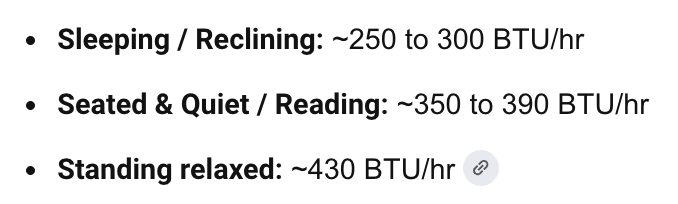
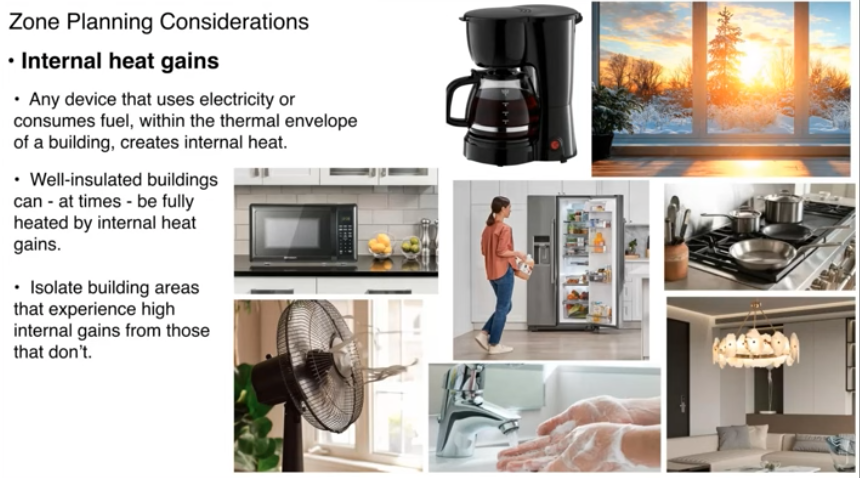
You may not experience warm floors with a low load like that. In some cases the internal gains will heat the space without the radiant. A few humans in the space may be enough BTUs :) as long as you fuel, feed them.
The room with all the runs in and out of the manifold will be warm, you may reroute some of those leaders. Internal rooms don't need much if any radiant.
As for the boiler, most have anti cycling function and a feature called ramp delay, where the boiler comes on in increments. In other words it starts at 20% fire rate for a time you program, then ramps up by 10° or so every 10- 15 minutes. This helps a lot with high mass systems to prevent over shooting.
Anti Cycle just times the boiler off for the time that you program into the control. So after it shuts off, program a 10- 15 minute delay. That goes a long way to prevent short cycling on mild low load conditions.
I've done small systems like with a basic 40 or 50 gallon gas or LP water heater. They are about 25,00 output and they have a built in buffer capacity. While not as efficient as a boiler, price is reasonable, not much goes wrong with them. In a closed loop application you may get 20 years of more out of a glass lined tank.
On a system like that with SWT uder 90° I'd run tne tank at 120 -130 and use a mix valve so the tank doesn't condense (sweat) allthe time.
Bob "hot rod" Rohr
trainer for Caleffi NA
Living the hydronic dream0 -
At the NEEP.org website there is a calculator where you can put in a weather station and a heating load and it gives you a breakdown by hours per year for each temperature. I put in King County Airport for the weather station and 10k BTU/hr for the heating load. I got that your design temperature is 29F, your mean annual minimum is 17F, and the mean temperature during heating season is 49F. With a heating load of 10k BTU/hr at 29F, at 49F your heating load is 3548 BTU/hr.
While it's important to make sure you have enough heat to meet the design temperature load and even the mean annual minimum, you also need to think about comfort on more typical days. With a slab around 1000 square feet that's about 3.5 Btu/hr/sf, which means a slab temperature about 1.8F above room temperature. That's going to be barely noticeable.
Slab heat works best in leaky, high-heating load buildings. The higher the heating load relative to the heat capacity of the slab, the more quickly the system can respond to changes in the heating load. A 6" slab of 1000 square feet is going to have a heat capacity of about 15,000 BTU per degree F. Let's say you have a cold night and get down to 17F, you need about 14K BTU/hr or a floor temperature 7F above room temperature. Then it warms back up to normal weather, and you need 1.8F. So the slab needs to lose 5.2F, which is 78,000 BTU's. But your heating load is only 3500 BTU/hr, so if you turn the heat all the way off that's going to take 22 hours or so. During those 22 hours the house is going to overheat.
This is a roundabout way of saying this system doesn't sound like a good fit for your house.
0 -
Radiant ceilings or walls are an easy retro fit and a very quick responding low mass system. Or panel radiators.
It really depends on your expectations. If you want to feel warm floors, they need to be above skin temperature. But that would over-heat the space and flywheel for hours.
Any cooling or dehumidification needs for the space?
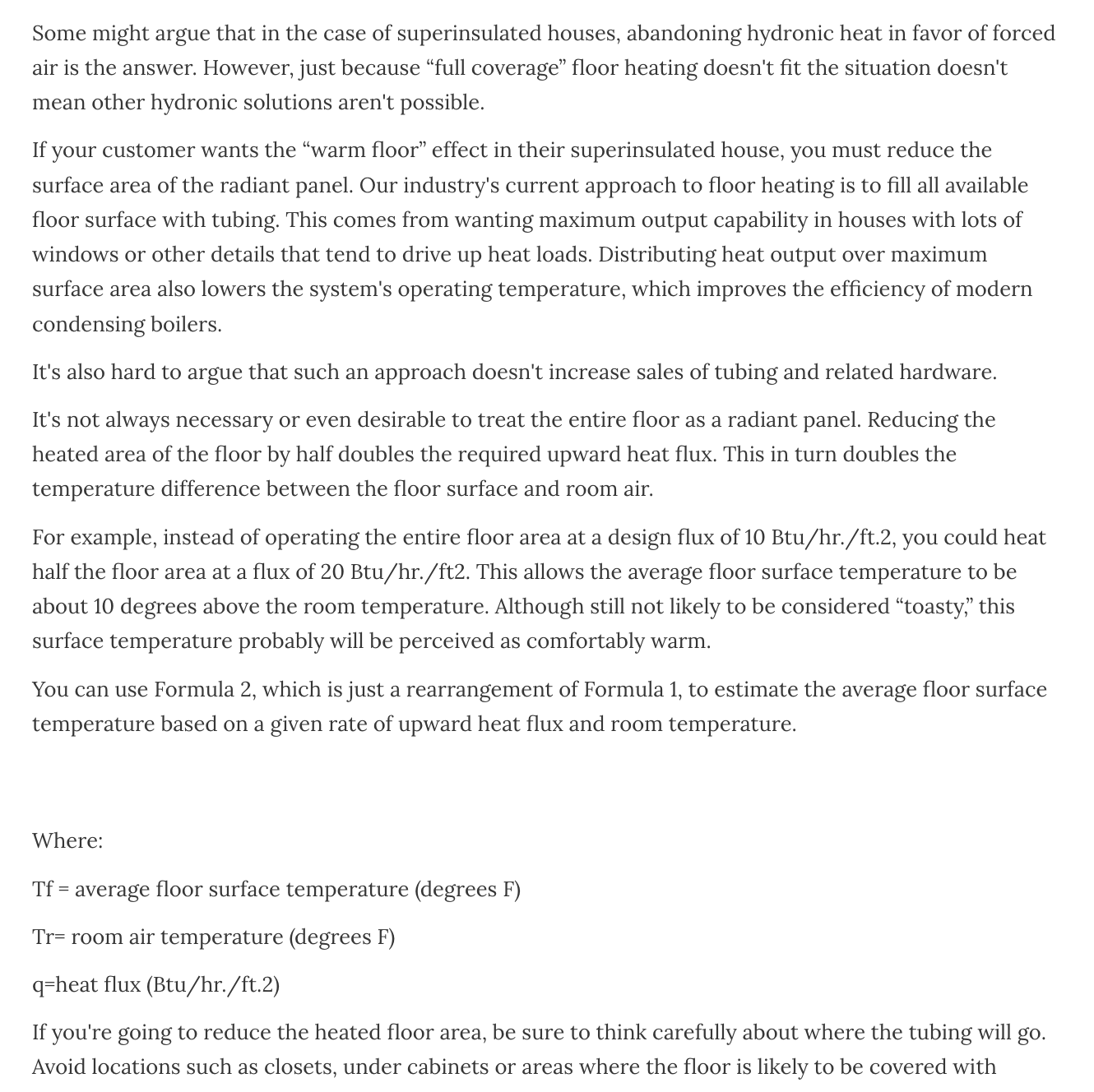
I have heard of people deleting tube runs around them perimeter where you don't typically stand or sit. Concentrate tube in the center at a warmer SWT. So you still get some warm floor "feeling" without over-heating the space
Do some more number crunching, this article has suggestions and formulas.
 Bob "hot rod" Rohr
trainer for Caleffi NA
Living the hydronic dream0 -
Thanks a lot for all the comments. I bought the combi-boiler a few months ago and can no longer return it, so am trying to make it work. It does have a ramp delay and an anti-cycle function. I also have a very small mech room, so am hesitant about having more than one unit to do two jobs. Additionally, the slab is ~6ft below grade and in the past my basement office was always so cold (even in the summer) that I ran an electric heater continuously to stay warm. The basement will be insulated from the bottom and sides now, though, so perhaps that information is no longer relevant. I just suspect that the temperature swings from one day to the next will not be felt much in the basement, so the energy needed to heat it should not change much throughout the year. Another bit of information I probably should have provided is that the house also has a heat pump for primary heat, so if the outdoor temperature changes much from one day to the next, then that can be covered by the heat pump. I don't need the slab to ramp up and down every day. Maybe I alter the temperature 2-3 times per year. I'm also ok with the slab not providing the same degree of warmth as an electrically heated floor. I just want the floor to not feel very cold. The finished floor will be the slab. Would it make sense to add a mixing valve to force the temperature lower, if overheating is a problem? Bob, you suggested I maybe just use a small water heater for the job. Would you still take that route after taking into account all this additional information or do you think the unit I have will be ok?
0 -
you can make that combi work well enough, if you want to use all the control functions to smooth it out
The other point being the the room will be comfortably warm, but you may not feel warm floors. As the design shows they may run in the 70’s, a bit warmer than ambient air temperature
Find a comfortable temperature and try mot to setback or change Let the system find its thermal equilibrium
Cooking, wild block parties may temporarily overheat the space.
Bob "hot rod" Rohr
trainer for Caleffi NA
Living the hydronic dream0 -
Noted. Thanks for the help, everyone.
0




Categories
- All Categories
- 87.7K THE MAIN WALL
- 3.3K A-C, Heat Pumps & Refrigeration
- 59 Biomass
- 430 Carbon Monoxide Awareness
- 129 Chimneys & Flues
- 2.2K Domestic Hot Water
- 5.9K Gas Heating
- 121 Geothermal
- 170 Indoor-Air Quality
- 3.8K Oil Heating
- 79 Pipe Deterioration
- 1.1K Plumbing
- 6.6K Radiant Heating
- 396 Solar
- 16K Strictly Steam
- 3.5K Thermostats and Controls
- 56 Water Quality
- 51 Industry Classes
- 51 Job Opportunities
- 17 Recall Announcements