Hydronic heating P/S design

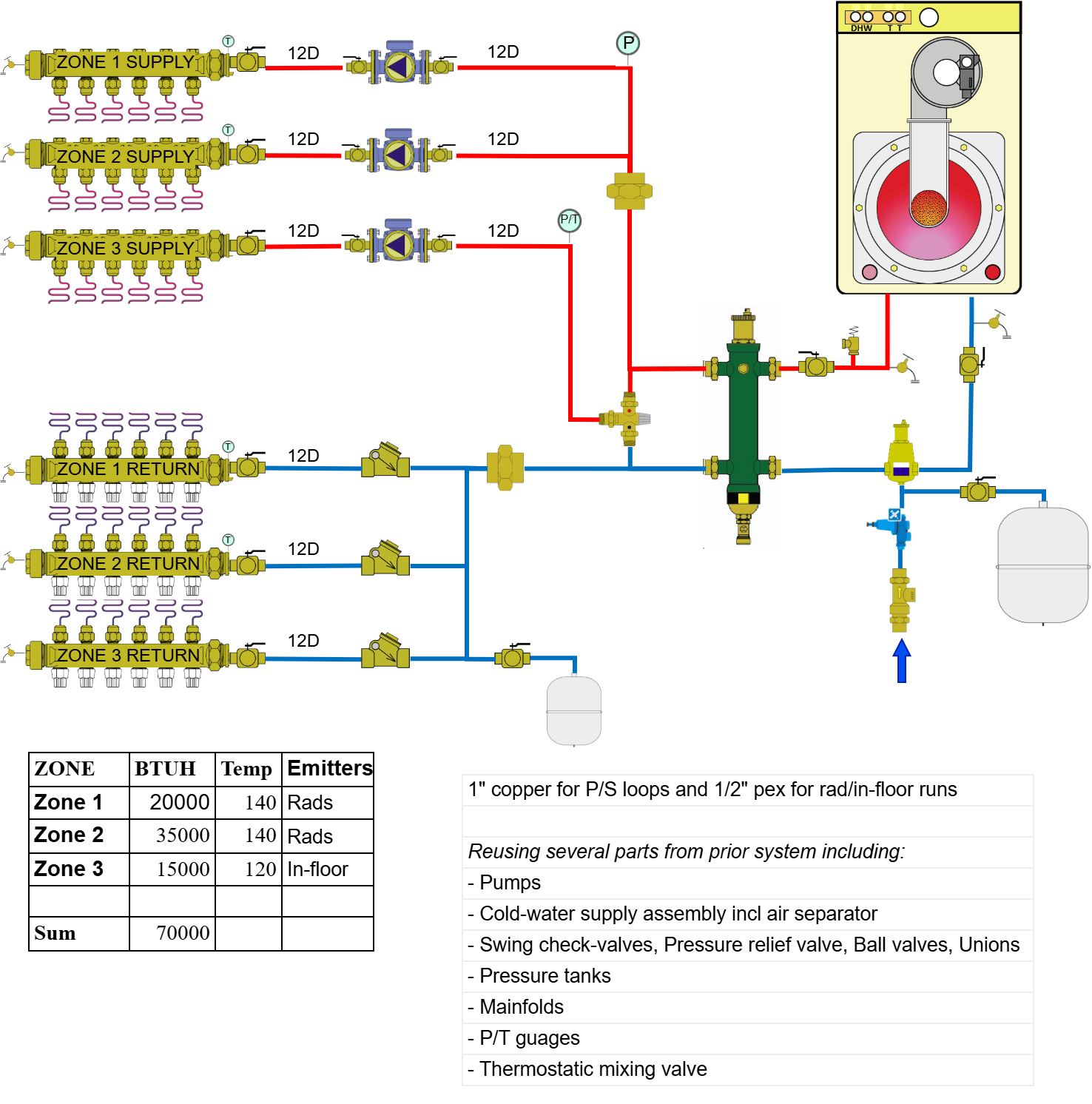
Looking for comments and feedback on P/S design for residential boiler room setup for a project. Installing new mod-con h/w combo boiler as well.
Comments
-
JKAA
The benefits and efficiency of a mod/con boiler is operating it at the lowest possible supply water temperature. So I would eliminate the mixing valve on the system side of the LLH, first. Next, I would consider using on one system pump and use actuators for zoning. Last, if you size the expansion tank on the boiler side of the LLH correctly you can eliminate the second expansion tank on the system side of the LLH.
Good luck with the project
Jeffrey
Jeffrey Campbell0 -
I like your design. there is some redundancy that may save you some $$$ to eliminate some parts.
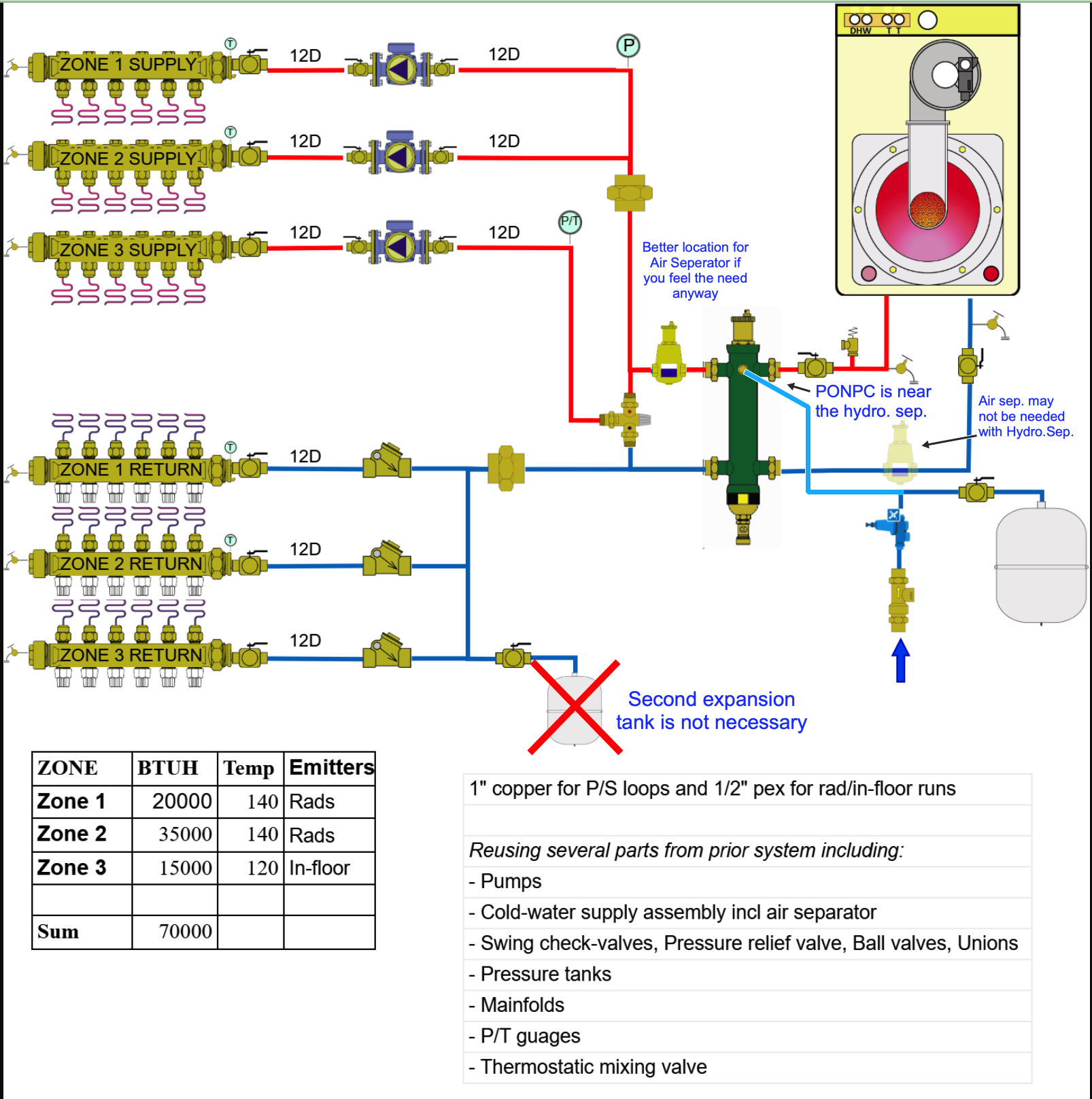
Since all the piping is connected thru the hydraulic separator, you only need one expansion tank. you can locate that expansion than as close to the hydro sep (or on it) as possible. this will make the separator the point of no pressure change making that the most stable location in the system.
With the very efficient and low flow rate thru the hydro-sep you ma not need the air separator at all, If you are a belt and suspenders kind of guy, then the best location for the microbubble Air Separator is the hottest pipe in the system, so I moved it to the system supply between the PONPC and the system pump(s).
@hot_rod is the expert on this, so he may have an even better idea. He may draw it on the back of a restaurant napkin depending on where he is when he reads this.
Edward Young Retired
After you make that expensive repair and you still have the same problem, What will you check next?
 1
1 -
Thank you Jeffrey - the in-floor is in basement slab with ceramic tile on top, so you're suggesting running all zones on 120, or perhaps slightly higher?
0 -
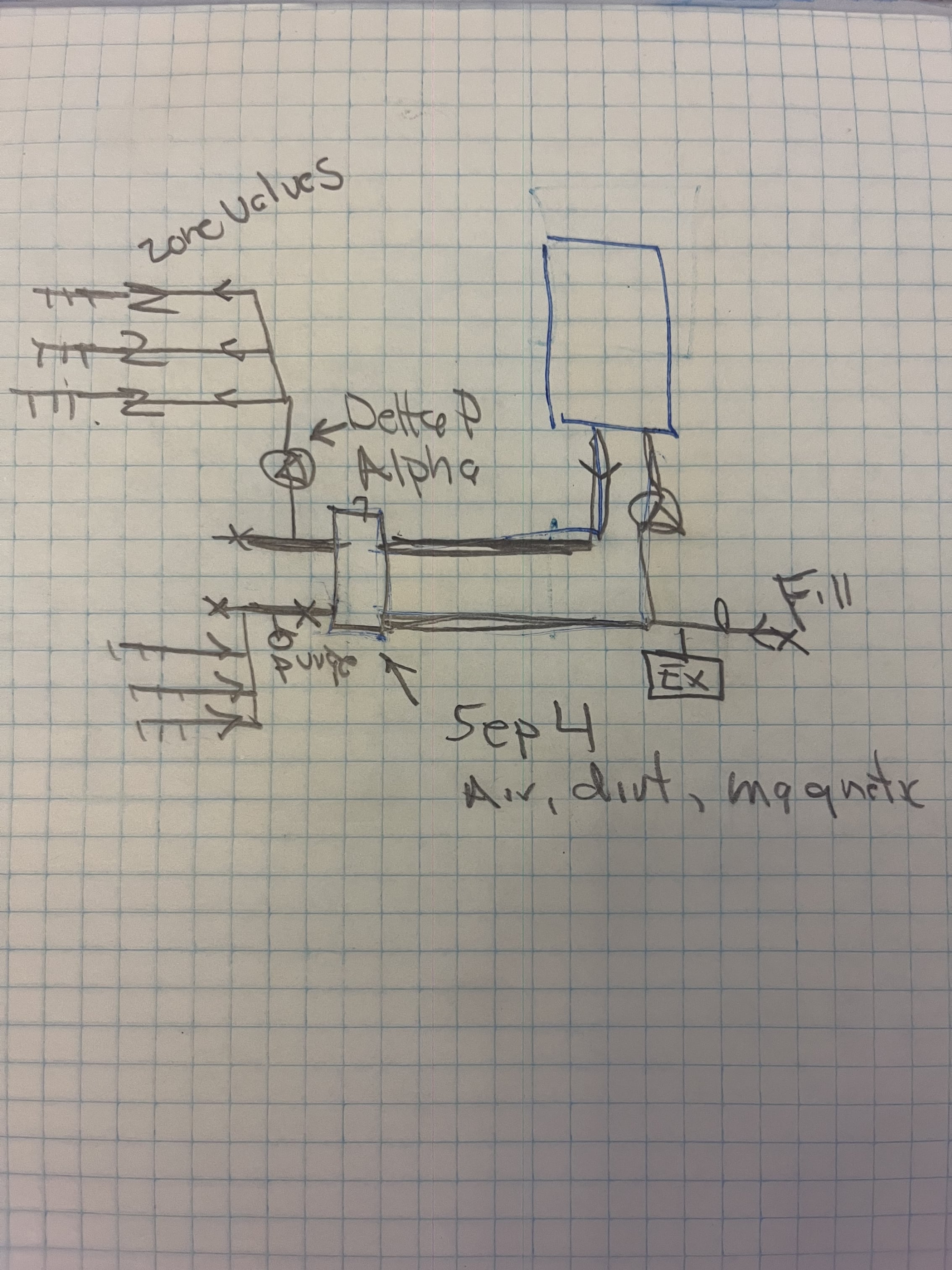
a single ECM delta P circ with some valves is a good option. The pump speed will modulate by itself as zones open and close
So gpm is always correct, power consumption is lower
The boiler, depending on brand, may have a variable speed pump also
A heat load and design would tell you the required operating temperature
The boiler temperature can modulate as the heat load does
Bob "hot rod" Rohr
trainer for Caleffi NA
Living the hydronic dream0 -
Since you are replacing an exiting boiler, run through the math here to figure out your heat loss:
https://www.greenbuildingadvisor.com/article/replacing-a-furnace-or-boiler
From there you can measure the size of your emitters and see the max temp you need to supply that heat. If it comes in around 120-130F, you don't need a mix valve for the slab.
@hot_rod layout is the best for new install. Since you have all the bits, not really worth buying new pump and zone valve. The many pumps can work at higher energy cost.
With a multi pump setup you can also over-pump your secondary loop which can drop the burner efficiency a couple of points. When setting up, make sure to adjust the pumps to get a decent delta T when running.
If you are in DIY, you make a LLH out of Ts and nipples with an auto air vent on the top. Magnetic sep is only needed if you have cast iron rads.
0



Categories
- All Categories
- 87.8K THE MAIN WALL
- 3.3K A-C, Heat Pumps & Refrigeration
- 60 Biomass
- 430 Carbon Monoxide Awareness
- 133 Chimneys & Flues
- 2.2K Domestic Hot Water
- 6K Gas Heating
- 124 Geothermal
- 170 Indoor-Air Quality
- 3.9K Oil Heating
- 79 Pipe Deterioration
- 1.1K Plumbing
- 6.7K Radiant Heating
- 397 Solar
- 16.1K Strictly Steam
- 3.5K Thermostats and Controls
- 56 Water Quality
- 51 Industry Classes
- 51 Job Opportunities
- 18 Recall Announcements