Proper way to vent water heaters and boiler together?

Sorry if this isn’t Strictly Steam but this is the section I always get good advice in and it doesn’t connect with a steam boiler vent too…
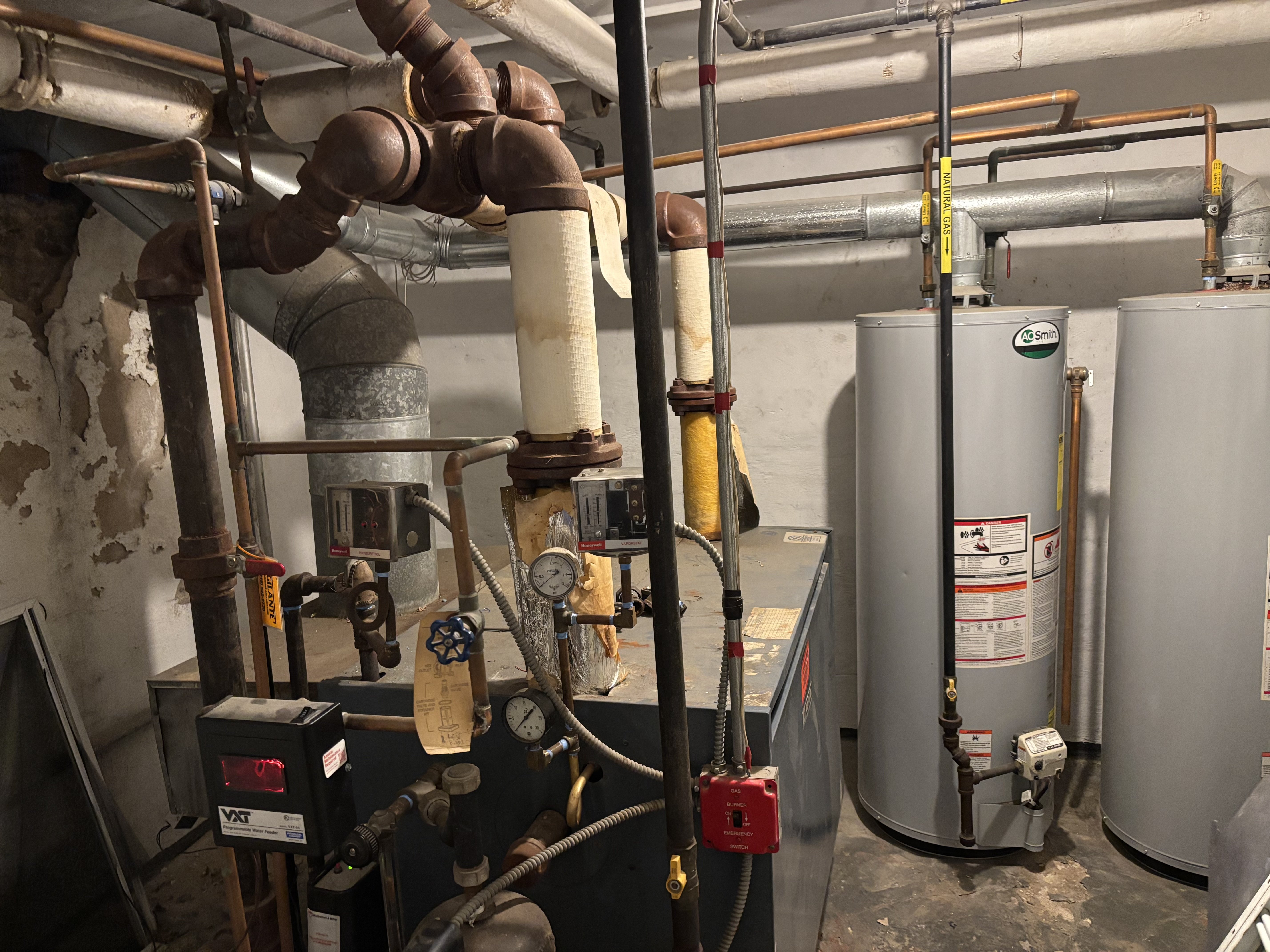
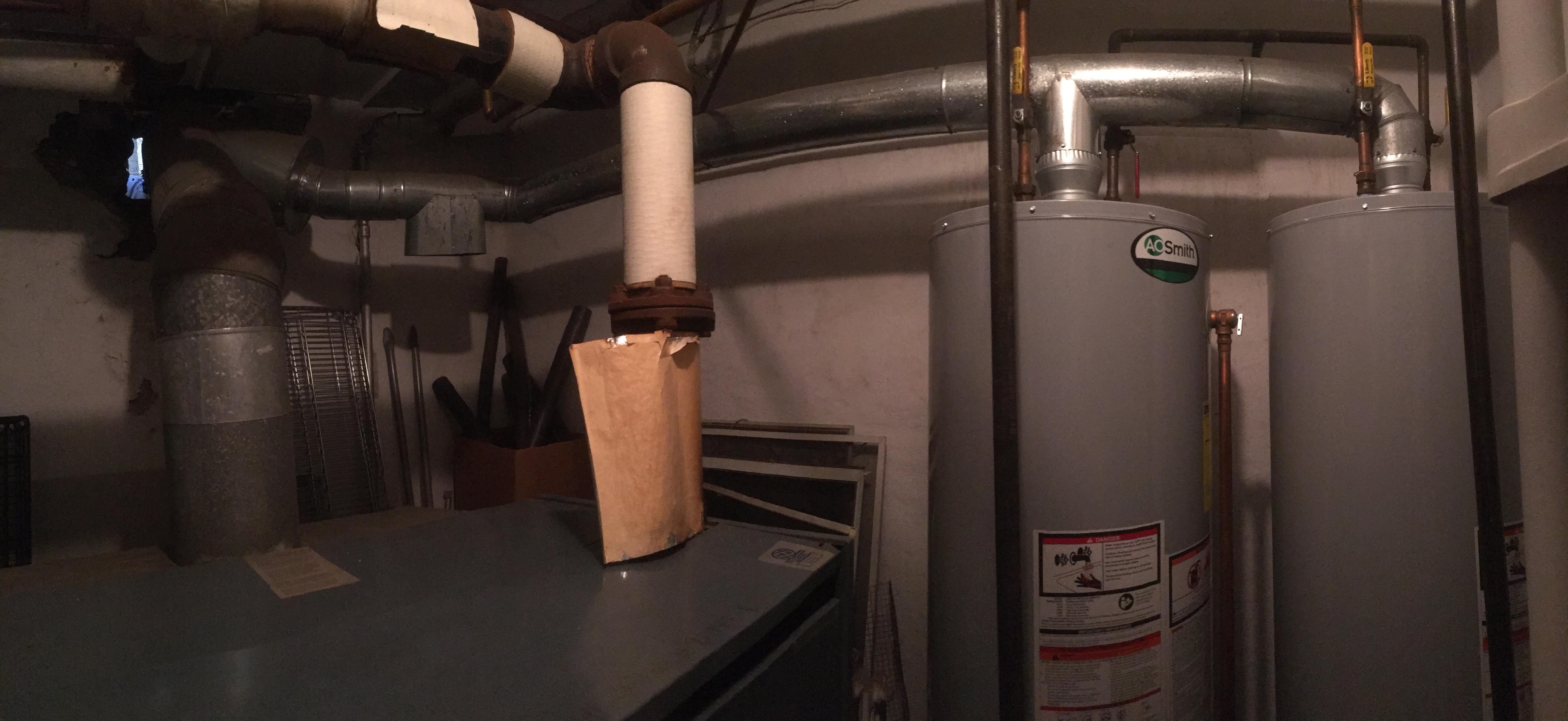
What’s the proper way to route these vents for two water heaters and a gas steam boiler?
I know the water heaters tee should be a wye and the water heater vents should rise up higher before going horizontal, but should the wye just be swapped out in the same spot as the current tee or should each water heater have its own line and then wye in together a little further to the left of the heaters? Any other suggestions?
The right water heater rusted out badly on top after 8 years, maybe from condensation dripping back, so this was the motivator to reconfigure all this. Otherwise this setup had been fine for decades just as is.
Comments
-
If the water heaters could be vented into the chimney separately that would be better.
This is what is happening:
You set the water heaters at the same temp but in reality, most of the time only one runs.
The idle heater sits there , not cold but not firing so flue gas from the one firing condenses onto the idle heater. Also cool air comes in the idle heater draft hood and condenses on the idle heater when in contact with the warmer flue gas
 1
1 -
Thanks for the thoughts on it. There isn’t really any easy way to vent them separately to the chimney. They have to pass through a hole in a rubble foundation and it’s more of a project than I can take on right now.
So if I can’t do that, what’s the next best option?
0 -
I would try avoiding running the flue from the farthest water heater over the other one.
I would run a separate flue from each WH and tee (a Y is better) them together as close to the chimney as possible then connect to the chimney with 1 pipe.
Check the pipe sizing.
0 -
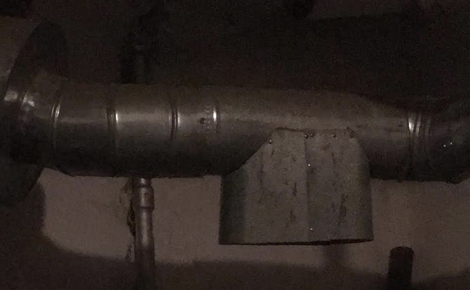
Hi, This thing in the water heater flue… is it open underneath? If so, it could be messing up the draft. Is there a reason for it being there?
Yours, Larry
 0
0 -
-
Venting may right, but can we talk about the piping of this Weil-McLain EGH Boiler…
1 -
what picture is the current one?
0 -
The thingy in the horizontal connector is a horizontal draft hood. Remove it. The water heaters are too far from the chimney- see the code. The connector does not have 1/4" per lineal foot slope-see the code. The connector does not increase in size- see the code.
You can common vent the WHs with the boiler if you size it correctly and the chimney can handle it. -see the code.
 2
2 -
All good advice above. Maybe in the future, when you need to replace the water heaters, replace them with shorter ones.
0 -
there two different pictures, in that picture the horizontal draft diverter it 100% cannot be removed cause there is not draft diverter on the top of the water heaters
0 -
Removing draft diverters? That's a no, no. Which picture is the new one, which is the old one?
0 -
Water heater venting doesn't meet code. Chimney connector 10' max, you look pretty close. How tall is the chimney? TEPL of the flue not to exceed 75% of the height of the chimney
0 -
TEPL?
Smith G8-3 with EZ Gas @ 90,000 BTU, Single pipe steam
Vaporstat with a 12oz cut-out and 4oz cut-in
3PSI gauge0 -
Where is the actual chimney? You can see the flue lines come together, then go into rubble wall, and daylight shining through. I dont see a chimney, or chimney connection. The heater on the right looks like a leaker, if it was condensation in the flue we would see rust on the flue pipe and at that draft box. I have never seen condensation attack such a specific area.
0 -
The picture I'm looking at has two WH's side by side with drafthoods, vent connector increasers to a common vent connector that runs virtually level around the neighborhood then has this THIRD draft hood closer to the chimney. IF you want to get technical about it, remove ALL the draft hoods, pipe the connectors directly to the top of the WH's using bullhead tees with double acting barometric dampers with spill switches, size the connectors properly and connect to a properly sized chimney/ vent/ liner. The input rating of the WHs was never provided but look at the code and you will see there is no way this complies. The code limits the distance from the chimney/ vent two ways: by the diameter of the connector and the input rating.
These water heaters are too tall for the chimney entrance. The sizing charts start at 1ft of vent rise then, it limits the lateral offset per connector diameter. You need the WH's MUCH closer to the chimney, MUCH shorter with proper venting.
Question: If you have a boiler right there, why not remove the WH's, replace with one or two indirect storage tanks with zone valves if need be and have ONE input into the chimney?
0


Categories
- All Categories
- 87.6K THE MAIN WALL
- 3.3K A-C, Heat Pumps & Refrigeration
- 59 Biomass
- 429 Carbon Monoxide Awareness
- 124 Chimneys & Flues
- 2.2K Domestic Hot Water
- 5.9K Gas Heating
- 119 Geothermal
- 168 Indoor-Air Quality
- 3.8K Oil Heating
- 78 Pipe Deterioration
- 1K Plumbing
- 6.6K Radiant Heating
- 394 Solar
- 16K Strictly Steam
- 3.5K Thermostats and Controls
- 56 Water Quality
- 51 Industry Classes
- 50 Job Opportunities
- 18 Recall Announcements