Noticed some oddities with my 2 Boilers

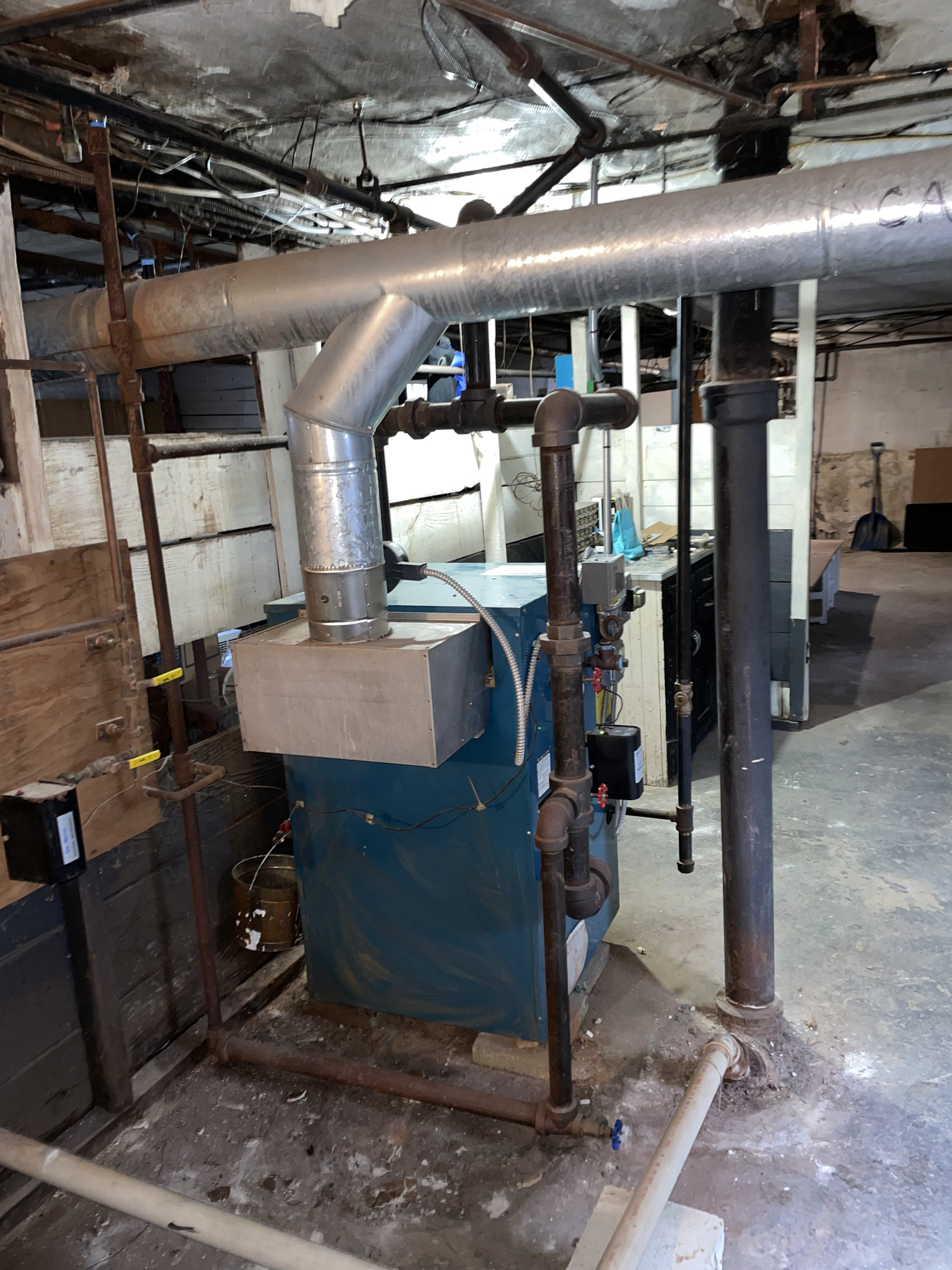
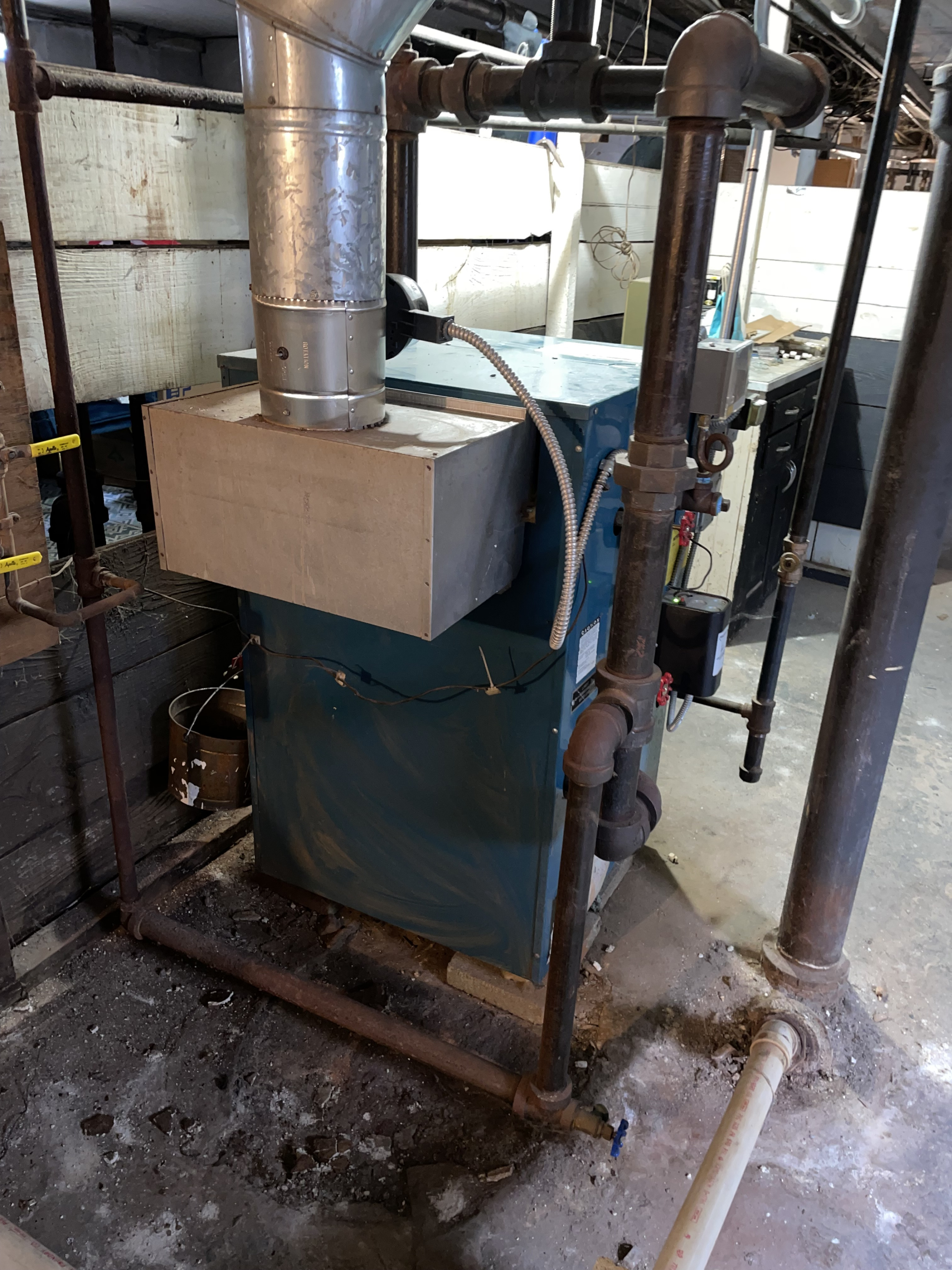
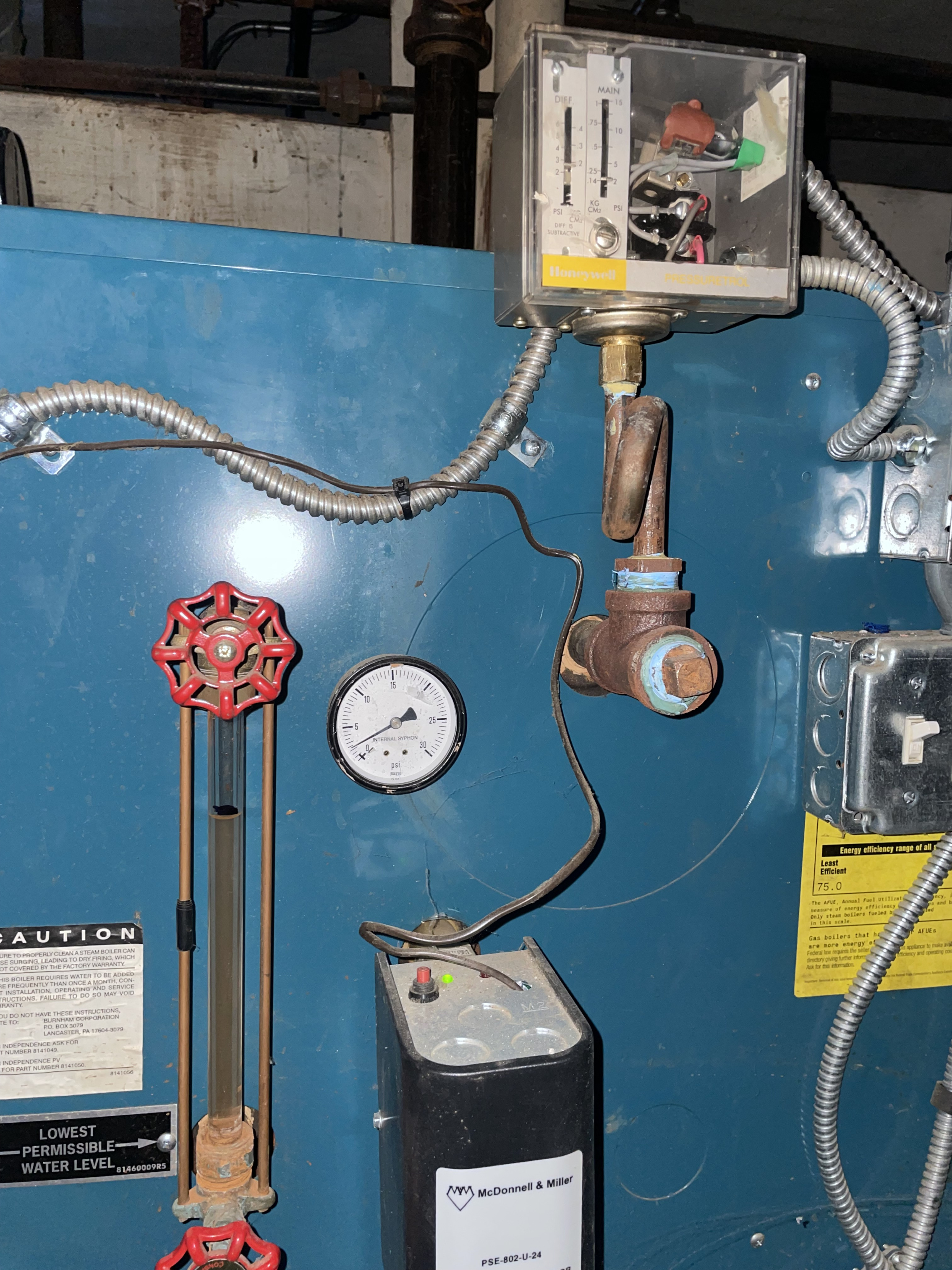
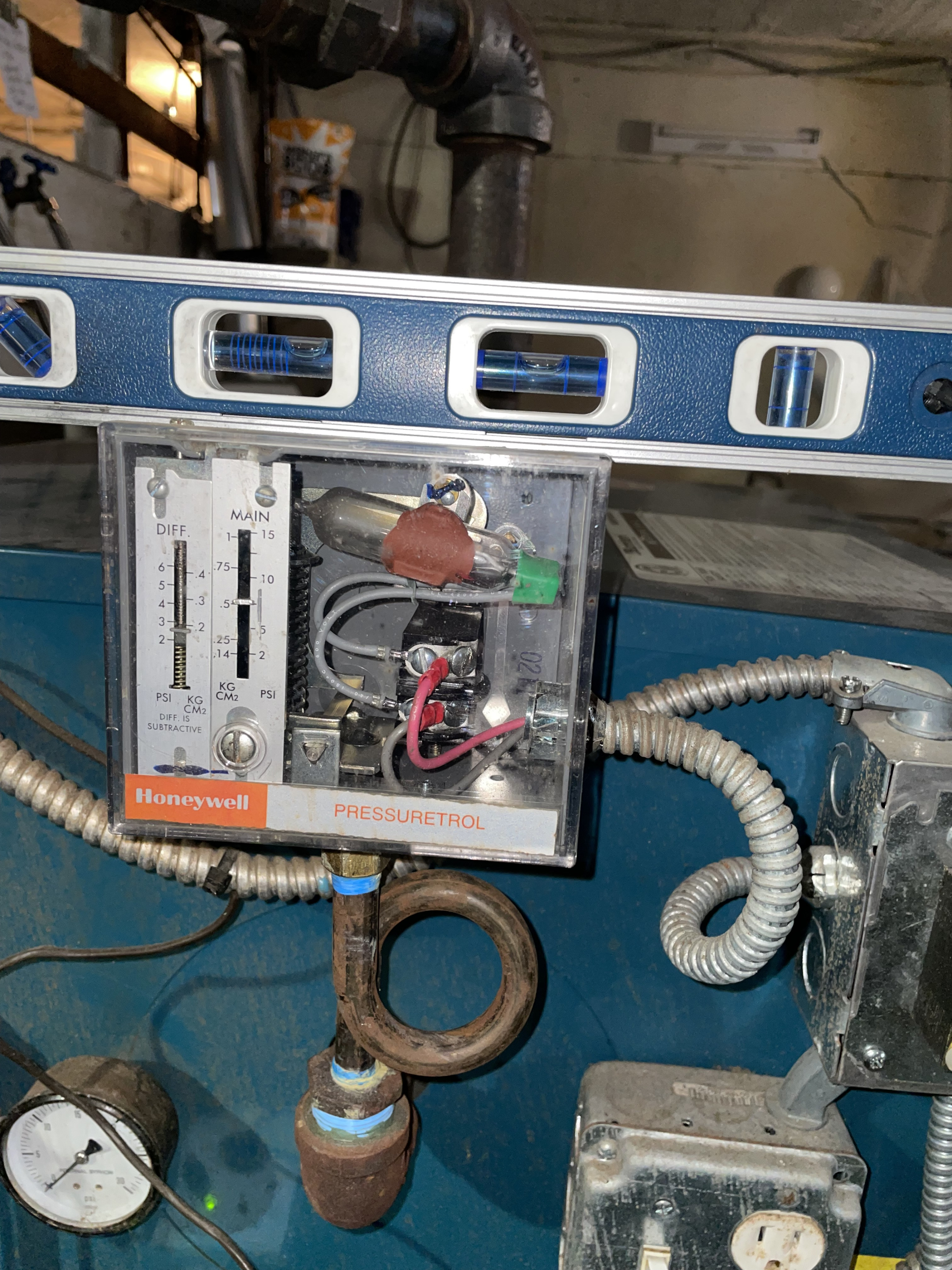
I have a 2-family house with two Burnham steam boilers and have recently started paying attention to them because I had a bad tuneup experience so I finally read “You Got Steam Heat” and noticed that the two guys sent to do my recent tuneups either made mistakes or overlooked apparent mistakes made by others before them. The pigtails on both systems are not perpendicular to the boiler, as recommended. I placed a level on each and - lo and behold - they are not level. (Plumber said that’s not a problem!) The pressurtrol settings on each are also funky. Unit 1 is set at 7.5
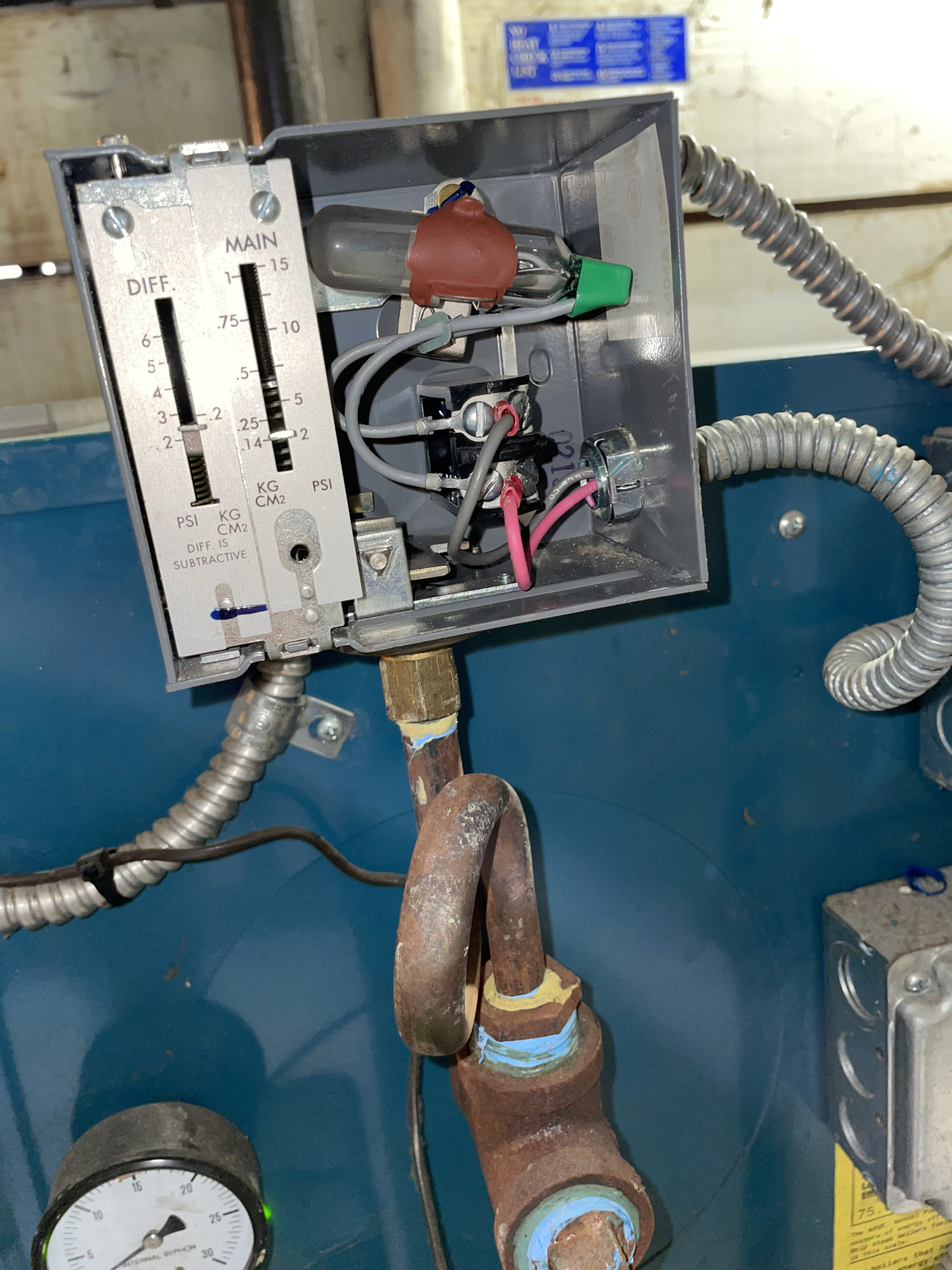
psi but it is ironically always running at 0 psi. From what i see, Unit 2 usually runs at 2.5 psi and gets as high as 5 psi at times (I’ve checked patterns a bit and this is usually when the tenant’s thermostat settings ask it to jump a few degrees after being down lower at night or during the workday). The 5 psi has me worried. Of course, the guys say they did not check the high pressure valve (said it might not have closed again if they’d tried to). Unit 2 has the DIFF set higher than the MAIN. Isn’t that backwards from the norm? I’m like, why the heck did nobody ever mention these strange things my furnaces are doing? I lived in the house until 5 yrs ago, and the system has functioned but i want to maximize it and focus on which components need upgrading, and in what
And why is there only one main vent on the return but none where the steam travels out and upwards?
Comments
-
First of all… what problems are you actually experiencing? Just because you now know where the pressure settings are on the control does not make it operate differently.
Are any of the radiators getting too hot or not hot enough? Is there any banging or noise that you need to address? Are you experiencing unbalanced heating from one area to another area served by the same boiler? And they are called boilers, not furnaces. A furnace heats air and your boilers heat water.
So to cover one point that many people misunderstand about limit controls. Those controls LIMIT the maximum temperature or pressure or humidity or water level. The don't make the appliance get there. They make the appliance stop if it gets there. On your steam boiler that is set at 7.5 and operates at zero. that may be that your boiler is the perfect size for the connected radiation. It puts out just enough heat to make the steam get to all the radiators without ever going above a few ounces of pressure. That is a good thing.
If the pressure always stays below the 7.5 setting and you are getting heat then I would not worry about the pressure gauge reading of zero. If you need to know you need to add a second gauge that measures pressure in ounces per sq in. The zero to 30 PSI gauge is like using the odometer on a car to build a home. The measurement increments are way to large to make precise measurements. You need a ruler that measures down to the fraction of an inch to build a home.
The zero to 30 PSI gauge is a code requirement, not something you actually use to see what the boiler is doing. A second gauge that measures from zero to 2 PSI in increments of ounces is what you need to see what is going inside that boiler if you really need to know. 2 PSI gauge 0 to 32 ounces/SI
Edward Young Retired
After you make that expensive repair and you still have the same problem, What will you check next?
1 -
Here is a video i've made that shows why you don't want any pressure (or very little pressure) in your steam heating system:
»»» See my steam heat YouTube videos:
https://www.youtube.com/@HeatingBlog 2
2 -
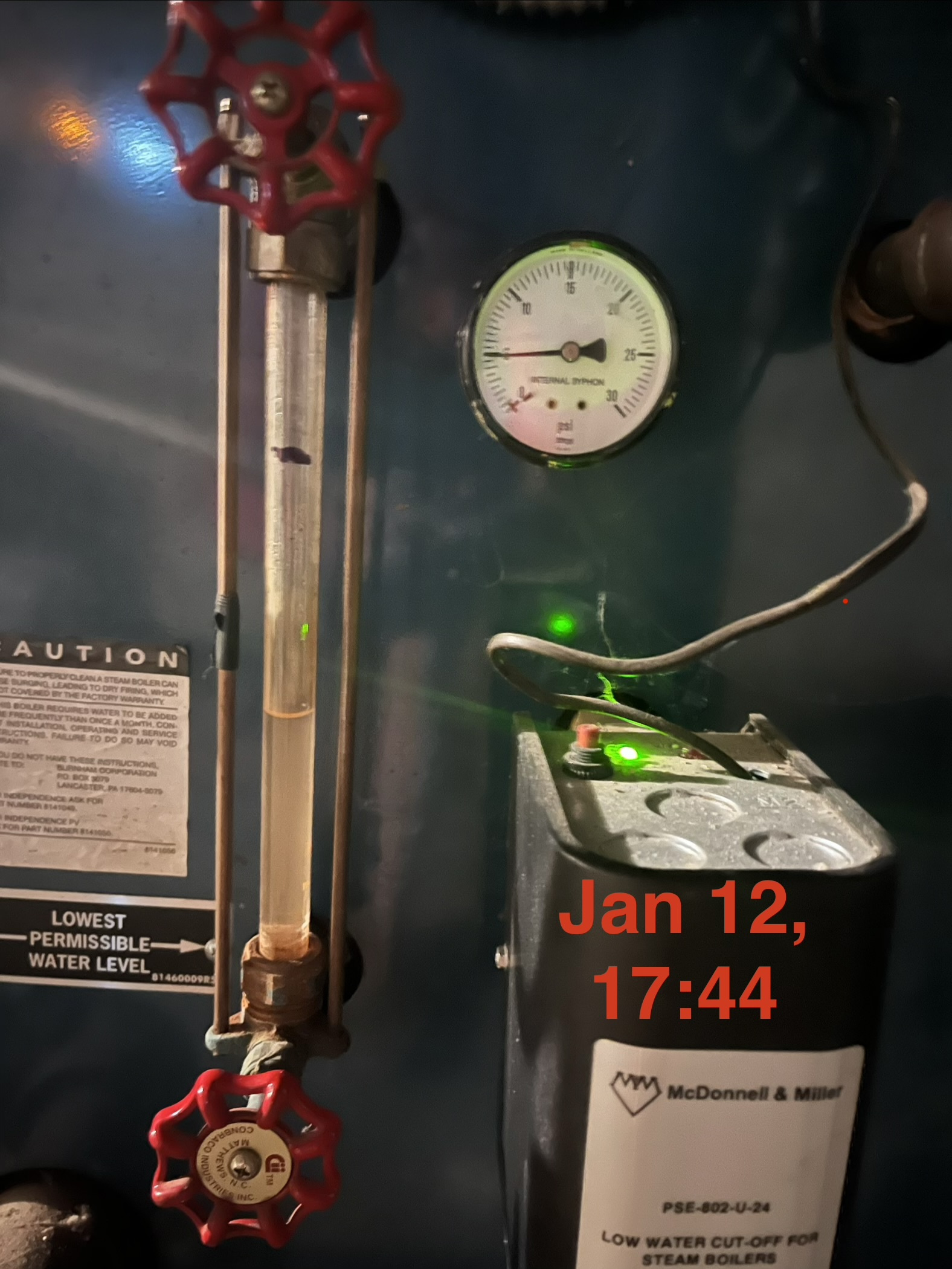
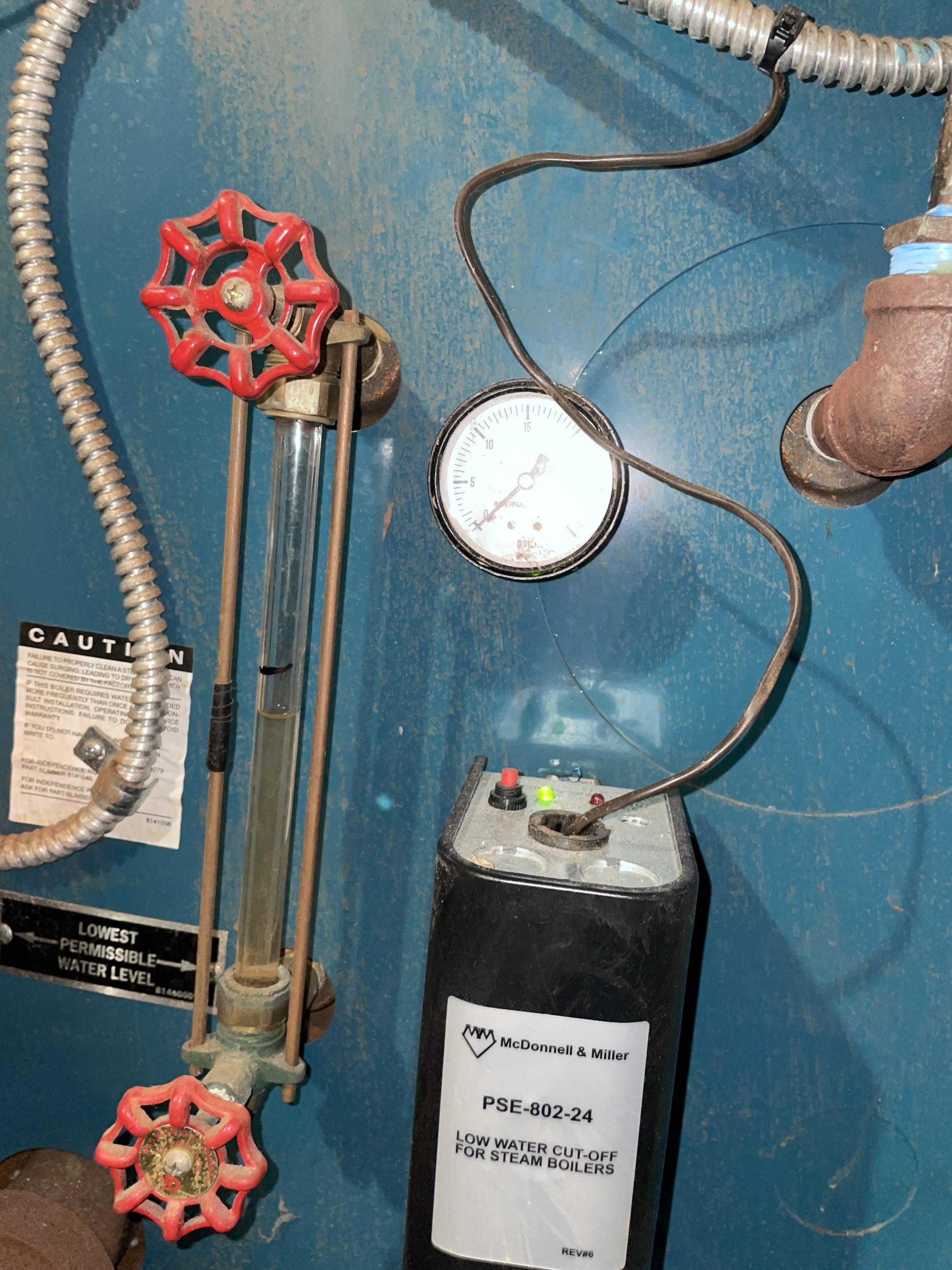
Hi Ed, After the tuneups I noticed the water was more than 3/4 up on unit 2 (the one that hits 5 psi at times), so i let some water out but v the water actually rose in the tube when i did that. That puzzled me. At that point it was up above the high sharpie mark you see (i’ve texted them to ask why they put the mark up there but have not heard back). So when it went higher, it was near the very top of the tube. Checked the next day and it was a bit lower, and lower again the next day. Delayed response to the water I’d taken out? If so, why the delay?
I began doubting the sight tube, which is a spot i don’t want to be in. So I’m visiting to look at it every day now.
Or i thought maybe a leak would explain how the water level resettled to such a lower point over the few days i watched it do that.
There are no problems with any radiators heating up and no spitting vents or leasing radiators. The water has settled more or less around the halfway mark for now (see the tape in the pic, which some other plumber put on there in some long ago era ), so i feel better but i know the system needs some attention as it is 22 (?) yrs old and the guys i had in just did a basic cleaning. (And left the pigtails on sideways..).They said it works as well as it should “for an old system like that.” Ugh. I want it to last and they want me to chuck it out the window.
How much should the water level vary (the top to bottom differential) when looking at the sight glass?
0 -
Hi Patrick,
I love your drawings. I wish I’d happened upon such great visualizations a lot earlier in my boiler-owning lifetime. I grew up with steam and have had it in practically every place I’ve ever lived but never thought about it before!
So is the 2.5 - 5 psi level on unit 2 because there is no main vent i can see except on the return? Where exactly is the “end of the main” if we were to have one installed? I see all pipes lead up into the basement ceiling and upwards with no vents on any of them.
And is it common for a plumber to set the DIFF higher than the main? I understand it should be set at around 1.5 since the MAIN is at 2. (The psi setting for the DIFF is on the far left, right?). (I know these aren’t as sensitive as vaporstats, but..)
The other one is set at 7 psi which is weird. Glad it runs at 0 but am skeptical that’s accurate as both systems have the same limitations. Worth noting we have no insulation in most of the pipes and no main vent on that side either.Can i have the pressurtrols and sight tubes tested for accuracy? One tenant is now worried and that’s why I’m learning all i can. Maybe i need a ‘diagnostic checkup’ of sorts to keep this system alive and happy? On top of The $400 we just paid for the tuneups…
Joanne0 -
your pressureyrol should be set to 2psi on main (this means ptrol will cut power to burner when it reaches 2psi) and 1.5psi on differential (this means pressure will drop 1.5psi before power is restored). This is IF your pressuretrol is working correctly. yours have mercury inside so maybe they are more precise. Those with brown switch are notoriously badly set from the factory and often NEVER work. the easies way to check is to add T between pteol and pigtail and mount 0-5psi gauge.
»»» See my steam heat YouTube videos:
https://www.youtube.com/@HeatingBlog1 -
Patrick, that’s what I thought. I’m wondering what the system itself makes of the fact that it is set with the DIFF above the MAIN so that it is being asked to only cut in at a negative psi(!). Odd way to set it, and i have no idea who did it or why. Most recent guys just said they left everything as they’d found it.
I’m afraid to reset this myself, though i know it only requires a screwdriver to do so, because i don’t know why it was set that way. Ditto for the other system that is set for 7 psi.Could the crazy DIFF settings on the unit that gets up to 5 psi at times be responsible for the higher pressure readings? Or is it more likely that the lack of insulation and of a main vent in the basement or some other issue causes it to stay between 2-5 psi at all times?
0 -
pressuretrol are stupidly simple devices. inside you just have 2 springs.
it seems 1 of your ptrols is set up 2 main and 2 diff. this is ideal. (translate: shut off when pressure reaches 2psi and thrn on when all pressure disapears).
on another ptrol it looks like main is set at 7 and diff at 3. just screw both screws so main is 2 and diff is 1.5. and if u have issues you can always gi back to ref photo you took.
(i have a bunch if new videos specifically related to ptrols coming out after the weekend)
»»» See my steam heat YouTube videos:
https://www.youtube.com/@HeatingBlog1 -
thanks, patrick. The DIFF is set above 2 psi. On my pressure the psi scale is to the far left and the other scale under the DIFF side is for kg/cm2. On that scale it is just under .2, which is about 2.5(?) psi.
Sounds like the pressurtrol is a really basic device, but what happens when the DIFF is higher that the MAIN like this?
I assume i should also add a main vent or two in the basement for each system, but especially the second floor system? It appears there are two mains heading from the system toward either end of the house, with one main feeding five radiators, and the other feeding two small ones.Clearance is tight, though. Are the main vents always installed vertically on a pipe?
0 -
generally, each main needs a main vent at the end of the pipe.
yes, the are all installed with opening pointing up.
»»» See my steam heat YouTube videos:
https://www.youtube.com/@HeatingBlog1 -
Older, mercury type pressuretrols must be level if you want the settings on them to actually mean something when compared to a working, low pressure gauge.
1 -
If #1 is really running at or near 0psi then theoretically adjusting your pressuretrol shouldn't impact anything. On #2 you say it is running near 5psi yet the main is set at 2psi? If this is so then your pressuretrol is not working correctly or the pressuretrol is not seeing true steam pressure due to clogged pigtail (your gage is not protected by the pigtail in your install). I'd clean the pigtail on #2, get a main vent on #2 and set the pressuretrol correctly. You can always test your settings after you set them. Process can be hastened by shutting off a number of radiators for the ptrol tests.
1 -
dabrakeman,
They claim they cleaned the pigtail. This was just weeks ago. They put it back on wrong, though, so i don’t know how good their cleaning was.
I think a plumber didn’t notice that they’d used the kg/cm2 side of the scale on the presdurtrol (on the left on my model!) and that they’d chosen .2 for the DIFF (which is above 2 psi) because it’s hard to see the decimal point. It’s a really stupid design as the psi side of the scale (as opposed to the kg/cm2 side) is the opposite for the MAIN. (Visible in pics 6402 and 6503 above).
I see that Honeywell has another model pressurtrol where the psi scale is on the right for both the DIFF and the MAIN. I bet that came after my model, and was due to the confusing nature of the pressurtrol i have.
If I were to reset the system running at 5 psi, how would i then test the pressure? Watch it cycle on and off as it hits the max and min, or some other means? I am not a plumber and rent out both units so i need to know exactly when and for how long to monitor it. Thanks!Also, maybe someone knows a pro who can come give us a full checkup? (Basic tuneup was just done)? I see a recommended plumber list but there must be a ton more folks that ppl know about via word of mouth? I want someone to maximize the system, at this point, and not just tidy it up once in a while. Know anyone near Boston?
0 -
"If I were to reset the system running at 5 psi, how would i then test the pressure? Watch it cycle on and off as it hits the max and min, or some other means?"
Basically, yes. I will premise everything else I say here with the fact that you really need to plumb in a low pressure gage such as a 0-3psi gage with a shutoff valve before it to really see what your pressure is doing. The 0-30 is inaccurate at best and may not even be working at all.
Pressure won't rise until all or most of the radiators are filled and their vents closed. If you set your temperature to 80 maybe it would get there but then again if the boiler sizing is optimal to the sqft of attached radiation then it may never get there. Shutting down some radiators just reduces the connected radiation likely ensuring that a reasonably short cycle will fill the remaining radiators and start building pressure. I would suggest putting the setting where they theoretically should be first before experimenting, i.e. main at 2-2.5psi and differential at 1.5-2psi, about 0.5psi lower than the main. There is no need or desire to witness pressure rise much beyond 3psi or so since it could create havoc with your radiator vents. If you do do this then you just want to sit down there and watch the pressure (on your new 0-3psi gage) as the boiler starts producing steam. You can tell when it start steaming since the header will get too hot to hold your hand against. After the steam closes the main vent pressure may rise ever so slightly and after the open radiators fill it will rise quickly. If it gets up to 3psi then turn off the boiler either by quickly reducing the thermostat temperature or flipping the off switch on the boiler. Tweak and repeat.
1 -
How to test your pressuretrol:
»»» See my steam heat YouTube videos:
https://www.youtube.com/@HeatingBlog1




Categories
- All Categories
- 87.6K THE MAIN WALL
- 3.3K A-C, Heat Pumps & Refrigeration
- 59 Biomass
- 429 Carbon Monoxide Awareness
- 124 Chimneys & Flues
- 2.2K Domestic Hot Water
- 5.9K Gas Heating
- 119 Geothermal
- 168 Indoor-Air Quality
- 3.8K Oil Heating
- 78 Pipe Deterioration
- 1K Plumbing
- 6.6K Radiant Heating
- 394 Solar
- 16K Strictly Steam
- 3.5K Thermostats and Controls
- 56 Water Quality
- 51 Industry Classes
- 50 Job Opportunities
- 18 Recall Announcements