Homemade Radiator?

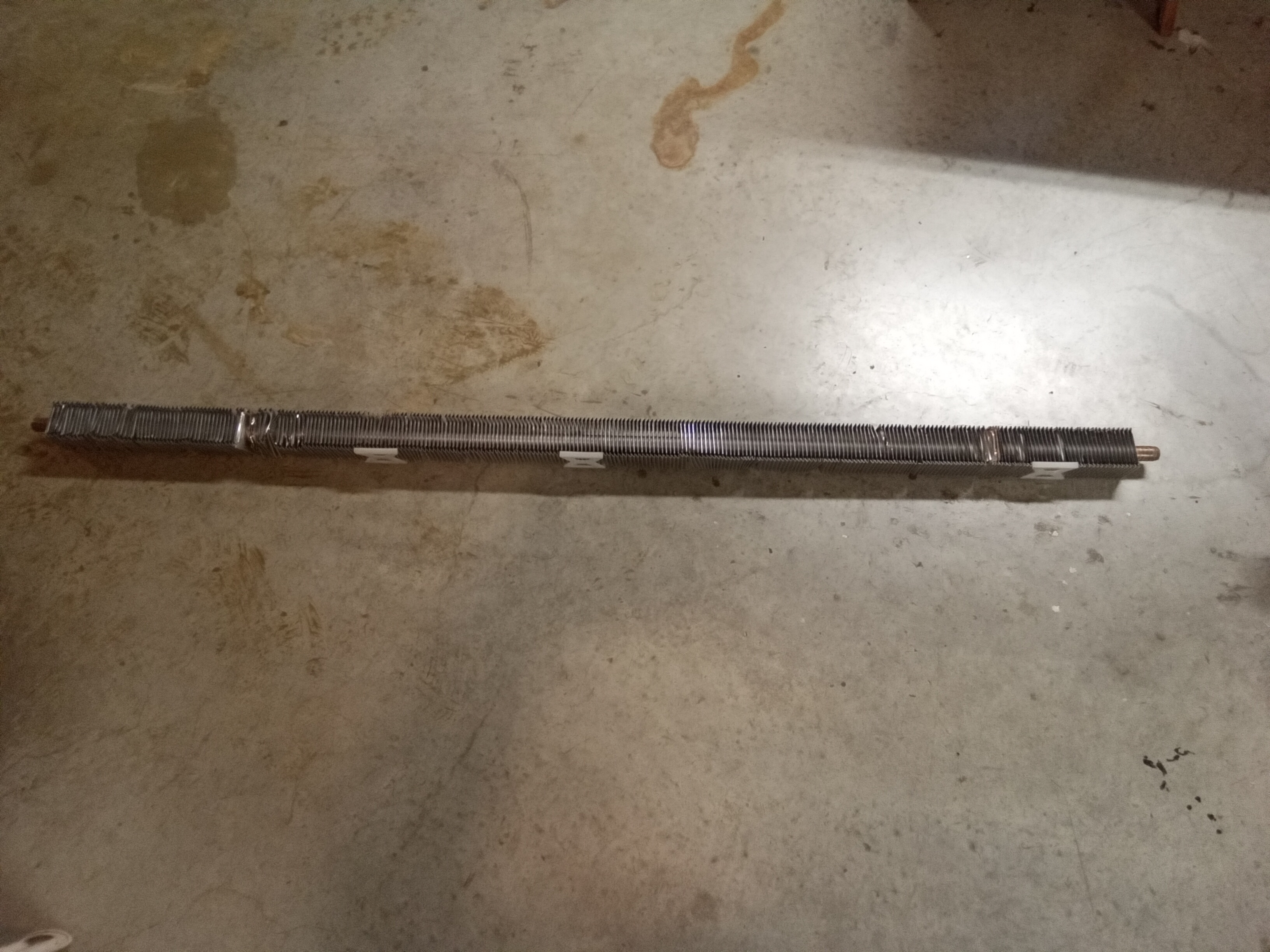
So I have this length of fin tubing and had the crazy idea of using some fittings to make a shorter "back&forth" radiator.
What do think?
Comments
-
Not a crazy idea at all. Some commercial hot water baseboard contains one, two or three rows of element (pipe with fins).
2 -
So I took a few moments to see if the fins would come off. But they seem very fragile. Any ideas on how to remove them.
0 -
what are you trying to do? cut it where you want to join to it and slip enough fins off the cut ends to put fittings on it. you can also cut some of the fins off with snips first where you want to cut it. a fine hacksaw works better than a tubing cutter because the tubing cutter will really crimp the end of the thin tubing down.
note that in most versions of fin tube that tubing is much thinner than the pipe you would buy if you were choosing it which is ok if you're soldering to it, just note that it is like you're working with a tube of heavy duty reynold's wrap only it is copper.
the output of the stacked elements will be significantly less than if they were linear because the incoming air to the top element will be much warmer and the output is a function of the difference between the air temp and the water temp.
0 -
I would recommend spending a couple of bucks and buy a small panel radiator. Just saying
There was an error rendering this rich post.
0 -
Ed, you are probably right! Sometimes I'm too frugal! 😄😄😄
0 -
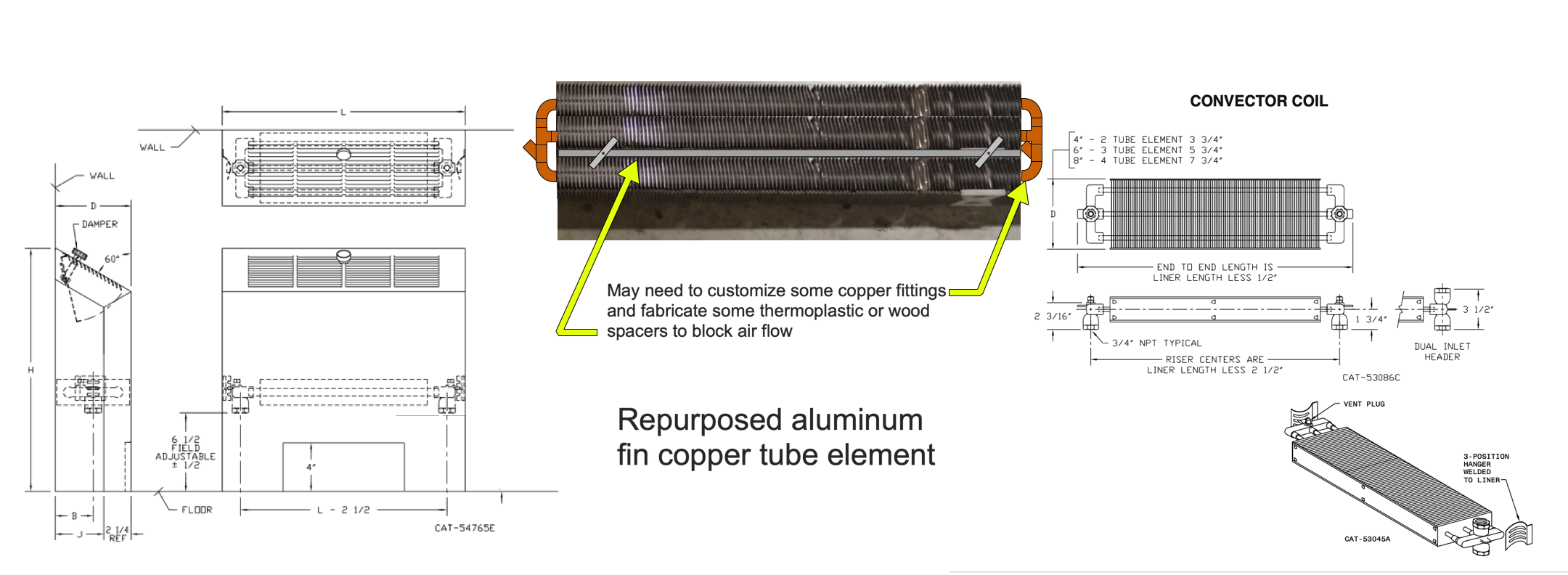
This will provide more heat per foot of element
Then this design

because the temperature entering the three rows of element in the top illustration is the same room temperature for all three pieces of element so the ∆T of all three is over 100° so they will transfer the same amount of heat to the entering air.
In the bottom illustration the first row of element will transfer the most heat because the ∆T of the room temperature is about 100° different. The middle row of element entering air temperature is higher so the ∆T is less so the heat transfer will be less. The top row will give off the least amount of heat to the air since the entering air will be hotter than the previous two elements below . The net result is the exiting air may be a little hotter but not enough hotter to distribute more actual BTUs of energy into the room.
Edward Young Retired
After you make that expensive repair and you still have the same problem, What will you check next?
 1
1



Categories
- All Categories
- 87.6K THE MAIN WALL
- 3.3K A-C, Heat Pumps & Refrigeration
- 59 Biomass
- 429 Carbon Monoxide Awareness
- 124 Chimneys & Flues
- 2.2K Domestic Hot Water
- 5.9K Gas Heating
- 119 Geothermal
- 168 Indoor-Air Quality
- 3.8K Oil Heating
- 78 Pipe Deterioration
- 1K Plumbing
- 6.6K Radiant Heating
- 394 Solar
- 15.9K Strictly Steam
- 3.5K Thermostats and Controls
- 56 Water Quality
- 50 Industry Classes
- 50 Job Opportunities
- 18 Recall Announcements