Welcome! Here are the website rules, as well as some tips for using this forum.
Click here to Find a Contractor in your area.
If our community has helped you, please consider making a contribution to support this website. Thanks!
Solved my solar PV DHW anti-freeze system overheating problem

I first installed my solar hot water system in 1995, and I've made numerous design modifications since. The current configuration is a photovoltaic-powered glycol antifreeze system featuring two AET Morning Star 4x8 solar collectors mounted awning-style on the southwest-facing side of my home at a 38-degree angle. I selected these collectors for their sturdy panel frame design and mounting hardware. They also perform pretty well, which matters given my location and installation orientation. (Pacific Northwest, and they point 30 degrees west of solar south)
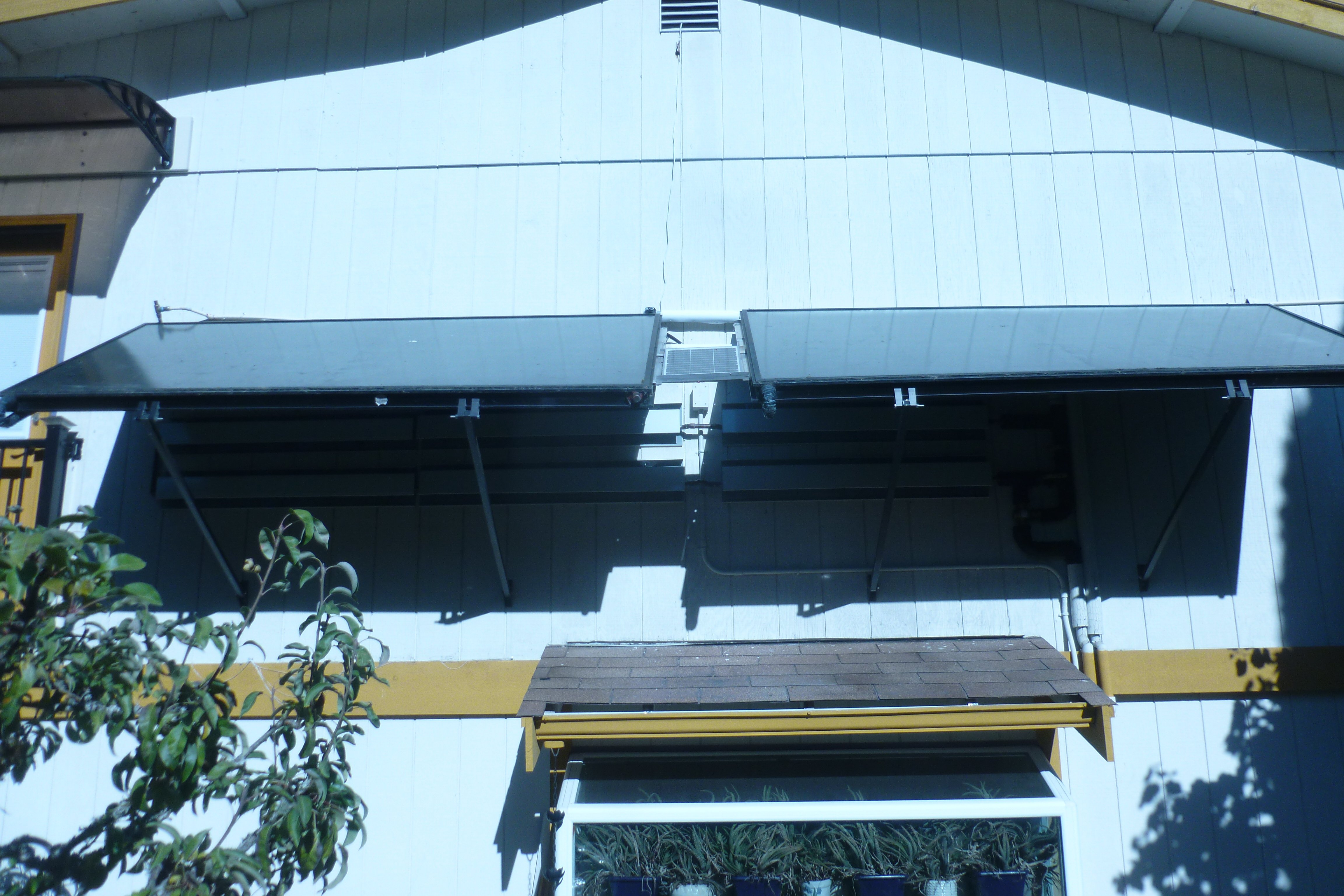
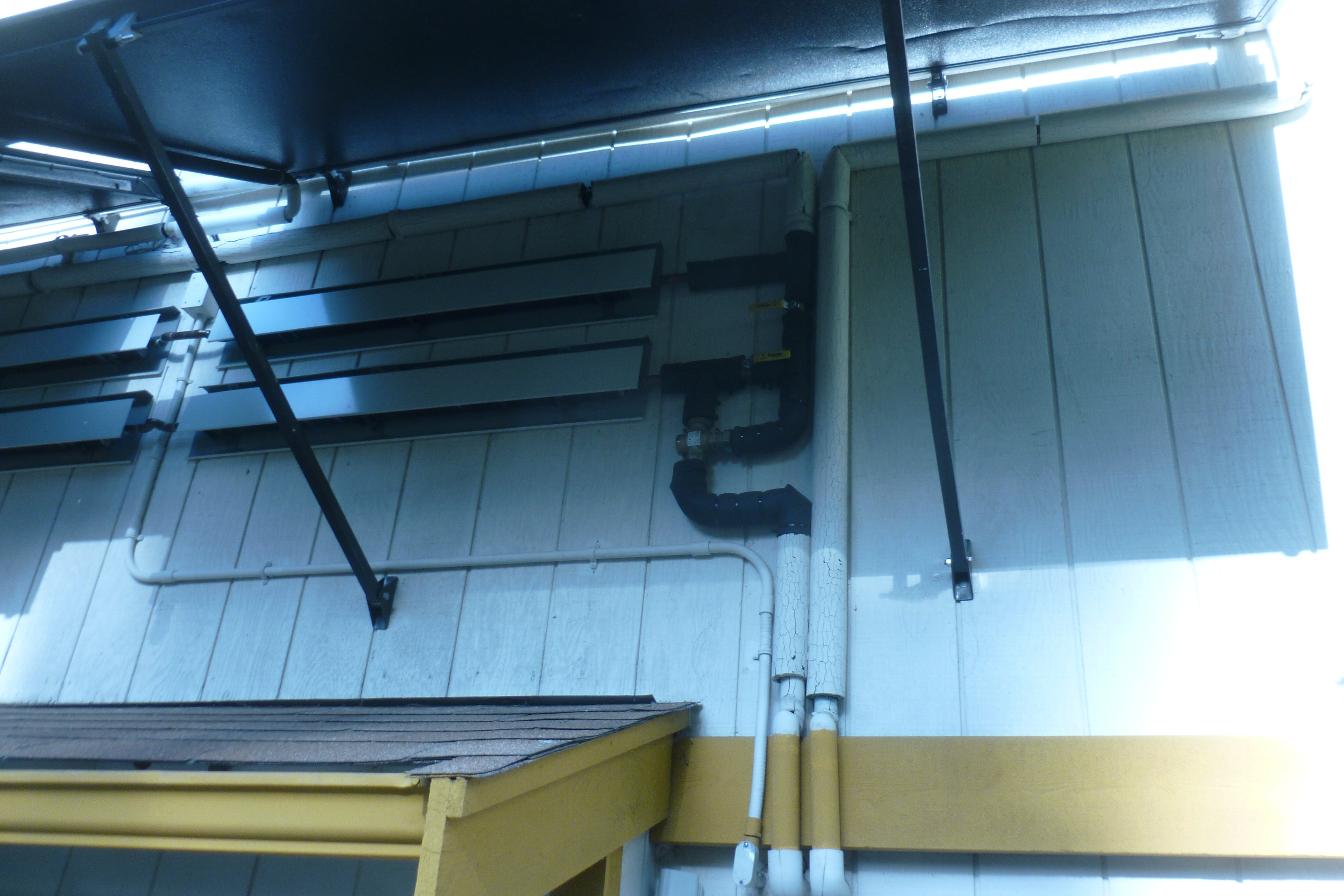
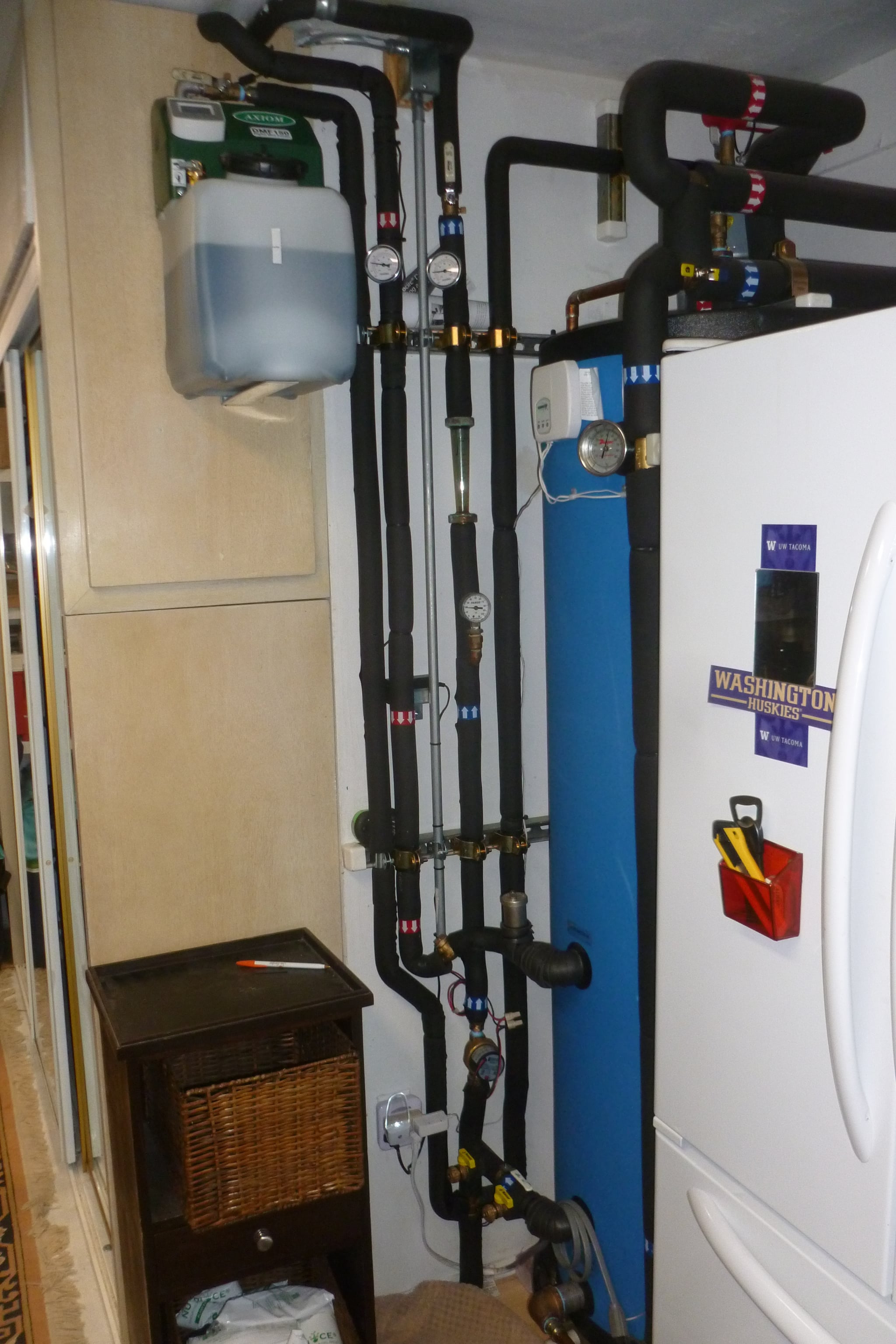
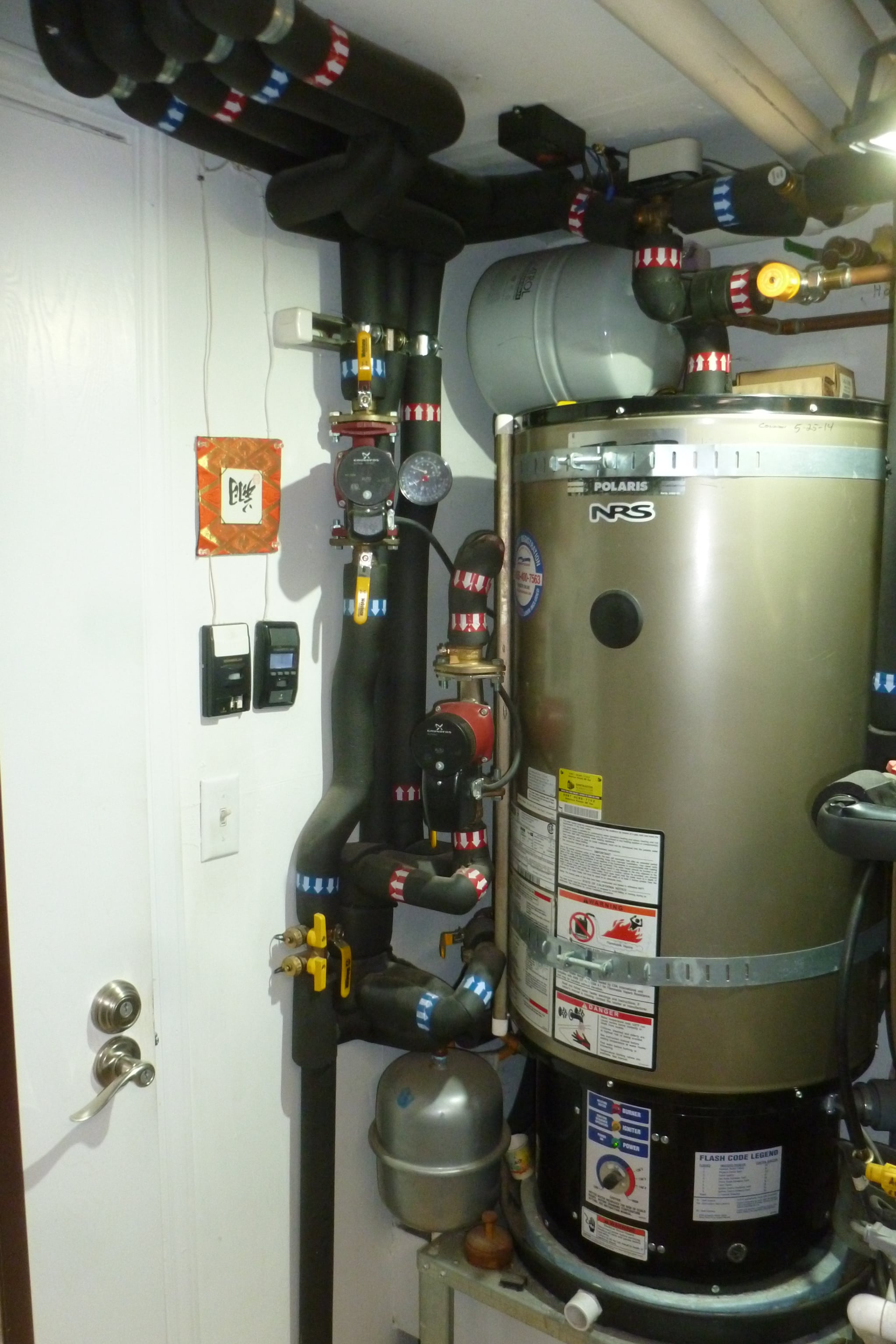
A 20-watt, 12-volt panel powers a Laing Thermotech D5 solar pump, chosen for its high efficiency and direct operation from solar energy without the need for additional 120 volt components. The two-tank system uses an 80-gallon Buderus SST stainless steel tank for solar storage that pre-feeds a 34-gallon Polaris high efficiency gas water heater.
I installed a diverting valve that automatically bypasses the gas water heater when the solar-preheated water exceeds 140 degrees. In operation, the temperature of the solar heated water leaving the storage tank is checked before it enters the diverting valve. If the water temperature is below 140 degrees, it proceeds to the gas water heater for supplemental heating. If the temperature exceeds 140 degrees, the diverting valve routes the hot solar heated water past the gas water heater directly to a Caleffi solar tempering valve set to 120 degrees. The Polaris gas water heater also supplies hot water through a flat-plate heat exchanger for radiant floor heating in part of the home.
At the time of the system's initial installation, five people resided in the home; currently, only two remain. During summer months, overheating became a significant issue, with solar storage tank temperatures often exceeding 180 degrees. To address this, I would cover part or all of the solar panels. Over the years, I’ve seen various types of solar heat-dump loops using exterior piping or electric-powered exchangers to dissipate excess heat. However, none would work with my system, so I stuck with the panel-coverage option as a reliable short-term solution while developing a more automated method that would not require electric power to operate.
Drawing on my experience installing cast iron gas, oil, and wood fuel boilers equipped with Caleffi boiler protection valves, I repurposed one as a diverting valve to cool the solar loop hot water before it enters the panels. When the supply water reaches 140 degrees, the valve begins diverting flow through 24 feet of slant-fin baseboards, achieving full bypass at approximately 160 degrees. Over this summer, with 160-degree water entering the valve at full bypass, I observe an 8 to 10-degree temperature drop across the baseboards, followed by an equivalent temperature increase across the solar panels and a similar drop through the solar storage tank heat exchanger. As a result, the system has developed a nice balance, and the solar storage tank temperature has not exceeded 165 degrees.
The next step is to cover the piping and baseboards with white-painted perforated metal to improve aesthetics. I intend to use perforated covers to facilitate airflow, thereby preventing heat accumulation and moisture retention around system components. I will design the covers for easy removal for service or inspection. I figure the metal adds durability and protects the piping and baseboards, while the white paint reflects sunlight and keeps the system looking clean. Overall, these covers will not restrict access or reduce the longevity of system components, and they should protect against accidental impacts or damage.
Comments
-
The Cedar mt Solar guys in New Mexico would put a strip of fin tube behind the panels , with a thermostatic valve set to a specific temperature
With a large pipe size and some slope they could Thermo siphon away excess energy
There was a company making covers like boat covers to go over evac tube systems during low use, high insolation periods
Probably get those custom made locally or online
Bob "hot rod" Rohr
trainer for Caleffi NA
Living the hydronic dream0 -
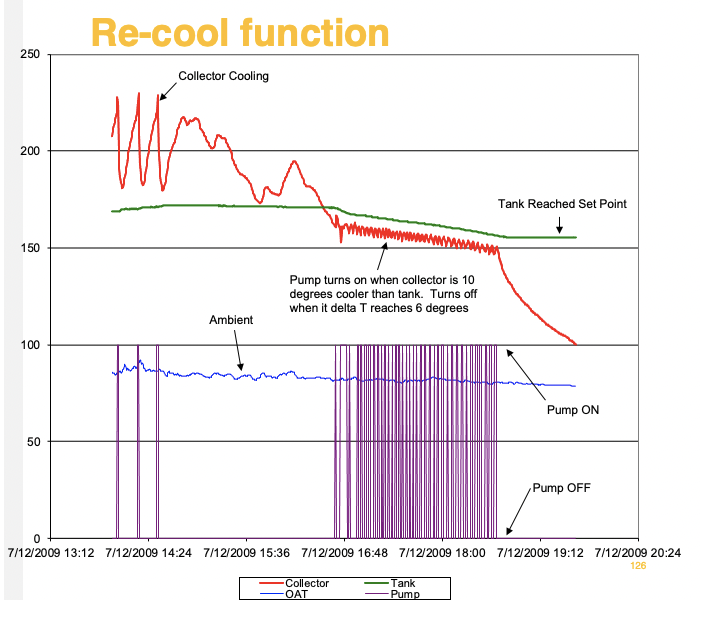
With a 120V pump and Resol control you can use nightime recooling. It cost pumping power, bvut you could pull the tank doer to near ambient.
This was a system we had in Milwaukee on the Caleffi building.
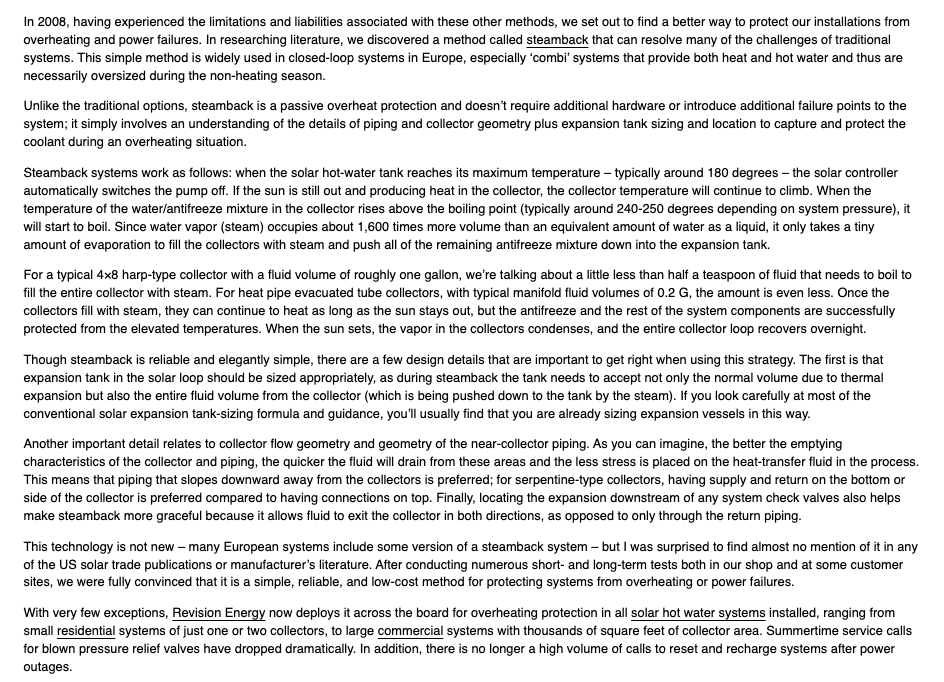
Steamback was another option that the Germans brought over. Here is how Revision Energy describes it. It really didn't take much more that assuring the expansion tank was sized large enough.
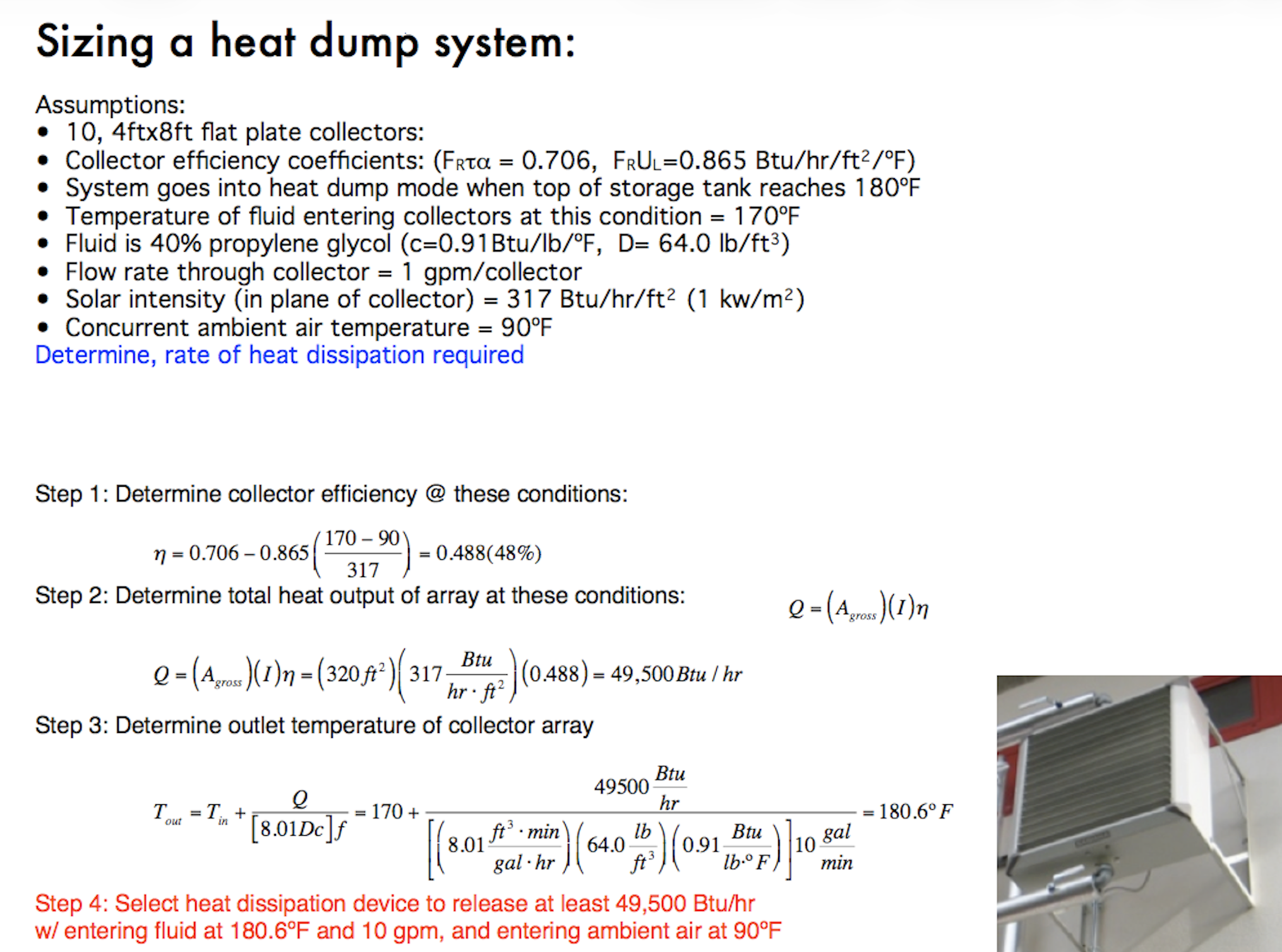
,Here is the math to determing how much dump zone is required.
The large systems I saw in Italy had fan coils on the outside of the building or in the under ground parking structures to dump excess.
 Bob "hot rod" Rohr
trainer for Caleffi NA
Living the hydronic dream0
Categories
- All Categories
- 87.8K THE MAIN WALL
- 3.3K A-C, Heat Pumps & Refrigeration
- 60 Biomass
- 430 Carbon Monoxide Awareness
- 133 Chimneys & Flues
- 2.2K Domestic Hot Water
- 6K Gas Heating
- 124 Geothermal
- 170 Indoor-Air Quality
- 3.9K Oil Heating
- 79 Pipe Deterioration
- 1.1K Plumbing
- 6.7K Radiant Heating
- 397 Solar
- 16.1K Strictly Steam
- 3.5K Thermostats and Controls
- 56 Water Quality
- 51 Industry Classes
- 51 Job Opportunities
- 18 Recall Announcements