Who likes the TigerLoop Fuel deaerator

Vote at bottom of this post:
In another discussion, On Oct 12 @MaxMercy said "I've been following and not commenting since I don't know what's going on, but I do have a question and then a comment. OP mentioned several times that there's no sign of air/bubbles/foam in the TL. I have NEVER seen a TL ever, so I confess that I don't know how they work, but my question is that -"
Here is how the tiger loop works.
Lets start new with no oil in the TL
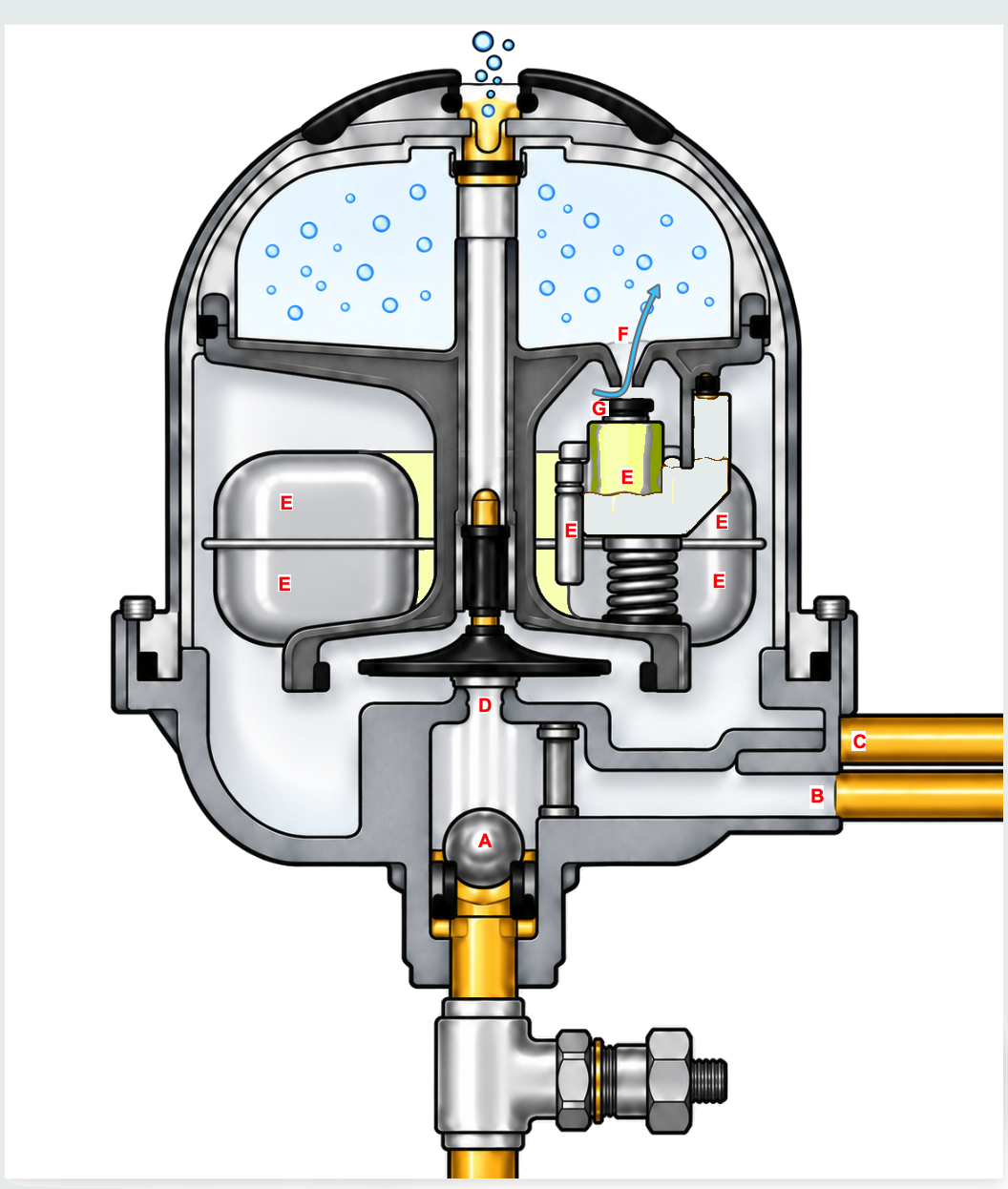
Float E is at the lowest point and that leaves Port F open from the Central chamber to the upper chamber so air can vent. The valve seat covering Port D is closed so the path from the tank to the fuel pump is sealed and the ball check A is closed.
When the pump operates a vacuum happens on the inlet of the pump. That vacuum thru port B opens the ball check A and oil from the tank is drawn into the pump thru the bottom chamber of the TL
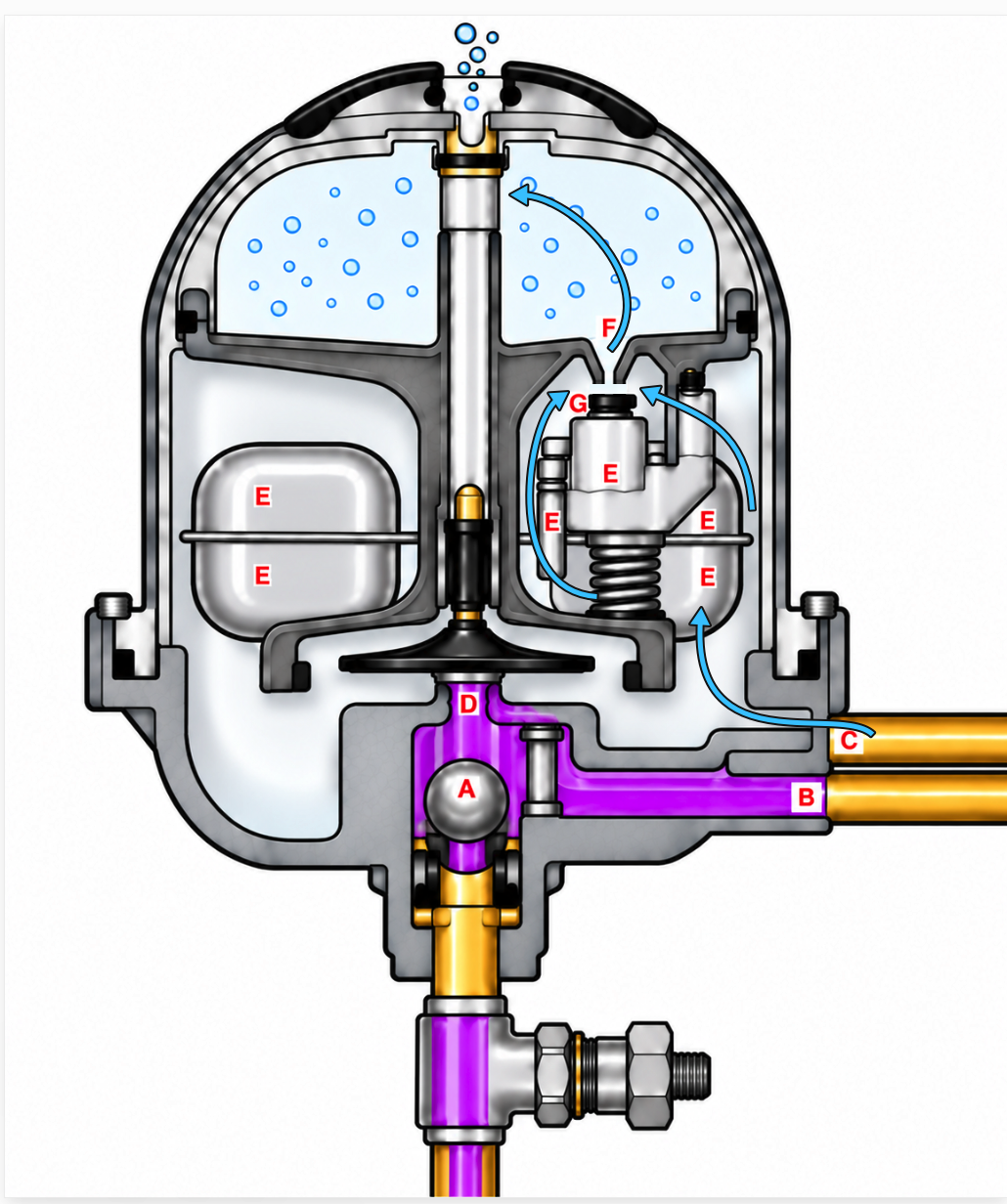
Air in the fuel line system is then driven out the pump's return line to port C of the tiger loop. The air vents thru port F of the TL from the Center chamber to the upper chamber where is is vented to the atmosphere.
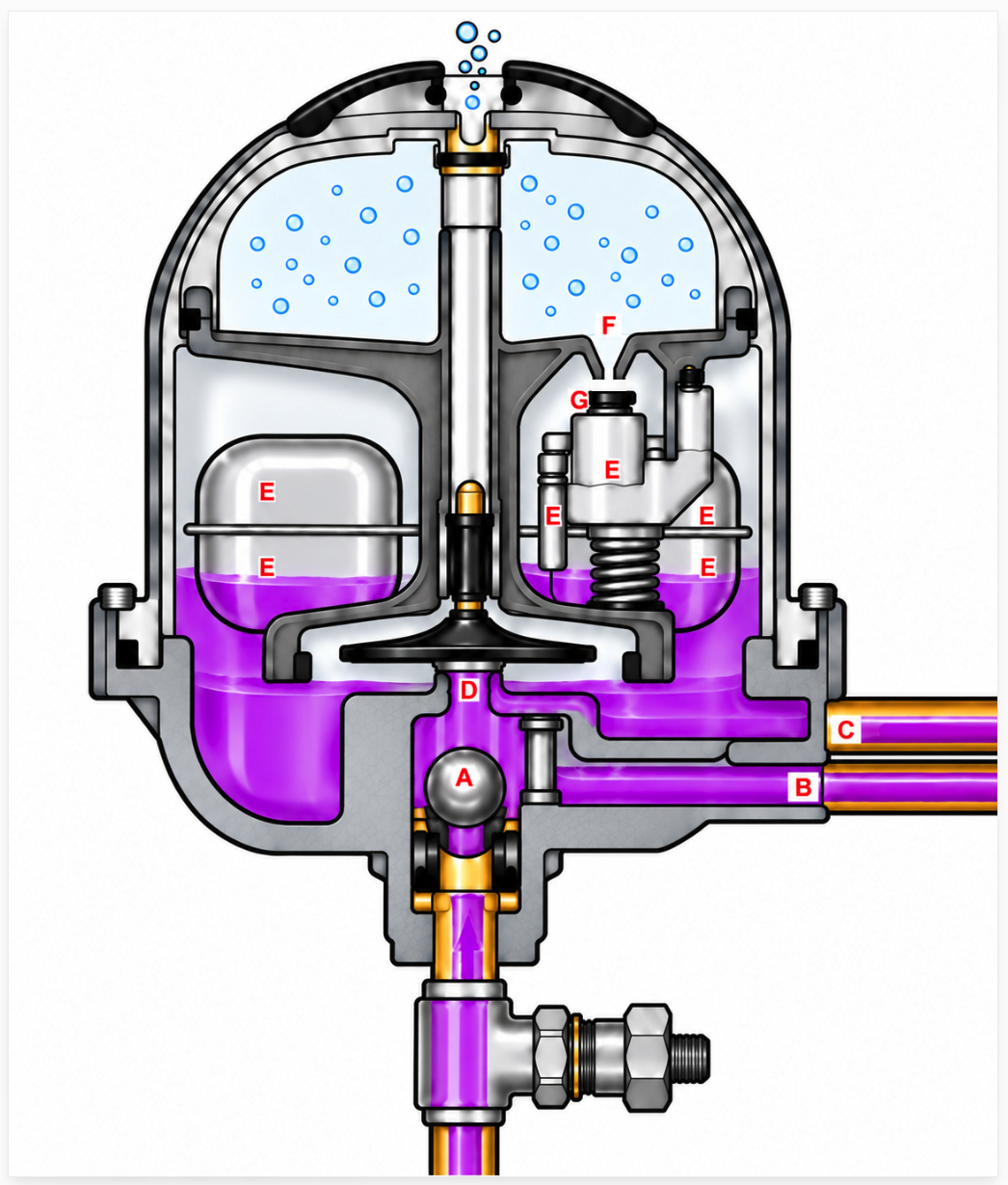
Once oil is returned to the TL from the fuel pump it enters the center chamber and the float E raises to cut off port F with valve seat G.
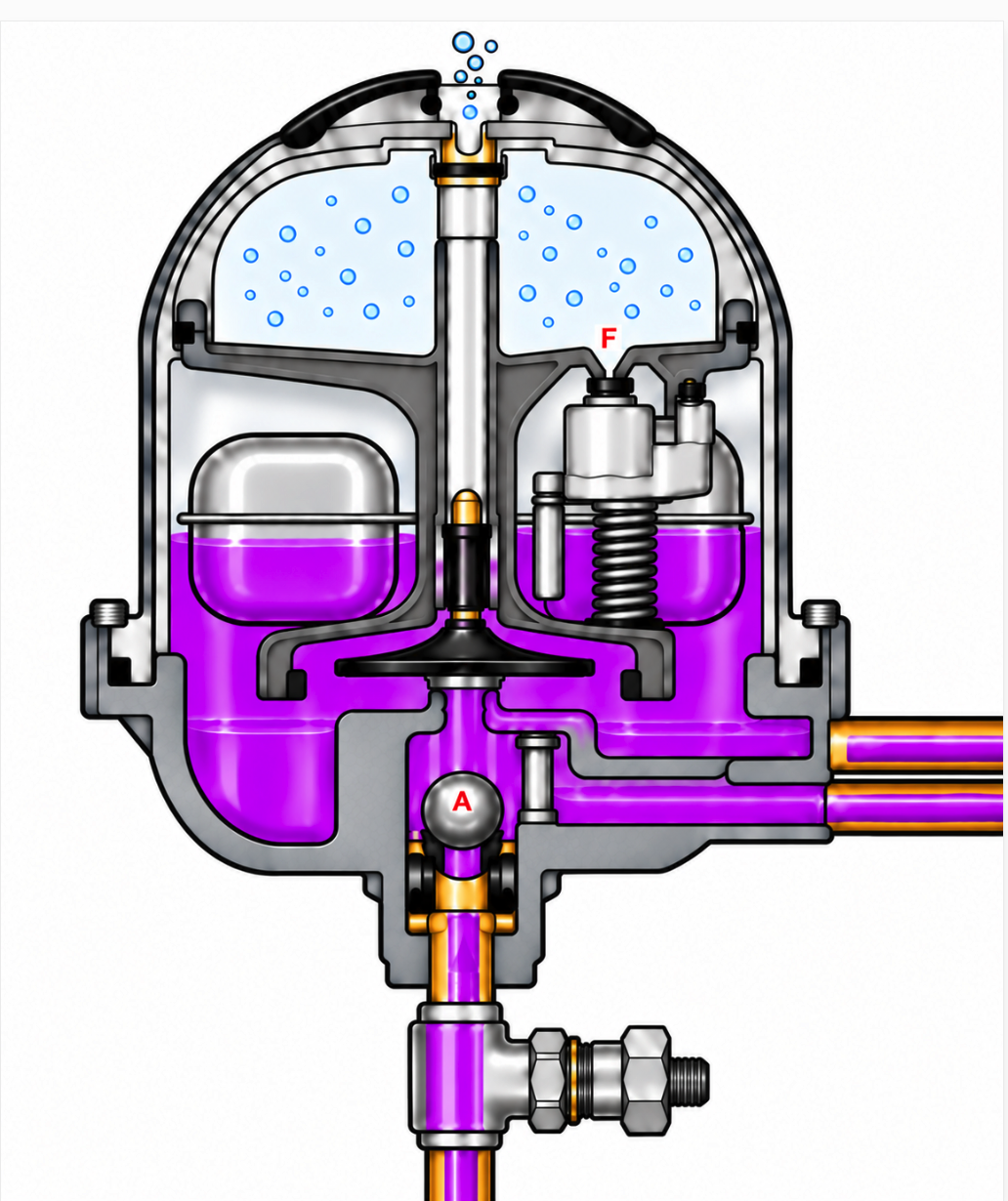
With port F closed the oil begins to build up pressure in the center chamber of the TL. when the pressure reaches about 1.5 PSI that forces valve seat D to open and allow fuel from the center chamber into the lower chamber so it can pass to the pump thru port B. That oil can return to the pump inlet.
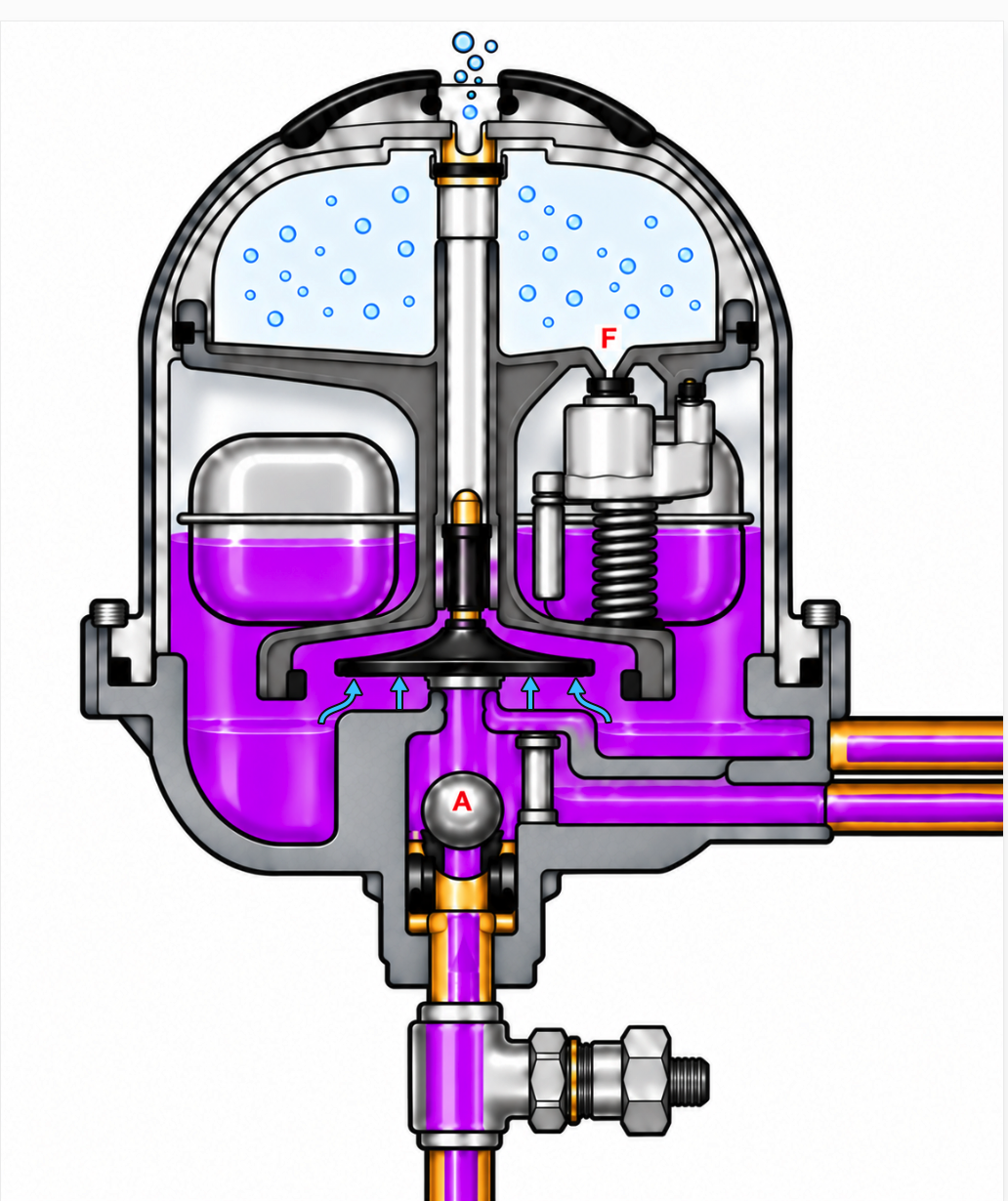
Check valve A drops to close off fuel from the tank until it is needed when pressure in the center chamber drops which closes valve seat D sealing off the center chamber from the lower chamber.
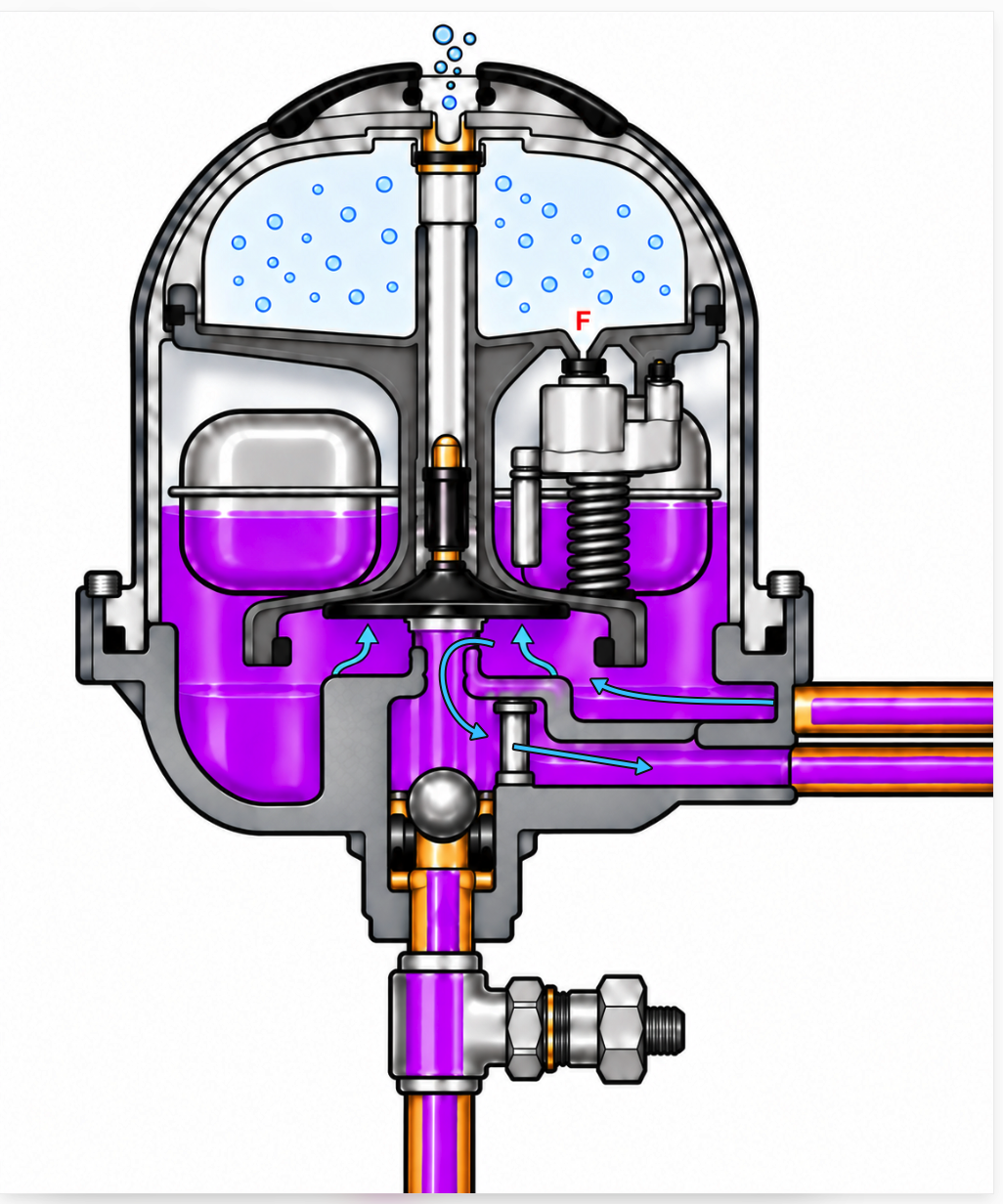
- If air enters the Tigerloop, the float drops, allowing the air to escape into the upper chamber.
- As the burner continues to operate, the oil pressure in the center chamber gradually drops as fuel is consumed. When the pressure drops, valve
Dcloses, and ball checkAopens, allowing more fuel to enter from the tank. - As the center chamber refills and the oil pressure builds, valve
Dopens, allowing fuel to flow to the pump. At the same time, ball checkAcloses, stopping the flow of fuel from the tank. - This cycle repeats continuously, with ball check
Aand valveDopening and closing in response to changes in oil pressure in the center chamber.
Hope that explains the TigerLoop operation clear as mud.
Ed
Edward Young Retired
After you make that expensive repair and you still have the same problem, What will you check next?
Who likes the TigerLoop Fuel deaerator 4 votes
 1 vote

 3 votes
Comments
-
I have used TigerLoop to solve a problem
We installed the earlier versions (with metal can if memory serves) on problem jobs back in the late 1980's or early 1990's. For some reason they would occasionally spit oil droplets. I do not remember the cause or the remedy. I do remember a few customers calling and complaining of an oil smell. While I am not certain, I believe the "newer" version eliminated the spitting problem. I am not familiar with the current product line as we rarely work on oil burners these days. Most equipment in my area burns natural gas.
1 -
I've used them a couple of times to solve or I should say deal with an issue. I installed them on all of my installations because it seemed Riello burners were happier with them.
Miss Hall's School service mechanic, greenhouse teacher, dog walker and designated driver
1 -
I used one because it came with my Roth tank.
Sure became nice to not have to bleed the burner. On the other hand, it did seem to struggle bleeding when there wasn't much fuel in the tank. (A Roth tank draws from the top)
30+ yrs in telecom outside plant.
Currently in building maintenance.0


Categories
- All Categories
- 87.8K THE MAIN WALL
- 3.3K A-C, Heat Pumps & Refrigeration
- 60 Biomass
- 430 Carbon Monoxide Awareness
- 133 Chimneys & Flues
- 2.2K Domestic Hot Water
- 6K Gas Heating
- 124 Geothermal
- 170 Indoor-Air Quality
- 3.9K Oil Heating
- 79 Pipe Deterioration
- 1.1K Plumbing
- 6.7K Radiant Heating
- 396 Solar
- 16.1K Strictly Steam
- 3.5K Thermostats and Controls
- 56 Water Quality
- 51 Industry Classes
- 51 Job Opportunities
- 18 Recall Announcements