Welcome! Here are the website rules, as well as some tips for using this forum.
Click here to Find a Contractor in your area.
If our community has helped you, please consider making a contribution to support this website. Thanks!
Flushing 25yr old in-floor hePex before replacing everything (except the hePex) ?

Replacing everything about our hydronics system except the in-floor pipes ( and the two circs, plus AH). Currently a cast iron boiler. Before I start cutting things open, I bet I should clean and maybe refill with city water (it has mostly well water in it now, I would think).
Plan is to valve off all zones but one (at a time) , then pump in/out of the unused manifold ports.
I could have a 200gal tote full of city water ready to go, but how do I know what size pump is good enough but not so powerful that it could damage my poor old HePex in the slab ?
Once "rinsed" , I could circulate a cleaner of some sort , using a bucket and pump. Any recommendations on type or brand of cleaner ?
Finally, another 200gal tote to rinse the cleaner and crud out and then leave the pipes full of that city water.
Once the old plumbing is out and all the new stuff is connected, I will have an Axiom fill tank to add stuff and a Caleffi dirtmag to catch any strays.
Let me know if Im missing something please.
Currently in building maintenance.
Comments
-
Pretty sure HePex wasn't even produced 25 years ago. City water is likely of worse quality than well water, but a simple water test would tell the story. Why are we using totes instead of using site water for flushing? Is there no purge station? No standard pump is going to hurt HePex or any PEX for that matter; use whatever you see fit just keep the pressure below the danger zone (I try not to exceed system operating pressure, just in case). Chemical will depend on what's actually in there, but something like Fernox F3 is pretty effective in most cases without being too aggressive.
0 -
A pump like this from any box store will give you plenty of gpm flow without over -pressurizing the system.

Isolate the boiler if you plan on going over 30psi.
Or buy the complete kit from Fernox

As far as water, hardness and TDS are what you want to know.
As you can see there are various water quality numbers from 6 different boiler manufacturers.
Viessmann shows hardness in PPM and based on the boiler BTU output.
I'd say hardness below 7 GPG. Simple hardness test strips get you close enough.
It is rare to find ph way out of wack from well or city water. The hydronic conditioners have a ph balance added. Along with O2 scavangers and film providers to coat the cleaned surfaces.


If you need to adjust the fill water
Axiom has a kit with a cleaner, deionizer, and final inhibitor.


Back in the day TSP or even dishwasher detergent was the go to. These products are all basically strong detergents. The hydronic cleaners do have some additives friendly to hydronic components.
With aluminum boilers, be sure the cleaner and conditioner is AL rated.
Bob "hot rod" Rohr
trainer for Caleffi NA
Living the hydronic dream1 -
We built in 2001 and the lines are stamped Wirsbo hePEX.
No purge station per se. I remember we filled it at the boiler drain point.
I'll incorporate a pressure gauge and a valve to throttle the flow, and see if they have that Fernox at the supply house. Thanks !
The new boiler manuf has required water specs. I happen to have a detailed water analysis of my well water that the province did (part of a wide study).
My Ph, Chloride, Iron, and Copper are within specs.
Hardness, TDS, and Conductivity are all quite a bit higher than boiler specs.
Im not sure how city water compares, but I will try to find out.
30+ yrs in telecom outside plant.
Currently in building maintenance.0 -
good things to know about hydronic water quality
Bob "hot rod" Rohr
trainer for Caleffi NA
Living the hydronic dream1 -
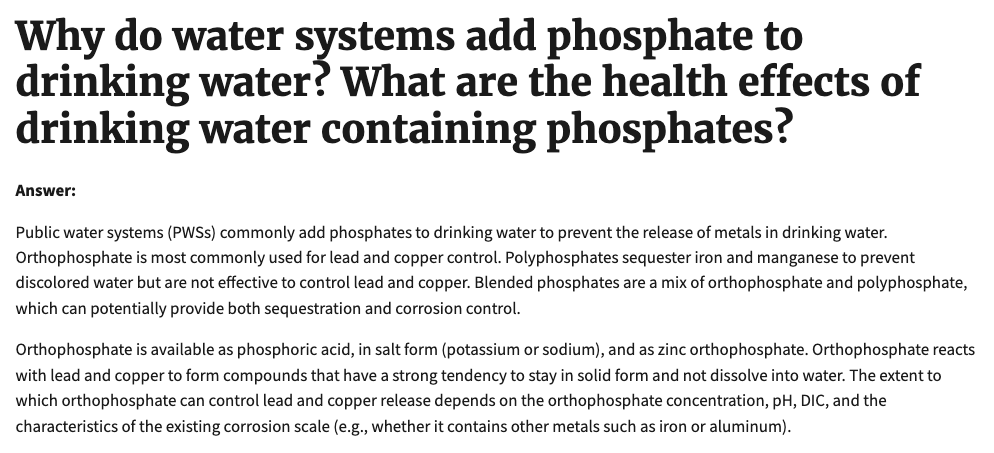
my city and many other cities add corrosion inhibitors that are designed to coat the pipes to keep the lead and copper from leeching from them. this might be worse than your well water. a deionizing cartridge on your well water might be just as effective and much cheaper than transporting water. i'm pretty sure the anti corrosion additives were what welded the check ball to the seat in my prv assembly.
0 -
Interesting, just looked up the typical inhibitors that are added including phosphates and sodium based. compounds.
Do you know what your municipality uses?
0 -
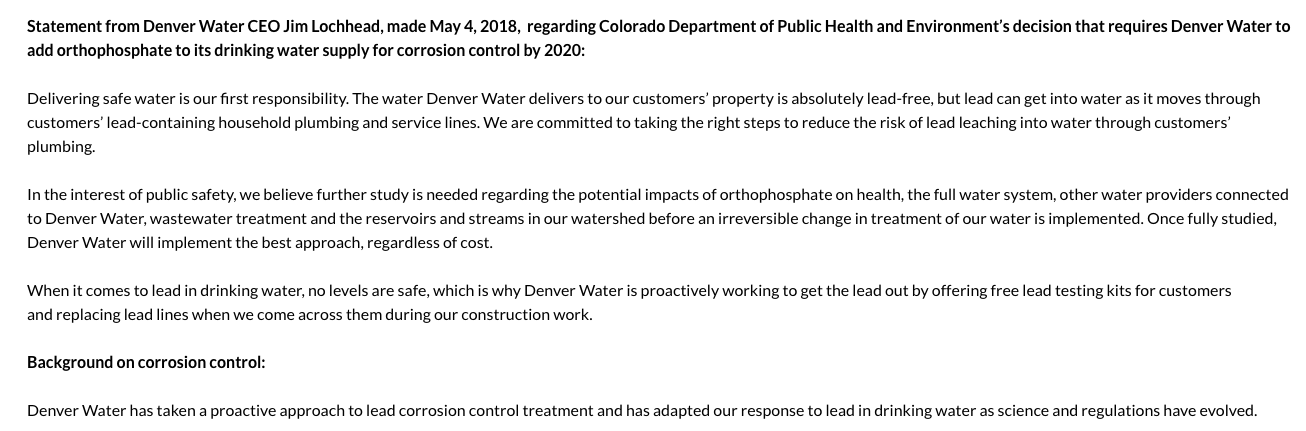
I think Denver had some issues with over-treatment with phosphates sludging up some systems.
 Bob "hot rod" Rohr
trainer for Caleffi NA
Living the hydronic dream0 -
I think I have a plan. (maybe?)
Swap out my normal 10 micron house water filter with a very fine (0.5 micron), cycle my water softener so the beads are fresh.
Flush each loop with softened well water via garden hose to manifold until it runs clear, keeping the pressure low ( ~15psi). This will drain outdoors. Record how much time it took each loop to run clear.
Switch to bucket and 1/4hp pump for closed loop cleaning (Fernox) of each loop (~ 15psi).
Flush each loop with softened well water again (drained outdoors) to remove cleaner and debris.
At this point, the loops will be in spec except for the TDS which will be really high (~700ppm ?).
Back to the bucket/pump to flush/replace each loop with deionized water until the TDS comes down to a realistic level. (30 ?) I found a source for deionized water at ~$7/gallon, and my total system should need about 20 gallons of water so the price isn't shocking.
On the other hand - If I can find that Puropak-CP in town, I will use that instead of the Fernox & gallon jugs of deionized.
30+ yrs in telecom outside plant.
Currently in building maintenance.0 -
I would just put the cleaner in the system as you have it now. Run it hot, 180 at the boiler for a few hour then dump, and start the rebuild process.
I doubt the system fluid is in that bad of shape?
If you have connections, automatic carwashes keep a large tank of RO water for the final rinse, get a 50 gallon barrel and borrow or buy some water:)
RO and DI or DM are both purified water. DI and DM uses a resin bed, RO uses a tight membrane to remove al the + and - ions. Distilled water is generated from steam condensate.
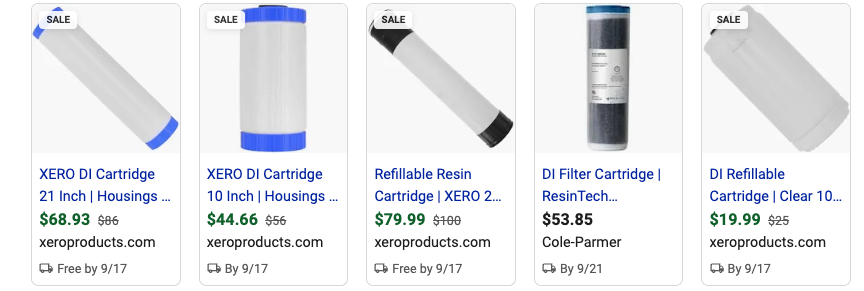
You can buy single use DI cartridges. What size is your house filter? How many gallons you get depends on the condition of your water.
I'd guess a 10" cartridge would get you 80 gallons or more
 Bob "hot rod" Rohr
trainer for Caleffi NA
Living the hydronic dream0 -
Thanks hot_rod .
I was hoping on leaving my oil boiler off. As usual, i ran the tank dry in spring so I would have to go get enough oil to prime it (the tigerloop seems to like more than minimal oil to get going) and then that oil would be abandoned. Plus, no a/c in house currently and wife is always overheated (iykyk).
Is fully heated water critical to cleaning the hePex ?
I wasnt going to bother cleaning the AH coil, but now Im having second thoughts. When I cut away the pipes, maybe I'll solder on a fitting and run cleaner through that too. The rad might be a bit cloggy ?
My house filter is a 2.5" x 10 so not many options other than fine screening. (fwiw, I get about a month out a 10 micron and a week or two with a 5 micron). A 0.5 might last for the flush/fill process.
I can get distilled water at $1.49 or so a gallon. That's just as good as using DI water, as long as the final TDS is around 30 ?
30+ yrs in telecom outside plant.
Currently in building maintenance.0 -
don't use softened water unless you deionize it. the chloride content is too high. those deionization cartridges with the hose thread are great for producing final fill water. the well water is fine for flushing and running the cleaner. could fill it from the water heater and at least werm it up some then use the corcutors to circulate the cleaner.
0 -
but unless there are chunks comin out of the existing system you're overthinking this. gravity conversions and old previous open tank systems have lots of debris in them. a 25 year old mostly copper and plastic system won't have much in it unless there was a long ignored leak or non barrier tubing.
0 -
@mattmia2 Other than the CI boiler, the worst that happened would have been my "bright idea" about 12 years ago. During a heat wave desperation (delusion ?) and no a/c I ran cold well water thru the boiler drain , up into the air handler, and drained to the yard via a spare port on the manifold. The AH was pushing out some cool air ! Then it started raining out of the AH lmao. I shut that down and didnt make a drip pan because it was a dumb idea anyhow..
The 2nd worst would have been the gate valve dripping on a section that no way was coming out. That leaked a cup/day for months and slowed down, finally sealed itself the next season. I looked for replacement guts for it but no joy.
That and all of my near boiler piping is sched 80 iron. (buddy was a pipefitter)
I think of "nasty" when I think of my boiler water.
The tubing is Wirsbo hePex so Im hoping it still has a long life.
30+ yrs in telecom outside plant.
Currently in building maintenance.0 -
Pretty much any detergent works better with warm water, if you can.
Distilled water is a pretty vague term, most of the stuff is actually DI or DM as it is expensive to make large quantities of true distilled water. You boil water, turn it to steam and collect the condensate across a stainless plate. Slow and expensive.
If you have super hard water, softenig may be the lesser of two evils, softeners pull only the scaling ions, but leave behibd some sodium. It depends on the quality of the softener, salt settings, and backwash cycles how much is left behing.
DI pulls both +ad - ions.
Bob "hot rod" Rohr
trainer for Caleffi NA
Living the hydronic dream0



Categories
- All Categories
- 87.8K THE MAIN WALL
- 3.3K A-C, Heat Pumps & Refrigeration
- 60 Biomass
- 430 Carbon Monoxide Awareness
- 133 Chimneys & Flues
- 2.2K Domestic Hot Water
- 6K Gas Heating
- 124 Geothermal
- 170 Indoor-Air Quality
- 3.9K Oil Heating
- 79 Pipe Deterioration
- 1.1K Plumbing
- 6.7K Radiant Heating
- 397 Solar
- 16.1K Strictly Steam
- 3.5K Thermostats and Controls
- 56 Water Quality
- 51 Industry Classes
- 51 Job Opportunities
- 18 Recall Announcements