Welcome! Here are the website rules, as well as some tips for using this forum.
Click here to Find a Contractor in your area.
If our community has helped you, please consider making a contribution to support this website. Thanks!
Using PEX in a closed-loop system for the first time

I have a fair amount of experience working with black-pipe boiler plumbing. I'm getting ready for my first experience using oxygen-barrier PEX, and I have a few questions.
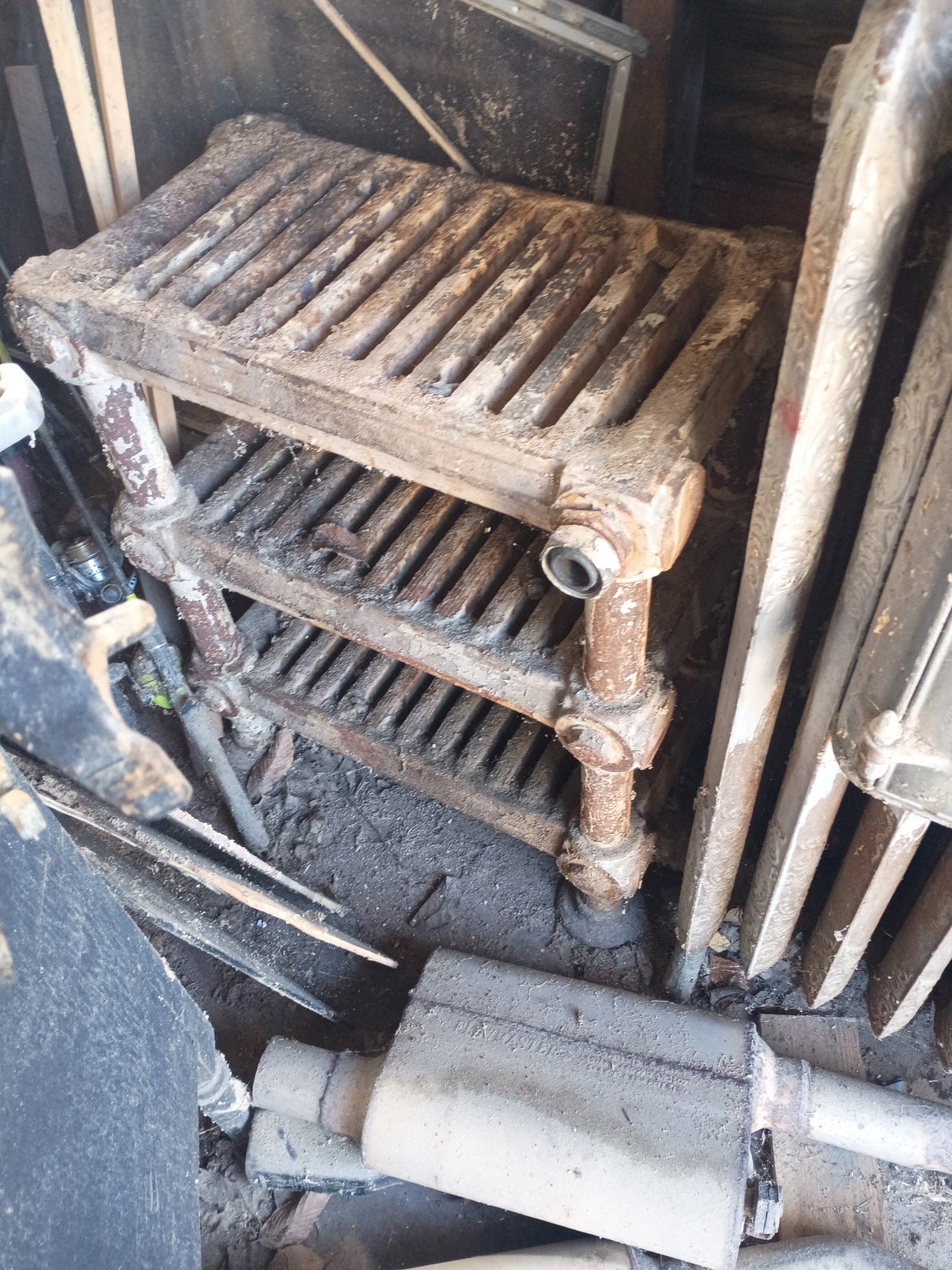
The boiler is an NTI Trinity 150, and the initial setup will be very small: 2-3 radiators, all of the classic cast-iron type. One of them is very rare (I am told), a "pantry" or "butler's" radiator with horizontal orientation of the fins. Image attached. I am struggling to use the various guides out there to figure out how many BTUs the thing will emit. 13" tubes, 23" wide, and stands 28" tall.
Piping will run under a floor, essentially no crawlspace, so once we seal it up maintaining it will be traumatic. Ergo I really want to get it right the first time.
My current plan is to transition to PEX right off the boiler, and then transition back to black pipe to emerge from the floor for aesthetic reasons.
I'm told to leave plenty of slack to account for expansion. The lines will run both along and across joists. What would be the ideal method of fastening them, and do I need to do anything where they pass through the joists?
Also I have seen conflicting information regarding the use of both push-to-fit and poly connectors. Any advice/tips in that domain would be greatly appreciated. Located in NW Indiana, and we are insulating the devil out of this space.
Comments
-
I would use tubing that is compatible with propex expansion sleeves and fittings but the copper crimp ring type fittings are good too. I would pressure test it before sealing it up if you are going to put is someplace inaccessible. There are various stub out devices available that you can expand/crimp the tubing to to make a nice transition through the floor. the 2 ear screw on type clamps are a good way to secure it to joists and other framing. where it passes through drilled holes in joists I would slip a piece of foam insulation around it, it needs to be able to slide freely in the hole as it expands and contracts or you will get expansion noise. There are all sorts of clamps available, just make sure they use some sort of mechanical fastener so the tubing can't pop out of the clamp and that the tubing can move in the clamp.
0 -
Make sure the pex you have is the 5 layer type. You want non-squeaky pex that has a layer of PE on the outside. Quick check, rub it against wood, if it squeaks don't use it.
Without steel pipes to hold the rads in place, you have to anchor them to the wall to keep it from tipping over.
You can get chrome finishing sleeves for pex that would let you run the pipe right up to the rad valve. If possible avoid joinst where the pex will be buried. Pex won't leak unless you put a nail through it, but fittings can. Homerun for each rad tends to be the best configuration.
150k for 3 rads is awfully big boiler. Make sure to enable the anti cycling features on the boiler like fire limit and ramp rate to avoid cycling the boiler into an early grave. Also make sure to install the ODR sensor and configure a reasonable rest curve.
0 -
I think that is called a pantry radiator.
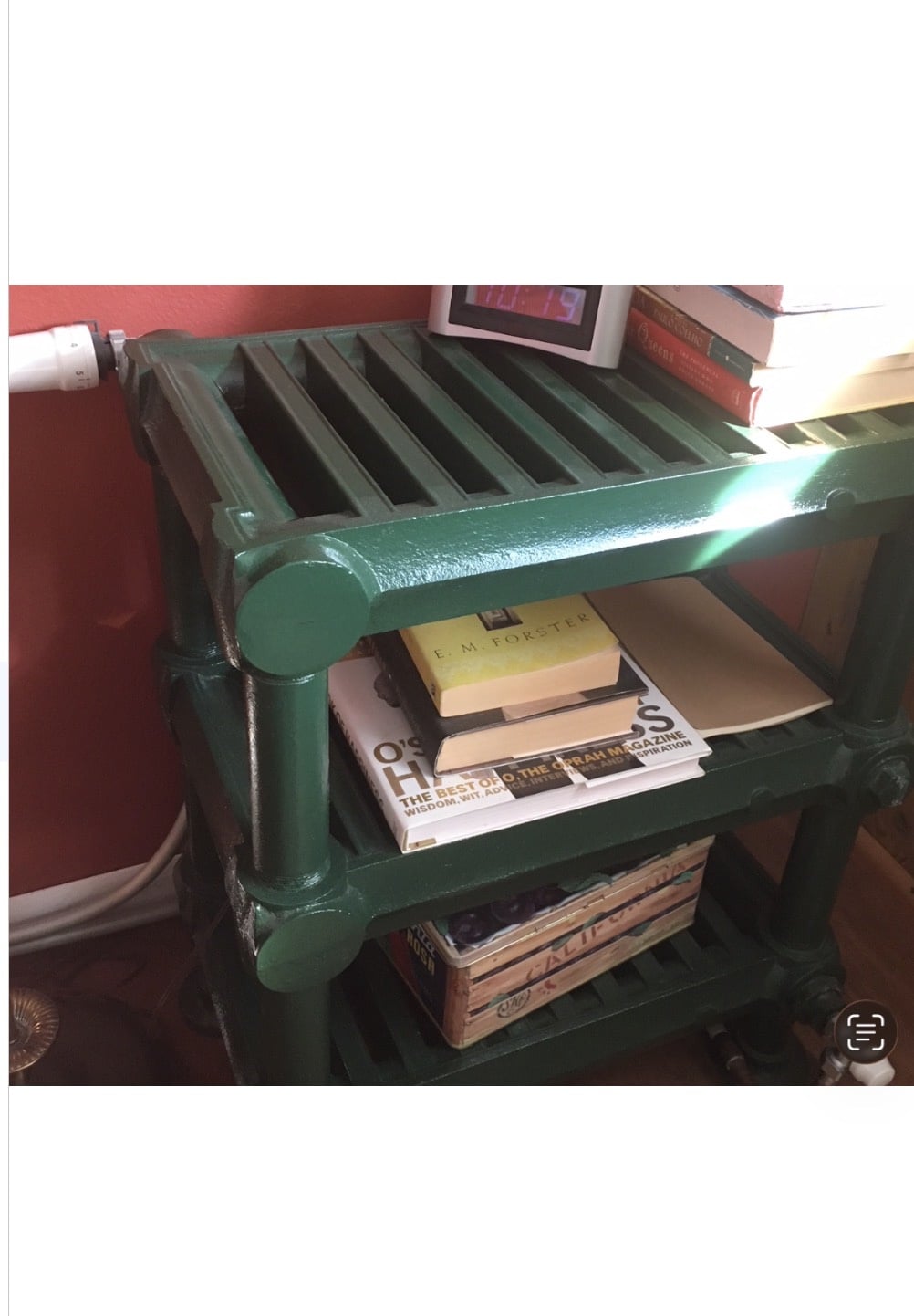
I installed one next to my bed. 1/2” Pex. A TRV for temperature control
The Btu output will depend on the flow you move through it and the temperature.
With 1/2” Pex 1- 1-1/2 gpm, so around 10- 15,000 btu/hr with 180 supply water.
What sort of output are you looking for? What temperature supply?
With 3/4 Pex you might get close to 40,000 btu/hr
 Bob "hot rod" Rohr
trainer for Caleffi NA
Living the hydronic dream0 -
I couldn't figure out how to selectively quote just part of your comment.
The room is about 200 square feet and well insulated, so the calculations I've done show about 8KBTU/hr required. I hope to run my water 140-160. I have a lot to learn about life with a high-efficiency condensing boiler. The current one in my home is 80%, either on or off. A big change is coming my way.
0 -
Pex al pex is another tube option. It doesn’t move around as much as standard pex, and it holds a bend nicely.
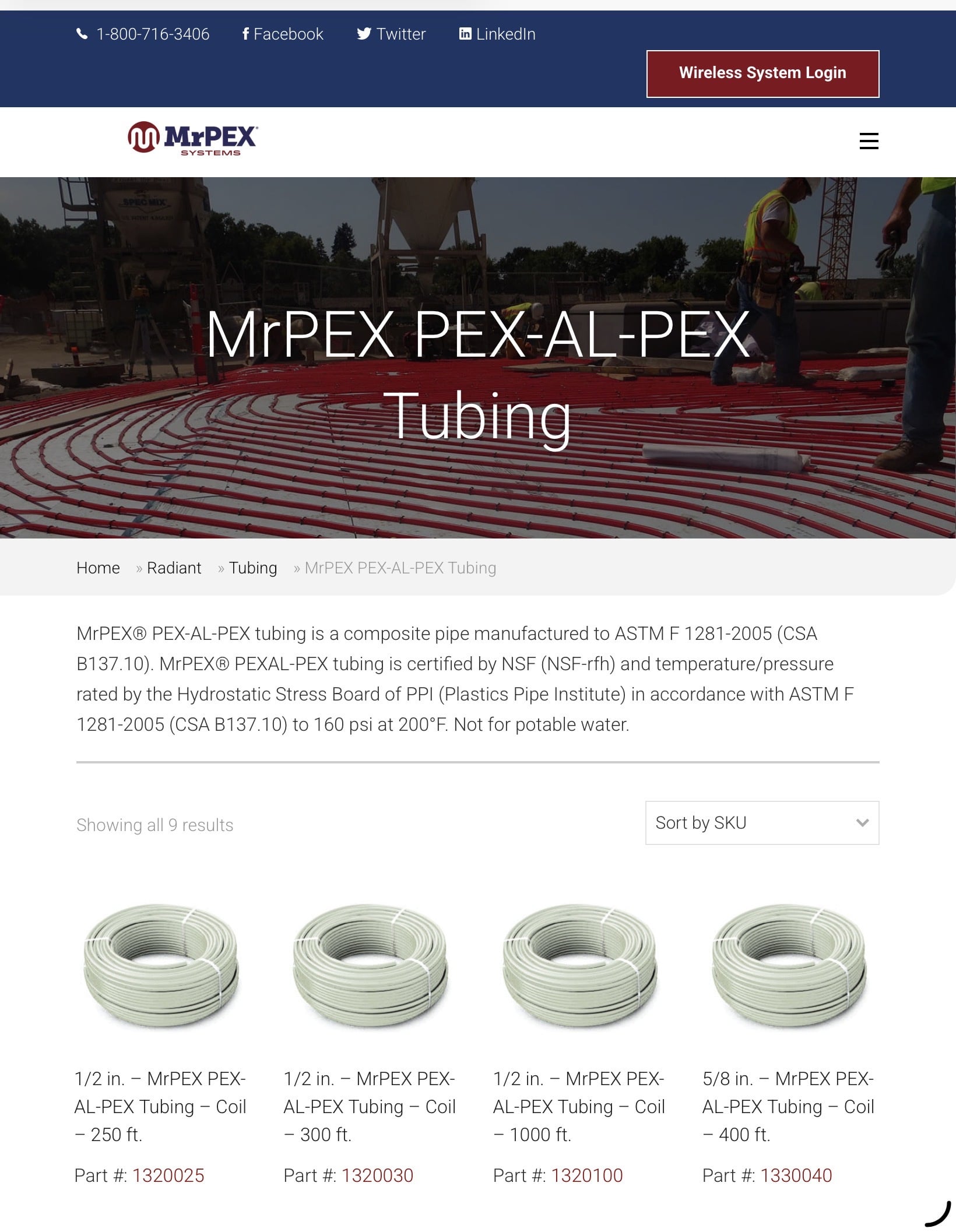
It takes a special o-ring fitting and a specific crimp tool. Probably more $$ than Pex or pert
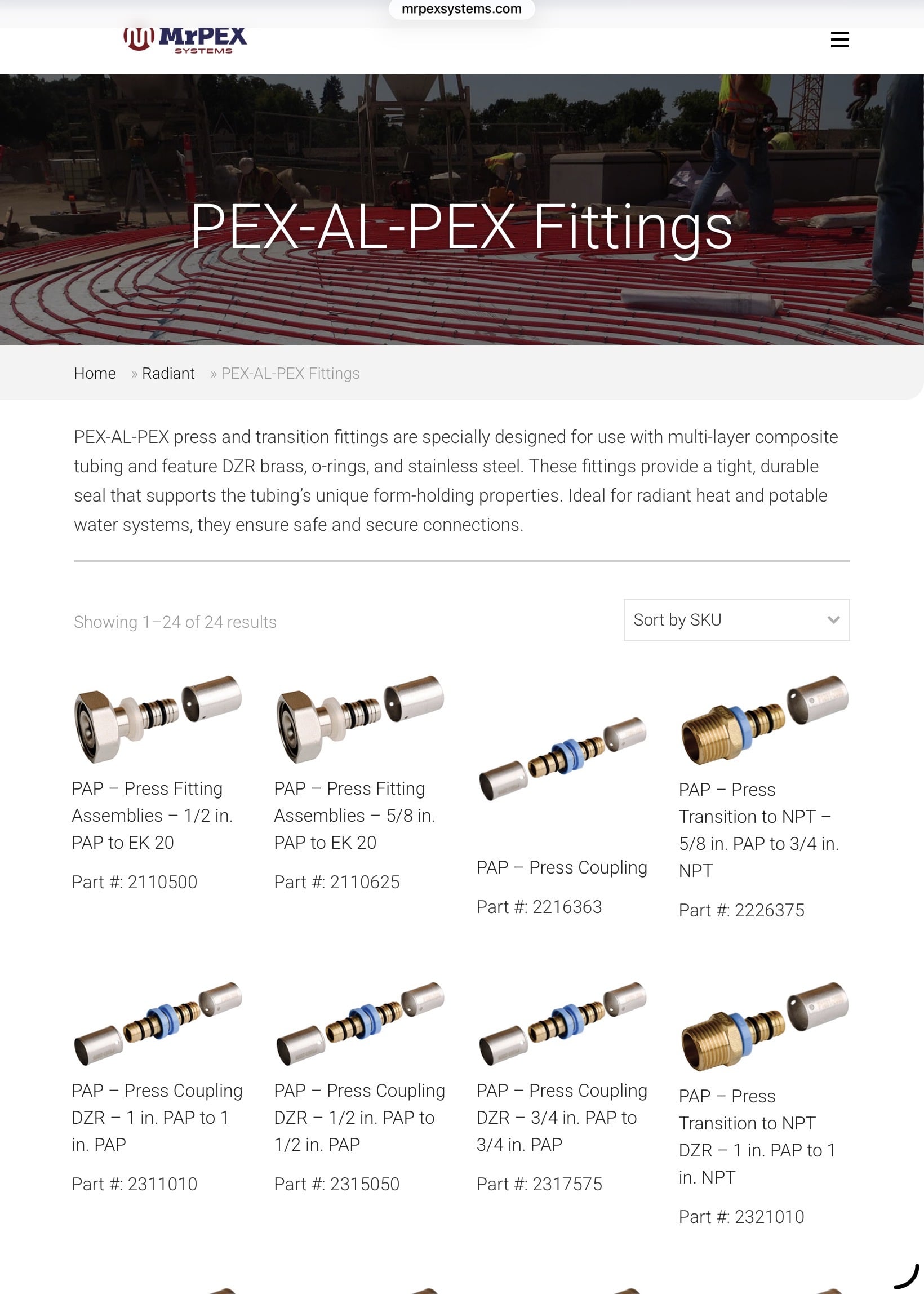
If you go with standard pex, Rehau, UPONOR, AND Mr Pex have type A pex which is very flexible
It can use an expansion or crimp fitting.there are plastic bushings for going through joists, drill a 1-3/8” hole for those to fit
I would not use the push grip fittings
 Bob "hot rod" Rohr
trainer for Caleffi NA
Living the hydronic dream0 -
I have a bag of those very bushings on the way, and also ordered TRVs for the two larger radiators.
Commenting on something said in an earlier comment, I know 150K is a lot for the load I am placing on it. There are two other rooms that will be brought online eventually, and I may also run a small radiator in my greenhouse during seed starting time. This size unit should be able to meet that demand.
0 -
most mod con boilers are 10-1 turn down. So you can limit that boiler output to 15,000 btu/hr
Which probably that one cast radiator could move,
Bob "hot rod" Rohr
trainer for Caleffi NA
Living the hydronic dream0 -
the cliff notes version of how you figure the output is you find the edr either from an old catalog page or for standardized radiators from a radiator chart then you can calculate the output from the edr and the average water temp. maybe @hot_rod has the catalog page. there is the book on this site called edr: every darn radiator that has many of the old catalog pages. probably using any wall hung radiator of that style the size of those sections would get you close enough.
you can likely run the system with outdoor reset and a low water temp but even at 15,000 btu/hr firing rate you probably will have to enable some of the anti short cycle features on the boiler.
0 -
the radiator or all the connected radiation will drive the operating condition of the boiler.
So if you limit the firing to 15k and you have enough radiation, or load on the boiler, it should run non stop
Typical fin tube at 180 gets you about 500 btu/ ft., as an example
I think Dans book EDR may have some data on that radiator. @Steamhead would have an idea.
My gut feeling is that radiator will move 15,000. Of course it needs to be under a load, in a cold room move heat into a space, or the boiler will cycle. This will be the case even with it firing full rate with a 150k load connectedIn a perfect design world, on the coldest design day, a boiler would run non stop, delivering the right amount of btu to the load of the building.
That boiler with ODR can get real close to a constant run condition as it adjusts both firing and supply temperature to match the changing load.
You are on the right path.
As a side note firing a 150 K boiler at 15K drives up the efficiency in condensing mode as you have a lot of HX surface with a small flame, it will condense like crazy!
The goal with a mod con is get the return temperature as low as possible. With radiators you may look at running a wide delta, maybe 30 or more to drive that return down.Bob "hot rod" Rohr
trainer for Caleffi NA
Living the hydronic dream0 -
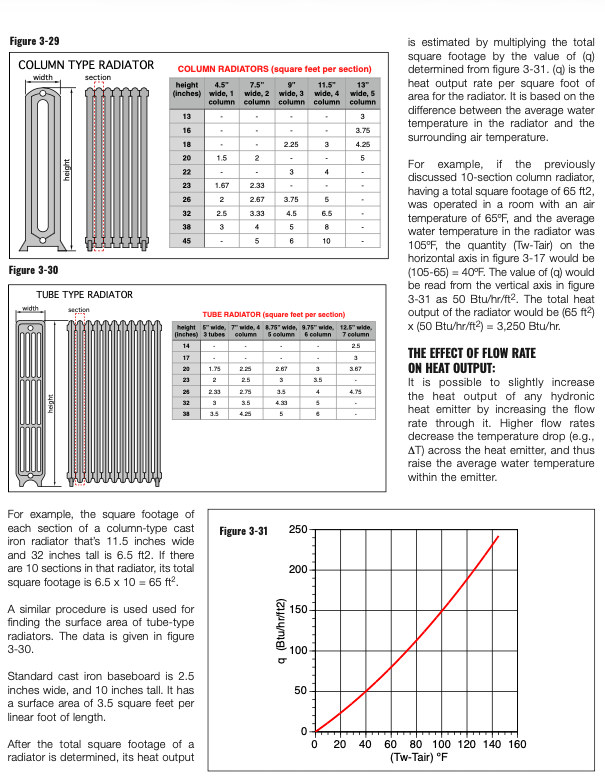
According to the 1925 "Ideal Fitter", it's 23 square feet.
 1
1 -
Here is a derate formula for column type radiators. I thik you will get close with this, now that you have sq foot number.
If you supply 180° to the radiator, room temperature of 65 at radiator, (170-65) 105 on vertical= 160 btu/ sq. ft./hr. 160x 23= =3,680 btu/hr.
Quite a bit smaller than my above guesstimate. A small computer muffin fan mounted below would increase output, turning it into a forced convector.
 Bob "hot rod" Rohr
trainer for Caleffi NA
Living the hydronic dream1 -
Thanks everyone for the advice on this thread; I'm sure glad I asked before I implemented.
I have one question that cropped up in my mind reading the responses: what is the interaction between the TRVs and the outdoor reset part of things? It would seem like the latter would obviate the need for the former, and I'm trying to get my head around just what role each would play in the final system.
0 -
0
-
The TRV is the actual radiator, or room temperature control device.
The advantages to this type of control, it does nor require power or wiring. It is a proportional valve, compared to an electric zone valve which is full open or full close.
There are TRV heads available with setback function also.
The ODR modulates the boiler temperature based on an outdoor temperature reading.
An ideal ODR setting would allow the boiler to modulate all season, rarely shutting off. As the boiler temperature ramps down that may allow the TRV to allow a small flow through the radiator. They work well together ODR and TRVs.
Bob "hot rod" Rohr
trainer for Caleffi NA
Living the hydronic dream 1
1



Categories
- All Categories
- 87.9K THE MAIN WALL
- 3.3K A-C, Heat Pumps & Refrigeration
- 60 Biomass
- 430 Carbon Monoxide Awareness
- 133 Chimneys & Flues
- 2.2K Domestic Hot Water
- 6K Gas Heating
- 124 Geothermal
- 170 Indoor-Air Quality
- 3.9K Oil Heating
- 80 Pipe Deterioration
- 1.1K Plumbing
- 6.7K Radiant Heating
- 397 Solar
- 16.1K Strictly Steam
- 3.5K Thermostats and Controls
- 56 Water Quality
- 51 Industry Classes
- 51 Job Opportunities
- 18 Recall Announcements