Boiler Protection (even with Outdoor Reset)

Comments
-
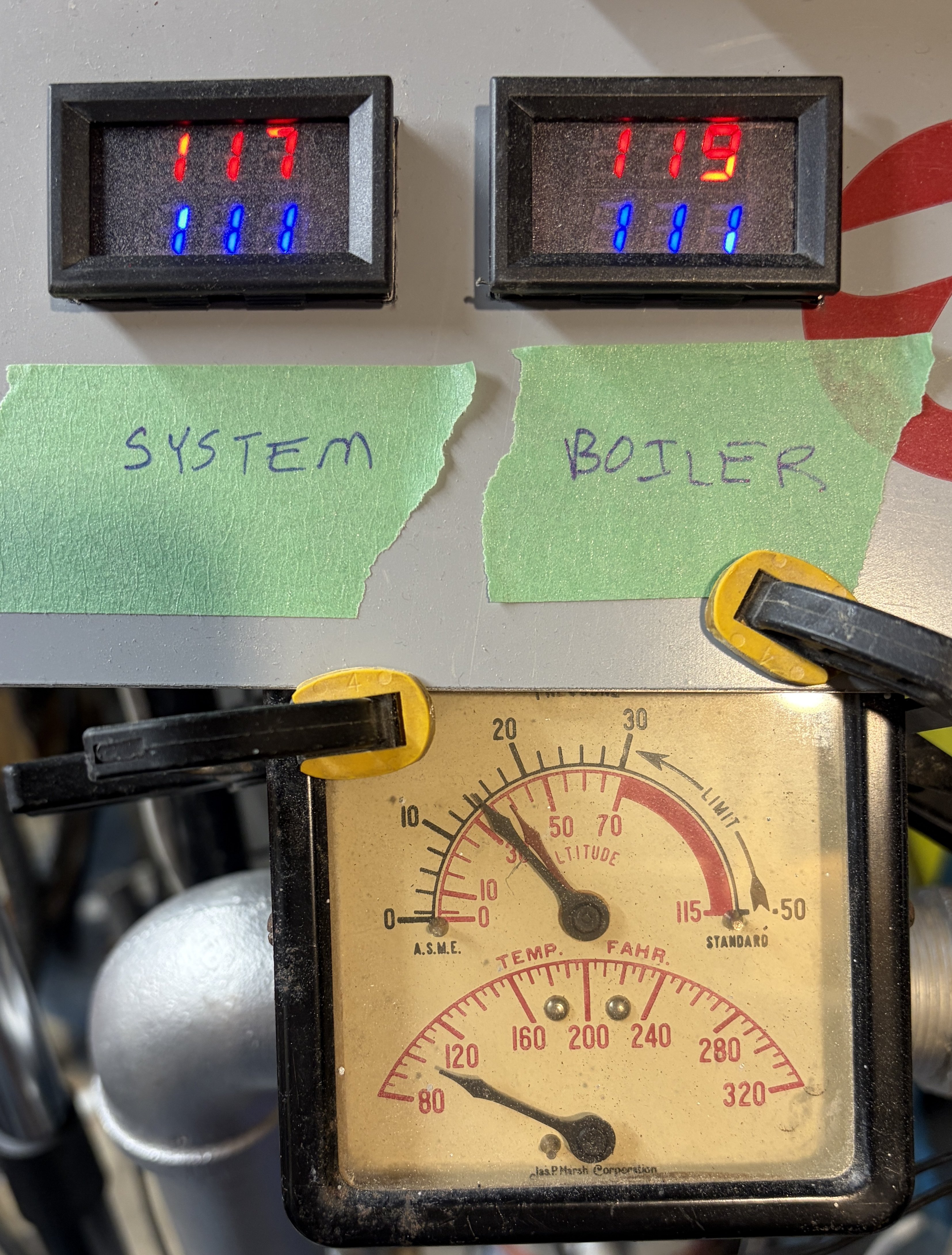
Care to explain what's going on?
0 -
it looks like you're condensing in a boiler not designed to condense although you could be nearing ok on an oil boiler
0 -
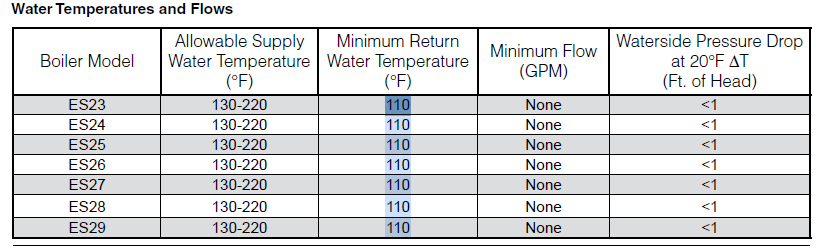
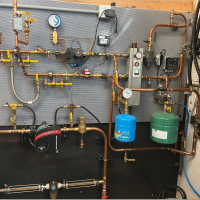
Just that the valve ensures that the return water temperature for my CI boiler meets the minimum of 110F, even during this shoulder season when the boiler is hardly running.
0 -
wouldnt you want the return water higher than that to prevent condensation of the flue gasses?

 2
2 -
Min return temp for my boiler is 110F.
0 -
What fuel are you burning? I'd be worried about condensation with return temperature lower than 135-140⁰.
1 -
-
yeah they actually promote that low return water temp as a selling point, my mistake i think we are all more familiar with the standard series 2 or series 3. it's a bit more money so it makes sense. wonder if they use a dip tube or internal mixer of some sort to prevent condensation
0 -
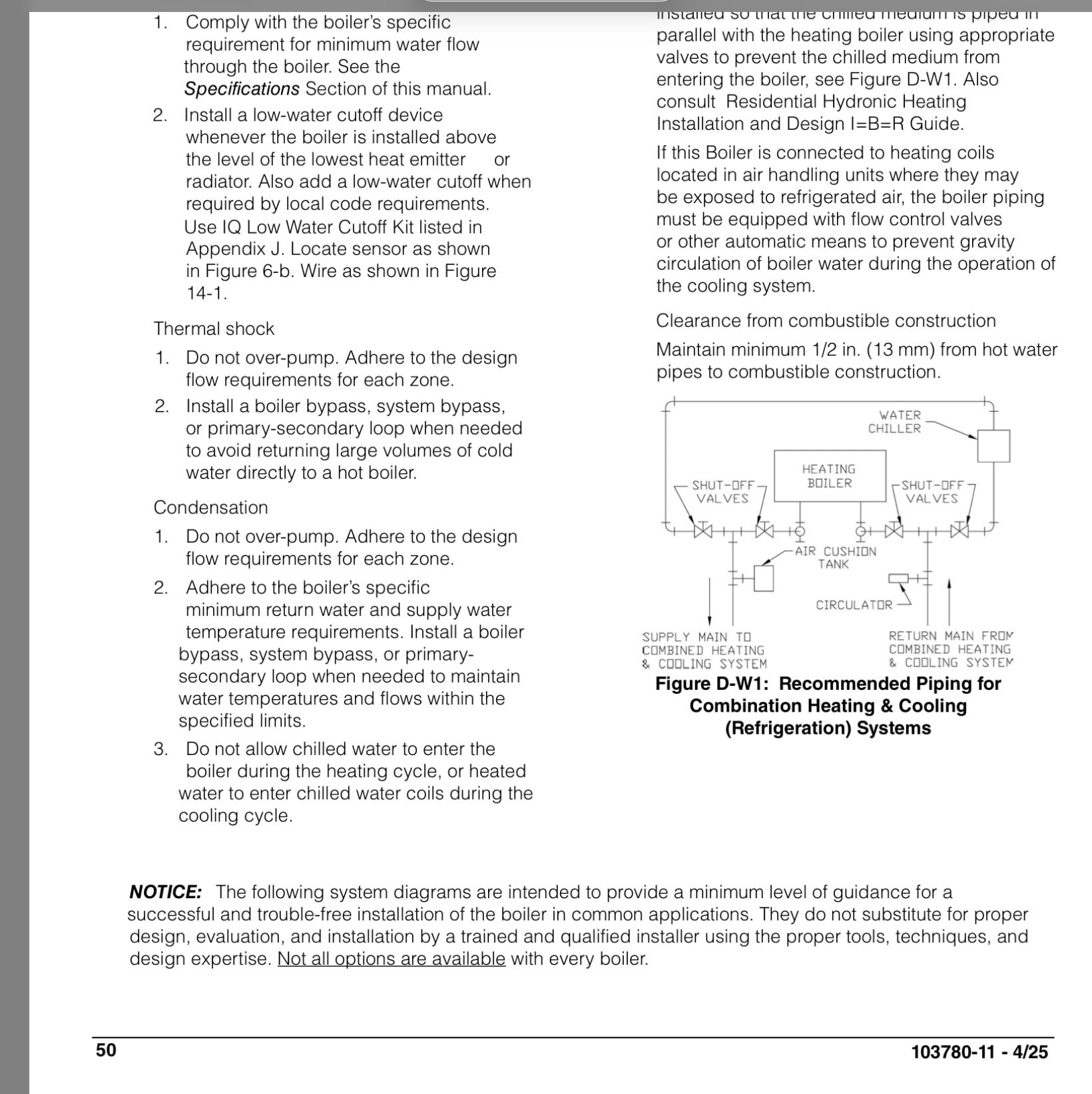
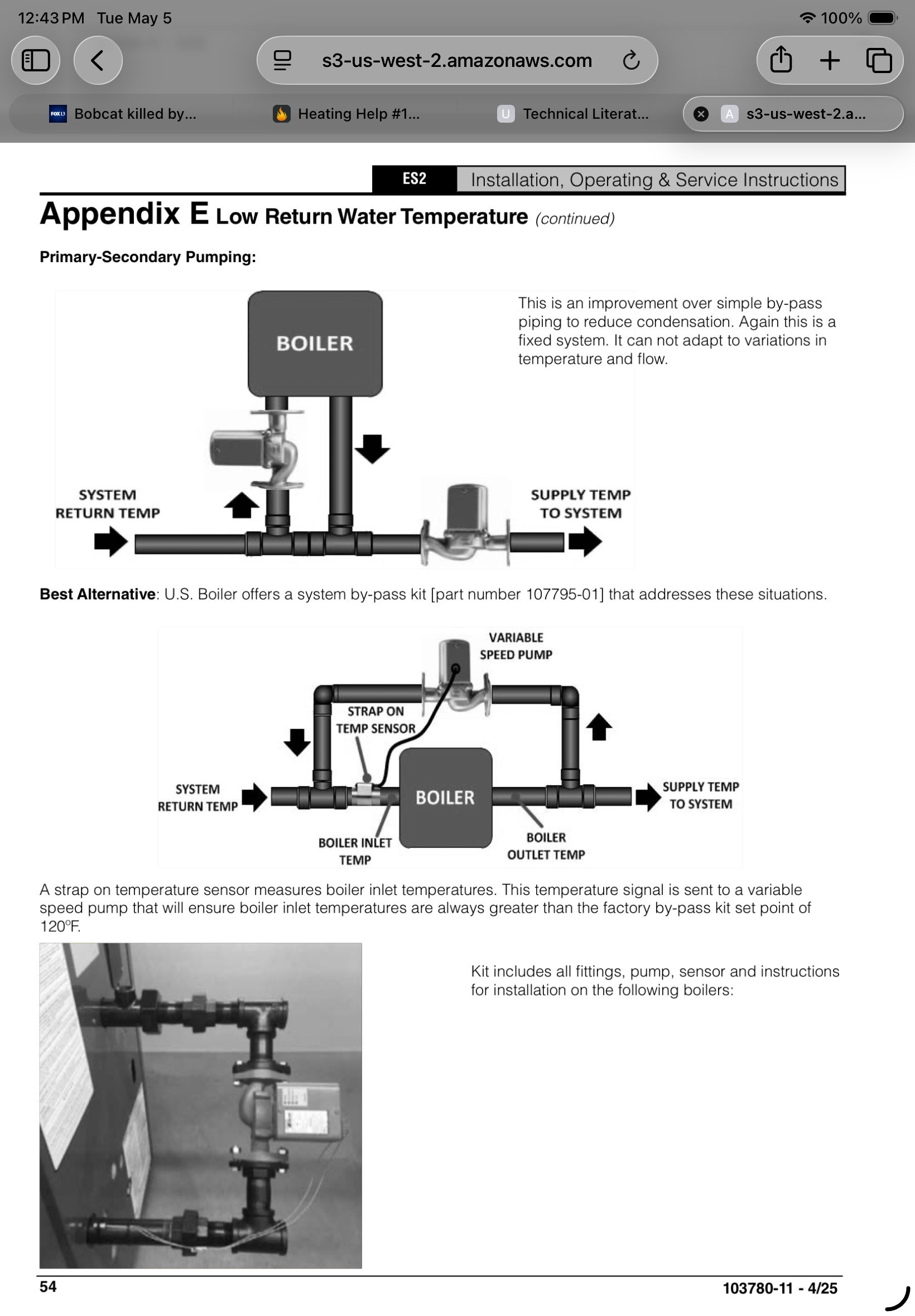
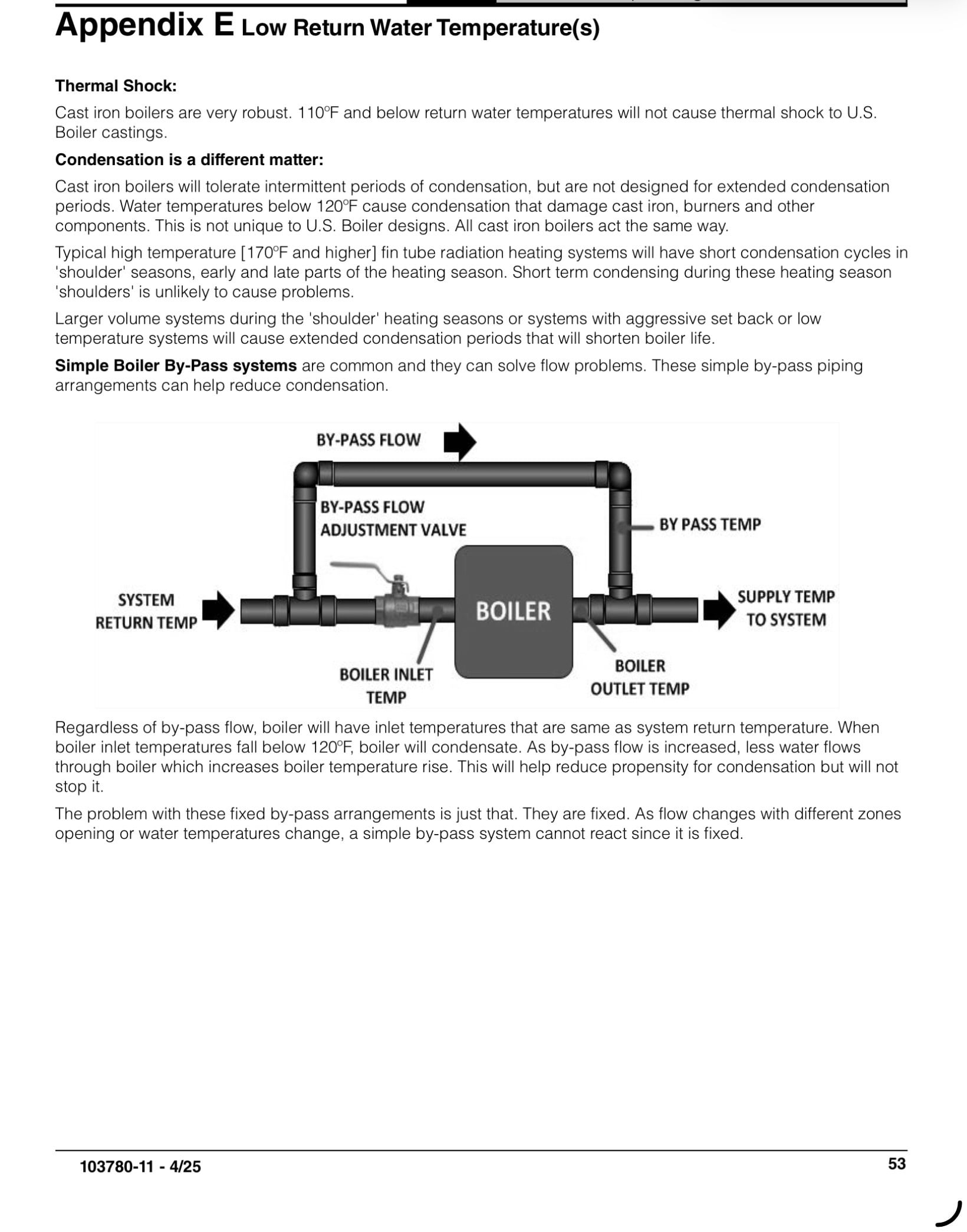
The manual for that boiler is a bit confusing. They seem to indicate 120 as a minimum return. They also show a few protection options, but even the temperature controlled bypass (optional kit) is not 100% protection
Does the 110 return number shown in the manual assume the bypass pump kit is used. Because the mention 120 and 110. While the fuel dewpoint may be closer to 130f.
 Bob "hot rod" Rohr
trainer for Caleffi NA
Living the hydronic dream1 -
I don't know what manual you are displaying, but I found the 110F number in the I&O Manual found here: link (on the Burnham website for the ES2). I didn't find any reference to a 120F return in the ES2 documentation. I think the document that specifies 120F is for the bypass kit and that is a generic comment for all boilers.
The bypass kit looks reasonable but the Caleffi valve is a lot cheaper and a lot simpler.
Their ES2 documentation is sadly lacking when it comes to specifying boiler protection. They do make reference to a bypass kit. They also mention thermal shock and condensation.
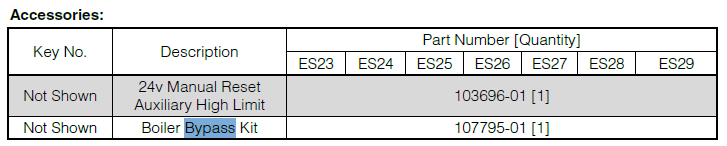
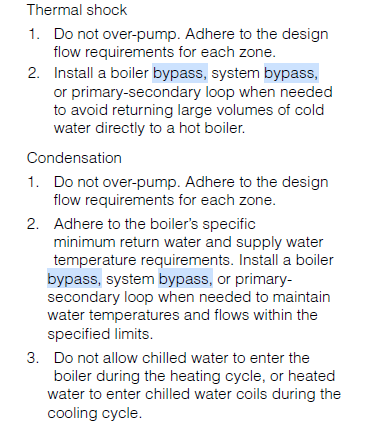 0
0 -
this was the manual I looked through, I couldn't find anything stipulating against that 110 return temp (page 5) . seemed weird to me as well, local rep said they do approve it for the low return water temperature but was going to reach out to the factory for more info. I found an even newer manual that states 100 for return water. kind of goes against what I know so I'm hoping someone from Burnham can clarify
0 -
I think the "allowable supply water temp" is also important here. If your flow isn't slow enough to keep the supply temp at the minimum of 130 then you will get condensing.(if it were my boiler I wouldn't cut it as close as the manual suggests is acceptable)
0 -
Both the ES2 and the other Series 2 boilers seem to use the exact same heat exchanger, so it does seem odd that one might have a lower acceptable return temperature than others.
ES2 heat exchanger model numbers (see page 32): https://s3-us-west-2.amazonaws.com/catsy.782/ES2+IO+Manual.pdf
X-2 heat exchanger model numbers (see page 42): https://s3-us-west-2.amazonaws.com/catsy.782/X-2+IO+Manual.pdf
0 -
What can I say other than that I trust the manufacturer's documentation for the boiler model that I installed?
That said, my point is that regardless of the actual required return temperature, the Caleffi valve will meet that requirement by using the appropriate thermostatic element - even in shoulder season where the water in the system does not warm up all that much. It's a simple mechanical solution that works.
0 -
My interpretation is the 110 is the minimum to prevent thermal shock (cracking) of the boiler and the 120 degrees is the minimum allowed to prevent condensation. In my opinion i would stay well above those numbers. It's like anything. Those are minimum numbers. You are straddling the line which is not good. Compare it to a circulator. Circulators are rated for 230 degrees but i'm sure as hell can bet you that you won't get many years out of a circulator if you run it at 230 degree loop temps.
0 -
The element I have in the Caleffi valve is the 115F, so yes it mixes the water so that the boiler return temps are typically 115F and higher when the boiler is in full swing. As for the 120F, the boiler does heat the water, let's say by 10 to 20F, so the supply temperature will then be well above 120F.
0 -
brings up a good point when you are talking about temperatures.
The return temperature is typically measured via a sensor outside the boiler. Either a strap on sensor, or with a 3 way mix valve the sensor is internal.
The boiler control measuring the temperature inside, typically a probe into the boiler, so that number will tend to be higher.
Another good number to know would be the temperature in the supply pipe as it exists the boiler. It should be a blend of the return, plus what the firing boiler is adding.
A boiler properly sized to its distribution, at load may add a few degrees maybe as much a 10 degrees depending on flow rates.
The “industry” return temperature suggested number is a bit of a moving target.
It depends on the fuel type, fuel value and CO 2 reading.
some boilers, due to the design and metalurgy can handle lower return, that was always the selling feature of some Buderus, and the Viessmann bi-feral.
Additionally some cast boilers have a blending device inside, either a valve or vs pump, the Weil GV Gold, or Burnham Revolution, and some other current brands and models have built in protection, done properly
So the boiler manufacturers info should be the number they have tested and recommend.
130f seems to be a number that covers all types is standard, conventional, non condensing gas, oil, lp with some wiggle room.
Bob "hot rod" Rohr
trainer for Caleffi NA
Living the hydronic dream1




Categories
- All Categories
- 87.8K THE MAIN WALL
- 3.3K A-C, Heat Pumps & Refrigeration
- 59 Biomass
- 430 Carbon Monoxide Awareness
- 132 Chimneys & Flues
- 2.2K Domestic Hot Water
- 6K Gas Heating
- 124 Geothermal
- 170 Indoor-Air Quality
- 3.8K Oil Heating
- 79 Pipe Deterioration
- 1.1K Plumbing
- 6.7K Radiant Heating
- 396 Solar
- 16.1K Strictly Steam
- 3.5K Thermostats and Controls
- 56 Water Quality
- 51 Industry Classes
- 51 Job Opportunities
- 18 Recall Announcements