Welcome! Here are the website rules, as well as some tips for using this forum.
Click here to Find a Contractor in your area.
If our community has helped you, please consider making a contribution to support this website. Thanks!
Riello Burner Issue

hello, I had a brand new buderus boiler with a riello burner installed in my home in 2021. Ever since it was installed it never worked properly and kicks on and immediately shutting right off over and over and not staying running. I’ve had several heating contractors adjust the air, replace the control, replace the nozzle several times and I installed a chimney liner. Still have never had a full winter where it ran properly without having the same issue. Any thoughts? Thanks.
Comments
-
What are the results of the most recent combustion analysis?
0 -
These are usually pretty trouble free burners, especially in a Buderus. Do you know if the techs were using digital analyzers? Pressure gauges and draft gauges etc? How is the burner getting its fuel? It's been my experience that the fuel delivery to the pump is the weak link on those burners.
Miss Hall's School service mechanic, greenhouse teacher, dog walker and designated driver
0 -
Ever since it was installed it never worked properly and kicks on and immediately shutting right off over and over and not staying running.
This does not sound sustainable. Under those conditions, the flame would go on and off hundreds of times each hour of operation. Your statement does not tell us whether the burner eventually stops this ON-and-immediately-OFF cycle. If this is the way it operates all the time, then the number of cycles on the control relay, the pump solenoid, and several other parts would have already lasted several lifetimes in the last 4 to 5 years.
The life expectancy of a Riello fuel pump solenoid is about 250,000 cycles, which on average should be 12 years or longer.
If the cycle you are describing (about 5 seconds from ON to OFF and back to ON) is how the burner operates all the time, then there would be as many as 720 cycles per hour, or about 864,000 cycles in one heating season. (average hours of operation per season) That would be more than three lifetimes in just one year.
I have a feeling that the short ON-OFF cycles eventually stop and the burner begins operating for some amount of time substantially longer than 5 seconds. I have seen systems behave this way when a pressure switch is influenced by the transient pressure spike that occurs at ignition in the combustion chamber or in the vent connector when a flue-vent proving switch is used.
When the burner shuts off, the pressure switch resets and closes. The burner then starts immediately, but the pressure pulse created by ignition causes the switch to open again, shutting the burner down just as quickly. This can result in a repeating ON-OFF cycle.
The cycle may eventually stop once the chimney draft becomes fully established and the pressure switch begins seeing a steady draft condition instead of the momentary pressure changes caused by ignition of the fuel.
Edward Young Retired
After you make that expensive repair and you still have the same problem, What will you check next?
0 -
This problem happens several times during the winter months as I do not use the boiler during the warmer months ( I have a hot water water heater for water the boiler is just for heat). It is an intermittent problem and not all the time.
The last time it was tested, the contractor used digital and draft gauges. I’ve been told that Increasing the pump pressure and changing the nozzle helped. But then I still end I still end up having the same problem a month or so later. The oil is gravity fed from the bottom of my oil tank.
0 -
What model Buderus? What model Riello?
Where is the oil tank?
Is the oil line off the bottom of the tank and runs along the floor or does it run overhead?
1 pipe or 2?
0 -
it’s the Buderus Logano G115 WS US/CA And Riello 40
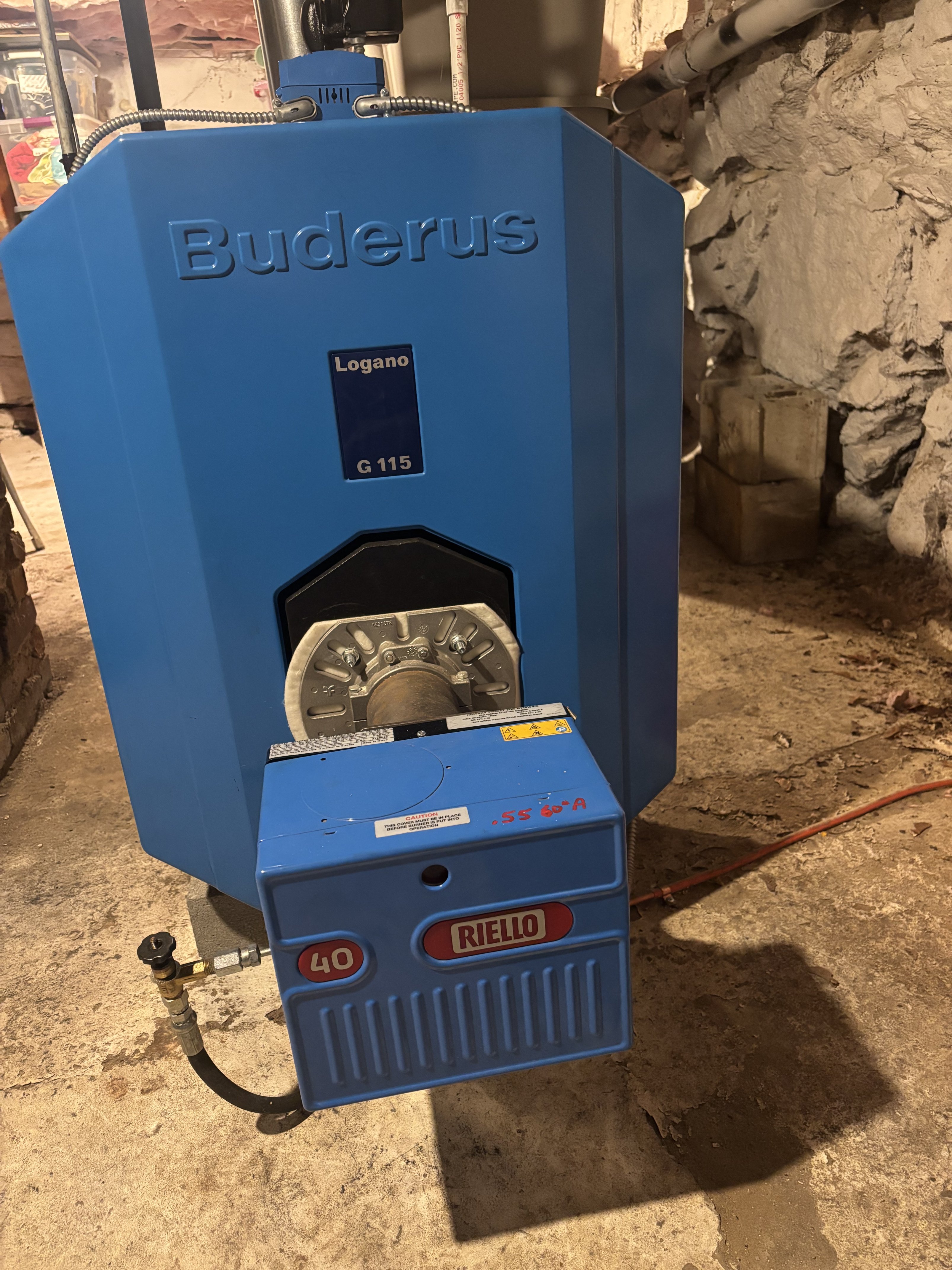
The oil tank is right near it and the line is off the bottom and goes along the floor.
I’m guessing 1 pipe? It’s 1 zone and I have 1 chimney0 -
You wrote:
“This problem happens several times during the winter months as I do not use the boiler during the warmer months.”I’m still not sure whether “several times during the winter” means that the burner does not do this all the time. Your statement almost makes it sound like you only use the boiler several times during the winter, and when it is warmer you don’t use the boiler at all.
What I think you might mean is: that the boiler operates normally and continuously from about mid-December to the end of February, and before December and after February you do not operate the burner at all. When you are using the boiler normally during the very cold months of December, January, and part of February, the burner does not short cycle every time. In other words, there are times when the burner operates normally without the short cycling. Is that a correct understanding of your issue?
Please confirm this explanation, or be more specific about the operating season and the number or percentage of times the short cycling occurs.
One possible explanation could be: that the short cycles happen when the boiler is cold after a long OFF period. Once the boiler heats up, the short cycling stops.
Another possibility is: that the short cycling only happens in the morning, and only lasts for about six or seven ON-OFF cycles before the burner begins operating normally. The rest of the day it works fine.
The explanation you have provided so far sounds like the ON-OFF cycle happens the entire time the burner is operating. As mentioned before, That is not a sustainable process, even if you only run the burner when it is very cold because of the problem.
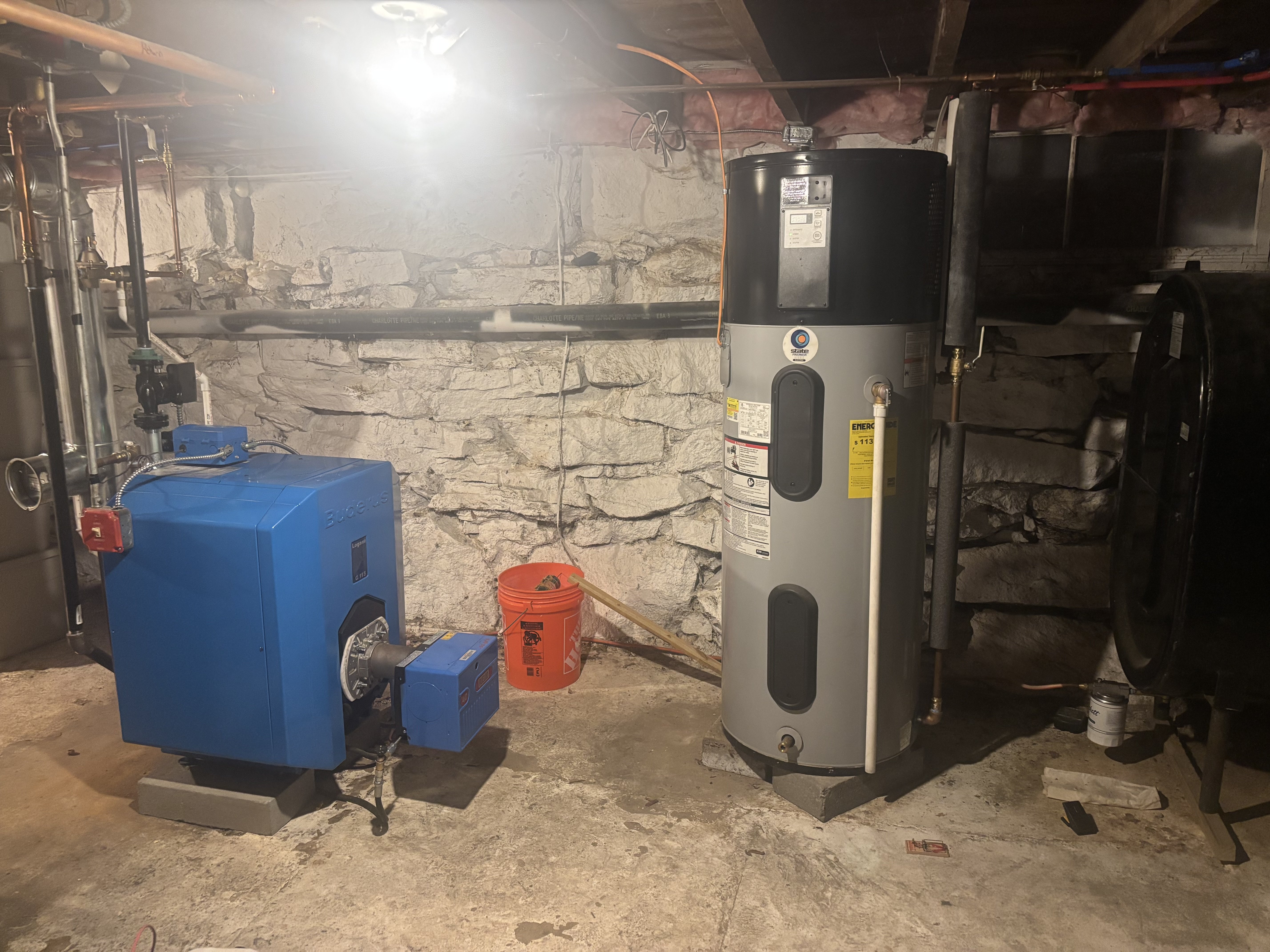
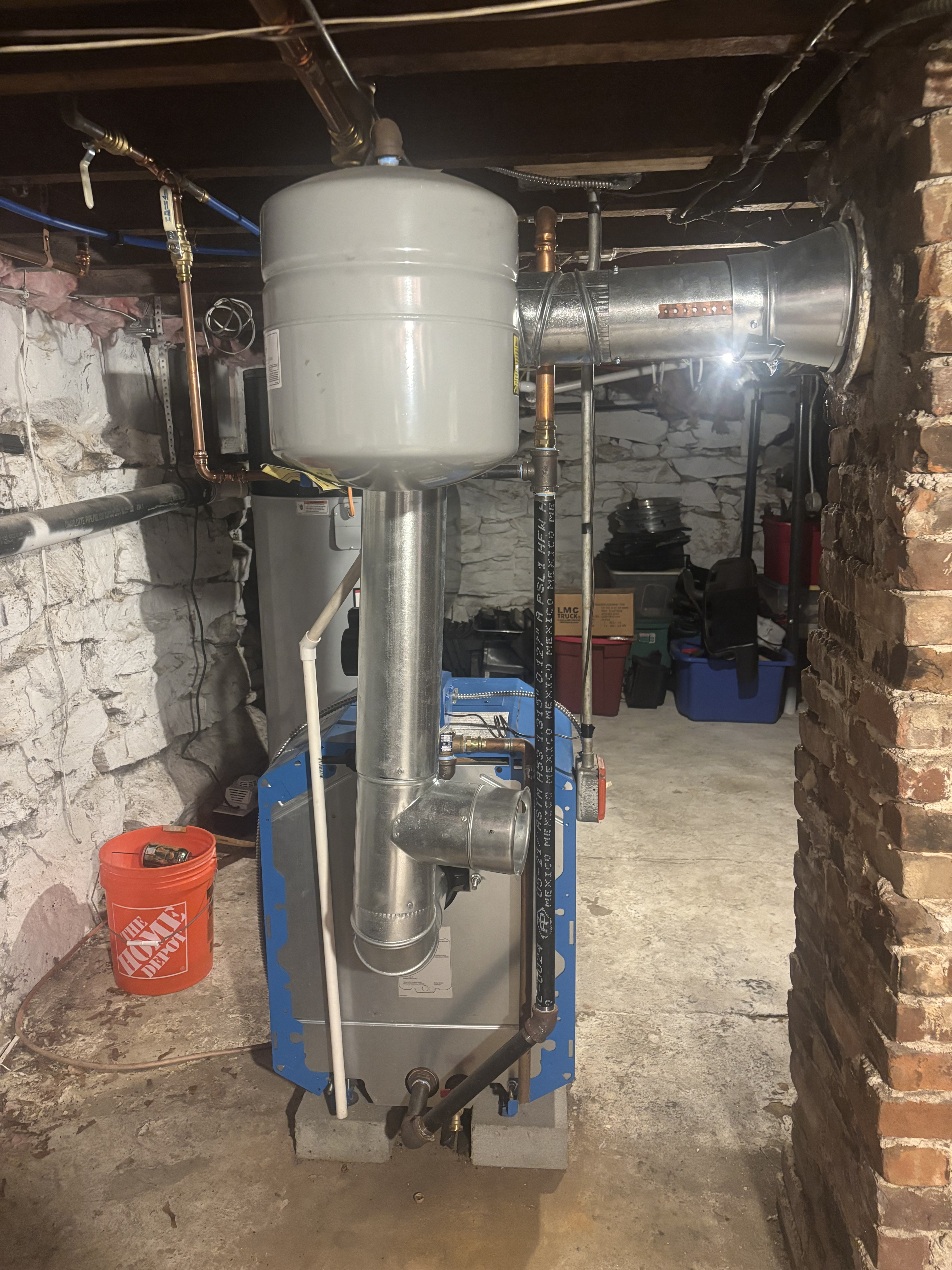
Would you be able to post a photograph or two of the boiler from far enough back to see how it is connected to the chimney including the burner and the vent connector in the same shot. Take it from more than one side so we can see stuff from different perspectives, and to see if there are any additional controls that are mounted on the boiler or on the walls near the boiler. That often pinpoints someplace to look.
Edward Young Retired
After you make that expensive repair and you still have the same problem, What will you check next?
0 -
what I am trying to say is that I use the boiler from October through April and during that time I have to call a heating contractor about 3 times due to it short cycling. It will do it at night and during the day so can’t find a pattern there. It will run normal for a month or 2 and then all of a sudden start doing the short cycling 5-6 times before staying running and then eventually 12 times before staying running until eventually it just doesn’t stay running so I shut it off and call a heating contractor. I will take more pictures.
 1
1 -
-
-
-
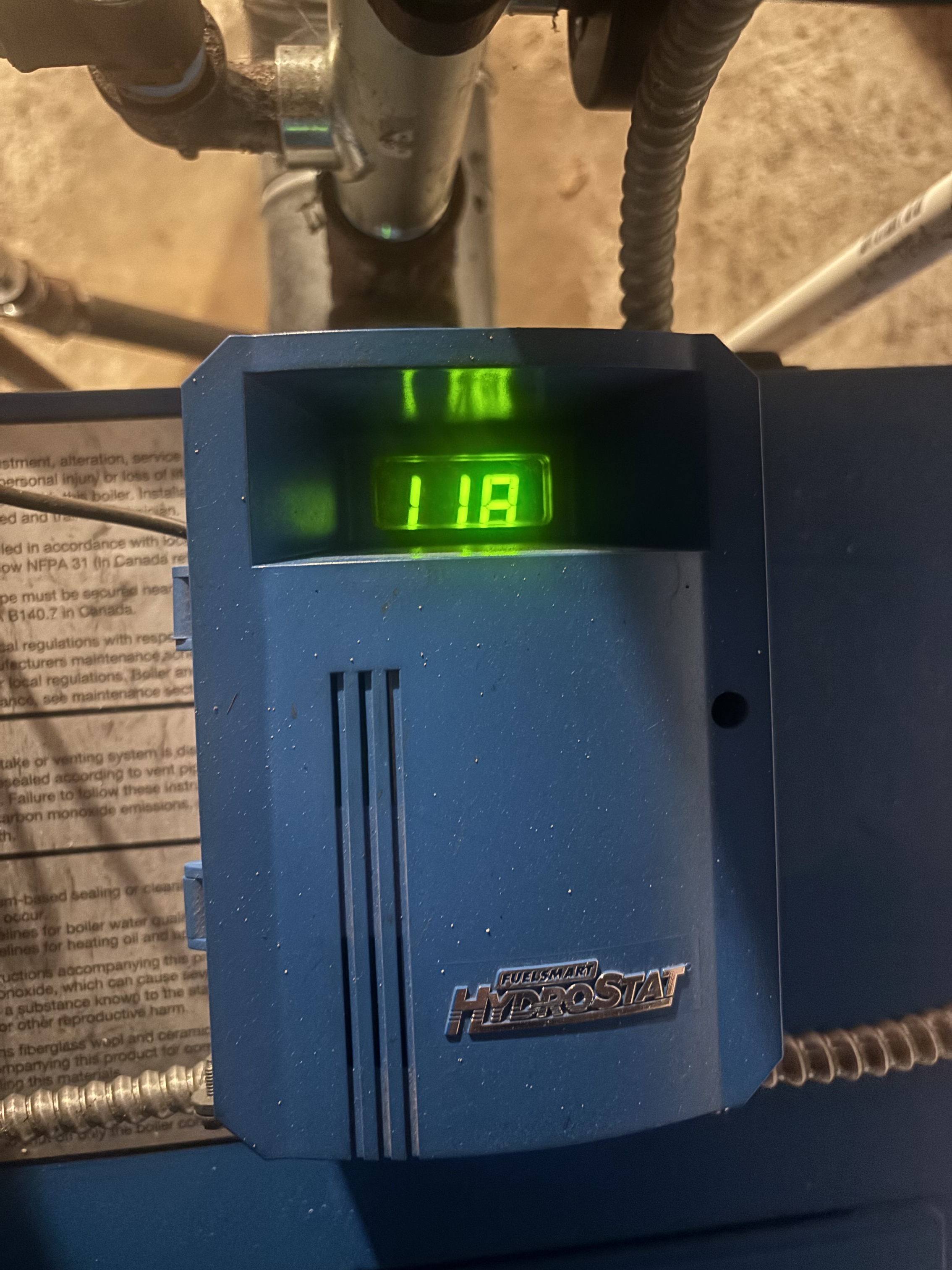
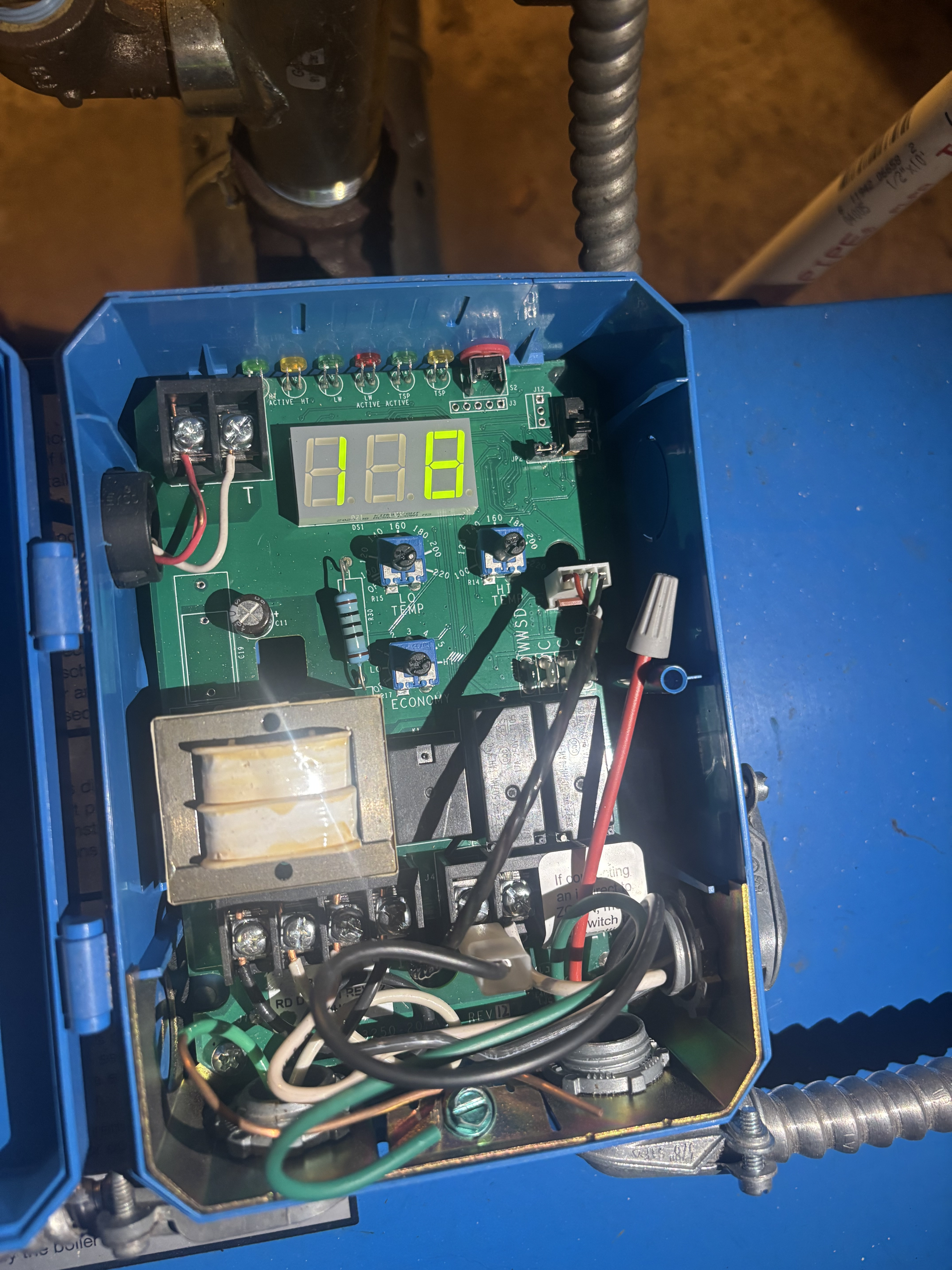
I have had that same system as you for over 30 years, and over the years. I have had my share of problems with different components—zone valves, relief valves, and other issues. You seem to be using the Buderus control to operate the burner and circulator. I was using a Honeywell L8148 and later the Honeywell L7224U control, so I am not familiar with your control.
Can you take a picture of that control with the part number visible so I can look up how that control is supposed to work?
For the first 15 years I was using the Riello Burner that was the model before the one you have but it still uses the same primary/ignition control, so that is something that I am familiar with. As time goes on I have put different burners on that boiler and have used oil burners that I removed from other homes just to get it up and running. You do that when you are in the trade. Your home gets looked at last when there is an emergency. and you put stuff on there that is laying around the shop "temporarily" when the supply houses are closed, and that temporary stuff can last for several years
Looking forward to more information from your boiler.
Edward Young Retired
After you make that expensive repair and you still have the same problem, What will you check next?
 2
2 -
-
-
is this the control you are referring too?
0 -
-
Thanks for the photos.
I was looking for a pressure switch that might be part of some type of draft-measuring device or control. You do not have that, so a pressure switch is not your problem.
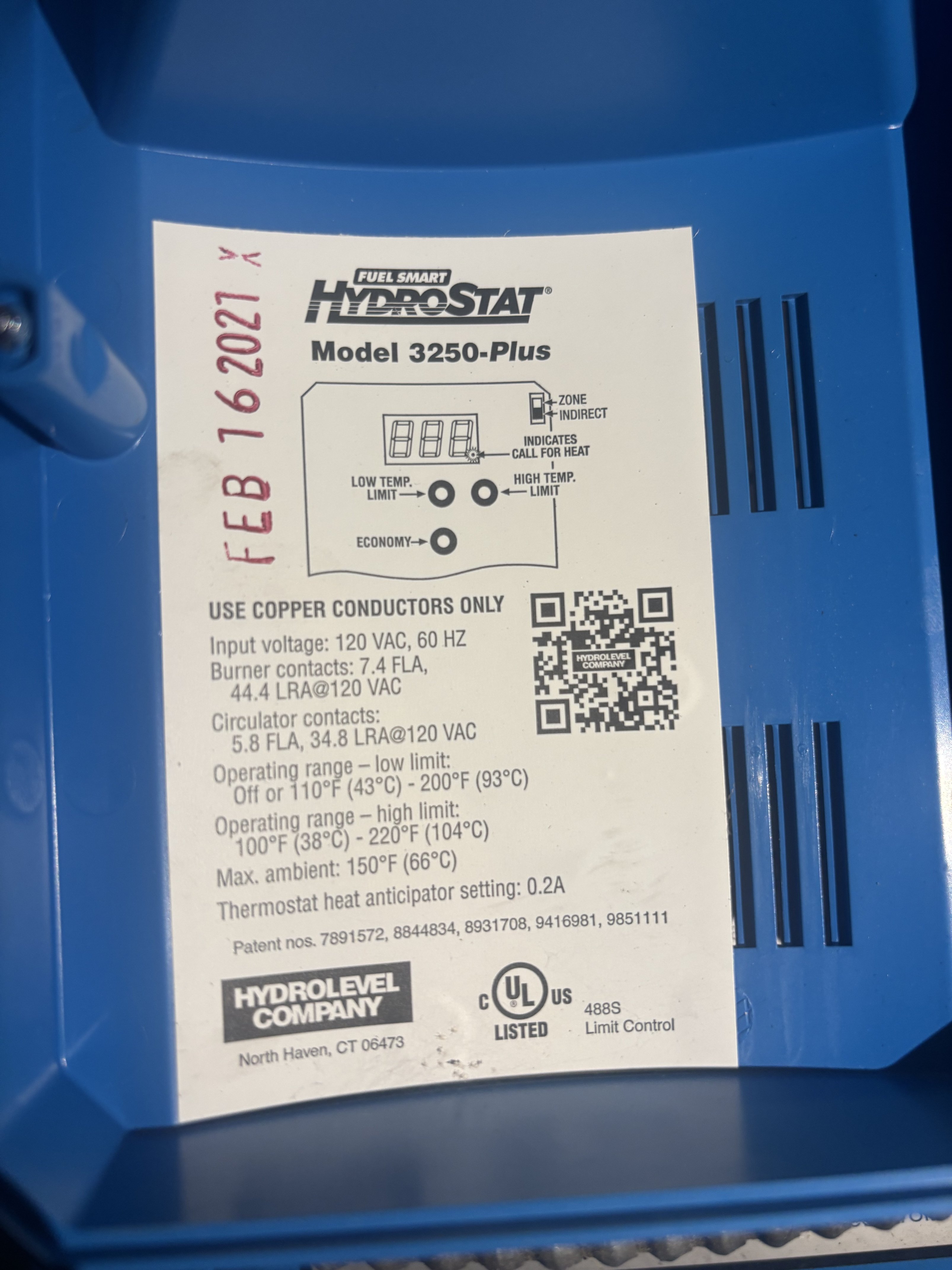
The Hydrostat with the blue cover is also not the cause of your problem. That control is easy to test to determine whether the short-cycling problem is originating from it, and your technician would have ruled that out in fairly short order.
That leaves the primary/ignition control, which is a Riello proprietary part that fits no other brand of burner. That is where you are likely getting the short-cycling problem. It may be caused by vibration and a poor connection of the flame-sensing eye, which is a replaceable part, or it may be related to the way the control plugs into the burner chassis.
I believe I have experienced that problem once or twice before. I replaced the flame-sensing eye first, and when that did not solve the problem, I replaced the control.
Other than that, there may be something blocking the view of the flame from the flame-sensor eye.
If there is a blockage flapping in the line of sight of the flame sensor, that is not something a rookie burner mechanic might normally look for. I have made it a habit to shine my flashlight in and look down the air tube of every oil burner to check for such obstructions. It is second nature to me now. Every oil burner air tube gets looked at before the nozzle assembly is replaced.
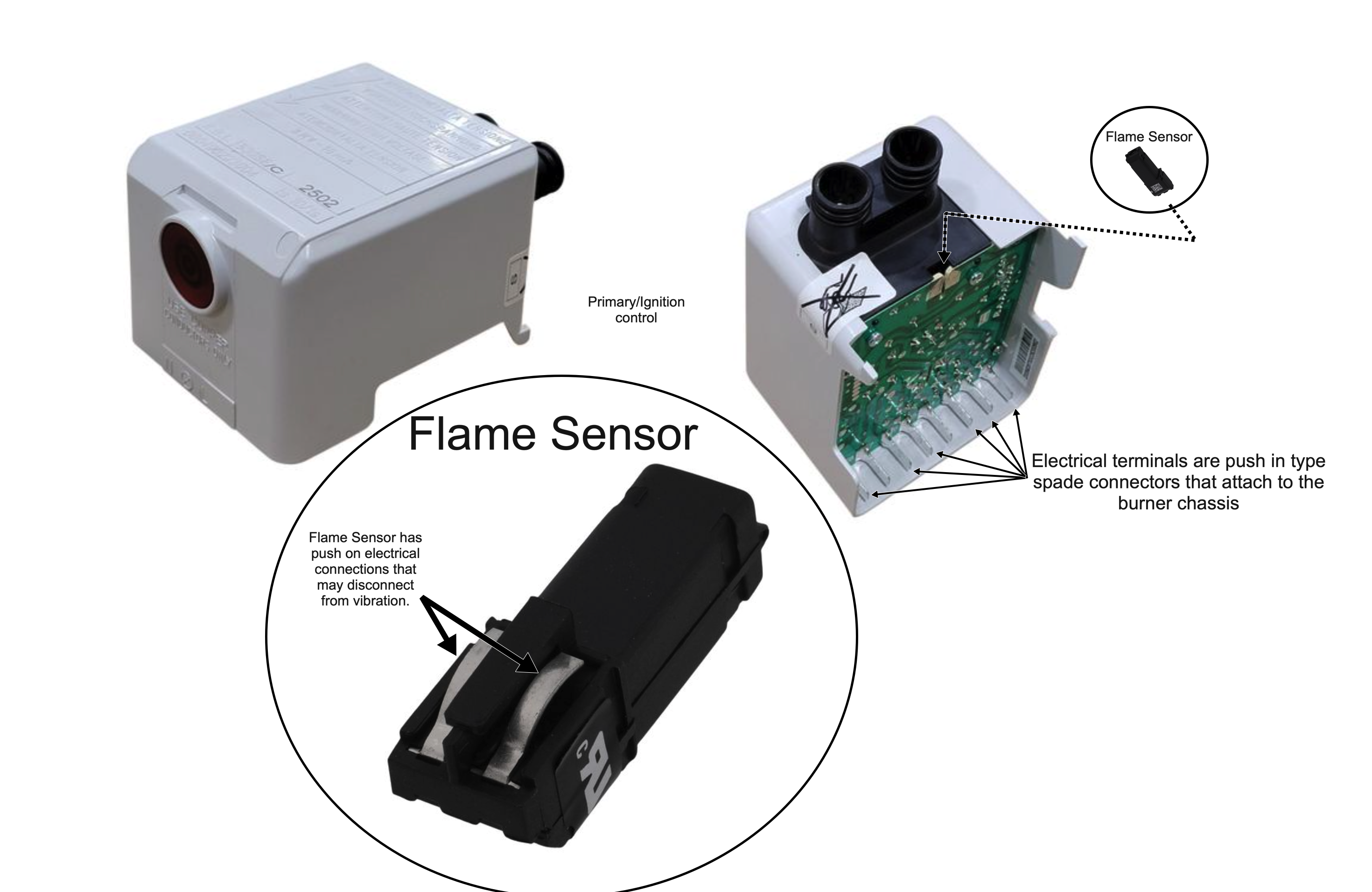
Hope this helps.
ED Y.
Edward Young Retired
After you make that expensive repair and you still have the same problem, What will you check next?
1 -
Sounds to me like it’s losing its prime.
Could also be it’s out of adjustment, too much combustion air and/or too much draft.

 4
4 -
thank you. The first contractor said he replaced the control and the next 2 say they adjust the air and draft and replace the nozzle and then it’s good for about 1-2 months before it goes back to the same issue.
0 -
Unlikely, but it is a possibility. The Riello control has a 10-second pre-purge that gets the pump pressure up to operating pressure before the valve opens. When the valve opens, the flame is sensed, and then the flame goes out.
It could be that the flame is going out as a result of air in the pump, but I do not see it coming back on and firing again just to lose oil pressure again and again. I see more of a control problem, where the flame is sensed and then the valve loses power from vibration, or the flame-sensing eye loses connection due to vibration. That would put the burner control into a relight scenario within a few seconds of the loss of flame.
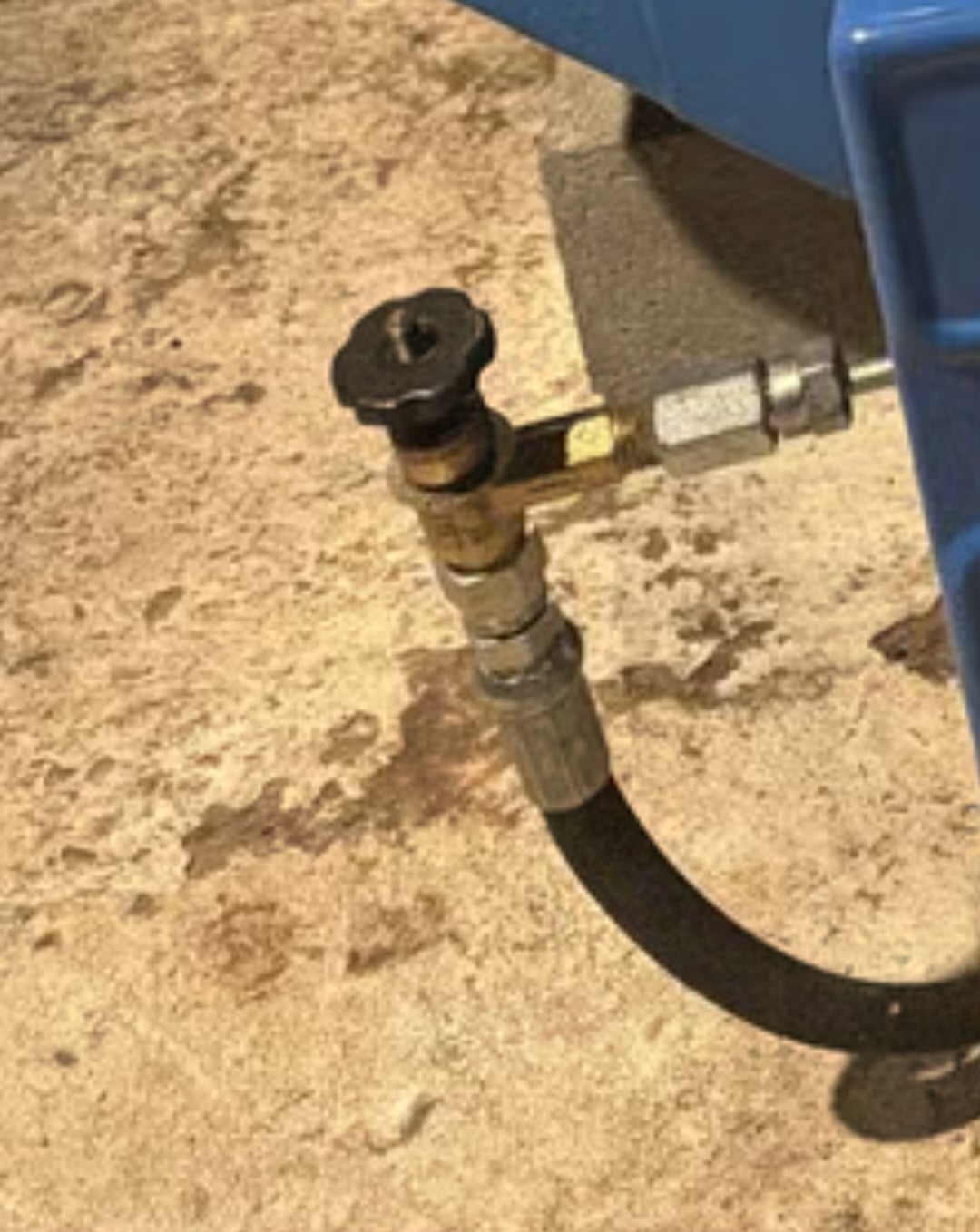
I see the fuel line on the floor, and I believe the oil tank is using a bottom outlet fuel line from the tank to the burner, so it is unlikely that the prime is being lost.
If the bottom of the tank is in a lower part of the basement and the tank is low on fuel (near the bottom third), then the loss of prime is a possibility. However, I would need more information about the tank location since it appears to be only a few feet away.
Is the bottom of the tank lower than the burner fuel inlet?
Is the tank below one-half on the gauge when this problem happens?inquiring minds want to know!
Edward Young Retired
After you make that expensive repair and you still have the same problem, What will you check next?
0 -
The oil tank is only a few feet away and there is currently less than a half tank but the problem still happens even with a 3/4 full tank. The floor isn’t lower where the tank is.
1 -
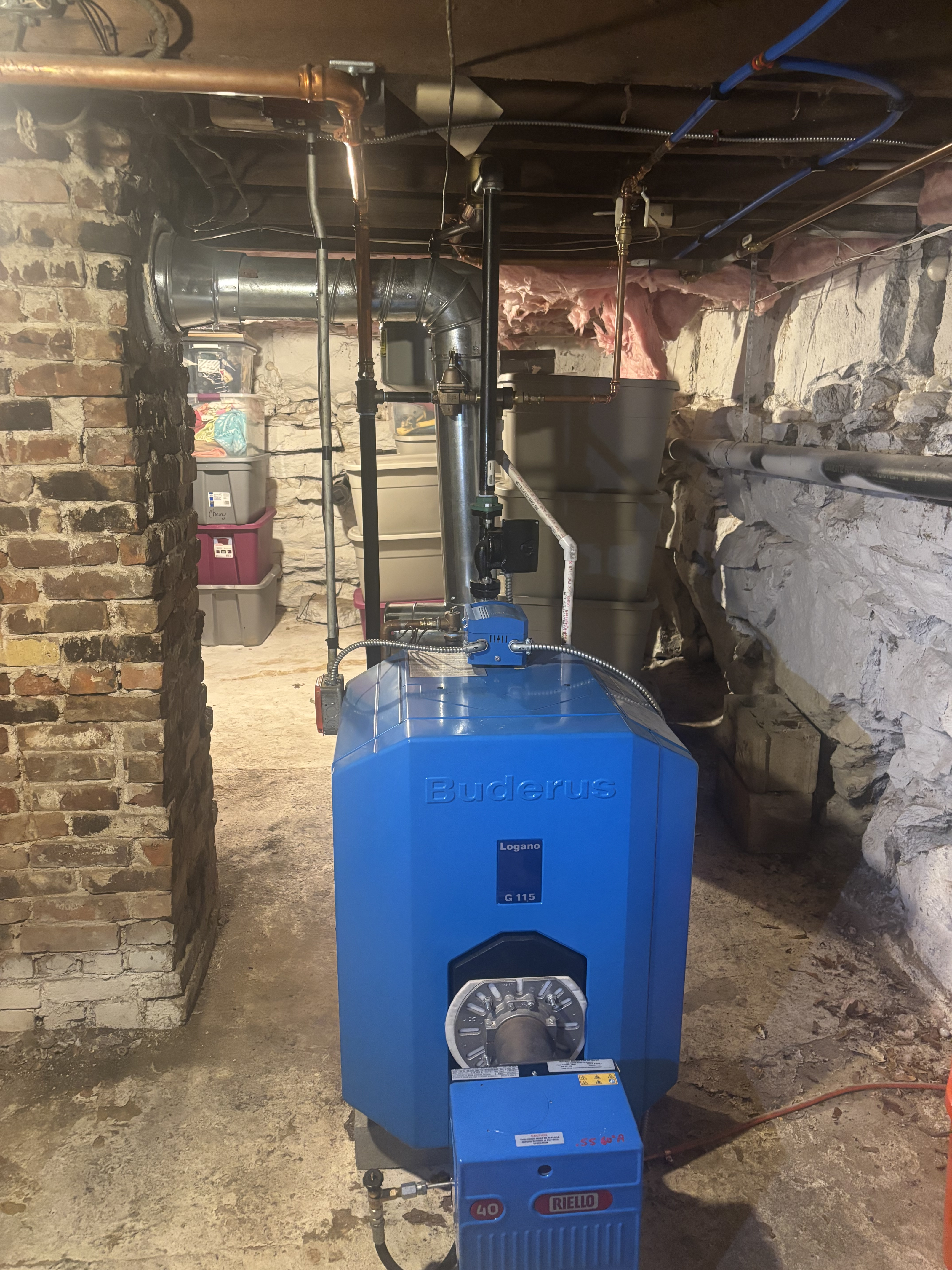
in my third picture you can kind of see the end of my black oil tank all the way on the right.
0 -
If short cycling is "pre purge, ignition, then immediately back into pre purge", and that cycle keeps repeating until steady flame? If so, its air and/or draft related.
The installer needs to set draft and combustion per Buderus/Riello specs. With a Zero smoke.
Very sloppy installation. It looks like an OEM burner, but a retrofit air tube assembly. I hope its sealed and has the correct insertion depth. The draft regulator needs to be about half way up the vertical (level and plumb). No isolation valves for the circulator. Pumping into the extrol tank. No purge station on the return. Even though its probably mono flo, it would be nice. Flue breaching isn't sealed. And maybe its up to code in your neck of the woods, but I've never seen a connection like this.
 0
0 -
Thanks for that description and photo. You are not losing the pump prime with that setup. The bottom of the tank is higher than the level of the fuel pump on the burner. The only way to lose prime in that setup would be if there were a blockage in the fuel line. In that case, the pump would draw fuel from the tank under a vacuum, and that could allow air to enter through the filter gasket or another fitting in the fuel line.
Do you know if you are using a biofuel mix, such as B5 or B10? That can sometimes affect gaskets and seals in the fuel system and cause nuisance problems.
Edward Young Retired
After you make that expensive repair and you still have the same problem, What will you check next?
0 -
I had a Reillo oil burner in my previous house that started operating very intermittently . I would have to use the reset button to get it started again. Very hard to fix an intermittent problem, The service tech came and in the end the oil valve solenoid was the problem. He never saw this problem before. I may sound crazy but if I wanted to be independent of any service tech costs, I would just buy a second burner as a backup or source of spare parts to use for troubleshooting. Tradeoff between the cost of a service call and a replacement part versus buying a second burner to have on hand and doing your own work.
 1
1 -
Me. A Beckett or a Carlin.
Keep it simple I don't know of any advantage of a Riello except expensive parts. I did a lot of work on Riello commercial burners (mostly gas, some oil) and they are great burners when you get used to them.
We had an instance with 8 of these burners on a job in Boston in a brand new hi rise. All the burners were 3-4 million btus. Boilers were 34 floors up.
During the install someone accidently broke the plastic cooling fan cover and fan blade on the burner motor.
We called to get a new cooling fan and cover. Not readily available metric motor. We waited 6 weeks for the 'parts".
They shipped a whole new motor over from Italy.
Things like that with equipment turn me off real fast regardless of how "good" that equipment may be.
Same with a Weishaupt burner that needed a new oil pump. We waited weeks for a new pump made buy Suntec in France.
Not every customer has spare boilers or burners.
I like things simple with less stress.
1 -
Too much air, most likely happens more often when it's warmer and it doesn't run as much. Boiler cools off and flame doesn't get a chance to stabilize on next cycle. CO2 should be at least 12%, a refractory blanket will help as well
0 -
The Riello residential burners are simple. It's just like anything else. The more hands on, the more familiar you get.
1



Categories
- All Categories
- 87.8K THE MAIN WALL
- 3.3K A-C, Heat Pumps & Refrigeration
- 60 Biomass
- 430 Carbon Monoxide Awareness
- 133 Chimneys & Flues
- 2.2K Domestic Hot Water
- 6K Gas Heating
- 124 Geothermal
- 170 Indoor-Air Quality
- 3.9K Oil Heating
- 79 Pipe Deterioration
- 1.1K Plumbing
- 6.7K Radiant Heating
- 397 Solar
- 16.1K Strictly Steam
- 3.5K Thermostats and Controls
- 56 Water Quality
- 51 Industry Classes
- 51 Job Opportunities
- 18 Recall Announcements