Staple up radiant heat under 6 inch slab

Dear forum,
When I built an addition to to my cabin, I had contractor put XPS and pex into the lower level floor.
However, the upper level I want to heat which is about 80% garage, and 20% I want to heat, I didn't. I've been using electric heaters, but I want to take advantage of my efficient water heater (Sanden), plus I have water solar panels lined up for some 'free heat'
I already have radiant heat in original part of the cabin lower level, as well as all the piping and Taco Valves for 2 more zones, so the expense to try is not that big. However, I have a few concerns.
There is no insulation in the ceiling/floor I want to heat on either sides, or any insulation separating the garage floor from candidate heated floor. So I should expect heat seepage there.
6 inches sounds like a lot of material to heat. The response time to applied heat underneath will probably be slow, and I am very concerned about actual heat transfer (and how much of it will get to the room)
Underneath the slab is corrugated metal decking (also known as steel floor deck, pan deck, or composite deck). Steel is good at conducting heat, but apparently aluminium is better. I'd like to consider using the 'fins' I've read about staple up installations.
What's your recommendation on pex attachment under 6 inch slab to minimize heat loss to the garage (e.g. how far from the wall) and to actually have a shot at meaningful effect. Also, how to insulate from underneath so that majority of heat goes "up" not "down".
Thanks.
Comments
-
I did a span deck radiant retrofit once. Shot anchors into the decking to clip the tube against the metal deck. Really no need to add additional metal transfer plates, you already have a massive transfer plate! Spray foam over the tube, ands decking to slow down transfer..
Edge loss may be high unless you can insulate around the pour? Sounds like it is too later for that?
What size is this slab?
Assume 20X 30 X 6" deep
about 324 cubic feet
29. 4 btu/ cubic'/ degree difference
so 9,525 btu to raise the slab 1°
If you want to raise the slab from say 55- 80° it will take 238,125 btu.
Basically you have a massive concrete flywheel that will take hours to warm, hours to slow back down. It is not an ideal slab to setback or change quickly.
The lower the tube in a slab, the higher the required supply water temperature, and slower the response..
I doubt that Sanden HP will put a dent in a load like this. With solar thermal, start warming the slab in August :)
The below example shows how many hours to warm a 1500sq ft slab with a 42,000 boiler input
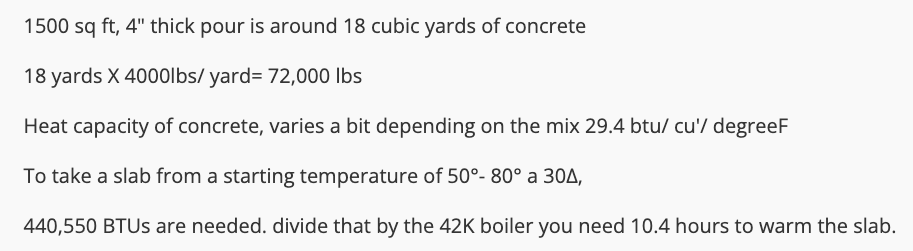 Bob "hot rod" Rohr
trainer for Caleffi NA
Living the hydronic dream0 -
Thank you for your response.
Can you please elaborate on the anchors you used and how you attached pipe to them?
I neglected to share the room size, but it's about half that (10x30), even at half your heating calculations, still a lot of BTU needed. The supply temp is sort of limited to 90F b/c of the other radiant system and Taco XPB-1 does the heat exchanging with water heater and any higher and the floor may get uncomfortable (currently around 80F)
I do not disagree that the load to heat is significant and the Sanden can't produce more than 16K BTU/h. But I am counting on about 100ft of flat plate collectors and a 400gal insulated tank outside, which should be able to generate about 30k BTU/h and store decent amount of heat in the tank on the good days (and exchange with cold water/Taco return). I have a basic electric instant heater as backup for those cloudy/cold days. Not much efficiency there, but not much different then electric heaters currently used, and hopefully seldom used (I plan to monitor that).
I am not too worried about water/heat supply capacity, as I have more ways to supplement it relatively cheap, I am more worried about heating the slab and at least cover large portion, and hoping for majority of room heating needs. I thought of installing some Polyiso panels underneath for any potential future serviceability. I think the spray foam will limit the surface area of the pipe that should be transferring heat, if not to metal directly, than to air surrounding it which should stay "up" and continue slowly heating the floor. I probably should be generous with piping and size to maximize heat dispersion and transfer.
I will do additional research on how far the heating source should be from external walls, if wall is poorly (or not) insulated.
0 -
It would be much better suited with a top application, but nobody really wants that step in the flooring.
1 -
I don't disagree, but Floor is already tiled. I'd rather add pex into the wall on window side if under the slab heat isn't satisfactory. May have to swap drywall for something else. And it keeps cracking from some weird heat/cold related cycle in that room (hear a noticeable snap every morning and evening).
0 -
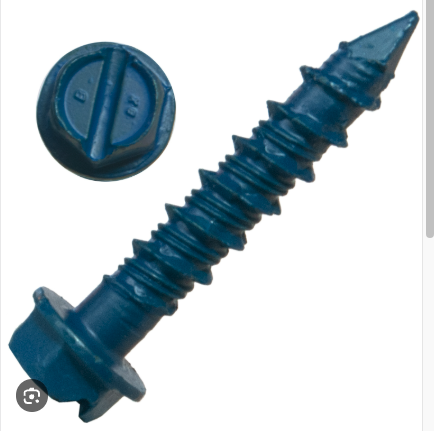
Tapcon is one brand of concrete screw, drill the small pilot hole with included drill, a small hammer drill to drive them in.
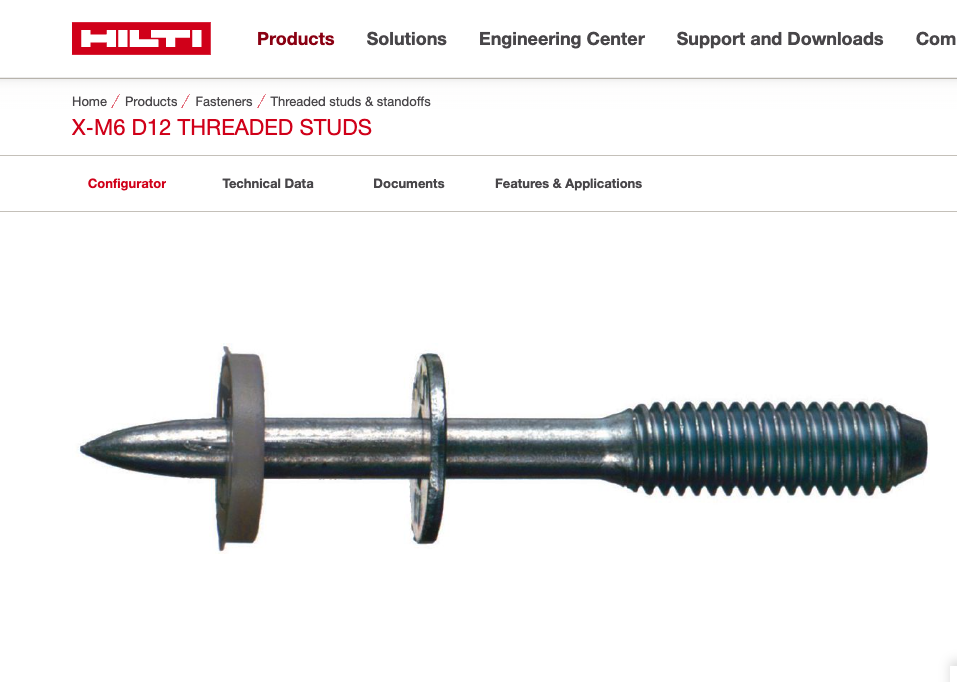
Or Hilti and others have threaded studs that you shoot into concrete, even steel i-beams.
Then a one hole conduit strap.
Bob "hot rod" Rohr
trainer for Caleffi NA
Living the hydronic dream0 -
Shouldn't short self tapping metal screws be enough?
0 -
Through the metal into the concrete? It will eat the screw thread unless you pre drill and use tapcon. The Hilti will be much faster (10x) and more deterministic.
0 -
You could try. I think they would break when they hit the concrete before the strap tightens.
Bob "hot rod" Rohr
trainer for Caleffi NA
Living the hydronic dream0 -
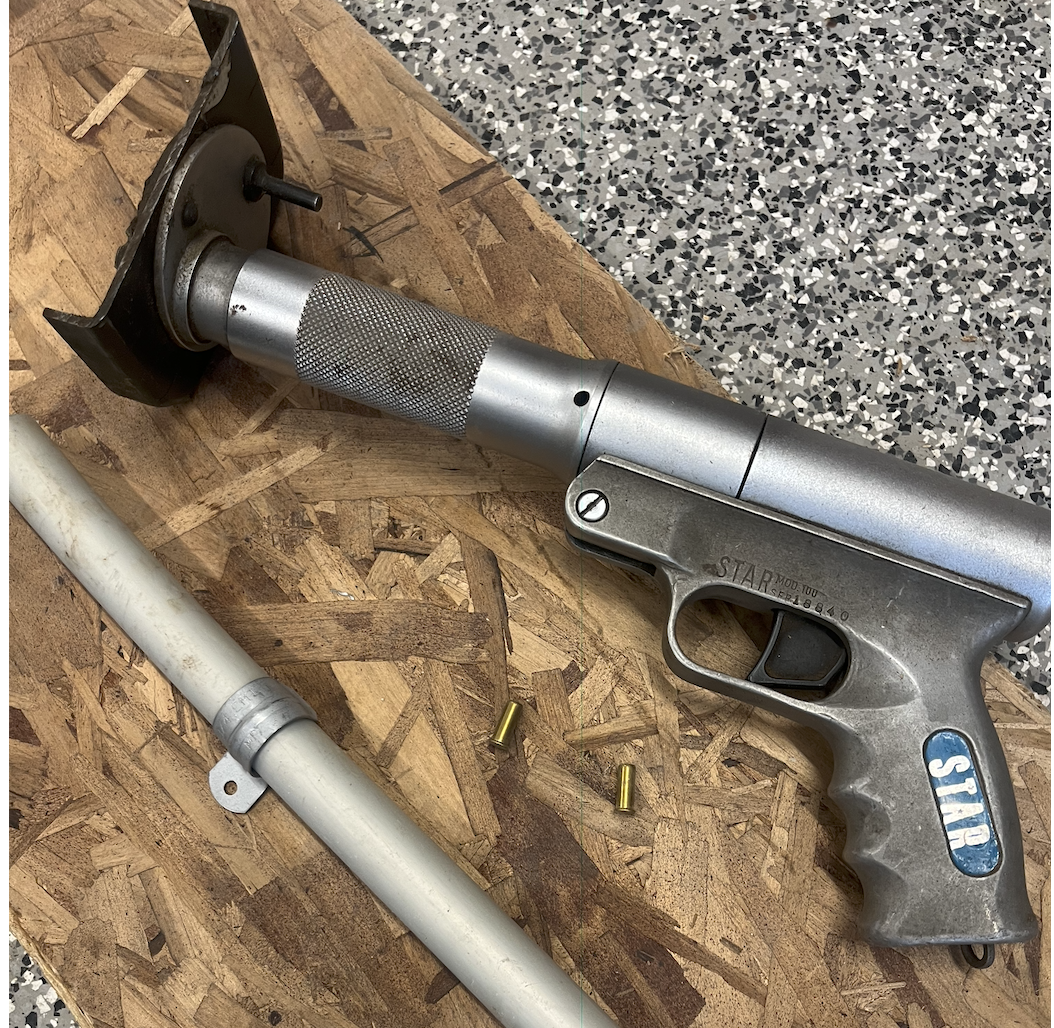
That is a 22 caliber Star, probably late 1960 or early 70's. My neighbor gave it to me recently.
I remember my dad had a similar tool made by Remington.
Bob "hot rod" Rohr
trainer for Caleffi NA
Living the hydronic dream 1
1 -
I tried a #8 1/2 Tek and a 3/4 lathe screw today (had both laying around). Both made a hole in the steel, but neither screwed in nor held the conduit strap, due to concrete on the other side, as predicted earlier.
I have enough experience with Tapcons to not want to go with them for this application, as I don't want to drill steel AND concrete 100x times and having to avoid that stuff getting into my face/head. Plus, I think they'd be pricey from all angles.. drill bits, hardware and time (and excessive swearing)
I will look into 'shooting'. I am guessing '10x faster' is an underestimation.
 1
1 -
^ your time is worth something.
0 -
I initially put 100x but didn’t want to exaggerate! 😂 I’d say 1 minute a stud for single shot; 6 per minute with the strip powder charges!
0

Categories
- All Categories
- 87.8K THE MAIN WALL
- 3.3K A-C, Heat Pumps & Refrigeration
- 59 Biomass
- 430 Carbon Monoxide Awareness
- 132 Chimneys & Flues
- 2.2K Domestic Hot Water
- 6K Gas Heating
- 124 Geothermal
- 170 Indoor-Air Quality
- 3.8K Oil Heating
- 79 Pipe Deterioration
- 1.1K Plumbing
- 6.7K Radiant Heating
- 396 Solar
- 16.1K Strictly Steam
- 3.5K Thermostats and Controls
- 56 Water Quality
- 51 Industry Classes
- 51 Job Opportunities
- 18 Recall Announcements