Combustion question

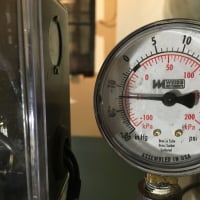
Hey so today I went to an oil Furnace Service call and was getting a combustion reading at the end. I understand as long as CO levels are under 100ppm in the exhaust its fine, but I thought under 50 is ideal. What would cause these elevated levels? (See photo). I have -0.02" of draft over fire, pump pressure at 150 psi and had a .50 60B nozzle in there. It was a beckett AFG burner. L head if that means anything.
Yesterday I did a maintenance a year after the install. And I was called back today because they had no heat. It was on lockout. I check oil flow and it was good. I fired it up and it seemed to be rumbling and then the flame went out. Long story short I had to bring the Co2 from 11 to 12% and that made the difference. Can someone help me understand why choking off some oxygen stopped the rumbling?

Comments
-
What model furnace? I had one recently. New installation no heat on a Boyertown furnace, Beckett AFG with the L head.
Combustion test beautiful. 0 smoke.
It came back in the next day no heat. There's oil on the L head. I reset and it fires right up. Combustion test numbers are different. O2 and excess air went way up. I pulled the burner. Got the T-Gauge and checked the Z dimension. The assembly was 3/4" back from specs. I set the Z and dialed it in. Haven't heard a peep since. Check the Z dimension.


 4
4 -
What was your smoke test reading?
What was your excess air?
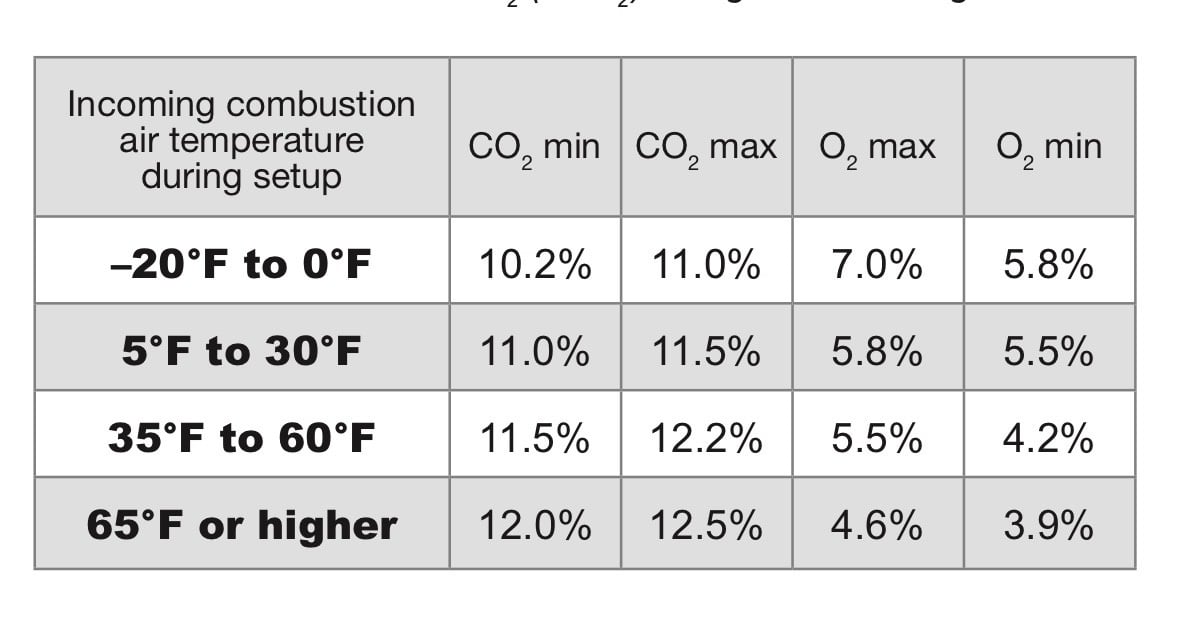
What was the outdoor/indoor temperature of your first combustion test, and the recent one?I’m guessing when you set it up the first time it warm weather and you didn’t allow enough excess air.
 1
1 -
Changing the Co2 1% is not going to fix a problem, I would suspect something else is going on.
2 -
This is one of those things where I have to be there to see and hear what is happening to be able to tell you what to do. I agree with @EBEBRATT-Ed that adjusting the excess air that results in a 1% increase in CO₂ is probably not going to fix anything.
Based on the combustion readings provided in the photo, the burner appears to be operating with elevated excess air.
The adjustment in question is from 11% CO₂ to 12% CO₂, that 1% change is relatively minor and unlikely to be the primary cause of flame instability or noise. This suggests that additional factors should be evaluated.
If for example A CO₂ reading as low as 5% would indicate very high excess air (potentially greater than 80–100%). In that condition, the flame can become short, weak, and less radiant. Excessive combustion air or draft may cause partial flame lift off the retention head, resulting in louder or harsher burner operation. A weak flame may also reduce cad cell signal strength and potentially contribute to nuisance flame safeguard lockouts.
Adjusting combustion from 5% CO₂ into the normal operating range of 11–12% CO₂ would reduce excess air, increase flame stability and luminosity, and improve cad cell response. In that situation, correcting the air setting could reasonably resolve a flame signal issue.
Your adjustment from 11% to 12% is not a good fix in my experience. From the recorded O₂ reading of 4.7%, calculated excess air is approximately 54%. This is higher than typical targets for a properly tuned #2 oil burner. Most burners operate optimally at:
- CO₂: 11–12%
- O₂: 4–6%
- Excess Air: 30–45%
- Smoke: Zero
Given the elevated excess air reading, the following steps are recommended before further air adjustments are made:
- Verify zero smoke using a calibrated smoke tester.
- Measure draft over the fire.
- Measure draft at the breech/exhaust connection.
- Reconfirm CO₂ and O₂ readings for consistency.
If readings remain unchanged after verification, two primary possibilities should be considered:
- The combustion analyzer may require calibration.
- The burner air setting may be reduced slightly, while carefully monitoring smoke and CO levels to ensure safe operation.
A target excess air level of approximately 40% is generally appropriate for #2 heating oil, provided that smoke remains at zero and CO stays within acceptable limits.
This assessment assumes there are no air leaks between the combustion chamber and the flue gas sampling location. Air infiltration through a compromised heat exchanger, flue pipe joints, or barometric damper can dilute the sample, artificially increasing O₂ readings and calculated excess air.
Further diagnostics should focus on draft control, combustion air setting, and verification of instrumentation accuracy. When was the last time your combustion analyzer was calibrated or compared to a "known good" analyzer
One last thought; are you using the proper nozzle spray pattern and spray angle? I have seen that make a big difference
Edward Young Retired
After you make that expensive repair and you still have the same problem, What will you check next?
3 -
I agree the Z is out , the fire is being chocked . The Z adjusts the focal point of the flame .
If you any CO reading burning oil you also have smoke , you have a combustion problem .. First step bring it to factory spec ..
Good Luck
There was an error rendering this rich post.
0




Categories
- All Categories
- 87.8K THE MAIN WALL
- 3.3K A-C, Heat Pumps & Refrigeration
- 59 Biomass
- 430 Carbon Monoxide Awareness
- 132 Chimneys & Flues
- 2.2K Domestic Hot Water
- 6K Gas Heating
- 124 Geothermal
- 170 Indoor-Air Quality
- 3.8K Oil Heating
- 79 Pipe Deterioration
- 1.1K Plumbing
- 6.7K Radiant Heating
- 396 Solar
- 16.1K Strictly Steam
- 3.5K Thermostats and Controls
- 56 Water Quality
- 51 Industry Classes
- 51 Job Opportunities
- 18 Recall Announcements