Welcome! Here are the website rules, as well as some tips for using this forum.
Click here to Find a Contractor in your area.
If our community has helped you, please consider making a contribution to support this website. Thanks!
safest bet? TRV at the radiators or rig up a zone type valve at the manifold?

A few years back I redid the boiler and ran home runs of pex al pex to pick up each of the radiators in my house and its been running really well. I left the piping up to the radiators intact and picked up the piping in the basement but I'd like to take it to the next level to make it a little more efficient distributing the heat. All the radiators heat well so I don't feel like I am trying to solve a balancing issue. Just trying to turn on and off flow once a room is satisfied. Front rooms get plenty of sun during day where as back rooms are more shady kind of control.
I have good old cast iron radiators and I am a little reluctant because of the cast iron and the age of the radiators to go cranking off the old valves and installing the TRV right at the radiator but I'll give it a try if that's the way most of you have successfully done it but I was wondering if any of you have rigged up actuators or zone valves or some other powered valves that turn the heat on and off to each radiator based on the rooms temp. I am going to do this in the bedrooms first since those 3 rooms get the warmest since they are really not large rooms and I'd rather have the most heat on the main floor since it will still eventually make its way to the 2nd floor anyway.
It's a small house so I was not looking to do every room/radiator as an individual tradition sense of a zone, turning on and off the boiler so I wasn't considering connecting the end switches if I did use a zone type valve device at the manifold. I am really just looking for ideas to use some type of electric operated valve to open and close based on a room temp/thermostat once the temp is satisfied.
or if thats all really over complicating it, I will just give the radiator TRV a whirl and cross my fingers the old valve threads comes apart without wrecking the radiator.
Comments
-
i would either group the rooms that overheat together at the manifold either by putting them on their own manifold or by adding actuators to the manifold if it supports that and wiring them in parallel or put TRVs on the radiators.
If you are careful about it taking the old spud out of the radiator isn't likely to damage the radiator but you'll probably have to cut the spud apart to get it out. if there is a copper riser to a top connection to the radiator you could put the trv there too.
1 -
Be careful using the TRV's. As they weather gets warm the percentage of TRV'S closing will eventually increase to a point that they will start to banging unless using something that can divert the excess flow. a differential bypass valve or similar device would work as that is old school. You could also use a variable speed circulator that can adjust to the require flow.
If you used a prebuilt manifold from viega or other manufacturers you can put electric zone valve heads on the manifold. there are other options. it just takes $$$$
1 -
TRV are proportional, non electric temperature controls,. Well worth the expense if they can be added without too much destruction
The work great with a delta P type circulator. As the valves modulates, so does the circulator
Zone valves will require wiring, transformer or relay box. ZVs work best with delta P circulators also
Bob "hot rod" Rohr
trainer for Caleffi NA
Living the hydronic dream 2
2 -
You can also get TRVs with remote sensor. This would let you put the TRV in the basement on the pex pipe and run the sensor up through the floor into the room. This would avoid having to monkey with 100 year old pipes.
Since you are mostly looking to control over-heating, the zone actuator option can be done the cheap. Since you are only looking to reduce flow rate, the zoning doesn't need to tie in to the heat controls. Put the zone actuator on the manifold with the local T stat driving it directly. I've done something close to this with a 24V AC transformer feeding to a bunch of DIN rain terminal blocks to provide power to the T-stats/actuators.
1 -
since I am only looking to do this with the 3 radiators on the 2nd floor I was assuming that the 4 radiators on the first floor would act as the "bypass" and pick up the additional flow. Do you think that this would not be the case?
0 -
@Kaos This is exactly what I am thinking. I figure the less wrenching on the radiators may be the best since I have all brand new stuff in the basement I can work with. Does the TRV with the remote sensors have leads that would go up to the second floor? I'll also start digging into different zone actuators and compare the overall project costs. It's really going to just focus on the 3 bedrooms so the downstairs rads will pick up the additional flow during the times for heat calls so I think I can avoid upgrading the circulator pump 007e for this project.
0 -
@mattmia2 I wish there was copper coming up to the radiators but unfortunately not. I think the least destructive and the safest is to mess around with the new stuff I installed in the basement and like you mentioned, either come off of the manifold or fins something I can splice into the pex al pex.
0 -
Do you have a manifold that accepts actuators? If not solder in or crimp in regular zone valves. You can get ZVs with crimp pex connections.
Then you need to run a wire to the thermostat location.
And yes, as zone valves close off, the remaining zones get more flow. The rule of thumb with a fixed speed circ,is with 4 or more zone valves install a pressure bypass valve, or a variable speed, delta P circulator
If you zone and hear excessive noise with only one or two zones, then you need to address that.
Here is an example of a copper press by pex zone valve. You can mix and match press, sweat, pex crimp or expansion, or threaded adapters.
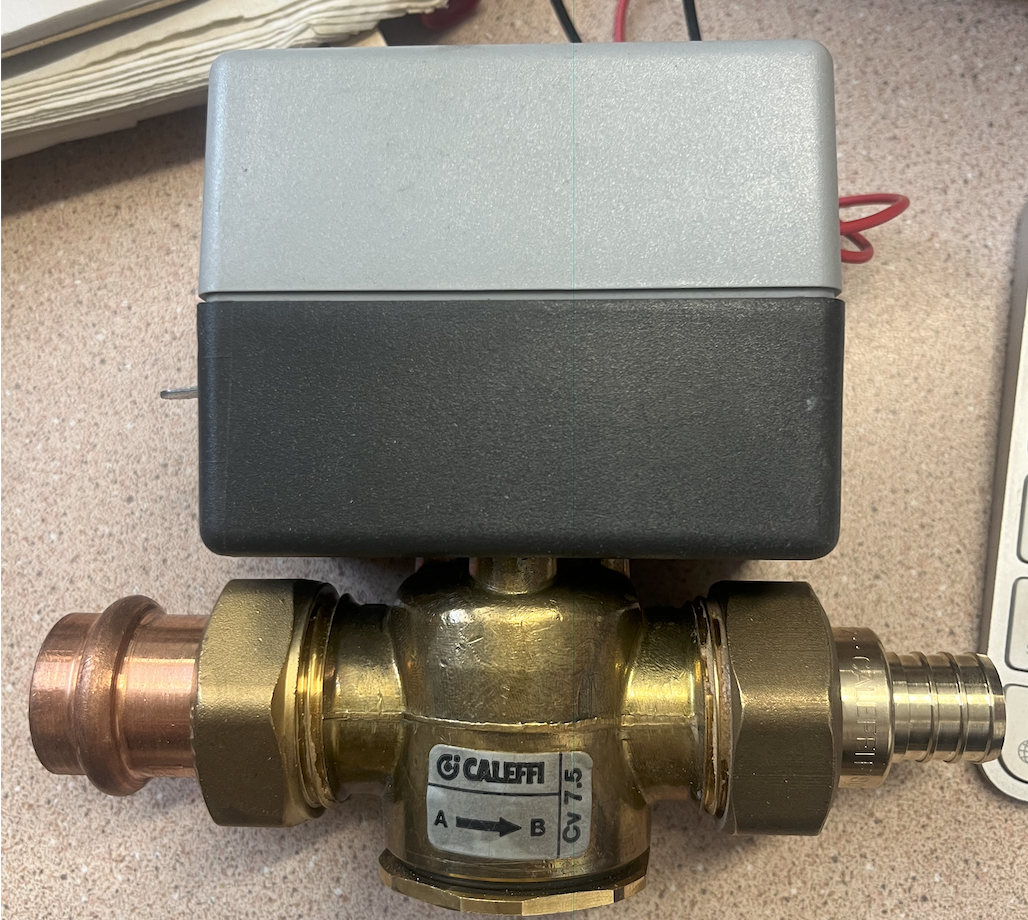 Bob "hot rod" Rohr
trainer for Caleffi NA
Living the hydronic dream0 -
@hot_rod I could certainly make it work if the ends in and out of the valve body were 1/2 threaded female because then I could just nipple into the ball valve on one side and then directly screw in the pex al pex compression adapter on the other side. Does that valve come with female threads on the union connectors also?
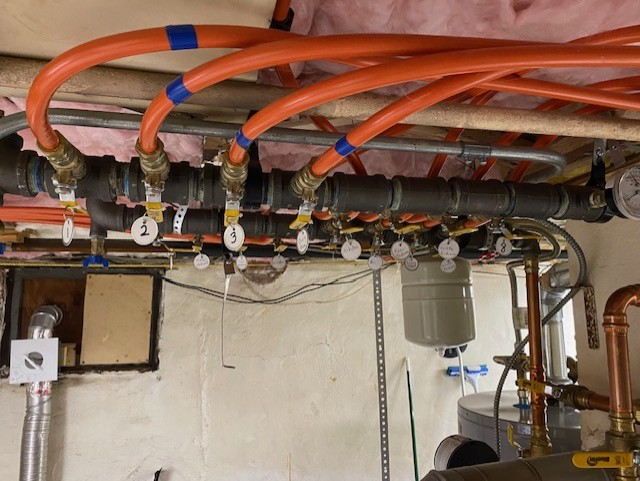 0
0 -
Z-200412 is 1/2" FIP connection zone valve body
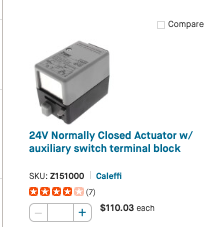
Z-151000 is a 24VAC actuator with end switch and terminal block connection for wires
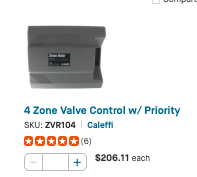
ZVR104 is a 4 zone relay box, gives you one spare if you are zoning 3 loops?
Supplyhouse.com has them
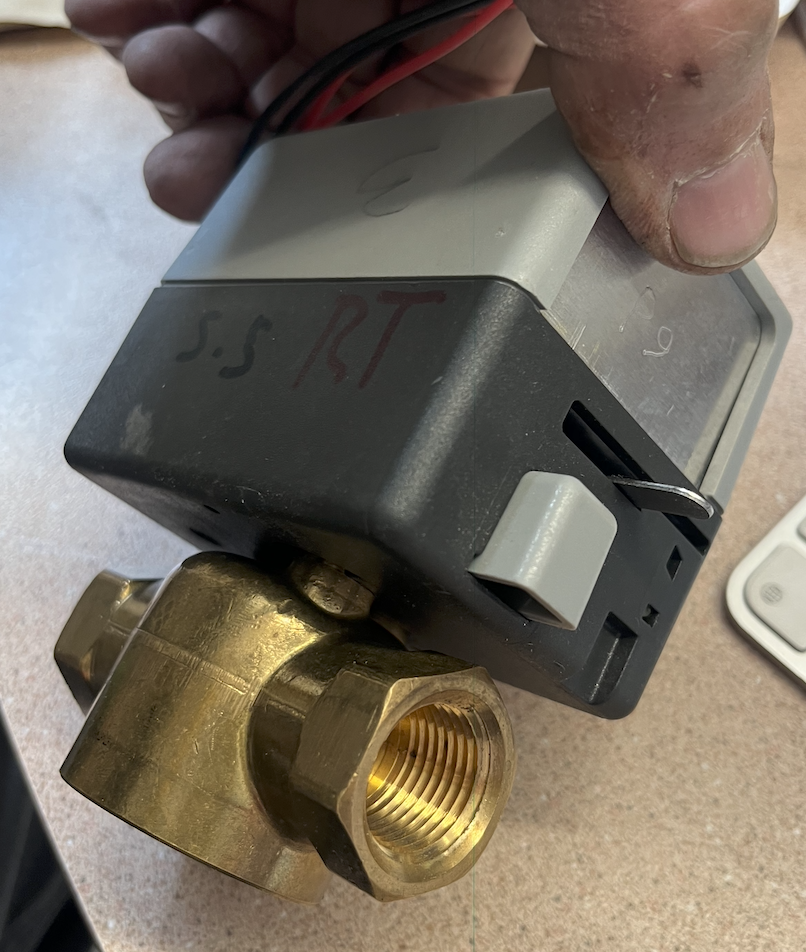
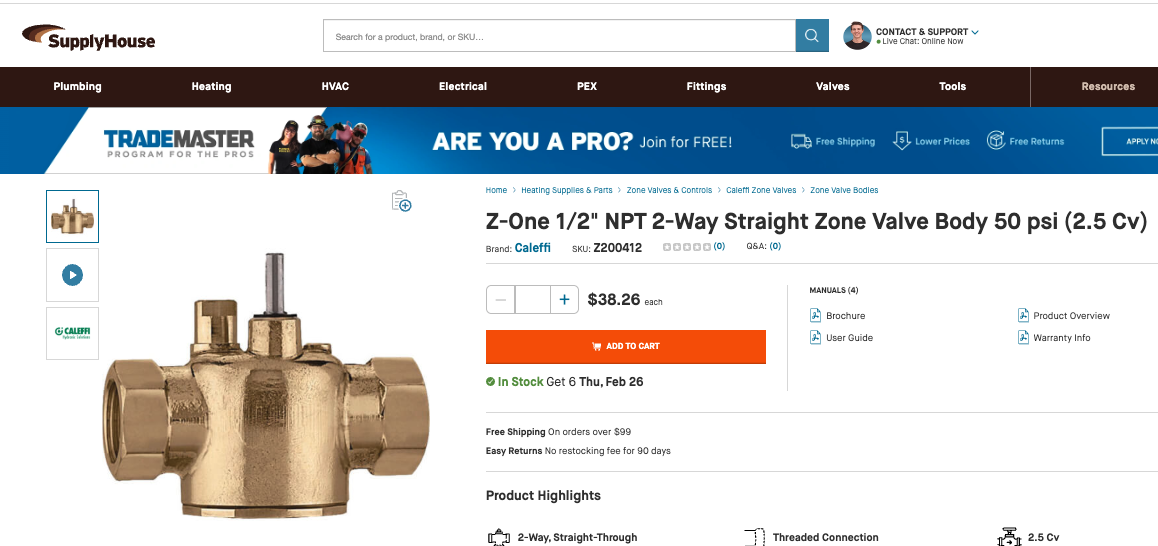
 Bob "hot rod" Rohr
trainer for Caleffi NA
Living the hydronic dream1 -
NC normally closed indicates it is closed when no power is applied.
It is open when the thermostat sends a 24v signal.
Bob "hot rod" Rohr
trainer for Caleffi NA
Living the hydronic dream1 -
i like the unions built in to hose, although i also very much like the phoenix connectors that the taco zone sentry valves use for the wiring connections
0



Categories
- All Categories
- 87.9K THE MAIN WALL
- 3.3K A-C, Heat Pumps & Refrigeration
- 60 Biomass
- 430 Carbon Monoxide Awareness
- 133 Chimneys & Flues
- 2.2K Domestic Hot Water
- 6K Gas Heating
- 124 Geothermal
- 170 Indoor-Air Quality
- 3.9K Oil Heating
- 79 Pipe Deterioration
- 1.1K Plumbing
- 6.7K Radiant Heating
- 397 Solar
- 16.1K Strictly Steam
- 3.5K Thermostats and Controls
- 56 Water Quality
- 51 Industry Classes
- 51 Job Opportunities
- 18 Recall Announcements